


Likes
Comments
Share


@Xpie77
Follow
Kweekverslag Week 3: Serious Happiness van Serious Seeds
Datum: 18 maart 2025
Kweekomgeving: Binnenkweek, LED-verlichting, temperatuur 21°C, luchtvochtigheid 51%
Welkom bij ons kweekverslag van week 3, waarin we de voortgang van onze Serious Happiness van Serious Seeds volgen. Deze hybride strain, bekend om zijn gelukkige en opbeurende effecten, maakt het kweken tot een waar genoegen.
Groei en ontwikkeling:
In de derde week zien we duidelijk dat onze planten goed reageren op de verzorging die ze tot nu toe hebben gekregen. De stelen zijn stevig en de bladeren vertonen een mooie, gezonde groene kleur. Er is een aanzienlijke toename in hoogte, met een gemiddelde groei van 10 cm deze week. We hebben de planten goed afgebroken om de ruimte te geven voor zijtakken, wat de komende weken zal bijdragen aan een vollere plant.
Voeding:
Deze week hebben we onze voedingsschema's aangepast, met een focus op stikstofrijke meststoffen om de vegetatieve groei te bevorderen. De planten lijken goed te reageren op de voeding; we zien een sterke groei en grote bladeren, wat een teken is van een gezonde fotosynthese.
Licht en omgeving:
De LED-verlichting is ingesteld op een cyclus van 18 uur licht en 6 uur duisternis. Deze instelling blijft optimaal voor de vegetatieve fase. De ventilatie is consistent, en we zorgen ervoor dat de luchtvochtigheid binnen het ideale bereik blijft – niet te hoog, om schimmelvorming te voorkomen.
Kijk vooruit:
Met een goede basis in week 3 kijken we vol vertrouwen naar de komende weken. We bereiden ons voor op de overgang naar de bloeifase, wat betekent dat we binnenkort onze lichtcyclus zullen aanpassen en wat veranderingen in voeding zullen aanbrengen. We verwachten dat de planten zich in de volgende weken verder ontwikkelen en hopelijk ons zullen belonen met prachtige toppen.
Conclusie:
Serious Happiness heeft zijn naam zeker waar gemaakt tot nu toe. Het kweken van deze strain is een fijne ervaring, en we zijn enthousiast om te zien hoe ze zich verder zal ontwikkelen. We blijven je op de hoogte houden van ons avontuur in de volgende weken. Tot de volgende keer!
Met groene groeten,🌍🌍🎄🎄🎄🎁🎁

Likes
15
Share

@ChrisNbran
Follow
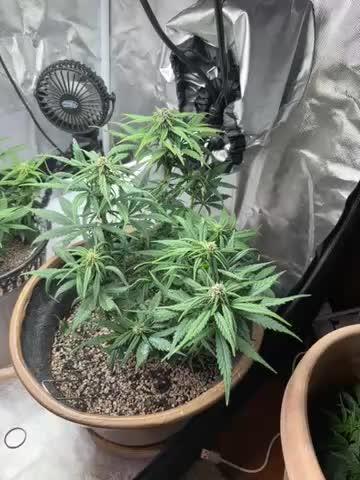
These two chicks have blown up the buds are starting to get frosty and on one the dark purple is starting to show I’ve up”d my watering and feeding to every day and a half or two days I feed every watering and they love it no burns or deficiencies so far until next time happy growing

Likes
30
Share


@CHILLING_RACOONS
Follow
Here we are to show you LSD by Seeds Mafia, one of the strongest strain I ever tried.
I'm expecting a lot from this plant!
✅ VEGETATIVE week #2
📅this week goes from 12/12 to 18/12.📅
💡💡💡Viparspectra XS2000 is working at 50% power.
💉🔍Fertilization schedule:🔍💉
14/12 2g/lt eposom salts foliar and 1g/lt irrigation
17/12 2ml/l deeper underground
WE ARE BACK!!!
We are back after a little pause.
We take a break because we were too busy to post high quality diaries. In the last diaries we tried to post as good as possible and we have to publish about 6 or 8 diaries (in addition to these that we will publish shortly). We opened also an educational Instagram page, we growed a lot in a short amount of time BUT, Instagram suspended our account and we lost all our posts, I was so sad and disappointed... a lot of work lost in a night....
Now we started a new grow with six awesome strains!!!!!
In this diary you will see our journey with LSD by Seeds Mafia under the AWESOME XS2000 by Viparspectra 🤩
LSD Feminized is one of the most powerful marijuana varieties, reaching a 26% THC content. It produces a very strong and lasting effect. In addition, it is a highly adaptable variety that grows easily under almost any condition, it is very resistant to both mold and pests.
DATA SHEET:
Sex: Feminized
Grows: Indoor, Outdoor, Greenhouse
Height: ≈ 120 - 200 cm
Yield: ≈ 600 - 700 gr m2
Flowering time: 8 - 9 weeks
Complete life cycle: October
Cannabis Genetics: Skunk #1 X Mazar
THC: 26%
Type: Indica
💸💸💸💸💸 Here you can buy seeds of this top shelf strain: https://seedsmafia.com/en/feminized-cannabis-seeds/lsd-feminized-.html
🔧💡OUR SET UP💡🔧
✔️ 💲💲💲VIPARSPECTRA 🚀🚀🚀🌕🌕
ViparSpectra®️ XS2000 240W Infrared Full Spectrum LED Grow Light:
Excellent ratio between wattage and ppfd, excellent light penetraton, perfect light spectrum (it also has IR 🤩) and it has the best build quality on the market. Until now, built quality is really awesome. You can touch that quality. Materials are really strong, excellent driver and the best leds on the market. Heat dissipation is perfect, the lamp is never too hot and it has a passive dissipator so you will have zero noise. It also has IP65 certification. I like that this lamp is bigger than others, so the 240w of power are well distribuited on the space. Viparspectra has an awesome customer service, and shipping was creazy fast!
This awesome brand also offers 3 years warranty.
This lamp has no rivals.
A special thanks to Emily of Viparspectra ❤️❤️❤️❤️
HERE YOU CAN BUY THIS PROFESSIONAL LIGHT: https://www.viparspectra.com/products/xs-series-xs2000 or https://amzn.to/3dyUoJl
and here you can buy other awesome stuff: https://www.viparspectra.com
✔️ 💲💲💲MARSHYDRO 🚀🚀🚀🌕🌕
📦120X120 GROW TENT: an awesome box, easy and fast to assembly. Made by strong materials, solid zips and it is totally lightproof. The position of holes is optimal and the two lateral windows will make easier the work inside the box. There is also a double end, so you are 100% sure that dirt or liquids will not spill out. You can find it here: https://www.mars-hydro.com/grow-tent/buy-mars-hydro-grow-tent-48x48x80-1680d-4-x-4-size-keeps-all-light-in-top-quality-1680d-canvas-is-tear-proof-and-double-stitched-light-blocking-fast-installation-for-sale
💡TS 600 FULL SPECTRUM 100W LED GROW LIGHT : with this light you will achieve excellent buds, you will not need anything more. This lamp replace a 150w HPS lamp, but, with this Led Light you will smoke bigger, harder and tastier buds because Led have a complete spectrum and a powerful light penetration, so your plants will work as much as possible to make you happy. Psssssss it it extremely cheap and it is only 100w, your bills will never be too high, YOU HAVE NO EXCUSES!! Here if you want this little beast: https://www.mars-hydro.com/led-grow-light/mars-ts-series-led-grow-light/mars-tsw-600-led-full-spectrum-hydroponic-led-grow-light
Thank you Eleen of Marshydro❤️❤️❤️❤️
💣Quantum board - 480w - 4x120w Boards by Zhoangshan Koray Opto-Electronic Ltd.
Samsung LM301B 288 led/board 3000K 0dB noise
+24led/board led Osram 660nm
Efficiency 2.6 umol/J 220 lm/w
Driver: Meanwell HLG-480H-36B
💣Quantum board - 240w - 2x120w Boards by Shenzen Yuanhui Led Ltd.
Samsung LM301H 504 led 3500K 0dB noise
+24led/board led Osram 660nm
Efficiency 2.7 umol/J 220 lm/w
Driver: Meanwell HLG-240H-48B
-ESTRACTION FAN:
Blauberg 125 Turbo Pro Series
Maximum air flow: 430-560 m³ / h 50W 32-44 dBA
-FANS:
A)OSCILLATING FAN D.15cm 2 speeds 20w
B) COMPUTER FAN Sunon DP200A – 230V 20w (Strong, reliable and quiet)
C)Cornawall Electronics Multifan Turbo, three speeds, can be used both on support surfaces and mounted on the wall. High capacity, about 740 m3 / h. High silence and reliability.
💊💉💊FEEDINGS:
We used BioBizz light Mix
TOP CROP:
-DEEPER UNDERGROUND: to stimulate roots system
-TOP VEG: for a excellent growth in the vegetative phase
-GREEN EXPLOSION: to promote creation of bud sites and to allow a faster growth
-MICRO VITA: bacterias for equilibrate the soil and to make the plant healty
-BIG ONE: to stimulate bud sites and to stimulate resin production
-TOP BLOOM: to achieve excellent big and hard buds
-TOP CANDY: to feed the buds with molasses for a tastier smoke and to gain weight
-TOP BUD: to enlarge buds and to gain weight
PLAGRON: PK 13-14 to have big and hard buds and to feed plants with lower effort
ADVANCED NUTRIENTS: Sensi Cal-Mag Extra-> for cal mag deficiency
GROTEK: CAL MAG for cal mag deficiency
HESI: PowerZyme to clean and balance the soil. It feeds the plant cleaning the soil.
GHE: - Final Part (ex Ripen) accelerate the final flowering phase, dissolves minerals in excess
- Flash Clean to flush the plant and to be sure that all excesses are out from plant and pot
These two products improve A LOT the smoke of our babies
-PURPINATOR to stimulate flavonoids and to have a better taste and smell.
____________________________________________________________________________________________
🙏❤️ THANK YOU FOR BEING HERE ❤️🙏
Please leave a comment with your opinions, it is very important to us to have a comparison.
If you like our job, tap the weed button and follow us. It will be really appreciated.🙏
We want to thank again everyone that help us in our project. You support us to support our dream. ❤️
SPREAD THE LOVE OF THIS PLANT ALL AROUND THE WORLD
🌿Thank you again🌿
❤️Sweet hugs❤️
👨🌾CHILLING_RACOONS👩🌾

Likes
296
Share


@StarLorr
Follow
Welcome to my Ðivine ØĠ Ķush diary.
In this diary:
Seeds: sponsored by Ðivine Șeeds
Media: Promix HP
Nutrients: Advanced Nutrients, Diablo Nutrients, Gaia Green Power Bloom.
Light and Weather: Şun☀️and Mother Earth.🌎
___________________________
Wet Weight: 1391 grams
___________________________
Wet Trimming with my trimming bowl was a humongous time saver!!
______________________________
Took me about 6 hours to wet trim.
______________________________
I wanna Thanks Ðivine Seeðs for the Opportunity to grow and smøke your Ðivine Plants👊🏼😉
______________________________
Thanks for stopping by, likes and comments are appreciated!👊🏻😎
Keep on growin!
Keep on tokin!!!
😙💨💨💨💨💨


Likes
9
Share


@ryanloftus222
Follow
Cc#1 wet = 14.62oz
Trimmed=1.92oz
Cc#2 wet =22.22oz
Cc#3 wet =26.39oz.
The last four crystal candies are getting an ice bath for 48 hrs then cut down to dry. I will re update my weeks when further weight is taken and I’ll re update the final product. She’s got lots of fruity notes with a little gas and earthy smell. First plant was cut down early and has cured for a week now and is more of an energetic high as flavors still continue to flourish as curing continues. Definitely a happy moment for me seeing as this is my first grow

Likes
156
Share

@StarLorr
Follow
Helloing 👋🏻friends and visitors.
Welclone to my Clone diary🙃
Clones are doing very well, did more defoliation leaving a few fan leaves who were small that i eventually will be taking off and leaving fan leaves with sugar on them 😉
Feeding:
Tue 21Nov: 3L each with nuts pH'd 6.3
Sat 25Nov: 2L each water only pH'd 6.3
--------------------------------------
That's it for this weekly update.
Hope you enjoy your visit and thanks for stopping by, likes and comments are most welcome 👊🏻😉
Keep on growin!
Keep on tokin!!!
😙💨💨💨💨💨

Likes
90
Share


@Roberts
Follow
FBT2212 is doing great. She is in bulking now so time to see what she will do. Lots of white pistils. Nice frost great smell. It has a fruity smell that is sweet. Been loading her on booster. Curious to see how she flowers under the Mars Hydro FC4800.
Thank you Mars Hydro, and Fast Buds. 🤜🤛💪❄️🌱
Thank you grow diaries community for the 👇likes👇, follows, comments, and subscriptions on my YouTube channel👇. ❄️🌱🍻 Happy Growing 🌱🌱🌱
https://youtube.com/channel/UCAhN7yRzWLpcaRHhMIQ7X4g
Processing
Likes
20
Share


@Ogkushneufseptquatreman
Follow
Time is spend. Just few days before OG KUSH CUTTING. ALL the plants looks likes good. Incredibely smelling. Nice qualty and seeds.


Likes
37
Share


@Capo420
Follow
Will update throughout the harvest, drying, and curing.
Great grow!!! I honestly could not have asked for a better first time growing experience. A few little bumps along the road, but nothing these ladies couldn't handle.
Very citrus smell topped with a salvating creaminess. Will definitely keep this lady in mind for all future grows. Maybe at least one plant. I can't wait until I can try this girl. Thank you to Fast Buds for these awesome genetics and thank you to the Grow Diaries Cimmunity for all your help along the way.
Happy Growing
💚💪🌱😎🌱💪💚
Likes
8
Share

@RBG
Follow
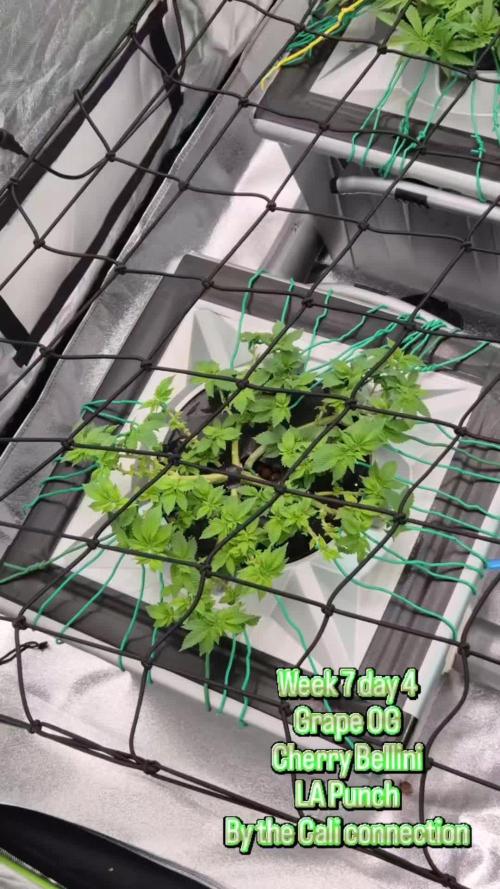
Week 7
Flower-day 2
16/10/2025
Nutrient change
Floramax veg 1: 1L
Floramax flowering enhancer: 400ml
Floramax organabud:400ml
Floramax rezin: 100ml ( around 1/4 dose)
Floramax cal mag: 100ml
Gp3 pro cal: 100ml ( unfortunately ran out and won't have any until next week )
Gp3 massive bloom: 100ml
Cyco platinum series silica: 200ml
Sleeps with the fishez: 400ml ( half dose system shock testing to see of this minimises/prevents problems per nutrients change like i was having )
Ph 5.9-6 - EC 2.2-2.3 ( Floramax wants e.c of 2.4, so I'm doing .1-.2 under for now to see how she responds
No lst changes or defoil today, just let her heal and recover.
I thought I should add, with the way I lst, I like to get as much defoilation out the way before flipping to flower that way all she does in flower is just get fat and lovely. Seemed to work well coming from only doing Autoflowers so just using that knowledge and implementing to my photo grows and tweaking it

Likes
2
Share

@Organic_G
Follow
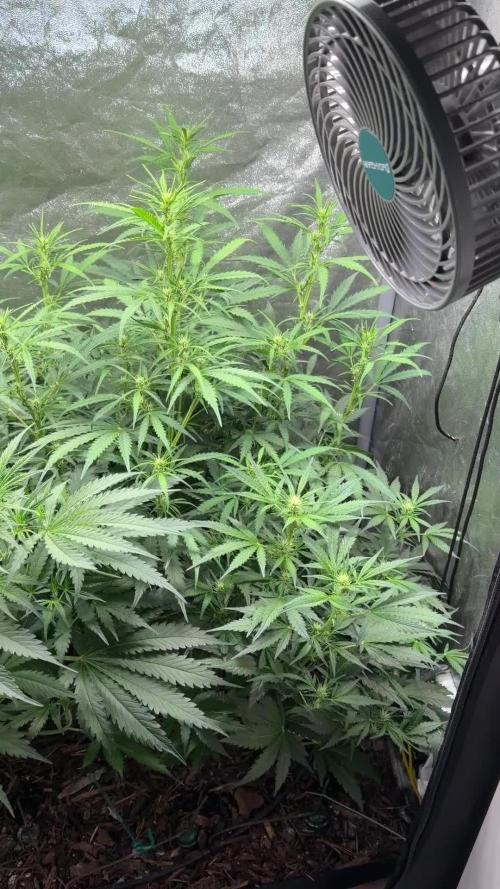
Wachsen wirklich perfekt, keine Mängel, super fette Stämme, extrem vital und gut am Stacken die Ladys…
Die Automatics sind auf einem Rekordrun wenn es so weiter geh, für 2. Woche Flower sind die extrem robust geworden…
Likes
2
Share

@Apple_11
Follow
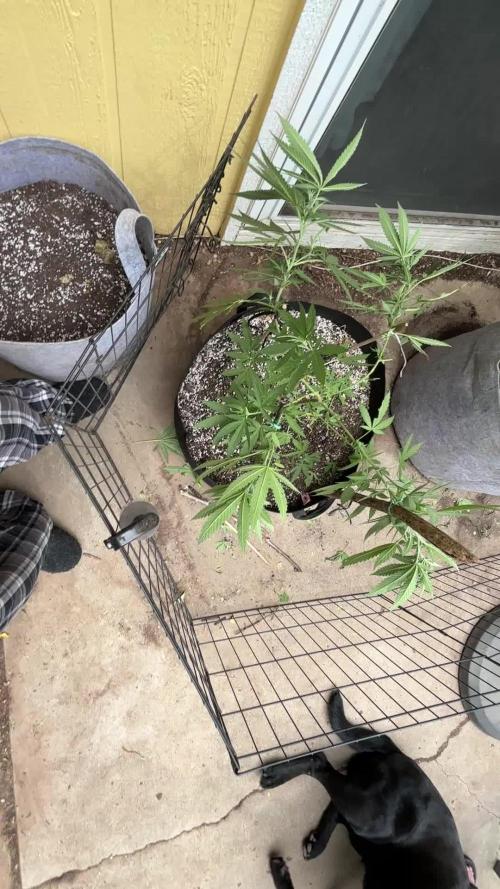
today is August 2nd all i did was train her down make her canopy more even, i didn’t feed her because she didn’t seem like she needed it .

Likes
7
Share


@Organic473
Follow
The sweet smell and her swelling of the buds is very evident mid flower glory. I gave her a mid flower flush of 2 gallons of water yesterday. From now on it’s just molasses and maybe some liquid budswell for the terps.

Likes
6
Share


@Plantinator
Follow
The pistils are turning brown and I’m checking the trics daily.
Flushing comes soon.
Lowered the DLI to 38, maybe I will go even lower this week to keep the terps and to avoid foxtailing.
Likes
17
Share


@Mr_nugs_lover_David
Follow
It's been a beautiful strain to work with, the flowrs are definitely worth it after all this time, the quality is definitely high. However this pheno of ak420 smells very different from the other 2 phenos I've grown along with her. The flowrs are beautiful, very solid and frosty nuggets, I smoked a few little nuggets when trimming but I'm excited to taste the big buds, hope you guys enjoyed the process. I want to say that this pheno #1 has a different smell compared to the other 2 phenotypes of ak420 that you can see here on my page as well, so stay tuned guys! Overall result is very nice, good quality, strong weed, sticky, stinky. I can say that it's very great and also you can get them for a very cheap price so it's a very good investment if you're looking for a powerful and affordable strain. Cheers growmies! ❤️💚💛💎👨🌾


Likes
3
Share


Likes
17
Share


@Elmobud
Follow
This week the girls have had some heat issues to deal with as my fan decided to stop working and with everything that's going on I had no fan for a few days so a few leaves got burnt but they are back to normal now thank god they are really smelling good aswell now, Happy Times Happy Growing 😁 🌿
Keep Safe 😁
Likes
14
Share


@SunshineBud
Follow
This week went fairly well, but I became concerned with some leaves appearing crispyfried along the edges and some looking deficient.
I finally started cutting my girls and I have to say, I felt ashamed at wounding my babes but hopefully it'll go the right way, guess we'll see!!!
I also flushed my plants with ph Balanced water this week and going to only provide this to water/feed them for another few days for fear of nutrient burn and simply following the feed schedule for my nutrients.
Also, I took some pics for the Christmas contest for Crop King Seeds lol hope you like them more than my Paw did!
I want to send a big shout out to my Dad who is giving me advice based upon his UNCA Biology BS experiences... Thanks Paw!!!
I also want to say thank you for all the likes and interest in my grow, much love yall! See you next week!!!
What follows below is the transcribed daily notes from the images above!
12/9 Plants looking good, I fed/watered w/Sunday's Ph 6.2 6tsp/ga Big Bloom & 3 tsp ga Grow Big. Next time I'll flush. I don't know if my runoff ph is bad or good because the plants are eating leaving acidic runoff
12/10 Plant 1 looks so Good, might be time for LST soon
12/11 Plants all showing Improvement/Growth Plant 3 still slowest but she's still growing. Under grow lights I think I see fringe yellow tips. Still on track to flush w/Plain H2o next watering.
12/12 Flushing w/ PH Balanced H2O no noots. Plant 1 has a leaf turning yellow on half so went with ph balanced water w/no nuets to flush all. 3 Growing ok but still a little off looking
12/13 Moved inlet vent to point up and clip on fan to blow on girls. Plants look great after a day of plain H2O.
12/14 Plant one having a small bit of leaf burn on widest leaves and a weird dying on lower leaf. They looked bad under light so I pruned em. Turned up humidifier to 65% been running low.
12/15 Topped Plant 2 Rinsed all w/PH Balanced H2O. Nervous I took too much from #2 But my thinking was I went easy on 1 yesterday so go aggressive on 2 to view effects.
12/16 Trimmed 2 crispy leaves off Plant 1 used Bonsai paste to cover wounds, Plant 2 stem looks narrow@ base wider up top. Trimmed 2 sucker leaves (1st leaves) from Plant 4 Rinsed all w/ PH Balanced H2O
Thats it! Thanks yall, see ya next week!
