


Likes
Comments
Share


@tresplantes
Follow
They looking Fire all over smell is amazing
Bluezy has not the bud Strukture im looking for and does Not Look Like the biggest yielder but man the smell is Crazy like really Crazy chemical sour blueberry light bleaching on one bud
Dante’s Inferno buds are Rock Hard and slowly reaching the size of soft drink cans, and the node spacing is insane golfballs all the way down
The smell is like a tropical runtz super sweet fruitmix
Tomb raider has just amazing plant structure amazing bud Structure is a trych Monster and the smell goes towards sweet sour gelato Kinda direction


Processing
Likes
17
Share


@Doobiefumes
Follow
this week is a bit frustrating im having some small issue with root rot im off to the store to buy some drip clean from house and garden and ill be doing a water change today i will also topped them after fourth set of leaves day 7 system flush and cleaned. adjusted ppm to 750 i will be using sterile rez from now on as i dont want to battle with pythium. added drip clean and peroxide 30% as suggested by my local hydro store now water looks pristine onto week 5 tomorow.

Likes
1
Share


@kauilmayel1996
Follow
Está increíble
Fascinado con esta planta
Está enorme no cabe en el armario
Tiene un olor dulce como a chicle
Increíble planta para el hidro
Toma agua como loca...
Likes
10
Share


@HideAndFly420
Follow
Day 71👋🌱
Started flushing. Giving ph controlled water at 6.2/6.5, I check TDS to water owerflowing from pot, bringing it to 50ppm from 400.
Now I’ll start checking trichomes every three days, I’d like a 60% white and 40% amber.
Day 72👋🌱🌱
Hi all growers, how is going?
Second flush, baut maybe the real first one😎,
i gave 10 lt of ph controled water (6.5) and was checking ppm from water coming out. i gave water unitl it reach 400 ppm, my water is 200 ppm,
i hope i'll bring it to 50 ppm for next flush in 3 days.
This lady is so fat, and tasty already i can smell chocolate and pinus, i'm sure they're going to fatten up 😋😉
Day 77🌱🌱🌱 🌱🌱🌱🌱
Keep washing it with ph controlled water, water now looks cleanest and buds are really blooming now, leaves are loosing color in favour to buds, i think i've got ther 6.7 days left to this lady cut.
Let's see!!!!
Let’se go!😋

Likes
2
Share


@DrBud420
Follow
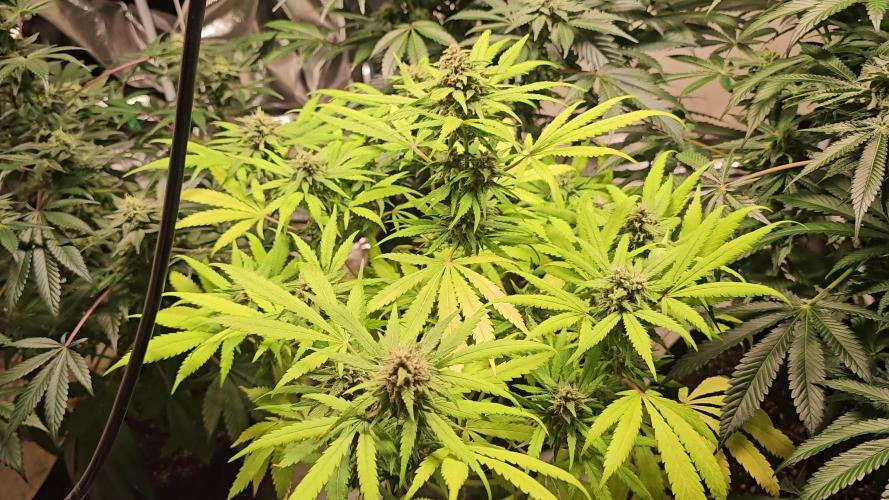
What can I say about this plant, it spent most of the day in the shade, if it had the same conditions as dos si dos, it would eat it for breakfast in terms of yield... 450 g of dry matter and some popcorn... I am very satisfied with but the plant didn't get nearly as much sun as it needs...it didn't fill up, but it wasn't empty either, the heads are nice and fleshy...when I picked it, it smelled like lemon or KeyLime as Barney says...but no on citrus, but really lemon combined with some heavy stench, I can't wait for this miracle to work for some time in the jar...
Next year we will see it in its full glory, so let's try to get a one kilo and a half dry from it alone, that's a bit of a challenge for me...but with this kind of genetics and this kind of variety, I don't think it will be a problem in 100-150 liters of soil for this kind of monster... this year my plants were in 40 to 50 liters of soil and almost each of them produced from 450 to almost a kilogram of dry grass



Likes
63
Share


@Ganjaman420UK
Follow
Better week this week
Gave another topping and a very little defoliation
Still have thrip but hopefully by me killing what i see daily and some help from Dorothy we can do this 👊
Check out the vid Dorothy walks straight over a thrip 🤦♂️🏼
Maybe shes full 🤷♂️🏼
HAPPY GROWING AND GOODLUCK
🌱😎👊👍✌️

Likes
5
Share


@CanarianGrow92
Follow
Week 6 flowering for the gorilla cookies from fastbuds 420!
At the moment the buds are getting bigger and getting more and more thc, i dont think that a lot of time is left so we gave some extra food this werk and we will stop soon feeding to start with the flush and give only water the last week.
This week we gave amino, sugar shot, sticky fingers, bloom booster, enzymes, silica and some more master roots
Likes
4
Share

@MrWeeedWorld
Follow
Kompakt, kräftig und voller Versprechen
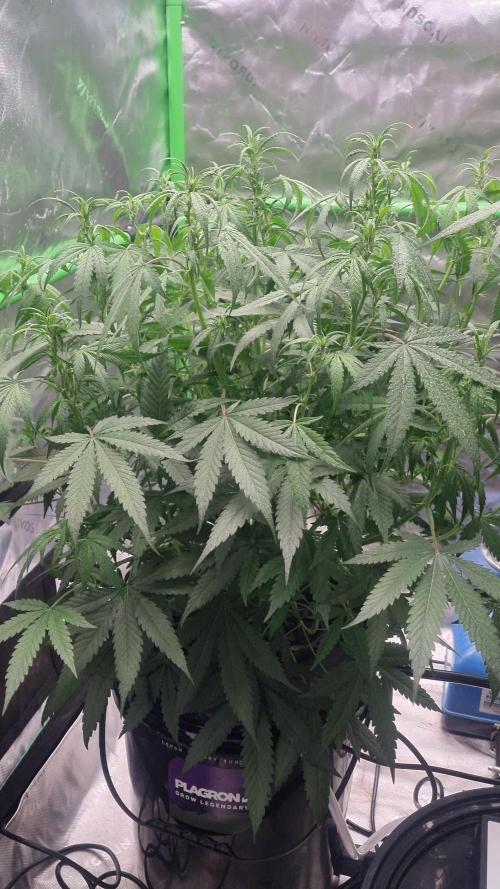
Während andere Pflanzen noch damit beschäftigt sind, in die Höhe zu wachsen, verfolgt die Lemon Cherry Sundae ihren ganz eigenen Plan. Sie konzentriert sich nicht auf Größe, sondern auf Struktur – und genau das macht sie so interessant.
In dieser Woche hat sich die Pflanze zu einem dichten, kräftigen Busch entwickelt. Die Internodien bleiben angenehm kurz, wodurch bereits jetzt ein sehr gleichmäßiges Blätterdach entstanden ist. Zwischen den zahlreichen Seitentrieben bilden sich überall frische Blütenansätze, sodass man schon jetzt erkennen kann, wie viele zukünftige Colas entstehen werden.
Besonders gefällt mir die Vitalität der Pflanze. Das Laub zeigt ein sattes Grün, die Blätter wirken gesund und die gesamte Pflanze vermittelt den Eindruck, als würde sie sich im RDWC-System rundum wohlfühlen. Jeder neue Austrieb entwickelt sich kräftig und gleichmäßig.
Der Stretch fällt im Vergleich zur Mango Cherry Runtz deutlich kompakter aus, dafür investiert die Lemon Cherry Sundae ihre Energie sichtbar früher in die eigentliche Blütenentwicklung. Genau diese Wuchsform könnte später für besonders dichte und gleichmäßig aufgebaute Buds sorgen.
Von Woche zu Woche wird deutlicher, welches Potenzial diese Genetik besitzt. Die Basis für eine ertragreiche Blüte ist gelegt, und jetzt beginnt langsam die Phase, in der sich aus den vielen kleinen Blütenständen nach und nach kräftige Colas entwickeln werden.
Ich bin gespannt, wie sie sich in den nächsten Wochen entfaltet. Bis jetzt macht sie einen hervorragenden Eindruck und entwickelt sich genau in die Richtung, die ich mir erhofft habe.
--------------------------------------------------------------------------------------------------------------------------------------------------------------------
Compact, Vigorous and Full of Promise
While some plants are still focused on stretching upward, the Lemon Cherry Sundae follows a completely different strategy. Instead of chasing height, she invests her energy into building a compact, well-balanced structure—and that's exactly what makes her so exciting.
This week she developed into a dense, vigorous bush with short internodal spacing, creating a very even canopy. Fresh flower sites are now forming throughout the entire plant, making it easy to imagine how many future colas she is preparing.
One thing that really stands out is her overall vitality. The foliage remains a rich, healthy green, every new shoot develops evenly, and the entire plant looks perfectly comfortable in the RDWC system.
Compared to the Mango Cherry Runtz, her stretch is much more controlled and compact. Instead, she appears to shift her energy into flower production much earlier, which could ultimately result in dense, uniform buds across the whole canopy.
With every passing week, this genetic continues to reveal more of its potential. The foundation has now been built, and the exciting stage begins where all those individual flower sites will gradually merge into thick, resin-covered colas.
I'm really looking forward to the coming weeks. So far, she is developing exactly the way I had hoped and continues to impress with her compact yet incredibly productive growth habit.
Likes
Comments
Share

@Germanator
Follow
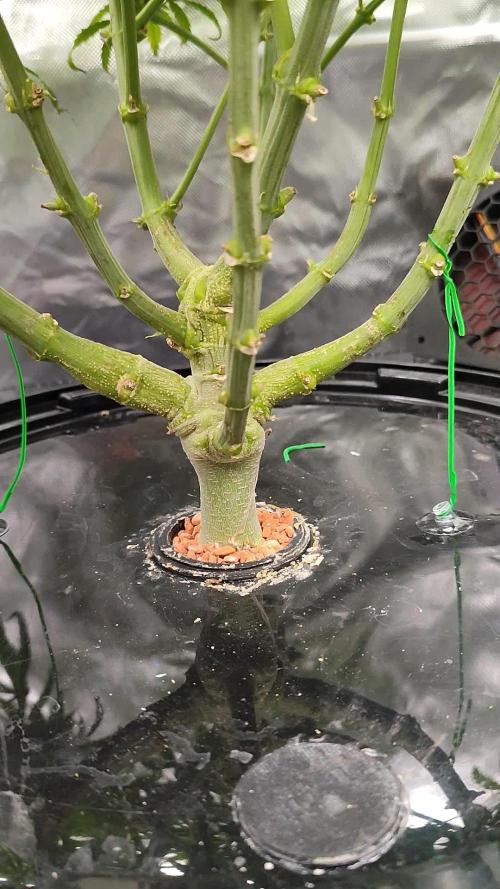
Doubled the CalMag dose this week and changed the nutrient solution. The degrading of the already yellowing leaves slowed down and I removed them today. Buds are looking real tasty and I think two more weeks until harvest. Trichomes still clear so fingers crossed.
Sticky as f but sadly no purple so far 😕

Likes
2
Share


@NocturnalGardner44
Follow
Flipping now, light training trying to maximize horizontal space

Likes
4
Share


@Constantin94
Follow
Purple shades are starting to show up… I think the size of the buds has not change from last week, I will start to flush out this lady
Likes
8
Share


@Growin_Ish
Follow
Day 63
What a turn around! Got my watering issues manageable.
Last watering for Candace I added Mykos and Azos to my water. Switched from SimPro to Terp Tea. #GIRTH # FROST #AROMA
Sheryl got that same recipe tonight. Candace didn't need water, but I splashed about 8oz in her dish for the bottom roots.
Take Away? It's a weed so it's resilient. Have patience, don't panic, let the plants tell you what they need.
Came back from out of town and the girls were looking famished. I put 1Tbl of Terp Tea Bloom in a gallon of rain water with Mykos, Azos, and Fish Sh!t. Fed both plants half gallon each.


Likes
6
Share


@franc
Follow
the cycle has come to an end, the plants have been harvested and are being cured.
the mother yielded 421 grams of dry flowers
the clones yielded 303 grams of dry flowers.
the variety changed its smell during curing, it became even more pleasant, the smell of garlic is not felt, fruit spices, very complex.
the variety is generally very strong, not suitable for beginners and for daily smoking.
I am very glad that such a rich harvest came out.

Likes
3
Share

@Olduffybastard88
Follow
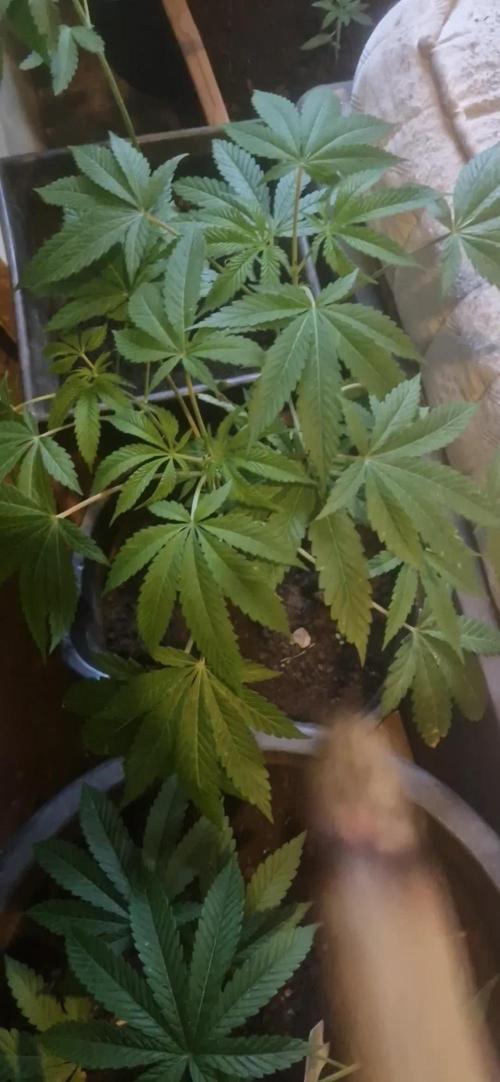
These plants are going in the tent with zoap so am cleaning out the tent and making sure everything is prefect for them going under the light for a couple weeks before I flip them this plant has been topped once might topp once more depending on growth

Likes
37
Share


@BB_UK
Follow
Flowers beautiful flowers! 🌺 to start of dynomyco has really done it’s job with the purple urkle and she already in bloom and is nearly to the second scrog, the grape ape has ONLY just started her stretch as she’s right at the first scrog about to push through as she only just pushed pistols today and I’m putting that down to her healing through transitioning as I had to trim her leaves and lower stems during transition as they’d be a problem later on! But all in all a great week and on my way to a great flowering!


Processing
Likes
1
Share


@DocChronic420
Follow
A major week for filling the trellis. And a premature lollipopping, normally wouldn’t do them till it’s week or two into 12/12 however I needed to hold the greenhouse plants indoors for a couple more weeks to ensure no frost damage will come to my crop due to no supplemental heat nor is the greenhouse sealed yet.