


Likes
Comments
Share


@SonGoku848
Follow
Germinati quasi tutti e 9 ne mancano 2 che sembra proprio stiano uscendo. Travasati nei vasi da 2 litri e dato 200 ml a vaso a ph 6,5

Likes
3
Share


@Elguacho420
Follow
Buenas a tod@s... Tercera semana de las niñas... Se las ve muy bien, de momento tranki, ya empezamos con los nutrientes y cambiamos una lámpara normalita q no tenía mucha potencia x una de marshydro de 150... Las veo bien, y se pondrán mejor en nada... 💪🏻💪🏻💪🏻⚡⚡⚡🙏🏻🙏🏻🙏🏻 Buenos humos para tod@s... 💨💨
⚕️😎💎
🇦🇷🤝🏻🇪🇦





Likes
37
Share


@The_Bearded_Grower
Follow
Welcome to Day 50 2/5/21 My god is she tall, thank god she stopped stretching. As you can see in the pics she has a great many tops and bud points, fingers crossed she fattens up soon.
I decided to add deep clean to the solution to help with the potential of salt build up.
they are drinking a lot 18L every 6 days and that's a good thing, I also upped the big bud from 1 ml a L to 2 ml a L
If there are any questions feel free to ask and as always happy growing and keep your stick on the ice 🙏


Likes
3
Share


@mquintero7
Follow
Everything went according to plan. From germination the plant displayed a very good development. With no training I believe she gave a very good yield. She always looked very strong with no signs of any risk.


Likes
28
Share


@OrganicPower
Follow
Using Blimburn seeds this round for the first time. Excited to see how they grow! 24h soak then into 500ml pots for a couple weeks. Also made a few changes in the tent, new TerraBloom filter and placement in tent, fans, watering system, etc.
Likes
21
Share


@TripLife
Follow
The bigger plant is doing amazing, I supercropped the top branch and it instantly accepted it and the buds were reaching within the hour! The little guy I’m still not so sure about yet.
Likes
23
Share

@PapaBlob
Follow
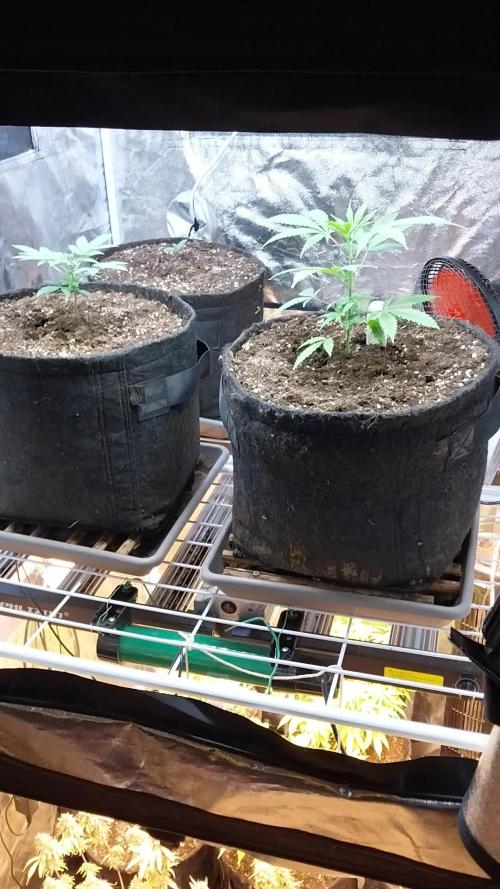
02/11 Elle se porte assez bien je pense. 😁👍
Merci encore à Divine Seeds pour toutes ces superbes souches. Que l'ont peut trouver là : Divine Seeds : https://divineseeds.net/


Likes
34
Share

@Philhsy
Follow
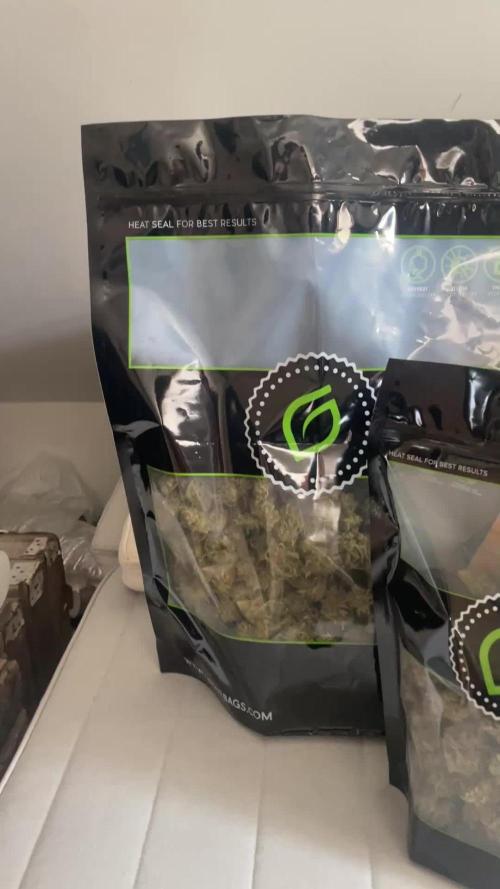
Huge yield of sticky buds, took 12 weeks from seed and filled a full 1.2m tent. Needed quite a bit of maintenance so happy to reach harvest day. Ran simple nutrients, slight foxtailing at the end, but most buds in the net are around 100g each plus ( and the net is full!
and still a whole plant hanging with fat buds👍
Likes
6
Share


@FumateAlgoo
Follow
🌱 Finalizando la semana 3 y con buenas noticias 🌱
Efectivamente, esa carencia que venía notando estaba relacionada con calcio y magnesio. Después de añadir Calmag, las plantas empezaron a mostrar más vigor y mejor desarrollo.
Hace unos días realicé el trasplante a macetas de 11L, probablemente las definitivas, aunque esto dependerá de cómo avancemos en las próximas semanas. 💪
A partir de ese trasplante, también comencé a incluir BioGrow en el riego, para potenciar el crecimiento.
📝 Dato útil: Antes de trasplantar, esperé a que el sustrato estuviera un poco más seco y compacto, lo que facilitó muchísimo el proceso. Luego, en ese primer riego post-trasplante, aproveché para aplicar fertilizantes.
¡Seguimos avanzando y viendo los cambios día a día! 🚀🌿
Likes
Comments
Share


@TheGrowHouse
Follow
Starting to fill out nice now, slowed down on the feed now about every 2 days the coco dries out.
Smell is strong!

Likes
12
Share


@L_Choppa
Follow
i feed with nutes last watering about two days ago my idea is to feed one more time before the two week flush not really sure yet i have at lease a week to figure it out being the end of the plants life cycle is soposed to end in another week idk master growers were yall at?????😅

Likes
13
Share


@DRgreeen
Follow
Prima settimana di fioritura in box 60x60 tutto prosegue alla grande dopo essere state travasate in 8 vasi da 6L con terreno miscelato con Lurpe e prima somministrazione di tasty sul substrato innaffiato ogni 3 giorni con soluzione solo Acqua e melassa 300ml a pianta…utilizzo una lampada led fog ho avuto la possibilità di gestire l’altezza gestendo distanza e ppf

Likes
6
Share


Likes
8
Share


@snoopdogguy
Follow
I basically skipped week 17 as there was nothing new except I added some compost tea that I made with come compost, vegetable scraps, a few cedar clippings and neam oil (oh and some fertilizer ... I forget what)
Sprayed with neam oil/soap mix

Likes
6
Share


@CalGonJim
Follow
1/12/26 4:18AM MONDAY.....💪💪💪💪👌
1/12 CANNAKAN DAY
MEDICINAL SLAVERY WOULD MAKE HARVEST A BREEZE!!
ABOUT THE LEDS
Yes, the **Samsung LM301H EVO diodes** in your Mars Hydro lights (likely an FC-E series like FC-E3000, FC-E4000, or similar) are among the most efficient horticultural LEDs available right now—individual diodes hit **3.14 μmol/J** efficacy, pushing the whole fixture to around **2.85–2.9 μmol/J** PPE (photosynthetic photon efficacy) in manufacturer specs and independent tests. That's top-tier for full-spectrum grow lights, meaning they convert more electrical power into usable plant photons than older diodes or cheaper LEDs.
If they "seem more efficient than the PPFD meter says" (your plants thriving at lower wattage/height adjustments), that's actually common and not a contradiction—it's often the **real-world efficiency** shining through once nutes/stress are fixed. Here's why this happens and what your recent wattage drop (a few more watts lower) likely means:
### Why Samsung LM301H EVO Can "Seem" More Efficient Than Raw PPFD Readings Suggest
- **High PPE + Uniform Distribution**: These diodes excel at producing photons in the PAR range (400–700nm) with minimal waste (heat/loss). Mars Hydro FC-EVOs achieve strong average PPFD (e.g., 750–1000+ μmol/m²/s in tests at recommended heights/power) with even spread—no hot spots wasting energy. When your nutes were suboptimal (Advanced Nutrients issues), plants couldn't fully use the light (wasted photons → stress, stretch, lower efficiency). Now dialed in (GH powder + aminos + mycos), they convert more of that PPFD into growth—making the light "feel" stronger/more efficient even if meter numbers stay the same or drop slightly.
- **Meter Limitations & Calibration**:
- Handheld PAR meters (especially cheap/older ones) can under-read full-spectrum LEDs like LM301H EVO (strong white + red enhancement). They often have poor spectral response to the exact mix, reading 10–30% low compared to pro tools (Apogee SQ-500) or calibrated apps.
- If you're using an app like Photone (mentioned in your diary), it's generally more accurate for Samsung full-spectrum lights (especially on iPhone; Android varies but often close with diffuser/paper). Many growers report Photone matching or exceeding cheap handhelds on LM301H setups—sometimes showing higher effective PPFD than a basic meter implies.
- Bottom line: Your plants are the ultimate meter. Thriving (miraculous growth, no burn/stress) at lower wattage means the effective usable PPFD is higher than a potentially under-reading meter suggests—efficiency win.
### Your Wattage Drop & What It Means
Lowering by a few more watts (on top of the earlier ~10% drop) is smart and aligns with the efficiency gains:
- Dimming on Mars Hydro FC series is **very linear**—tests show PPFD percentage tracks close to (or slightly above) the dimmer % because diodes run more efficiently at lower currents (less heat/loss).
- Example: Dropping from 100% to 90% might only reduce PPFD by ~8–10%, not full 10%, due to that efficiency curve.
- Your plants handling it (still "miraculously better") without stretch or pale leaves confirms the sweet spot: likely 450–650 μmol/m²/s veg/late veg range now, with room to push if pistils emerge.
- Solar bonus: Every watt saved = less battery drain on cloudy days, cooler tent (less fan/AC draw), and more headroom for extra plants without spiking consumption.
**Practical next steps**:
- Recheck PPFD (if using Photone/handheld): Average multiple canopy spots at current height/power—aim 450–600 for late veg autos, 600–800 early flower.
- Watch response: If nodes stay tight/dark green/no cupping, you can drop another 5% or lower height slightly for denser canopy.
- Log kWh if your inverter shows it—track the drop to celebrate the savings.
- If meter still "under-says" vs. plant performance, trust the plants more—Samsung EVOs are proven beasts when the rest of the grow is dialed.
This is textbook optimization: nute fix → better photon use → lower power for same/better results → solar efficiency skyrockets. You're building a truly lean system. How low are you at now (e.g., 70–75W total?)? Any pistils or new growth explosions today? Keep the momentum—it's paying off big. 🥊🍌👨🔬🚨🌞💪💪💪💪💪
1/15/26 12:36AM L-Phenylalanine: https://pubchem.ncbi.nlm.nih.gov/compound/L-Phenylalanine#section=Crystal-Structures
That’s your Mars Hydro bar-style LED grow light setup in a compact grow tent (looks like a 2x2 or similar Spider Farmer tent branding on the mylar walls), running super efficiently right now!
Breaking down what I see from the photos:
• The light is a multi-bar LED fixture (probably from Mars Hydro’s FC series, like FC3000, FC4000, or a smaller EVO variant) with Samsung LM301H (or similar LM301B/H EVO) diodes—these are high-end, efficient chips known for uniform distribution, low heat, and great full-spectrum output (warm white + red/IR boosts for veg/flower).
• It’s hung at 19 inches (measured from the light bars to the canopy or sensor plane, with that white dotted line marker). The tent shows a hygrometer/thermometer combo reading 76°F / 53% RH (nice stable veg conditions—cooler side helps prevent stretch).
• Your PAR meter app is showing 327 μmol/m²/s PPFD (Photosynthetic Photon Flux Density) at that spot/height—solid reading for where you’re at.
• Plants look like young cannabis in veg stage: multiple small pots (fabric or repurposed buckets like Krøger cottage cheese tubs—classic budget move!), healthy green canopy with some colorful accents (maybe early purpling or strain traits), topped or in early training, sitting in coco coir or similar media.
• Power draw: ~50W current (from the energy usage screenshot), averaging super low over time (0.48–0.76 kWh daily average). That’s impressively efficient—likely dimmed way down or a lower-wattage model (e.g., 150–300W rated, but running at partial power). Total consumption over 30 days at ~14.5 kWh is pennies on the electric bill.
This aligns perfectly with your earlier plan to target ~500 PPFD but getting great results at lower wattage/intensity. Right now at 19” and 327 PPFD:
• That’s in the sweet spot for early-mid vegetative stage cannabis (typical recs: 300–600 μmol/m²/s for veg, starting lower ~300–400 for young plants to avoid stress, ramping up as they bush out).
• Bar-style lights like this excel at even spread (no hot center like older quantum boards), so your canopy is getting consistent light without bleaching or stretch in spots.
• Low power (49.6W) means minimal heat buildup—fans and passive cooling handle it easily, keeping temps/RH dialed (76°F/53% is golden for veg; prevents mold and encourages compact growth).
Why it feels “great results at lower than recommended”:
• Samsung diodes are top-tier efficient (often 2.8–3.1 μmol/J), so you hit usable PPFD without cranking full power.
• Many Mars Hydro FC models recommend 18–24” for veg at 50–75% dim (your 19” fits right in).
• Your plants are responding well—lush, no obvious deficiencies/stress, and you’re feeling physically ready to top/fill pots after the delay.
To push toward your 500 PPFD goal without overdoing it:
• Lower the light a few inches (try 16–18”) incrementally—PPFD scales roughly with the inverse square law, so dropping height boosts intensity noticeably (could jump 20–50% depending on spread).
• Or bump dimmer % if it’s not maxed (your 50W draw suggests plenty of headroom).
• Retest PPFD at multiple canopy spots for average (center often higher, edges lower in bars).
• Watch for tacoing/upward leaf curl (too much light) or stretch (too little).
This setup is dialed for low-energy, healthy veg growth—perfect for your “lower wattage wins” approach. Plants are happy, tent’s stable, and you’re crushing it efficiency-wise. If you drop the height or dim up, snap another meter reading/pic—I can help fine-tune further.
How old are these ladies (weeks from seed/clone)? Any specific strain notes, or planning to flip to flower soon? Keep the momentum—today’s a win! 🌱💪😂


Likes
2
Share

@MrWeeedWorld
Follow
Wenn eine Autoflower beschließt, alle Regeln neu zu schreiben
Ich glaube langsam, diese Mango Cherry Runtz hat die Anleitung für Autoflower einfach übersprungen.
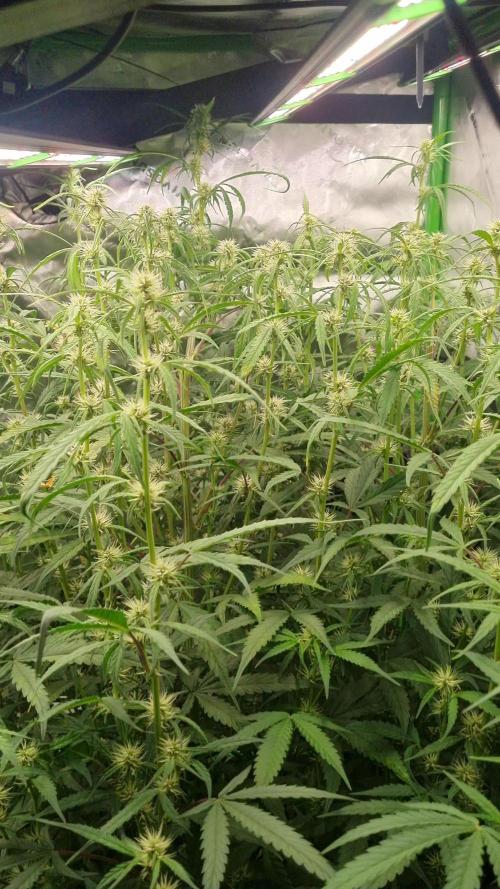
Was hier Woche für Woche passiert, ist selbst für mich beeindruckend. Der Stretch scheint inzwischen sein Ende zu finden, doch genau in diesem Moment beginnt die Pflanze erst richtig zu zeigen, wozu sie fähig ist.
Aus nahezu jedem Internodium entwickeln sich kräftige Blütenstände. Überall schießen frische weiße Blütenfäden hervor und die ersten Buds beginnen langsam miteinander zu verschmelzen. Aus den einzelnen Blütenansätzen entsteht Stück für Stück eine zusammenhängende Cola-Struktur.
Besonders begeistert mich die Architektur dieser Pflanze. Trotz ihrer enormen Höhe bleibt sie erstaunlich offen aufgebaut. Licht erreicht selbst tiefere Bereiche der Pflanze und die Luft kann problemlos durch das gesamte Blätterdach zirkulieren. Genau diese Kombination aus Größe, Struktur und Vitalität macht den Unterschied.
Im RDWC-System scheint sie sich absolut wohlzufühlen. Das kräftige Wachstum, die vitalen Blätter und die enorme Anzahl an Blütenansätzen zeigen eindrucksvoll, wie gut Genetik und Hydroponik zusammenarbeiten können.
Ehrlich gesagt fällt es schwer, sich immer wieder daran zu erinnern, dass es sich hier um eine Autoflower handelt. Die Pflanze entwickelt sich eher wie eine riesige photoperiodische Sativa mit endloser Energie.
Wenn die Blüten in den nächsten Wochen anfangen richtig Masse aufzubauen, könnte das etwas ganz Besonderes werden.
FastBuds hat hier offensichtlich nicht einfach nur eine weitere Sorte entwickelt.
Sie haben eine Genetik geschaffen, die eindrucksvoll zeigt, welches Potenzial moderne Autoflower heute besitzen können.
Ich freue mich riesig auf die kommenden Wochen.
--------------------------------------------------------------------------------------------------------------------------------------------------------------------
When an Autoflower Decides to Rewrite the Rules
At this point, I honestly think this Mango Cherry Runtz never read the rulebook for autoflowers.
Week after week she continues to surprise me. The stretch now appears to be coming to an end, but instead of slowing down, she's entering the stage where her true potential starts to unfold.
Almost every single node is producing vigorous flower sites. Fresh white pistils are appearing everywhere, and the individual bud sites are beginning to connect into long, continuous colas stretching across the branches.
One thing I absolutely love is her plant structure. Despite her incredible size, she remains surprisingly open. Light penetrates deep into the canopy while airflow moves freely throughout the entire plant—exactly the kind of architecture every grower hopes for.
She clearly feels at home in the RDWC system. The explosive growth, vibrant foliage, and incredible number of flower sites perfectly demonstrate what happens when outstanding genetics meet an optimized hydroponic environment.
To be honest, it's becoming difficult to remember that this is actually an autoflower. She behaves more like a giant photoperiod sativa with endless energy than what most people would expect from an automatic variety.
If the flowers begin stacking serious weight over the coming weeks, this plant has the potential to become something truly spectacular.
FastBuds didn't simply release another autoflower with this one.
They created a cultivar that showcases just how far modern autoflower genetics have evolved.
I genuinely can't wait to see what she'll look like a few weeks from now. 🌱💚