


Likes
Comments
Share


@BLAZED
Follow
Week 8 (17-3 to 23-3)
17-3
Temps: 17.4 to 21.9 degrees
Humidity: 60% to 72%
18-3
Temps: 17.5 to 22.2 degrees
Humidity: 54% to 65%
19-3
Temps: 17.9 to 22.4 degrees
Humidity: 52% to 61%
Watering: Both 500 ml. EC: 0.4
Watering: Both 1000 ml. EC: 1.4
Defoliated both plants and attached some shoots to the rack. She got really big fan leaves!
I also supercropped some branches.
20-3
Temps: 18.2 to 22.8 degrees
Humidity: 59% to 69%
21-3
Temps: 18.5 to 23.4 degrees
Humidity: 57% to 67%
Watering: Both 1000 ml.
22-3
Temps: 19.4 to 24.1 degrees
Humidity: 55% to 67%
Watering: Both 1000 ml.
Set the strength of the light to 50%
23-3
Temps: 19.8 to 24.8 degrees
Humidity: 58% to 67%
Watering: Both 1000 ml.
As you can see, instead of removing the leaves, i tucked down all the leaves to open up the canopy.
I will see if i like this method as its the first time i try this.
I also attached some more shoots to the rack, its looking nicely spread out now :)
The #2 makes my fingers very sticky and smells really strong! I love it!

Likes
3
Share

@Bread_n_Buds
Follow
Good morning, we're finally here.
We've changed locations, still in southern Spain, but this time much closer to the sea and with a Mediterranean climate, like my Italian roots. Love it.
We'll start with the autoflowering plants first; this time, they'll all be grown without cutting techniques. We'll always have two plants: one grown with just a little tidying and left to grow straight, and the other using techniques that don't involve cutting, and therefore slowing things down.
I need weed; the grower must also consider this, so the autoflowering plants will finish as quickly as possible.
In most cases, it will be a nice, firm LST, not too delicate, and I'll fim if the plant seems to touch the sky, as has happened recently, probably thanks to the Plagron fertilizers, which will be with us this time too.
The chosen soil is the recently released Plagron Bio LightMix, which will allow us a more regular and reliable start without the sudden changes that liquid fertilizers can cause.
We're 100% organic this time too. For the germination, we also used Seedbooster as soon as it arrived with the last and first ones: 75% water + 25% hydrogen peroxide. *** From my point of view, it's very important to add hydrogen peroxide if you start with the seed in a small glass of water. As soon as it's opened, it would drown too; the oxygen bubbles in the hydrogen peroxide prevent suffocation.
www.plagron.com
That said, our Critical Cheese Automatic is a classic strain. We expect stability and potency, and to be honest, we're looking for that cheesey smell that has been lost in hybridizations over time. We're still hoping for it. Come on, my friend, you've grown beautifully under the watchful eye of our mirrorless camera. Keep giving us thrills until the very end.
The seedling started well without any particular problems. Its little sister stretched a little because I took a timelapse under different lighting, but we're there and ready to give it our best.
https://www.zamnesia.io/en/3334-zamnesia-seeds-critical-cheese-automatic-feminized.html
Zamnesia Description - An iconic strain from the UK, Cheese has quickly become one of the most sought-after strains in the world. Thanks to the breeders at Zamnesia Seeds, we now have an easy-to-grow autoflowering variant with identical qualities to the extraordinary original, the only major difference being that it can be harvested in 10 weeks!
www.zamnesia.com

Likes
56
Share


@nonick123
Follow
Día 8 (28/10) Subo a DLI 20
Spray solo H2O RO en el top del sustrato
Retiro la cúpula de humedad, porque una de las CBD Auto 20:1 tenia el tallo ligeramente doblado por falta de resistencia
Sin la cúpula y con el ventilador a la potencia mínima (1/10), van a tener una suave brisa que va a hacer que se fortalezca el tallo!
Día 9 (29/10) Las plantas se han estirado mucho y se tambalean un poco
Creo que deberían haber tenido un DLI más alto desde el principio!
Día 10 (30/10) CBD Auto 20:1 y LSD-25 Auto se encuentran "tumbadas" porque el tallo se ha estirado mucho!
Hago un soporte casero con una brocheta de madera + alambre + clip de enrejado para mantener los tallos verticales!
Spray solo H2O RO en el top del sustrato
Día 11 (31/10) Las plántulas se muestran verticales y felices! Una de las CBD Auto 20:1 está mostrando un desarrollo muy rápido!
Spray solo H2O RO en el top del sustrato
Día 12 (01/11) Spray solo H2O RO en el top del sustrato
Día 13 (02/11) Las plántulas se están estirando mucho! Creo que las falta DLI
Subo el DLI a 30
Spray solo H2O RO en el top del sustrato
Día 14 (03/11) Introduzco la 1ª BioTab a 5 cm de profundidad, lado derecho
1er Riego! 750 ml de H2O RO + ORGATREX 5 ml/L + BACTREX 1 g/L
💦Nutrients by Bio Tabs - www.biotabs.nl/en/
🌱Substrate PRO-MIX HP BACILLUS + MYCORRHIZAE - www.pthorticulture.com/en-us/products/pro-mix-hp-biofungicide-plus-mycorrhizae
"GDBT420" 15% DISCOUNT code for the BIOTABS Webshop https://biotabs.nl/en/shop/

Processing
Likes
10
Share


@UrbanFog
Follow
Plants continued to grow well some plants show signs of nutrient deficiencies, trying to address it without burning all the other plants.
But besides that all looks good and we ready to flip to flower. 12/12 cycle to start.
Clones looking strong and ready to be replanted as mothers for the next batch of clones / SOG


Likes
16
Share


@TechDCo
Follow
24/01/2024
Spread her out! Time for the show.
Welcome to my "Barrel Of Laughs" look what shes grown in lol
25/01/2024
Lights on and moved the pot to the left side of the tent, then sorted out the canopy with the scrog! Fed her with extra seaweed to the mix. Unfortunately, she got burnt. I made the mistake of moving the light too close, overfeeding, and overusing 12% food-grade hydrogen peroxide.
Conclusion: Well, onwards and upwards! I need to sort this out. Since I used hydrogen peroxide, flushing is a bad idea. I don't want to reactivate what's settled in the leaves and soil until it's no longer active. I removed all the badly damaged leaves, likening it to a necessary amputation, but luckily I'm at the early stages of flower. I'll keep a close eye on her.
25/01/2024 Mid-day
Not looking good; the new growth is the same after the flush.
25/01/2024
Lights out! Can't believe I spoiled the grow, but she'll hopefully recover. The lights, particularly the sk600 and Cropmaster, are too intense and powerful. I'm wiring up a dimmer switch to reduce it to 420 watts. The Cropmaster will be removed until maturity as having over 1000 watts of LED in a small tent is too much.
26/01/2024
Mid-day Check Time! She's looking a lot better. Taking photos is a good calf workout and lower back exercise when shooting at 0.6x at 12m. There are positives to all the negative occurrences during the growing, raising, and breeding of these plants. Weed can inspire creativity, debate, contemplation, and intelligence. It's important to focus on the positive aspects these plants can bring.
26/01/2024
Temps are more normal now since removing the Cropmaster, which was very powerful.
Sleepy time: 24-25°C; Daytime: 27-28°C.
27/01/2024
In recovery and doing well. Bright moon tonight.
Mid-Day: She's now ready for the full tilt. I've slowly guided the colas out and all the branches looked similar in size, which is why she's ready to grow straight up. There will be a beautiful green screen underneath! I'll coin this technique 'The SpaceProvider' as it maximizes the canopy and undergrowth space. It took me two hours to sort this tonight, and she will straighten up properly in three days.
The dimmer didn't work due to incorrect volts, but I managed to reduce the light to 10% today by tapping its relay wires.
Mid-day: Looking a bit better. I sorted a few branches out to rearrange and ensure they will grow straight. There are definitely no free radicals left in this plant, and the fresh new growth is a positive sign.
24/01/2024
Preparing for upcoming growth spurt during flowering phase.
25/01/2024
Adjusted the scrog to accommodate the impending growth spurt. Allowing the plant to stretch freely. Will need to reposition a few colas as needed but expecting smooth sailing from here onward.
Late-day temperature check: 27-28°C.
26/01/2024
Daytime temperature inside the tent remains in the 27-28°C range, similar to pre-Cropmaster lighting. Planning to implement the Cropmaster light closer to the bloom phase as we have a way to go. Committed to only guiding the upward growth and not interfering with the flowers. Each bud requires a leaf for optimal growth. Embracing a playful wordplay: "I will need to leave the flowers alone, just a little friendly play of words."
I'm looking through the window, the window to your heart!
https://www.youtube.com/watch?v=1nw_ob4IeOo
27/01/2024
That was a lot of supercropping today, my goodness! Even my thumb and index fingers are aching now, but hey, thumbs up for a job well done; I'll store that in my mental index book to reminisce about later when it's all over to click through! Peaceful mind 🧠, at least the canopy will be flat, unlike my occasionally bouncy head - Slowly walks quietly away to Mediate.
It looks like it'll add an extra week to the harvest date. Instead of the 8th of February, we're looking at the 15th to 17th of February for when she'll be ready, but you just can't predict with Hazes; they seem to need like 13 weeks at times. I mean, March for harvest 😆. I'm no comedian, but everyone seems to be laughing at me now. Sometimes, we have to poke fun at ourselves; it's good for the spirit 👏 🙌 ✨"
"I've got two extractor fans set up, one bringing in clean air and the other pushing it out. Yesterday I noticed that the extractor out fan was off before bed, due to the weight of the cables pulling it loose. The kettle lead must have come loose, but it's all sorted now."
"I know what you might be thinking; he's going to get popcorn nugs by fussing and stressing the plant in the early stages of flowering. I did mention in the article that there might be a little risk, with a pun about nuggets. Honestly, I believe I'll still yield 1lb just because of the light and growing technique used, and the extended time in long veg."
I accomplished what i stated using this DIY Budmaster GoD 9 250w for the vegetative stage and 450w for flowering, drawing only 320w wall power, achieving a yield of 11 ounces. Conversely, the SK600 draws 610 watts from the wall. If I can avoid further mistakes and ensure proper feeding during maturity, I anticipate a minimum of 18 ounces. With over 80 colas, the close proximity to the light, and abundant breathing space, I've developed a unique growing technique which I've dubbed "The Space Provider," due to its ability to ensure every corner of the tent is utilized for cola growth. As a shorter version, I've considered naming it "SpaceyPro." 🤔
Bring in the reflective mylar mat for under her!
*_______________*_____________*_______________*
#A Brief Article Summary of This Week's Discussions & Disasters!
______________________________________________
Title: From Defoliation Disaster to Cannabis Cultivation Wisdom: A Cannabis Grower's Saga
So, there I was, thinking of performing a routine defoliation on my prized Forgotten Haze Cakes, a 100% sativa strain with a long flowering period from Terpzy Mutant genetics and feminized seeds. Little did I know that this seemingly simple task would unleash a comedy of errors, leading me to discover the vital importance of precision in organic cannabis cultivation.
As I lovingly tended to my plants, I reached for some hydrogen peroxide - 12% food-grade, of course - to keep everything clean and healthy. After all, research has taught me that using hydrogen peroxide can be beneficial in preventing root diseases and promoting healthy root growth. However, in a classic case of good intentions gone haywire, my well-meaning application ended up in a rather unexpected chemical reaction. Who knew that bacteria from my hands and a bit too much light would turn my peaceful grow operation into a psychedelic mishap?
As I gazed in bewilderment at the unexpected brown shading on the leaves, I couldn't help but laugh at the absurdity of the situation. It was as if my plants had suddenly developed a rebellious streak and decided to rebel against my well-intentioned care. I mean, really, who needs a science experiment when you have cannabis plants with their own flair for drama?
Unraveling the aftermath of this defoliation debacle, I realized that beneath the chaos lay a valuable lesson in the art of cannabis cultivation. Precision, my friends, is the secret ingredient. It's all about applying the proper measurements and foreseeing the potential consequences before diving headfirst into the world of organic plant growing.
Now, about using hydrogen peroxide on cannabis plants, it's crucial to dilute it properly. A popular recommendation is to prepare a solution of 3% hydrogen peroxide mixed with water in a 1:5 ratio for watering your plants. This provides the benefits of oxygenation at the root zone without harming the plants. Timing is also essential; it's typically recommended to administer the hydrogen peroxide solution during the watering schedule, ensuring that the roots receive adequate oxygenation for healthy growth.
Following this incident, I delved deeper into my research, seeking advice from seasoned growers and multiple reputable sources. The experience instilled in me the importance of thorough investigation and informed decision-making when it comes to plant care. I learned that even the most well-intentioned actions can have surprising outcomes, but with extensive research and knowledge, one can minimize the chances of such mishaps.
To complement the hydrogen peroxide, I also learned the benefits of diatomaceous earth, natural and effective pest control and soil amendment. After researching extensively, I discovered that applying a thin layer of diatomaceous earth to the soil surface helps deter pests like aphids, mites, and other unwanted visitors while promoting healthy root development. To apply diatomaceous earth, lightly dust it around the base of the plants and on the soil surface, taking care to avoid excessive buildup.
As I embraced the twists and turns of this growing process, I couldn't help but ponder the amusing parallels between cannabis cultivation and life itself. We all aim and miss at times, but it's all part of the growth process - mind the pun. Just as in cultivating cannabis, it's essential to adapt, learn from our experiences, and continually strive for improvement.
In the midst of all the chaos, amidst the pre-flowering stage of my beloved Forgotten Haze Cakes, I found myself inadvertently learning the intricate needs of my plants. And what a wild journey it has been! I can't help but see the humor in it all. After all, every mishap has its own little nugget of wisdom, right?
Now, armed with this newfound insight, I plan to pass on this treasure trove of knowledge to fellow growers and those venturing into the enchanting world of cannabis cultivation. Precision, chemical reaction unpredictability, and the foresight to foresee potential consequences - these are the valuable gems I've gathered from this unpredictable turn of events.
So, to all the aspiring cannabis cultivators out there, remember - every mishap holds a lesson. Embrace the unexpected, learn from your plants, and be ready for a surprise twist in your grow. Who knows, it might just turn your next gaffe into a hilarious story to share with your fellow cannabis enthusiasts!
In the end, what started as a defoliation disaster has blossomed into a valuable experience, reminding me that even in the wildest of mishaps, there's a silver lining or, should I say, a luscious green lining?
In the aftermath of the hydrogen peroxide mishap, a deeper understanding of the science behind its effects on the plants unfolded. Hydrogen peroxide, often used as a root boost and cleaner during or after feeds, should be approached cautiously in organic cultivation. When used inappropriately, it can have unintended and adverse effects on the delicate ecosystem of the cannabis garden.
The chemical composition of hydrogen peroxide causes it to act as an oxidizer, releasing oxygen upon degradation. This reaction can be beneficial in certain contexts, such as in soil aeriation, but if incorrectly applied, it can result in detrimental outcomes. During the mishap, the hydrogen peroxide inadvertently reacted with micro metals in the diatomaceous earth, which was being used as animal food grade. This led to an unexpected chain reaction, causing the release of free radicals and a bleaching effect on the plants' leaves.
Additionally, the application of hydrogen peroxide resulted in the burning of bacteria present on and within the leaf veins. This process, similar to the effect of light burn, contributed to the browning and twisting of the leaves. When leaves are exposed to excessive light or heat, they can become brown and subsequently twist up, exhibiting signs of distress. These combined effects not only altered the aesthetic appearance of the plants but also had a profound impact on their nutrient uptake, as I had elaborated upon earlier in the article.
The intricate interplay of chemical reactions and biological processes within the cannabis garden underscores the necessity for precision and comprehensive knowledge in organic cultivation practices. It is a compelling reminder that every action, every component introduced to the garden, must be carefully considered for its potential consequences. The delicate balance of life within the ecosystem demands an astute understanding of the science behind each element employed in cultivation practices.
This incident, though initially wrought with challenges, has ultimately deepened my comprehension of the nuanced relationship between the cannabis plants and their environment. It underscores the profound interconnectedness of the elements at play within the garden and serves as a testament to the resilience and adaptability of the cannabis plants.
Thanks for reading 📚
______________________________________________
"A picture is worth a thousand words, so here is a thousand pictures! For the Future readers looking back on this grow 👀" - more Mental Pictures for my Dubconscious Mind 📸
______________________________________________
28/01/2024
"Anyway, this is it! I might need to remove some colas because there's just way too many in this 2x4 space. She'll need air circulation to grow big colas. I'll assess the colas as I start eliminating them in early flower. For now, she gets to recover and heal from the stress, snapping, and poisoning! Low light levels for a few days. Staying within 10.0DLI to prevent stretching. She'll be sprouting new pistils 🔫 next week.
29/01/2024
Mid-day: just a peek!
Temps up to 29c.
Should be 👍 👌
''In The Centre Of The Maze, is the One Mother Connected too it all!
That one mother that's connected to everything, in the centre of everything; like an old mob boss!"
Or look at it like
"The Queen Cola' City with her soldier's beside her leading them into battle"
29/01/2024
I had funny sparks for a very interesting idea for product lines.
"The Adams Family Tree!
Crazy Genetics from TerpyZ! " - coined it 😉 😜
Mid-day: She's looking swell this evening, took a window photo like I promised myself. She's springing back to life.
Onwards and upwards from this vertigo abruptness 🙌
'
- The Stalker's Of SteMetil Prochlorperazine's
The stalkers of SteMetil Prochlorperazine are here,
to take the die off Elijah.
Peck till I'm full, till the red dye stained blood orange is beneath her..
Having practiced for quite a while pouring my thoughts round here,
whinnin' is my main feature.
Loosing the hatched, despite scoring life backwards.
Conquering our spectacule life fears.
Under the hues of the Technical Sky Mirrors.
As we gaze at the Mirrors, complementing the Maze which it infigures:
The image behind this Window becomes clearer when you smear the vintage velvet.
While the Brown Orange slowly fades and vanishes its hell-pit!
New found knowledge is helpin',
To Ground that hair-spin, that's looking all alone on this barreled mountain!
A mountain formed in that of mistakes
They just kept on mountin'
Time to send them of on a horse and mounted,
Over To a distant land,
leaving behind her banishments'.
Down to a 4inch scissors for cuttin' these
Mother Fu#kers,
taste of my own inner medicine.
I debated waiting a little longer
to flower her Forgotten cake
then be over yarnda',
I wipe the slate clean, this is over steering
But she turned Queer
like the average human being
A beautiful layer of green resembling spears,
Soon we'll be seeing,
Will replace with flowers displaying such splendor and grace.
Not brittle and dark and full of hate.
A couple dropped off' and died
What a fate!
She seems spineless, her name is Mindless,
'The Queen Sophie' with such Sativa Elegance.
She's round like the 'Galaxy of Spheres', and the Atom Elements.
She's the round Table of Relevance that we can't comprehend;
It's like we stumbled and dove headfirst into a well of mints.
She possesses stable genetics for intelligent plant development;
She's the last sound you hear before passing out until next year.
Release all your fears,
She'll help you journey back through the years.
What's her name??
- 'The Queen Sophie'
"Is that God?
Or just me looking back on myself or not?
I herd these sheep like ''Houghton heard a WHOOoo?''
.
30/01/2024
Sorted out the colas and arranged them freely as they grow naturally.
One or two haven't fully healed from supercroping the other day, tied them up for support.
Took off the main ties holding the stems back. Will keep a close eye on her pull on the Scrog during week 11.
She's in her finally state now, ready to grow and bloom.
Few of the flowers are showing signs of fresh new pistils.
''Crash & Sonic:
Did a Dashing, Smashing Job Cleaning up''
Applied a fresh layer of top soil and 4 Litres of Distilled Water with Hydrogen Peroxide 1:5.
Did a Spray Feed with Aloe Pro Natural Nutes 1;5.
30/01/2024
Mid-day: Spread her out more and re arranged again. I need to leave this plant alone.
I will prefect this growing technique, I see a few mistakes I made on guiding her, rushed it a little.
Can't wait to see the back-end of this plant though, lol. All the mistakes are my fault, not the plant's obviously, but you know how it goes in the garden. Little voice: "I'm taking stock of all the errors and looking to learn from them. I know I've made some missteps with my organic soil and feeding schedule, and it's time to address these issues before my next attempt"
I think the timing of my feeding schedule and letting the soil dry out has been off, which may have led to the proliferation of bad bacteria in the soil. Additionally, I suspect that the wire I've been using may be causing the plant to react negatively, resulting in what looks like a poison-induced response on her stalks and stems. I've also noticed some open wounds from overdone supercropping on my part.
Researching on Cannabis Organic Soil Making:
After some research, I've found that making quality organic soil for cannabis cultivation requires a deep understanding of soil composition, nutrient cycles, and microbial activity. Using organic compost is essential to provide the right blend of nutrients and beneficial microorganisms to support the plant's growth. By making my own organic compost, I can ensure that it's free from any harmful contaminants and tailored to the specific needs of cannabis plants.
Furthermore, I've learned that the soil needs to be well-aerated to ensure proper drainage and air circulation for the roots. This is important for maintaining a healthy microbial population in the soil, which facilitates nutrient uptake and overall plant health. It seems that my soil may have become compacted and lacking proper aeration, which could be contributing to the issues I've been experiencing.
According to my research, the feeding schedule for cannabis plants is crucial, especially when working with organic soil. I've realized that I need to be more attentive to the timing and frequency of feeding to prevent the soil from drying out excessively, as this can disrupt the balance of beneficial microorganisms. From what I've read, trying to maintain a consistent moisture level in the soil is key to ensuring the well-being of these microorganisms, which in turn supports the health of the plants.
Concerning the use of wire, I've come to understand that certain materials can have negative effects on plants. In my case, it seems that the wire I've been using may be leaching harmful substances into the soil, resulting in the plant's adverse reaction. I'll need to look for alternative methods for supporting the plants to avoid any further issues.
Dealing with a Sensitive Haze Strain:
I've also discovered that the Haze strain I've chosen to grow can be quite sensitive to its environment and feeding regimen. This can make it more prone to reacting negatively to any irregularities or contaminants in the soil. I've definitely underestimated the level of care and attention this strain requires, especially when it comes to feeding. This is a valuable lesson to keep in mind for my future growing endeavors.
Moving Forward:
Taking this step back and doing the research has shed a lot of light on the mistakes I may have made. Going forward, I plan to make necessary adjustments to my approach. Firstly, I'm going to focus on creating a high-quality organic compost to ensure that the soil is rich in beneficial microbes and free from any harmful substances. I'll pay close attention to the moisture levels and aeration of the soil, as well as refining my feeding schedule to better suit the needs of the sensitive Haze strain. In addition, I'll seek out alternatives to the wire support I've been using, to eliminate any potential sources of contamination for the plant.
In conclusion, I'm encouraged by the opportunity to learn from these challenges and improve my growing techniques. As frustrating as it can be to face setbacks, I believe that overcoming them will ultimately make me a better grower. I'm looking forward to applying these insights and making the necessary changes in my approach to achieve better results in the futurE.
31/01/2024
Midnight for the plant time:
I've lowered temps: 21c at night,
24C Daytime: should help will healing and recovery.
I'll be checking in again next week – hopefully!
See you all then!
Let's go!"
___________________________________
1. Why did the Forgotten Haze Cake weed stalk get arrested?
Because it was caught "joint-handed" trying to high-tail it out of the garden!
2. What did the Forgotten Haze Cake weed stalk say to its friends at the party?
"I may be a little stemmy, but I'm still the life of the bud!"
3. How do you describe a Forgotten Haze Cake weed stalk in a suit?
"Distinguished, with a hint of earthy undertones and a subtle note of sophistication!"
4. What does forgotten Haze Cake say' when santa stop delivering her presents due to bad weather?
"I guess when Santa stopped delivering presents, Forgotten Haze Cake thought,
- 'Well, if Rudolph isn't real, he should have at least hired a fog light specialist that foggy hazey Christmas Eve!'
"Distinguished, with a hint of earthy undertones and a subtle note of sophistication!"
I hope these jokes bring a smile to your face as you read through this diary of 😠madness!
https://youtu.be/ZttOQlqgiGA

Likes
4
Share

@DogDoctorOfficial
Follow
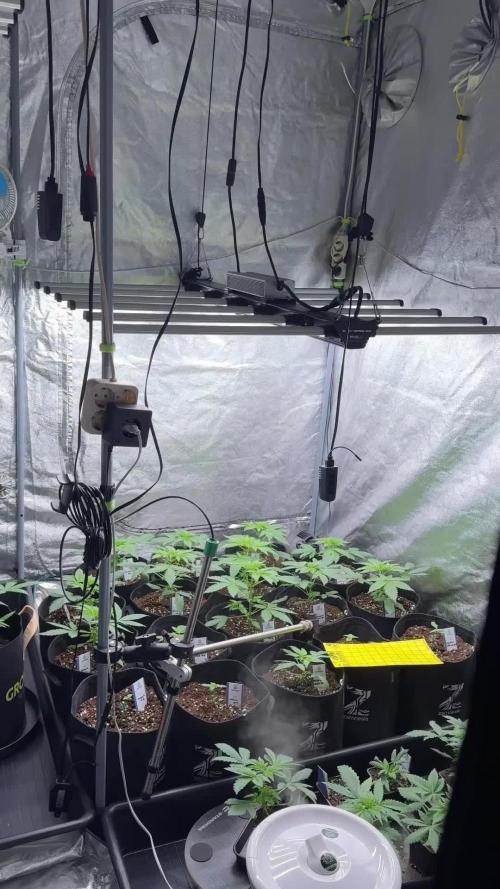
Week 3 Veg – Transplant Time, System Prep & Roots in Focus
Strain: Gelonade
Grower: Dogdoctor
Type: Feminized
Environment: Indoor Tent | LEDs | Dual Controlled Airflow
⸻
🌱 Overview
This week marked a key transition in the Gelonade grow:
Transplant into final 11L fabric pots,
Environmental tuning,
TrolMaster ecosystem preparation,
… and most of all: the official selection of the two chosen phenos that will move forward into flower.
The girls are thriving. Roots are looking stunning. Leaves are proud and full. The journey deepens, and we’re ready.
⸻
🌿 Selected Phenotypes
After careful observation, Gelonade #1 and Gelonade #2 were chosen as the lead phenos for the full grow journey. Both exhibited:
• Strong early structure
• Balanced leaf symmetry
• Vigor and resilience in early veg
• Root density and color that promised excellent transplant response
All three looked beautiful, but these two earned the spotlight. ✨
⸻
Soil Mix & Nutrient Support
We prepared a specialized super soil mix enriched with high-quality biological amendments from Aptus Holland to give the girls everything they need for explosive veg.
Transplant Mix:
• Super soil base
• Aptus Mycor-Mix – to inoculate roots with beneficial mycorrhizae for symbiotic nutrient exchange
• Aptus Micro-Mix – full-spectrum microbes and bacteria to build a thriving root biome
• Aptus Substrate Buffer Powder – stabilizes pH, locks in ideal nutrient availability
💧 Feed Mix (per liter of water):
• Aptus Regulator – 0.15 ml: Cellular armor, nutrient flow, anti-stress shield
• Aptus CalMag Boost – 0.25 ml: For foundational frame building
• Aptus All-In-One Liquid – 1 ml: Core NPK and micro blend
• Aptus Start Booster – 2 ml: Encourages new root branching and initial canopy formation
🌊 Water Stats:
• pH: 5.83
• EC: 1.01
• Water Temp: 18.5°C
⸻
Fabric Pots – Why We Use Them
The girls were transplanted into 11-liter Amnesia fabric pots. Why fabric?
• Air pruning: As roots reach the edges, they hit air, which stops circular binding and encourages lateral branching.
• Oxygenation: Roots receive more oxygen through the breathable fabric, boosting metabolism.
• Drainage: No soggy bottoms here. Fabric pots keep your medium airy and prevent overwatering issues.
These are the final pots — no further transplants will be done. From here, the girls can stretch, root, and build freely.
⸻
Airflow & Filtration
A strong root system needs strong air too. This week we’ve been dialing in our environment with dual extractor/intake systems:
🌀 Airflow Setup:
• 2x 6-inch extractors:
• TrolMaster Aerofan 6” – controlled by the TrolMaster system
• Spider Farmer 6” – managed by the GGS controller
• 1x 6-inch intake fan with carbon filter
🌫️ Why Carbon Filters (Even Early On)?
• Odor control is obvious — but more than that, they filter airborne particles, spores, and contaminants, keeping air pure and clean, even during early veg.
• Healthy air = happy leaves = fast growth.
⸻
🔧 TrolMaster Ecosystem – Automation Incoming
While everything is still being hand-watered, we’re preparing to connect the full grow to the TrolMaster system:
• Environmental control (humidity, temp, VPD)
• Light cycle syncing
• Fan response automation
• Future irrigation control for specific zones
Not all plants will be automated, we’re keeping some fully manual to compare growth responses. That’s the Dogdoctor way: grow, observe, experiment, evolve.
⸻
📸 Media & Studio Time
The girls were looking so stunning, we took them into the studio for a proper photoshoot. These are living models — vibrant, proud, and photogenic. Likely we’ll do another shoot next week, before they get too large to safely move.
Expect high-gloss glamour and leaf-candy content.
⸻
🌿 What to Expect (and Not) After Transplant
✅ Expect:
• Slight temporary slowdown (1–2 days max)
• New root tips forming within 48–72 hours
• Visible growth surge as roots expand into fresh soil
• Fuller, wider leaf spacing
❌ Don’t Expect (yet):
• Explosive top growth right away — they’ll focus on the roots first
• Stretching — we’re still under strong LEDs with great internodal control
Let the roots build the temple, and the temple will grow.
⸻
📊 Environmental Conditions
• Room Temp: 27°C
• Humidity: 57.4%
• CO₂: 632 ppm
• Lighting: Future of Grow Black Series 600 LED
• Delivering full-spectrum brilliance — tight internodes, deep greens, and radiant health.
⸻
💬 Final Thoughts
Transplant week is always a sacred moment in a grow, a rite of passage from childhood to adolescence. The Gelonade girls are ready. Their roots are strong, their stems are proud, and their leaves are glowing with promise.
This week was a blend of precision and love, preparing systems, mixing soil by hand, and honoring the natural rhythm of growth.
From here on out, it’s about watching, adjusting, and letting nature lead.
Let’s grow something unforgettable.
With soil on our hands and stars in our eyes,
DD 🌿
📲 Don’t forget to Subscribe and follow me on Instagram and YouTube @DogDoctorOfficial for exclusive content, real-time updates, and behind-the-scenes magic. We’ve got so much more coming, including transplanting and all the amazing techniques that go along with it. You won’t want to miss it.
• GrowDiaries Journal: https://growdiaries.com/grower/dogdoctorofficial
• Instagram: https://www.instagram.com/dogdoctorofficial/
• YouTube: https://www.youtube.com/@dogdoctorofficial
⸻
Explore the Gear that Powers My Grow
If you’re curious about the tech I’m using, check out these links:
• Genetics, gear, nutrients, and more – Zamnesia: https://www.zamnesia.com/
• Environmental control & automation – TrolMaster: https://www.trolmaster.eu/
• Advanced LED lighting – Future of Grow: https://www.futureofgrow.com/
• Root and growth nutrition – Aptus Holland: https://aptus-holland.com/
• Nutrient systems & boosters – Plagron: https://plagron.com/en/
• Soil & substrate excellence – PRO-MIX BX: https://www.pthorticulture.com/en-us/products/pro-mix-bx-mycorrhizae
• Curing and storage – Grove Bags: https://grovebags.com/
⸻
We’ve got much more coming as we move through the grow cycles. Trust me, you won’t want to miss the next steps, let’s push the boundaries of indoor horticulture together!
As always, this is shared for educational purposes, aiming to spread understanding and appreciation for this plant. Let’s celebrate it responsibly and continue to learn and grow together.
With true love comes happiness. Always believe in yourself, and always do things expecting nothing and with an open heart. Be a giver, and the universe will give back in ways you could never imagine.
💚 Growers love to all 💚
Likes
22
Share


@Teamdirtbag2
Follow
Well she has grown that's for sure. She needs to be transplanted to a bigger pot. Also defoliated... I will attempt this tomorrow. I need to acquire a bigger pot. Worse case scenario I use a 5 gallon bucket, and drill some holes. I'm switching to flower 12/12 this week.
So she is going into a 15 gallon pot now and getting a good trim.
Go check out Viparspectra products they have what you need. https://www.viparspectra.com/collections/xs-series/products/xs-series-xs4000
Use code, "GDVIP" for an extra discount.🤗


Likes
62
Share


@masterofsmeagol
Follow
9/19 FED TODAY ONLY USED ABOUT A GALLON OF A HALF AND I LEFT OUT BEASTIE BLOOM AS I FORGOT AND WAS IN A HURRY.
Wow. Yesterday was quite the day. I smoked a joint of the bud I had taken earlier. It was fire. Trichs look good and I didn't want to risk sustained damage from the storm or earwigs (more later). Took forever but I got the one ten foot blueberry hanging and one of my 5 gallon seedlings. I want to wait a little longer before I took ANYTHING. The seedling is was overdone if anything though. I'll add trichs pics. We are supposed to have some fairly good weather. This brings me to my next point. These earwigs must like blueberries because those three plants are the ones they damaged the most. That and one in a bucket. I mean they fucking strip it. I was going to take a branch off another blueberry as it looked awesome and kept hitting me in the face. I left it. I came back this morning and all the lower part of the branch was stripped. I mean fucking nothing. Im so fucking pissed. You can look on the interior and see secondary and tertiary branches that are just destroyed. Obviously my ice cream cake and a few others need more time. Dreamcatchers are totally unaffected by them. I could take those if I had to but they are fine. I could take the blueberries too if needed but this is when they really bulk up. It's a hard decision to make. Especially when they can work that fast and demolish a plant. If I don't chop I'll be using everything at my disposal today and hunting them after dark. I wonder if they are in the bag?
9/20 Harvested another blueberry yesterday. I left one to maybe catch a frost. I put petroleum jelly on every stalk and branch Of the other plants. Came here this morning to more striped branches further up on the lone blueberry. I don't care about the damage on the 5 gallon small experiment plants but it still sucks. I still don't totally know what is causing this ridiculous damage. As you can see in the pictures the damage is progressing up the plant. I'm cutting the last blueberry today. Trichs are good. It could go another week but with the damage sustained from ONE night I'm not going to risk it. Whatever is eating my plants don't seem to like the dreamcatchers. Luckily. I hope whatever this destructive fucking bug is doesn't move to another plant. I'll be on the look out. I'm ready for this season to end.
9/21 I think I lost a day in my diary. I've been so fucking busy. Took the last blueberry yesterday. Spent hours in the garden. Watered today. Need to do a potassium bicarbonate spray. I'll update later.
9/22 It's raining. Shook off the plants this morning. I cannot believe the rate of flowering. Maybe it's because the last four days I've been working my balls off harvesting and trimming those plants. Ill do a review and a harvest report of the blueberry once it's dry. The stuff is fire. The seedling is crazy too. Trichs are through the roof. I compared with a local dispensary pot and mine was better. Not as good as the dispo I frequent though. There is one on ever corner down here.
9/23 Didn't have time to feed this morning. I'll be back down in a bit and feed. We are expecting rain I guess but I'm not dealing with any mold issues other than the mild WPM. I plan to do a k bicarb spray today. I defoliated everything dead I saw. I've smoked my blueberry and it is amazing. The little seedling experiment I grew in the 5 gallon turned out AMAZING. Some of the densest buds I've grown. Trichs off the charts. Piny citrus taste and heavy sedative effects. Im waiting for the blueberry to at least dry before I do the harvest report. It's nice today. Plants have continued exploding into flower. For now I'll be in trim jail.
9/24 Watered lightly and fed 1 gallon. Started cha ching today at 1/8 tsp. Gallon. Still no idea on mysterious damage. I noticed a bit more. I went over at 4am hoping to find the culprit but nothing was there. We are supposed to have three days of rain. Everyone seems worried. I'm a little worried myself. I cut out a small branch on the middle of the dreamcatcher that had rot. Other than that it's just slight PM on some. I tried to mark damage so I can see what else happens. I'm letting the rest of this stuff ride. I'll do what I can to protect it but it's not coming down early.
9/25 The massive storm descended last night. Winds turned my ice cream cake literally sideways. Dreamcatchers are so fucking sturdy and strong that it would take a tornado to Damage them. The big plant in the fifty gallon pot had some branches that were 90° down. I tried to tie up what I could quickly. I noticed some damage on the ice cream cake. Same as on the blueberry's. I hope I made the right decision waiting this storm out. Defoliated and added supports where I could. Rushed morning.


Processing
Likes
Comments
Share


@Cannibalgardens
Follow
The genetics in this little lady are very good she stayed short.. All the stretching and bending are paying off right now she has a very nice even canopy .. Well we are gonna start to see some buds getting size now . Can't wait till next I also can't wait for the few bid sites I dusted with some male pollen ..

Likes
14
Share


@TOMI08
Follow
47.nap
A elkezdtem finomat adni nekik
Hesi tnt 10ml 10l víz
Hesi supervit 2csep 10l víz
Plagorn alga bloom 2.5ml 10l víz
Ph 5.8
Mint este esövizzel premezem őket imádják!
Ezek a tápok hihetetlenül működnek kis mértékben is!
2hetente fogom 0.7ml növelti a tápanyagokat
Holnap kapnak neem olajat permetezve 2ml 0.5l víz

Likes
12
Share


@Krissci
Follow
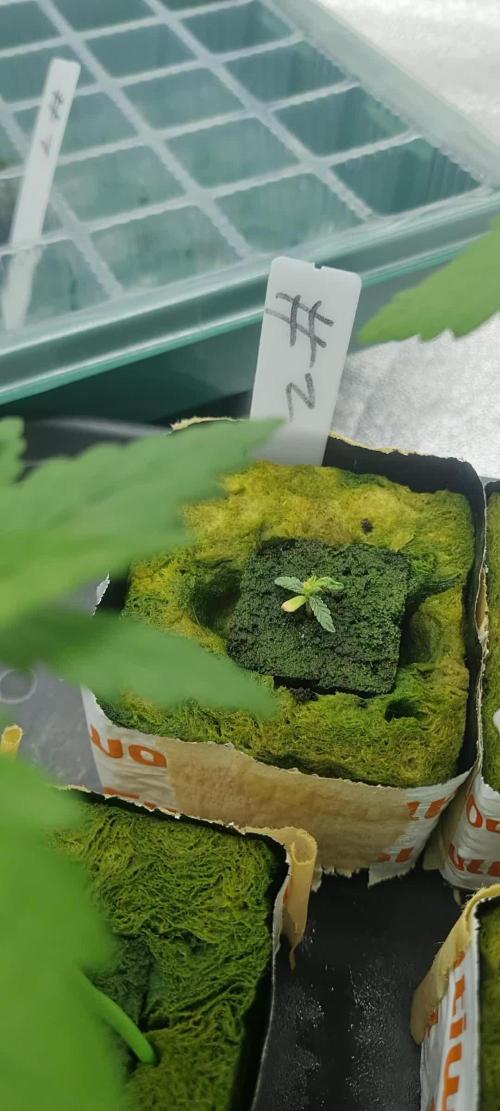
Day 6 - all is well with both plants.
Organic molasses teanyo be used going forward to increase sugar and flavour
Likes
18
Share


@berlinbeginner
Follow
High temperatures and nutrient burn. At this point i have no idea what i am doing. Every now and then SD2 and SD3 release typical weed smell but apart from that no other smell. The stems upon rubbing and touching smell like cinammon,cloves and orange zest.It reminds me of fanta drink.

Likes
2
Share

@mjumbo
Follow
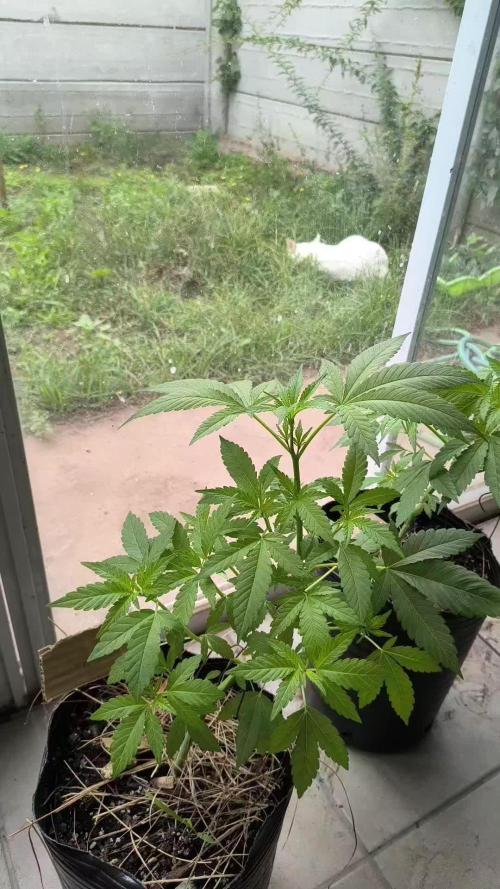
Well planta are growing and growing , this Will be last week of veg for some of them, the other ones maybe I Will keep adding hours of lighting but I need to separete thems SO the ones flowering don't get the lights. Surely Will be getting the flowering ones out the Quincho while the lights is on.
I have added tricomas, and also some plagues preventive.

Likes
2
Share


@High_Grade_Dadli
Follow
Missed last week update but did some cutting girls have to live up to the mission 73 between the 5 plant....added one more which was a cutting from a seed plant harvested previous...didn't look like I did anything so cut dem a few day later 85 between the same plants... only cut the lower half of G4 n smaller inside branches( going to stop they dont hold up well)
Likes
20
Share


@blady1989sqn
Follow
Plants looks healthy, they are really in good shape and cover aproximietly 1m2 each plant. They looks amazing :)
Likes
46
Share


@Mrs_Larimar
Follow
March 9th
Sorry for late Update, I just forgot it
We are coming closer to the End, leaves are fading, Buds are swelling,
Flowers smell lovely
Daily diving into Feedingsolution keeps them Happy.
Just under 10 g of Soil... and stil growing wonderful
Iam having alot of fun... and I learned so much in this Journey
Iam sure more " EGGS" will come
I hope you enjoy that Journey like me
Stay medicated
Likes
17
Share


@CanadianFillmore
Follow
Howdy growfessors! Welcome to week 7F in the 4x8 theatre. The ladies are hungry, I've been increasing their feeding and they still want more!
Defoliation performed, removed a lot of small dead or dying leaves from the lower branches.
Not much else to say, thanks for stopping by growfessors 👽🌳💚


Likes
1
Share


@Luke_Lee
Follow
—————————————————————
WEEK 6 / DAY 37-43
Mars Hydro FC-E3000
Floragard Professional GrowMix
11L Plant bag made of fleece
Light: 50cm
Schedule: 18/6;
PPFD: 686-700 umol/m2/s
20° C - 50 RH
1L per Plant
PH 6,5-7
2ml BioGrow; 1ml TopMax ; 1ml BioBloom
1ml CalMag
#1 Blueberry Automatic
#2 Blueberry Automatic
Fan, extractor and pump ON 24/0.
—————————————————————
-24.02.2025
The first week of flowering begins today.
The light will be switched to an 18/6 light cycle from today.
The distance is 50cm with a value of 680-700PPFD (PhotoneApp).
TopMax and BioBloom will also be added to the irrigation water from this week.
I am curious to see how the plants will develop in the coming weeks.
-01.03.2025
The plants are developing very well. They were watered on Tuesday 27.02 and today 01.03 with 1 liter of water each (2ml BioGrow; 1mlCalMag; 1mlBioGrow; 1mlTopMax).
The LST was adjusted again and a few leaves and popcorn buds were removed.
Total Time-1031:02h
Total Energy-166,72 kWh