


Likes
Comments
Share


@Mr_Juice
Follow
I rinsed with clean water. Both plants received 1 liter of water each, since I grow without drainage so that they have a clean transition to flowering. Even though I grow organically, rinsing never hurts, quite the opposite. I thought that Anesia could no longer surprise me, but with each new strain I see how wrong I was.
I had to reduce the light intensity to 60%, the think tank didn't accept it, We are gradually increasing the intensity. Currently it is at 65% and 35 cm away from the peak.
peace

Likes
5
Share


@seth
Follow
Week 11😎
This mutant by the way is huge , unlucky its mutant😭
I will use flowers to make kief so i will freeze them after drying process.
More or less 1 week and harvest
PH 6.8
PPM 200

Likes
3
Share


@StickyFingah420
Follow
Semana 9 y estimo que la próxima será la de cosecha, ojalá en el día 75 o algo así. Ya veo los tricomas lechosos y en menor cantidad ámbar, por lo que estimo esa fecha para el corte puesto que luego de cosechada la planta sigue madurando debido al proceso de secado/curado, huele muy bien y luce genial // Week 9 and I estimate that the next will be the harvest, hopefully on day 75 or something like that. I already see the milky trichomes and in less amber, so I estimate that date for the cut since after harvesting the plant continues to mature due to the drying / curing process, it smells very good and looks great

Likes
41
Share


@TheBulldozerSicily
Follow
Venerdì 20 luglio Aggiungo 50 lt acqua e il doppio dei nutrienti, vediamo che succede. Ho dato anche una bella deformazione e pulizia rami inferiori
Martedì 23 luglio
Inizio controllo ec 3999 ph7
Cambio soluzione parto da 75 lt acqua osmosi inversa + 5lt acqua rubinetto ottenendo ec 473 ph 8.4
Aggiungo tutti I nutrienti ottenendo ec 1489 ph 6.5

Likes
7
Share


@Adam22
Follow
Getting ready to transplant in a couple of days. Today on one of the short plants I half snapped one of the fan leaves near the top of the plant! I've also gone and knocked over another one when feeding earlier today 😔 tent should be up by now but can't put up yet ATM
Likes
4
Share

@BobbersDown
Follow
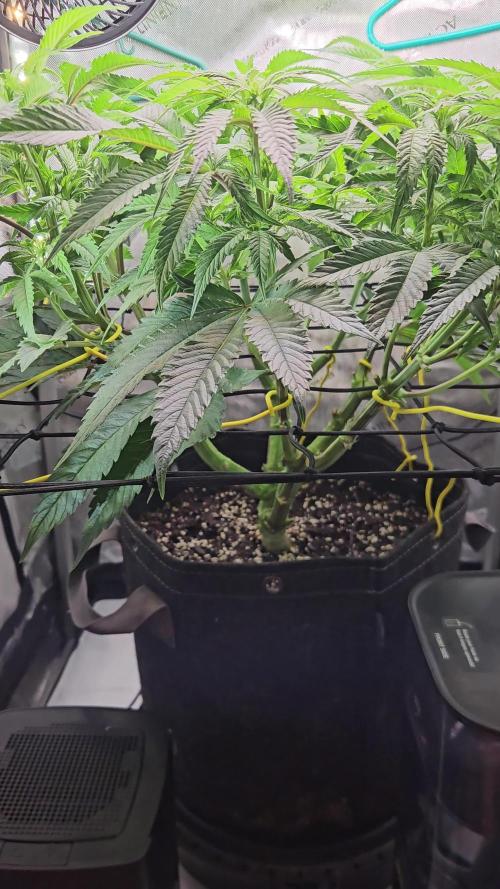
10 days into flower and she's in stretch mode. Took out 12 fan leaves today before pics, I'm sure there will be more in a couple days at the rate this thing is growing. I think I got a strong foundation in place (she's thick as hell at the trunk and mains) and a decent, but not perfect, spacing. Debating on trimming the bottom nodes and just letting it pump up the top colas, but the bottom set has 3 nodes of its own and will probably turn into solid colas in their own right. See how it gotten in the next 7 days, but she's looking good and soon should be smelling good too!

Likes
112
Share


@Tropicannibis_Todd
Follow
ALRIGHTY THEN
REMINDER I DO 2 UPDATES PER WEEK 👉WEEKLYROUNDUP👈👉MIDWEEKLY UPDATE👈
We just hit week 12 and all is well , have to admit shes just killing it on the resin development 😃 ......the frost is insane 👹...... Just waiting for her to ripen up👈
👉NutriNPK NUTRIENTS USED FOR FEEDING👈
Lights being readjusted and chart updated .........👍
I GOT MULTIPLE DIARIES ON THE GO 😱 please check them out 😎
👉IF ANYONE IS LOOKING FOR A PLACE TO HANGOUT VIA GROWDIARIES AND TALK GROWING AND JUST CHILL AND WHATEVER .....👈
👉I CREATED GROWDIARIES DISCORD SERVER !!!!!!!!!!!👈
LINK IS 👉
https://discord.gg/zQmTHkbejs
AND SEE HOW IT PLAYS OUT !!!!!!!
Likes
1
Share

@StillBlazin
Follow
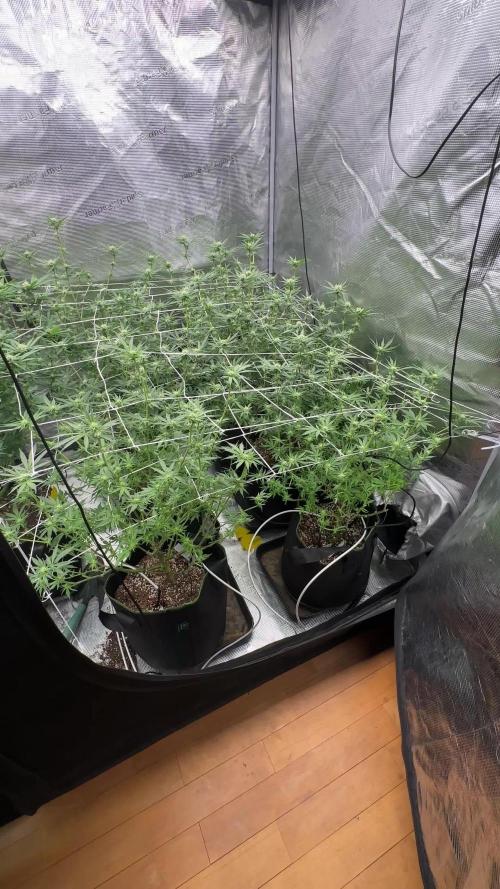
Flower day 22 now, I planted the cuts 48 days ago I’m very happy with it. Defoliation on day 20 was very tough the strain has many small leafs took me and my girlfriend 4hours😤😅

Likes
7
Share

@Selkot
Follow
.
FIRST DAYS
-------------
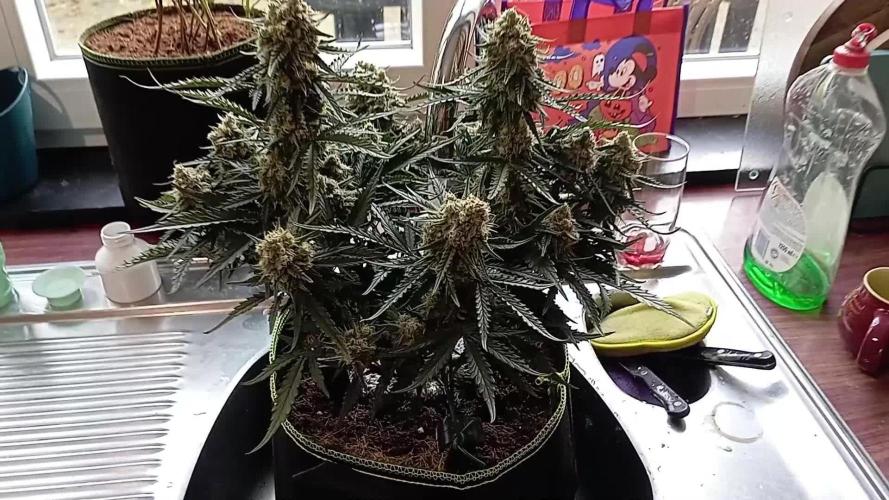
This week marks the end of flowering; one of my girls is even already ready, with big, compact, fragrant, and frosty buds! She seems to have focused on her buds more quickly, which explains her smaller size; the others still need about two more weeks.
She was flushed today (see video); I’m letting her dry out under the light for 4–5 days, and I’ll harvest her at the end of the week.
The injured plant is also ahead, but still has about a week to go before the flush. She suffered from a slight nutrient lockout until the end, but her buds don’t seem too affected; they’re nice and dense and still swelling up.
MIDWEEK
-----------
The Beginning of the End 😉
The three big sisters are turning brown and covering themselves with resin,
The flushed girl is drawing what she can from her reserves and keeps swelling,
And the injured girl is ready to be flush in turn!
Next week, I’ll be able to cut the first two.
I’ll give the three big ones one more week.
Likes
13
Share


@RFarm21
Follow
11 março - 17 março
12 março - feeding
16 março feeding:
bio heaven 1.5ml; sílica 0.1ml; bio grow 1ml


Likes
7
Share


@Alejangrow
Follow
Gave them the chop today. ✂️
The nugs look super frosty and dense but no huge colas on these plants. 🤔
Staying hopeful for a decent yield.🤞


Likes
6
Share

@Hylex
Follow
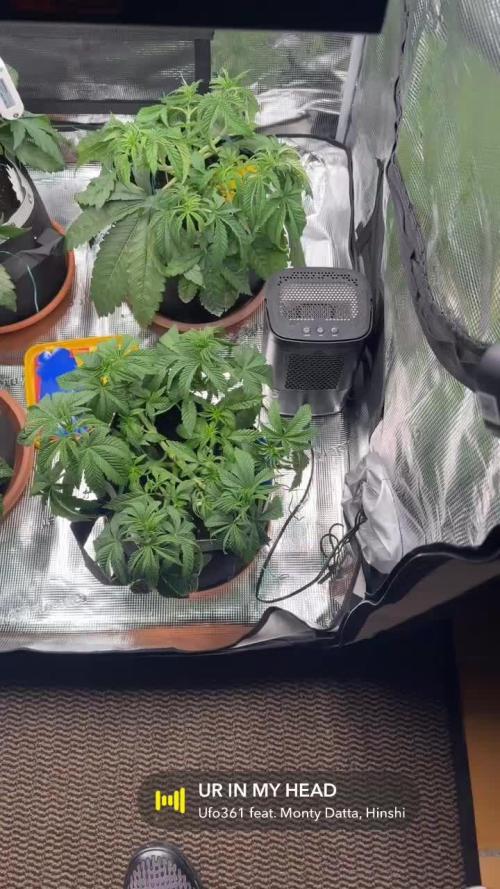
05.10 Am abend nochmal die Pflanzen was gedehnt(LST). Morgen werde ich denke ich mal was entlauben hab glaube ich was zu lange gezögert weswegen sich zuviel Feuchtigkeit gebildet hat und die blätter mitgenommen hat.


Likes
19
Share
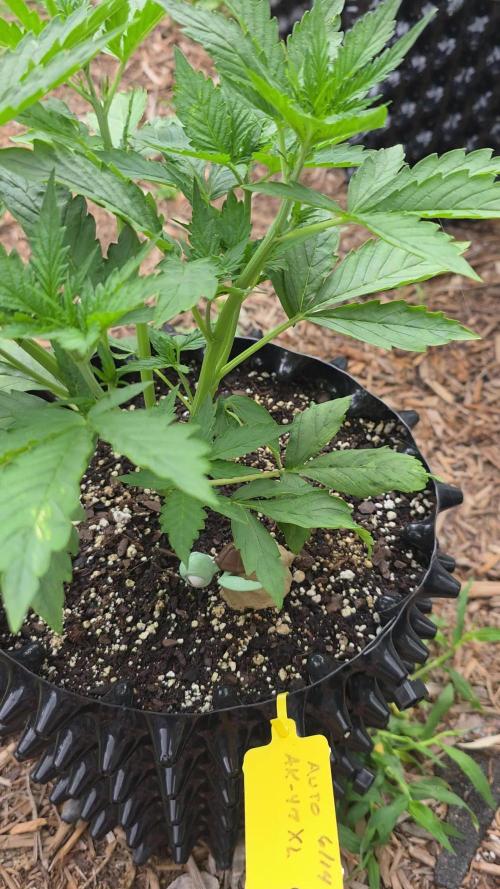

@Natrona
Follow
Divine Seeds 2025 Auto Contest
👉Sponsored👈
AK-47XL Auto
W4V4
7/6- 12
I decided to grow AK47-XL outside to test the strain resilience.to fungi and mold since 2 plants this season have befallen bud rot. Genetically the strain grows in Colombia / Brazil / Afghanistan demonstrating resistance to imperfect conditions and a strong immunity to moderate temperature shifts. No expressed vulnerability to fungi or mold has been noticed with Auto AK-47 XL.
I will put this strain on the real environmental test.
I’ve changed the grow from inside to outside so hopefully the statistics reflect the change.
Last week AK-47XL topped herself and she now shows 3 tops. Any further training will be LST and defoliation to see what happens on her own. I am giving water only for this grow since I have Supersoil as part of the base and will add Green Sensation during flower.
As always, thank you all for stopping by, for the likes and most of all growers’ love and support.
Stay green, growers love 💚🌿
💫Natrona💫

Likes
11
Share


@McShorty
Follow
First week of flowering is done and they started to stretch. Really nice to see how fast they grow now, every day i open the tent i could see the difference. So far so good, not much to say here. Hopefully the buds and the smell will change soon :)
Likes
16
Share


@GabbaGandalf
Follow
I started to scrog The Church (left side of the closet). I topped the plants after the fourth node. Of the 4 Churches, I didn't properly top two of them. These two are looking like they are developing the main cola as well as the two side colas equally, so it seems there are three of them.
Serious 6 is growing slowly. Two of the plants are staying small and scrawny. I'm wondering if that is the phenotype or if I messed up.
And to top it all of, there was an accident with the Autopots :-(( This is the second time it happened in my AP system: The float gauges in one of the trays got stuck and the water kept flowing. The tray overflowed and the water ran all over my wooden floor. This also happened at night and I only discovered it the next morning. Luckily, the float became unstock at one point of time and the waterflow stopped. If it hadn't, 30 Liters of water in my tank would have caused serious issues.
I was going to start the 12/12 flowering cycle next week, but looking at the Serious 6s I will postpone it by at least another week. That way the Church can scrog longer and I assume won't fill up the net as quickly as Serious 6 anyway, since it more bushy compared to the Serious 6 sativas.


Likes
15
Share


@McKush420
Follow
We are reaching full maturity slowly but surely. The pheno on the left is a solid week ahead of the one on the right. They are finishing quite differently. The left has reached full color showing yellows and purples about 12 days ago. Her velvety flowers a plump and juicy looking and remind me of a sour candy. The one on the right is showing signs from the flush but calyx swell and trichrome production has yet to peak. The smell is intense and even slightly different then the critical Kush I've experienced in the past. Pheno A will be harvested this week I'm guessing. Watching trichromes day to day at this point. I like just a bit of amber.

