


Likes
Comments
Share


@Ninjabuds
Follow
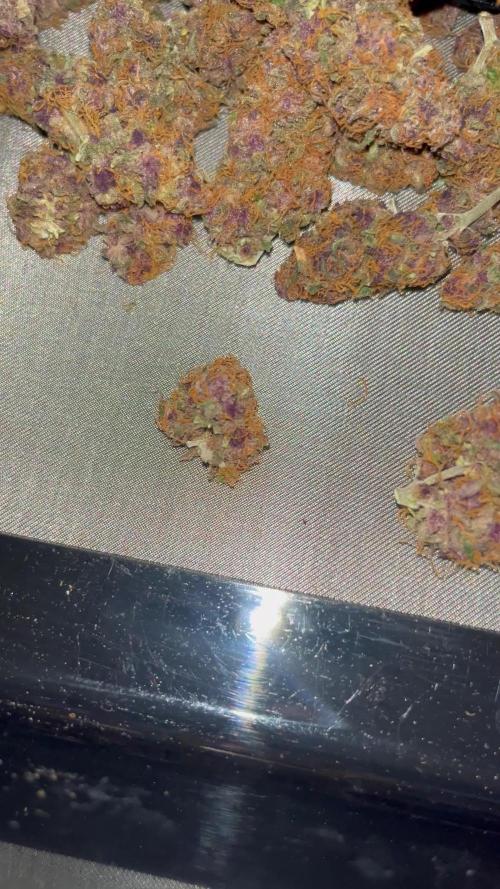
Soaptini another winner from lit farms. The plants leaves are turning a black color very pretty with deep purple stems. It’s loving up to its name with some buds that are so frosty they look white like soap and they smell of a gas soap smell. Also the nugs are kinda small with an odd bud structure and odd growth structure. I think it has a little to much breeding and crossing done to it without stableazing the genetics. I’m sure if grown several plants there would be a huge pheno variation good thing I got a pretty plant from the lottery. Great smell should be some gas.

Likes
5
Share


@simps
Follow
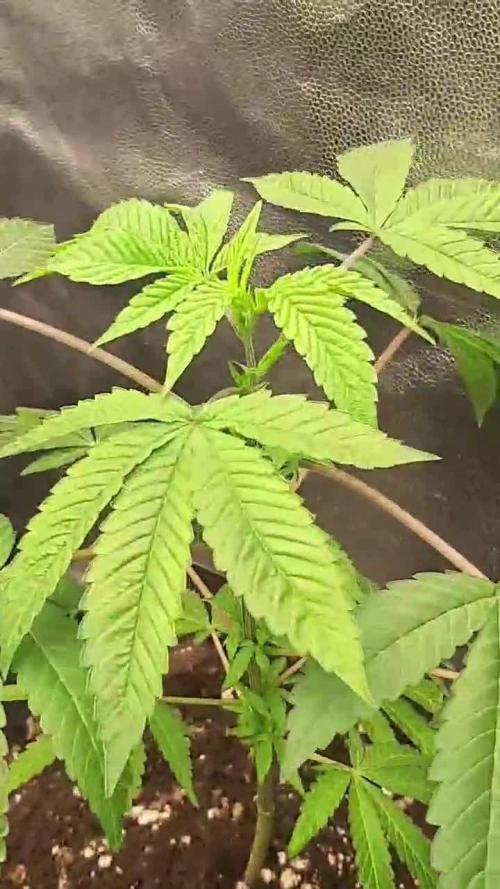
Transplanted into 2 gallon plastic pots I used fox farm soil ocean forest growing a little slow but I’m sure growth will pick up after she settles into the new pot I’m going to put them out in about 16 days going to be transplanting into 30 to 50 gallon pots next see how big I can get them before flower should be fun to see it play out lol


Likes
27
Share


@ButterfliesLittleFarm
Follow
Hello Diary.
The second week of flowering is behind me. There’s already a real jungle in the box, and as I announced last week, I did my first defoliation this week. I removed all the leaves from the lower branches and thus allowed her better airflow since there are three plants in the box. Two Haze Berry Auto and one Fat Banana Auto.
As you can see in the pictures, the plants are really beautiful, with a bunch of flowers that fill up and develop nicely.
Watering is every third day, when each plant in the box receives approximately 2.5 liters of water. I started adding CalMg preventively, 1.5 ml / lit and I continue with BioBizz, I will add it by feeling so we will see how the plants will react to that.
Here's what the week looked like:
23/10/2020 - Day 29.
Watering. This time I only added CalMg without BioBizz. p.H I regulated to 6.4 and the temperature of the water I water with is always around 20 degrees.
Temp / Humidity on the farm - 26.5 degrees and 51% humidity.
24/10/2020 - Day 30.
Defoliation. As I wrote earlier, I cleaned the leaves on the lower branches and allowed better airflow and easier watering.
26/10/2020 - Day 32.
Watering. I always prepare about 8 liters of water with which I water all three plants. This time I added both CalMg and BioBizz. p.H. - 6.4
Temp / Humidity on the farm - 25.4 degrees and 44% humidity.
29/10/2020 - Day 35.
Photographing and watering. I took photos for this week just in the box. I think I will only take photos on a black background for the last two weeks of flowering so as not to disturb them too much.
I then watered the plants only with water with regulated p.H at 6.4.
That's all for this week, so far everything is great and I hope it will continue that way. See you soon.

Likes
74
Share


@AsNoriu
Follow
Day 66. First girl down, found Bud Rot, so even happy to chop her !
Fastest plant ever, 66 days from seed touching soil !!!
Day 74. Second down and bud rot again !!! Lost nicest part of the plant ... In panic chopped two other girls too early and one close to good time....
But now the rest have more space ...
Day 78. First girl jared.
Day 84. Second girl is curing.
Happy Growing !


Likes
28
Share


@JiggleBudz
Follow
Day 78 - The exciting weeks begins! The smell is nice and fruity and more pistils are browning by the day. Also happy to report that no height was gained on the main colas in the last 10 days. This is a good thing, as my lights are as height as it gets for my tent.
I've had to keep the tent pretty wrapped up lately to let the carbon filter do it's thing. The smell is amazing, but creeping down my stairwell if I don't keep an eye on it. 🍊🌲
Day 79 - She's taking up less water these days. Could be influenced by the high humidity in the area and defoliation. Everything looks good and some of the satellite buds are starting to really brown their hairs.
Day 80 - Trichomes on some of the satellite buds are turning cloudy! The rest are all still very clear. We've made it into the 80's, not long now! 🌲
Day 81 - Rolling into the 80's! All seems good today.
Day 82 - Water uptake is reducing. Pistils are turning brown on the lower ends on the colas now.
Day 83 - Starting to see cloudy trichomes on some bud, but most are still clear. Looking really frosty. 🍊🌲
Day 84 - The end of the week! I'm thinking she'll be close to 100 days before the harvest. Everything went well this week - if only the humidity in my area would drop a bit that would help out. Onto the final weeks!
Likes
2
Share

@Senior_Weed
Follow
Leider kam es kurz nach beginn der Blüte wieder zu Mangelerscheinungen wodurch sicherlich noch etwas Potential liegen gelassen wurde. Stand jetzt bin ich mir noch nicht sicher was genau der Fehler war jedoch bin ich in der Hoffnung das der nächste Grow nochmals besser wird. Für meinen 2ten richtigen Grow bin ich trotzdem sehr zufrieden.

Likes
41
Share


@Skinnytalls420
Follow
Day 37-27/11/21 I watered them with just water today cause I’m panicking about the burnt tips on some of them so I’ll give them a flush!!! Day 39-29/11/21 nothing new today seems like there doing better since flush!!!!! Day 41-1/12/21 plants are doing much better now I was getting worried but they look a lot better than they did a week ago Day 43-3/12/21 today I’m felling abit sad there not doing Aswell as the big bud did!!! Hopefully they get better but I’m a bit lost as what to do tbh cause they all get the same food!!


Processing
Likes
21
Share


@Siriuz
Follow
Week 12
Day 79
Guys we started this week flushing our ladies until lowered ppm to optimum ppm
Cant tell you how long it gonna take you but it took me a long time to finish each plant since you have to literally add 3 times the quantity of water that your pot can get and it takes so much time but it's worth it!
Day 80
They're looking good and smelling awesome, couldn't finish flushing one of the ladies yesterday but managed to finish today and they're all happy!
Day 81
Overall they're good can't wait for them only few days to harvest
Day 82
End of week 12
Looking pretty good

Likes
4
Share


@Daw33d41
Follow
33DF
PH 6.1
EC 2.1
First time using Athena, following the feeding charts, and everything is going smoothly so far.
Nemam co dodat. Prvni zkusenost s Athenou, vse podle tabulek a funguje to hezky.


Processing
Likes
1
Share


@magicjohnson
Follow
Wk 4 was where I started to notice things weren't as they seemed. Continuous growth and some LST started towards the end of Wk3 and throughout 4 as different plants developed.
The 3 girls in the Coco were looking wonderful, with nothing really done to them.
- Towards the end of the week I noticed my leaves on the girls In the aero were now dramatically wilting and discolouration continued.
- I flushed the tank and proceeded with just water.. 12 hours later after some research I realised I most likely have root rot!!
- The following morning I took a look at the roots in more detail and what I thought was a bit of nute burn from the gunky root juice was in-fact slime.
- I again drained the tank and rinsed the roots with tap water. Fortunately I have an adaptable tap and managed to hose them with an actual hose sprinkler! (it was better than a shower head). To my surprise most of the slime and damaged root matter rinsed away. I literally just scrubbed the whole tank with Flash bleach and rinsed the absolute crap out of it.
- Again more research educated me that organic fertilisers are generally not great for hydro
- I also realised that amazons system is terribly designed. The red sprinkler covers which are there purely for inspection let an immense amount of light penetrate through. This was another noob mistake I learned the hard way!
Moving on I bought some Regen -e- root and pursued my crusade!
Likes
4
Share

@THEFROZEN710
Follow
Happy to finish one cycle and start a new one, that's the good news. The bad news is that I didn't write down any of the clones I took, but I've already seen that most are Bakers, maybe there's a Pure Glitter one, hopefully!
The reason for not identifying them is that they were in a place not conducive to rooting because the humidifier broke and on very hot days, an improvised lamp was used. I actually doubted that any would survive, but here we are. I will notify you if I manage to determine if any others are different genetics, but I remember the smell of the veg of this Bakers as if it were yesterday. Transplanted into 7-liter pots and I added 15g of bokashi to each soil level, watering with about 1L in order to leach some microorganisms that I inserted and some beneficial bacteria for roots and prevention of gnat proliferation, Trichoderma Harzianum for roots and Bacillus Turingensis Israelis for mosquito larvae.

Likes
3
Share

@MmaJunkie420
Follow
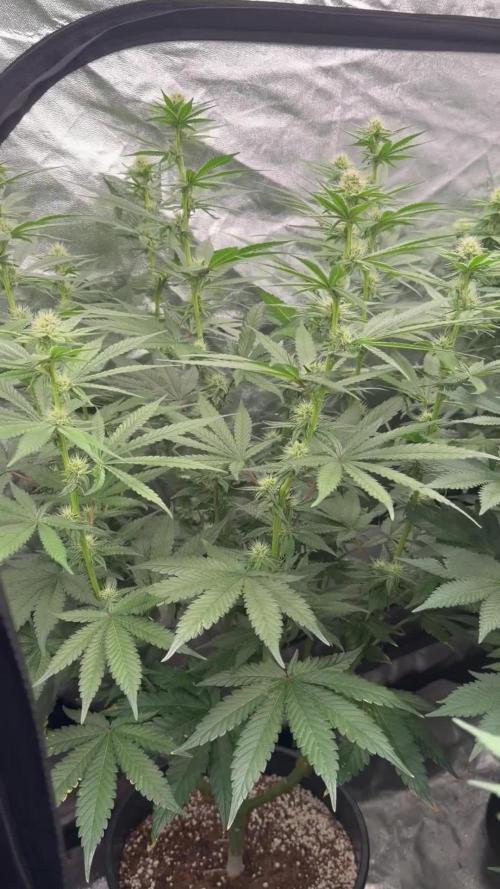
Week 4 is underway and these girls are thriving despite the humidity being so stubbornly fluctuating de humidifier cannot keep up. Managing to keep it below 60% mostly and keeping airflow strong. Papaya frosting is going to be very frosty and I suspect Chunky colas for this 1. Suppose to be 9 weeks strains but I feel a few Phenos may take the extra week to fully mature 😌💚✨




Likes
21
Share


@gr3g4l
Follow
la semana empiezan mostrando un estado muy bonito y gozan de humidificador nuevo.
Primeras comprobaciones de temperatura y humedad con el humidificador al mínimo, como puede verse en la foto del dia antes, dia 15, apenas no ha cosumido nada de agua por lo que aumentaremos el caudal y tiempo en el temporizador analógico. Así aumentaremos también un poco más la humedad sin tantos altos y bajos
Pasados unos 5 dias volví a podar dejando únicamente un nudo por planta y un doblado de ramitas.
A los 21 dias volví a podar del primer nudo de cada rama, hojas y yemas.

Likes
4
Share

@DevilsBud
Follow
Start of week 2
There growing like clock work taking the first nutrients like a champ and now we have improved there invoirment they going to take off.
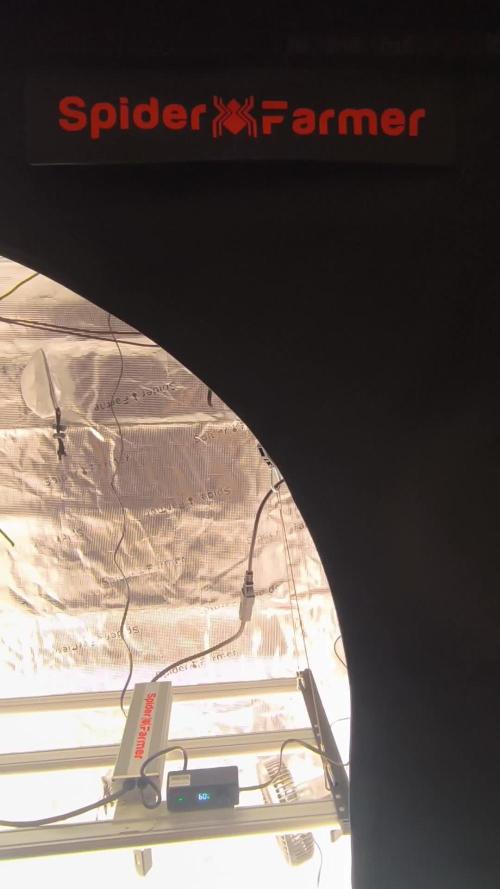
Finally have put up the new setup from spider farmer together and I am very pleased with a modern version more control and can watch from distance what's going on .
More info and picture Tru the week
Had some issues with some deficiency but it resolved it self everything looking Green again

Likes
27
Share


@Potgoblin
Follow
So she's getting pretty close to being finished I reckon guys!!
She's had pretty much straight water for a month or so now with only a few little feeds
Her buds are feeling dense and have developed a beautiful purple colour (which I am trying my hardest to enhance!) They also have a beautiful citrus smell with some earthy overtones and are looking frosty!! Trichomes are still cloudy no amber!
It's Tuesday 12/10/21 day 55 of flower and her next drink will be tonight and she will be getting a weak dose of feed, 1 maybe 2 more then flush!!!!
Likes
43
Share


@420DeepGrow
Follow
Gracias al equipo de Kannabia Seed y XpertNutrients, sin ellos esta magia no seria posible.
🍁💐 Runtz (Auto):
Si esta cepa se ha ganado su popularidad a pulso, esta versión autofloreciente es digna heredera de sus atributos. No es de extrañar que nuestros criadores hayan acertado con su programa de reproducción, al combinar dos de las cepas más fascinantes de la actualidad: Zkittlez y Gelato.
planta resistente y robusta, de cuerpo esbelto y fuerte ramificación lateral, que se puede cultivar prácticamente en cualquier entorno; pero prefiere los veranos largos y cálidos, tal y como quiere la madre naturaleza, donde bañada por el sol se eleva hasta los 120 cm. para producir unos rendimientos muy gratificantes de 100-150 gramos por planta.
En interior, y tras solo 70 días desde la semilla, también recompensará con cosechas abundantes de hasta 500 gr./m²
Inmediatamente después de encontrarte con ella, lo primero que notarás es su aroma descaradamente afrutado, con un toque tropical cortado con reminiscencias terrosas y amaderadas, que se entremezclan de forma agradable para ofrecer un combo que hace salivar las papilas gustativas.
Ofrece un sabor confitado, refrescante y similar a sumergirse en una piscina de frutas cítricas y flores de fragancia intensa. Al inhalar, obtienes la bondad de la dulzura; al exhalar, el humo se convierte en suave y cremoso, dejando suficiente profundidad en cada bocanada para satisfacer a aquellos que buscan los matices más complejos.
⛽ XpertNutrients: es una empresa especializada en la producción y comercialización de fertilizantes líquidos 🍶y sustratos🐛, que garantizan los mejores resultados y cosechas de la más alta calidad. A través de una cuidadosa selección de materias primas y un proceso de producción avanzado, sus productos son sinónimo de resultados confiables.
🛒 Consigue aqui tus fertilizantes:
https://xpertnutrients.com/es/sobre-nosotros/#:~:text=Xpert%20Nutrients%20es%20una%20empresa,de%20la%20m%C3%A1s%20alta%20calidad.
📆 Semana 12:
Una lastima esta semana, ha habido mal tiempo este año y esto ha influido bastante en este grow.
Último riego con nutrientes y después agua hasta el dia de la cosecha.

Processing
Likes
16
Share


@VIPgrower
Follow
Ok couple days into week 10 second week of flower I may have mixed a little stronger as getting too burn so on last feed used some clear and oh water turned light down to 600 watt also changed bulb to hps also tops looking yellow but might be just me also Atco stray of week 10 I trimmed a lot of leaf and unwanted branch’s off so will see how the year like it next feed will be half strength I think try that still on feed water schedule added another bag of co2 not sure why but whatever I also keep bending through the netting
