


Likes
Comments
Share


@Roberts
Follow
White widow is doing great compared to her start. She has bounced back well. She will be huge by the time I get her to her finish. Things are looking good now. Thank you Seedsman, Medic Grow, and Athena.🤜🏻🤛🏻🌱🌱🌱
❄️🌱🍻 https://www.seedsman.com/?a_aid=Mrsour420. This is my affiliate link to seedsman.
Thank you grow diaries community for the 👇likes👇, follows, comments, and subscriptions on my YouTube channel👇.
❄️🌱🍻 Happy Growing 🌱🌱🌱
https://youtube.com/channel/UCAhN7yRzWLpcaRHhMIQ7X4g.

Likes
7
Share


@CanadianFillmore
Follow
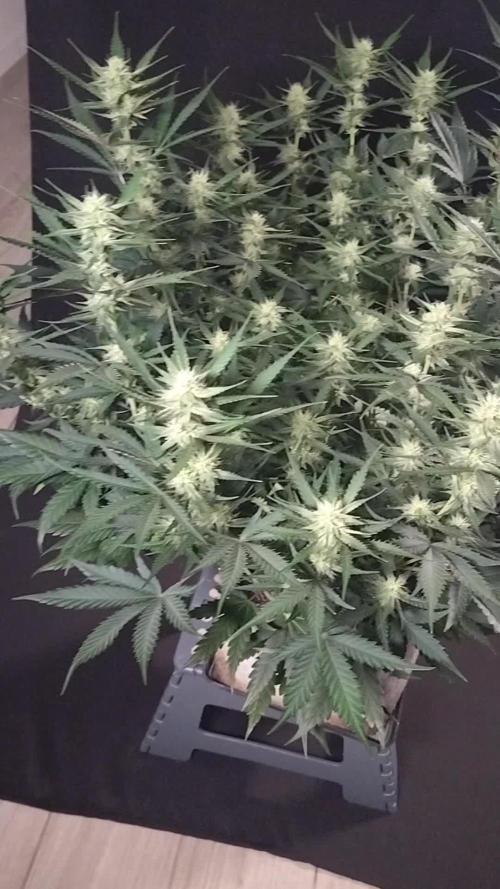
Week 7 begins. Removed some dead leaves and big leaves that were blocking light to the lower parts of the plant. Buds getting bigger and frosty! Very happy with the plants development up to this point.





Likes
1
Share


Likes
17
Share


@420DeepGrow
Follow
Gracias al equipo de Kannabia Seed, Marshydro, XpertNutrients y Trolmaster sin ellos esto no sería posible.
💐🍁 Moby Dick 🐋:
Criada a partir de dos parentales icónicos, como es el cruce de White Widow y una Haze pura G13, este choque de titanes provoca un híbrido que golpea a las puertas de las sativas más fuertes disponibles en el mercado.
Estamos ante una criatura impresionante en todos los sentidos, con ejemplares que florecen en solo 9-10 semanas en interior y arrojan un peso en lonja de 550 gr./m²
Al igual que su padre Haze, nuestra Moby Dick ofrece agradables notas cítricas, pero con efluvios de vainilla y eucalipto, una mezcla de aromas que genera una combinación intrigante, que puede llenar cualquier habitación con una fragancia inolvidable.
El sabor es muy parecido a su olor, con toques de limón agrio que harán que tu lengua cosquillee al inhalar, convirtiéndose lentamente en un humo dulce y terroso, con pinceladas de madera e incienso que se adhieren al interior de la boca al exhalar.
💡TS-3000 + TS-1000: se usaran dos de las lámparas de la serie TS de Marshydro, para cubrir todas las necesidades de las plantas durante el ciclo de cultivo, uso las dos lámparas en floracion para llegar a toda la carpa de 1.50 x 1.50 x 1.80.
https://marshydro.eu/products/mars-hydro-ts-3000-led-grow-light/
🏠 : Marshydro 1.50 x 1.50 x 1.80, carpa 100% estanca con ventanas laterales para llegar a todos los lugares durante el grow
https://marshydro.eu/products/diy-150x150x200cm-grow-tent-kit
🌬️💨 Marshydro 6inch + filtro carbon para evitar olores indeseables.
https://marshydro.eu/products/ifresh-smart-6inch-filter-kits/
💻 Trolmaster Tent-X TCS-1 como controlador de luz, optimiza tu cultivo con la última tecnología del mercado, desde donde puedes controlar todos los parametros.
https://www.trolmaster.com/Products/Details/TCS-1
🍣🍦🌴 Xpert Nutrients es una empresa especializada en la producción y comercialización de fertilizantes líquidos y tierras, que garantizan excelentes cosechas y un crecimiento activo para sus plantas durante todas las fases de cultivo.
Consigue aqui tus Nutrientes:
https://xpertnutrients.com/es/shop/
📆 Semana 2:
Fantástica semana, estan creciendo de una forma espectacular gracias a la ayuda de @marshydro, @xpertnutrients y @trolmaster.
Se puede apreciar un tercer nudo aunque la aplicación de cola de caballo y el estar en una maceta pequeña ha influido en el tamaño de ella, se recupera muy rápido 😁.
Esta semana espero trasplantar a la maceta definitiva.
Potencia de la lámpara: 50%

Likes
4
Share


@Santica_Garden
Follow
So this is how things are looking for the ladies at the end of Week 8 of Flower, I have uploaded a video for you guys with all the information, any questions just ask away 👍🏾👊🏾😎


Likes
92
Share


@DogDoctorOfficial
Follow
🌸 Week 3 Flower – Growing Strong, Tall, and Vibrant! 🌱
Hey Grow Fam! It’s already Week 3 in flower, and I’m thrilled to bring you this update because these plants are doing phenomenally well! Some are stretching up so tall that I might have to get creative in the coming weeks! Fruit production is well underway, and it’s absolutely amazing to watch the canopy fill out as these girls reach their potential.
Aptus Holland Pack Unboxing & New Additions
This week kicked off with a big arrival: the Aptus Holland nutrient pack! 🙌 I couldn’t wait to share the unboxing with you all; there’s a video up where I go through all the goodies, so check it out if you haven’t yet! Between the photos and videos, you’ll be able to see just how well these nutrients are already feeding these green beauties. Having a blast sharing more content lately—I’m in the zone with editing and creating, so get ready for even more shares!
🌡️ Environmental Control and Fine-Tuning the Reservoir pH
Temps this week have been holding around 27.2°C with RH at 65.2% and CO2 at 800 ppm, creating a VPD of 1.26 for ideal flower development. The lighting intensity is at 833 PPFD, and the solution in the reservoir is fine-tuned to a pH of 6.22, EC of 475, with a temp of 21.8°C.
Let’s talk pH in the reservoir: it’s a dynamic process, and I’m constantly adjusting it to keep everything at the right level. The pH tends to rise throughout the week, and each day, I work it back down, fine-tuning it to keep those plants happy and balanced. Managing pH is truly a hands-on job, and it’s worth every moment. I love staying on top of it for optimal nutrient uptake—it’s all about consistent effort and keeping that perfect range dialed in.
Leaf Maintenance & Selective Defoliation
These leaves are HUGE and gorgeous, creating a lush canopy that’s nearly too perfect! I’ve been taking a few leaves here and there, focusing on leaves that may be blocking light from reaching lower parts of the plant. Selective defoliation at this stage is key because it opens up airflow and allows light to penetrate deep, boosting energy distribution across the whole plant.
Big, healthy leaves mean we’re getting excellent photosynthesis, but a gentle, strategic defoliation can guide that energy toward those developing buds. Leaf removal is all about balance, giving the plant space to breathe and thrive while still maximizing growth in flower!
🌐 TrolMaster + App – Real-Time Precision
Huge shoutout to the TrolMaster system and the app—keeping everything in sync and at peak performance is honestly effortless with this ecosystem. The app provides a full overview of each environmental parameter, allowing me to make real-time adjustments as needed and track trends over time. The precision here is unbeatable, giving me complete control over temps, humidity, CO2, and VPD, ensuring my girls are in a controlled paradise 24/7.
What I love most is how the app records everything automatically, so I always know exactly where things stand without having to keep separate records. If you haven’t tried TrolMaster yet, it’s a total game-changer for any grow setup!
💥 Shoutouts & Gratitude
Massive shoutout to TrolMaster and Aptus Holland for powering this grow with tech and nutrition that’s second to none. And, of course, gratitude to Pro-Mix for the superb growing medium and to the seed banks behind the genetics. We’re running strong thanks to each of you.
And to the whole community—thank you, everyone, from new friends to seasoned followers, lovers to haters. Your energy, whatever form it comes in, is all part of this journey, and I’m so grateful for it all. Special shoutout this week to my brother Daggadna—head over to IG and give him a follow! And if you’re loving the journey, remember to like, comment, and subscribe—it really helps the channel grow and reach others who may also dig this content!
Discount Codes so you can save big on your next check out 💚💚💚
Kannabia - DOGDOCTOR 30% off
SeedsmanSeeds - DOGDOCTOR 10% off
CannaKan- DOGDOCTOR 15% off
terpyz.eu - DOCTOR 15% off
The Neutralizer - PORKIT5-DOG 15% off
As always thank you all for stopping by, for the love and for it all , this journey of mine wold just not be the same without you guys, the love and support is very much appreciated and i fell honored and so joyful with you all in my life 🙏
With true love comes happiness 💚🙏 Always believe in your self and always do things expecting nothing and with an open heart , be a giver and the universe will give back to you in ways you could not even imagine so 💚
Friendly reminder all you see here is pure research and for educational purposes only
Growers Love to you all 💚💚💚


Likes
7
Share


@MomNPopOp
Follow
we took 1 gelato out.. 1 of the girls is full of bananas and is already out of tent.. kinda sad..


Likes
23
Share


@eldruida_lamota
Follow
Que pasa familia, actualizamos las lemon kush y que aroma ya, empezamos apreciar olores en el cuarto, os aseguro que viene de aquí, tienen buen color, no es lo más grande pero se garantiza un buen desarrollo.
En las imágenes podéis apreciar bien el proceso semana tras semana.
55% de humedad maxima y 29 grados maximos de temperatura.

Likes
31
Share


@Targona
Follow
24/05/2023 - 82 days since my little girl sprouted from a seed🌱
Tenth week of my Larry Bird Kush 🏀🏀🏀
Nutrients:
Advanced Nutrients Flawless Finish - 2ml - I rinse the plants two weeks before harvesting so that they have a clean taste and smell 😋👃🌴
-------------------------------------------------- -----------------------------------
Lights: I use a Mars Hydro TS1000 - 150w full spectrum, great light for vegetation and flowering use 💡💡
Training:
No training is needed this week
In general:
My fears were confirmed, Larry has seeds in buds, while no plant has bananas. Apparently I didn't really clean the tent properly after the previous round. I haven't seen anything with the other girls yet, but I'm afraid there will be something there too 😭😭😭
In a week I will gradually harvest the girls 🌿🌾
Thanks for the likes and you can follow me on Twitter 🐦: @ Targona666
See you soon 😍

Likes
5
Share

@CookiDoggi
Follow
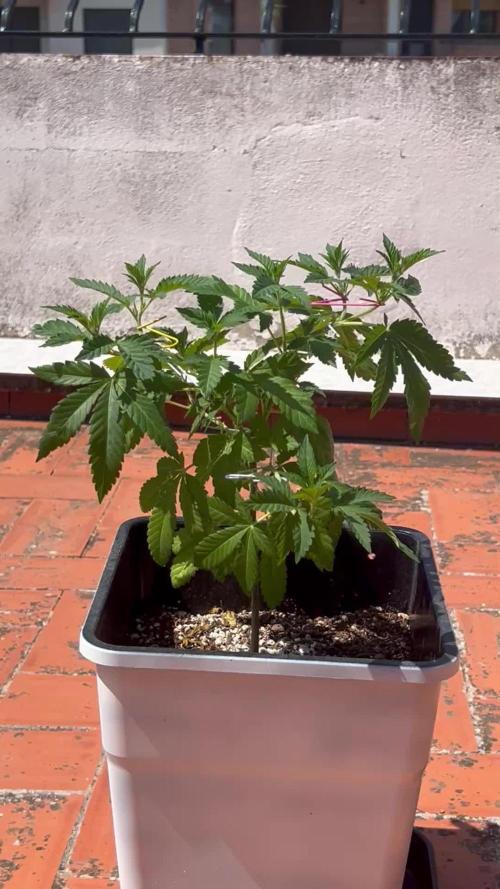
The plant is looking great!! I've done super cropping (hst) with some clips and it's working perfectly!! I think she's starting to go into preflower but at the moment there are no signs of pistiles or strong odour.
Likes
Comments
Share


@acidblue
Follow
OMG, so much has happened since my last post, this is way overdue.
My soil went totally hydrophobic, my PH pen was outta calibration so my soil ph was way of, combined with another gnat infestation.
Things are much better know. the gnats are gone, transplanted into larger pots with newly bought soil, changed lighting to 18/6, vegged for a couple more weeks .
One plant showed full male pollen sacs and one had suspicious looking male pre-flowers so I culled both. The last 2 showed what I think look like female pre-flowers.
I just flipped lights to 12/12 on 4/4 so hopefully I have 2 females, started weaving thru scrog net, canopy looks fairly even, plants due look super healthy aside from couple tips have a bit of yellow
But thats from early veg when I had the lights a tad too close.
Wish me luck ;).

Likes
17
Share


@EduardoLV885
Follow
Esta sera la ultima semana en vegetativo , despues cambiaremos el fotoperiodo a 12/12 y empezaremos con la etapa de floracion, solo hemos aplicado lst
Likes
11
Share


@OleGrow
Follow
Cherry A causing me all sorts of issues. She's falling on top of Cherry B. And in turn, Cherry B is hitting into my other plants (Grandpa Stash).
Also noticed what looks like pollen sacs on day 78.

Likes
19
Share


@TopNotchBud
Follow
Very easy strain to grow. I grew the White Critical Express previous to this grow, I really liked it and wanted to try growing an Autoflower so I went for the Critical 2.0 and it was worth the grow.


Likes
7
Share


@OwlGang_Uk
Follow
Week 5 - Trimming And Low Stress Training - the Gorilla Glues are looking nice and healthy. I trimmed and LST 1 of the Gorilla Glue’s and just trimmed the other one for experimental purposes.

