The Grow Awards 2026 🏆 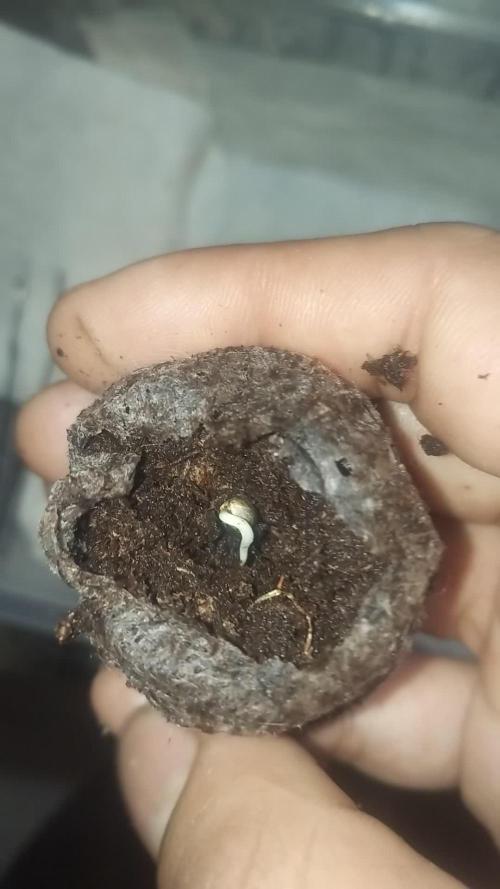








Likes
Comments
Share
@SmokeSmog7
Follow
Germinadas directamente desde su eppendorf al medio de germinado en tupper mediano con agua desclorada desmineralizada a 20° al momento de rociar las servilletas.
Puestos en oscuridad y con una manta térmica que va entre los 20 24°C.
A las 32hs se observa que 3 de 4 abren su cascarón, a las 72hs ya estaban con radicula de 2cm +-.
Puestas en jiffys de turba hidratados con 50%agua desclorada a 20°C y luego de exprimir el exceso de agua al jiffy fueron colocadas en un tupper propagador con ventilas muy pequeñas.

Likes
15
Share
@Kurow
Follow
Very optimal setup for everything so far. you can really tell the first sprout apart right now because of the second set coming in. Can’t wait to start using nutrients soon!


Likes
12
Share
@Budking420
Follow
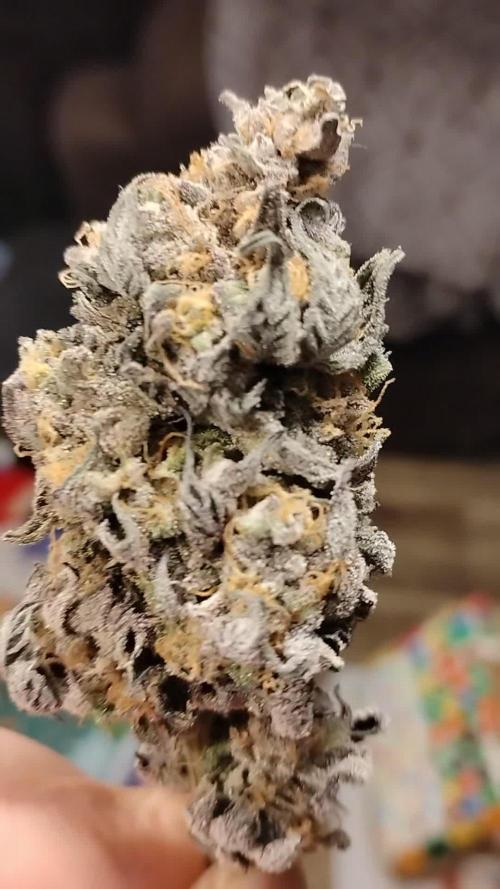
This ones really starting to swell. I'm blown away by the one in fox farm soil but the one in the coast of maine sadly is not as happy. I've been top dressing with worm castings to the deficient one. I'm excited by the frosty trichomes beginning to form on the larger healthier plant of the two. At this point I'd say it wasn't a different pheno but maybe a deficiency. The ladies are gonna finish strong.
Check back next week to see just how fast she buds & remember its 4:20 somewhere!!!!


Likes
8
Share
@ProKush27
Follow
Over the last week I’ve continued with defoliation process and I removed downer leaves that were not developing properly.
On day 78 I added support for aide branches on B and C.
I started flush of plant C on day 80, so we’ll see how she looks. I keep feeding other plants but I will be starting flush soon. 😎


Likes
49
Share
@Mosquito_Haarlem
Follow
Ze ziet er goed uit.
Laten we kijken hoe ze zich deze week ontwikkeld.
Ik heb het voedingschema voorzichtig aangepast.
Ik zal gedurende de week nog verse foto's updaten dus hou het in de gaten buddies😅
De LST verwijderd op de dertigste dag

Likes
Comments
Share


Likes
7
Share
@Naujas
Follow
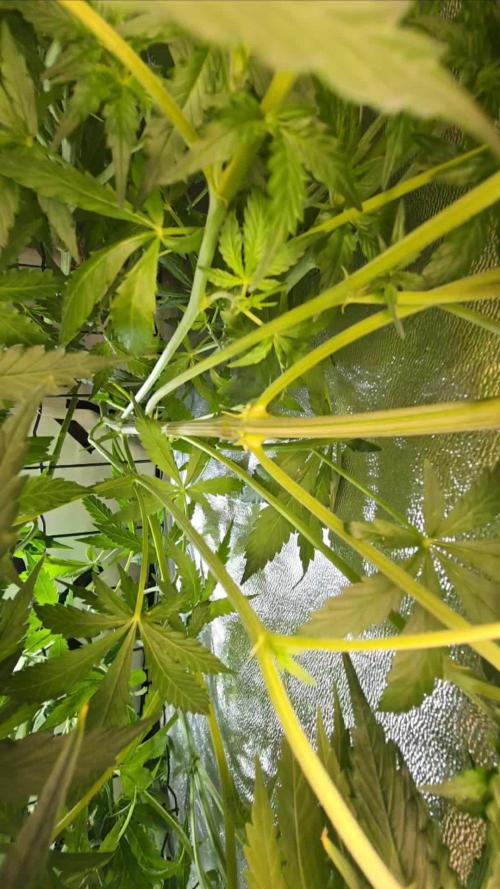
When I photograph her in the dark with a flash, the leaves look a lot more yellow than they really are :) The girl looks pretty good :) I'm happy :)

Processing
Likes
4
Share
@Grownewgenetics
Follow
we begging week 5 and the flowers are getting bigger and bigger These Strain is the fastest on these test , and the dark colors are begging to take over the plant .
the second one is a weel younger but also getting fast really frosty


Likes
35
Share
@Da420Andi
Follow
Yo yo yo what's poppin
It's day 2 in week 7 some more pics incoming this week
Triple G and Wedding Gelato is fire.
North Thunderfuck has the most weight and doing also great
Hulk Berry is a sativa and will need a little bit longer. It smells already gasoline diesel berry like. The smell of Triple G is the best I've ever smelled. It's so fruity and has trichomes everywhere
Day 46 today and I started feeding water only. I guess 14 to 16 days and they are ready to harvest. All plants do really good.
Day 49 every plant got flushed today. 30 Liter clear water for every plant.


Likes
10
Share
@barlobruz
Follow
7/12/2021
- Removed stakes, training mains with periodic bending.
- Noticing she's very short, internodal space is really small as well.
- Unsure whether to trim out bottom growth on the first set of branches.
7/13/2021
- Did a major trim to really expose all the new potential colas.
- Chopped and dropped fan leaves directly onto the soil to be used as a leaf mulch.
- Added some fan leaves I had drying to the mulch layer.
- Thinking of flipping the lights in about 2 weeks.
7/14/2021
- Re-staked mains to expose more tops.
- Continuing leaf tucking for even canopy.
- Strategizing feeding regiment for coming light flip.
- Can't kill the residual LABs in the sprayer I've been using for my kelp solution, and it keeps fermenting out butyric acid. Upon a quick google search, it looks like indole-3-butyric acid is an auxin. Whether or not that matches what's in the sprayer is unknown.
- Any pest pressure I expected to experience has been very light, almost non-existent. A few flies here and there as to be expected with organics, but not to the point of full blown infestation. For soil that's basically bare on top, very unexpected.
7/14/2021
- Performed a major pre-flowering morning trim.
7/17/2021
- Fed her some bloom fertilizer as I expect I'll be flipping the lights next week.

Likes
26
Share
@PatriciaGant
Follow
Dane, We all should help one another.
Human beings are like that.
We should live by each other’s happiness - not by each other’s misery.
We don’t want to hate and despise one another, share the Joint.
And mother earth is rich and can provide for everyone.
We can Grow enough Happiness, In this paradise, there is room for everyone.
We only exist to bring joy into the world and The way of life can be free and beautiful,
but we have lost the way.
Grow High and Give the world A smile.
At the end we own nothing more then all our memories, lets make them amazing for everyone,
nothing to loose only everything to win.
A last kiss goodby, a second one, softer and long as a sign, that you are woth it.
That Everyone worth who loved and give.
Enought Hippie Talk, now have a nice day and an even better grow, thx for watching by.
(36 next week flower nutrients for water
Likes
7
Share
@I_Identify_As_A_Dan
Follow
Week 7 for Lemon OG by SSSC
The indoor Runt😂 Starting to bounce back from its initial overwatering/nitrogen toxicity she had from when it was transplanted. Finally starting be able to top her a few times. She's at 6 tops for now waiting a few days before I top her again & I reckon her lower branch will be ready for a topping soon aswell. She was fed twice this week with some FPJ, Regulator, Enzym+ & Startboooster by @aptus_portugal just to give it an extra boost!
Think the Enzym+ is helping clear that build up of nitrogen i have. 😇
Starting to remove herself from the runt list😂Hopefully in the next few weeks she's out of it completely.

Likes
4
Share
@Ultraviolet
Follow
0.23v tuned to 7.83Hz Plants exposed to the Schumann resonance often show greater resistance to stress factors such as drought, diseases, and pests. It is possible that these natural electromagnetic waves strengthen plants' immune systems and increase their ability to resist disease.
Pretty neat, in the afternoon when the tent hovers around 84F the plants are 🙏, can visually see in time around 10 minutes after I opened the tent the temp had dropped to 76 pressure was lost, she is still chilling but she doesn't quite have that perk anymore.
*Salinity3.5% - 100ml H2O=100g The concentration of salt in a solution 3.5%= 3.5g in 100ml.
Growing well. Not going to top or do any training, I'll let the plant do its own thing, she is constructing foundations now for what she senses ahead. Smart girl. ✨️ Let her, do her thing, let me do mine.
The voltage that is needed for electrolysis to occur is called the decomposition potential. The word "lysis" means to separate or break, so in terms, electrolysis would mean "breakdown via electricity. Green hydrogen is hydrogen produced by the electrolysis of water, using renewable electricity. The production of green hydrogen causes significantly lower greenhouse gas emissions than the production of grey hydrogen, which is derived from fossil fuels without carbon capture.
Electrolysis of pure water requires excess energy in the form of overpotential to overcome various activation barriers. Without the excess energy, electrolysis occurs slowly or not at all. This is in part due to the limited self-ionization of water. Pure water has an electrical conductivity of about one hundred thousandths that of seawater. Efficiency is increased through the addition of an electrolyte (such as a salt, acid or base).
Photoelectrolysis of water, also known as photoelectrochemical water splitting, occurs in a photoelectrochemical cell when light is used as the energy source for the electrolysis of water, producing dihydrogen . Photoelectrolysis is sometimes known colloquially as the hydrogen holy grail for its potential to yield a viable alternative to petroleum as a source of energy. The PEC cell primarily consists of three components: the photoelectrode the electrolyte and a counter electrode. The semiconductor crucial to this process, absorbs sunlight, initiating electron excitation and subsequent water molecule splitting into hydrogen and oxygen.
Water electrolysis requires a minimum potential difference of 1.23 volts, although at that voltage external heat is also required. Typically 1.5 volts is required.
Biochar, a by-product of biomass pyrolysis, is typically characterized by high carbon content, aromaticity, porosity, cation exchange capacity, stability, and reactivity. The coupling of biochar oxidation reaction (BOR) with water electrolysis constitutes biochar-assisted water electrolysis (BAWE) for hydrogen production, which has been demonstrated to reduce the electricity consumption of conventional water electrolysis from 1.23v to 0.21v.
Biochar particles added to the electrolyte form a two-phase solution, in which the biochar oxidation reaction (BOR) has a lower potential (0.21 V vs. RHE) than OER (1.23 V vs. RHE), reducing the energy consumption for hydrogen production via biochar-assisted water electrolysis (BAWE).
BAWE produces H2 under 1 V while eliminating O2 formation: key word "eliminating". Air with a normal oxygen concentration of around 21% is not considered explosive on its own; however, if a flammable gas or vapor is present, increasing the oxygen percentage above 23.5% can significantly increase the risk of ignition and explosion due to the enriched oxygen environment.
The addition of ion mediators (Fe3+/Fe2+) significantly increases BOR kinetics.
Air:
Nitrogen -- N2 -- 78.084%
Carbon Dioxide -- CO2 -- 0.04%
Hydrogen in homosphere H -- 0.00005%
Hydrogen "GAS" H2 in homosphere - 0%
"Nitrogen, oxygen, and argon are the three main components of Earth's atmosphere. Water concentration varies but averages around 0.25% of the atmosphere by mass. Carbon dioxide and all of the other elements and compounds are trace gases. Trace gases include the greenhouse gases carbon dioxide, methane, nitrous oxide, and ozone. Except for argon, other noble gases are trace elements (these include neon, helium, krypton, and xenon). Industrial pollutants include chlorine and its compounds, fluorine and its compounds, elemental mercury vapor, sulfur dioxide, and hydrogen sulfide. Other components of Earth's atmosphere include spores, pollen, volcanic ash, and salt from sea spray."
Although the CRC table does not list water vapor (H2O), air can contain as much as 5% water vapor, more commonly ranging from 1-3%. The 1-5% range places water vapor as the third most common gas (which alters the other percentages accordingly). Water content varies according to air temperature. Dry air is denser than humid air. However, sometimes humid air contains actual water droplets, which can make it more dense than humid air that only contains water vapor.
The homosphere(where you live) is the portion of the atmosphere with a fairly uniform composition due to atmospheric turbulence. In contrast, the heterosphere is the part of the atmosphere where chemical composition varies mainly according to altitude. The lower portion of the heterosphere contains oxygen and nitrogen, but these heavier elements do not occur higher up. The upper heterosphere consists almost entirely of hydrogen, cool.
78%nitrogen as N2, a far too stable bond to be used by organisms.
20%oxygen
0.04%co2
0.00005% hydrogen
When lightning strikes, it tears apart the bond in airborne nitrogen molecules. Those free nitrogen atoms N2 nitrites then have the chance to combine with oxygen molecules to form a compound called nitrates N3. Once formed, the nitrates are carried down to the ground becoming usable by organisms. Will it react with the oxygen in the air spontaneously, the answer is no. The mixture is chemically stable indefinitely. A mixture with air near the release point can be ignited, but if this does not happen then when its concentration gets below 4% it will be unable to carry a flame. Taking a small detour into chemistry here, a key concept to understanding the health impact of nitrogen-based compounds is knowing the difference between nitrates and nitrites.
What Are Nitrates and Nitrites?
A nitrite (NO2) is a nitrogen atom bonded to only two nitrogen atoms. Very strong bond
A nitrate (NO3) is a nitrogen atom bonded to three oxygen atoms. Weaker bond The optimal pH for nitrate (NO3-) depends on the process and the type of bacteria involved.
Nitrification
The optimal pH for nitrification is between 7.5 and 8.6
Nitrification is the process of oxidizing ammonia to nitrate and nitrite
Nitrosomonas has an optimal pH between 7.0 and 8.0
Nitrobacter has an optimal pH between 7.5 and 8.0
Nitrification ceases at pH

Likes
3
Share
@Pepe_Ramone
Follow
Just a little video I put together. Still waiting for trichomes to turn cloudy.