Likes
Comments
Share
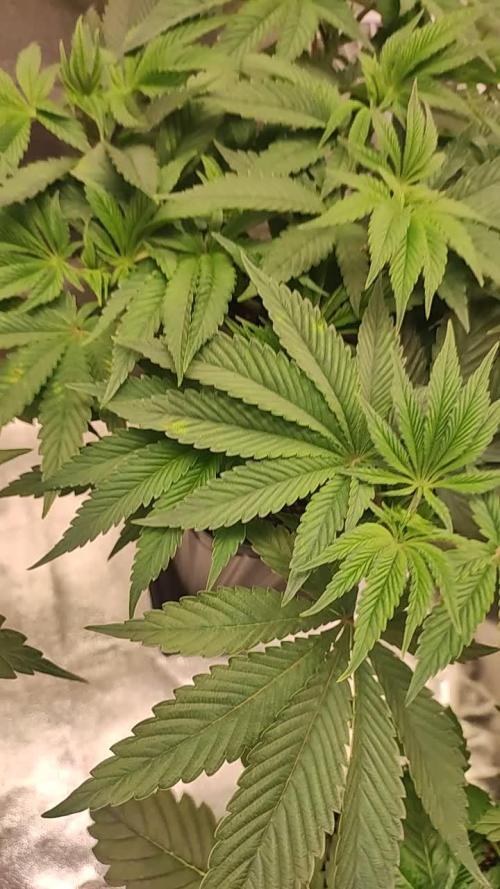
Alright, as you guys can see, she has been topped and she has been mainlined... i have a while to keep her in veg due to an auto flower, not being an auto flower, so now I have to wait for that that plants flowering to be done before I can transition this one into flower so I figured I would take my time and get some training on her .. God bless everybody have a great week 🙏
Likes
4
Share
Es realmente impresionante ver el crecimiento que ha tenido en menos de 1 mes. Unos días más de vegetación… quizás sale alguna poda apical más, unos días y luego a florar 🌹😍👍💪🦍🦍🦍
Likes
17
Share
@Joni2017
Follow
Hello, Growdiaries Community!😎 This week has been purely technical with plenty of action in the tent. My Critical has undergone a total transformation to optimize both space and light. 📏 Height Evolution: We started the week at 14 cm and, after the pruning and training, the plant has already regained its vigor, reaching 17 cm. You can tell the metabolism is running at full speed. ✂️ Applied Techniques (HST & LST): I decided to take full control of the structure before switching to flower: -Topping: I performed a cut on the main apex to break apical dominance and redirect energy to the side branches. -LST (Low Stress Training): I have opened up the two lower branches and the two new upper main colas towards the corners of the tent, anchoring them to create a flat and uniform canopy. -Selective Defoliation: I removed some fan leaves and internal shoots to ensure light reaches the heart of the plant and the fasciated stem directly. 💧 Watering and Nutrition: -Volume: Watered with 500 ml. -Fertilizers: Maintained a light dose of 0.5 ml/L of Bio-Grow. Next step: Next week I will increase the watering to 1 Liter with 1-2 ml/L of Bio-Grow to support the final stretch. 🌤️ Environment: -Temperature: 27°C (stable and perfect for recovery). -Humidity: 70% (helps keep the stems flexible for LST). -Lighting: Keeping the light at a 63 cm distance to encourage a bit more internodal stretching. Bio-acoustics: Continuing with 528 Hz (22 min) sessions to reduce stress from pruning. Week Summary: The plant has responded incredibly well to the training. I now have a structure with 4 well-defined and leveled main colas. The goal is for it to double its height in the coming days before switching to 12/12. Thanks for stopping by and for your comments! Happy growing!😉👍
Likes
86
Share
My Peach has once again taken an gigantic step towards her flowering stage. The constant training is a success, has made for a healthy looking growth. She is now probably in her last week of vegetation, going to be a good one. Description Peach Puree CBD is a high-CBD, sativa-dominant medicinal marijuana strain. It was bred by back-crossing the product of a Sweet Diesel x The Orange (California). Peach Puree got its name from the delightfully delicious taste of sweet, ripe peaches which also includes notes of creamy lemon. It is a plant that is a breeze to grow requiring no special skills or considerations. Its vigour is also reflected in the proliferation of of dense, sticky buds. Its aroma of citrus and peach is further complemented by the dazzling purple display as leaves turn colour towards the end of flowering. The THC:CBD ratio is 1:2 with THC levels measured at 5% as opposed to the CBD measurement of 10%. The effect of Peach Puree CBD is extremely gentle yet upifting and it can be used at any time of day for those seeking medicinal relief from cancer, AIDS, insomnia, anxiety, gastro-intestinal problems, epilepsy, muscle tension and more besides. Characteristics Breeder/Brand G13 Labs Genetics (Sweet Diesel x The Orange) BX Pack Size 5 Seeds Variety Mostly Sativa Flowering Type Photoperiod Sex Feminised THC Content 5% CBD Content 10% Grows Indoors, Outdoors Medical Conditions Anxiety, Cancer, Epilepsy, Gastrointestinal Disorder, HIV / AIDS, Insomnia, Muscle Spasm Medicinal Properties Yes Taste / Flavour Citrus, Lemon, Peach Effect Uplifting
Likes
23
Share
@Wazowskid
Follow
I've stopped giving them fertiliser and did a root flushing 4 days ago. They are looking good, smaller buds of what could have been with the correct equipment and dedication but I can't complain. I don't have a magnifying glass so I'm basing myself on the pistils to know when to harvest. I think I'll give them one more week but everyone is welcome to give me advice, would love to receive feedback from more experienced people.
Processing
Likes
6
Share
Week 5 I believe and they’re doing great..topped them lil over a week ago. Thinking another week or two then flip to flower! 😎
Likes
38
Share
@TrueNorth
Follow
Flowering has beyond started, looks beautiful and healthy, smells fantastic lol. Hope these continue to bring me happiness. Just put the netting in, she is budding i believe hopefully i get some juicy nugs out of this
Likes
4
Share
@Dr_4NdY
Follow
Week 5🌸 done, first day of week 6 They are developing beautifully Studio & Rainbow Gelato are heavy stinkers - sweet + gassy It seems like Bruce Banner in the back could get more feeding Will up the volume of water a little in the following week I take out a few leafes here and there, don’t seem to stress them a bit At nighttime it gets pretty cold, 16/17 degrees so some of the pistils tops (Blütenstempel) are getting dark
Likes
47
Share
Gave her a cocktail to help with stress. Added 1st net for lateral support, not so much now, but for later. Blue light is absorbed by photoreceptor proteins called phototropins, which trigger a hormonal response that causes cells on the shaded side to elongate, making the plant bend toward the light. Try and fill this side a little. She is quite big already, just needs to find her stride again after the undue torture. The mind is constantly working and producing, just like a factory. It's not just a passive recipient of information but an active producer of ideas, attitudes, and beliefs. The "ingredients" in this factory are the information you consume, such as books, conversations, and the media you engage with. The "products" are your thoughts, beliefs, and actions. The quality of the ingredients directly influences the quality of the output. 5 apex stems with 20-30 mini cola, let them develop a little, with the apical dominance shattered, all those 20-30 will all compete with each other as soon as that stretch is initiated. Key to a good stretch is making sure the plant is cycling efficiently, with large ATP conversions occurring lights out. For now, keeping light intensity high. A plant will slow its vertical growth in very high light intensities, leading to a more compact form with thicker stems and leaves. This response is a protective mechanism against light stress, which can damage the photosynthetic apparatus and lead to symptoms like leaf scorching, yellowing, and brittleness. Instead of growing taller, the plant invests its energy into creating a more robust, stress-tolerant structure. Providing plants with necessary antioxidants helps protect the photosynthetic apparatus by scavenging reactive oxygen species (ROS) that cause damage from excess light. UV light exposure can impact the xanthophyll cycle by either enhancing its photoprotective role or causing damage, depending on the intensity and type of UV radiation. UV exposure can trigger the synthesis of more xanthophyll cycle pigments to increase the plant's capacity to dissipate excess energy, but it can also cause direct damage, particularly to Photosystem II, and may lead to a decrease in the de-epoxidation state (DEPS ratio) which indicates a reduced capacity to dissipate excess energy. Plants can respond to UV stress by increasing the synthesis of xanthophyll cycle pigments, such as violaxanthin and zeaxanthin, to improve their photoprotective capacity. UV-induced changes in xanthophyll cycle pigments can be linked to a plant's overall tolerance to high radiation stress. The xanthophyll cycle helps protect against photoinhibition, which is especially important when the plant is exposed to high levels of both UV and visible light. High doses of UV radiation can directly damage photosynthetic components, including the proteins, lipids, and pigments in the thylakoid membranes. Exposure to UV radiation can have a mixed effect on the de-epoxidation state (DEPS ratio) of the xanthophyll cycle pigments. In some cases, UV can inhibit the conversion of violaxanthin to zeaxanthin, resulting in a lower DEPS ratio and a reduced capacity for energy dissipation. However, the total pool of xanthophyll cycle pigments may increase, and this enhanced pool size could provide a greater potential for photoprotection despite a lower DEPS ratio. The xanthophyll cycle works alongside other mechanisms, such as the accumulation of flavonoids (UV screens), to protect the plant from UV-induced damage. Blue light repairs 100% UV-induced damage in plants through a process called photoreactivation, which uses a light-dependent enzyme called photolyase. This enzyme uses energy from blue and UV-A light to directly reverse the damaging pyrimidine dimers in the DNA caused by UV-B radiation, a key mechanism for maintaining the plant's genetic integrity. After carbon, light, water, temperature, and nutrients, the limiting factor of a plant's growth is often its own internal factors or the amount of a key ingredient. Chlorophyll concentration is one such factor, as the amount of this pigment limits how much light can be captured for photosynthesis. Other factors include chloroplast number, respiration rate, and the concentration of carbon dioxide in the atmosphere, as plants are often in a CO2-deficient condition. 60x60x18=64800seconds x 700 = 45,360,000moles. 45DLI Exposure to 165 µW/cm² of ultraviolet-B (UV-B) light for 3600 seconds = 1 hour, a extremely high, acute dose triggering stress responses and protective mechanisms. . The plant's photoreceptor protein, UVR8, senses the UV-B radiation. This triggers a signaling cascade that activates specific genes to protect the plant from damage. In response to the UV-B signal, the plant ramps up the biosynthesis of protective compounds like flavonoids, phenolic acids, and anthocyanins. These compounds absorb UV radiation and accumulate in the epidermal layers of leaves to shield inner photosynthetic tissues. The plant may increase leaf thickness or deposit more cuticular wax, creating a physical barrier to the radiation. The plant will produce more enzymatic and non-enzymatic antioxidants to neutralize the reactive oxygen species (ROS) produced by the UV-B radiation. The plant activates enzymes, including photolyases, to repair DNA damage caused by the UV-B. These repair mechanisms are critical for preventing permanent genetic mutations. While protective measures are activated, a high dose delivered over a short period can cause stress that overwhelms the plant's defenses. Photosynthesis is highly sensitive to UV-B. A high dose can inactivate Photosystem II (PSII), damage thylakoid membranes within the chloroplasts, and reduce chlorophyll content, which lowers the plant's overall photosynthetic capacity. Despite repair mechanisms, high UV-B doses can inflict persistent damage on the plant's DNA. The overproduction of reactive oxygen species can cause oxidative stress, leading to the oxidation of lipids and proteins and disrupting cellular function. I am playing in the enchanted forest. A shift in perspective is what changes perception over time. By deliberately considering a situation from another point of view (perspective), you can challenge your initial, knee-jerk interpretation (perception). This is a valuable skill in both personal and professional life for fostering empathy, improving problem-solving, and making more informed decisions. Move the mind off perception into perspective. Thank you.
Likes
29
Share
D52/F2 - 11.8 - 11 very loved tops have been switched to 12/12 and amended with mulch and doses of good bugs and mycos! D54/F4 - 11.10 - Got the defoliation yesterday, stretchin kicking in
Likes
19
Share
They've stretched through the net a fair bit , all different heights. Defoliated reasonably hard on day 20 . Started sugar royal at half dose this week. Will start green sensation also from plagron from week 4 as recommended.
Likes
184
Share
#seedsman420growoff and #SeedsmanSeeds 📆 Germination Week, 20-26 April 2024 20 April - Placed 3 seeds in a cup of RO water, put in seedling grow tent under 24hrs light at 25% power, temp 74 degrees F. 21 April - 2 seeds cracked, roots appeared. Placed into Root Riot starter cubes. 22 April - 3d seed cracked. Placed into wet paper towel. 24 April - 1st seed sprouted from starter cube. Main root exposed, moved to permanent DWC system (see pictures). Filled for first time with solution. 25-26 April - Let seedling grow. Thank you Seedsman Seeds! I’m very excited to be a sponsored participant and given the opportunity to cultivate during SeedsmanSeeds Growoff this year! The strain I received was Pineapple OG. This is a new 2024 release from Seedsman Seeds. Its genetics are a hybrid 3 way cross with Pineapple Kush, Pineapple Muffin, and Pineapple Express. This unique fusion results in tall plants boasting remarkable uniformity, and delightful sweet, tropical fruit flavors. It also has notably high THC levels (25-27%), 50% Sativa / 50% Indica, with harvest yielding up to 450g indoor - 750g outdoor /m2, and a flowering time between 56-70 days. I’m anticipating the upcoming weeks with great optimism. 📑 The Plan - use a Deep Water Culture, 3 gal system, as a permanent home. Apply a weekly feeding schedule using time tested blends of Terra Aquatica (formerly General Hydroponics), Botanicare, and Europonics nutrients throughout the cycle. Depending on the speed of the grow, veg the plant for 6-10 weeks using the scrog method of training. Then flip into flower where she will continue for another 8-10 weeks. So my forecast is this grow should be finished around 30 August. 🍶 24 April initial nutrient solution TDS 530, PH 6.1 🍽️ 24 April initial feeding schedule first 2 weeks 💧 Using reverse osmosis water with EC/TDS at 0 🐉 Nutrient Solution EC 1.0 at 63 degree F 🔆 Light power at 50%, DLI 13 canopy coverage at 18hrs 😤 Using General Hydroponics, HGC728040, Dual Diaphragm Air Pump, 320 GPH That is it for this week. Thanks for the look, read and stopping by.
Likes
25
Share
10/23: I fed today with One, sweet & sticky, signal, superthrive, silica, and a little ca/mg. 10/27: Fed today with one, signal, sweet & sticky, silica, beastie bloomz, kangeroots, and humic acid.
Likes
35
Share
@nonick123
Follow
Día 87 (26/08) Aplicación foliar de Bacillus thuringiensis a 1 g / litro para evitar a las temidas orugas de los cogollos! Hace un día nublado (29 ºC de maxima) y NO es necesario regar Elimino la malla de sombreado de la cara sur, ya que las temperaturas son más suaves después de la canicula Día 88 (27/08) Riego con 500 ml H2O pH 6,5 Empiezan a bajar las temperaturas a 29 ºC de máxima, y se nota en la demanda de agua por parte de las plantas! Día 89 (28/08) Riego con 500 ml H2O pH 6,5 Cada planta empieza a ir un poco a su marcha en la demanda de riego dependiendo de su tamaño y estado de floración Día 90 (29/08) Riego con 250 / 500 ml H2O pH 6,5 He detectado un gusano de los cogollos muerto sobre una hoja! 💥 Parece que los Bacillus thuringiensis funcionan estupendamente! 😁 Día 91 (30/08) Riego con 250 / 500 ml H2O pH 6,5 Día 92 (31/08) Riego con 1 litro H2O pH 6,5 + 25 ml de Humus de Lombriz Liquido Día 93 (01/09) Aplicación foliar Bacillus Thuringiensis No es necesario regar tras el litro de ayer y dia nublado con pequeños chubascos! 💦Nutrients by Lurpe Solutions - www.lurpenaturalsolutions.com 🌱Substrate PRO-MIX HP BACILLUS + MYCORRHIZAE - www.pthorticulture.com/en/products/pro-mix-hp-biostimulant-plus-mycorrhizae
Likes
12
Share
@Csmithch
Follow
Flowers really showed up this week. Started feeding flowering nutes as of tonight, so they went 2 full weeks still on veg nutes. Today is the end of week 2 since switching to flowering light schedule. Growth isn’t as explosive as it had been the first two weeks, however still growing. Slowly did some defoliating over the last 2 weeks, opened things up a bit, will do a little more this week and then leave them to grow until harvest. Stay blessed and happy growing 😎
Likes
16
Share
Loving the tight bud structure on this plus size gurl.. she greasy, drinkin like a fish and F U N K Y fuely ppfd ranging 800-1100
Likes
37
Share
@RakonGrow
Follow
+ data+charts online rakongrow.lima.zone/growme-mango-kush-auto-015.html Tag 81 : der rest dünger ist defenitiv jetzt umgekippt. egal , sie holt sich was sie nutzen kann und blüht fröhlich vor sich hin . sieht allerdings etwas gerupft aus .
Likes
22
Share
@Papablob
Follow
06/11 Y a plus qu'a.. Enfin si je ne merde pas plus sur l'alimentation. C'est encore juste.. 😅👍 Merci encore à Divine Seeds pour toutes ces superbe souches. Que l'ont peut trouver là: Divine seeds: https://divineseeds.net/
Likes
Comments
Share
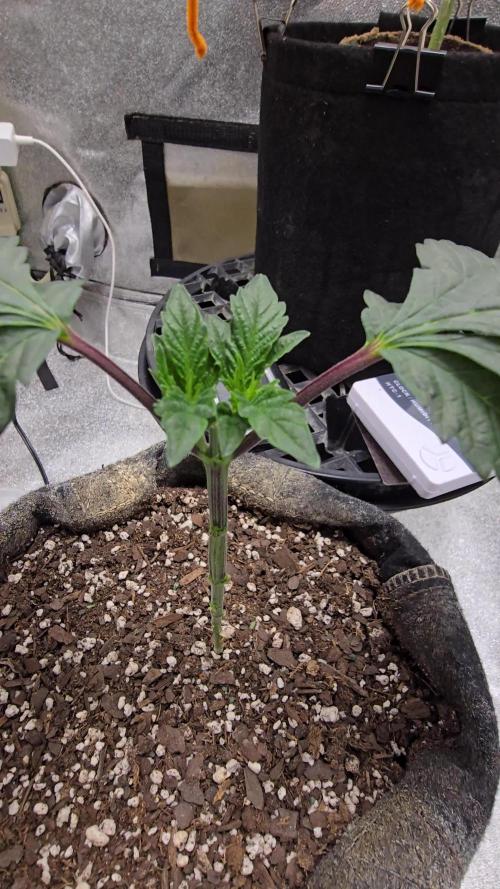
22.04.25 VD#43 Hey Growmie's 😁 Der Caramba geht es wunderbar sie macht sich sehr sehr gut. Heute gab es wieder Nährstoffe Hesi Wurzel Complex 5ml/L Hesi TNT Complex 5ml/L Hesi PowerZyme 2ml/L. Jetzt ist es nicht mehr lange dann geht es in die Blütephase dann wird sich Ihr ganzes Potential zeigen. Es wird definitiv sehr fein, jetzt muss Sie aber noch ein bißchen Geduld haben. Nächste Woche gibt es das nächste Update danke für den Stop bleibt Sauber and Stay High. Mögen all eure Ladys Gesund und prächtig wachsen und euch mit schmackhaften Stuff versorgen 🤩🍀 ■■■■■■■■■■■■■■■■■■■■■■■■■ 22.04.25 VD#43 Hey Growmie's 😁 The Caramba is doing wonderfully well. Today I gave it nutrients again Hesi Root Complex 5ml/L Hesi TNT Complex 5ml/L Hesi PowerZyme 2ml/L. It won't be long now before the flowering phase begins and the full potential will be revealed. It will definitely be very fine, but now she has to be a little patient. Next week there will be the next update thanks for the stop stay clean and stay high. May all your ladies grow healthy and splendid and provide you with tasty stuff 🤩🍀