


Likes
Comments
Share

@DogDoctorOfficial
Follow
Week 2 Flower – Gelonade Run (Week 6 from Seed)
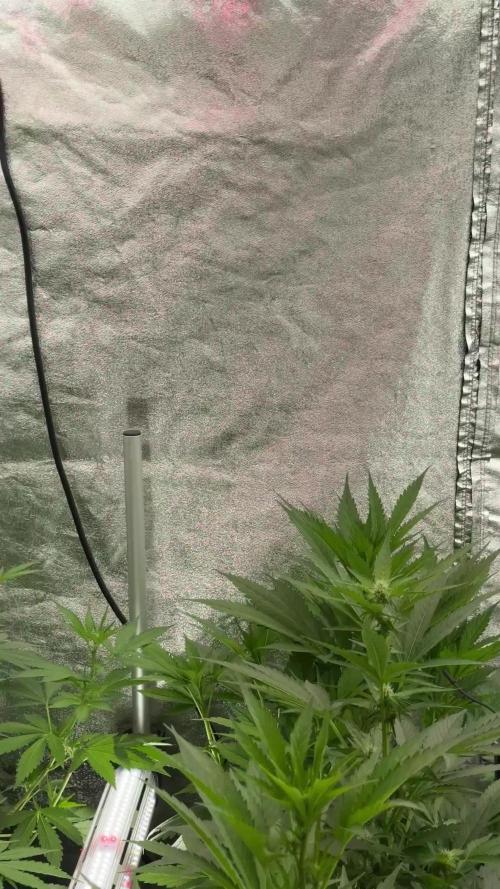
The Gelonade girls are stepping gracefully into flower, evolving beautifully despite a very busy week on my end. Fewer photos this round, but I did capture a full-room video and some detailed shots of their stunning leaves, because even if time is short, the magic in the tent keeps on shining.
Growth & Morphology
Both phenos are showing their character. Gelonade #1 is vigorous and balanced, while Gelonade #2 is still carrying that special leaf mutation we talked about, leaves that open like a hand folding back into itself. I couldn’t resist photographing them again. They’re not just leaves, they’re little works of art.
This week also saw the first defoliation of some of those big solar panels, just enough to keep airflow moving while still letting the girls power themselves. They took it in stride, no stress, only progression.
Nutrient Program – Experiment in Motion
The recipe shifted this week as we build momentum into flower. Start Booster is now replaced by Top Booster, and alongside Aptus staples (Regulator + CalMag Boost), I introduced a Plagron trio at 1 ml/L each:
• Power Buds – to push flower initiation
• Sugar Royal – to stimulate metabolism and resin potential
• Green Sensation – a trusted all-in-one bloom enhancer
The All-In-One Liquid remains on pause since the super soil and pellets are still carrying base NPK. Improvising? Yes. But with intention. I’ve had excellent results before with Plagron, and now I’m curious to see how their boosters synergize with Aptus.
Environmental Conditions
Temperatures are running a bit high (peaking at 34°C on hot days) and humidity has reached 60–70% at times. That pushes VPD to around 1.89 – not textbook perfect, but the Gelonades are adapting with grace.
The TrolMaster WCS Substrate Sensor has been a game-changer here: it gives me live readouts of soil EC, moisture, and balance, all piped into the Tent-X brain. Watering is happening when moisture drops around 19–20%, promoting healthy wet/dry cycles and deeper root activity.
Lighting & Room Setup
The room is alive with tech.
• Future of Grow Black Series 600
• ThinkGrow Model 1s
• Lumatek Zeus 465w Compact Pro (newly added!)
All tied into the TrolMaster ecosystem, letting me control light, extraction, sensors, and environment as one living system. Air exchange is handled by dual 6-inch extractors with carbon filters, plus a 6-inch intake, keeping fresh air circulating and smells contained.
Looking Back, Looking Forward
From a seed to now the Gelonades have been nothing but joy. Strong roots, vigorous structure, and personalities shining through. Flower initiation is just beginning, so no dramatic bud sites yet, but the stretch and structural shift are in full swing. Next week, I expect clear signs of pre-flowers stacking in.
And because life in the garden always connects back to nature: this week I also captured a photo of a bee pollinating a flower outdoors. Bees are the true keepers of fertility on Earth, and just like them, we as growers are here to assist life in expressing itself fully. A little fairytale touch to remind us: without bees, there would be no Gelonade.
⸻
Plant Stats – Week 2 Flower / Week 6 from Seed
• Height: ~50 cm
• Temperature: 28–34°C
• Humidity: 50–70%
• VPD: ~1.89 kPa
• EC: 0.6
• pH: 6.1
• Light: PPFD range 700–800 µmol/m²/s
⸻
✨ The Gelonades are thriving. The leaves tell their own stories, the room hums with technology, and flower season is officially underway.
Growers Love to all,
DD (Dogdoctor) & The Gelonade Girls
📲 Don’t forget to Subscribe and follow me on Instagram and YouTube @DogDoctorOfficial for exclusive content, real-time updates, and behind-the-scenes magic. We’ve got so much more coming, including transplanting and all the amazing techniques that go along with it. You won’t want to miss it.
• GrowDiaries Journal: https://growdiaries.com/grower/dogdoctorofficial
• Instagram: https://www.instagram.com/dogdoctorofficial/
• YouTube: https://www.youtube.com/@dogdoctorofficial
⸻
Explore the Gear that Powers My Grow
If you’re curious about the tech I’m using, check out these links:
• Genetics, gear, nutrients, and more – Zamnesia: https://www.zamnesia.com/
• Environmental control & automation – TrolMaster: https://www.trolmaster.eu/
• Advanced LED lighting – Future of Grow: https://www.futureofgrow.com/
• Root and growth nutrition – Aptus Holland: https://aptus-holland.com/
• Nutrient systems & boosters – Plagron: https://plagron.com/en/
• Soil & substrate excellence – PRO-MIX BX: https://www.pthorticulture.com/en-us/products/pro-mix-bx-mycorrhizae
• Curing and storage – Grove Bags: https://grovebags.com/
⸻
We’ve got much more coming as we move through the grow cycles. Trust me, you won’t want to miss the next steps, let’s push the boundaries of indoor horticulture together!
As always, this is shared for educational purposes, aiming to spread understanding and appreciation for this plant. Let’s celebrate it responsibly and continue to learn and grow together.
With true love comes happiness. Always believe in yourself, and always do things expecting nothing and with an open heart. Be a giver, and the universe will give back in ways you could never imagine.
💚 Growers love to all 💚



Likes
18
Share


@RadDad
Follow
Ahhrrrrrggggghhhh PH imbalances!
Don't panic. We got this.
After a few theories and a bunch of research what I originally thought was light stress then a Cal Mag deficiency. Then I saw leaf damage and thought of Thrips. Wrong wrong and wronger.
Turns out the soil PH is all out if wack. By which I mean waaaaaay too high. Like almost 8. That's what I get for not thinking PH was nOT tHaT BiG a dEaL. Now equipped with my PH and TDS meters and a little PH up and PH Down from Standard Hydroponics we can get thing back into balance.
Lots of leaf growth this week. Looks like flowering is right around the corner. This will probably be the last week I'll feed her Grow Girls Grow from DSN and switch to Bloom Baby Bloom next week.
I've also done some defoliation this week to get light to some of the bud sites. Again I had no idea LST was this powerful, she's gonna have such pretty flowers
Looking forward to Bloom 🌹🚀🌻😎

Likes
2
Share

@Jardineiro_Br
Follow
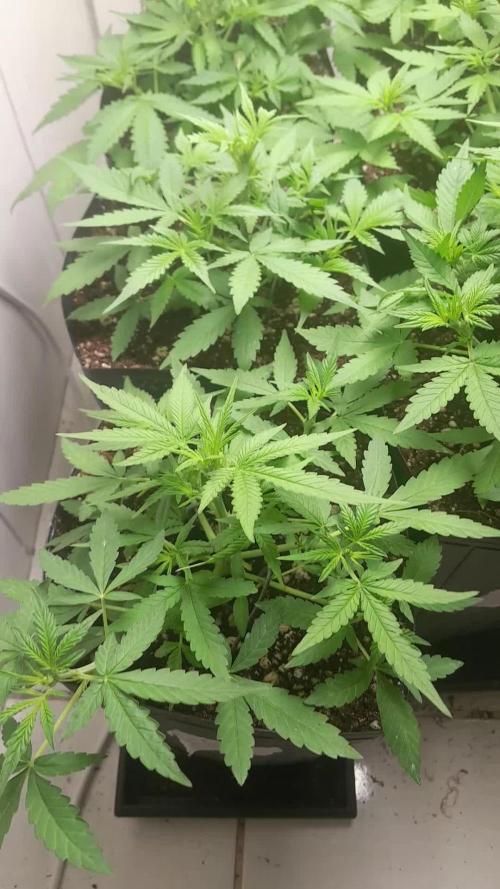
Comecei uma semana realizando o treinamento de baixo estresse e uma desfoliação. Não fiz poda top, não acho que seja adequado para plantas rápidas.
Vamos ver como vai ser o resultado. Não pretendo mais fazer intervenções no crescimento. A pequena lá do fundo não vou mexer .

Likes
21
Share


@BLAZED
Follow
W15 (9-5 to 15-5)
9-5
Temperature: 24.6 degrees (lights on) 20.3 degrees (lights off)
Humidity: 70% (highest) 46% (lowest)
Watering: None.
No pictures.
10-5
Temperature: 25.2 degrees (lights on) 20.8 degrees (lights off)
Humidity: 67% (highest) 44% (lowest)
Watering: 1000 ml.
11-5
Temperature: 25.4 degrees (lights on) 19.8 degrees (lights off)
Humidity: 67% (highest) 36% (lowest)
Watering: 1000 ml.
No pictures.
12-5
Temperature: 25.9 degrees (lights on) 20 degrees (lights off)
Humidity: 59% (highest) 42% (lowest)
Watering: 1500 ml.
Set the strength of the light to 95%
13-5
Temperature: 26.8 degrees (lights on) 20.9 degrees (lights off)
Humidity: 61% (highest) 47% (lowest)
Watering: 1500 ml.
No pictures.
14-5
Temperature: 27 degrees (lights on) 19.2 degrees (lights off)
Humidity: 68% (highest) 41% (lowest)
Watering: 1500 ml.
15-5
Temperature: 26.1 degrees (lights on) 19.8 degrees (lights off)
Humidity: 67% (highest) 43% (lowest)
Watering: None.

Likes
5
Share

@Chubbs
Follow
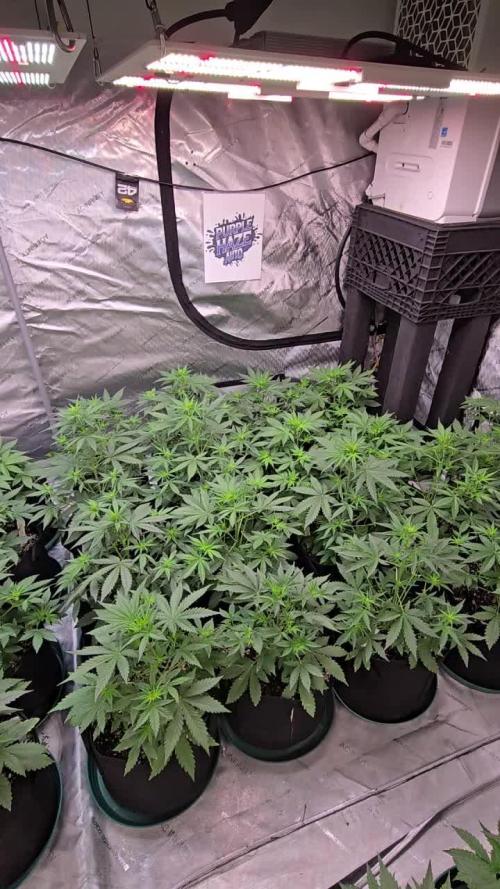
What up family, weekly update on these girls. I raised the lights 6in this week to allow some stretch but still keeping 400-600ppfd at the canopy level. Over all they're progressing beautifully. I started adding 2.5ml/gal of Athenas Blended line Grow A & B. Haven't seen any burnt leaf tips so I think they'll be OK adding a little boost. All in all Happy Growing.


Processing
Likes
4
Share


@Mr_nugs_lover_David
Follow
She is such a beautiful strain to grow,her aroma it's just so amazing like pure mango,it's just like fruit,can't wait to try her,I'm in love with her Aroma and this feno particularly it's purple so I'm very excited,let's see how she keeps developing on her 4th week

Likes
18
Share


@BABS_Babies
Follow
Things are really starting to smell strong and getting fun. Seeing some frosty Trichomes. Excited!


Likes
34
Share


@BOMbolenath
Follow
This week the weather is better. the buds are getting fat and it is developing well.
Its smell like citric mango.

Likes
13
Share


@Ferenc
Follow
It was easy to harvest she was very small jut cut it quickly without stalks the wet weight is 17 g of the buds, nicely coated with THC and it was approx 70% milky and 40% amber trichomes. Hopefully good time to be harvested. This site has changed can not update and edit the comment section. The smoke is nice it is kind of relax and strong high. Not the best but not bad at all. I like it.

Likes
8
Share


@Kayotic
Follow
*So many leaves!! Lots of defoliation still.
*Smells stronger, earthy
*About to have her own tent

Likes
38
Share


@nerdz
Follow
There's soooooo much and it smells great. I had a 3x3 for drying but resorted to just drying in the grow tent since I'm not sure if it would have all fit.
I will not be using a SCROG especially with Autopots and this light as it leaves no room for me to get in and train.
Will post final results in ~10 days or so.
See you on the next one
Processing
Likes
3
Share


@LongJohn420
Follow
So Blue gelato left. this week with nutes then start to flush.
-day 60 update
Looking ready, almost every trichome cloudy. I'll start flushing and day 70 30th dec it will be cutted. But I will check those trichomes again. If I get lots of amber ones before day 70 harvest will come sooner.. and other way around, I want there to be couple amber ones. Very nice dank blueberry smell here😋
Shoutout to Barney's for nice genetics for both this Blue getato 41 and Gorilla Zkittles 👊😎
-day 63
So I got me a little better loop to check trichomes. (usb mikroscope coming up) and they were almost all cloudy a few amber ones also. So I flushed her with 5L of water and flawless finish and now I wait for soil to dry up and couple feeds with falwless finish and were done here. 😎👌
-66
last flawless finish 4ml in 3l of water. Ok now there is almost none clear trichs cloudy everywhere and some amber ones. I'll wait 48 hours after next light cycle goes dark then I'll chop her down. so 3 more days and it´s gonna be 68 full days in the end.
Likes
12
Share


@L_Choppa
Follow
Buds are fatting up auto has another week or so to go watering with just plain phed water still giving the photos nutes this week next week is plain water for my records

Processing
Likes
14
Share


@kevgrow
Follow
Hey Friends, end of Week 10 from seed
Colas are looking Very nice
Noticed some orange color on some leaf tips so I lowered the amount nutrition when feeding
I used a magnifier to have a closer look at the colas, trichomes used to looked like little crystals, now they are bigger and cloudy.
So far no amber coloring on trichomes
I need some advice as to when I should begin flushing and harvest
Smell is slowly getting stronger, like a muffin with a small touch of gas ⛽️
Looking Forward in seeing some bud growth in the following week, will keep you guys posted!
Likes
6
Share
@Chubbs
Follow
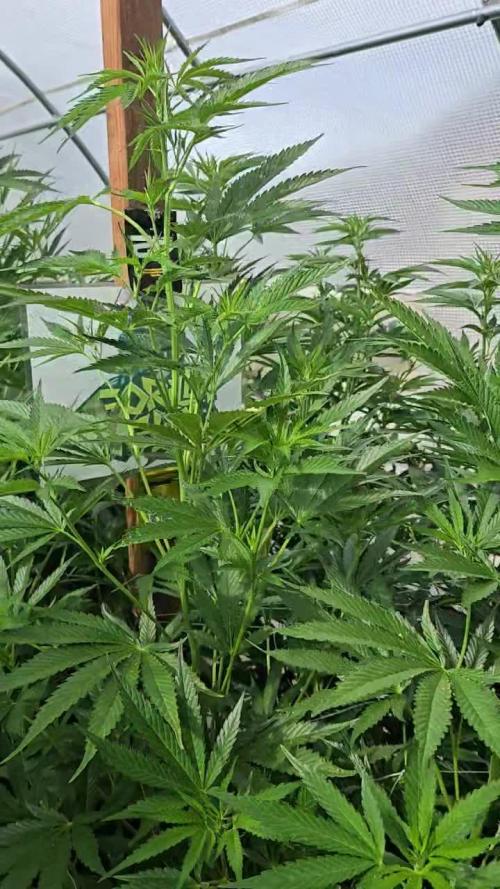
What up family. Weekly update on these gorgeous girls, the leafs are humongous on a couple. They're showing no signs of issues and dam near Growing a foot a week. All I all Happy Growing
Processing
Likes
1
Share


@TheBudTender
Follow
The spider mites are still here and I can’t seem to get rid of them. Even by removing every last leaf you can find them on they still manage to hide.
Likes
11
Share


@CanadianFillmore
Follow
Start of flowering week 1. This girl is already bigger then her round 1 sister and she's starting to stretch after just a few days of 12/12 light. The only nutrient difference this grow, will be the addition of sensizym, hopefully it helps pack on a few more grams per plant.
Likes
64
Share


@Cheeba_Inu
Follow
April 24, day 35, the plant continues to widen with the LST I am performing, and has nice healthy growth. Lots of branching, but the early stages of the flowering stretch is opening the plant up a little.
I switched from a transition nutrient profile to an early blooming profile, as there are a few pistils popping out here and there on the plant. My guess is that there will be another week or so of growth/stretch so I am hoping to get the plant significantly larger.
April 25, day 36, I raised the light by 5 inches. I should have realized earlier but I was chronically running the light a little too close this run which likely contributed to the stocky tight growth. I figured that if my brightness was not exceeding sunlight and I was not noticing leaf issues it would be fine. However, measuring the ppfd at a 15 inch hang height showed readings of 750+ at the edges and 1000 at the center. This amount is just not helpful for the plants structure even if it is growing vigorously. I raised the lighting to 20 inches which brought the ppfd to 650 at the edges and 850 at the center which is right where I want it. I am not otherwise touching the plant today, but will prune and perform some LST tomorrow.
April 26 Day 37, just letting it grow.
April 27 Day 38, did some training and pruning of the growth. The Euforia's transition to flowering has been slow, but the growth and vigour of the plant has stayed strong so at least it's giving me the time to fill up the tent. It's taking up just shy of 4sqft of growing space, so by the time time the flowering stretch finishes I am hoping to have growth close to all corners of the tent. So far I have been successful keeping the growth low, as this tent is very tight in its height.
April 29, day 40, just letting it grow.
April 30, day 41, switched watering to 3x daily 20 second intervals. The leaf tips are not showing any signs of burn, so so far so good. Took a few leaves off to expose the preflowers as needed.

Likes
4
Share


@SolitudeCorners
Follow
🌿Week 4: Defoliation & SCROG Setup
Week 4 was all about structure and airflow.
The canopy was getting bushy fast, with a ton of inner growth, so we went in for a solid defoliation session across the board. Lower fans, overlapping leaves, and shaded internodes were cleaned up to let light penetrate deeper into the canopy and reduce potential humidity traps.
Right after that, we finally dropped the SCROG net, stretched out gently across the canopy to guide the branches horizontally and prep for flower stacking. Some of these phenos are already reaching for the sky, so the timing felt just right.
Captured a full-time-lapse clip of the defoliation + netting process. It’s super satisfying watching the chaos turn into clean lines. Nature meets intention.
Feed Bloom since 20/6
22/6 Defoliation
🌱 Plant Response:
After defol, they bounced back fast. Tops are perky, leaves are praying, and stretch is continuing in a controlled way. The structure’s more open now — better airflow, better light distribution, better everything.
