


Likes
Comments
Share


@Tesla
Follow
Week 8 since switch to 12/12h.
The weather stays good, finally.
Pistils start to turn brown. Thricoms are 50% clear, 50% cloudy.
Going low on nutrients to avoid over fertilization (600-650 ppm)
2 or 3 weeks until harvest, I guess...
Suggestions are welcome. 👍

Processing
Likes
57
Share


@MadeInGermany
Follow
Hey everyone 😀.
These weeks they have continued to develop very well 👍.
They have made a huge leap forward since they were repotted 😃.
They will be topped again this week, and will then move to the flower tent next week 😍.
I am very curious to see how it will develop until next week.
I wish you a lot of fun with the new update, stay healthy 🙏🏻 and let it grow 🌱🍀
You can buy this Strain at :
https://sweetseeds.es/de/red-mandarine-f1-fast-version/
Type:
Red Mandarine F1 Fast Version
☝️🏼
Genetics:
Red Poison Auto®️ (SWS39)
X
Tangie (California Orange x Hybrid Skunk)
👍
Vega lamp:
2 x Todogrow Led
Quantum Board 100 W
💡
Bloom Lamp :
2 x Todogrow Led
Cxb 3590 COB 3500 K 205W
💡💡☝️🏼
Soil :
Canna Coco Professional +
☝️🏼
Fertilizer:
Green House Powder Feeding
☝️🏼🌱
Water:
Osmosis water mixed with normal water (24 hours stale that the chlorine evaporates) to 0.2 EC. Add Cal / Mag to 0.4 Ec Ph with Organic Ph - to 5.5 - 5.8 .

Likes
13
Share


@WeedTheNorth
Follow
Original Sensible Seeds
Bruce Banner#3 Auto
LED 180 watt
Coco 2 gallon fabric pot
Advanced Nutrients
House and Garden
Botanicare
Week 14
So another week or so with this lady and then done like dinner. I already cut some branches off this lady from the lower section that wasn't getting much sunshine. So I topped this gal to keep short and then the sativa traits took over and she grew tall and lanky which I would definitely change how I approach this strain in the future. Solid buds with a nice coating of trichomes. The yield won't be impressive but the quality is going to be banging with what she is producing. I cut more than half of this gals branches because her height was too much for my space so the final yield will not reflect what she could produce with the right training. Live and learn but overall Strong genetics and fun to grow. Well folks until next week Stalks Strong!!
Keep em popping
🇨🇦😏🤜👊🙏

Processing
Likes
25
Share


@Greengirl420
Follow
These plants are exciting! 🤩 (Today is day 22 (from sprout with green).
We have two plants here. Both are G14’s. Plant #1 we topped on day 11.
Plant #2 we are letting it ride out to see what it does, but with a bit of help from LSTraining.
Plant #1 is measuring around 7.5 inches but that’s on an angle as pictured, next time I untie it to rearrange I’ll try to get another measurement.
Plant #2 is around 5.5in. Both are just doing great and changing daily! Even from night to day we notice a difference! Both are receiving fox farm plant food and calmag each watering. I removed those super big fan leaves today so I’m hoping they do ok with that. 🤞🏼💪🏼🤩
As I’ve said in my other journals, I take a lot of pics lol. I’m here to learn and to help when I can and I love to see everyone’s baby’s grow 😍 Thanks for checkin mine out! Cheers to another week 💨 💨🤞🏼🤞🏼💪🏼💪🏼🤩🤩

Likes
168
Share


@Still_Smoq
Follow
📆 Week 8, 24-30 June 2024
24 June - Defoliated
25-30 June - Observed and let the plant grow.
📑 Defoliated Pablo. Well, she successfully smothered out the main apex and topped herself. I gave it the final pinch to complete the process. Pablo is one of most densely packed plants I’ve grown. She is beautiful and lush, but she requires a little more attention than most.
🍶 24, 27 June nutrient solution changed
🍽️ 24, 27 June feeding schedule updated
💧 Using reverse osmosis water with EC/TDS at 0
🐉 Nutrient solution EC 2.8 at 74 degrees F
🔆 Light power at 80%, DLI 40 canopy coverage at 12hrs
😤 Using PYPABL, Air Pump, 400GPH
That is it for this week. Thanks for the look, read and stopping by.

Likes
Comments
Share

@BlackBear833
Follow
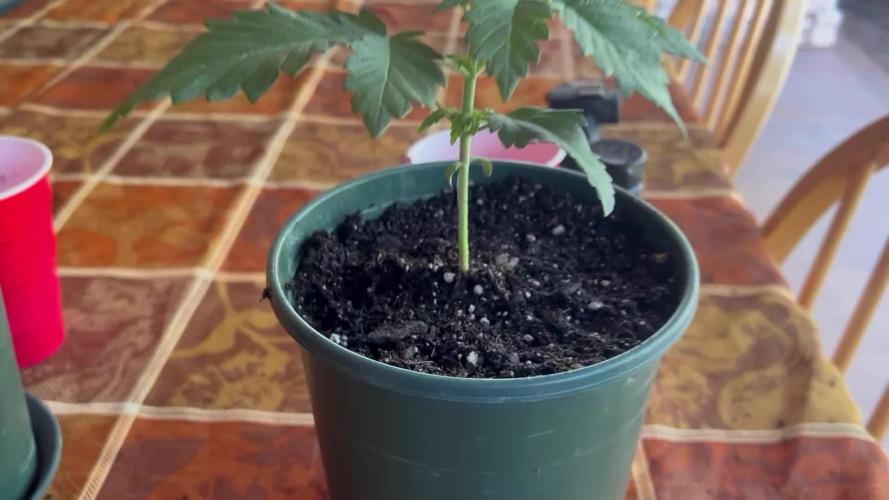
After three weeks in the solo cups I transplanted to 1 gallon pots and three days later I noticed yellowing on one of the plants so in 16oz of water I mixed in 1/4 tsp of Epsom salt and gave it to both plants in fear of magnesium deficiency but the other plant is thriving and growing strong. YouTube video:


Likes
6
Share


@cwgrows
Follow
The preflower stretch has been incomparable to any Soil grow I've seen! These sativas already caught up and don't show any signs of slowing down.


Likes
Comments
Share

@UDUDUDUDU
Follow
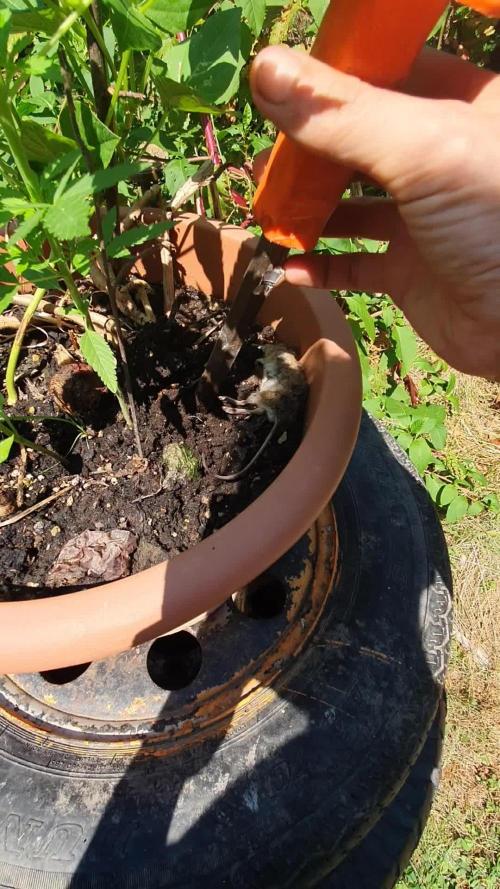
fun times with UDU! oh ' yea ' growing technique number 400,000,100,1 - Put a DeeeD mouse in da potter = no - ya itz GreaT nutrition ! Especially demm field miCe dem barn CaTz bee catchin'
NeXt WeeK Natural Bee Pollen ;) Delivered By BeeZ !
Likes
2
Share


@Madman2020
Follow
Vegetative steering
Aiming for:
leaf Temp -70f
CO2 300
VPD +.93
Planning for:
MJ and bras foilar
60%+1.5/-71f set to 68f+1.5
Leaf Temp is about 3f higher than ambient temp
At 68f outside, grow room still wont hit 68 with lights off
Day 24
No Co2
50-55klux
15inch from light
Leaf Temp 71-73f
60%/72F
Veg steering
Coconut water
Uneven canopy(11 at 29inch, 3ag 31 inch
————————
Day 26
56%68f(humidity dropped because i havnt watered in two days 🤡)
23inch-34inch tal. Arranged in order.
52-59klux
Sprayed
5Bras,(23inch)70 leaf temp
4Jas,(29inch) 70 leaf temp
4Bras&Jas(34inch)72f leaf temp
———————
Day 27
Watered once
————-
Day 28
Im pretty sure the sprays worked.
Noticed leaf burn with 3 plants sprayed with MJat 147ppm(.5ml)
No leaf burn with the .1Bras sprays
I wonder how long both are good for. Also, can i pour the unused spray in the medium? I just dont want to waste it.
Plants are noticeably more vigorous.
I am wondering if now is a good time for my defoliation. i was planning for Week 5. I feel like the buds are to developed for me to be pruning off lower buds and makes me feel like i should have pruned beginning of week4
__________

Likes
23
Share


@HerbalPower
Follow
This Auto Sour Diesel seed from Homegrown Cannabis Co. are fast growing and very strong resistance even if the plants suffered from heavy nutrient burns , still produced good amount of buds. Thanks to Mr. Jones, I learned a lot from your diaries and it was such an inspiration. I will try to grow another batch for holiday season. Happy Growing to all. 🙏😊❤️✌️

Likes
2
Share


@BakingBaked
Follow
This week was all about letting her recover from the cloning. Sadly most clones I took did not made it. Just 2 survived my inexperience hands.
The good news is that miss Daisy it's doing so well I may be able to give it another try before flipping to flower. I have no rush for this harvest so will probably give it a try.
After the cloning and some extra pruning she recovered in no time. The roots look good, just wish the nutrients did not stained them, that way would be easier to sight any root rot if present.
🗓️ Day - 28
⏰ Hour - 8:30 am / 10:00 pm
🌬️Air Temp. - 74 / 77
💦Humidity - % 50 / 54
⛽️ TDC (ppm) - 630 / 650
⚱️Reservoir Tmp. - 73 / 72
⚗️PH - 6.1 / 6.1
🌿 Looks perky and happy after pruning. She’s is recovering very well. Her roots are showing new white hairs so seams she’s liking the higher nutrients levels.
🗓️ Day - 29
⏰ Hour - 9:00 am /
🌬️Air Temp. - 76 /
💦Humidity - % 54 /
⛽️ TDC (ppm) - 680 /
⚱️Reservoir Tmp. - 73 /
⚗️ PH - 6.1 / 6.1
📝 Added 4 Gallons of tap water starting feed for week #5 with higher nutrient concentration so ppm should stay around 600. Also added 10 ml of hydrogen peroxide to the reservoir.
🗓️ Day - 30
⏰ Hour - 8:00 am /
🌬️Air Temp. - 76 /
💦Humidity - % 54 /
⛽️ TDC (ppm) - 680 /
⚱️Reservoir Tmp. - 73 /
⚗️PH - 6.2 /
🌿 Bouncing back very well and has nice new roots coming out.
🗓️ Day - 31
⏰ Hour - 8:15 am / 9:00 pm
🌬️Air Temp. - 75 / 76
💦Humidity - % 61 / 60
⛽️ TDC (ppm) - 680 / 710
⚱️Reservoir Tmp. - 72 / 73
⚗️PH - 6.2 / 6.2
🌱 Two clones left of Sour Diesel show small signs of root development. Other samples did not made it.
🗓️ Day - 32
⏰ Hour - 8:10 am / 11:30 pm
🌬️Air Temp. - 75 / 76
💦Humidity - % 61 / 57
⛽️ TDC (ppm) - 710 / 740
⚱️Reservoir Tmp. - 72 / 72
⚗️PH - 6.2 / 6.2
🗓️ Day - 33
⏰ Hour - 8:10 am / 11:00 pm
🌬️Air Temp. - 73 / 74
💦Humidity - % 49 /
⛽️ TDC (ppm) - 770 / 800
⚱️Reservoir Tmp. - 72 / 72
⚗️PH - 6.2 / 6.2
🗓️ Day - 34
⏰ Hour - 7:30 am / 10:00 pm
🌬️Air Temp. - 74 / 74
💦Humidity - % 52 / 53
⛽️ TDC (ppm) - 820 / 880
⚱️Reservoir Tmp. - 72 / 72
⚗️PH - 6.2 / 6.2
🗓️ Day - 35
⏰ Hour - 7:30 am / 9:00 pm
🌬️Air Temp. - 73 / 74
💦Humidity - % 55 / 52
⛽️ TDC (ppm) - 910 / 960
⚱️Reservoir Tmp. - 71 / 71
⚗️PH - 6.1 / 6.1

Likes
47
Share

@MadeInGermany
Follow
Info:
Unfortunately, I had to find out that my account is used for fake pages in social media.
I am only active here on growdiaries.
I am not on facebook instagram twitter etc All accounts except this one are fake.
Have fun with the update.
Flowering day 9
since the time
was changed to 12/12 h.
Hey everyone 😀.
The lady has started to stretch very nicely :-).
She is developing very well without any problems 👍.
I added 2 g of GHSC Powder Feeding per liter of coconut beforehand.
In 16-22 days I will add another 1 g per l cocos.
Today, like every two weeks, I added 1 g of GHSC Enhancer.
I also removed the bottom shoots.
As every day, the tent was cleaned, the humidifier was refilled and the entire electronics were checked for functionality.
I am very curious how it will develop in the coming week and I wish you all a lot of fun with the update.
Stay healthy and let it grow 🙏🏻
You can buy this Strain at :
https://www.exoticseed.eu/
Type:
Herz Og
☝️🏼
Genetics:
Larry OG X Kosher Kush
Indica 60 % / Sativa 40 %
👍
Vega lamp:
2 x Todogrow Led
Quantum Board 100 W
💡
Bloom Lamp :
2 x Todogrow Led
Cxb 3590 COB 3500 K 205W
💡💡☝️🏼
Soil :
Canna Coco Professional +
☝️🏼
Fertilizer:
Green House Powder Feeding
☝️🏼🌱
Water:
Osmosis water mixed with normal water (24 hours stale that the chlorine evaporates) to 0.2 EC. Add Cal / Mag to 0.4 Ec Ph with Organic Ph - to 5.5 - 5.8 .

Likes
14
Share


@Boilly
Follow
Once again I was away the whole week. They are definitely starting to flower. My post next week they will be full flower. Got lucky all 4 are females. Some minor bug issues as some small holes on leaves. Going to have lots of buds sites. 1 more week of LST then its off. Going into week 5 and apparently 4 more to go. Happy growing
Likes
21
Share

@DE_BW
Follow
Flower Week 4 – Frosty & Productive
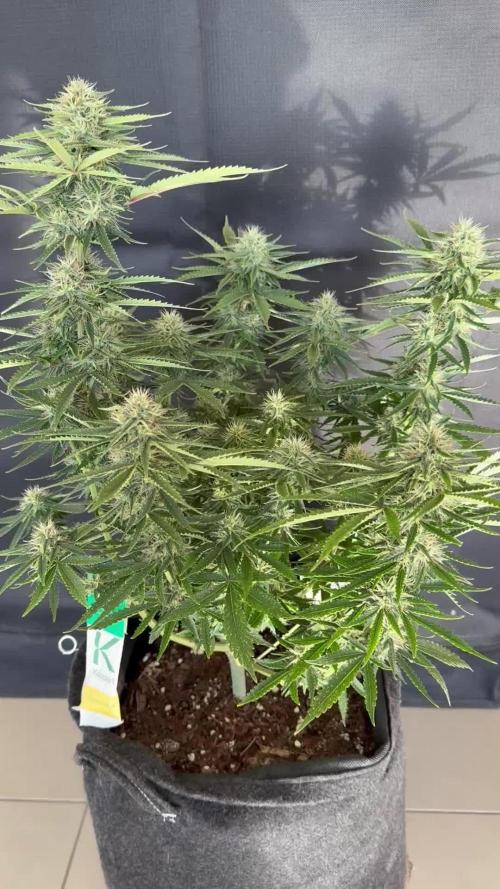
The Pineapple Kush had an excellent fourth week of flowering. Her buds are starting to stack nicely and she is getting noticeably frostier. She has also developed a very pleasant sweet and fruity aroma.
She is incredibly productive, with a huge number of bud sites all across the plant. It’s still difficult to judge the final bud density, as they currently seem to be on the slightly airier side. However, she definitely makes up for that with sheer quantity.
Overall, she continues to develop beautifully and I’m very happy with her progress.
Likes
15
Share


@Siriuz
Follow
I was very busy and couldn't upload content earlier but here we go
Day 20 and ahead

Likes
325
Share


@Metatronix
Follow
A BIG hallo to You all my familly and usual visitors. Thank you for stopping by and all the likes and comments....You rule!
I'm late with the update again because of the holidays and the Black Weekend shopping spree ;) So all the pictures were taken on November 25.
Everything runs smooth, The Blue Cheese is truly catching some blue colored buds and leaves....the leaves are also yellowing a lot right now, that you have to forgive me ;) But it's ok because this lady has one last week befor finish.
looking at the trichomes mostly they are cloudy with some amber and transparent both present, so i start flush any day now.
The bright Mars Hydro TS 1000 is kept at 33 cm from the top of my plants is is running on full power.
TS 1000 gives a full spectrum of light to the plants and you can see that... Mars Hydro did a very good job producing this lamp.
Thanks to Mars Hydro for supplying the necessary equipment for this grow.
That's it for this week folks, have a wonderful week.
Likes
3
Share
@DE_BW
Follow
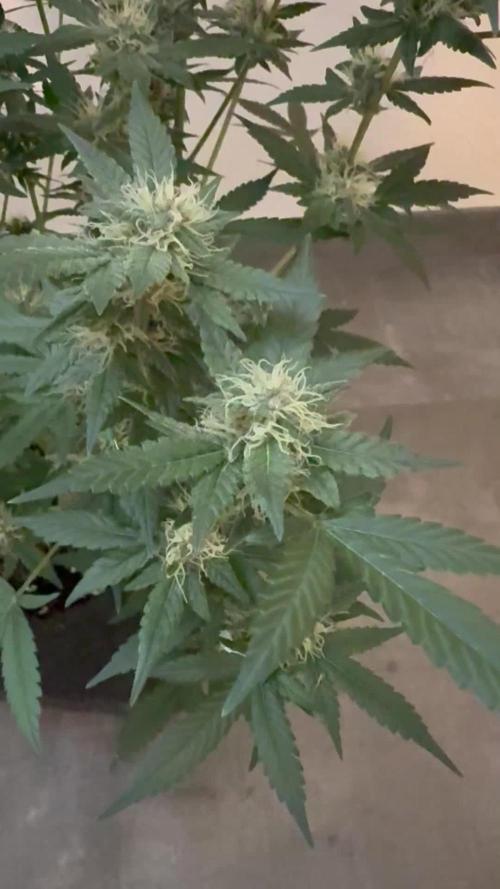
She is really stacking the Buds. Absolute pleasure to watch her develop
D58: Feeding 4l
D60: Feeding 4l. Switched to Overdrive. Minimal foxtailing is forming
D63: Feeding 4l.
Likes
5
Share


@Acid_joker
Follow
Вот. Не знаю. КАкда. Срезать. Шас или. Через недельку памогити. Светом плиз ?!)
Likes
57
Share


@DudeGrowsWeed
Follow
Coming into the home stretch here. I've been flushing for a week, going to give her one more good watering then plan on harvesting this weekend. I still don't see any amber trichomes, but I don't want the dying leaves to cause any bud rot, so amber or not she's coming down this weekend. The smell is super STRONG!!!👍
Thanks to all who answered my question on harvesting. I've been having trouble selecting an answer. I contacted GD support, hopefully they get this fixed soon.