Likes
Comments
Share
@Salgeezi
Follow
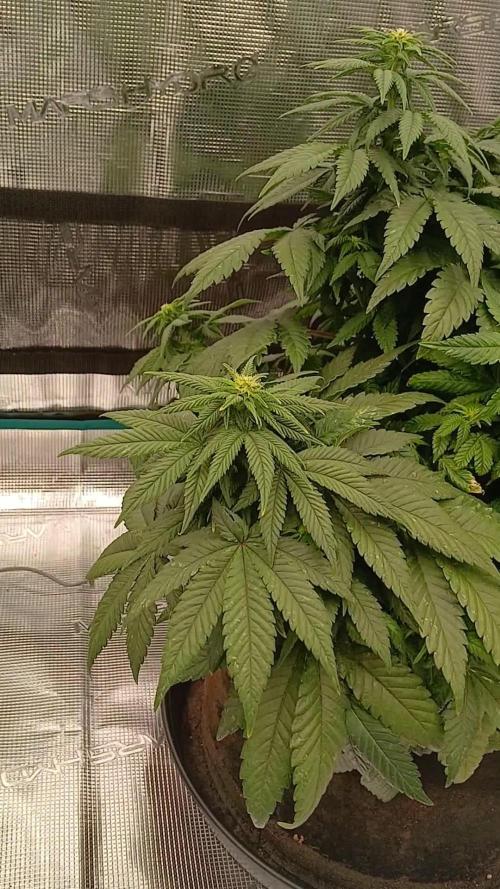
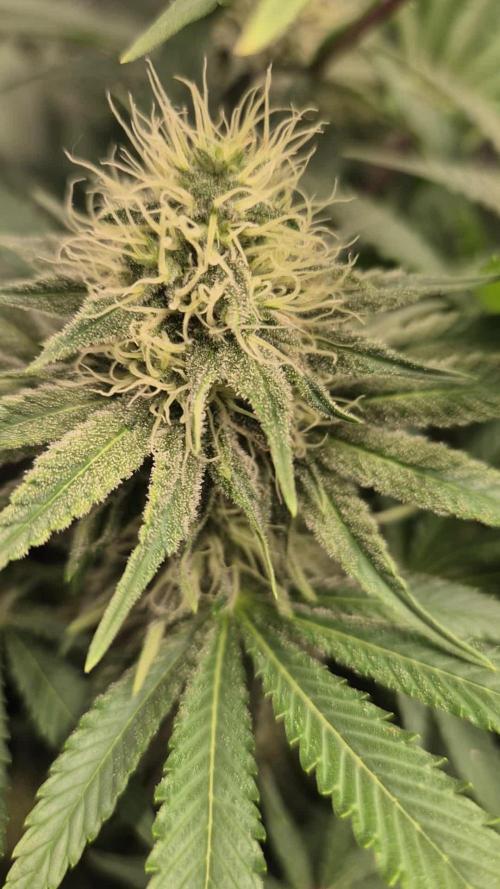
Finally got a bigger tent. They are much happier. Almost seems like it put them fully into flowering. I'm feeding around 1200 ec but the runoff keeps climbing to almost double. I will flush to about 800. Within a few days it's back up to 2000 Ec. Am I missing something here??
Likes
19
Share
Yellow butterfly came to see me the other day; that was nice. Starting to show signs of stress on the odd leaf, localized isolated blips, blemishes, who said growing up was going to be easy! Smaller leaves have less surface area for stomata to occupy, so the stomata are packed more densely to maintain adequate gas exchange. Smaller leaves might have higher stomatal density to compensate for their smaller size, potentially maximizing carbon uptake and minimizing water loss. Environmental conditions like light intensity and water availability can influence stomatal density, and these factors can affect leaf size as well. Leaf development involves cell division and expansion, and stomatal differentiation is sensitive to these processes. In essence, the smaller leaf size can lead to a higher stomatal density due to the constraints of available space and the need to optimize gas exchange for photosynthesis and transpiration. In the long term, UV-B radiation can lead to more complex changes in stomatal morphology, including effects on both stomatal density and size, potentially impacting carbon sequestration and water use. In essence, UV-B can be a double-edged sword for stomata: It can induce stomatal closure and potentially reduce stomatal size, but it may also trigger an increase in stomatal density as a compensatory mechanism. It is generally more efficient for gas exchange to have smaller leaves with a higher stomatal density, rather than large leaves with lower stomatal density. This is because smaller stomata can facilitate faster gas exchange due to shorter diffusion pathways, even though they may have the same total pore area as fewer, larger stomata. Leaf size tends to decrease in colder climates to reduce heat loss, while larger leaves are more common in warmer, humid environments. Plants in arid regions often develop smaller leaves with a thicker cuticle and/or hairs to minimize water loss through transpiration. Conversely, plants in wet environments may have larger leaves and drip tips to facilitate water runoff. Leaf size and shape can vary based on light availability. For example, leaves in shaded areas may be larger and thinner to maximize light absorption. Leaf mass per area (LMA) can be higher in stressful environments with limited nutrients, indicating a greater investment in structural components for protection and critical resource conservation. Wind speed, humidity, and soil conditions can also influence leaf morphology, leading to variations in leaf shape, size, and surface characteristics. Small leaves: Reduce water loss in arid or cold climates. Environmental conditions significantly affect gene expression in plants. Plants are sessile organisms, meaning they cannot move to escape unfavorable conditions, so they rely on gene expression to adapt to their surroundings. Environmental factors like light, temperature, water, and nutrient availability can trigger changes in gene expression, allowing plants to respond to and survive in diverse environments. Depending on the environment a young seedling encounters, the developmental program following seed germination could be skotomorphogenesis in the dark or photomorphogenesis in the light. Light signals are interpreted by a repertoire of photoreceptors followed by sophisticated gene expression networks, eventually resulting in developmental changes. The expression and functions of photoreceptors and key signaling molecules are highly coordinated and regulated at multiple levels of the central dogma in molecular biology. Light activates gene expression through the actions of positive transcriptional regulators and the relaxation of chromatin by histone acetylation. Small regulatory RNAs help attenuate the expression of light-responsive genes. Alternative splicing, protein phosphorylation/dephosphorylation, the formation of diverse transcriptional complexes, and selective protein degradation all contribute to proteome diversity and change the functions of individual proteins. Photomorphogenesis, the light-driven developmental changes in plants, significantly impacts gene expression. It involves a cascade of events where light signals, perceived by photoreceptors, trigger changes in gene expression patterns, ultimately leading to the development of a plant in response to its light environment. Genes are expressed, not dictated! While having the potential to encode proteins, genes are not automatically and constantly active. Instead, their expression (the process of turning them into proteins) is carefully regulated by the cell, responding to internal and external signals. This means that genes can be "turned on" or "turned off," and the level of expression can be adjusted, depending on the cell's needs and the surrounding environment. In plants, genes are not simply "on" or "off" but rather their expression is carefully regulated based on various factors, including the cell type, developmental stage, and environmental conditions. This means that while all cells in a plant contain the same genetic information (the same genes), different cells will express different subsets of those genes at different times. This regulation is crucial for the proper functioning and development of the plant. When a green plant is exposed to red light, much of the red light is absorbed, but some is also reflected back. The reflected red light, along with any blue light reflected from other parts of the plant, can be perceived by our eyes as purple. Carotenoids absorb light in blue-green region of the visible spectrum, complementing chlorophyll's absorption in the red region. They safeguard the photosynthetic machinery from excessive light by activating singlet oxygen, an oxidant formed during photosynthesis. Carotenoids also quench triplet chlorophyll, which can negatively affect photosynthesis, and scavenge reactive oxygen species (ROS) that can damage cellular proteins. Additionally, carotenoid derivatives signal plant development and responses to environmental cues. They serve as precursors for the biosynthesis of phytohormones such as abscisic acid () and strigolactones (SLs). These pigments are responsible for the orange, red, and yellow hues of fruits and vegetables, while acting as free scavengers to protect plants during photosynthesis. Singlet oxygen (¹O₂) is an electronically excited state of molecular oxygen (O₂). Singlet oxygen is produced as a byproduct during photosynthesis, primarily within the photosystem II (PSII) reaction center and light-harvesting antenna complex. This occurs when excess energy from excited chlorophyll molecules is transferred to molecular oxygen. While singlet oxygen can cause oxidative damage, plants have mechanisms to manage its production and mitigate its harmful effects. Singlet oxygen (¹O₂) is considered a reactive oxygen species (ROS). It's a form of oxygen with higher energy and reactivity compared to the more common triplet oxygen found in its ground state. Singlet oxygen is generated both in biological systems, such as during photosynthesis in plants, and in cellular processes, and through chemical and photochemical reactions. While singlet oxygen is a ROS, it's important to note that it differs from other ROS like superoxide (O₂⁻), hydrogen peroxide (H₂O₂), and hydroxyl radicals (OH) in its formation, reactivity, and specific biological roles. Non-photochemical quenching (NPQ) protects plants from damage caused by reactive oxygen species (ROS) by dissipating excess light energy as heat. This process reduces the overexcitation of photosynthetic pigments, which can lead to the production of ROS, thus mitigating the potential for photodamage. Zeaxanthin, a carotenoid pigment, plays a crucial role in photoprotection in plants by both enhancing non-photochemical quenching (NPQ) and scavenging reactive oxygen species (ROS). In high-light conditions, zeaxanthin is synthesized from violaxanthin through the xanthophyll cycle, and this zeaxanthin then facilitates heat dissipation of excess light energy (NPQ) and quenches harmful ROS. The Issue of Singlet Oxygen!! ROS Formation: Blue light, with its higher energy photons, can promote the formation of reactive oxygen species (ROS), including singlet oxygen, within the plant. Potential Damage: High levels of ROS can damage cellular components, including proteins, lipids, and DNA, potentially impacting plant health and productivity. Balancing Act: A balanced spectrum of light, including both blue and red light, is crucial for mitigating the harmful effects of excessive blue light and promoting optimal plant growth and stress tolerance. The Importance of Red Light: Red light (especially far-red) can help to mitigate the negative effects of excessive blue light by: Balancing the Photoreceptor Response: Red light can influence the activity of photoreceptors like phytochrome, which are involved in regulating plant responses to different light wavelengths. Enhancing Antioxidant Production: Red and blue light can stimulate the production of antioxidants, which help to neutralize ROS and protect the plant from oxidative damage. Optimizing Photosynthesis: Red light is efficiently used in photosynthesis, and its combination with blue light can lead to increased photosynthetic efficiency and biomass production. In controlled environments like greenhouses and vertical farms, optimizing the ratio of blue and red light is a key strategy for promoting healthy plant growth and yield. Understanding the interplay between blue light signaling, ROS production, and antioxidant defense mechanisms can inform breeding programs and biotechnological interventions aimed at improving plant stress resistance. In summary, while blue light is essential for plant development and photosynthesis, it's crucial to balance it with other light wavelengths, particularly red light, to prevent excessive ROS formation and promote overall plant health. Oxidative damage in plants occurs when there's an imbalance between the production of reactive oxygen species (ROS) and the plant's ability to neutralize them, leading to cellular damage. This imbalance, known as oxidative stress, can result from various environmental stressors, affecting plant growth, development, and overall productivity. Causes of Oxidative Damage: Abiotic stresses: These include extreme temperatures (heat and cold), drought, salinity, heavy metal toxicity, and excessive light. Biotic stresses: Pathogen attacks and insect infestations can also trigger oxidative stress. Metabolic processes: Normal cellular activities, particularly in chloroplasts, mitochondria, and peroxisomes, can generate ROS as byproducts. Certain chlorophyll biosynthesis intermediates can produce singlet oxygen (1O2), a potent ROS, leading to oxidative damage. ROS can damage lipids (lipid peroxidation), proteins, carbohydrates, and nucleic acids (DNA). Oxidative stress can compromise the integrity of cell membranes, affecting their function and permeability. Oxidative damage can interfere with essential cellular functions, including photosynthesis, respiration, and signal transduction. In severe cases, oxidative stress can trigger programmed cell death (apoptosis). Oxidative damage can lead to stunted growth, reduced biomass, and lower crop yields. Plants have evolved intricate antioxidant defense systems to counteract oxidative stress. These include: Enzymes like superoxide dismutase (SOD), catalase (CAT), and various peroxidases scavenge ROS and neutralize their damaging effects. Antioxidant molecules like glutathione, ascorbic acid (vitamin C), C60 fullerene, and carotenoids directly neutralize ROS. Developing plant varieties with gene expression focused on enhanced antioxidant capacity and stress tolerance is crucial. Optimizing irrigation, fertilization, and other management practices can help minimize stress and oxidative damage. Applying antioxidant compounds or elicitors can help plants cope with oxidative stress. Introducing genes for enhanced antioxidant enzymes or stress-related proteins over generations. Phytohormones, also known as plant hormones, are a group of naturally occurring organic compounds that regulate plant growth, development, and various physiological processes. The five major classes of phytohormones are: auxins, gibberellins, cytokinins, ethylene, and abscisic acid. In addition to these, other phytohormones like brassinosteroids, jasmonates, and salicylates also play significant roles. Here's a breakdown of the key phytohormones: Auxins: Primarily involved in cell elongation, root initiation, and apical dominance. Gibberellins: Promote stem elongation, seed germination, and flowering. Cytokinins: Stimulate cell division and differentiation, and delay leaf senescence. Ethylene: Regulates fruit ripening, leaf abscission, and senescence. Abscisic acid (ABA): Plays a role in seed dormancy, stomatal closure, and stress responses. Brassinosteroids: Involved in cell elongation, division, and stress responses. Jasmonates: Regulate plant defense against pathogens and herbivores, as well as other processes. Salicylic acid: Plays a role in plant defense against pathogens. 1. Red and Far-Red Light (Phytochromes): Red light: Primarily activates the phytochrome system, converting it to its active form (Pfr), which promotes processes like stem elongation and flowering. Far-red light: Inhibits the phytochrome system by converting the active Pfr form back to the inactive Pr form. This can trigger shade avoidance responses and inhibit germination. Phytohormones: Red and far-red light regulate phytohormones like auxin and gibberellins, which are involved in stem elongation and other growth processes. 2. Blue Light (Cryptochromes and Phototropins): Blue light: Activates cryptochromes and phototropins, which are involved in various processes like stomatal opening, seedling de-etiolation, and phototropism (growth towards light). Phytohormones: Blue light affects auxin levels, influencing stem growth, and also impacts other phytohormones involved in these processes. Example: Blue light can promote vegetative growth and can interact with red light to promote flowering. 3. UV-B Light (UV-B Receptors): UV-B light: Perceived by UVR8 receptors, it can affect plant growth and development and has roles in stress responses, like UV protection. Phytohormones: UV-B light can influence phytohormones involved in stress responses, potentially affecting growth and development. 4. Other Colors: Green light: Plants are generally less sensitive to green light, as chlorophyll reflects it. Other wavelengths: While less studied, other wavelengths can also influence plant growth and development through interactions with different photoreceptors and phytohormones. Key Points: Cross-Signaling: Plants often experience a mix of light wavelengths, leading to complex interactions between different photoreceptors and phytohormones. Species Variability: The precise effects of light color on phytohormones can vary between different plant species. Hormonal Interactions: Phytohormones don't act in isolation; their interactions and interplay with other phytohormones and environmental signals are critical for plant responses. The spectral ratio of light (the composition of different colors of light) significantly influences a plant's hormonal balance. Different wavelengths of light are perceived by specific photoreceptors in plants, which in turn regulate the production and activity of various plant hormones (phytohormones). These hormones then control a wide range of developmental processes.
Likes
4
Share
Vamos familia, actualizamos la cuarta semana de vida de estas Lemon Cherry Runtz de Fastbuds. Tuve problemas con la temperatura que estuvo alta 28/26 grados y humedad dentro de los rangos correctos, la única queja es la temperatura, 16 horas luz, 8 oscuridad, estiraron un poco, pero van lentas por el momento, que cojan fuerza. El trasplante a sido realizado a la maceta definitiva, 7L con sustrato Top crop. Hasta aquí todo, Buenos humos 💨💨💨
Likes
12
Share
Going really well, getting big colas! Had to do a lot of defoliation as they were really bushy, blocking air & light & also starting to rub up against each other & also sweating leaves. Removed a lot of popcorn growth & lower growth that wasn't getting enough light, this created more space for air& light around the colas. Super sticky & very smelly. Gorilla cookies is getting close to finishing up. Want Quality genetics to grow? If so you can't go past Fast Buds! Enter the code GROWEED when purchasing for a 15% discount.
Likes
15
Share
@Dunk_Junk
Follow
Day 49 - She's grown well this week, 7cm taller and a lot bushier. 💪
Likes
11
Share
@Synkery
Follow
Esta semana ha hubo un notario cambio en las pequeñas! Se recuperaron muy bien, han empezado a comer bien y pegaron estirón! A partir de la proxima semana empezaran a comer mas i a acavar de crecer!
Likes
13
Share
Day 30 toady, i switched to 12/12 3 days ago e the babies are already stretching hard and some are showing preflowers i'm pretty happy i'm watering with no nutrients as i'm using Canna Pro Plus soil and it should have enough nutrients for the first 3/4 weeks of flower. I cleaned the bottom of the plants from lowers branches and leaves and i will continua till day 14 of flower and i fixed it with a bamboo stick i got gifted from @AlpineGoat i will fix the other branches in the next weeks i'm pretty stocked with this grow this genetics are really solid growing strong and fast! Good job @Exotic_Seed!!🙌👍
Likes
10
Share
Hello my comrades! It was time for the fifth week of plants in my student's tent. He's lazy, and I don't have time to deal with his plants, but even the little we do has a positive effect on the progress of plants. Autoflowering plants did not train LST, but regularly did defoliation. Photoperiodic Bubblelicious on the contrary trained on the technique of LST, but did not cut off the vegetative leaves, because of this it turned out low, but fluffy. I'm tired of my student's laziness, he does not always perform the tasks that I give him, except for regular watering. But in General everything is fine, I watch his plants in the tent every three days to control the humidity of the earth and the color of the leaves.
Likes
4
Share
This week was full of ups and downs,,smiles and frowns,,,due to some early LST,,I managed to pop a couple branches off,,which is always frustrating but at the same time,,interesting and challenging,,so I will let her do her thing for a week or so,,and then look at how I’m going to shape her,,might be a blessing,,🤞🤞🙏
Likes
8
Share
Likes
5
Share
A little yellowing slow growth I think due to non transplant
Likes
3
Share
Esta semana hicimos la última poda de bajos y alicales , es una de las últimas podas q hacemos! Después de esto la vamos a pasas a 10 litros y ya la mandamos a florecer creo q esta más q lista para arrancar el proceso de floración
Likes
1
Share
Stunning Laides right here I will be pulling her early because more fastbuds are entering the tent ⛺️ remember It’s 420 somewhere™️
Likes
10
Share
@Chubbs
Follow
Week 6 update: What up Grow family. These testers are growing fast and strong. Where in week 6 now and the swelling and ripening of flowers are going amazing. Still feeding 500ml/16oz daily as I've found that's the sweet spot for 3gal fabric pots for these. I'd say these probably have about 2 weeks left until they'll be finished. All in all Happy Growing.
Likes
3
Share
@Nillenium
Follow
Diese Woche musste sie noch ein paar Tage ohne mich auskommen, dank der Dochtbewässerung und des Wassertanks aber kein Problem. Ich denke 14 Tage insgesamt wären sogar möglich gewesen. Da ein weiteres runter binden zu kompliziert gewesen wäre, habe ich mich für Scrog entschieden. Ich habe das vorher noch nie gemacht, also habt ein bißchen nachsicht, falls das nicht 100% richtig ist. Ein bißchen Entlaubt habe ich auch. See U next week!
Likes
11
Share
@PanGrower
Follow
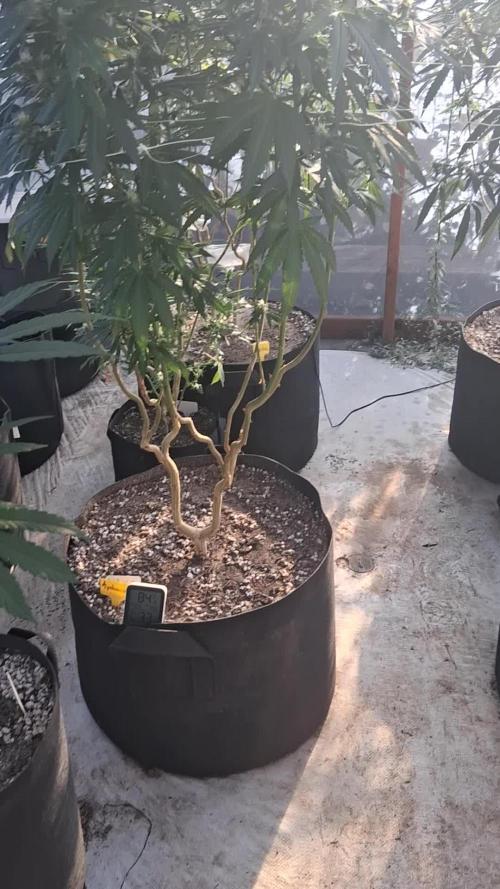
Do not pay attention to the temperature on the thermometer in the middle, it lies by a couple of degrees. I have a good thermometer on top of the box that shows the temperature. Day 29: After a terrible fracture, we see that the plant is beginning to recover. I'm honestly disappointed because it makes it very difficult for me to train mainlining and it will also increase the amount of time it takes to grow. Day 30: It looks much better already, I could superprune the right branch, but I don't want to stress it. I will try to bend the right branch harder, I will bend the left one a little in the morning the next day, maybe early. Day 31: This morning I cut the lower leaves, photo in the evening and continued the LST training after the injury. Photo in the evening. Day 32: I am completely sure that the plant has moved away from the stress, but we can see on the left circle, the right bud (and side) slowed growth. Day 34: I saw traces of salt on the tips of the new leaves, so now I pour water with regular 15 PPM.
Likes
Comments
Share
OK, so I’ll begin dialing back in my grow focusing after I gave her a top dress feeding I watered her in well with 2 gallons of water unpHd maybe two or three days later I noticed that her topsoil was starting to dry so I gave her another gallon of water just because although I believe in allowing the plant to have the dry back. Between watering I also keep hearing you know that with organic soil, you have to keep it moist in order for you know the nutrient to break down and I definitely want those top nutrients I gave her to become readily available . Also, in terms of dialing it back in the plant has been at a very abbreviated or dimmed level like since recovering from when I basically almost killed it and with that being said with the light being out at a dim level of about 40 to 50%, it was also brought up to a very High height in order to decrease stress so that they can regrow so I lower the light from 26 inches 28“ to 14 inches above the canopy. I put back in my floor fan for the lower canopy although I found out that it no longer circulate so I’m having to replace it. Its replacement is on the way in the mail. I added it back in the humidifier for the plants mainly because I was doing the cuttings in the clones since I needed to trim the lower canopy and begin training the plant down more for the trellis. This is my first run using a trellis. This is my first time trying to make one plant so massive, but I’m just a small time grower trying to get the most bang for my book since I’m trying to grow plants to supply myself anyways rather than maintaining so many different plants, I just thought I’d give it a go at making one plant massive I’ve gotten fairly decent and establishing good structure implants as far as like the number of branches or branches so I really wanna like push the threshold of my quantity that I can that I can deliver, but this are all the while. I’m still really working hard to get the quality that I know I like to smoke. I’m happy you know I’m learning but wow I’m still very far from the goal so the light is still at 50% but it lowered to 14 inches. There’s an additional lower canopy fan that’s not currently circulating but one on the way that will circulate the air down there and the humidifier in the tent now oh I also reprogram my humid controller because ever since I’ve called the other three plants that were occupying this tent when I began this this project I tried to switch it over for new settings for this plan considering you know it was set for the flower setting for my last three ladies but when I did that I messed it up and I was just too lazy to go in there and fix it so we have been running with BPD issues this entire time you know and that’s that’s part of the stunning growth as well you know the darn near 30 inch light height, being hungry and meet me during the watering but just in discriminated amounts because I’m not TDS and or PPM any of this stuff I’m really just eyeballing it not paging this stuff circulation and low light intensity. I mean, I can see why it’s taking her a little while to start moving like got like I remember her moving but since I’m back posting I’m I’m I’m working a dollar and I was even considering buying a new light at first but then I realized one I do have a really good light too. I really haven’t got that many runs off of this light less than 10 three is because I doubt her back so much in order to like decrease the stress and I can. I can push this plant with this light. I just need to dial my equipment back in and for you know, I had him back in the extra circulation and the humidifier to get the environment dialed in. I mean, you thought you get that BPD setting right and she used to transpired but now she’s hungry and if I keep that so more so that those nuts can break down she’s gonna get to looking for those nutrients so if not now like I think it’s supposed to take a week no more than a week gonna have to before those nutrients become you know bi available tour so I’m doing I’m doing my part now to give her the attention that she needs into dollar back in so that we can we can get the show on the road. This is entirely too long, but that’s just because I haven’t. I’ve been. I’ve been hands off. I mean, I found that I like the hands off approach to growing much more than the hands-on because then I’m too impatient and I’m oh man then it becomes a chore and has to go take care of her. You know as opposed to a pleasure or like a getaway, I enjoy when I take care of my plan. I like it to be at my activity you know not something that I’m just ready to get over with. I like to spend time with my plans I like to not mind going in there and then defoliating every couple of days. Listen, I need a strain that has an excellent of matter fact a low leaf to blood ratio I need far more bud and weight less leaves. I strain that I pick out a pure interest, but at this point, I’m almost ready to pick strains based off of leaf to blood ratio. I would enjoy just a good simple girl like I just have a couple of leaf Plug every couple of weeks. Let’s see when I’m mean to her with food top dressed because she’s in a 6 gallon hot, I gave her 1 tablespoon of the guy green broke and 3 tablespoons of organic worm castings per 6 gallons so that was a total of 6 tablespoons of the guy green grow nutrient maybe even seven for good measure and then 18 tablespoons cause I don’t know how many you know a4 cups 1/3 cup for cups that is but I actually wanna find out so I can stop doing these tablespoon measurements but 18 tablespoons of worm castings and I just I did my best to work. I didn’t really well to the top so and then I watered that in really slowly to try to avoid runoff the best I could. I did end up getting about a quarter inch runoff when I usually get about an inch and a half a runoff so I did good. I just even know that stuff eventually sucks back up in the pot. I didn’t want all that stuff to like rush to the bottom and then only get sucked back up at the bottom cause I don’t know what the root looks like at the bottom. I kinda have to assume that it is nice and strong, and maybe even root bound need to be upside to a bigger pot before I flipper the flower but if it’s not like I don’t want the concentration of nutrients and salts to be at the very bottom, especially when it comes time later for flushing, like I want that stuff to be you know closer to the to the top in the middle of the other of the soul structure, where I know the majority of the roots are and eventually work as way down to the evening rate, but not have a concentration at the bottom and I’m adding stuff in at the top. I really wanna flush this plant. Well, my lash flush it was semi decent. This flush it could be between my flesh, my dry and my cure which is crippling anybody I mean the girl I got far better man you should’ve seen my first couple girls terrible but now I’m gonna achieve quality in good structure. I just need to get I mean I can see quality you know structure of plants and blood structure but I gotta get the quality smoke. The sticks the smells taste the dense buds at the right moisture level if you’re enjoying it so far, give us a like. FINAL UPDATE OF THIS WEEK: 16DAYS SINCE DRY AMENDING SOIL . . PLANT STILL SHOWS NUTRIENT DEFICIENCY. I had hoped to be back on Water Onlu by now bc I’m afraid I’m going t burn her with these nutrient waters this long since my dry ammenduand what’s worse is that if I follow my 3 week amendment rule I’ll be adding 6 more tbl spoons of nutrient alongside worm castings ALL WHILE THE LAST NUTRIENTS I FED STILL HAVENT BECOME AVAILABLE YET. I DONT LIKE THIS
Likes
14
Share
@Quintall
Follow
Die erste Woche ist da die Pfalze in der Mitte hat leider ihren Samen erst recht spät abgeworfen. Deswegen glaube ich das die bisschen gespargelt hat. Die Pflnazen schlucken langsam immer mehr Wasser. Sie fangen sehr leicht an zu riechen. Luftfeuchtigkeit immer zwischen 60-70 % Temperatur 20-25 grad
Likes
3
Share
@Ticfusama
Follow
End of week 7(day 50 to be exact). Her buds are starting to put on lots of mass. At this point only the buds in the center of the scrog are still upright on their own. I backed down on my light intensity a bit (on day 46) as she started to foxtail on me a little. Was running about 1600par in the convergence area between the two lights and about 900 on the edges. Backed the lights down to about 550(center) and 375(edges). She has been liking it and has stopped yellowing. She will be on this light intensity for the last couple of weeks. Trichomes are still mostly clear with a few cloudy/amber, so she will definitely be going the full 10 weeks. I backed down to half strengrh on her feed and added a good dose of epsome salt to give her a mag/sulfur boost ti promote ripening. She smells amazing. Earthy dank with a strong overtone of fruit. This pheno will be a breed mother for me in a couple of runs. The best clone is going to a homie's place to be kept in veg. He wants to run her too so we will take cuttings for cycles at his place and i will later when im ready to cross her.
Likes
1
Share
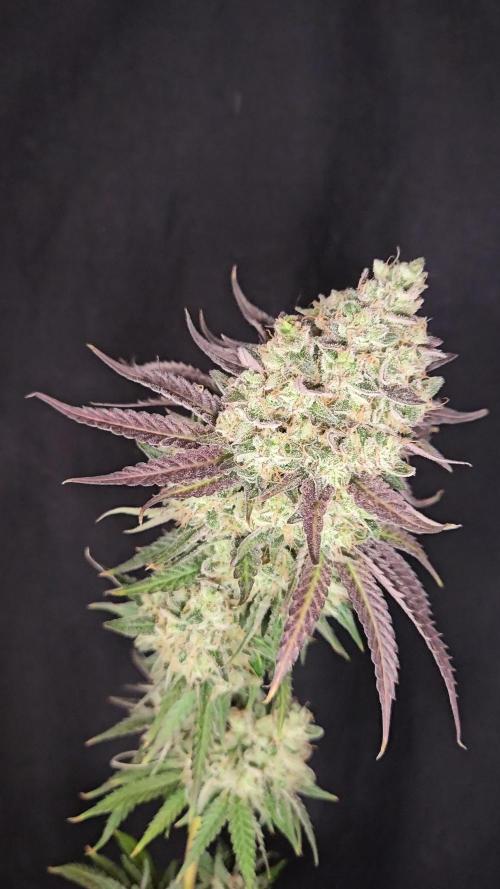
Booommm! Llegó la hora tan esperada Farmers nuestras flores llenas de resina acabandose de formar, la verdad que estas genéticas ayudan mucho al desarollo del cultivo espero que os guste!! Una locura de olores y terpenos!!💚