


Likes
Comments
Share


@Comfrey
Follow
Der Duft lies etwas nach, die Luftfeuchtigkeit stieg an. Ende. Der Anbau dauerte nur 83 Tage vom Samen bis zur Ernte der reifen Blüten.
Auto Elephant ist leider in der Hitze bei über 37 Grad Mitte der dritten Woche in die Blüte gegangen. Ich werde sie nächstes Jahr wieder anbauen und auf stabileres und milderes Klima in der Vegetation hoffen. Auch der sehr stickstoffreiche Schwarzkohlekompost hat ihr Probleme bereitet, so vermute ich. Er eignet sich wohl besser für photoperiodische Sorten als für Autoflower Genetik. Ich werde den Kompost beim nächsten Mal anpassen müssen.
Die Blüten hängen zum Trocknen. Ich melde mich bald mit dem Ergebnis und in ein paar Wochen mit einem Vape Bericht. Es ist meine zweite Elephantendame und soviel kann ich schon jetzt sagen: Bombe! Super harzig, extrem lecker. Ein High, wie als wenn du auf einem Elephanten sitzend durch die Wolken schwebst und dabei einen Blick auf die Dinge bekommst, die dir ansonsten verborgen blieben. Ein High wie damals beim ersten Mal. ;-) 🍌😄
Danke für‘s vorbeischauen. Bis demnächst.
🐘🌱🌵🔥

Likes
53
Share


@Roberts
Follow
Grand Daddy Purple auto is doing good. She has acclimated, and started make some good growth. The spots on the tip of the leaves never spread. So that was good. Everything has been looking really good. Nothing more to report at the moment. Thank you ILGM, and Medic Grow. 🤜🏻🤛🏻🌱🌱🌱
Thank you grow diaries community for the 👇likes👇, follows, comments, and subscriptions on my YouTube channel👇.
❄️🌱🍻 Happy Growing 🌱🌱🌱
https://youtube.com/channel/UCAhN7yRzWLpcaRHhMIQ7X4g

Likes
9
Share


@wheedtobeus420
Follow
Day 71. She’s huge and heavy like heavier then I can explain. I took her off her hangers so she can go into her dark flushing period and she just well you can see 😂😂😂🍆🍆🍆 she smells Devine like spices and things I can’t even describe I’m very excited to chop her down in the coming weeks she’s been a pleasure to grow.

Likes
22
Share


@Green_Mountains
Follow
A great week!! Chloe grew 8 inches!! Sofie grew 6!! I fed them yesterday and moved them into the flowering tent!!
Looking forward to another great week... hoping they adapt to the new environment!
Also, I can't believe they started flowering so early!! Unbelievable!!
Otherwise, steady as she goes!

Likes
20
Share


@gottagrowsometime
Follow
Grew crazy. Really high. Co2 made growth explode and she drank like a horse. At her Height 2L a day. Nutrient feeds every day, or at min every other. Buds were huge but very airy. Very stinky zkittlez / Runtz typical smell. Nice Citrus fruity tones with earthy musky background smell & Taste, fruits range from apple to mango..
8☆, if buds are been dense, would be 9 or 10. Yield was big. But too much foxtailing. Still a very strong 8 ☆
Rougly 1.5kg of high grade, some what larfy bud. But, still of a very high grade.

Processing
Likes
10
Share

@CrackinBeans
Follow
The mephisto is has bounced back and pushing hard. All the plants still have a high runoff but has been pushing hard this last week or so. Ph run off has been around 7.6 from around 8.4ph😬😬
I kinda gave up on the freeze berry but I started checking it out and I didnt notice how well the branching is on that plant and how frosty it is.
the freeze berry has been getting set up nicely hoping it fills out nicely because the branching and spacing on that one is not too shabby
I'm not sure wth is going on with the big bomb that one decided to just grow like a bush real fast and has soo many bud sites but is flowering super slow.. I started all the seeds at the same time except the mephisto is about a week or two younger than the rest.
The crystal meth is about ready I'm going to start flushing that here sometime this week when I get my new ph pen.


Likes
9
Share


@Wicked_Stix
Follow
Had a lot going on this week so the plants didnt get any care or maintenance at all other than just checking on the water level a couple times. They need some major defoliation which I wanted to do this week but procrastination is the vibes currently. Will probably get some done next week.... the plants are looking good and most of them are bushing out pretty nice. They dont seem to be stretching as much as they normally do by this time, but they are transitioning to flower. Will probably do a flush and water change soon since they haven't had one in over a month. I'm just anxious to see some frosty buds at this point.
Likes
35
Share


@hannabis420
Follow
Alot of trial and error on this gal and shes fast to spring back, resilient to a lot-- hot res temps, training, etc. beautiful plant and genetics!
Likes
25
Share


@Ultraviolet
Follow
ANTHOCYANIN production is primarily controlled by the Cryptochrome (CR1) Photoreceptor ( !! UV and Blue Spectrums are primary drivers in the production of the pigment that replaces chlorophyll, isn't that awesome!
1. Diverse photoreceptors in plants
Many civilizations, including the sun god of ancient Egypt, thought that the blessings of sunlight were the source of life. In fact, the survival of all life, including humans, is supported by the photosynthesis of plants that capture solar energy. Plants that perform photosynthesis have no means of transportation except for some algae. Therefore, it is necessary to monitor various changes in the external environment and respond appropriately to the place to survive. Among various environmental information, light is especially important information for plants that perform photosynthesis.
In the process of evolution, plants acquired phytochrome, which mainly receives light in the red light region, and multiple blue light receptors, including his hytropin and phototropin, in order to sense the light environment. .. In addition to these, an ultraviolet light receptor named UVR8 was recently discovered. The latest image of the molecular structure and function of these various plant photoreceptors (Fig. 1), focusing on phytochrome and phototropin.
Figure 1
Ultraviolet-visible absorption spectra of phytochrome, cryptochrome, phototropin, and UVR8. The dashed line represents each bioactive absorption spectrum.
2. Phytochrome; red-far red photoreversible molecular switch
What is phytochrome?
Phytochrome is a photochromic photoreceptor, and has two absorption types, a red light absorption type Pr (absorption maximum wavelength of about 665 nm) and a far-red light absorption type Pfr (730 nm). Reversible light conversion between the two by red light and far-red light, respectively(Fig. 1A, solid line and broken line). In general, Pfr is the active form that causes a physiological response. With some exceptions, phytochrome can be said to function as a photoreversible molecular switch. The background of the discovery is as follows. There are some types of plants that require light for germination (light seed germination). From that study, it was found that germination was induced by red light, the effect was inhibited by subsequent far-red light irradiation, and this could be repeated, and the existence of photoreceptors that reversibly photoconvert was predicted. In 1959, its existence was confirmed by the absorption spectrum measurement of the yellow sprout tissue, and it was named phytochrome. Why does the plant have a sensor to distinguish between such red light and far-red light? There is no big difference between the red and far-red light regions in the open-field spectrum of sunlight, but the proportion of red light is greatly reduced due to the absorption of chloroplasts in the shade of plants. Similar changes in light quality occur in the evening sunlight. Plants perceive this difference in light quality as the ratio of Pr and Pfr, recognize the light environment, and respond to it.
Subsequent studies have revealed that it is responsible for various photomorphogenic reactions such as photoperiodic flowering induction, shade repellent, and deyellowing (greening). Furthermore, with the introduction of the model plant Arabidopsis thaliana (At) and the development of molecular biological analysis methods, research has progressed dramatically, and his five types of phytochromes (phyA-E) are present in Arabidopsis thaliana. all right. With the progress of the genome project, Fi’s tochrome-like photoreceptors were found in cyanobacteria, a photosynthetic prokaryotes other than plants. Furthermore, in non-photosynthetic bacteria, a homologue molecule called bacteriophytochrome photoreceptor (BphP) was found in Pseudomonas aeruginosa (Pa) and radiation-resistant bacteria (Deinococcus radiodurans, Dr).
Domain structure of phytochrome molecule
Phytochrome molecule can be roughly divided into N-terminal side and C-terminal side region. PAS (Per / Arndt / Sim: blue), GAF (cGMP phosphodiesterase / adenylyl cyclase / FhlA: green), PHY (phyto-chrome: purple) 3 in the N-terminal region of plant phytochrome (Fig. 2A) There are two domains and an N-terminal extension region (NTE: dark blue), and phytochromobilin (PΦB), which is one of the ring-opening tetrapyrroles, is thioether-bonded to the system stored in GAF as a chromophore. ing. PAS is a domain involved in the interaction between signal transduction-related proteins, and PHY is a phytochrome-specific domain. There are two PASs and her histidine kinase-related (HKR) domain (red) in the C-terminal region, but the histidine essential for kinase activity is not conserved.
3. Phototropin; photosynthetic efficiency optimized blue light receptor
What is phototropin?
Charles Darwin, who is famous for his theory of evolution, wrote in his book “The power of move-ment in plants” published in 1882 that plants bend toward blue light. Approximately 100 years later, the protein nph1 (nonphoto-tropic hypocotyl 1) encoded by one of the causative genes of Arabidopsis mutants causing phototropic abnormalities was identified as a blue photoreceptor. Later, another isotype npl1 was found and renamed phototropin 1 (phot1) and 2 (phot2), respectively. In addition to phototropism, phototropin is damaged by chloroplast photolocalization (chloroplasts move through the epidermal cells of the leaves and gather on the cell surface under appropriate light intensity for photosynthesis. As a photoreceptor for reactions such as escaping to the side of cells under dangerous strong light) and stomata (reactions that open stomata to optimize the uptake of carbon dioxide, which is the rate-determining process of photosynthetic reactions). It became clear that it worked. In this way, phototropin can be said to be a blue light receptor responsible for optimizing photosynthetic efficiency.
Domain structure and LOV photoreaction of phototropin molecule
Phototropin molecule has two photoreceptive domains (LOV1 and LOV2) called LOV (Light-Oxygen-Voltage sensing) on the N-terminal side, and serine / on the C-terminal side. It is a protein kinase that forms threonine kinase (STK) (Fig. 4Aa) and whose activity is regulated by light. LOV is one molecule as a chromophore, he binds FMN (flavin mononucleotide) non-covalently. The LOV forms an α/βfold, and the FMN is located on a β-sheet consisting of five antiparallel β-strands (Fig. 4B). The FMN in the ground state LOV shows the absorption spectrum of a typical oxidized flavin protein with a triplet oscillation structure and an absorption maximum wavelength of 450 nm, and is called D450 (Fig. 1C and Fig. 4E). After being excited to the singlet excited state by blue light, the FMN shifts to the triplet excited state (L660t *) due to intersystem crossing, and then the C4 (Fig. 4C) of the isoaroxazine ring of the FMN is conserved in the vicinity. It forms a transient accretionary prism with the tain (red part in Fig. 4B Eα) (S390I). When this cysteine is replaced with alanine (C / A substitution), the addition reaction does not occur. The effect of adduct formation propagates to the protein moiety, causing kinase activation (S390II). After that, the formed cysteine-flavin adduct spontaneously dissociates and returns to the original D450 (Fig. 4E, dark regression reaction).
Phototropin kinase activity control mechanism by LOV2
Why does phototropin have two LOVs? Atphot1 was found as a protein that is rapidly autophosphorylated when irradiated with blue light.
The effect of the above C / A substitution on this self-phosphorylation reaction and phototropism was investigated, and LOV2 is the main photomolecular switch in both self-phosphorylation and phototropism. It turns out that it functions as. After that, from experiments using artificial substrates, STK has a constitutive activity, LOV2 functions as an inhibitory domain of this activity, and the inhibition is eliminated by photoreaction, while LOV1 is kinase light. It was shown to modify the photosensitivity of the activation reaction. In addition to this, LOV1 was found to act as a dimerization site from the crystal structure and his SAXS. What kind of molecular mechanism does LOV2 use to photoregulate kinase activity? The following two modules play important roles in this intramolecular signal transduction.
Figure 4
(A) Domain structure of LOV photoreceptors. a: Phototropin b: Neochrome c: FKF1 family protein d: Aureochrome (B) Crystal structure of auto barley phot1 LOV2. (C) Structure of FMN isoaroxazine ring. (D) Schematic diagram of the functional domain and module of Arabidopsis thaliana phot1. L, A’α, and Jα represent linker, A’α helix, and Jα helix, respectively. (E) LOV photoreaction. (F) Molecular structure model (mesh) of the LOV2-STK sample (black line) containing A’α of phot2 obtained based on SAXS under dark (top) and under bright (bottom). The yellow, red, and green space-filled models represent the crystal structures of LOV2-Jα, protein kinase A N-lobe, and C-robe, respectively, and black represents FMN. See the text for details.
1) Jα. LOV2 C of oat phot1-to α immediately after the terminus
Rix (Jα) is present (Fig. 4D), which interacts with the β-sheet (Fig. 4B) that forms the FMN-bound scaffold of LOV2 in the dark, but unfolds and dissociates from the β-sheet with photoreaction. It was shown by NMR that it does. According to the crystal structure of LOV2-Jα, this Jα is located on the back surface of the β sheet and mainly has a hydrophobic interaction. The formation of S390II causes twisting of the isoaroxazine ring and protonation of N5 (Fig. 4C).
As a result, the glutamine side chain present on his Iβ strand (Fig. 4B) in the β-sheet rotates to form a hydrogen bond with this protonated N5. Jα interacts with this his Iβ strand, and these changes are thought to cause the unfold-ing of Jα and dissociation from the β-sheet described above. Experiments such as amino acid substitution of Iβ strands revealed that kinases exhibit constitutive activity when this interaction is eliminated, and that Jα plays an important role in photoactivation of kinases.
2) A’α / Aβ gap.
Recently, several results have been reported showing the involvement of amino acids near the A’α helix (Fig. 4D) located upstream of the N-terminal of LOV2 in kinase photoactivation. Therefore, he investigated the role of this A’α and its neighboring amino acids in kinase photoactivation, photoreaction, and Jα structural change for Atphot1. The LOV2-STK polypeptide (Fig. 4D, underlined in black) was used as a photocontrollable kinase for kinase activity analysis. As a result, it was found that the photoactivation of the kinase was abolished when amino acid substitution was introduced into the A’α / Aβ gap between A’α and Aβ of the LOV2 core. Interestingly, he had no effect on the structural changes in Jα examined on the peptide map due to the photoreaction of LOV2 or trypsin degradation. Therefore, the A’α / Aβ gap is considered to play an important role in intramolecular signal transduction after Jα.
Structural changes detected by SAXS
Structural changes of Jα have been detected by various biophysical methods other than NMR, but structural information on samples including up to STK is reported only by his results to his SAXS. Not. The SAXS measurement of the Atphot2 LOV2-STK polypeptide showed that the radius of inertia increased from 32.4 Å to 34.8 Å, and the molecular model (Fig. 4F) obtained by the ab initio modeling software GASBOR is that of LOV2 and STK. It was shown that the N lobes and C lobes lined up in tandem, and the relative position of LOV2 with respect to STK shifted by about 13 Å under light irradiation. The difference in the molecular model between the two is considered to reflect the structural changes that occur in the Jα and A’α / Aβ gaps mentioned above.
Two phototropins with different photosensitivity
In the phototropic reaction of Arabidopsis Arabidopsis, Arabidopsis responds to a very wide range of light intensities from 10–4 to 102 μmol photon / sec / m2. At that time, phot1 functions as an optical sensor in a wide range from low light to strong light, while phot2 reacts with light stronger than 1 μmol photon / sec / m2. What is the origin of these differences? As is well known, animal photoreceptors have a high photosensitivity due to the abundance of rhodopsin and the presence of biochemical amplification mechanisms. The exact abundance of phot1 and phot2 in vivo is unknown, but interesting results have been obtained in terms of amplification.
The light intensity dependence of the photoactivation of the LOV2-STK polypeptide used in the above kinase analysis was investigated.
It was found that phot1 was about 10 times more photosensitive than phot2. On the other hand, when the photochemical reactions of both were examined, it was found that the rate of the dark return reaction of phot1 was about 10 times slower than that of phot2. This result indicates that the longer the lifetime of S390II, which is in the kinase-activated state, the higher the photosensitivity of kinase activation. This correlation was further confirmed by extending the lifespan of her S390II with amino acid substitutions. This alone cannot explain the widespread differences in photosensitivity between phot1 and phot2, but it may explain some of them. Furthermore, it is necessary to investigate in detail protein modifications such as phosphorylation and the effects of phot interacting factors on photosensitivity.
Other LOV photoreceptors Among fern plants and green algae, phytochrome ɾphotosensory module (PSM) on the N-terminal side and chimera photoreceptor with full-length phototropin on the C-terminal side, neochrome (Fig. There are types with 4Ab). It has been reported that some neochromes play a role in chloroplast photolocalization as a red light receiver. It is considered that fern plants have such a chimera photoreceptor in order to survive in a habitat such as undergrowth in a jungle where only red light reaches.
In addition to this, plants have only one LOV domain, and three proteins involved in the degradation of photomorphogenesis-related proteins, FKF1 (Flavin-binding, Kelch repeat, F-box 1, ZTL (ZEITLUPE)), LKP2 ( There are LOV Kelch Protein2) (Fig. 4Ac) and aureochrome (Fig. 4Ad), which has a bZip domain on the N-terminal side of LOV and functions as a gene transcription factor.
4. Cryptochrome and UVR8
Cryptochrome is one of the blue photoreceptors and forms a superfamily with the DNA photoreceptor photolyase. It has FAD (flavin adenine dinucle-otide) as a chromophore and tetrahydrofolic acid, which is a condensing pigment. The ground state of FAD is considered to be the oxidized type, and the radical type (broken line in Fig. 1B) generated by blue light irradiation is considered to be the signaling state. The radical type also absorbs in the green to orange light region, and may widen the wavelength region of the plant morphogenesis reaction spectrum. Cryptochrome uses blue light to control physiological functions similar to phytochrome.
It was identified as a photoreceptor from one of the causative genes of UVR8 Arabidopsis thaliana, and the chromophore is absorbed in the UVB region by a Trp triad consisting of three tryptophans (Fig. 1D). It is involved in the biosynthesis of flavonoids and anthocyanins that function as UV scavengers in plants.
Conclusion
It is thought that plants have acquired various photoreceptors necessary for their survival during a long evolutionary process. The photoreceptors that cover the existing far-red light to UVB mentioned here are considered to be some of them. More and more diverse photoreceptor genes are conserved in cyanobacteria and marine plankton. By examining these, it is thought that the understanding of plant photoreceptors will be further deepened.

Likes
57
Share


@ATLien415
Follow
🙏 Big thanks to Plagron and Zamnesia for putting on the Eternity Grow Cup 2025. This kind of platform means a lot to the community. The chance to push our grows, test out new techniques, and connect with other cultivators from all over has been inspiring. Appreciate the love and effort that went into making this event happen! Hope everyone enjoyed looking over my shoulder on this grow and best of luck to all participants!
REVIEW - Runtz (fem., photo.) from Zamnesia: ⬛⬛⬛⬛⬛⬛⬛⬛⬜⬜
The seeds from Zamnesia germinated rapidly, rooted strongly, went wild in veg, and produced an ample amount of high-quality medicinal flower. The diary speaks for itself on that front so this space will be more of a phenotype review. The plants were labelled A, B, and C from left to right respectively in photos. A and B were the 'clasicaly-appearing' sativa-esque leaves while C was the more 'indica-appearing' phenotype. Although A and B appear the same qualitatively, they did produce substantially different amounts of flower (despite their DLI being near max out for the entire tent footprint without supplementing CO2, so I do not think just being in the middle attributed to this). Past their different yields, A and B also have vastly different profiles. A is a classic gelato/ice cream cooler/Z terps, and my personal favorite of the plants (wish I had taken a clone of this one instead). B is the most on point for what I think of with Runtz, classic Z terps but with a slight tropical/rotten/sweetness to it. C had the misfortune of being ready to chop a little earlier than the other girls so her profile is mostly just spicey kush now. I did observe intersex flower sites but given the entire context of the diary and how the plants performed, I have to assume it was user error. No pollination observed in any of the flowers, as zero additional intersex sites occurred. The distinction between A, B and C is what I would expect from a typical F1 cannabis seed. I do not enjoy growing from seed much but these girls were manageable. Add to that the relative stability of the genetics for a Runtz recreation, and well, these are good quality beans for a great price. Not only is Zamnesia responsive and available, their confidence speaks volumes. How many vendors would have an in-house Runtz, knowing how much of a genetic-gravity-well it is in, and be confident enough to let ~200 randos grow it and show it?
REVIEW - Green Sensation from Plagron: ⬛⬛⬛⬛⬛⬛⬛⬛⬜⬜
I enjoyed using the green sensation, the NPK values on it make it versatile in application and a power-house in flower. I can't say I noticed anything better or dramatically improved, although comparing to Heavy 16 and asking for a marked improvement is big ask in my opinion. What I was able to do was seamlessly integrate the Green Sensation into my current routine. The additive stayed homogenous, was easily introduced into solutions with no adverse impact to the water contents or pH. Most importantly, the plants enjoyed the additive and it did accomplish the main goal of being able to wane off your primary line. In this respect, by using Green Sensation I was able to save resources by lowering my Heavy 16 inputs across the board approximately 50% and supplementing with Plagron's Green Sensation.
Likes
15
Share


@Uwish
Follow
Nothing special, everything is actually working. Clearly once my water was at the right temperature, no more worries.
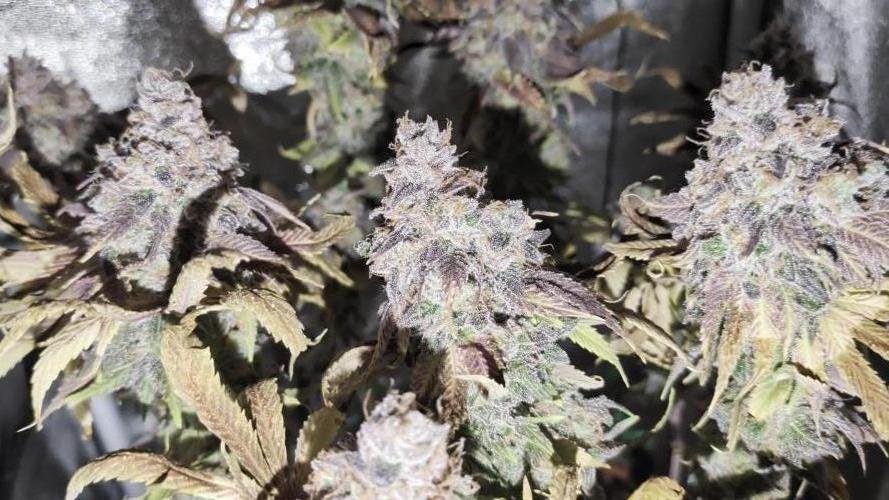
The flowers arrived at 12/12 + 11 with the trichromes that pop, it starts to be pleasant! So of course, I'm not going to break any records on this RUN but in any case, I've eliminated a lot of "novelty" and mistakes that I'll make more. I'm counting on the run I'm re-launching to blow all that up, I'm going to go for a performance goal
The stretch is off to a good start, it should settle down around 12/12 +21 - 28, so I will place my second net next week.
I have done a defoliation.
I change the soup in 2 days, so my solution lasts 10 days. I have a slight over-fattening, but really nothing serious, I will switch to an EC of 1.8 - 1.9 instead of 2.0. and I will observe.
Here we can see the delay of one of the plants, it's as if I was shooting with only 3 plants. Next time, only one strain, same size of cuttings and passage by cuttings and RDWV DIY mandatory before passage in the V-system.
Next week, I change the brand of fertilizer for the RDWC, I go to Athena, I will introduce the PK of Athena which according to their recommendation starts at the 21st day at a rate of 2ML/L.
I turn with the base sensi bloom a and b + athena pk
Otherwise, I receive the parts this week for my RDWC DIY system for growth, I'll make it with my friend and I'll test it and I'll give you a feedback on the next update, especially since I'm going to restart right away, I'm going to do 10-15 days in cuttings and then I'll go to the RDWC DIY system for growth until I finish the FLO of the V-SYTEM and then I'll go straight to the next one.
I'm going to put my LEDS at 80% which is the MAX recommendation of SANlight without c0² ( I don't forbid myself to grow at 100% in week 5-6, I'll see... )


Likes
91
Share


@420Highlifecouple
Follow
Well it was definatly another tough week.From battling temps of 34 degrees celcius to too much humidity levels over 70 percent,not to add to the trouble,my light blew.Im lucky a retailer had a MARS FC3000.
In Full flush with mollases and ph adjusted water and ready to pick these guys this week or next.As for the other girl she wasn't thr greatest after all that so she was pulled,hopefully enough for a few spliffs after dry n cure.
Thanks to all y'all guys help on my message list.you know who you are.bloody legends!
https://growdiaries.com/grower/420highlifecouple
https://youtube.com/channel/UCKvjJ_S8nRI2wTc4cx_O1KQ
https://myfastbuds.com/?a_aid=616a33e294e50
With every order you will get a free seed
Join the community on GROWDIARIES
It’s a awesome place to meet cool people, document your grow and learn a lot from fellow growers, happy growing 😊🌱

Processing
Likes
22
Share


@Marrocko
Follow
Buenas growers esta semana fue muy tranquila para las plántulas solo crecieron poco pero las hojas se desarrollaron más.
Espero que así pueda seguir
Peace ✌️🏼


Likes
14
Share


@Drgreenthumb627
Follow
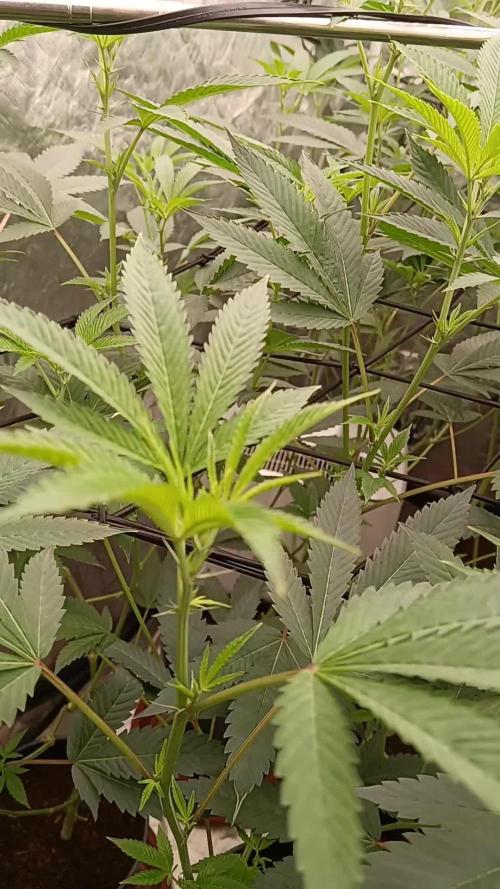
day 26 of flower, gorgeous plant very unique leaf structure, and tall as hell, the experiment of topping on say 4 of flower seems to be paying off, i’m very happy with it at this height. looks like the beginning of anthocyanin breakdown are occuring in the fan leaves


Likes
4
Share


@Jimmy_Jankens
Follow
1/12/23 all plants stretching nicely. P4 is vary one sided and P1-3 have similar structures. Starting 12/12 cycle tomorrow, still no pre-flower but should have signs by the end of next week. Hoping for at least 2 oz of or each plant.
Likes
10
Share

@The_Doctor_Green
Follow
Hola a todos!!!.
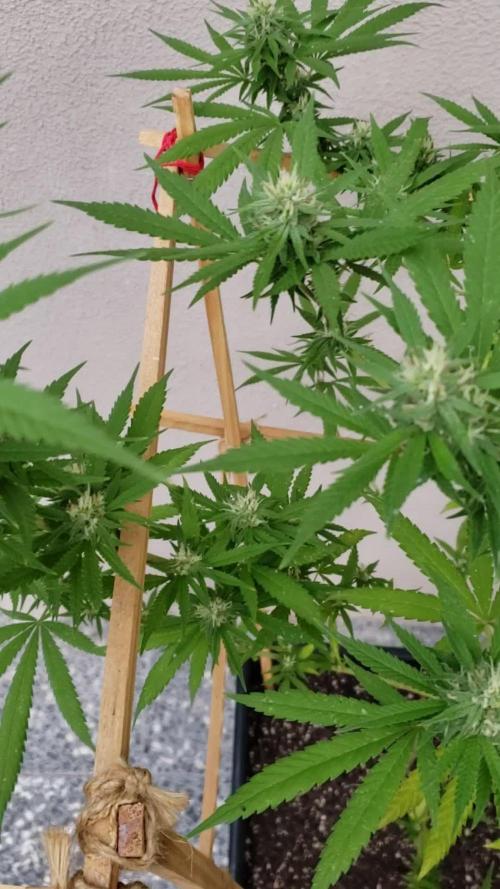
Les cuento que esta planta ya empieza a mostrar sus olores de forma más notoria, nose describirlo bien pero tiene unos toques dulces en principio, yo huelo notas como dulces, afrutadas.
Esta semana aumente dosis de fertilizantes , como así también pude bajar unos números el ph del drenaje, si bien sigue alto, pude bajarlo de 8 a 7.5 asique esta semana seguro ya baje a 7, si mantengo el ritmo.
Likes
Comments
Share

@GracelessGardens
Follow
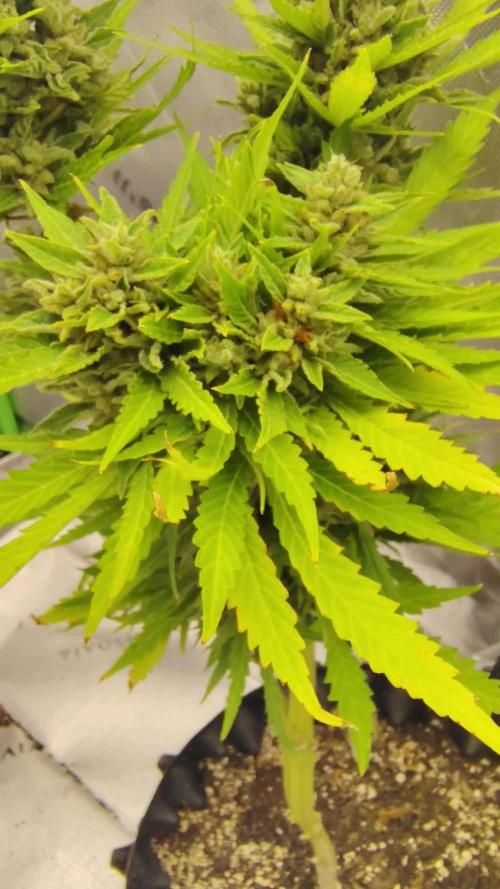
Been keeping this as happy as I can for the next week, hopefully ready for harvest in the next 7-10 days. Trich are looking good at about 60% cloudy, very trace amounts of amber near the top . Smell is skunky B.O and sweet tarts!
Likes
9
Share


@Headies
Follow
So I had a few issue. I over watered early on, took them out the seed tray early, started feeding them a week or two late, no humidifier yet but they recovered well.