The Grow Awards 2026 🏆
Likes
Comments
Share
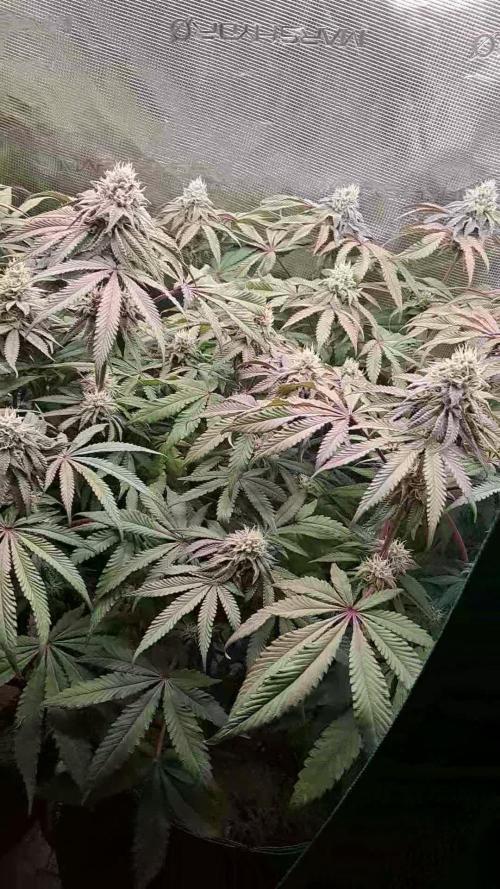
loved growing this one she grows well reacts to fimming well withstands mould well .the plants structured well buds grow all to a good shape and size no foxtails would recommend to anyone sorry about not updating as much will get back to it properly on the next grows thanks for reading happy growing guys
Likes
16
Share
@GYOweed
Follow
I think the emerson effect far red led light strip worked too well I never seen sativas look ready at 6 weeks lol.
Likes
22
Share
GSC BY KANNABIA Week #21 Week #10 Flower This is the last week for feeding the plant trichomes are about 50% clear 50% milky so it's about that time. This plant is a beautiful lady!! Stay Growing!! Thank you for taking a look!!
Likes
38
Share
Hello friends here we are in week seven of flower. Sorry there was no daily time lapse or pics went out on vacation. So today Day 105 12/24/2021 marks the end of the week, She is coming along nicely and the smell is just WOW. She should be ready to start flush after next week. I checked the Trichomes and mostly all cloudy few clear and few amber. Also got a new tent last night that will be setting up for next year grow.
Likes
307
Share
@Ju_Bps
Follow
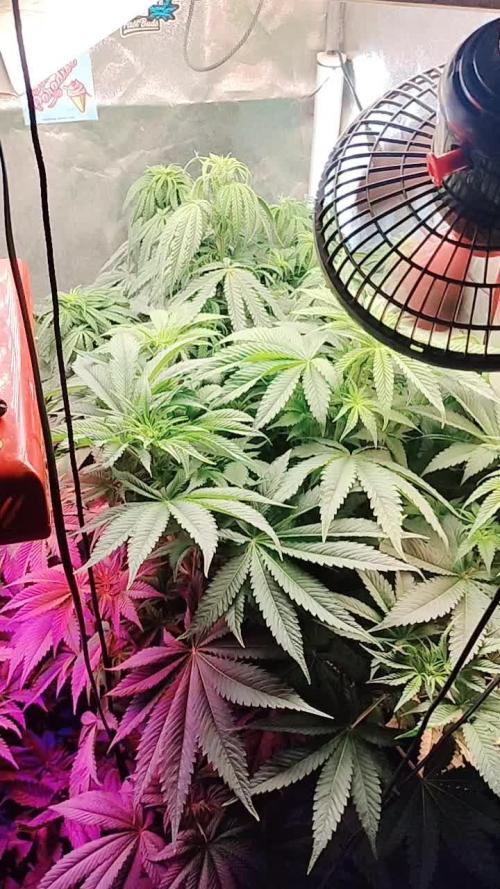
Hello growmies 👩‍🌾👨‍🌾🌲🌲, 👋 Girls continue to grow well, for moment really easy 👍 💪 we can see the difference between this week and last week on the canope I need to do big defoliation each week, they are really invasive, Will turn in flower in couple of Days. 💧 Give water each 2/3 day And vaporise plant with water + Plagron Roots (1ml/l) 1.5 l Water + Roots + Grow + Zym + Sugar Royal (1 + 5 + 1 + 1 ml/l) PH @6 💡Mars Hydro - FC 3000 37% 40 cm. Mars Hydro Fan kit Setting 4 Have a good week and see you next week 👋 Thanks community for follow, likes, comments, always a pleasure 👩‍🌾👨‍🌾❤️🌲 Mars Hydro - Smart FC3000 300W Samsung LM301B LED Grow Light💡💡 https://www.mars-hydro.com/fc-3000-samsung-lm301b-led-grow-light Mars Hydro - 6 Inch Inline Fan And Carbon Filter Combo With Thermostat Controller 💨💨 https://www.mars-hydro.com/6-inch-inline-duct-fan-and-carbon-filter-combo-with-thermostat-controller Anesia Seeds - High Mars 36% THC🌲🌲 https://anesiaseeds.com/product/high-mars/
Likes
1
Share
Well its been a good run with this pheno , she's the biggest plant i've grown so far and has excelled in bud production litterally everywhere. The shogun nutrients seem to have worked really well with no deficiencies throughout the grow . I've stop using dragon force now and am just feeding ph'd water for these final few days. I am looking forward to sampleing soon my gelato has also done really well with some nice dense buds
Likes
26
Share
WEEK 5 8/16- Alrighty! Start of week five and all the ladies are in flower and starting to look sexy as hell! Even the Crystal Meth #2 in the SOHUM Living Soil that had a soil ph of 5.2-5.4 and 4.2 ph runoff on a 4 1/2 gallon flush of 7.7 ph water is doing well! I checked the ph on her soil this morning and she's at 6.4...PERFECT! I gave all the girls a drink of de-chlorinated water in the amount of 2 1/2g with 1 tsp CalMag+ added and ph'd to 6.9 split evenly between them. 8/17- Day 30- The girls are all really growing like crazy filling out their 10g fabric pots. I went through all of them today and, using the green horticultural wire LST'd the crap out of everyone! I know, I know....LST on Day 30??? I've LST'd this late before and had really good results so giving it a go this run. Gave all the girls a small drink as they were moist 2" down using 2 1/2g de-chlorinated water ph'd to 6.8 @ 75 deg. After I LST'd all the girls, I selectively tucked shade leaves and defoliated a couple here and there and also removed all the shitty little undergrowth down low on the main stalks. Can't believe the FastBuds Crystal Meth #2 came back from the edge of oblivion. I checked her medium(SOHUM Living Soil) ph which is still @ 6.4...whew! I think she's gonna do just fine, although not as good as her sister who's an obviously different phenotype. 8/18- Cranked up the HLG 650R's to max today. Now drawing 1300w at the wall-650w each and raised both lights to 42" high which is giving 800-1100 umols depending on what place on the canopy you check. 8/19- I administered the second dose of live Nematode's with the girls morning watering. I put the Nematodes in 2 1/2 gallons of de-chlorinated water ph'd to 6.8 @ 74 deg. and split it evenly between all eight pots. I tightened up the LST on all the girls to keep spreading them out and getting better light penetration into the lower canopy. 8/20- I started a batch of Compost Tea this morning- 4 cups worm castings, 1 cup of Alfalfa Meal, 1 cup Kelp Meal, 2 tbsp Bat Guano into 4 1/2 gallons of de-chlorinated water with a 6.9ph in which I added 5 tbsp of unsulphured molasses as a catalyst for the microbes. I'll brew this for 48 hours. The ladies all were moist enough that I felt safe skipping the water for today, I'll give them a light watering tomorrow, then a heavy feed with the compost tea. I went through and tucked the heck out of leaves blocking bud sites from light (this is a chore as the girls are getting BUSHY as hell!) and removed a few scattered fan leaves that refused to be tucked and were really blocking light into the lower canopy....can't be having that, need the LIGHT! 8/21- Ladies were all looking very perky this morning and the FastBuds Crystal Meth and Purple Lemonade are both getting beautiful purple shades to them especially the FastBuds Crystal Meth #1 in Natures Living Soil Autoflower Concentrate, she's absolutely on FIRE although her node spacing is very wide. The #2 Crystal Meth in SOHUM that had the ph issue with her medium seems to have recovered after I flushed the shit out of her. She's behind her sister and definitely has a different structure than the #1 phenotype. The Purple Lemonade #1 & #2 are both flowering with #2 looking way better. The #1 Purple Lemonade has some thick kushy leaves and she's a short little biatch, in contrast to the #2 which is tall and lanky with wider node spacing. The #2 Purple Lemonade is having a little issue apparently with the nitrogen level in the medium as she's getting 'claw tips' on several of her leaves and judging by her dark green coloration, she's nitrogen rich right now. I'll keep an eye on her but don't think it's a big issue at this moment in time. The Seedsman Gelato OG in Natures Living Soil Autoflower Concentrate is getting bushy and has filled out the 10 gallon fabric pot. She's got a ton of bud sites and it's a struggle training to keep all the sites exposed to light. The #2 Gelato OG in SOHUM is doing about the same as her sister but she's not quite as tall. The Seedsman Zkittles #1 slowed down on her stretch and just decided to get bushy instead! She's still in pre-flower but is very healthy and will be getting it on very soon! Her 'Sin Twisters' Zkittles #2 & #3 are beautiful and in flower. The Zkittles 'twins' were previously the shortest plants in this run but have caught up and are as tall as the Zkittles #1 @ 14". 8/22- End of Week 4! The girls got Compost Tea ( 8.1 ph, 840 ppm and 1636 EC @ 78 deg.) for breakfast this morning along with a top dress on the six ladies growing in Natures Living Soil Autoflower Concentrate / Fox Farms Happy Frog mix. The two SOHUM pots with the Seedsman Gelato OG #2 and FastBuds Crystal Meth #2 got 4 tbsp of 2-8-4 slow release dry amendments by Down To Earth top dressed and worked in by hand. I gave them each 1/2 gallon of Compost Tea after top dressing to help water in the nutrients. I went through all the girls and tucked and gently spread their branches to continue to train them as they get ready to really start flowering. The FastBuds girls are getting MORE colorful each and every day and I can't wait to open the tent each morning to see them....BEAUTIFUL!!!
Likes
8
Share
Days 67 - 73 (from seed) 4/8/24 - 4/14/24 Lamp distance: 12" @ 75% power (estimate 800+ PAR from highest point of canopy) VPD: leaf surface temperature averaging 68-72 degrees - humidity set to 45% Feed schedule: Each plant receiving slowly downward now to 1/3 gallon water daily + once a week feeding schedule and additional FPE every third day IPM: visual inspection only, no foliar Notes: Flowers are really swelling up this week. All plants in the tent now showing signs of senescence with Cookies & Berries just barely fading. As the week went on their need for water has slowly diminished back down to roughly 1/3 gallon a day, but a day or two in there they also received their 1/2+ gallon daily. Usually can tell how much watering they need by lifting the pots and determining by weight/feel, or if there's any water run-off but that is quite uncommon/undesirable. Hot Damn! currently reeking the most out of them all, lots of sweet funk when you just get near it. Vanilla Fizz has a very mellow smell check until you do rub it then it's a cheesy/funk bomb. Cookies & Berries seems to have the lightest appearance of resin coverage and the least nose out of the tent - but when you rub it the resin is very very tacky and smells of chemical citrus fruit, maybe pine. Mango Sky is fairly mellow too but after touching the flowers it's bold and sticky, smells like menthol (to me, but not unanimous) and tropical fruits.
Likes
10
Share
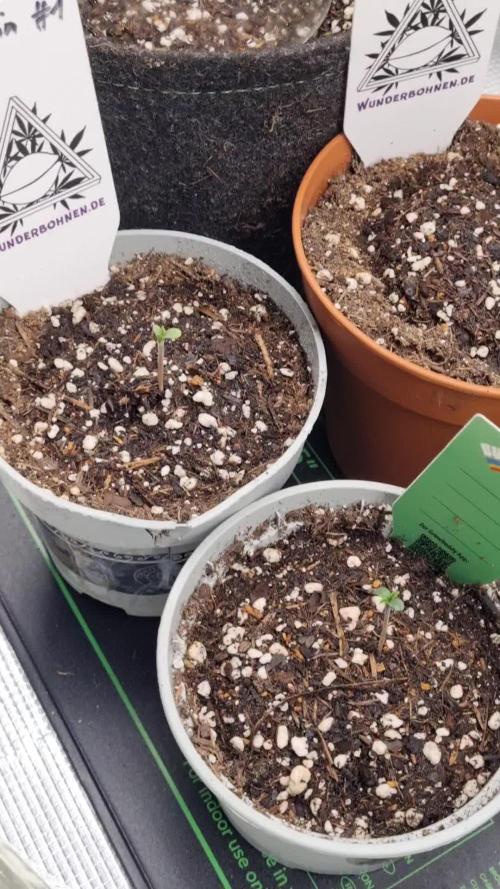
My first Mephisto run, got a new tent, light, and humidifier from me for Xmas. I started 2 seeds in paper towel in a cd case wrapped in a tshirt in the basement. 1 popped 2 days later, the other split still hasn’t really popped so I stuck it in a plug in a solo cup. I got pissed one night after it didn’t pop when I was drinking, so I started the single Dutch Passion®️Banana Blaze seed I had, it popped and went into a rapid rooter in the new tent 1/5/22. Mephisto Genetics®️Double grape 🍇 (which I’m calling Henrietta) went to her forever 3 gallon fabric pot with the bottom 1/3 FFOF, and the top 2/3 FFHF with a 2 liter greenhouse dome on 1/06/22. Welcome to this world lil lady!
Likes
33
Share
Son 2 hafta civarına girdik someklerin en cok şişiceği dönemi gozlemleyecegiz .
Likes
18
Share
@Nazgul420
Follow
Holky jsou připraveny na sklizeň dva dny tma a hurá na to😁🤨😉🍨🍧🍦 Každá je jiná těším se .🚀🚀🚀
Likes
14
Share
Starting to show signs of flowers had do give her a really good defoliating just keeps getting so bushy but it's Starting to look as if I know what I'm doing as well 😂 getting exited now to see what the buds will look like anyway until next week thanks guys 🙏
Likes
245
Share
@Roberts
Follow
THC Bomb auto has been growing really well under the Spider Farmer 100 watt SF-1000 light. Well on its way to becoming a monster. Has been stretching all week and more signs of flowering are becoming present. Been raising the light as stretching continues. I have increased bloom and bloom booster. Will likely sep nutrition up more in a few days. Thanks again Spider Farmer. 🤜🤛 Thank you everyone in the GD community for your support. Please like, and follow along. Extra thanks to my YouTube subscribers as well. Stay safe everyone, and happy growing 🌱🌱🌱🌱🌱🌱🌱🌱
Likes
42
Share
9L Pot was harvest 6 days before 12L pot with 66g dry bud plus 3.1g bubble hash. Total 69g 12L Pot was left for 6 more days and the harvest weight was 123g plus 7.3g bubble hash. Total 130g The buds is rock hard and cover in crystals. The smoke is balanced great hybrid.
Likes
52
Share
Lacewings seemed to have mostly killed themselves by flying into hot light fixtures. I may have left the UV on which was smart of me :) Done very little to combat if anything but make a sea of carcasses, on the bright side its good nutrition for the soil. Made a concoction of ethanol 70%, equal parts water, and cayenne pepper with a couple of squirts of dish soap. Took around an hour of good scrubbing the entire canopy. Worked a lot more effectively and way cheaper. Scorched earth right now, but it seems to have wiped them out almost entirely very pleased. Attempted a "Fudge I Missed" for the topping. So just time to wait and see how it goes. Question? If I attached a plant to two separate pots but it was connected by rootzone, one has a pH of 7.5 ish the other has 4.5. Would the Intelligence of the plant able to dictate each pot separately to uptake the nutrients best suited to pH or would it still try to draw nitrogen from a pot with a pH where nitrogen struggles to uptake? Food for stoner thought experiments! Another was on my mind. What happens when a plant gets too much light? Well, it burns and curls up leaves. That's the heat radiation, let's remove excess heat, now what? I've always read it's just bad, or not good, but when I look for an explanation on a deeper level it's just bad and you shouldn't do it. So I did. How much can a cannabis plant absorb, 40 moles in a day, ok I'll give it 60 moles. 80 nothing bad ever happened. The answer, finally. Oh great........more questions........ Reactive oxygen species (ROS) are molecules capable of independent existence, containing at least one oxygen atom and one or more unpaired electrons. "Sunlight is the essential source of energy for most photosynthetic organisms, yet sunlight in excess of the organism’s photosynthetic capacity can generate reactive oxygen species (ROS) that lead to cellular damage. To avoid damage, plants respond to high light (HL) by activating photophysical pathways that safely convert excess energy to heat, which is known as nonphotochemical quenching (NPQ) (Rochaix, 2014). While NPQ allows for healthy growth, it also limits the overall photosynthetic efficiency under many conditions. If NPQ were optimized for biomass, yields would improve dramatically, potentially by up to 30% (Kromdijk et al., 2016; Zhu et al., 2010). However, critical information to guide optimization is still lacking, including the molecular origin of NPQ and the mechanism of regulation." What I found most interesting was research pointing out that pH is linked to this defense mechanism. The organism can better facilitate "quenching" when oversaturated with light in a low pH. Now I Know during photosynthesis plants naturally produce exudates (chemicals that are secreted through their roots). Do they have the ability to alter pH themselves using these excretions? Or is that done by the beneficial bacteria? If I can prevent reactive oxygen species from causing damage by "too much light". The extra water needed to keep this level of burn cooled though, I must learn to crawl before I can run. Reactive oxygen species (ROS) are key signaling molecules that enable cells to rapidly respond to different stimuli. In plants, ROS plays a crucial role in abiotic and biotic stress sensing, integration of different environmental signals, and activation of stress-response networks, thus contributing to the establishment of defense mechanisms and plant resilience. Recent advances in the study of ROS signaling in plants include the identification of ROS receptors and key regulatory hubs that connect ROS signaling with other important stress-response signal transduction pathways and hormones, as well as new roles for ROS in organelle-to-organelle and cell-to-cell signaling. Our understanding of how ROS are regulated in cells by balancing production, scavenging, and transport has also increased. In this Review, we discuss these promising developments and how they might be used to increase plant resilience to environmental stress. Temperature stress is one of the major abiotic stresses that adversely affect agricultural productivity worldwide. Temperatures beyond a plant's physiological optimum can trigger significant physiological and biochemical perturbations, reducing plant growth and tolerance to stress. Improving a plant's tolerance to these temperature fluctuations requires a deep understanding of its responses to environmental change. To adapt to temperature fluctuations, plants tailor their acclimatory signal transduction events, specifically, cellular redox state, that are governed by plant hormones, reactive oxygen species (ROS) regulatory systems, and other molecular components. The role of ROS in plants as important signaling molecules during stress acclimation has recently been established. Here, hormone-triggered ROS produced by NADPH oxidases, feedback regulation, and integrated signaling events during temperature stress activate stress-response pathways and induce acclimation or defense mechanisms. At the other extreme, excess ROS accumulation, following temperature-induced oxidative stress, can have negative consequences on plant growth and stress acclimation. The excessive ROS is regulated by the ROS scavenging system, which subsequently promotes plant tolerance. All these signaling events, including crosstalk between hormones and ROS, modify the plant's transcriptomic, metabolomic, and biochemical states and promote plant acclimation, tolerance, and survival. Here, we provide a comprehensive review of the ROS, hormones, and their joint role in shaping a plant's responses to high and low temperatures, and we conclude by outlining hormone/ROS-regulated plant-responsive strategies for developing stress-tolerant crops to combat temperature changes. Onward upward for now. Next! Adenosine triphosphate (ATP) is an energy-carrying molecule known as "the energy currency of life" or "the fuel of life," because it's the universal energy source for all living cells.1 Every living organism consists of cells that rely on ATP for their energy needs. ATP is made by converting the food we eat into energy. It's an essential building block for all life forms. Without ATP, cells wouldn't have the fuel or power to perform functions necessary to stay alive, and they would eventually die. All forms of life rely on ATP to do the things they must do to survive.2 ATP is made of a nitrogen base (adenine) and a sugar molecule (ribose), which create adenosine, plus three phosphate molecules. If adenosine only has one phosphate molecule, it’s called adenosine monophosphate (AMP). If it has two phosphates, it’s called adenosine diphosphate (ADP). Although adenosine is a fundamental part of ATP, when it comes to providing energy to a cell and fueling cellular processes, the phosphate molecules are what really matter. The most energy-loaded composition for adenosine is ATP, which has three phosphates.3 ATP was first discovered in the 1920s. In 1929, Karl Lohmann—a German chemist studying muscle contractions—isolated what we now call adenosine triphosphate in a laboratory. At the time, Lohmann called ATP by a different name. It wasn't until a decade later, in 1939, that Nobel Prize–-winner Fritz Lipmann established that ATP is the universal carrier of energy in all living cells and coined the term "energy-rich phosphate bonds."45 Lipmann focused on phosphate bonds as the key to ATP being the universal energy source for all living cells, because adenosine triphosphate releases energy when one of its three phosphate bonds breaks off to form ADP. ATP is a high-energy molecule with three phosphate bonds; ADP is low-energy with only two phosphate bonds. The Twos and Threes of ATP and ADP Adenosine triphosphate (ATP) becomes adenosine diphosphate (ADP) when one of its three phosphate molecules breaks free and releases energy (“tri” means “three,” while “di” means “two”). Conversely, ADP becomes ATP when a phosphate molecule is added. As part of an ongoing energy cycle, ADP is constantly recycled back into ATP.3 Much like a rechargeable battery with a fluctuating state of charge, ATP represents a fully charged battery, and ADP represents a "low-power mode." Every time a fully charged ATP molecule loses a phosphate bond, it becomes ADP; energy is released via the process of ATP becoming ADP. On the flip side, when a phosphate bond is added, ADP becomes ATP. When ADP becomes ATP, what was previously a low-charged energy adenosine molecule (ADP) becomes fully charged ATP. This energy-creation and energy-depletion cycle happens time and time again, much like your smartphone battery can be recharged countless times during its lifespan. The human body uses molecules held in the fats, proteins, and carbohydrates we eat or drink as sources of energy to make ATP. This happens through a process called hydrolysis . After food is digested, it's synthesized into glucose, which is a form of sugar. Glucose is the main source of fuel that our cells' mitochondria use to convert caloric energy from food into ATP, which is an energy form that can be used by cells. ATP is made via a process called cellular respiration that occurs in the mitochondria of a cell. Mitochondria are tiny subunits within a cell that specialize in extracting energy from the foods we eat and converting it into ATP. Mitochondria can convert glucose into ATP via two different types of cellular respiration: Aerobic (with oxygen) Anaerobic (without oxygen) Aerobic cellular respiration transforms glucose into ATP in a three-step process, as follows: Step 1: Glycolysis Step 2: The Krebs cycle (also called the citric acid cycle) Step 3: Electron transport chain During glycolysis, glucose (i.e., sugar) from food sources is broken down into pyruvate molecules. This is followed by the Krebs cycle, which is an aerobic process that uses oxygen to finish breaking down sugar and harnesses energy into electron carriers that fuel the synthesis of ATP. Lastly, the electron transport chain (ETC) pumps positively charged protons that drive ATP production throughout the mitochondria’s inner membrane.2 ATP can also be produced without oxygen (i.e., anaerobic), which is something plants, algae, and some bacteria do by converting the energy held in sunlight into energy that can be used by a cell via photosynthesis. Anaerobic exercise means that your body is working out "without oxygen." Anaerobic glycolysis occurs in human cells when there isn't enough oxygen available during an anaerobic workout. If no oxygen is present during cellular respiration, pyruvate can't enter the Krebs cycle and is oxidized into lactic acid. In the absence of oxygen, lactic acid fermentation makes ATP anaerobically. The burning sensation you feel in your muscles when you're huffing and puffing during anaerobic high-intensity interval training (HIIT) that maxes out your aerobic capacity or during a strenuous weight-lifting workout is lactic acid, which is used to make ATP via anaerobic glycolysis. During aerobic exercise, mitochondria have enough oxygen to make ATP aerobically. However, when you're out of breath and your cells don’t have enough oxygen to perform cellular respiration aerobically, the process can still happen anaerobically, but it creates a temporary burning sensation in your skeletal muscles. Why ATP Is So Important? ATP is essential for life and makes it possible for us to do the things we do. Without ATP, cells wouldn't be able to use the energy held in food to fuel cellular processes, and an organism couldn't stay alive. As a real-world example, when a car runs out of gas and is parked on the side of the road, the only thing that will make the car drivable again is putting some gasoline back in the tank. For all living cells, ATP is like the gas in a car's fuel tank. Without ATP, cells wouldn't have a source of usable energy, and the organism would die. Eating a well-balanced diet and staying hydrated should give your body all the resources it needs to produce plenty of ATP. Although some athletes may slightly improve their performance by taking supplements or ergonomic aids designed to increase ATP production, it's debatable that oral adenosine triphosphate supplementation actually increases energy. An average cell in the human body uses about 10 million ATP molecules per second and can recycle all of its ATP in less than a minute. Over 24 hours, the human body turns over its weight in ATP. You can last weeks without food. You can last days without water. You can last minutes without oxygen. You can last 16 seconds at most without ATP. Food amounts to one-third of ATP production within the human body.
Likes
16
Share
Que pasa familia, de vuelta otra vez, os traigo unos esquejes de le Xupet negre y Haribo de Rkiem seeds , que han sido donados por un colega, me e llevado 8. Necesitaron 7 días para el enraizado y las condiciones fueron 80% de humedad y 24 grados, una vez enraizados se pasaron a tierra en unos vasos y me los traje a casa. cuando llegaron a casa ese mismo día , trasplante a macetas de 7 Litros con tierra de Plagron , Royal mix . Utilizaré la gama básica de Advanced Nutrients para cultivar estos ejemplares, de momento solo les aplique una dosis mínima para que se vayan acostumbrando, también practiqué varias podas apicales para dejarlos a la misma altura.
Likes
179
Share
@StarLorr
Follow
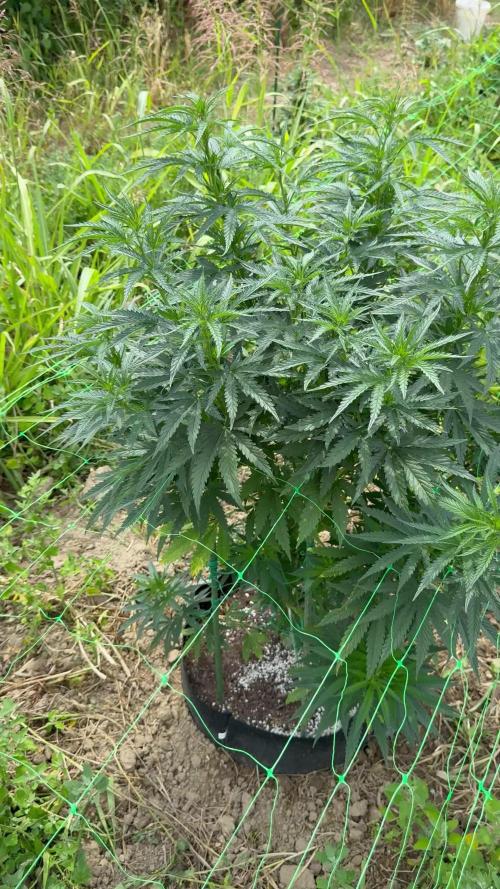
Welcome to my Øpium Diary. In this diary: Seeds sponsored by: Ðivine Șeeds Media not sponsored😄 Nutrients not sponsored🤪 Light sponsored by: Şun☀️ ___________________________ Feeding: Thu 23May: 4L nutrients pH'd 6.5 ___________________________ Past week was very warm and she loves the outdoors ... Perhaps not so much with todays wind gusts and pouring down rain😂 ___________________________ Thanks for stopping by, likes and comments are appreciated!👊🏻😎 Keep on growin! Keep on tokin!!! 😙💨💨💨💨💨
Likes
8
Share
These our great and quite uniform genetics! Lemonpaya get the beans