


Likes
Comments
Share

@LokalGrenz
Follow
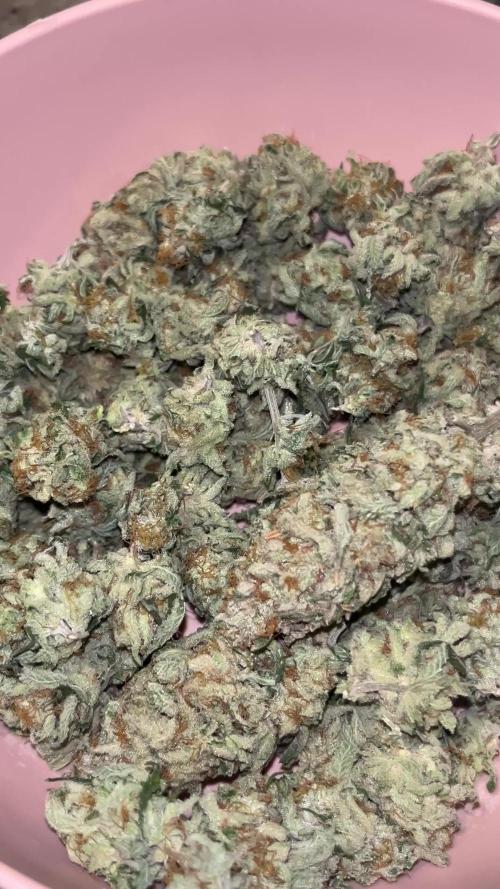
Cut down 9/6 will hang for week or two will give me detail up dates late
9/16 branches snapping so I cut down and trimmed
Not to happy with the amount but I am really happy with the quality thing is sticky frosty wish I could take better pics

Processing
Likes
27
Share


Processing
Likes
23
Share


@GrowGuy97
Follow
Started flushing the biggest plant today the should have about another week & half left on it, all the other ones are still clear & cloudy! Fingers crossed everything goes good through harvest I have never flushed or done any of the harvest or cure process😅😬
Likes
24
Share


@TheCannaProphet
Follow
~Dutch Passion Auto Melonade Runtz~
[Auto Pink Runtz x Melonade (Lemon Z x Lemon Tree)]
Hello again fam! I always LOVE😍running genetics from my friends at Dutch Passion Seed Company. This is a unique autoflower version of the photoperiod Melonade Runtz and is kinda special as this strain, along with her other abundant terpenes, has a relatively unknown terpene by the name of farnesene which peaked my curiosity as a lover of terpenes... aren't we all?🤪 For a more in depth and thorough description of Auto Melonade Runtz I defer to the proverbial 'horses mouth', Dutch Passion.
"Auto Melonade Runtz is a powerful Runtz autoflower crossing that is incredibly potent and pungent due to the addition of Melonade genetics. The dried buds have nice bag appeal and a commercial look.
She is suitable for every type of grower (including beginners). This cannabis strain does well in soil and coco-fiber, but can also be grown hydroponically for the highest yields. She has an XL yield and has an average autoflower seed to harvest time of 11 weeks.
Auto Melonade Runtz is a strong and robust hybrid autoflower plant with good branching, sturdy buds with a unique terpene profile. She usually has a fruity and creamy aroma and taste. The THC content is high and the effects are very potent.
Auto Melonade Runtz is a potent autoflower with both a high THC percentage and a powerful terpene profile. In terms of aroma, she leans most towards a mix of sweet, creamy and fruity notes. The most dominant are the doughy/creamy tones of the Runtz genetics. The fruity notes vary from tropical, berry-like to slightly sour. This makes her an ideal strain for cannabis connoisseurs looking for a unique sensory experience.
Some phenotypes sometimes seem to resemble Gorilla Glue in terms of smell. Others seem to be a bit more towards a fruity 'Kush'. All in all a very complex and interesting fragrance profile! In terms of taste, this Melonade Runtz autoflower version is also very pleasant. The fruity notes are at their best here, the 'inhale' can be nice and fruity with notes of berries, tropical fruit and melon.
The creamy and doughy notes are a little more in the background and come more to the fore on the 'exhale'. The most common terpenes in this autoflower cross are in no particular order; limonene, linalool, myrcene, caryophyllene and humulene. And the relatively new and unknown terpene called farnesene (or 'B-farnesene' ) is also strongly present.
Auto Melonade Runtz was created by crossing an Auto Pink Runtz mother and a Melonade father (made by reversing an elite mother plant). Our Melonade genetics are a cross of the legendary and cup-winning Lemon Zkittle and a clone-only Lemon Tree. The offspring was in turn crossed with a female Auto Pink Runtz through the well-known feminisation process.
This new autoflower is the Gold-standard of contemporary autoflower genetics. Not too big, not too small, but just right and she doesn't mess around when it comes to yield. By combining the well-known Runtz and Melonade genetics, a beautiful new hybrid has been created that will appeal to every grower.
Auto Melonade Runtz is a hybrid THC-rich cannabis strain with a strong cannabinoid profile, an average flowering time & a high yield
Auto Melonade Runtz has been received with great praise within the Dutch Passion test team. The buds of this strain really have a unique terpene profile combined with a very high potency. The flowers also look super white and frosty. In addition, the dried buds are dense and compact. All in all, great bag appeal making her very suitable for real 'cannasseurs'.
During the vegetative phase, every cannabis grower will note that this is an enjoyable strain to grow. She grows easily and has many side branches that gradually grow longer. Most plants exhibit the classic Dutch Passion auto structure. A beautiful thick main bloom surrounded by many well-developed side blooms.
A true growth explosion takes place during weeks 4 and 5. The branches start their stretching period. This ensures that the plant will increase considerably in size during the next 3 weeks. The internodes are fairly close together and this ensures relatively well-connected buds. From week 7 onward, trichome production really starts and the buds start to look whiter.
By week 9 everything is packed with crystals and you see the true nature of this beautiful autoflower strain. The buds are compact and glisten beautifully with THC-rich trichomes. In general, this strain has a seed to harvest time of around 11 weeks. In exceptional cases they bloom 1-2 weeks longer, especially when they are not grown in optimal conditions.
Outdoors, the flowering time can also take a little longer and she needs an average of around 13 (to a maximum of 15) weeks to fully ripen. Her rounded and compact buds make her easy to cut and manicure. The buds are very sticky, so the use of gloves is recommended. However, while cutting you can use the sticky resin on your scissors to make delicious finger hash.
Auto Melonade Runtz is an average sized plant but despite this she has a high yield. The strain grows sturdy side branches, and the buds are still relatively compact even at the bottom. The internode distance is average. This creates buds that are close together on the stem but do not completely merge.
The genetics used for Auto Melonade Runtz guarantee the following properties:
A fast, stable and potent THC-rich autoflower cannabis strain with a hybrid plant and bloom structure which are also easy to harvest
Auto Melonade Runtz is a powerful cannabis strain with a very high THC level which can reach up to 25%, the terpene profile is also high and this makes her ideal for cannabis connoisseurs (cannasseurs)
This strain is easy to grow and, due to the classic Dutch Passion auto structure, ensures high yields when grown naturally, but also in a SOG culture (packed together in small diameter containers which restrict side growth, focusing bud growth on the main bloom)
Auto Melonade Runtz is best suited for indoor cultivation, but can also be grown outdoors. Her plant structure is medium to large and she produces buds with a unique cannabinoid and terpene profile.
Auto Melonade Runtz has an average autoflower seed to harvest time of around 11 weeks. This is typically the time it takes to fully complete the grow indoors in a controlled environment. This autoflower is also best grown on a 20/4 schedule. This gives the plants a short rest period so that they can recover and prepare for the next day.
In an unstable indoor climate it can sometimes take 1 to 2 weeks longer to fully ripen. This also applies to outdoor cultivation. Usually the greatest day/night temperature differences are outdoors and this can slightly delay the total autoflower seed to harvest time.
In a temperate outdoor climate it is best to plan for 12 to a maximum of 15 weeks. In a dry and sunny (e.g. Mediterranean) climate, most plants will be ready for harvest within 11-12 weeks.This gives the very white buds an even more beautiful and unique appearance!
Auto Melonade Runtz is a powerful autoflower with strong genes from several award-winning USA genetic lines. Crossing these hybrid cannabis genetics has created a stable and robust autoflower that can take a beating and still deliver. This makes her suitable for beginners and growers who are still improving their skills. She grows very easily and quickly naturally, without any grow techniques.
If you like to grow in soil/coco, preferably give her a pot of at least 15-20L for a stress-free experience. If you want to use a slightly larger container, we recommend a pot of around 30-35L. This ultimately ensures that she can grow larger and has a better buffer against dehydration and possible nutritional deficiencies.
The same applies to outdoor cultivation. Choose a larger pot for a better buffer zone, making it easier for her to thrive in a variety of conditions. It is best to give black pots a white cover on the outside, so that the light of the sun is reflected and the root temperature of the plants does not rise further and cause damage (black containers absorb a lot of heat in direct sunlight).
She can also be grown in the open ground in more sunny and dry areas, but for the highest yield we recommend growing her in containers, preferably smart pots or root pouches for outdoors and airpots for indoor cultivation.
This is the perfect autoflower strain for those who love a potent cannabis strain with strong smelling and tasty terpenes. The Dutch Passion test team was immediately sold after smoking and vaping this strain during the blind trials. The Farnesene terpene present gives the aroma profile something unique that we have not experienced before."
I know that was A LOT to read, but this strain deserves it and I cannot wait to see what this lady can do...Let's Goooo!🤩💚
________________________________________________________________________________________________________________________________________________________________________________________________________________________________________________________________________________________________________________________
~THE SETUP~
~ This will be a 100% Organic grow
~ Initially seed was germinated in a moist paper towel, then planted directly into the medium.
~ Grown in a 15L Gronest fabric pot filled with Mother Earth 70/30 Coco/Perlite amended with BioTabs Organic Amendments and 30% Worm Castings.
~ Top dressing every 3-4 weeks with Gaia Green slow release dry amendments and Earthworm castings.
~ Straight well water ph'd @ 6.2-6.8 when needed and bi-weekly Compost Tea's.
~ Grown under HLG 650R's with a 19/5 light cycle with supplemental UVA added during the last weeks of flower. Lights are controlled by a Trolmaster Hydro X controller set for a 15min Sunrise/Sunset simulation.
~ Supplemental co2 provided throughout vegetation and flower - monitored and controlled by an AutoPilot APC8200 co2 controller.
________________________________________________________________________________________________________________________________________________________________________________________________________________________________________________________________________________________________________________________
Weekly Updates:
8/14- Ten weeks from seed now and seven weeks of flowering have brought the Dutch Passion Auto Melonade Runtz to an epic finish! Today I'll be placing the Auto Melonade Runtz in complete darkness for 72hrs during which time I will have the temp's in the mid 60's℉ and maintain a RH of 40-45%. I also watered her today so that she wouldn't dry out during her time in 'dark jail' with straight well water that was ph'd to 6.8 @ 68℉.
8/17- After three full days in total darkness, the Dutch Passion Auto Melonade Runtz emerged today drenched in beautiful coloration and loaded with trichomes... another epic result from Dutch Passion genetics!🔥🔥🔥
Now that the first 1/3 of the process is complete, it's time to get this girl chopped and hung to begin the drying/curing process so that we can get to the Smoke Report and see if the Auto Melonade Runtz smokes as good as she looks! Stay tuned for the Harvest Report coming soon!😎
Thank you for checking out my diary, your positive comments and support make it all worthwhile! 💚Growers Love!💚😎🙏

Processing
Likes
6
Share


@VitaminGreenGrow
Follow
Just started flowering. Don't expect too much regarding yield. Just hoping she can make some potent buds. She has been responding really well to the fish mix. I hope she continues to grow but I will only add biogrow as Nitrogen supplement. If I am not happy with the grow in the next 3 days I will ad 0,5mL per Litre Fish mix. Mulch added Day 47. I can already smell her if I put my nose against the newly formed flower.
Likes
371
Share


@love_2_grow
Follow
D64.
We're at the start of the fourth week of flower, and today was a busy day.
First, I had to remove the old lights before swapping in the light from my auto tent. All while trying to avoid trashing the plants in the way too full tent. Not an easy task.
The entire mission, with changing the light in the auto tent as well, took a couple of hours. I wish I could keep the Greenception lights in the tent as they're high-quality lights, but the Kingbrite has a much lower profile and thus takes up much less space. Space that I desperately need considering how insanely much these girls stretched.
One of the tops on the second girl has unfortunately already been bunt by being too close to the light, and I'm sure I will run into light bleaching and probably foxtailing as the grow progress, but I hope I will be able to pull it off with the Kingbrite light.
I also added some wire support to the branches that I super-cropped, as they looked somewhat sad after all the abuse to the canopy while swapping the lights.
------------------------------
D66.
It looks like the girls have FINALLY stopped stretching. Phew!
Yesterday, I gave each girl 2.5 liters of water @ pH 6.2 with humic acid and EM-1.
Today, the green lacewing larvae (Chrysoperla Carnea) arrived, and I dispersed them in the tent to deal with the thrips.
------------------------------
D68.
All is well in the tent, but now when the thrips are (hopefully) under control, it's time to address the VPD. It has gotten seriously out of wack due to dropping temps, plus I increased the humidity to make the environment more inhospitable for the thrips.
The temps were low due to the light change as the new one is running a lot cooler, but the temps have also dropped outside.
The heating in the lungroom has been off until now, so I turned that on and lowered the humidity threshold on my exhaust fan.
Finally, I put my small humidifier in the tent, generating extra heat and decreasing the humidity.
So far, the VPD has increased from a terrible 0.4-0.5 to an acceptable 0.9, and I'm hoping it will increase further as the ambient RH drops as we move into winter.
------------------------------
D70.
We're at the end of the fourth week of flower, and all is well in the tent.
The VPD has gone up to 1.0, which is a nice improvement to what it was only a couple of days ago.
I haven't scouted yet for thrips, but I will give the lacewings a couple of days to do their thing and then look closer.
However, I went to WAR against the spider mites we have in our ornamental plants in the apartment. I sprayed all plants with my homemade pesticide (capsaicin, alcohol, horticultural soap.) since I had it at hand. If that fails to knock the spider mites back, I'll bring out the neem oil instead.
The infestations aren't bad (yet), but it would suck to get mites into my tents, so better to be proactive.
------------------------------

Likes
13
Share


@MiyaguiOkPolilla
Follow
Esta semana ha ido muy bien. Su color es muy verde a pesar de la poca cantidad de nitrógeno aportado y lleva un crecimiento muy fuerte a sus flores que ya estan bañándose en tricomas con ese delicioso olor a goma de mascar rosa. Es muy visible el trabajo de Bud Booster sumado a Bud Candy que estan dando un increíble aporte de volumen a sus cogollos. Por suerte no tuve que usar agua de grifo para esta planta que aún está siendo alimentada con agua de lluvia.
Irie!
Likes
13
Share


@SzkolaZiola
Follow
Last days for most of them - only Strawberry Cough will stay longer - she is super hungry and I can not keep up with feeding her - most of leaves are yellow now. 😱
The rest - four plants will be harvested on the weekend - 2-3 days from now and frozen - I'll be making bubble hash and fresh frozen live resin from them in the following weeks 😈
Trichomes are mostly milky with some amber starting - ideal ripeness and time to freeze those glands


Likes
7
Share


@Mrg7667
Follow
Decent week, noticed some pregnant buds so i have temoved the little ones that i see and any other hermies i missed but not much. Buds are starting to get unique smells and traits as far as bud structure just added new light today

Likes
233
Share


@Tropicannibis_Todd
Follow
🐶🐶🐶🐶🐶 👉Alrighty Then👈🐶🐶🐶🐶🐶🐶
We're 35 days in and we be moving along great 👍 really surprised at the bud development thus far 👈
👉The SweetDream Rose is the tallest and biggest mover growing another 6 inches in just one week 😲 gotta love that purple hues coming in 👈
We've also got some double tops on some branches as well as some triple internode branching 👈
All plants are blooming like crazy 🤪 🙀
We got some great growth right across the board on all plants 👈 All plants receiving at least a min of 850 PPFD
🐶 🐕 🐶 🐕 🐶 🐕 🐶
So we are back for another round 😛 But this grow is special because my big boy needs some love too , he's been getting on the old side of things and his hips have been giving him trouble so I've been buying CBD treats for him and it works great so 😉 👍
I've decided to grow this for my little buddy 🐶 so I can make him some Doggy 🐕 Treats and plus I've never tryed it myself and I really wanna give it a go👈 😊 so let's see what it's all about 👈
I will post the recipes at the end of harvest 👏
So Let's Do This👈
👉Soil Provided by ProMix.ca
👉Nutrients Provided by Agrogardens
👉Lighting Provided by MarsHydro.ca
👉Seeds Provided by Kannabia Seeds

Likes
31
Share


@KitaKush
Follow
78 grams roughly 2.8 oz! Pretty happy with that as I’m looking for quality and potency and no longer quantity and quickness.
She has a good amount of frost and super pungent stank radiating off her.
Unfortunately for me I had issues with drying and at one point a few hours of 70% humidity which led to a few areas of mold…I threw away those buds and the rest are top notch..probably my most resinous plant harvested so far and strongest smelling. I also grew a runt which will give me less than an ounce now I know it’s just best to call quits on those stumpy odd growing plants and start fresh.
Lastly my humidity stayed at 52-56% and I should’ve harvested 1-2 days earlier so the buds are much drier/crispier than I’d like. I’m still trying to find a good drying location..one room had that low humidity and my grow room had way too high at 70..will figure it out eventually.
Also 200watt for lighting I can’t go back and change it.
Likes
2
Share

@Chrisandweed
Follow
Bueno, ya empiezan a tocar las fotos guapas jajajajaja
Les metí el corte este domingo pasado a todas para dejarlas listas para el engorde. Vamos a ver que tal.
Likes
4
Share


@Coolbeanism
Follow
Just cruising along. Not sure why some look like they will be very tiny, but at least one looks like it will be of a decent size.
Likes
25
Share


@DrGanj
Follow
This plant was a dream to grow, wish I'd taken cuts. Halfway through dry at 7 days. Drying at 55 - 60 % RH and 17 - 19 degrees C. I anticipate she'll be done between 10 - 14 days total dry time and I'll then trim and update weights on this Harvest.
133.75g total after trim. She's a nice smoke, very happy.

Likes
32
Share


@Roberts
Follow
Critical x Animal Cookies just got switched to ph water 4 days ago. I have her schedule to harvest in about 8 days. She grew well under the Hortibloom Solux 350. It was grower error that she is small. I will still get some frosty buds from her. Everything is looking great. Thank you Hortibloom, and Ripper Seeds. 🤜🏻🤛🏻💪🏻❄️🌱
Thank you grow diaries community for the 👇likes👇, follows, comments, and subscriptions on my YouTube channel👇. ❄️🌱🍻
Happy Growing 🌱🌱🌱
https://youtube.com/channel/UCAhN7yRzWLpcaRHhMIQ7X4g

Likes
10
Share


@MadeInGermany
Follow
Harvest day 66
since time switch
to 12 / 12 h
Hey guys :-)
Finally it's time 💚
The lady is done the large leaves have been removed and hung upside down to dry in the dark drying room.
You can now stay there for 13-15 days at a temperature of 18-20 degrees and 55-62% humidity.
After 13-15 days it is neatly trimmed by hand and placed in jars with boveda packs 62.
After 4 weeks Boveda 58% come in and are ready for testing ;-).
After everything has been cut cleanly, the last update comes with the smoke report and the finished pictures.
Let's get to the plant 💚.
Unfortunately, the rating system at Growdiaries is a bit strange because I have to give the stars before the Smoke Report and in the end it might have led to more stars in terms of taste.
. The smell is great I'm curious about the taste 💚
Have fun and stay healthy 💚🙏🏻
👇🏼👇🏼👇🏼👇🏼👇🏼👇🏼👇🏼👇🏼👇🏼👇🏼👇🏼👇🏼
‘Powered by GreenHouse Feeding’
Copy the link for 10% off all Nutrients 👇🏼
http://shop.greenhousefeeding.com/
affiliate/madelngermany_passiongrower/
👇🏼👇🏼👇🏼👇🏼👇🏼👇🏼👇🏼👇🏼👇🏼👇🏼👇🏼👇🏼
Water 💧 💧💧
Osmosis water mixed with Cal/Mag (24 hours stale that the chlorine evaporates) to 290 ppm and Ph with Ph- to 5.8 - 6.4
MadeInGermany

Likes
27
Share


@Snowy
Follow
All ladies have grown a lot this week again, with the Blue Dream CBD growing at the rate of about 10 inches a week. That's almost a foot and I will admit to being a bit unprepared for this kind of growth rate, especially given that flowering season will not start until about late July... All said everyone seems healthy and happy.
UPDATE - Interesting and unexpected development: the ladies (both Trainwrecks) seem to have flipped into flowering. I have no idea how this happened at this time of year. The seeds were not planted under lights, the plants have been sunlight only since they sprouted. Perhaps this explains the crazy growth all plants have been exhibiting. I'm keeping a close eye out on the two others to see if the same happens. Any thoughts?


Likes
27
Share


@RDWCGrowing
Follow
3/25/2023
Week 6- Day 1 of Veg (Day 52 overall)
Added my first between changes SILICA Top offs. Was worried that when you add it to pre mixed Nutes that it can make the whole thing turn into a gummy looking substance. I was ready to drain the system and start it over for the week if needed, but no issues adding it to the tank. the Silica going into the Res didn't gummy the system up, it did drop my PH by quit a bit causing me to have to bring it back in balance.
36 Gallons in the Tank
Silica
Add .5mil/Gal = 18Mil
I topped some that needed to be topped, I defoliated some that needs to be defoliated. Since I have moved into Week 6 I have increased the light intensity up to just over 500 maxing it out for Veg Cycle. Next increase will be Week 1 of Flower.
3/26/2023
Week 6- Day 2 of Veg (Day 53 overall)
All conditions looked great. Other than me not putting one of the humidifiers back right which means it didn't work last night so Humidity was lower than I like. But got the Humidifier back on it's stand correctly and it is now pumping away. With that I decided to give the plants a day off from any stresses, no topping, no FIMing, no Defoliation for today. Just some good old soaking up the light rays and the ability to get all the Nutes they would like..
3/27/2023
Week 6- Day 3 of Veg (Day 54 overall)
Looking kind of Bushy today, so I defoliated some, and topped some.
3/28/2023
Week 6- Day 4 of Veg (Day 55 overall)
PH was a little lower than I like 5.74 so I added a few Mil of PH UP and brought it back up to 5.94.
Not much else at this stage, just I topped a little and I defoliated a little.
3/29/2023
Week 6- Day 5 of Veg (Day 56 overall)
Topped a little, Defoliated a little Watched them grow!!
3/30/2023
Week 6- Day 6 of Veg (Day 57 Overall)
Main action today was breaking down my old tent and setting up a new tent and getting my second RDWC system setup and ready for clones. I Topped a little, I Defoliated some and started taking a good look at what I would like to take for clones in the coming days. I have a few bottom branches that look every promising for my clone material on each.
3/31/2023
Week 6- Day 7 of Veg (Day 58 overall)
#3 is at 16" Tall
#2 is at 13" Tall

Likes
Comments
Share


@DansHampf
Follow
20JUNE2025: Buds are forming well. Water them 1 liter every third day.