


shorts_status_processing


@Fergie
Follow
HEy guys so another week has passed and it is getting close to end for my lemon ak girls . Begun flush this week passed 10 gallon through eachnplant and strip back all main fan leafs to e,pose buds . The remo is a monster ready to flip for sure and i will repot blueberry llater to 3 gallon til i swap again to 9 gallon after auto done . All look good sorry again light i haven't got a good led yet and i have be cautious where i stay .- 😉


@BearBuds
Follow
Another BIG week for the gals. They got lollipopped on Monday and it took them about 5 days to fill back out and start stretching vertically again. Saturday-Monday they seems to explode overnight, had to adjust the scrog net and do additional LST to keep the canopy as level as possible. PE#1 is not as tall as the others and with this system I can't really stand her up on anything. Hope that she catches up this week. I discovered some purple petioles, and a little spreading to stems on each plant and read that it's likely due to a mag deficiency. I added CalMag to the res. Also noticed the water temp is a little warm at 26-27C but I am not going to spend the money to get a chiller and pay for that electricity, so we will see what happens. Doesn't seem to be too big of an issue right now. To counter this a little I turned on the autopot air domes. Hoping that the extra oxygen will do them well since the warm water is likely low in DO. This week the light was lowered to 45cm above canopy. Reading back through old grows it appears between 37.5-45.5 is the sweet spot for this light. I also started checking the pH and the ppm's of each tray and noticed that the pH rises slightly from tank to tray. Tank is at 5.5 and trays are 5.8-6. Something to keep an eye on later. Tonight I will clean the tank with soap, peroxide and water and plan to snag some hydroguard this week at the store. I added Bud explosion to the nute recipe this week and will begin to decrease Part B Nutrients slowly over the course of the next two weeks. They are still a little shorter than I would like, but the good news is there is literally no more room to scrog so its all vertical growth from here on out. Hoping that they have a good stretch this week. if they could be between 65-70 cm by the end of flower week two I would be very pleased. All other conditions in the tent have been great.


@Grimreefer420
Follow
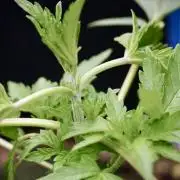
One plant is flowering a few days later, this particular seed grew a bit different then the other 2 stronger and minus the 4th one "that went through shock due to the accident during transplant." Aka tipping over 😞..... The back 2 plants will be the prime crops, but some open sesame and TLC on the front left plant will amake difference,.Stay tuned....40 days left...aprox




@DogDoctorOfficial
Follow
🌿 Sour Diesel — Catch-Up Report (Weeks 2.5 → 4 | 12/12 Transition)
First — a quick word to everyone following the diary
We want to start this update by apologizing for doing a two-and-a-half week report in one go.
This is not a change in transparency or process — it’s simply to bring Sour Diesel back in sync with the rest of the room.
All plants are evolving under the same tent, same environment, same rhythm.
Having one diary lag behind doesn’t serve the journey — so we’re catching her up, cleanly and honestly.
Thank you for understanding 💚
⸻
🌱 General Behavior & Growth
Sour Diesel has been growing beautifully.
• Strong, healthy structure
• Deep green, lush foliage
• No stress signals
• Calm, confident growth
She transitioned into 12/12 smoothly and is now fully sharing the same rhythm as the rest of the room.
⸻
✋ Training Response (Week 3)
Training started in Week 3, using only:
• leaf tucking
• gentle leaf bending
No aggressive techniques.
Her response was excellent.
By the end of Week 4:
• She became noticeably bushier
• Leaves increased in size
• Side branches began to push outward and upward
• Branch length reached roughly 4–5 fingers, which is perfect for this stage
Nothing exaggerated, nothing forced — just natural structure opening up.
⸻
🌸 Flowering Signals (or lack of — and why that’s okay)
Despite being under 12/12:
• No visible flowering signs yet
• No pistils
• No true flip signals
This is expected.
Why?
• She had ~15 days of 18/6 vegetative phase
• She’s now completing ~2 weeks of 12/12
• Sour Diesel often hesitates, then commits fully
She feels close — almost like she’s thinking about it.
We expect clear signs very soon, likely at the start of the next week.
Ending this week:
➡️ bushier
➡️ more structured
➡️ clearly preparing
⸻
Nutrition & Autopot Reality (Important Note)
She is currently being fed the same vegetative recipe, with one key adjustment.
Autopots & organics — the reality
Some of the inputs we normally use are organic / biological.
These work beautifully with:
• some gravity feeding
• hand watering
• living solutions
But they do NOT work well in irrigation systems like Autopots.
Why:
• Living inputs can settle
• Cause build-ups
• Create pH fluctuations
• Reduce line consistency
• “Alive” water doesn’t like being stored or recirculated
So for now:
What she’s receiving
• Plagron Terra Grow only in the Autopot system
• EC lowered to 0.8 (instead of 1.0)
• Even though NPK is present, we keep EC conservative
• No boosters in the reservoir
Occasional top feeding
Once or twice, when watering the rest of the room:
• She received the full recipe via top watering
• This is likely how we’ll continue once demand increases
Flower will bring higher needs — we’ll adapt when she asks, not before.
⸻
🌬️ Environment
No changes here:
• Temperatures stable
• Humidity stable
• Airflow unchanged
Everything remains identical to the rest of the room, so no need to repeat values.
⸻
👑 What to Expect / What Not to Expect
Expect:
• A clear flip soon
• Stretch after commitment
• More expressive structure than some of the others
• Increased nutrient demand once flowering starts
Do NOT expect:
• Instant pistils just because she’s in 12/12
• Heavy defoliation yet
• Aggressive feeding right now
• Identical behavior to other cultivars
Sour Diesel does things her way — and she’s doing them well.
⸻
🌿 Final Notes
She’s healthy.
She’s calm.
She’s aligned with the room now.
This Queen is not late — she’s intentional.
Thank you to everyone following this journey, and thank you for allowing us to keep the diary honest, educational, and paced by the plant — not the calendar.
As always:
observe → adjust → repeat
FOR DISCOUNT CODES AND MORE JUST FOLLOW THE LINK https://website.beacons.ai/dogdoctorofficial
📲 Don’t forget to Subscribe and follow me on Instagram and YouTube @DogDoctorOfficial for exclusive content, real-time updates, and behind-the-scenes magic. We’ve got so much more coming, including transplanting and all the amazing techniques that go along with it. You won’t want to miss it.
GrowDiaries Journal: https://growdiaries.com/grower/dogdoctorofficial
Instagram: https://www.instagram.com/dogdoctorofficial/
YouTube: https://www.youtube.com/@dogdoctorofficial
⸻
Explore the Gear that Powers My Grow
If you’re curious about the tech I’m using, check out these links:
🔆 Lighting & Environmental Control
• Future of Grow — Advanced LED lighting technology
https://www.futureofgrow.com/
DISCOUNT CODE: DOG20
• Lumiflora — Under-canopy LED lighting
https://lumiflorade.com/
• TrollMaster — Environmental controllers and automation gear (past collaboration)
⸻
Genetics
• Zamnesia Seeds — Genetics used in this project
https://www.zamnesia.com/
⸻
🌱 Soil, Substrates, Boosters & Root Support
• Plagron — Substrates, bio mixes, and supportive products
https://plagron.com/en/
⸻
🎒 Storage, Curing & Preservation
• Grove Bags — Curing and storage solutions
https://grovebags.com/
⸻
📸 Photography Equipment & Tools
(Not sponsors, but part of my creative toolkit)
• Sony A6700
• Sony full-frame macro lens + few more
• Stacking photography workflow - learning
• iPhone (for behind-the-scenes shots)
We’ve got much more coming as we move through the grow cycles. Trust me, you won’t want to miss the next steps, let’s push the boundaries of indoor horticulture together!
As always, this is shared for educational purposes, aiming to spread understanding and appreciation for this plant. Let’s celebrate it responsibly and continue to learn and grow together.
With true love comes happiness. Always believe in yourself, and always do things expecting nothing and with an open heart. Be a giver, and the universe will give back in ways you could never imagine.
💚 Growers love to all 💚
📸 P.S. – The Eye Behind the Lens
All photos in this diary (for now — except for the ones showing the camera, which I took with an iPhone) are taken with a Sony A6700 paired with a Sony full-frame macro lens and a few more.
Photography is part of the story — it’s how we share the fine textures, the glow, and the quiet details that words can’t always capture.
I’ve also started experimenting with photo stacking — a technique where multiple images, each taken at a slightly different focus point, are layered together to create one perfectly sharp image from front to back.
It’s not digital enhancement or AI; it’s pure photography — a way to reveal the plant’s beauty in microscopic depth, from trichome to petal.
You’ll even see a few shots of "ghost me" capturing the shots — camera, lens, setup — because every grow deserves not just to be cultivated, but documented like art.
FOR DISCOUNT CODES AND MORE JUST FOLLOW THE LINK https://website.beacons.ai/dogdoctorofficial
NEW DISCORD - Official Server Invite Link : https://discord.gg/ksjAkA5T74


@DivineBuds420
Follow
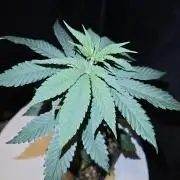
Not much has changed this week. Both plants are growing steadily, although the previously injured plant is slightly behind the other one. I expect this difference to balance out over time.
You can clearly see where the leaves were damaged earlier, and they are now growing a bit twisted and deformed as a result. The larger plant is already showing strong indica traits with big leaves and thick fingers.
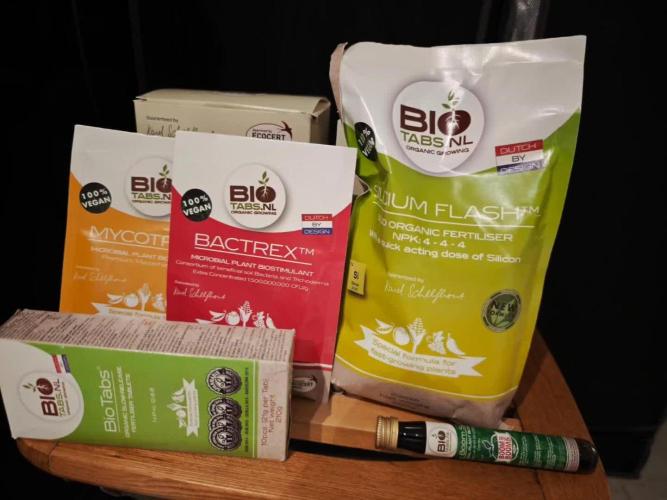
During the week, the plants will most likely be transplanted into a larger pot and will receive their BioTabs treatment – including nutrients and beneficial microorganisms. Basically the whole organic setup. I’m confident they’re going to love it.
I’ll be away on vacation for a few weeks after this update, so some diary entries may be posted with a slight delay. The plants will be taken care of and watered during that time, and progress will still be documented.
Both plants were successfully transplanted into 3.5 liter pots and received the full BioTabs treatment, including microorganisms and nutrients.
The substrate is based on reused and reconditioned soil with roughly 50% perlite mixed in. The base soil is BioBizz Light Mix.
Since watering is done exclusively with osmosis water, about 7 g of dolomite lime per liter of soil was added to provide proper calcium and magnesium buffering.
This run marks the first time following the BioTabs “just add water” strategy.
The substrate was prepared accordingly and amended with Startrex and Silicium Flash.
Before placing the plants into their new pots, Mycotrex was sprinkled directly into the planting hole and one BioTab was added to each pot.
After transplanting, the leaves were lightly sprayed with Boom Boom Spray.
The substrate was then watered with osmosis water mixed with Bactrex.
Everything went smoothly and the plants handled the transplant very well.
From here on, it’s all about letting the biology do the work.



@adam_pawloski87
Follow
Such an amazing flower, really great especially a phenomenal hash producer yall will be super satisfied with this one!! She’s a shorty but Make sure you top 4 to 6 times or even more to have all them gooey bud producing heads , Dirtyblonde is absolutely an amazing plant!!


@1Right_Angle
Follow
Jan 15th
- soil tests tonight / photos tonight
17th
- soil ph is a tad over; 7.2 -7.3
- dinner served at a pH of 6.2
- dinner tonight; 1.5L pH’d water ran through plant first, then fed 3L nutes/water posted above. This flow caused some Run-off, but not enough to properly measure EC value
-near max on the tds, but it was the thickest dinner yet. (including molasses) follow-up tonight.
20th
- Allowing the soil to dry an xtra day
- brewing a compost tea for tomorrow’s dinner. (black willie as well) Then back on schedule
- Running 2 Aerated-Teas, staggered between heavy nutrient meals, I hope it nourishes the soil enough that we see a flourish of activity next week… - first tea with bat guano… Resting the banana lol
Jan 21,
- last day of the week… finally the tent to themselves. Congo & Mystic are gone
- tea tonight
shorts_status_processing


@ladyjane
Follow
8/10 - In prep for flower I've got some Compost Tea brewing with a little Terp Tea Bloom by Roots Organics. .Also did a little selective defoliation
8/11 - Flipped the ladies to flower today! And all is good in the 8x4.
8/12 - Watered all the ladies with the Compost/Terp Tea. Also did some more defoliation and added some mosquito bits for added pest prevention.


@Kirsten
Follow
The flowers are building now. Looking very nice.
Here's what I did this week
18.7.25:
I watered with 3ltrs of dechlorinated water PH'd to 6.4, containing the following nutrients;
💜 2ml Ecothrive Trace
PH: 6.4
PPM: 365
20.7.25:
I watered with 2ltrs of dechlorinated water PH'd to 6.3 containing the following nutrients;
💜 2ml Ecothrive Trace
💜 1/4 TSP Ecothrive Biosys
25.7.25:
I watered with 3ltrs of dechlorinated water PH'd to 6.5, containing the following nutrients;
💜 2ml Ecothrive Trace
💜 1/4 TSP Ecothrive Biosys
PH: 6.5
PPM: 361
28.7.25:
I watered with 6.5ltrs of dechlorinated water PH'd to 6.0 with;
💜 7ml Trace
💜 1.5 TSP Ecothrive Biosys
PH: 6.0
PPM: 351
Thank you for checking in this week and hanging out in the comments 😁💚✌️🌱🙌



@Ultraviolet
Follow
Yellow butterfly came to see me the other day; that was nice.
Starting to show signs of stress on the odd leaf, localized isolated blips, blemishes, who said growing up was going to be easy!
Smaller leaves have less surface area for stomata to occupy, so the stomata are packed more densely to maintain adequate gas exchange. Smaller leaves might have higher stomatal density to compensate for their smaller size, potentially maximizing carbon uptake and minimizing water loss. Environmental conditions like light intensity and water availability can influence stomatal density, and these factors can affect leaf size as well. Leaf development involves cell division and expansion, and stomatal differentiation is sensitive to these processes. In essence, the smaller leaf size can lead to a higher stomatal density due to the constraints of available space and the need to optimize gas exchange for photosynthesis and transpiration. In the long term, UV-B radiation can lead to more complex changes in stomatal morphology, including effects on both stomatal density and size, potentially impacting carbon sequestration and water use. In essence, UV-B can be a double-edged sword for stomata: It can induce stomatal closure and potentially reduce stomatal size, but it may also trigger an increase in stomatal density as a compensatory mechanism. It is generally more efficient for gas exchange to have smaller leaves with a higher stomatal density, rather than large leaves with lower stomatal density. This is because smaller stomata can facilitate faster gas exchange due to shorter diffusion pathways, even though they may have the same total pore area as fewer, larger stomata. Leaf size tends to decrease in colder climates to reduce heat loss, while larger leaves are more common in warmer, humid environments. Plants in arid regions often develop smaller leaves with a thicker cuticle and/or hairs to minimize water loss through transpiration. Conversely, plants in wet environments may have larger leaves and drip tips to facilitate water runoff. Leaf size and shape can vary based on light availability. For example, leaves in shaded areas may be larger and thinner to maximize light absorption. Leaf mass per area (LMA) can be higher in stressful environments with limited nutrients, indicating a greater investment in structural components for protection and critical resource conservation. Wind speed, humidity, and soil conditions can also influence leaf morphology, leading to variations in leaf shape, size, and surface characteristics. Small leaves: Reduce water loss in arid or cold climates.
Environmental conditions significantly affect gene expression in plants. Plants are sessile organisms, meaning they cannot move to escape unfavorable conditions, so they rely on gene expression to adapt to their surroundings. Environmental factors like light, temperature, water, and nutrient availability can trigger changes in gene expression, allowing plants to respond to and survive in diverse environments.
Depending on the environment a young seedling encounters, the developmental program following seed germination could be skotomorphogenesis in the dark or photomorphogenesis in the light. Light signals are interpreted by a repertoire of photoreceptors followed by sophisticated gene expression networks, eventually resulting in developmental changes. The expression and functions of photoreceptors and key signaling molecules are highly coordinated and regulated at multiple levels of the central dogma in molecular biology. Light activates gene expression through the actions of positive transcriptional regulators and the relaxation of chromatin by histone acetylation. Small regulatory RNAs help attenuate the expression of light-responsive genes. Alternative splicing, protein phosphorylation/dephosphorylation, the formation of diverse transcriptional complexes, and selective protein degradation all contribute to proteome diversity and change the functions of individual proteins.
Photomorphogenesis, the light-driven developmental changes in plants, significantly impacts gene expression. It involves a cascade of events where light signals, perceived by photoreceptors, trigger changes in gene expression patterns, ultimately leading to the development of a plant in response to its light environment.
Genes are expressed, not dictated! While having the potential to encode proteins, genes are not automatically and constantly active. Instead, their expression (the process of turning them into proteins) is carefully regulated by the cell, responding to internal and external signals. This means that genes can be "turned on" or "turned off," and the level of expression can be adjusted, depending on the cell's needs and the surrounding environment. In plants, genes are not simply "on" or "off" but rather their expression is carefully regulated based on various factors, including the cell type, developmental stage, and environmental conditions. This means that while all cells in a plant contain the same genetic information (the same genes), different cells will express different subsets of those genes at different times. This regulation is crucial for the proper functioning and development of the plant.
When a green plant is exposed to red light, much of the red light is absorbed, but some is also reflected back. The reflected red light, along with any blue light reflected from other parts of the plant, can be perceived by our eyes as purple.
Carotenoids absorb light in blue-green region of the visible spectrum, complementing chlorophyll's absorption in the red region. They safeguard the photosynthetic machinery from excessive light by activating singlet oxygen, an oxidant formed during photosynthesis. Carotenoids also quench triplet chlorophyll, which can negatively affect photosynthesis, and scavenge reactive oxygen species (ROS) that can damage cellular proteins. Additionally, carotenoid derivatives signal plant development and responses to environmental cues. They serve as precursors for the biosynthesis of phytohormones such as abscisic acid () and strigolactones (SLs). These pigments are responsible for the orange, red, and yellow hues of fruits and vegetables, while acting as free scavengers to protect plants during photosynthesis.
Singlet oxygen (¹O₂) is an electronically excited state of molecular oxygen (O₂). Singlet oxygen is produced as a byproduct during photosynthesis, primarily within the photosystem II (PSII) reaction center and light-harvesting antenna complex. This occurs when excess energy from excited chlorophyll molecules is transferred to molecular oxygen. While singlet oxygen can cause oxidative damage, plants have mechanisms to manage its production and mitigate its harmful effects.
Singlet oxygen (¹O₂) is considered a reactive oxygen species (ROS). It's a form of oxygen with higher energy and reactivity compared to the more common triplet oxygen found in its ground state. Singlet oxygen is generated both in biological systems, such as during photosynthesis in plants, and in cellular processes, and through chemical and photochemical reactions. While singlet oxygen is a ROS, it's important to note that it differs from other ROS like superoxide (O₂⁻), hydrogen peroxide (H₂O₂), and hydroxyl radicals (OH) in its formation, reactivity, and specific biological roles. Non-photochemical quenching (NPQ) protects plants from damage caused by reactive oxygen species (ROS) by dissipating excess light energy as heat. This process reduces the overexcitation of photosynthetic pigments, which can lead to the production of ROS, thus mitigating the potential for photodamage. Zeaxanthin, a carotenoid pigment, plays a crucial role in photoprotection in plants by both enhancing non-photochemical quenching (NPQ) and scavenging reactive oxygen species (ROS). In high-light conditions, zeaxanthin is synthesized from violaxanthin through the xanthophyll cycle, and this zeaxanthin then facilitates heat dissipation of excess light energy (NPQ) and quenches harmful ROS.
The Issue of Singlet Oxygen!!
ROS Formation: Blue light, with its higher energy photons, can promote the formation of reactive oxygen species (ROS), including singlet oxygen, within the plant.
Potential Damage: High levels of ROS can damage cellular components, including proteins, lipids, and DNA, potentially impacting plant health and productivity.
Balancing Act: A balanced spectrum of light, including both blue and red light, is crucial for mitigating the harmful effects of excessive blue light and promoting optimal plant growth and stress tolerance.
The Importance of Red Light:
Red light (especially far-red) can help to mitigate the negative effects of excessive blue light by:
Balancing the Photoreceptor Response: Red light can influence the activity of photoreceptors like phytochrome, which are involved in regulating plant responses to different light wavelengths.
Enhancing Antioxidant Production: Red and blue light can stimulate the production of antioxidants, which help to neutralize ROS and protect the plant from oxidative damage.
Optimizing Photosynthesis: Red light is efficiently used in photosynthesis, and its combination with blue light can lead to increased photosynthetic efficiency and biomass production.
In controlled environments like greenhouses and vertical farms, optimizing the ratio of blue and red light is a key strategy for promoting healthy plant growth and yield.
Understanding the interplay between blue light signaling, ROS production, and antioxidant defense mechanisms can inform breeding programs and biotechnological interventions aimed at improving plant stress resistance. In summary, while blue light is essential for plant development and photosynthesis, it's crucial to balance it with other light wavelengths, particularly red light, to prevent excessive ROS formation and promote overall plant health. Oxidative damage in plants occurs when there's an imbalance between the production of reactive oxygen species (ROS) and the plant's ability to neutralize them, leading to cellular damage. This imbalance, known as oxidative stress, can result from various environmental stressors, affecting plant growth, development, and overall productivity.
Causes of Oxidative Damage: Abiotic stresses: These include extreme temperatures (heat and cold), drought, salinity, heavy metal toxicity, and excessive light. Biotic stresses: Pathogen attacks and insect infestations can also trigger oxidative stress. Metabolic processes: Normal cellular activities, particularly in chloroplasts, mitochondria, and peroxisomes, can generate ROS as byproducts. Certain chlorophyll biosynthesis intermediates can produce singlet oxygen (1O2), a potent ROS, leading to oxidative damage. ROS can damage lipids (lipid peroxidation), proteins, carbohydrates, and nucleic acids (DNA). Oxidative stress can compromise the integrity of cell membranes, affecting their function and permeability. Oxidative damage can interfere with essential cellular functions, including photosynthesis, respiration, and signal transduction. In severe cases, oxidative stress can trigger programmed cell death (apoptosis). Oxidative damage can lead to stunted growth, reduced biomass, and lower crop yields.
Plants have evolved intricate antioxidant defense systems to counteract oxidative stress. These include: Enzymes like superoxide dismutase (SOD), catalase (CAT), and various peroxidases scavenge ROS and neutralize their damaging effects. Antioxidant molecules like glutathione, ascorbic acid (vitamin C), C60 fullerene, and carotenoids directly neutralize ROS. Developing plant varieties with gene expression focused on enhanced antioxidant capacity and stress tolerance is crucial. Optimizing irrigation, fertilization, and other management practices can help minimize stress and oxidative damage. Applying antioxidant compounds or elicitors can help plants cope with oxidative stress. Introducing genes for enhanced antioxidant enzymes or stress-related proteins over generations.
Phytohormones, also known as plant hormones, are a group of naturally occurring organic compounds that regulate plant growth, development, and various physiological processes. The five major classes of phytohormones are: auxins, gibberellins, cytokinins, ethylene, and abscisic acid. In addition to these, other phytohormones like brassinosteroids, jasmonates, and salicylates also play significant roles.
Here's a breakdown of the key phytohormones:
Auxins: Primarily involved in cell elongation, root initiation, and apical dominance.
Gibberellins: Promote stem elongation, seed germination, and flowering.
Cytokinins: Stimulate cell division and differentiation, and delay leaf senescence.
Ethylene: Regulates fruit ripening, leaf abscission, and senescence.
Abscisic acid (ABA): Plays a role in seed dormancy, stomatal closure, and stress responses.
Brassinosteroids: Involved in cell elongation, division, and stress responses.
Jasmonates: Regulate plant defense against pathogens and herbivores, as well as other processes.
Salicylic acid: Plays a role in plant defense against pathogens.
1. Red and Far-Red Light (Phytochromes):
Red light:
Primarily activates the phytochrome system, converting it to its active form (Pfr), which promotes processes like stem elongation and flowering.
Far-red light:
Inhibits the phytochrome system by converting the active Pfr form back to the inactive Pr form. This can trigger shade avoidance responses and inhibit germination.
Phytohormones:
Red and far-red light regulate phytohormones like auxin and gibberellins, which are involved in stem elongation and other growth processes.
2. Blue Light (Cryptochromes and Phototropins):
Blue light:
Activates cryptochromes and phototropins, which are involved in various processes like stomatal opening, seedling de-etiolation, and phototropism (growth towards light).
Phytohormones:
Blue light affects auxin levels, influencing stem growth, and also impacts other phytohormones involved in these processes.
Example:
Blue light can promote vegetative growth and can interact with red light to promote flowering.
3. UV-B Light (UV-B Receptors):
UV-B light:
Perceived by UVR8 receptors, it can affect plant growth and development and has roles in stress responses, like UV protection.
Phytohormones:
UV-B light can influence phytohormones involved in stress responses, potentially affecting growth and development.
4. Other Colors:
Green light:
Plants are generally less sensitive to green light, as chlorophyll reflects it.
Other wavelengths:
While less studied, other wavelengths can also influence plant growth and development through interactions with different photoreceptors and phytohormones.
Key Points:
Cross-Signaling:
Plants often experience a mix of light wavelengths, leading to complex interactions between different photoreceptors and phytohormones.
Species Variability:
The precise effects of light color on phytohormones can vary between different plant species.
Hormonal Interactions:
Phytohormones don't act in isolation; their interactions and interplay with other phytohormones and environmental signals are critical for plant responses.
The spectral ratio of light (the composition of different colors of light) significantly influences a plant's hormonal balance. Different wavelengths of light are perceived by specific photoreceptors in plants, which in turn regulate the production and activity of various plant hormones (phytohormones). These hormones then control a wide range of developmental processes.


@DThomp
Follow
Critical purple autos smelling fierce certain times of day, not as bulky as i imagined especially since they advertise 150 grams per plant outside.
24k golds are chillin the one tall guy is gunna get chopped up if it keeps going at tht rate or it'll be too much to manage.


@RFarm21
Follow
Another grow that has come to an end. I loved it, Simple and quick, i recommend it. It has started to dry. It will take between 10 and 14 data. Thanks!


@420DeepGrow
Follow
Gracias al equipo de Royal Queen Seeds, Marshydro, XpertNutrients y Trolmaster, sin ellos esto no seria posible.
💐🍁 Gelato #44:
Los criadores de Tyson 2.0 criaron Gelato 44 a partir de cepas finas. Al cruzar la Sunset Sherbet y la Thin Mint Girl Scout Cookies, crearon un híbrido de dominancia índica que asesta fuertes golpes en el cuerpo y la cabeza.
Su contenido de THC del 22% crea sinergia con terpenos colocantes para ablandar los músculos
Mantenla hidratada y con una dieta constante y pasará por la fase de floración en unas ocho semanas. Las plantas de interior alcanzan una altura máxima de 120 cm y producen 400-450 g/m², mientras que sus homólogas de exterior alcanzan los 180 cm y producen hasta 600 g por planta.
🚀 Consigue aqui tus semillas:
https://www.royalqueenseeds.es/rqs-semillas-cannabis-tyson/664-dynamite-diesel.html
💡TS-3000 + TS-1000: se usaran dos de las lámparas de la serie TS de Marshydro, para cubrir todas las necesidades de las plantas durante el ciclo de cultivo, uso las dos lámparas en floracion para llegar a toda la carpa de 1.50 x 1.50 x 1.80.
https://marshydro.eu/products/mars-hydro-ts-3000-led-grow-light/
🏠 : Marshydro 1.50 x 1.50 x 1.80, carpa 100% estanca con ventanas laterales para llegar a todos los lugares durante el grow
https://marshydro.eu/products/diy-150x150x200cm-grow-tent-kit
🌬️💨 Marshydro 6inch + filtro carbon para evitar olores indeseables.
https://marshydro.eu/products/ifresh-smart-6inch-filter-kits/
💻 Trolmaster Tent-X TCS-1 como controlador de luz, optimiza tu cultivo con la última tecnología del mercado, desde donde puedes controlar todos los parametros.
https://www.trolmaster.com/Products/Details/TCS-1
🍣🍦🌴 Xpert Nutrients es una empresa especializada en la producción y comercialización de fertilizantes líquidos y tierras, que garantizan excelentes cosechas y un crecimiento activo para sus plantas durante todas las fases de cultivo.
Consigue aqui tus Nutrientes:
https://xpertnutrients.com/es/shop/
📆 Semana 7:
Ha sido una semana algo complicada, tormentas, frio y lluvia han ralentizado el crecimiento, espero que pronto lleguen dias soleados, continuo con 1/3 nutrientes recomendados en cada riego.
@all_about_420
Follow
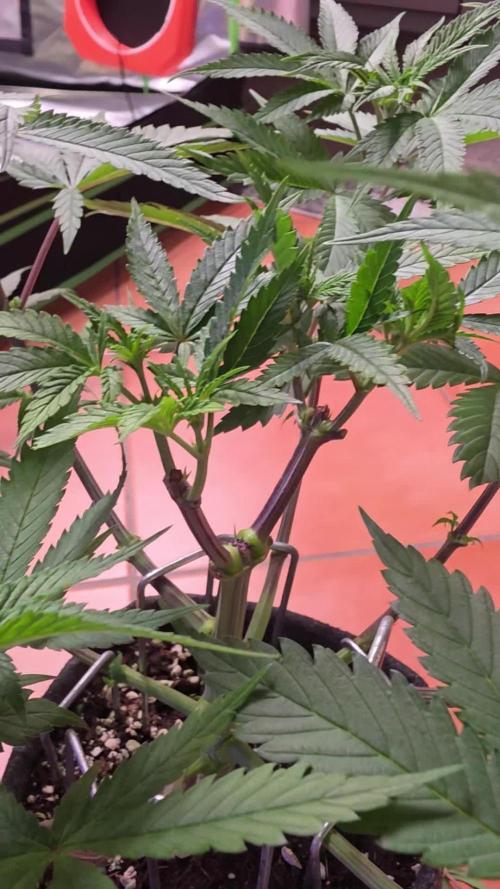
Die sechste Vegetationswoche markiert einen entscheidenden Meilenstein in der Formgebung der Tropicanna Poison F1 Fast Version. Zum Wochenstart erfolgte eine großzügige Entlaubung im unteren Drittel, um schwächere Mikrotriebe sowie überflüssiges Schattenlaub konsequent zu entfernen und die Energieversorgung gezielt in die oberen Hauptachsen zu lenken. Gleichzeitig wurden die dominierenden äußeren Triebspitzen getoppt und präzise auf ein einheitliches Höhenniveau gebracht, um ein absolut homogenes Blütendach zu formen.
Den krönenden Abschluss der Woche bildete das Umtopfen in den finalen 15-Liter-Stofftopf. Das Durchwurzelungsbild des bisherigen Substrats war hervorragend und spiegelte die unverminderte Vitalität dieser exzellenten Genetik aus dem Hause Sweet Seeds wider. Mit frischem Nährstoffpuffer, vergrößertem Wurzeltriebraum und einer perfekt ausbalancierten Struktur steht die rote Schönheit nun optimal vorbereitet da, um in Kürze die Blütephase einzuläuten.


@Staffedition
Follow
Привет друзья.
Наше знакомство продолжается с новым фотоцветущим растением от Smail_Seeds сорт ORIGINAL CHEMZKITTLEZ F1 reg.
Сегодня растению 99 дней.
Шишки наливаются уже тяжелей и тяжелей стоять малышки)
Перевёл на 12/12 1.10.2023
Растение очень хорошо развивается, ни каких сбоев в генетике не наблюдается😀
Сорт выводим сами.
Смотри мой профиль, у нас всегда есть что то интересное.
Не забудь поставить лайк❤️, если понравилась как прошла неделя
И читайте наш TELEGRAM: https://t.me/smail_seeds
#Smail_Seeds 😀


@Tropicannibis_Todd
Follow
Alright Then
REMINDER I DO 2 UPDATES PER WEEK 👉WEEKLYROUNDUP👈👉MIDWEEKLY UPDATE👈
We just hit week 3 and all is well , have to admit she's showing great , Growth in just 21 days😃 .......
Middle of last week I have decided to start a little training by pulling her over to the side 👌 And will continue to LST this week👈 And she's looking fantastic add to the fact she's already begun next faze by preflowering 😲
Pheno #2 Is about 9-10 behind buts its playing catch up and I should be doing some LST on her later this week 😛
Very little water given ,so far and rain water to be used entire growth👍
Lights being readjusted and chart updated .........👍
I GOT MULTIPLE DIARIES ON THE GO 😱 please check them out 😎
👉I WISH GD HAD DISCORD SERVER SO GROWMIES COULD HAVE A PLACE TO HELP AND TALK THINGS RELATED TO GROWING IN REAL TIME .....👈
👉SO I CREATED ONE ALL YOU NEED IS TO JOIN THE GROWDIARIES DISCORD SERVER !!!!!!!!!!!👈
LINK IS 👉
https://discord.gg/zQmTHkbejs
AND SEE HOW IT PLAYS OUT !!!!!!!





shorts_status_processing


@rudiak
Follow
Girls starting to grow really tall now, they have taken to the flowering stage really nicely!
Started the Flores feed on Day 38. Starting high at 3.2 and working my way down after a couple of weeks.
Smells are lovely coming from the tent!
Leaves are looking very dark and healthy.


@Belverde
Follow
Welcome growers
Day thirty of flowering for these two BLUEBERRY CHEESECAKE 🍰
Very delicious notes of something like some fruit cake are in the air
The aroma is very close to a beautiful strain i have tryed in Cali call Blueberry Muffin...amazing 💯
I hope this two will be like it..
For the biggest one i have put a stick in to the soil for mimic a bigger stem..
Unfortunately i have finished all the other stick to use for the lower 😅
She's very nice with a good structure and promise well about flowers production..
Also the biggest
Trichomes production is equal for now..already in a good amount and stickyes too 🔥
They are mostly identical about aroma and bud development...only the structure is different, due to the topping of the lower one
Anyway..
Afted the "massive" defoliation they reacted pretty well 💪💪
About nutrients 👇
I still using with their organic/veganic nutrients at any watering 💧
A little bit of silicium (Bionova) / Crescita (Biomagno) / Activera (Biobizz) / Grow vegan (Bionova) / The Missing Link (Bionova) / X-Cell (Bionova) / Bioheaven (Biobizz) , a little bit of P-K 3-5 (Bionova) /Fioritura (Biomagno) / Bloom vegan (Bionova) / Biomassa (Biomagno) / Florastimo (Biomagno) and i started to use some enzymes present in the Sensizym (Advanced Nutrients)
That's all guys..
See you in week 10, n°5 in bloom phase 📆🌻🌻
Thanks for watching and reading 😎👍👍
FC ✌️
🇮🇹
