
The Grow Awards 2026 🏆
Processing
Likes
Comments
Share
@
Follow
Likes
7
Share
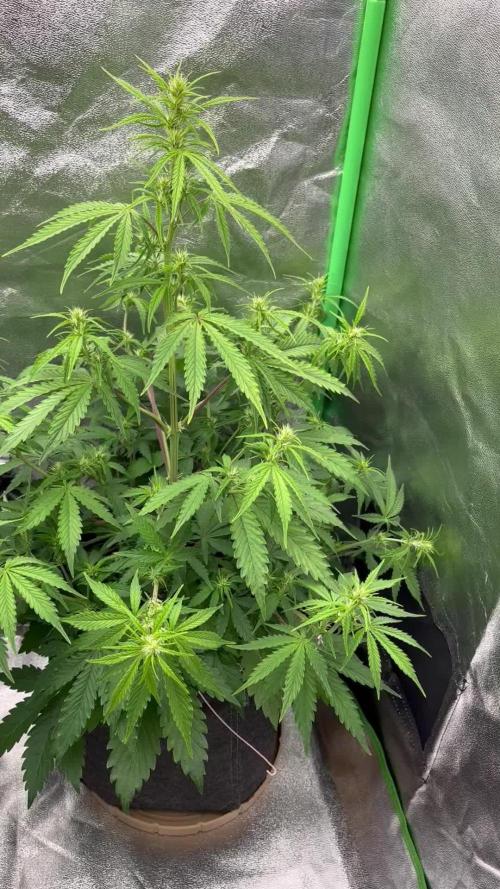
Que pasa familia, vamos con la septima semana de floración de estas Black muffin F1 de Sweetseeds. Vamos al lío, me quede con 3 por espacio, siempre pongo alguna semilla de más por si no abriese alguna por no perder ese hueco del indoor. También se trasplantaron a su maceta definitiva, en este caso de 7 litros y el trasplante se realizó correctamente. El ph se controla en 6.2 , la temperatura la tenemos entre 20/22 grados y la humedad ronda el 50%. Las jodidas han estirado bastante, ya veremos que ocurre como va todo. Hasta aquí todo, Buenos humos 💨💨💨
Likes
102
Share
@Roberts
Follow
Ztrawberriez auto is growing great in the perlite. She is progressing more into flower and getting her stretch on. She got some lst, defoliation, and underside cut out some this week Everything is looking really good at the moment. Thank you Fast Buds. 🤜🏻🤛🏻🌱🌱🌱 Thank you grow diaries community for the 👇likes👇, follows, comments, and subscriptions on my YouTube channel👇. ❄️🌱🍻 Happy Growing 🌱🌱🌱 https://youtube.com/channel/UCAhN7yRzWLpcaRHhMIQ7X4g If anyone needs to purchase fastbuds here is a link for my affiliate program https://myfastbuds.com/?a_aid=60910eaff2419
Likes
2
Share
@Simba732
Follow
🔘 Whew… we’ve come a long way with this one 👊🏾🔥 🔘 Another week wrapped up and she’s out here thriving 🔘 Those slightly dark leaves? Yeah… chef’s kiss 🔘 She’s been stretching all week like she’s training for the Grow Olympics 🏾‍♀️ 🔘 Finished strong with some light defoliation so the bud sites can soak up all that shine ✨ 🔘 That trunk is getting THICK ! love this baby for real 🤗💪🏾 🔘 Happy growing 💚
Likes
11
Share
Week 18 Middle August : weather is changing. Return of heat and humidity: 28 degrees, a little bit rain. A heat wave is coming but near the ocean the maximum will be around 32 degrees. It’s good to grow in greenhouse during this period : -ventilation control: I adapted the rythme: for now it’s around 18h/24h intermittently -pests and diseases control: insect’s traps natural and artificial, less heat -humidity control: no rain problem Daylight 14h: 7h/21h Flowering time 😁. Healthy plant, beautiful green color, just a few yellow leaves on the base. More watering: 1,5L every 60 hours Same cocktail: Calmag (0,5ml/L)+ FloraGro (2ml/L), FloraMicro (2ml/L), FloraBloom (1ml/L) + Root booster + Cannazym Feeding soil with guano bat (NPK 3/6/10) for a slow dispersion + dried horn and blood (NOK 13/0/0) for nitrogen add. Protecting plant: sprayed Neem Oil, added diatomaceous earth on soil. I will make a defoliation soon.
Likes
38
Share
Gracias al equipo de Anesia Seeds, Marshydro y XpertNutrients sin ellos esto no seria posible. 💐🍁 Purple Lobster: Con un 34% de THC, Purple Lobster no es ninguna broma. Cada calada es una explosión de arándanos, caramelo y sabor afrutado que hará que tus papilas gustativas surfeen sobre las olas del sabor. Es como sumergirse en una piscina de las vibraciones más frías y sabrosas que puedas imaginar. Puede que en Maine se haga bien la langosta, pero en Anesia Seeds hacemos cannabis como nadie. La Blue Lobster ya causó sensación con sus tentadores terpenos y su atractivo en bolsa que se sale de lo común. Ahora, mézclala con el dulce y jugoso aroma afrutado y las notas mentoladas de Planet Red, y tendrás Purple Lobster , una variedad que no sólo se fuma, sino que es toda una experiencia. 🚀 Consigue aqui tus semillas: 💡FC6500: Eficiencia líder en el mercado: la lámpara de cultivo LED FC-E6500, que ostenta un estatus líder en el mercado, es una solución rentable con un PPE de 2,8 µmol/J y un rendimiento máximo de 2,5 g/vatio. Ofrece un PPF alto de 2026 umol/S y es adecuada para una cobertura de vegetación de 1,50 m x 1,50 m y una cobertura de flores de 1,20 m x 1,20 m. Iluminación versátil y uniforme. https://marshydro.eu/products/mars-hydro-fc-e-6500-730w-commercial-led-grow-light/?gad_source=1&gclid=Cj0KCQjw1qO0BhDwARIsANfnkv9IIrYSbmJqz8PqpJOIyWwJfp5bc3SGJgUV68USLQ4tjmXDYwoBuAsaAue3EALw_wcB 🚥 MarsHydro ADLITE UV/IR/RED: Para lograr un crecimiento óptimo de las plantas y maximizar los rendimientos es un arte simple que depende en gran medida de las condiciones ambientales adecuadas. Reconociendo las limitaciones de la iluminación natural y las soluciones de iluminación tradicionales para satisfacer estas necesidades únicas, lanzamos ADLITE. Estas luces especiales UV, IR y roja están diseñadas para llenar áreas del espectro, proporcionando las altas longitudes de onda que las plantas necesitan para un crecimiento y desarrollo óptimos. 🚀 Consigue aqui tu Adlite: https://marshydro.eu/collections/adlite-supplemental-lights/ 🏠 : Marshydro 1.50 x 1.50 x 1.80, carpa 100% estanca con ventanas laterales para llegar a todos los lugares durante el grow https://marshydro.eu/products/diy-150x150x200cm-grow-tent-kit 🌬️💨 Marshydro 6inch + filtro carbon para evitar olores indeseables. https://marshydro.eu/products/ifresh-smart-6inch-filter-kits/ 🍣🍦🌴 Xpert Nutrients es una empresa especializada en la producción y comercialización de fertilizantes líquidos y tierras, que garantizan excelentes cosechas y un crecimiento activo para sus plantas durante todas las fases de cultivo. Consigue aqui tus Nutrientes: https://xpertnutrients.com/es/shop 📆 Semana 14: Última semana de lavado de raices antes de cosechar esta maravilla, ha quedado una planta con unos cogollos escarchados y muy prensados, su dulce aroma te taladra el cerebro .
Processing
Likes
15
Share
Start of week 7 for the OG Kush and blueberry. Second repeat of week 5 feeding for the super lemon haze as she's on a 10 week schedule. OG's are super sticky, smelly and packing on thick dense buds, blueberry is bulking up, but not nearly as much as the oG. The SLH is also pumping out nice buds, that are very sticky. Very happy with this grow so far.
Likes
16
Share
@WeGrow
Follow
Flushed them as I think they are only a week or two away from harvest. They are getting really heavy and as I had to move them to the shower to flush them properly I tried to be careful not to break any branches. The PH is about 8.0 of the tap water, so after flushing I gave them enough PH 6.3 water. One or two plants seem to be finished, they already have some dark trichomes - but I can't harvest them as I only have this tent. As always - if you have any advice for me or criticism, please let me know! Thank you! EDIT: Humidity is currently a huge issue, there has been rain 24/7 since yesterday, so keeping humidity at oround 30-40% is impossible. Currently at about 55% - I know, it is too much but there is nothing I can do.
Likes
19
Share
@Ensign420
Follow
Introduction - Week 09 Summary - Ensign's log, stardate 100906.68, Overall a pretty good grow week! Started the week off by increasing the light's intensity. Also raised it up a bit. Most of the week was basic growth checkups and humidifier refilling. Mid week, increased the light's intensity a bit more. Also did a top soil drench of organic fertilizer along with a simple defoliation. Towards the end of the week, decided to give both girls a large bottom watering. Also did a mini defoliation again. Now that both reservoirs are full with about 2 gallons, shouldn't need to water for a while. Next week will be the big 12/12 flip! Steady as she grows Ensign. Engage! 🖖 [START OF WEEK 09] ========================================================== WEEK 09 - Full Veg Wk4 04/17/23 → 04/23/23 This Week's Estimated Goals ---------------------------------------------------------------------------------------------- DLI: 39 mol/m2/d PPFD: 600 μmol/m2/s VPD: 0.5-1.0 kPa This Week's Meter Readings & Averages ---------------------------------------------------------------------------------------------- DLI: 40.05 mol/m2/d PPFD: 618 μmol/m2/s VPD: 1.04 kPa Soil %: [25.9, 37.3, 32.0, 34.7] ========================================================== Day 01 - Monday - 04/17/23 - Total Days: 063 ----------------------------------- Daily Averages - Temps: 77.8°F [25.4°C] - Humidity: 68.6% - VPD: 1.00 kPa - Soil %: [19, 28, 30, 28] ----------------------------------- - [09:23]: Quick morning checkup! --- Looking great my ladies! --- EB1 is continuing to explode with growth! --- Refilled the humidifier with distilled water and Hydrogen Peroxide (~20mL). - [22:25]: Evening my girls! --- Growing along nicely! --- The top of the canopy is clearly filling in with top sites. --- Refilled the humidifier with distilled water and Hydrogen Peroxide (~20mL). --- Looking at the lower leaves, plan to do another fertilizer feeding soon. Day 02 - Tuesday - 04/18/23 - Total Days: 064 ----------------------------------- Daily Averages - Temps: 78.4°F [25.8°C] - Humidity: 67.4% - VPD: 1.05 kPa - Soil %: [31, 34, 33, 35] ----------------------------------- - [09:17]: Good morning my ladies! --- Growing along very nicely! --- Refilled the humidifier with distilled water and Hydrogen Peroxide (~20mL). --- Getting a bit droopy, so plan to top water (or better known as soil drenching) tonight! - [16:03]: Good evening my queens! --- Wow! Looking great ladies! --- Top growth is looking very nice! --- Hmm. A bit of yellowing is still developing on the lower leaves. --- Regardless, canopy growth is still spreading out quite nicely! --- With this being the last week of 18/6 veg, these girls are bushing out quite nicely! --- After flipping the light schedule from 18/6 to 12/12, some cannabis plants will double in size. --- Starting to get a bit nervous (well more stoked than nervous) about the growth spurt these ladies may undergo (also known as the 'stretch phase'). - [16:19]: Took PPFD readings. --- EB1 was around 476 μmol/m2/s which gives a DLI of 30.84 mol/m2/d --- EB2 was around 449 μmol/m2/s which gives a DLI of 29.1 mol/m2/d --- Decided to increase the intensity of the grow light. Going for a PPFD goal of 500. --- Will also most likely need to raise it up a bit. - [16:27]: Within the AC Infinity App, --- Adjusted the 'Vegetative [18/6]' Schedule for the grow light. --- Increased the MAX from 3 to 4 --- The FC-6500 is now utilizing around 327.3W from 261.9W (at intensity 4 out of 10) - [16:33]: Raised the grow light up a bit. --- Took new PPFD readings. --- EB1 was around 528 μmol/m2/s which gives a DLI of 34.21 mol/m2/d --- EB2 was around 499 μmol/m2/s which gives a DLI of 32.34 mol/m2/d --- Great! - [16:48]: Took a general light distance reading for EB1. --- She's now about 16.25" from the grow light. --- Plan to do final height and distance readings at the end of the week. --- Okay! Now for the soil! - [16:53]: Checked the Ecowitt soil moisture sensor data: --- 20% - [CH01 EB1 - grow bag] --- 28% - [CH02 EB1] --- 30% - [CH03 EB2 - grow bag] --- 28% - [CH04 EB2] --- Soil moisture is drying around EB1. --- EB2 soil seems to be 10% more hydrated. --- Now for the basic meter. - [16:58]: Using the soil moisture probe, took readings for each EarthBox. --- Soil moisture levels for EB1 was at 5.5 out of 10 --- Top soil both looked and felt dry. --- Soil moisture levels for EB2 was at 3 out of 10 --- Top soil looks hydrated but felt dry. --- Fascinating. 🖖 --- A huge contrast in moisture data. --- Based on the basic meter, both girls have drank quite a bit. Yet the Ecowitt sensors have not really changed much at all. - [17:09]: Rotated both EarthBoxes 180 degrees. --- Checked the fill tube for each EarthBox. --- Both fill tubes are now pretty dry! --- With the current soil moisture levels, decided to continue on with the top soil drenching. --- Don't frack this up Ensign! - [17:21]: Filled a pitcher with 5 cups of distilled water. --- Then filled a measuring cup with 2 cups of distilled water. --- Added 1/32tsp + 1/64tsp + Half 1/64tsp of Quillaja Saponaria Extract --- Added 1/16tsp + 1/32tsp + 1/64tsp of: ------ Horticultural Aloe ------ Big 6 Micronutrients [+ Humic Acid] --- Added 1/8tsp + 1/16tsp + 1/32tsp of: ------ Mycrobe Complete ------ Recharge --- Added 1/4tsp + 1/8tsp + 1/16tsp of: ------ Pure Protein Dry [Organic Fish Aminos] --- Added 2mL of Bio-Catalyst Enzyme Elixer --- Added 5.25mL of Yah-Whey --- Mixed the solution and poured everything straight into the pitcher to mix with the 5 cups of distilled water from earlier (now 7 cups). --- Poured 3.5 cups of the mixed solution into a spray bottle. - [17:54]: Rotated the EarthBoxes 90 degrees. EB2 is now facing the front. --- Before watering, going to defoliate a bit. - [17:58]: Using a pair of trimmers, I gently clipped away lower yellowing leaves. --- Removed a few of the larger fan leaves which were covering top sites. --- To help to further promote top growth, also removed more lower nodes. --- Time to top soil drench! --- Also going to top dress a bit of gnarly barley! - [18:27]: Gently removed the rear moisture meter before pealing back the plastic much cover. --- Now for the top dressing. - [18:30]: Sprinkled 1/4cup of Gnarly Barley onto the top soil. --- Tried to stay towards the back. --- Using my fingers, I gently tilled the topdressing into the top soil. --- Also tried to work in all of the trimmings from the defoliation. - [18:42]: Misted the top soil for EB2. --- Made sure to spray the area with the Grow Dots, but did not spray the grow bag. --- Sprayed the whole top soil, but focused more on the back area. --- Placed the mulch cover back along with the rear moisture sensor. - [18:59]: Rotated the EarthBoxes 180 degrees. --- Now for EB1, --- Using a pair of trimmers, I gently clipped away yellowing leaves. --- Also removed the larger fan leaves covering top sites. - [19:20]: Gently removed the rear moisture meter. --- Then pealed back the plastic much cover. - [19:24]: Sprinkled 1/4cup of Gnarly Barley onto the top soil. --- Again, tried to stay towards the back. Also sprinkled a bit around the grow bag. --- Using my fingers, I gently tilled the topdressing into the top soil. --- Also tilled in the trimmings from the defoliation. - [19:45]: Using the rest of the solution (~3.5cups), misted the top soil for EB1. --- Made sure to spray the Grow Dots, but did not spray the grow bag. --- Tried to spray the solution evenly. - [19:47]: Placed the mulch cover back along with the rear moisture sensor. --- Rotated the EarthBoxes back to the default configuration. --- Refilled the humidifier with distilled water and Hydrogen Peroxide (~20mL). - [20:12]: Misted the top growth with a bit of distilled water. --- Really hope I didn't over-water. --- Going to let the water soak in a bit before checking the moisture levels. --- Okay! - [21:31]: Checked the Ecowitt soil moisture sensor data: --- 31% - [CH01 EB1 - grow bag] --- 44% - [CH02 EB1] --- 33% - [CH03 EB2 - grow bag] --- 35% - [CH04 EB2] --- As expected, soil moisture overall is higher. --- Will continue to check moisture levels as the soil dries out. Day 03 - Wednesday - 04/19/23 - Total Days: 065 ----------------------------------- Daily Averages - Temps: 77.8°F [25.4°C] - Humidity: 67.7% - VPD: 1.02 kPa - Soil %: [28, 41, 33, 36] ----------------------------------- - [09:25]: Morning my ladies! --- Quick humidifier refill and growth check! --- Nice! Growth is continuing to bush out! --- Refilled the humidifier with distilled water and Hydrogen Peroxide (~20mL). - [+02:40]: Late night checkup! --- Looking good girls! --- Ladies are looking nice and perky! --- The top canopy is already filling in quite nicely! --- Refilled the humidifier with distilled water and Hydrogen Peroxide (~20mL). --- Oh yea, --- Happy 420! --- [*smokes a bowl] Day 04 - Thursday - 04/20/23 - Total Days: 066 ----------------------------------- Daily Averages - Temps: 79.1°F [26.2°C] - Humidity: 68.5% - VPD: 1.04 kPa - Soil %: [27, 40, 32, 36] ----------------------------------- - [09:37]: Morning my beauties! --- Quick checkup and refill! --- Growing along and looking great! --- Refilled the humidifier with distilled water and Hydrogen Peroxide (~20mL). --- HAPPY 420! --- [*smokes a few bowls] --- Recently been considering how I bottom water my EarthBoxes. --- Usually I never fill the reservoir more than 8-9 cups of water at a time. --- But now planning on doing a larger bottom watering (2-3 gallons or 32-48 cups). --- My main concern of course is over-watering. --- Since all I have is distilled water, will most likely add a bit of CalMag and Agisil along with a bit of Yah-Whey. --- For now gonna wait a bit for the top soil to dry up a bit more. - [20:46]: Evening checkup! --- Wow looking good girls! --- Both are bushing out nicely! - [21:39]: Took PPFD readings. --- EB1 was around 527 μmol/m2/s which gives a DLI of 34.15 mol/m2/d --- EB2 was around 509 μmol/m2/s which gives a DLI of 32.98 mol/m2/d --- Since the 12/12 flip is starting next week, plan to increase the PPFD even more closer to 600 μmol/m2/s. --- Going to further increase the light's intensity. - [21:48]: Within the AC Infinity App, --- Adjusted the 'Vegetative [18/6]' Schedule for the grow light. --- Increased the MAX from 4 to 5 --- The FC-6500 is now drawing around 386.2W from 327.3W (at intensity 5 out of 10) --- Took new PPFD readings. --- EB1 was around 618 μmol/m2/s which gives a DLI of 40.05 mol/m2/d --- EB2 was around 595 μmol/m2/s which gives a DLI of 38.56 mol/m2/d - [10:07]: Took a light distance reading for EB1. --- She's now about 16" from the grow light. - [22:16]: Checked the Ecowitt soil moisture sensor data: --- 27% - [CH01 EB1 - grow bag] --- 40% - [CH02 EB1] --- 32% - [CH03 EB2 - grow bag] --- 36% - [CH04 EB2] --- Soil moisture is drier around EB1's grow bag. EB2 seems to be at a higher level than the back. --- Now for the basic meter. - [22:21]: Using the soil moisture probe, took readings for each EarthBox. --- Soil moisture levels for EB1 was at 7.5 out of 10 --- Top soil looked pretty hydrated. --- Soil moisture levels for EB2 was at 5.8 out of 10 --- Top soil was also looking pretty hydrated. - [22:33]: Rotated both EarthBoxes 180 degrees. --- Checked the fill tube for each EarthBox. --- Both fill tubes were pretty dry. --- With the current soil moisture levels, decided to not water anything. --- Plan to do a large bottom watering soon. Probably tomorrow or Saturday. - [22:43]: Rotated the EarthBoxes back to the default configuration. --- Misted the top growth of both plants with distilled water. --- Refilled the humidifier with distilled water and Hydrogen Peroxide (~20mL). Day 05 - Friday - 04/21/23 - Total Days: 067 ----------------------------------- Daily Averages - Temps: 78.8°F [26.0°C] - Humidity: 68.4% - VPD: 1.04 kPa - Soil %: [26, 40, 32, 36] ----------------------------------- - [09:20]: Quick morning checkup and refill! --- Growth looks --- Refilled the humidifier with distilled water and Hydrogen Peroxide (~20mL). --- Not much to do today. Gonna be a simple grow day! - [23:36]: Evening my girls! --- Growth is looking great! --- EB1 continues to dominate the tent! EB2 is also filling in nicely! --- Refilled the humidifier with distilled water and Hydrogen Peroxide (~20mL). Day 06 - Saturday - 04/22/23 - Total Days: 068 ----------------------------------- Daily Averages - Temps: 79.9°F [26.6°C] - Humidity: 69.7% - VPD: 1.04 kPa - Soil %: [25, 39, 32, 36] ----------------------------------- - [07:02]: Early morning checkup! --- Girls are looking pretty good! --- Refilled the humidifier with distilled water and Hydrogen Peroxide (~20mL). --- Plan to bottom water tonight! - [21:16]: Evening checkup! --- Nice! Looking great ladies! --- There are a few leaves on EB1, but overall growth is healthy and perky. - [21:26]: Checked the Ecowitt soil moisture sensor data: --- 25% - [CH01 EB1 - grow bag] --- 39% - [CH02 EB1] --- 32% - [CH03 EB2 - grow bag] --- 36% - [CH04 EB2] --- Soil moisture is drier around EB1's grow bag. EB2 seems to be at a higher level than the back. --- Now for the basic meter. - [21:30]: Using the soil moisture probe, took readings for each EarthBox. --- Soil moisture levels for EB1 was at 6.5 out of 10 --- Top soil looked pretty hydrated. There was even a bit of bokashi fuzz growth. Nice! --- Soil moisture levels for EB2 was at 4.1 out of 10 --- Top soil was also looking hydrated, but with no bokashi growth. --- Okay! Going to attempt a large bottom watering. --- Before I water, going to defoliate a bit more. - [21:38]: Using a pair of trimmers, I defoliated both girls. --- Clipped off a few of the larger fan leaves that were covering tops. --- Overall, did not defoliate much. Less than a solo cup of leaves. --- Mainly focused on yellowing or damaged growth. --- Tucked the trimmings under the mulch covers. - [22:03]: Rotated the EarthBoxes 180 degrees. --- Okay! Time to give this a go! --- Going to give each EarthBox a full 2 gallons of distilled water. --- Going to also add some probiotics and beneficial anaerobic microbes. --- Don't frack this up Ensign. --- Okay! Starting with EB2, - [22:15]: Poured 2 cups out of one of the gallons into a measuring cup. --- Added 60mL (2oz) of Yah-Whey. --- Mixed and poured the solution straight into the fill tube. --- Then poured the rest of the gallon along with another full gallon of distilled water into the fill tube. - [22:27]: Repeated the exact same process with EB1. --- Poured 2 gallons of distilled water along with 60mL of Yah-Whey into the reservoir. --- Great! Now both EarthBoxes are the fullest they have ever been. - [22:36]: Rotated the EarthBoxes back to the default configuration. --- Oops. Some water did spill out while rotating the EarthBoxes. --- Next time, will wait a bit longer for the water to soak in first. --- Refilled the humidifier with distilled water and Hydrogen Peroxide (~20mL). Day 07 - Sunday - 04/23/23 - Total Days: 069 ----------------------------------- Daily Averages - Temps: 80.2°F [26.8°C] - Humidity: 69.9% - VPD: 1.04 kPa - Soil %: [25, 39, 32, 36] ----------------------------------- - [07:19]: Morning my ladies! --- Growing along nicely! --- Although some of the growth is looking a bit droopy. --- Refilled the humidifier with distilled water and Hydrogen Peroxide (~20mL). - [21:24]: Night checkup and refill! --- Looking good girls! --- Growth has started perking up again. Nice! - [21:27]: Took end of week height readings. --- EB1 is about 18.5" tall. --- EB2 is about 16.5" tall. --- EB1 was about 16" away from the grow light. --- EB2 was about 18" away from the grow light. --- Growth is taller for both, but overall still about the same height. --- But lots of lower growth so not too worried. --- Refilled the humidifier with distilled water and Hydrogen Peroxide (~20mL). --- Wow what a week! --- Next week begins the flip to a 12/12 light cycle. --- Curious to see if these girls will stretch or not. [END OF WEEK 09]
Likes
18
Share
Green light is radiation with wavelengths between 520 and 560 nm and it affects photosynthesis, plant height, and flowering. Plants reflect green light and this is why they appear green to our eyes. As a result, some growers think that plants don’t use green wavelengths, but they actually do! In fact, only around 5 – 10% of green light is reflected from leaves and the rest (90 – 95 %) is absorbed or transmitted to lower leaves [1]. Green wavelengths get used in photosynthesis. Chlorophyll pigments absorb small amounts of green wavelengths. Light that doesn’t get absorbed is transmitted to leaves that are shaded out from direct light. This means that leaves at the bottom of the canopy get more green light than leaves at the top. A high proportion of green wavelengths compared to other colors tells lower leaves that they are being shaded out, so they are able to react accordingly. Lower leaves may react by opening or closing their stomata or growing longer stems that help the leaves reach brighter light [1, 2, 3]. When it comes to growing cannabis, many cultivators are interested in the quality of light used for the flowering stage. In many plants, flowering is regulated by two main photoreceptors: cryptochrome and phytochrome. Both photoreceptors primarily respond to blue light but can also respond to green, although to a lesser extent. Green can accelerate the start of flowering in several species (although cannabis has yet to be tested) [1, 4, 5]. However, once flowering has begun, it’s important to provide plants with a “full spectrum” light that has high amounts of blue and red light, and moderate amounts of green, in order for photosynthesis to be optimized. Green light mediates seed germination in some species. Seeds use green wavelengths to decide whether the environment is good for germination. Shade environments are enriched in green relative to red and blue light, so a plant can tell if it is shady or sunny. A seed that senses a shaded environment may stay dormant to avoid poor growing conditions [1]. Some examples of plant species where researchers have documented this response are: ryegrass (a grass that grows in tufts) and Chondrilla (a plant related to dandelion) [1, 6]. Although green wavelengths generally tell plants NOT to germinate, there are some exceptions! Surprisingly, green wavelengths can stimulate seed germination in some species like Aeschynomene, Tephrosia, Solidago, Cyrtopodium, and Atriplex [1, 6, 7]. Of course, light is not the only factor affecting seed germination – it’s a combination of many factors, such as soil moisture, soil type, temperature, photoperiod, and light quality. When combined with red and blue light, green can really enhance plant growth [1, 8]. However, too much green light (more than 50% of the total light) can actually reduce plant growth [8]. Based on the most current research, the ideal ratio of green, red, and blue light is thought to be around 1:2:1 for green:blue:red [9]. When choosing a horticultural light, choose one that has high amounts of blue and red light and moderate amounts of green and other colors of light. Not many studies can be found about the effect of green light on cannabis growth or metabolism. However, if one reads carefully, there are clues and data available even from the very early papers. Mahlberg and Hemphill (1983) used colored filters in their study to alter the sunlight spectrum and study green light among others. They concluded that the green filter, which makes the environment green by cutting other wavelengths out, reduced the THC concentration significantly compared to the daylight control treatment. It has been demonstrated that green color can reduce secondary metabolite activity with other species as well. For example, the addition of green to a light spectrum decreases anthocyanin concentration in lettuce (Zhang and Folta 2012). If green light only reverses the biosynthesis of some secondary metabolites, then why put green light into a growth spectrum at all? Well, there are a couple of good reasons. One is that green penetrates leaf layers effectively. Conversely red and blue light is almost completely absorbed by the first leaf layer. Green travels through the first, second, and even third layers effectively (Figure 2). Lower leaf layers can utilize green light in photosynthesis and therefore produce yields as well. Even though a green light-specific photoreceptor has not yet been found, it is known that green light has effects independent from the cryptochrome but then again, also cryptochrome-dependent ones, just like blue light. It is known that green light in low light intensity conditions can enhance far red stimulating secondary metabolite production in microgreens and then again, counteracts the production of these compounds in high-intensity light conditions (Kim et al. 2004). In many cases, green light promoted physiological changes in plants that are opposite to the actions of blue light. In the study by Kim et al. blue light-induced anthocyanin accumulation was inhibited by green light. In another study it has been found that blue light promotes stomatal opening whereas green light promotes stomatal closure (Frechilla et al. 2000). Blue light inhibits the early stem elongation in the seedling stage whereas green light promotes it (Folta 2004). Also, blue light results in flowering induction, and green light inhibits it (Banerjee et al., 2007). As you can see, green light works very closely with blue light, and therefore not only the amount of these two wavelengths separately is important but also the ratio (Blue: Green) between these two in the designed spectrum. Furthermore, green light has been found to affect the elongation of petioles and upward leaf reorientation with the model plant Arabidopsis thaliana both of which are a sign of shade avoidance symptoms (Zhang et al. 2011) and also gene expression in the same plant (Dhingra et al. 2006). As mentioned before, green light produces shade avoidance symptoms which are quite intuitive if you consider the natural conditions where the plants grow. Not all the green light is reflected from the highest canopy leaves in nature but a lot of it (50-90%) has been estimated to penetrate the upper leaves at the plant level ((Terashima et al., 2009; Nishio, 2000). For the plant growing in the understory of the forest green light is a signal for the plant of being in the shade of a bigger plant. Then again, the plants growing under unobstructed sunlight can take advantage of the green photons that can more easily penetrate the upper leaves than the red and blue photons. From the photosynthetic pigments in higher plants, chlorophyll is crucial for plant growth. Dissolved chlorophyll and absorb maximally in the red (λ600–700 nm) and blue (λ400–500 nm) regions of the spectrum and not as easily in the green (λ500–600 nm) regions. Up to 80% of all green light is thought to be transmitted through the chloroplast (Terashima et al., 2009) and this allows more green photons to pass deeper into the leaf mesophyll layer than red and blue photons. When the green light is scattered in the vertical leaf profile its journey is lengthened and therefore photons have a higher chance of hitting and being absorbed by chloroplasts on their passage through the leaf to the lower leaves of the plant. Photons of PPFD (photosynthetic photon flux density) are captured by chlorophyll causing an excitation of an electron to enter a higher energy state in which the energy is immediately passed on to the neighboring chlorophyll molecule by resonance transfer or released to the electron transport chain (PSII and PSI). Despite the low extinction coefficient of chlorophyll in the green 500–600 nm region it needs to be noted that the absorbance can be significant if the pigment (chlorophyll) concentration in the leaf is high enough. The research available clearly shows that plants use green wavelengths to promote higher biomass and yield (photosynthetic activity), and that it is a crucial signal for long-term developmental and short-term dynamic acclimation (Blue:Green ratio) to the environment. It should not be dismissed but studied more because it brings more opportunities to control plant gene expression and physiology in plant production. REFERENCES Banerjee R., Schleicher E., Meier S. Viana R. M., Pokorny R., Ahmad M., Bittl R., Batschauer. 2007. The signaling state of Arabidopsis cryptochrome 2 contains flavin semiquinone. The Journal of Biological Chemistry 282, 14916–14922. Dhingra, A., Bies, D. H., Lehner, K. R., and Folta, K. M. 2006. Green light adjusts the plastic transcriptome during early photomorphogenic development. Plant Physiol. 142, 1256-1266. Folta, K. M. 2004. Green light stimulates early stem elongation, antagonizing light-mediated growth inhibition. Plant Physiol. 135, 1407-1416. Frechilla, S., Talbott, L. D., Bogomolmi, R. A., and Zeiger, E. 2000. Reversal of blue light -stimulated stomatal opening by green light. Plant Cell Physiol. 41, 171-176. Kim, H.H., Goins, G. D., Wheeler, R. M., and Sager, J. C. 2004.Green-light supplementation for enhanced lettuce growth under red- and blue-light emitting diodes. HortScience 39, 1617-1622. Nishio, J.N. 2000. Why are higher plants green? Evolution of the higher plant photosynthetic pigment complement. Plant Cell and Environment 23, 539–548. Terashima I., Fujita T., Inoue T., Chow W.S., Oguchi R. 2009. Green light drives leaf photosynthesis more efficiently than red light in strong white light: revisiting the enigmatic question of why leaves are green. Plant & Cell Physiology 50, 684–697. Zhang, T., Maruhnich, S. A., and Folta, K. M. 2011. Green light induces shade avoidance symptoms. Plant Physiol. 157, 1528-156. Wang, Y. & Folta, K. M. Contributions of green light to plant growth and development. Am. J. Bot. 100, 70–78 (2013). Zhang, T. & Folta, K. M. Green light signaling and adaptive response. Plant Signal. Behav. 7, 75–78 (2012). Johkan, M. et al. Blue light-emitting diode light irradiation of seedlings improves seedling quality and growth after transplanting in red leaf lettuce. HortScience 45, 1809–1814 (2010). Kasajima, S., et al. Effect of Light Quality on Developmental Rate of Wheat under Continuous Light at a Constant Temperature. Plant Prod. Sci. 10, 286–291 (2007). Banerjee, R. et al. The signaling state of Arabidopsis cryptochrome 2 contains flavin semiquinone. J. Biol. Chem. 282, 14916–14922 (2007). Goggin, D. E. & Steadman, K. J. Blue and green are frequently seen: responses of seeds to short- and mid-wavelength light. Seed Sci. Res. 22, 27–35 (2012). Mandák, B. & Pyšek, P. The effects of light quality, nitrate concentration and presence of bracteoles on germination of different fruit types in the heterocarpous Atriplex sagittata. J. Ecol. 89, 149–158 (2001). Darko, E. et al. Photosynthesis under artificial light: the shift in primary and secondary metabolism. Philos. Trans. R. Soc. B Biol. Sci. 369 (2014). Lu, N. et al. Effects of Supplemental Lighting with Light-Emitting Diodes (LEDs) on Tomato Yield and Quality of Single-Truss Tomato Plants Grown at High Planting Density. Environ. Control Biol. 50, 63–74 (2012).
Likes
38
Share
@Oyziphar
Follow
Trichomes and strong smell. That's what we like 😋😍 👆 Largest plants = Triple G = 125cm 👇 Smallest plants = Wedding Gelato = 85cm
Likes
4
Share
Great nose and terps. Cookies beats out Humboldt in quality. Yield was very low but that could have been growers error
Likes
17
Share
@EGPharouh
Follow
Week 8. They got their First flush. Look at those beauties. Better pictures by the end of the week.
Likes
1
Share
Another week of sunny weather. The training went well considering the outdoors. At the end of the week the stamens showed.
Processing
Likes
4
Share
@Strife957
Follow
This week was hottt. I have been out sic l8ly sorry 4 no updates. The girls r still growing strong. With very little maintenance. I gave them each 5 gallons of water with nutrients on Sat, (early morning since it was a heat wave) I defoliated (the lower branches became shaded out) and now the little bushes are taking upon a more tree like appearance. They are all just under the 7 ft roof, with training. They were hitting the roof and getting wet (morning dew), so i put more fans inside, (also the 90+ outside temps). No problems with heat. I will start making preparations 2 switch them 2 flower at the end of this month :)
Likes
3
Share
A couple of weeks until we are done 😁🔥
Likes
60
Share
half way through the first week of flower and the stretch is in full effect. canopy is going to be completely full in a few days, scared for my dwarf white runtz in the middle of the group, itll get swallowed
Likes
77
Share
I love the sativa shaped nug-towers! When my plants grow big, I like to grow them until the very end of their cycle! That's why the extended flower period. Video of Measurement of yield: T=Tops(92grams), M=Mids(59.1 grams), L=Lowers(58.6grams) Total: 209.7 grams (1-2 grams worth, was taste-tested prior to scaling.)
Likes
32
Share
Heute ist Tag 28 und den Pflanzen geht es prima. Die MAC#1 hat zur Mimosa etwas aufgeholt und die Tropicana Cookies geht voll aus dem Rohr. Sie scheint schon deutlich weiter in der Entwicklung zu sein und ich bin gespannt, ob sie groß oder schnell fertig wird. Vielleicht ja sogar beides 😅 -------------- An Tag 32 musste ich entlauben, da ich die Triebe nicht einmal mehr von Hand an den Blättern vorbei bekommen habe, ohne etwas zu beschädigen. Dieses mal habe ich mich dazu entschieden, einmal recht radikal zu entlauben, anstatt wie bisher jeden Tag ein bisschen. Ich möchte mir dadurch Zeit und Arbeit sparen und hoffe, dass sie das gut verkraften. Bei der Mimosa bin ich mir da nicht so sicher, da die unter ihrem Blätterpanzer ziemlich klein geblieben ist. Die Äste sind aber sehr dick, also wird sie vermutlich jetzt 2 Tage schmollen und dann nochmal loslegen, hoffe ich jedenfalls 😅