


Likes
Comments
Share

@Olduffybastard88
Follow
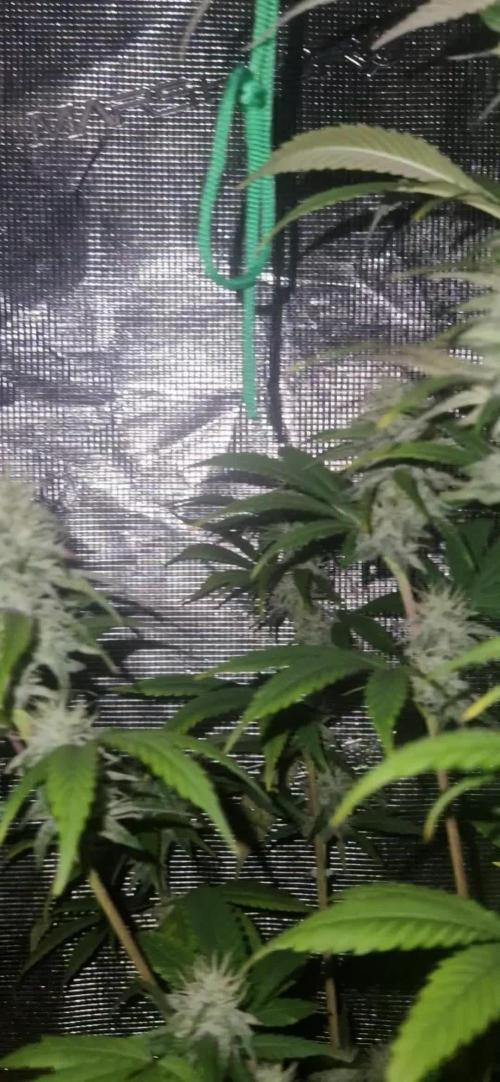
Having to flip the other plants to flower as there outgrowing my space and the last plants ended up outgrowing the tent so ive flipped the rest here's the otber girls after 3 weeks flower wont be long for these girls to catch up

Likes
5
Share


@Eljardindemargarita_grower
Follow
Ya en macetas de 5 litros
Estamos con los preventivos previos al paso aflore
Ellas en pocos días afrontaron con buenas ganas en último trasplante, y de eso vamos a ir adelantando algún tiempo , ellas ya parecen que muestran su madurez sexual , así que ellas van calentando motores
En días cviamos xliclo
En nada empieza la marcha
Un gran saludo


Likes
5
Share


@dwotTV
Follow
Harvested the more mature plant, it had lost it's top to the wind, harvested a few days ago and has had a couple spots with a little rot removed. Seems stable enough and mature. Going to let the remaining one run out a bit as it seems a bit slower.

Likes
20
Share


@Pulsar00
Follow
Welcome back boys,
Everything's going as planned :)
Still don't know if I should defoliate, I chose to let the leaves grow a bit more until next week.
I will use wood sticks to maintain them a little more spaced.
See you next week buddies

Likes
9
Share


@Hlasmor7664
Follow
1 Liter abgestandenes Wasser PH reguliert auf 6,0 verteilt auf alle drei Pflanzen gegossen
Eine Pflanze hatte zu dem Zeitpunkt ganz merkwürdig ihre Blätter ab geknickt. Glaube der große Lüfter macht mir Probleme in meinem Zelt. Noch dazu die fehlende Abluft und alles

Likes
29
Share


@JeyGanesha
Follow
Questa Ayahuasca purple ha sofferto molto stress. Spero arrivi a maturazione..,anche lei...è rimasta 3mesi dentro un vasetto da un litro
adesso è in un vaso da 7 ma si sta riprendendo bene... Poi dando Advanced nutrient in spray fogliare 2 minuti prima che si spegne la luce è perfetta....sta tornando al suo verde ben vivo😉💪☮️🕉️👍
Likes
Comments
Share


@Nobody1991
Follow
It is a vigorous plant with very uniform branching, high resinous and high yield, if you grow from seed there are a few different phenos that I got, equally as good

Likes
6
Share

@GnomesAndStones
Follow
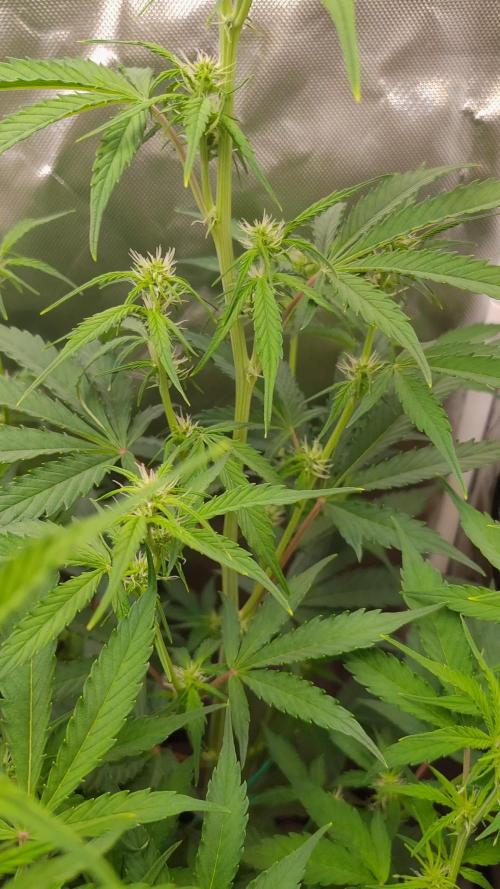
🌱 Growing too nice! She kept on stretching like crazy, growing 3 cm every day. The small tent couldn't handle her anymore, so she got promoted to the 60x60x180 cm Tent. Buds are really visible now and only the tops are stretching even more to indicate the final colas.
Day 43
💧 watered with 3,5L, pH 6 and 3ml/l CalMag, 1 ml/l grow, 0,7 ml/l micro and 0,4 ml/l bloom coming in at 1200 ppm.
Day 45
💧 Thirsty again, so she got 4L with 2,5 ml/l CalMag, 0,7 ml/l grow, 1,5 ml/l micro and 1,2 ml/l of bloom resulting in 1200 ppm. I wanted to try lowering CalMag slowly because i wasn't sure if she still needed that much.
Day 49
❗I realized, that i was still feeding her growing nutrients because i forgot to switch to preflower ratios... Not a huge deal but still unfortunate.
💧 Watered with 3,5L, 0,6 ml/l grow, 0,9 ml/l micro, 0,8 ml/l bloom and 3 ml/l CalMag -- 1150 ppm
Likes
51
Share


@MadeInGermany
Follow
Info:
Unfortunately, I had to find out that my account is used for fake pages in social media.
I am only active here on growdiaries.
I am not on facebook instagram twitter etc All accounts except this one are fake.
Flowering day 8
since time change
to 12/12 h.
Hey guys :-)
The lady is developing great :-).
A few days ago she started stretching and will develop the first calyxes over the next few days :-).
It was poured 3 times this week (sewing materials see table above).
Next week I'll be removing the bottom shoots so the energy isn't wasted down on the popcorn buds.
Bio Grow will also be discontinued next week and only Bio Bloom Liquid will be given 👍.
Otherwise everything was cleaned and checked for health :-).
Stay healthy 🙏🏻
You can buy this Nutrients at :
https://greenbuzzliquids.com/en/shop/
With the discount code: Made_in_Germany you get a discount of 15% on all products from an order value of 100 euros.
You can buy this Strain at :
https://www.exoticseed.eu/
Type:
Herz Og
☝️🏼
Genetics:
Larry OG X Kosher Kush
Indica 60 % / Sativa 40 %
👍
Vega lamp:
2 x Todogrow Led
Quantum Board 100 W
💡
Bloom Lamp :
2 x Todogrow Led
Cxb 3590 COB 3500 K 205W
💡💡☝️🏼
Soil :
Canna Coco Professional +
☝️🏼
Nutrients :
Green Buzz Liquids :
Organic Grow Liquid
Organic Bloom Liquid
Organic more PK
More Roots
Fast Buds
Humic Acid Plus
Growzyme Big Fruits
Clean Fruits
Cal / Mag
Organic Ph - Pulver
☝️🏼🌱
Water: Osmosis water mixed with normal water (24 hours stale that the chlorine evaporates) to 0.2 EC. Add Cal / Mag to 0.4 Ec Ph with Organic Ph - to 5.8

Likes
6
Share


@RhodiesGrow
Follow
Day 15/Day 3: + Speed is finally starting to take off. Should show excellent growth this week. Seedling coming along nicely for 3 days. Popped 5/19. Will keep humidity dome on for the week with 1 mist per day of straight RO water. OG + Speed looks horrible. Really stunted and has struggled ever since she was transplanted. Definitely germinate in paper towels and plant direct to final pot next time. We'll see what happens with her; she is trying to hang in there however. There is some new growth be it extremely slow. Might end up with one small cola. We shall see... OG + Speed is currently in a 1gl pot filled with Fox Farms Ocean Forest. She was fed a light feeding of nutes 5/21/23. First big feed for Day 15 + Speed: 4ml FloraMicro, 6ml FloraGro, 3ml FloraBloom, 2ml CALiMAgic, 1ml RapidStart, 1ml Floralicious Plus and 2.5ml Armor Si. RO water PH 6.0 Temp: 75º RH: 63% PPFD: 450 VPD: .53 kPa
Day 16/Day 4: + Speed looks about the same as yesterday with a tiny bit of new leaf growth. Checking the light I noticed the PPFD around 350 where she was sitting. I think the tripod was blocking some light. Moved around now about 450 PPFD. We'll see if that helps her speed up (pun intended) Applied LST to + Speed. New + Speed shows slightly larger leaves from yesterday so progressing and OG + Speed looks like she is thriving! She's trying to hang on and do something. No water no feed. Temp: 76º RH: 61% PPFD: 475 AVG VPD: .46 kPa
Day 17/Day 5: + Speed looks healthy and happy. Taking to LST nicely. New + Speed sprout doing it's thing. Will feed tomorrow. Temp 77º RH: 55 % PPFD: 500 AVG VPD: .6kPa
Day 18/Day 6: All is well the nursery. Moved up and turned up the lights. Fed 250ml of 4ml FloraMicro, 6ml FloraGro, 3ml FloraBloom, 1ml RapidStart, 2.5ml ArmorSi, 2ml CALiMAGic and 1ml Floralicious in RO water PH 6.2 PPM: 750 Solution Temp: 69º. Tent Temp: 77º RH: 60% PPFD: 575 VPD: .44 kPa New + Speed got 25ml of .3ml RapidStart (All per Gal)
Day 19/Day 7: Looking good. Tent Temp: 77º RH: 60% PPFD: 550 VPD: .44 kPa
Day 20/Day 8: Still looking good. New growth. Smaller + Speed still trying to catch up. She'll be small but should still produce. Fed another 250ml RO water with 1ml RapidStart PH: 5.7 Tent Temp: 77º RH: 60% PPFD: 550 VPD: .44 kPa
Day 21: End of Veg Week 3! Looking strong and healthy so far. Almost feeding/watering daily at this point, will up the solution volume and see if it will last a day or two longer. Lagging + Speed still truckin' along. New + Speed seedling looking a little shriveled. Fed 350ml-400ml of 4ml FloraMicro, 6ml FloraGro, 3ml FloraBloom, 1ml RapidStart, 2.5ml ArmorSi, 2ml CALiMAGic and 1ml Floralicious in RO water PH 6.2 PPM: 750 Solution Temp: 69º. Tent Temp: 77º RH: 60% PPFD: 500-550 AVG VPD: .44 kPa

Likes
42
Share


@GanjaReaper
Follow
Hey guys,
I did some LST with some copper dreads. I like Rubber tie tubes more but my brances are to small for that.
A day later i gave them some water with enzymen ph 5.8-6
and yesterday i gave them nutrients and sprayed them with CANNA CURE.
I decided to build a roof for my plants haha, i can't help myself giving them the best conditions i can give them for a outside grow.
Bought some 20L pots and some garden dreads.
Sadly it is still to cold in the night so i can't repot them and keep them outside 24/7.
I'm not really sure if i like the way i LST them because it takes a lot of time to recover and grow but like i said i like to do different things everytime.
Normaly you should LST them when you got more brances or just bend the main cola. The way i did it cost many leafs while not having much, so you take away lots of energy.
By accident a brance from the plant in the middle(look at pictures) got cut off but i really didn't mind because i was planning to keep four plants instead of five :)
ps, made the pictures at 10pm so the leaves are down a bit, i might make some new ones when they are happy in the sun therefore they are lifted more.
They still get a few hours of sun every day when i put them outside and therefore they still grow slowly, it will take some time.
I hope you enjoyed.
Update:
Made a new picture at daylight under the roof.
Putted the plant I don't want to keep in the bigger pot and will keep her outside to see if she can manage through the night temperatures.
If i don't see anything i don't like, keep growing in the comming week, i might put all my plants outside permanent.

Likes
12
Share


@Naujas
Follow
Well, that day has come, the girl would have been really different if not for the high temperature, strong light, and a huge lack of potassium :( well, everything will be fine next time :) live and learn :) I am satisfied with the result, which is what I need :) got 200 gr of liquid :) gathered a lot of sugar leaf :) they are already in the sweet shop :D I will make an addition!! good growth and success :)

Likes
371
Share


@love_2_grow
Follow
D120.
We have arrived at the twelfth and final week of this grow. Twelve weeks of flower is plenty, and the trichomes are starting to mature. In any case, I soon need to move the light into another tent, so chop day is almost here no matter what.
------------------------------
D121.
I was going to wait a while longer, but today, I said fuck it and chopped the girls. They are now hanging in the tent, and there's an Inkbird controller connected to a humidifier and dehumidifier, keeping the humidity at 60%. Now we wait at least two weeks for the dry to finish.
------------------------------
Likes
8
Share


@eldruida_lamota
Follow
Que pasa familia, vamos con la tercera semana de floración de estás Zkittelz de Seeds Mafia.
La humedad está entorno al 50%,y la temperatura la tengo entre los 22/24 grados.
Controlamos en ph en cada riego a 6.2.
Y el agua que utilizo de riego suele estar estancada entre 24 / 36 horas, hasta aquí todo bien, tienen un buen color, ya van progresando y creciendo a buen ritmo, vemos cómo avanzan estas semanas y como avanza el progreso de las flores.
Mars hydro:
Code discount: EL420
https://www.mars-hydro.com/
Agrobeta:
https://www.agrobeta.com/agrobetatiendaonline/36-abonos-canamo
Hasta aquí todo, Buenos humos 💨💨💨

Likes
107
Share


@Afterglow
Follow
Всем привет.
Все-таки решил в начале недели перевести на 12 часов и, в принципе, оказалось очень вовремя. Оно еще подрастет сантиметров на 15 к пику цветения и расстояние до лампы будет прям идеальное.
Помимо этого удалил много веток на нижних этажах, чтобы всё шло в основные, а не в мелкую поросль. Так и получилось, растение начало активно утолщать основные ветки и стало еще расти вширь.
Листья чувствуют себя очень хорошо, ни единого намека на передозировку или дефицит. Есть небольшой профицит азота, но его совсем чуть чуть. Старые листья, где начался некроз от чрезмерной освещенности, чувствуют себя отлично, некроз прекратился, а листья позеленели и работают на все 146%.
Листья стали расти с 11 лепестками. Воды пьет по 2 литра в сутки, корневая разивлась очень хорошо. Нам 35 дней и мо скоро станем еще красивей и будем радовать бутонами цветов.
Всю неделю подпитывал 700PPM удобрениями на вегу. Следующею неделю буду комбинировать вегу и цветение.
Спасибо, что заглянули. Всем огромной удачи!

Likes
35
Share

@wolfvb
Follow
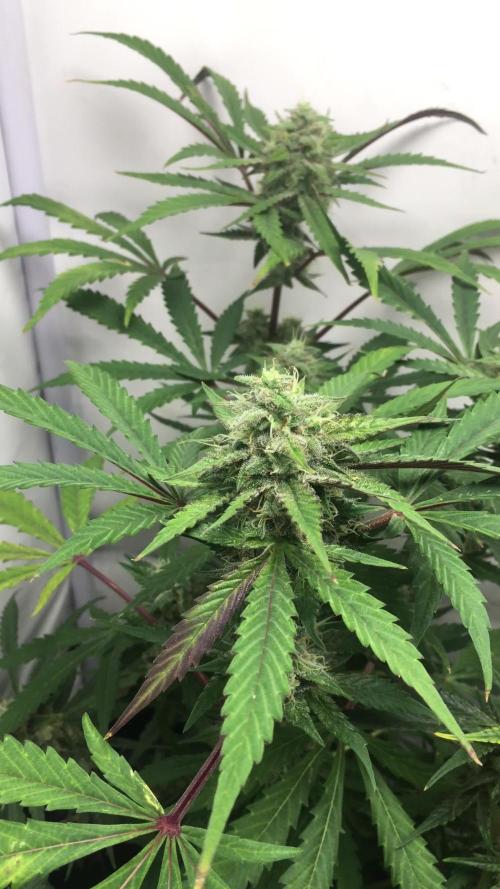
Trichome Takeover! ❄️🍰 : The Cake is Frosting Up!
Welcome to Week 8! This Wedding Cake Auto is really living up to her name now. The "stretch" from the previous weeks has finally settled, and she is focusing all her energy on stacking those buds.
The frost is becoming much more apparent trichomes are starting to crawl onto the sugar leaves, and the scent is getting deeper and more doughy every time I open the tent. I’m really impressed with how she handled the topping and LST earlier on; the canopy is nice and even, and every bud site is getting a prime spot under the Agyrochy LED.
Feeding & Environment:
Watering: She’s getting thirsty! I’ve maintained a steady watering schedule, making sure to keep the pH around 5.5-6.0 as she bulks up.
Nutrients: Continuing with the mix. She seems to be loving the current PPM levels (around 800), so I’m sticking to the plan without pushing too hard.
Zamnesia really knocked it out of the park with these genetics. Low effort, high reward so far! Can't wait to see how much more she swells in the coming days.

Likes
53
Share


@Almora
Follow
I give 8 liters of water per pot.
I was giving a 2-nutrient callmag, but the water coming out from the bottom has high ppm, so I will give empty watering.
Day 97-Bloom 38= sugar leaves and immature buds were cuted


Likes
13
Share


@masterofsmeagol
Follow
7/13 It's maine-ing out. Overcast and misting. I guess it rained last night but not much. Today is my watering day although I think they could've made it until tomorrow. These drastic temp changes makes it hard to get a STEADY routine in place. I watered everything in the 20's a gallon the 10's 1/2 gallon. The 10th planet in the front was still heavy so I didn't water it. I'll keep an eye on it. Temps are much milder. I noticed a few more septoria leaves on the 10th planet which I promptly defoliated. This pheno is flowering. I could've put this week as flowering as several plants have started. I also saw ONE leaf on my chem dog that had septoria on it. ONE f-ing leaf! I was planning on treating this early anyway so I mixed one gallon of plant doctor 3 tsp gallon/gallon which was the recommendation. I'll monitor this plant and continue treating it the next two weeks. I may do foliar too but the mixture is different. It's a systemic so I don't think that matters as much. Considering getting mulch to protect from spores on the soil. My plants look GORGEOUS. I Hate to use such a nice plant as a guennie pig but I'm not going to sit here and watch it progress. I'm lucky it's really not that bad and that it's on a reveg. There's so many leaves that I would be forced to prune anyway. I'm seeing two MAYBE three leaves a morning but I want to get this under control. Last year u let a plant with septoria go and it finished but went to extracts. I've got a pretty good feeling about this plant doctor. I've used it before with good results. Only time will tell though.🤞

Likes
2
Share


@A_Aron
Follow
Day 57:
Forgot to get pics when watering. So some pics the next day.
Water/Feed day. Each plant got 1 gallon with:
5mL per gallon Alaska 5-1-1
15mL per gallon Alaska 0-10-10
7.5mL GrowMore Seaweed Extract
15mL Blackstrap Molasses
Plant 2 also got 1.25mL per gallon of AGT-50
Plant 3 also got 15mL per gallon of Liquid Culture Microbes
Plant 4 got both and at the same amounts.
I scratched into the soil of each pot 1/2 cup of Happy Frog Fruit and Flower
Day 58:
Took pictures. Plants are looking good. You can really see the difference in plant 1 compared to the other 3. Very few tops really pushed their way up on plant 1.
Day 59:
Water/Feed day. Again I didn't get pictures on this day.
Each plant got 1 gallon with:
5mL per gallon Alaska 5-1-1
15mL per gallon Alaska 0-10-10
7.5mL GrowMore Seaweed Extract
15mL Blackstrap Molasses
Day 61:
This time I got some pics. You can really tell that the plants are in flower. They are developing a good smell and you can see trichomes starting as well.
Water/Feed day.
Each plant got 1 gallon with:
5mL per gallon Alaska 5-1-1
15mL per gallon Alaska 0-10-10
7.5mL GrowMore Seaweed Extract
15mL Blackstrap Molasses