The Grow Awards 2026 🏆 









Likes
Comments
Share
@BunnyBud
Follow
I'm very happy with the results, I'm also about to add a dimmable sf1000 for more power. I'll soon introduce microvita topcrop to improve the soil.
==Update Sept. 25==
I added a dimmable sf1000 in addition to the sf1000d, which I set to 80%. We'll see how the plants react. The 221 m3/h extractor is coming soon, adjustable. Temperatures are 27-29 degrees with 58-60% humidity. I currently have a 130 m3/h extractor.

Likes
9
Share
@Ginger_gnome
Follow
Man what a busy week. I left for a small vacation with the family and left the plants in the care of someone and luckly everything is still alive lol. Then today I almost forgot to post my weekly diary because I was busy build my new grow office and moving all the equipment in. The room I built is where all the plants well eventually end up ones my coco and perlite arrive.
So one plant is 2 weeks behind the other I believe. That's why one looks smaller then the other. Both plants tho are doing very well and are coming along nicely. Hope to have then in the autopots by next weekend.
Well happy growing everyone

Likes
31
Share
@Mz876
Follow
The mystery strain has officially started to flower . Crazy she’s flowering before the Fucking incredible auto . Another reason why I think that strain is really a photo.
Likes
4
Share
@Kronen
Follow
Mohawk Meds: Banana Flambe (BF): Day 42, 7 Weeks from seed. Healthy & green. Battled some High temps this week. Built a DIY water cooling system in the duck work along with lowering power to the lights but moving them closer to maintain PPFD & created an intake of cooler air to my closed loop system. All these things brought temps back to low-mid 70's from low 90's I was having. Through the week BF never wilted from the heat but didn't grow as much as it should have. Weekly Environment: 85-91F, 48-54% RH, 750-850 PPFD, & 550-875 CO2. Also topped BF #2 & #3 on the 5th Node. Decided to keep #1 as a Mother.
Likes
59
Share
@JeyGanesha
Follow
Un altra settimana è passata e tutto procede bene.per fortuna non ho più trovato nessun nanners 🙏✌️💪..belle piantine mie, continuate così che farete delle belle pannocchie....
30/8/24 gente ho combinato una bella cazzata.pur avendo esperienza, mannaggia a me,mi sono portato a casa dentro il box, il cazzo di ragnetto rosso... fanculo...
Ho già iniziato a ripulire tutto, box e piante con Neem...li sterminerò tutti 😂..

Likes
37
Share
@Kirsten
Follow
23.08.24:
I've done considerable defoliation. Also, FBP1 and FBP3 have grown all over the place. The stems are also relatively weaker as they've grown so much.
(Photos above).
Being as the plants were looking a bit delicate, I added some string and tied the side branches lightly to keep them a bit more compact.
Additionally, FBP2 has a considerable amount of buds on the main cola. So I've added a plant stake, and I just tied string around the stake and the main stalk.
The humidity has been able to stay under 53%. That's with 3 dehumidifiers. So I'm pretty sure that's about as good as it will probably be.
I've had to lower the watering frequency on FBP3, as I overwatered only this plant. and also added too much Nitrogen in. As a result all the leaves are looking droopy.
I'm really not sure how this will pan out, as they all still look like they're weeks away from harvest.
Anyway, I'll update throughout the week.
25.8.24:
I was tending to the garden a majority of the day, and realised that a branch had broken on FBP2. I acted quickly to insert plant stakes, to provide the heavily laden branches additional support. See photos above.
The branch was bent or snapped, but still in one piece. I used duct tape to carefully put it back together. Before making a stake for it.
Silica, apparently wasn't quite enough to get the FBP2 through the whole way. The flowers are very heavy and dense.
I have also given the plants water yesterday with concentrations of the following nutrients, per plant.
● 9ltr of dechlorinated tap water with 6ml of cal-mag, 3ml of Ecothrive Flourish, 6ml of Xpert Nutrients Bloom Booster.
I have also added cinnamon top dress after watering, as I have noticed some fungus gnats.
I checked the trichomes through one of my loupes yesterday too, and nearly all are still glass like in appearance, with some cloudy here and there. I'm definitely going to have some time left on these girls.
I did check the PH if my soil on all plants as I was concerned about nutrient lock out on FBP3. All pots tested out at 7.0 Ph exactly, before and after watering.
Thanks for reading my diary 😊

Likes
43
Share
@Master_weeda
Follow
Bonjour a tous les padawans et les maîtres jedis
Pour cette semaine 4 je surveille comme à mon habitude hygrométrie et arrosage. Je peaufine mon LST en stressant ma plante le moins possible. Je combine mon LST avec un pincage d'Apex cela me permettra d'avoir une canopé plus homogène donc une meilleure pénétration lumineuse et par conséquent un meilleur rendement.
Petit rappel sur le pincage d'Apex:
Le pinçage des plantes de cannabis
Proche de la taille d’apex sur le principe, cette technique possède cependant plusieurs avantages, le principal étant de conserver le gros bud central de la plante, d’une production et qualité maximale.
Pinçage des plantes de cannabis
Le pinçage d’apex (tête de la plante) consiste simplement à pincer délicatement la tige du dernier étage de la plante, entre le pouce et l’index, jusqu’à sentir la fibre s’écraser sous les doigts avec un petit bruit critch caractéristique. Si l’espace disponible sur la tige du dernier étage ne permet pas d’y placer confortablement ses doigts, il faudra plutôt pincer l’étage du dessous.
Le pinçage ralentira fortement la croissance verticale de la plante, tout en stimulant le développement des branches secondaires, donnant ainsi à la plante une forme de buisson.
La plante mettra quelques jours à réparer ce pinçage, formant un nœud à cet endroit, et poursuivra ensuite sa croissance de façon normale. Le pinçage peut alors être répété si nécessaire, sur l’étage suivant nouvellement formé, ainsi que sur les éventuelles branches secondaires qui pourraient dépasser l’apex.
Le pinçage est donc une excellente technique pour avoir une belle canopée uniforme de type marée verte. En pinçant régulièrement l’apex des plus grandes plantes de votre espace, durant la croissance et en début de floraison (stretch), vous obtiendrez ainsi facilement des plantes de hauteur homogène en pleine floraison, ce qui facilitera la culture et augmentera la production finale, surtout si vous cultivez simultanément de multiples variétés de marijuana.
Avec un peu d’habitude le pinçage pourra être réalisé aussi rapidement qu’efficacement. En cas de pinçage trop violent qui se traduirait par un apex arraché, cela produira simplement les mêmes résultats qu’une taille classique de l’apex, ce qui ne sera donc pas dramatique.
Que la force soit avec vous💪

Likes
43
Share
@GrowerGaz
Follow
Really nice strain , still not figured out why it autoflowered. Hints of sweet cheese and that lemon citrus from the jack H


Likes
6
Share
@StoneyMelony
Follow
Overview of my grow:
Tent: Secret Jardin DS120 4 x 4 (120 cm by 120 cm)
Lights: 2 x 120 Watt CTlite c4 clusterled
Climat: Trotec Dehumidifyer 240 watt- 10L/24h
Filter: Prima Klima carbon filter PK2600
fan: 2 x Secret Jardin 20watt osc. fan
Pots: Gronest 4 x 11 liter airpots
Water : automated water system
PH: bluelab
Nutrients: Plagron cocos A + B
Plagron PK 13/14
ATA cal/mag
Epsom salt
Week 10 the strawberry cheescake is very frosty it look really like a layer of snow on this plant. i started to flush her. very nice for a free seed. smeel is also amazing. i dont smell any strawberry yet but maybe it is in the taste. 😋

Processing
Likes
5
Share
@PETEROG
Follow
Hey everyone at week 4 know and wow have these girls grown early this week I applied some LST and all took really well to say it was my first time trying this
Likes
14
Share
@GoldenWeedGrower
Follow
D15/V11 - 15/04/23 - Added water and nutes EC 0,7 pH 6.4
D16/V12 - 16/04/23 - Nothing
D17/V13 - 17/04/23 - Nothing
D18/V14 - 18/04/23 - Added water and nutes
D19/V15 - 19/04/23 - Nothing
D20/V16 - 20/04/23 - Added water and pH+
D21/V17 - 21/04/23 - Nothing


Likes
20
Share
@Roberts
Follow
She grew well for the little time I spent with her. She grew fast as upping my room temps a few degrees sped the process up. She has a good smell and I will be back to update on a smoke report in a few months once it is dried, cured, and trimmed. Thank you, Medic Grow, and ILGM. 🤜🏻🤛🏻🌱🌱🌱
Thank you grow diaries community for the 👇likes👇, follows, comments, and subscriptions on my YouTube channel👇.
❄️🌱🍻 Happy Growing 🌱🌱🌱
https://youtube.com/channel/UCAhN7yRzWLpcaRHhMIQ7X4g.

Likes
3
Share


Likes
52
Share
@Ultraviolet
Follow
You don't become confident by shouting affirmations in the mirror, but by having a stack of undeniable proof that you are who you say you are, outwork your self-doubt.
Nitrogen fixation is a chemical process by which molecular nitrogen (N2), which has a strong triple covalent bond, is converted into ammonia (NH3) or related nitrogenous compounds, typically in soil or aquatic systems but also in industry. The nitrogen in air is molecular dinitrogen, a relatively nonreactive molecule that is metabolically useless to all but a few microorganisms. Biological nitrogen fixation or diazotrophy is an important microbe-mediated process that converts dinitrogen (N2) gas to ammonia (NH3) using the nitrogenase protein complex (Nif).[2][3]
Nitrogen fixation is essential to life because fixed inorganic nitrogen compounds are required for the biosynthesis of all nitrogen-containing organic compounds, such as amino acids and proteins, nucleoside triphosphates and nucleic acids. As part of the nitrogen cycle, it is essential for agriculture and the manufacture of fertilizer. It is also, indirectly, relevant to the manufacture of all nitrogen chemical compounds, which include some explosives, pharmaceuticals, and dyes.
Nitrogen fixation is carried out naturally in soil by microorganisms termed diazotrophs that include bacteria, such as Azotobacter, and archaea. Some nitrogen-fixing bacteria have symbiotic relationships with plant groups, especially legumes.[4] Looser non-symbiotic relationships between diazotrophs and plants are often referred to as associative, as seen in nitrogen fixation on rice roots. Nitrogen fixation occurs between some termites and fungi.[5] It occurs naturally in the air by means of NOx production by lightning.[6][7]
All biological reactions involving the process of nitrogen fixation are catalyzed by enzymes called nitrogenases.[8] These enzymes contain iron, often with a second metal, usually molybdenum but sometimes vanadium.
Green clover (Fixation)
White clover (Fixation)
Red Clover. (Fixation)
Yellow Clover. (Fixation, deeper roots)
Sweet Thai Basil. (Terpenes)
Italian Basil. (Terpenes)
Chamomile.(Oil production)
Borage.(Pest attraction taste)
Lavender.(Pest attraction smell)
Marigold(Pest attraction visual)
Mycorrhizae are beneficial associations between mycorrhizal fungi and a plant’s root system. Mycorrhizal fungi spores germinate in the soil, creating filaments (hyphae) that penetrate the root cells, thus establishing a symbiotic relationship. This collaboration leads to the development of both intra-radical and extra-radical networks of filaments, enabling efficient exploration of the soil for enhanced access to nutrients and water. Consequently, these vital resources are transferred to the plant, resulting in numerous benefits for crop cultivation.
Various mycorrhizal products are available in diverse formulations (powder, granular, and liquid), concentrations, and qualities. Ongoing advancements in products, technologies, and research are reshaping our understanding of mycorrhizae. Despite these positive developments, certain misconceptions persist. In the following discussion, we aim to clarify the truths and dispel the myths surrounding mycorrhizae products.
MYTH #1
A HIGHER NUMBER OF MYCORRHIZAE SPECIES MEANS BETTER RESULTS.
Contrary to common belief, having a higher number of mycorrhizae species in a product does not translate to better results; in fact, it often yields the opposite outcome. A plant can sustain only one association with a particular mycorrhizal fungi species. Introducing multiple species creates competition among them, which is not advantageous for the plant. The initial colonizer does not ensure the highest success; instead, it gains precedence. It is recommended to select a product with a concentrated presence of a single mycorrhizae species known for its effective performance, rather than opting for a product with multiple species at lower concentrations.
MYTH #2
ECTOMYCORRHIZAE ARE EFFECTIVE FOR CANNABIS PLANTS.
Although ectomycorrhizae can colonize five to ten percent of plant species, cannabis is not among them. Ectomycorrhizae do not penetrate the root cells; instead, they develop around the roots and on the exterior. For cannabis plants, it is essential to seek out endomycorrhizae. Endomycorrhizae are capable of colonizing 70% to 90% of plant species, including cannabis. Unlike ectomycorrhizae, endomycorrhizae penetrate the root cells, forming structures like arbuscules for the exchange of nutrients and water with the plant.
MYTH #3
WHOLE INOCULANT (PROPAGULES) PERFORM BETTER THAN ONLY VIABLE SPORES.
The propagule count specified on most mycorrhizae products indicates the presence of spores (viable and unviable), hyphae, and root fragments. However, it is crucial to note that only viable spores, those with the capacity to germinate, can successfully colonize a plant’s root system. Spores are to mycorrhizal fungi what seeds are to cannabis plants—a fundamental component enabling fungi reproduction. Consequently, even if a mycorrhizal product boasts millions of propagules, its effectiveness hinges on the presence of viable spores. Without viable spores, the product will not contribute to plant development. Therefore, the genuine value of a mycorrhizal inoculant lies in the quantity of viable spores it contains, as only viable spores can efficiently initiate symbiosis.
MYTH #4
ALL METHODS OF APPLICATION YIELD IDENTICAL RESULTS.
To establish the symbiosis, mycorrhizal fungi spores must be close to the plant roots. The optimal recommendation is to directly apply mycorrhizal inoculant to the roots, either in powder, granular or slurry form. This method ensures maximum proximity between the spores and the roots, facilitating a rapid establishment of symbiosis. Particularly with crops like cannabis, which have a short growing cycle, employing this technique is the most effective way to obtain optimal benefits. Alternatively, techniques such as blending the inoculant with the soil are effective, but there may be a delay in the establishment of symbiosis. This is because the roots need to grow and come into contact with the dispersed spores throughout the growing media.
MYTH #5
MYCORRHIZAE CAN ONLY BE GROWN ON LIVING PLANTS.
While the predominant method for commercially producing mycorrhizae involves growing them on the root systems of living plants (in vivo production), it is not the exclusive nor the optimal technique. In fact, this production approach has notable drawbacks that the “root organ culture” method just does not have (in vitro production). In vitro production occurs in meticulously controlled, aseptic laboratory conditions, allowing for the consistent generation of products that are viable, highly concentrated, species-specific, and free from pathogens. Achieving such precision and quality is impossible when relying on the cultivation of mycorrhizal fungi on plants exposed to external conditions.
In conclusion, it is crucial to take all these factors into consideration when choosing the appropriate product for your crop to fully harness the wide array of benefits provided by a high-quality mycorrhizal product.
STRONGER PLANT – Stress resistance.
FASTER GROWTH – Improve plant structure and shorter veg time.
INCREASE YIELD – Overall more biomass.
IMPROVED QUALITY – Increase cannabinoids and terpenes content.

Likes
23
Share
@DevelGrow
Follow
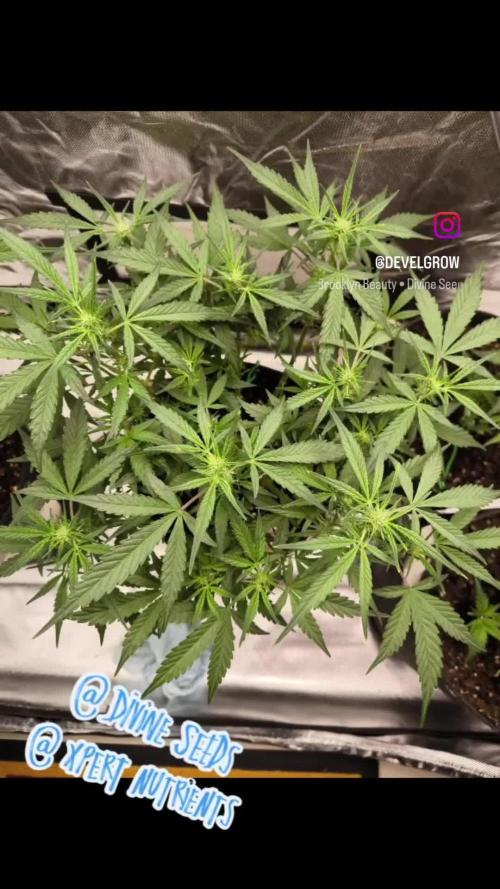
Hallo Freunde 👋 BigDemon von Divine Seeds ist 42 Tage alt! Sie ist schön in Blüte und streckt sich noch, baut schön die Buds auf und ist stark gesund und vital! Kann nur noch besser werden! 💎🥦 Bis dahin keep Green and grow High ✌️🍀💚🍀

Likes
13
Share
@hachiko
Follow
Roots look very healthy
I tried different method for starting the seedling that seem to work. Plant seems very healthy at 10 days of growth. Will try to do the shortest veg time possible.
Having issue with water temp. I added some H2O2 and will make new solution tomorrow, will try to change it twice per week
Likes
58
Share
@Legendaryseedthumb
Follow
Just chopped these 3 girls!
Drying day 5: damn I’m so amazed of the thricome production on this one! Looking like sparkling diamonds covering the buds! Tastes good, earthy/woody flavor, will need to dry some more and cure then it will be a 10/10 smoke!!
Day 8 drying: okay 2 of 3 plants are finished small bud sickest buds I ever seen and smells amazing

Likes
26
Share
@Gunnen
Follow
This week was easy, just keeping an eye on the environment and low stress and high stress (supercropping) methods. Top soil was amended last week to keep the slow release organic nutrients for bloom going.
The genetics are keeping it low profile, but I am able to spread it out with it's flower stretch. Have some decent top sites forming. Removing fan leaves from prime bud sites, otherwise defoliation is pretty low. Tucking fan leaves and other leaves as much as possible without removal as well. Ladies have been drinking water daily and seem to be quite healthy and green.
Will be interesting to see the bud formation as it grows. I am curious with the Lowryder genetics seeming to be in stature, wondering if buds will be more Lowryder or AK-47 looking. Genetics seem resilient and quite happy with warmer and dryer environment.
This week focusing on training more to get canopy how I want for final flower form. Defoliation as necessary, and keeping an eye on the environment. Things have been smooth and easy so far.
The light measurements are using my phone, in a case, with LED lighting, so highly likely the readings aren't very accurate. But gives me an idea where my zones are for hitting most intensity where I need.
