


Likes
Comments
Share


@Comfrey
Follow
Dutch Passion Shaman
Die vierzehnte Woche begann sonnig und warm und endete mit dem Beginn einer massiven Starkregen Front. Über 70 Liter Wasser werden in 48 Stunden fallen. So entschied ich zum Ende der Woche, beide Shamaninnen mit einem Gartenschirm zu schützen.
Die Blüten schwellen, die Aufregung steigt. Ich kontrolliere die Pflanzen täglich, um sicher zu stellen, dass beide weiterhin gesund bleiben und ich am Ende saubere und harzig leckere Buds ernten kann. Und diese Zeit ist gut investiert, denn ich entdeckte zu Beginn der Woche eine Blüte, die verdächtig aussah und sofort herausgeschnitten wurde. Shamanin No. 1, die stickstoffüberfütterte grüne Dame hatte ganz oben ein klein wenig Fäulnis zwischen Blüte und Stiel. Im Laufe der Woche konnte ich dann nichts weiteres mehr finden. Auch der Schnitt ist sauber verheilt. Beide stehen gut da.
Als klar war, dass es über Tage massiv regnen wird, habe ich begonnen beiden Shamaninnen nur noch sparsam Wasser zu geben. Ein bisschen Trockenstress soll sich gut auf die Trichom Bildung auswirken und ich hoffe, dass sie so in der kommenden Woche durstig und mit geschlossenen Spaltöffnungen weniger anfällig für Pilze sein wird. Denn eines ist sicher: Die kommende Woche wird für uns drei heftig. Ich habe das miese Virus und oben drauf noch eine bakterielle Bronchitis. 29 Grad Fieber. Knock out. 🤒 Zu den Pflanzen werde ich trotzdem täglich hinfahren. Bissl frische Luft tanken.
Danke für‘s vorbeischauen! 🤞💚

Likes
9
Share


@Staffedition
Follow
Привет друзья.
Наше знакомства продолжается с новым сортом автоцветущих растений от Smail_Seeds сорт ORIGINAL AUTO CHEMZKITTLEZ F1 reg.
Сегодня растению 73 дня.
Растение очень хорошо развилось, ни каких сбоев в генетике не наблюдалось за весь цикл.
Шишки наливаются очень хорошо😀
Так же стрессую, что бы получить пыльцу.
Скоро будут феминизированные растения.
Сорт выводим сами.
Смотри мой профиль, у нас всегда есть что то интересное.
Не забудь поставить лайк❤️, если понравилась как прошла неделя
И читайте наш TELEGRAM: https://t.me/smail_seeds
#Smail_Seeds 😀
Likes
15
Share

@fdsaopijfas
Follow
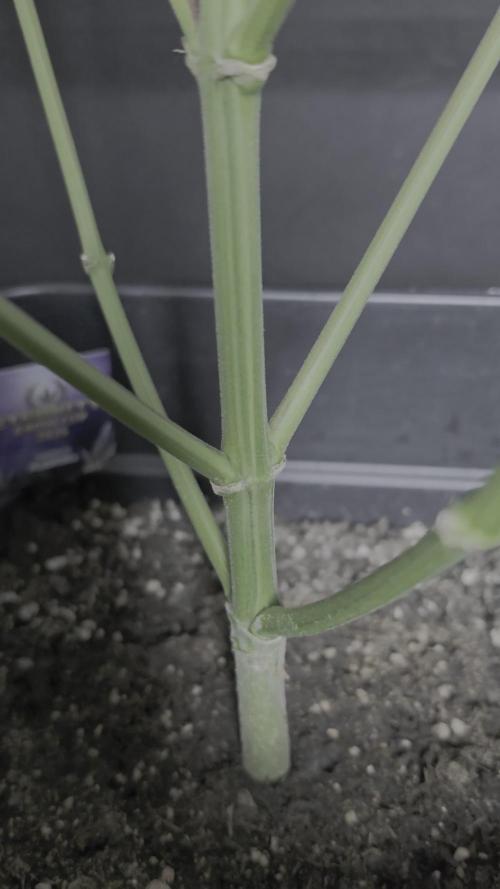
Wtam ❤️ zaczęło pojawiać się mięso 😁! Lamp 64% power. I put more nutriens, they eat very well. PH wody zoswaiłem na poziomie 7,1 ⚡️⚡️⚡️ they like it ❤️! Pozdrawiam, miłego dnia ;)

Likes
32
Share


@WhiteWidow
Follow
All good here. Today i did some more defoliation, leaf tucking, and watering, lights were flipped 1.6.
Plants are healthy, growing like maniacs and drinking 3 liters every 3rd day
Countdown begins :)))


Likes
50
Share


@Fibro_Witch
Follow
It was a good week for Night Nurse👍
Now that they're in the ground they're doing much better and putting out more growth.
The one on the end could have better color, since her new growth is a bit yellow. I gave her an extra feeding last night after I transplanted some Calendula into the bed since it's a good pest repelling companion.
We're getting some much needed rain today🙏
Otherwise there's not much else to report!
Update 6/26- I totally forgot to add that on Monday the garden got a spraying of horn manure. Horn manure is a biodynamic preparation of cow manure that's been fermented in a buried horn. This results in a material that's teeming with beneficial flora and fauna for the soil. Ideally it would be sprayed prior to planting in the spring as it encourages healthy root growth. I purchased the pre-potenized so that I only had to spend 20 mins stirring rather than an entire hour. That would have been brutal😵
I sprayed it at night when the earth is breathing in and used a spruce bough to sprinkle it over the plants in the garden. The extra icing on the cake was that there was a rain the day before, and another the day after I sprayed so it was well watered in.
Likes
4
Share


@SamDo
Follow
Vegetative Week 4 – Pineapple Upside Down (Round 2)
This fourth week of vegetative growth confirms a pattern that has unfortunately been present since the beginning of this run.
The plant is technically growing, but visually she looks unhealthy, weak, and stressed.
Overall structure, leaf quality, and general vigor are clearly not where they should be at this stage.
Nutrient solution has been kept within a reasonable range, with pH maintained between 5.8 and 6.2 and EC around 1.1–1.2.
Despite this, there is no clear positive response from the plant.
At this point, it is difficult to identify a single root cause.
It could be related to nutrition balance, substrate preparation, environmental parameters, lighting, or simply a combination of multiple small issues accumulating since the start.
The humidity dome has now been fully removed.
Given the plant’s current condition, maintaining excessive humidity no longer seems beneficial.
The approach is now to simplify, stabilize, and observe.
This run is clearly delayed, and expectations for a quick recovery are low.
That said, the focus remains on learning from these early-stage difficulties and improving future starts, especially substrate preparation and initial environmental control.
For now, the plant will continue to be fed consistently, without overreacting or introducing drastic changes.
Observation and patience remain the priority.
See you next week, and take care.

Likes
6
Share


Likes
6
Share


@coyotenowhere
Follow
Mar 19
Day 1 of Flower 12-hour light cycle
Mar 20
725ppm / 5.89ph
Mar 22
759ppm / 6.03ph
Mar 24
780ppm / 6.08ph
+defoliation (large fan leaves and lower branches)
Likes
12
Share


Likes
5
Share


@Rizza78
Follow
Smooth few days after the defoliations. They seem to be happy. Malted Milk can be very temperamental but I have been catching on to her ways. Still wary with my feedings tho. Want to give all these different nutes and unknown what the results will be? Installed ac units in each room to ensure good temperatures and RH outside the tents. Hoping for another good week!


Likes
2
Share


@Hydrus
Follow
she slowly begins to sweat and also develops her characteristic color.
i have not used any cropping or topping techniques, or defoliation, except that she will develop 2 head buds.
i still don't have any uV or iR light supplement, just using a sanlight led and senmatic fl300 grow with adjustable colorspectrum and adjustable poweroutput.
wondering. still in the same environment. all the pests have suddenly disappeared. i did not say any prayers.lol
my mouth is already watering.lol

Likes
118
Share


@Grow3rPT
Follow
👉 ( Vegetação ) 👈
📅 Total de Dias 15 - 17/08/2021 / Inicio da 3º semana
📅 Total de Dias 16 - 18/08/2021
📅 Total de Dias 17 - 19/08/2021 / 💦 Rega
📅 Total de Dias 18 - 20/08/2021
📅 Total de Dias 19 - 21/08/2021 / 💦 Rega com 2ml de calmag apenas por prevenção
📅 Total de Dias 20 - 22/08/2021
📅 Total de Dias 21 - 23/08/2021 / 💦 Rega
👉 MARSHYDRO
👉 CODIGO PORMOCIONAL : Grow3rPT
👉 Em marshydro.eu 3% de desconto em qualquer produto

Likes
35
Share

@wolfvb
Follow
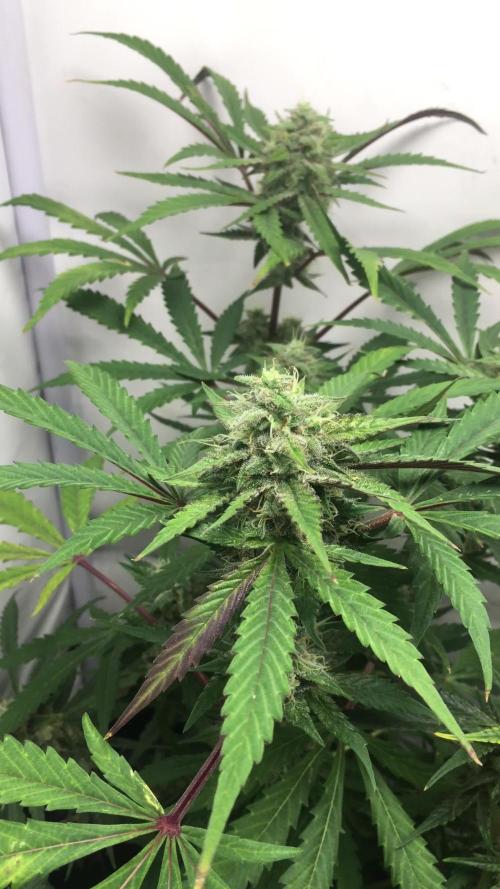
Trichome Takeover! ❄️🍰 : The Cake is Frosting Up!
Welcome to Week 8! This Wedding Cake Auto is really living up to her name now. The "stretch" from the previous weeks has finally settled, and she is focusing all her energy on stacking those buds.
The frost is becoming much more apparent trichomes are starting to crawl onto the sugar leaves, and the scent is getting deeper and more doughy every time I open the tent. I’m really impressed with how she handled the topping and LST earlier on; the canopy is nice and even, and every bud site is getting a prime spot under the Agyrochy LED.
Feeding & Environment:
Watering: She’s getting thirsty! I’ve maintained a steady watering schedule, making sure to keep the pH around 5.5-6.0 as she bulks up.
Nutrients: Continuing with the mix. She seems to be loving the current PPM levels (around 800), so I’m sticking to the plan without pushing too hard.
Zamnesia really knocked it out of the park with these genetics. Low effort, high reward so far! Can't wait to see how much more she swells in the coming days.
Likes
18
Share


@raulmoat123
Follow
Quick update week 3 flower these girls are putting on weight very very quickly. The blue gelato buds are already becoming dense like stones . Watermelon punch literally is the most satisfying smell I have smelt in a while . Wedding cake is the biggest in my tent and most gassiest plant. The terple inhouse genetics are also massive will show the inhouse section next week , just takes to long to take them out of tent


Processing
Likes
29
Share


@Calveeno
Follow
Greetings GrowDiaries!
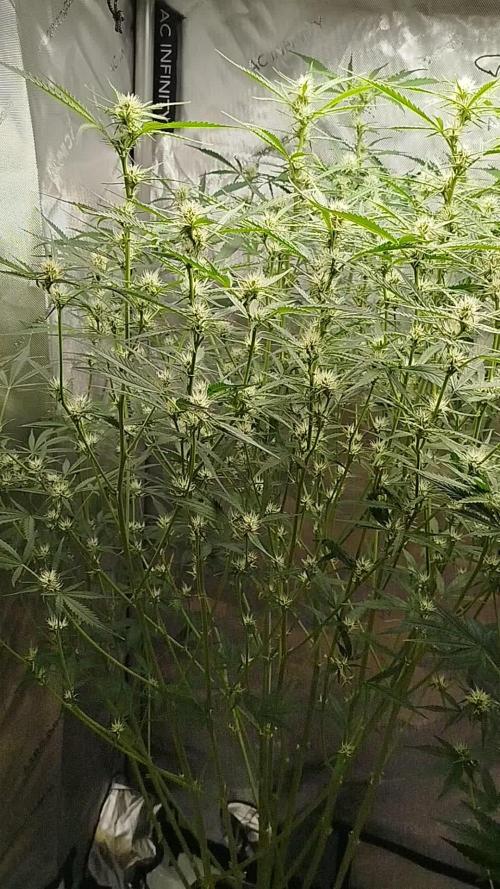
Cough is coming along nicely, bud sites are developing daily.
I managed to get a shot in just after lights out with the flash. I'm certain that I have borderline N toxicity by the deep, dark ever green color and curling leaves (leaves aren't clawing yet and I pray they don't!) I flushed mid-week and hope this doesn't become an issue.
Tomato seedlings a day after applying Compost Tea. Roots galore!
New light coming in next week! Mars Hydro TS1000. Stoked!
'til next week, Be Safe and Stay Blessed! 🙏👽


Likes
15
Share


@NorthEquinoix
Follow
Added a little time lapse video for y’all to see my journey - atleast this clone journey- with this strain. Hope you enjoy it.
Every day is a learning experience and she is like that saucy best friend - keeping me on my toes.
She got 2 gallons of recharge, increased liquid nutrients - finally, some new minor tip burn which is what I was looking for.
It’s about 1.25 gallons per day to keep her moist, 2 gallons to even get a cup of run off. (Every 3rd day I saturate her).
New nutrient addition this week is tps signal- which I had great success with during end stage on another run. Plus I had hoped it would curb her appetite more.
But by the 31st….she still wasn’t happy. I yell at her - “my goodness woman, what do you want from me!?” 🤣🤣
Mega nutrient increase coming up. 🙂 - and I’m watching the trichomes closely. I’m taking a ton of the lower branches/larf for a 6 week flower CBG harvest. I intend to mix it with the final thc flower product to maximize the benefits of the plant in certain smokes/edibles.
Likes
1
Share


@FeebleSnane
Follow
Today is day 78 since the plants sprouted, and day 43 of the 12/12 light schedule.
In the original tent, plants #1 and #3 are doing great. Plants #1 has a super nice purple color, and its buds are bigger than the other plants. I really wish I made a greater effort on the clones so I could grow #1 again.
In the second tent, plant #4 (the one that pollinated/herm'd) doesn't have any obvious signs of growing seeds in the buds yet. I've developed a keen eye for pollen sacks and developing seed pods from my last grow, and so far plant #4 doesn't look like it will be unsmokable. There's a picture of all the pollen sacks I've pulled off the plant since it moved tents, and while most of them are opened, I don't think they had too much of an effect (yet). The buds do seem to be maturing a little early, with many of the hairs turning color, and already showing amber trichomes on the buds.
*Bonus*
The two little plants in the tent with plant #4 are the fast flowering photoperiods from FastBuds, and they were switched to flower in week 2 of veg because I had to move plant #4 in there. They look like they've gone into flower, but are SUPER stretchy from the light position. It'll be interesting to see how they grow out.
Likes
3
Share


@HeavensHarvest89
Follow
week 8 was another growful week no issues to report.. No matter what I do to this thing she just continues to thrive.. i was worried some of the aggressive defoliation I was doing would stress her out but she has showed no signs even after the training accident she didn't slow her growth down a bit