


Likes
Comments
Share

@AestheticGenetix
Follow
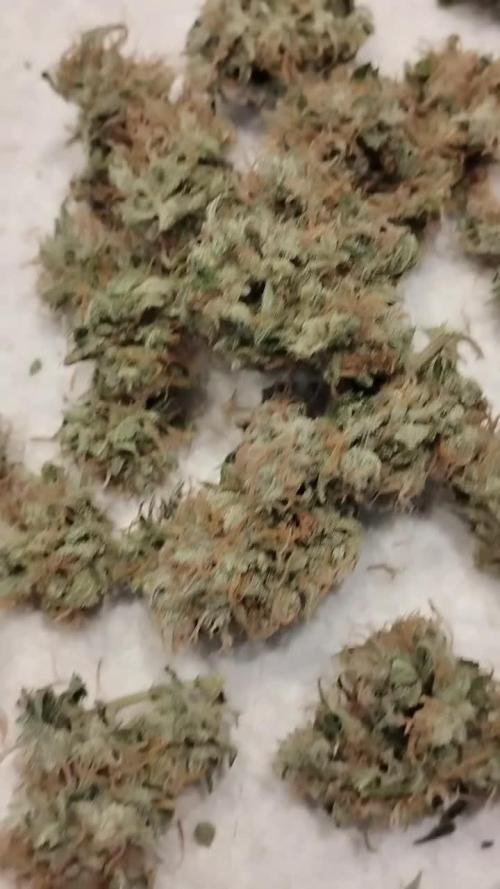
Chopped on 9/11/25
Has a fruity sweet smell to it. These buds are giant and just long connected braided cola with very uniform and chunky buds throughout the whole plant

Likes
7
Share


@Nassmou
Follow
Hello,
We are at 12/12 +40, the plants are developing well, not all of them will explode right away, but I am patient.
So we have the big plant in the middle and 4 cuttings, alas there are only 3 cuttings from the biggest the other is from a Purple Bud.
They all received a dose of Terra florès, Cannazym and CannaBoost.


Likes
7
Share


@GermanHydroponics
Follow
In diesem Run verwende ich das erste Mal meine AlienHydroponics RDWC Anlage. Und Beleuchte meine Pflanzen aktuell unter 13/11 in der Blüte. Aktuell befinden wir uns in Blüte Woche 5. Und die Pflanzen sind unter der Beleuchtungsdauer unglaublich groß geworden.

Likes
4
Share

@GroloCup
Follow
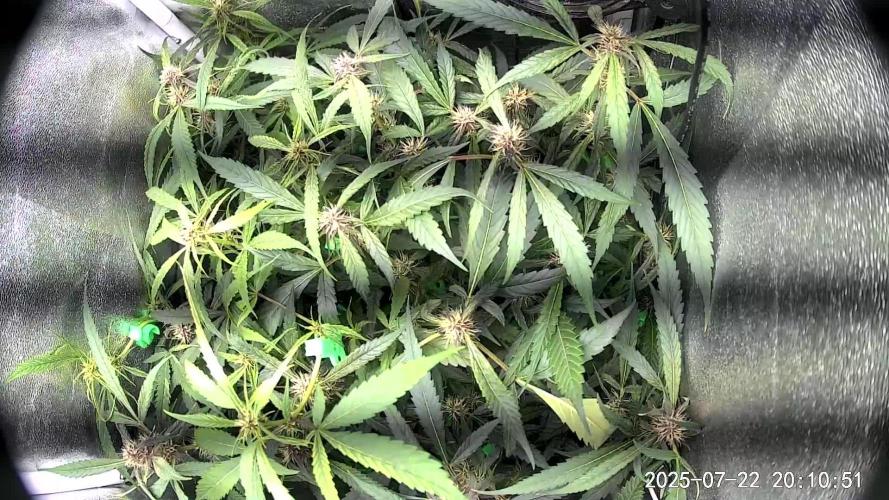
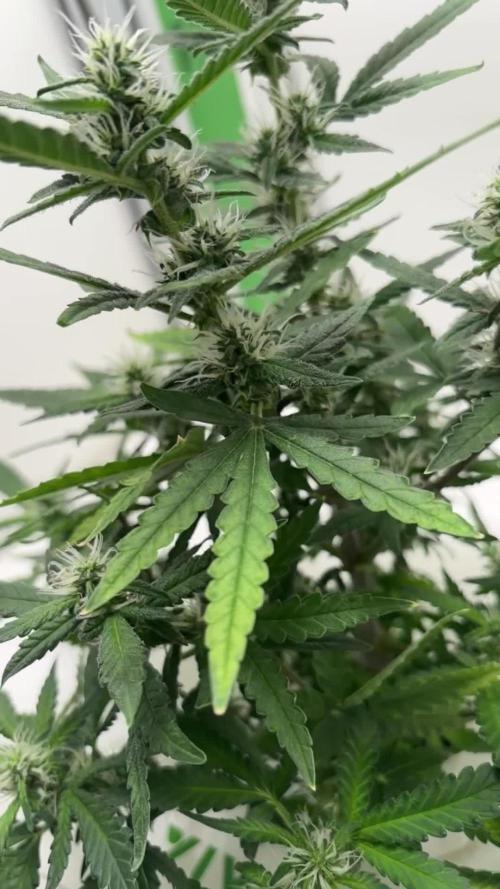
She's blown up and smells like grape kool aid mix poured into a cup of gasoline. Then look at that deep purple. Brother Geoff's selection is definitely a thing of beauty.We're adding some green sensation to the nutes and sticking to this autoflower feed and training schedule for the small tent I've put together that's really given me consistently quality harvests in limited space. Here's to another week of growth and flower development!


Likes
45
Share


@Robbaus
Follow
Ciao a tutti! C'è stata un'accellerata imprevista e così mi sa che raccoglierò una settimana prima del previsto! Tra 3 o 4 giorni taglio tutto! Ho svuotato completamente i vasi e ho messo solamente acqua liscia per far sì che le radici scarichino bene tutti i nutrimenti ancora presenti. Devo registrare purtroppo un piccolo problema di muffa, dovuto sicuramente all'umidificatore (purtroppo ho dovuto tenerlo acceso per tenere bassa la temperatura) in quanto si è formata sugli 8 apicali della pianta più vicina ad esso. Ho dovuto purtroppo tagliarli e buttarli via quasi per intero, ci avrò rimesso una ventina di grammi, anche 30. Post memoria per me: l'anno prossimo a luglio non devo avere niente e iniziare il ciclo a metà agosto con le temperature più accessibili. Comunque sta andando benissimo a parte l'imprevisto, non vedo l'ora di raccogliere e fumare! Ci vediamo la prossima per l'ultima settimana 🤣🤣🍀🍀💪🏼💪🏼

Likes
48
Share


@Wackytabacky_420
Follow
🚨 Blue Dream week 11 update 🚨
🚨 week 7 of flower!! 77 days old!! 🚨
So this will be my last feed post 4 these ladies!! I will begin flushing this coming up week!! Was disappointed in the first weeks of flower as she wasn't producing much but as the weeks have progressed these ladies have packed it on!!!
Low stress training clips-
@madmadameplant
@madmanplant
Www.madmanplant.com
Other companies in this grow-
@foxfarmsoilandfertilizer - 100% ffof
@acinfinityinc - fabric pots
@generalhydroponics - flora trio line
@vivosun.official - inline exhaust fan
@opulent_systems - 4x4x80 grow tent
@fastbuds_genetics - 4 Blue dream seeds
@inkbird_official - temp and rh controls
This was my feeds 4 the week!! I will begin flushing from this point on....
2/22/2022
2ml micro
4 ml bloom
1/4 ml ph down
Ph 6.41
420 Ppm
Solution temp 75.9°F
2/26/2022
2 ml micro
4 ml bloom
1/2 ml ph down
Ph 6.40
400 Ppm
Solution temp 76.5°F
Well growers thanks 4 stopping by 2 check out my grow!! Till next week. Best of luck and Happy Growing!🌱💚💨🔥🔥🔥
Processing
Likes
17
Share


@Trueorganics84
Follow
Just starting , This is my soil mix!
Only took two days to break soil pretty sweet!!
Likes
7
Share


@Gardener_of_Goodness
Follow
A strain I’ve been very keen to get going! AK is a real classic and an iconic strain for me, I’ve given her a 5Gal fabric pot with BioBizz Light mix and I’ve added some beneficial bacteria and mycorrhizal fungi to support the infrastructure development.
Off to a flying start, literally 72hours from seed to saying hello. Poked her head up yesterday so Day 1 is 30/03/20.
Let’s see how this week goes. I plan to keep a close eye on the environmental conditions and to ensure she’s being fed some gentle nutrients, CalMag to begin with followed by some BioBizz Grow for the extra nitrogen needed at this delicate time 👌
See you all next week, I hope with more leaves to show 🌱✌️ Peace and love, stay safe
Likes
7
Share

@Samsationalseeds
Follow
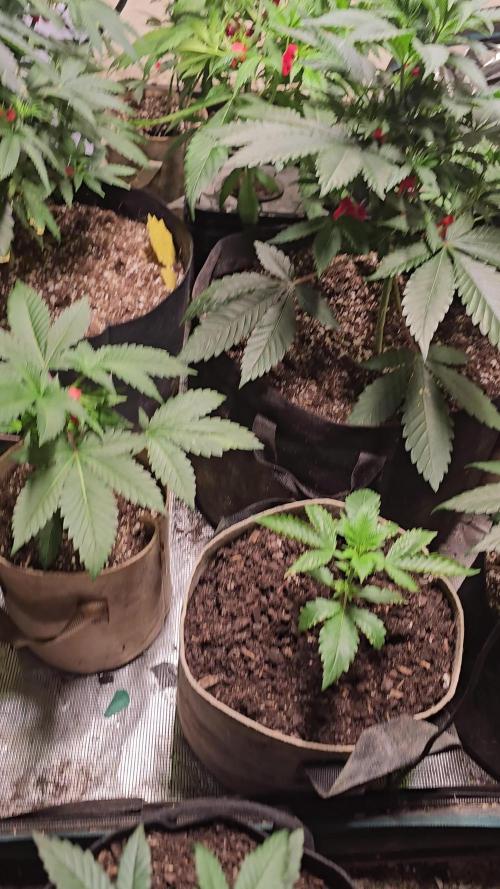
My dwc auto hasn't gone into bloom yet. Once it does , will determine when i flip the fem photos. Alot of the autos in have currently will be donated to my dad , to maximize. Mianly to not run out of herb. Haha me and him smoke a ton everyday. Adhd shiii
Likes
5
Share


@Mr_nugs_lover_David
Follow
She looks like a single main cola coming from the soil, very hard dense and sticky, I love this little cream mandarine, the aroma I can say is very sweet, but not definitely the most sweet of the garden. Peace ✌️ 💚


Likes
62
Share


@OwlGang_Uk
Follow
Week 6 - The Purple Power Is No Longer The Tallest In The Forest But It’s Still The Prettiest. The Purple Power Has Been Dethroned By 4 Of The Other Plants. Everyone Except For The Gorilla Glue Is On Bloom Nutrients.
Height:
Gorilla Glue: 19 Inches
Purple Power: 28 1/2 inches
Girls Scout Cookies(3gal): 30 inches
Lemon OG: 34 1/2 inches
Girls Scout Cookies(5gal): 34 1/2 inches
Stardawg: 33 1/2 inches
These Plants Are All Correct Measurements Size May Look Different In Picture Because Of Pot Size.


Likes
23
Share


@Firepharmer
Follow
She’s getting frosty and dank
👃🍪🍊🍓🍰🍌🍒🍇🍭👃
Day 29 almost half way , happy with all the phenos so far all frosty so many terps
.. started feed the canna nutrients plants canna pk1314 ..
2 flush’s Got the remo plants all most on the proper Ec again


Likes
Comments
Share

@Borberad
Follow
Woche 3
Das Fundament wird gelegt und Umtopfen steht an.
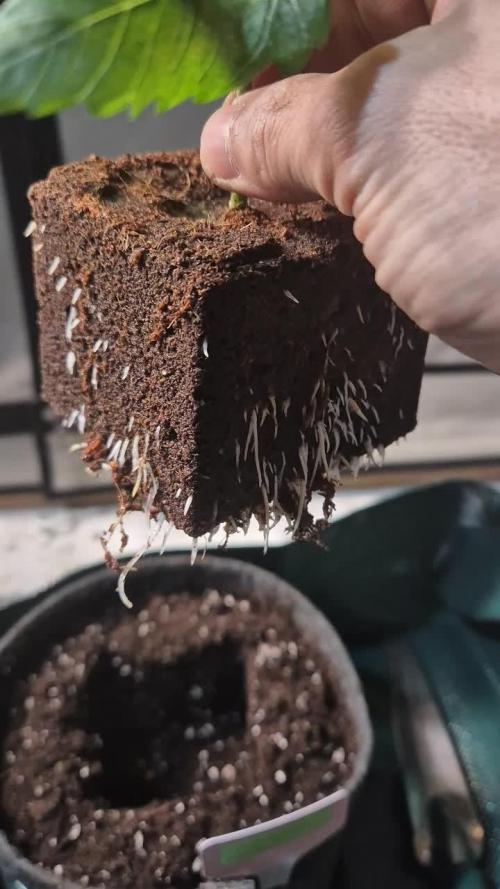
Die Schoki ist in der dritten Woche ihres Lebens. Die ersten Seitentriebie bilden sich und die Pflanze ist gesund gewachsen mitlerweile hat sie 3 Nodien. Und ist über ihren Cube hinausgewachsen und hat diesen kräftig durchwurzelt. Somit wird jetzt in den 3l Stofftopf umgepflanzt. Danach gibt es zum ersten Mal die standart Düngedosis, angepasst an das Pflanzenbild 2,5 -5ml Hesi TNT für ordentlich Nährstoffe im Wachstum, 5 ml/l Hesi Root für eine kräftige Wurzelentwicklung und 2 ml/l Calmag, um unser Osmosewasser aufzuhärten. Der DLI wurde auf im Laufe der Woche auf 40 erhöht.
* Zustand der Pflanze: Die ersten "echten" Blätter sind vollständig entwickelt und wie durch die EasyCubes zeigt sich wie eine kräftige Wurzelbildung.
* Wichtige Ereignisse: Beginn der Nährstoffgabe. Anhebung des DLI. Umtopfen in 3L Stofftopf
* Düngung & Messwerte:
* Gießwasser: pH ca. 6,0. Leitwert ca.1,4 - 2 S.
* Drain: Wir messen sporadisch, um die Abweichung von +/- 500 S einzuhalten.
* Anpassungen: Wir sind überrascht wie gut sich die Pflannze im Easys Plug System entwickelt hat.
Likes
19
Share


@sirstickyfingers
Follow
Start of Week 2 day 2 of flower!! These girls are stretching and starting to stack bud sites.
My little sour diesel is doing her best to reach that canopy with the others, she aint showing alot of sites at the moment but im hoping after stretch and defoliation I can get more to pop.
I decided to upgrade my light and now have a SE4500 450w on the way. From what I had researched Id like to be getting 1000ppfd in the center and then around 600-700 on edges
I picked up some stashblend and real growers recharge and added it to my water as a compost tea today and will be implementing that in the watering per the plant needs .
My biggest fear doing organics is getting behind on the food for these girls. I plan to top dress with worm castings, gaia green all purpose 4-4-4 and power bloom 2-8-4 every 3 weeks during flower, and then about the 4 week of flower I will be using more power bloom than all purpose to avoid too much nitrogen.
My biggest thing I been going back and forth on is when to defoliate. I dont wanna start removing abunch of leaves and force my plant to recover during the stretch rather than making bud sites. I figure once it is done stretching completely I am going to lollipop and remove all branches/larf and leaves under the canopy.
feel free to comment, provide tips, suggestions im open to all as im still new and learning
Thanks for looking and happy growing!!

Likes
25
Share


@Ferenc
Follow
I had to take a big decision. I know it is not good it is way too hot in the tent but needed to remove from my garden because of some reasons.
Firstly, illegal which is fine but I do not want to take a risk for 3 g of harvest. She should start flowering in autumn when less sun and weather is basically shitty here in London it is okay to grow but when starts flowering.... so I planted an auto and saw that it wont yiled good so I was thinking what will happend to my Zkittlez in autumn when mush less sun and weather is going down. So realised I can have a 2-3 m plant but it ain't gonna flower just a bit. Soni decided to put under artificial light but it is summer my plants are suffering in the tent. Inhave no choice I will try to manage maximum I will cut back. Hopefully all goes ok.
Day 86: Fucked up she was totally wilt I removed all the leaves basically the stalk left only..... she will be okay