


Likes
Comments
Share



Likes
435
Share


@Ju_Bps
Follow
Hello my friends grower 👨🌾👩🌾🌲
Week was good, baby's looks healthy,
I keep 26°C Night and Day
Plants are under glass to keep a maximum wet.
My lamp is a bit more min,
I give water each day with my vaporisator 1 time,
Water + rhizo PH @6
Thanks community for follow, likes, comments, always a pleasure 👩🌾👨🌾❤️🌲
Mars Hydro TS 1000
https://www.mars-hydro.com/ts-1000-led-grow-light
Gorilla Girl F1 fast version
https://sweetseeds.es/en/photoperiod-dependent-seeds/3065-gorilla-girl-f1-fast-version.html
See you next week my friends
Have a good week end 😁💕

Processing
Likes
7
Share


@Reaper
Follow
week 10
june 9th: i only give bloom booster and calmag from here

Likes
6
Share


@Organic473
Follow
The heat is really intense these days as I've noticed her leaves are curling up…she was transferred to the 5-gallon pot 2 days ago.

Likes
56
Share


@Ultraviolet
Follow
What's in the soil? What's not in the soil would be an easier question to answer. 16-18 DLI @ the minute. +++ as she grows.
Probably not recommended, but to get to where it needs to be, I need to start now.
Vegetative @1400ppm 0.8–1.2 kPa 80–86°F (26.7–30°C) 65–75%, LST Day 10, Fim'd Day 11
CEC (Cation Exchange Capacity):
This is a measure of a soil's ability to hold and exchange positively charged nutrients, like calcium, magnesium, and potassium. Soils with high CEC (more clay and organic matter) have more negative charges that attract and hold these essential nutrients, preventing them from leaching away.
Biochar is highly efficient at increasing cation exchange capacity (CEC) compared to many other amendments. Biochar's high CEC potential stems from its negatively charged functional groups, and studies show it can increase CEC by over 90%. Amendments like compost also increase CEC but are often more prone to rapid biodegradation, which can make biochar's effect more long-lasting. biochar acts as a long-lasting Cation Exchange Capacity (CEC) enhancer because its porous, carbon-rich structure provides sites for nutrients to bind to, effectively improving nutrient retention in soil without relying on the short-term benefits of fresh organic matter like compost or manure. Biochar's stability means these benefits last much longer than those from traditional organic amendments, making it a sustainable way to improve soil fertility, water retention, and structure over time. Needs to be charged first, similar to Coco, or it will immobilize cations, but at a much higher ratio.
a high cation exchange capacity (CEC) results in a high buffer protection, meaning the soil can better resist changes in pH and nutrient availability. This is because a high CEC soil has more negatively charged sites to hold onto essential positively charged nutrients, like calcium and magnesium, and to buffer against acid ions, such as hydrogen.
EC (Electrical Conductivity):
This measures the amount of soluble salts in the soil. High EC levels indicate a high concentration of dissolved salts and can be a sign of potential salinity issues that can harm plants.
The stored cations associated with a medium's cation exchange capacity (CEC) do not directly contribute to a real-time electrical conductivity (EC) reading. A real-time EC measurement reflects only the concentration of free, dissolved salt ions in the water solution within the medium.
98% of a plants nutrients comes directly from the water solution.
2% come directly from soil particles.
CEC is a mediums storage capacity for cations. These stored cations do not contribute to a mediums EC directly.
Electrical Conductivity (EC) does not measure salt ions adsorbed (stored) onto a Cation Exchange Capacity (CEC) site, as EC measures the conductivity of ions in solution within a soil or water sample, not those held on soil particles.
A medium releases stored cations to water by ion exchange, where a new, more desirable ion from the water solution temporarily displaces the stored cation from the medium's surface, a process also seen in plants absorbing nutrients via mass flow. For example, in water softeners, sodium ions are released from resin beads to bond with the medium's surface, displacing calcium and magnesium ions which then enter the water. This same principle applies when plants take up nutrients from the soil solution: the cations are released from the soil particles into the water in response to a concentration equilibrium, and then moved to the root surface via mass flow.
An example of ion exchange within the context of Cation Exchange Capacity (CEC) is a soil particle with a negative charge attracting and holding positively charged nutrient ions, like potassium (K+) or calcium (Ca2+), and then exchanging them for other positive ions present in the soil solution. For instance, a negatively charged clay particle in soil can hold a K+ ion and later release it to a plant's roots when a different cation, such as calcium (Ca2+), is abundant and replaces the potassium. This process of holding and swapping positively charged ions is fundamental to soil fertility, as it provides plants with essential nutrients.
Negative charges on soil particles: Soil particles, particularly clay and organic matter, have negatively charged surfaces due to their chemical structure.
Attraction of cations: These negative charges attract and hold positively charged ions, or cations, such as:
Potassium (K+)
Calcium (Ca2+)
Magnesium (Mg2+)
Sodium (Na+)
Ammonium (NH4+)
Plant roots excrete hydrogen ions (H+) through the action of proton pumps embedded in the root cell membranes, which use ATP (energy) to actively transport H+ ions from inside the root cell into the surrounding soil. This process lowers the pH of the soil, which helps to make certain mineral nutrients, such as iron, more available for uptake by the plant.
Mechanism of H+ Excretion
Proton Pumps: Root cells contain specialized proteins called proton pumps (H+-ATPases) in their cell membranes.
Active Transport: These proton pumps use energy from ATP to actively move H+ ions from the cytoplasm of the root cell into the soil, against their concentration gradient.
Role in pH Regulation: This active excretion of H+ is a major way plants regulate their internal cytoplasmic pH.
Nutrient Availability: The resulting decrease in soil pH makes certain essential mineral nutrients, like iron, more soluble and available for the root cells to absorb.
Ion Exchange: The H+ ions also displace positively charged mineral cations from the soil particles, making them available for uptake.
Iron Uptake: In response to iron deficiency stress, plants enhance H+ excretion and reductant release to lower the pH and convert Fe3+ to the more available form Fe2+. The altered pH can influence the activity and composition of beneficial microbes in the soil. The H+ gradient created by the proton pumps can also be used for other vital cell functions, such as ATP synthesis and the transport of other solutes. The hydrogen ions (H+) excreted during photosynthesis come from the splitting of water molecules. This splitting, called photolysis, occurs in Photosystem II to replace the electrons used in the light-dependent reactions. The released hydrogen ions are then pumped into the thylakoid lumen, creating a proton gradient that drives ATP synthesis.
Plants release hydrogen ions (H+) from their roots into the soil, a process that occurs in conjunction with nutrient uptake and photosynthesis. These H+ ions compete with mineral cations for the negatively charged sites on soil particles, a phenomenon known as cation exchange. By displacing beneficial mineral cations, the excreted H+ ions make these nutrients available for the plant to absorb, which can also lower the soil pH and indirectly affect its Cation Exchange Capacity (CEC) by altering the pool of exchangeable cations in the soil solution.
Plants use proton (H+) exudation, driven by the H+-ATPase enzyme, to release H+ ions into the soil, creating a more acidic rhizosphere, which enhances nutrient availability and influences nutrient cycling processes. This acidification mobilizes insoluble nutrients like iron (Fe) by breaking them down, while also facilitating the activity of beneficial microbes involved in the nutrient cycle. Therefore, H+ exudation is a critical plant strategy for nutrient acquisition and management, allowing plants to improve their access to essential elements from the soil.
A lack of water splitting during photosynthesis can affect iron uptake because the resulting energy imbalance disrupts the plant's ability to produce ATP and NADPH, which are crucial for overall photosynthetic energy conversion and can trigger a deficiency in iron homeostasis pathways. While photosynthesis uses hydrogen ions produced from water splitting for the Calvin cycle, not to create a hydrogen gas deficiency, the overall process is sensitive to nutrient availability, and iron is essential for chloroplast function.
In photosynthesis, water is split to provide electrons to replace those lost in Photosystem II, which is triggered by light absorption. These electrons then travel along a transport chain to generate ATP (energy currency) and NADPH (reducing power). Carbon Fixation: The generated ATP and NADPH are then used to convert carbon dioxide into carbohydrates in the Calvin cycle. Impaired water splitting (via water in or out) breaks the chain reaction of photosynthesis. This leads to an imbalance in ATP and NADPH levels, which disrupts the Calvin cycle and overall energy production in the plant. Plants require a sufficient supply of essential mineral elements like iron for photosynthesis. Iron is vital for chlorophyll formation and plays a crucial role in electron transport within the chloroplasts. The complex relationship between nutrient status and photosynthesis is evident when iron deficiency can be reverted by depleting other micronutrients like manganese. This highlights how nutrient homeostasis influences photosynthetic function. A lack of adequate energy and reducing power from photosynthesis, which is directly linked to water splitting, can trigger complex adaptive responses in the plant's iron uptake and distribution systems.
Plants possess receptors called transceptors that can directly detect specific nutrient concentrations in the soil or within the plant's tissues. These receptors trigger signaling pathways, sometimes involving calcium influx or changes in protein complex activity, that then influence nutrient uptake by the roots. Plants use this information to make long-term adjustments, such as Increasing root biomass to explore more soil for nutrients. Modifying metabolic pathways to make better use of available resources. Adjusting the rate of nutrient transport into the roots. That's why I keep a high EC. Abundance resonates Abundance.
Likes
114
Share


@GMSgrows
Follow
Girls had a good week of mostly sun and rain for the end of the week.
Upped the girls feed yesterday to 1400 ppm 2.8 ec, Almost to the max for outdoors, in the ground, grows.
Girls are a nice green with big beautiful leaves. No clawing or burnt tips and the stems of the leaves are all green like they should be.the Breakup Cake and the Silver Widow in this garden are a lot smaller than the gelato, but that is fine. I will have a week of steady trimming as it is now.
Thanks for your interest and thanks to Kannabia for supplying some awesome genetics




Likes
7
Share


@Ruuddata
Follow
Ph problems. Having difficulty monitoring ph . Not been much around to watch plant about a week or 2 . Aero garden set up a lil bit difficult to get into reservoir to check ph daily. Going to change system to deep water culture RDWC.

Likes
28
Share


@hydroponicganja
Follow
Still stretching out them girls are , hope they are almost done 😬..
I think the stretch is pretty well done and my 4x4 tent is full of bud sites wow this is gonna be a great finish I think🤘👌
I took my hps of the hangers and attached it directly to the top of the tent for more room .
I have the cool tube hps.with lots of air flow so it doesn't get very hot.

Likes
42
Share


@Ezzjaybruh
Follow
Some results from the blueberry reversal here..
Space jam is planet of the grapes x blueberry
Waiska is pure indica x blueberry
Thanos is astaphanos x blueberry
Can see more in my “xBlueberry” diary


Likes
1
Share

@Organic710
Follow
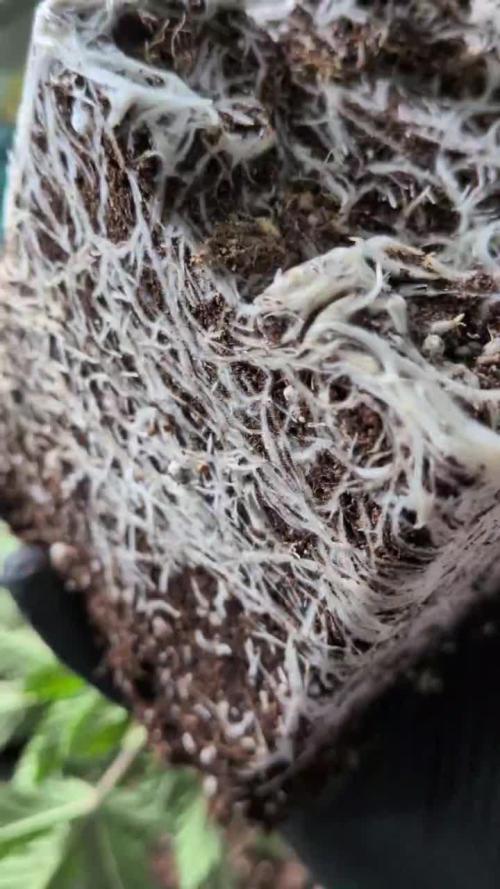
Transplanted 4x Jealousy into 18L pots of livingsoil with 4-3-4 and some Charge. Myco psycho for the roots and watered with microbes and mono silicic acid approx 500ml each 😇
Mammoth lighting has hooked you guys up with a 5% discount code which will help me massively. Use code : KEYOG at checkout on the official Mammoth website. Stock worldwide with warehouses USA/EU etc so fast discret shipping. Also they sponsor legal operations and even offer loans of upto 500k for medical investments so if your legal facility could do with a future proof upgrade then consider Mammoth lighting. Made by professionals for the geeks and freaks of nature 😇

Likes
1
Share

@UKPurplePunch
Follow
Half way through week 4 happy with the Progress so far also havnt come into any problems yet!
Follow my Instagram @ukpurplepunch for any other pictures/videos on this purple punch run

Likes
2
Share

@wolfvb
Follow
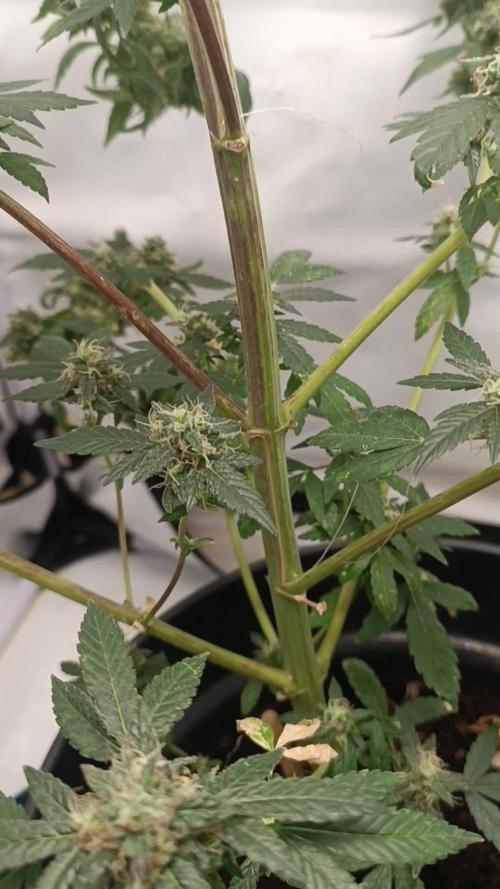
So our last week started, she is looking nice and ready and she is gaining weight.
I love the pink hints on it she looks very beautiful 😍 ❤️
Can't wait to try it out.
Hopefully she is as delicious as she looks 💦
24.11.25
So today I maxed some small amounts of char by rubbing here a bit as the tircomes are still clear so I decided to add some extra food and maybe stress here a bit. To make it grow more tircomes hopefully 😅
And Manged to up the humidity by closing the windows in the room, not much and I have to run the fan at the lowest!
German growers how it's for you ?
I feel the winter is abit dry.
Likes
4
Share


@Nofeckingclue79
Follow
I don't think I got as much weed as I did last time I grew this strain but still very happy with the outcome

Likes
46
Share


@Dreadnug
Follow
Two phenotypes - one purple and one white/green. The purple was very difficult to train and resulted in a couple inadvertent breaks - luckily it was repairable. The other trained very well, very flexible and worked very good for SCROG. Both produced heavily and are beautiful. The purple tends to be much more fluffy, with very long pistil hairs - the longest of any grow I have done. The white was super dense, very crystally and sticky. It will be very interesting to see how they smoke. Also, the purple tended to do very well with some nute mistakes I made as well as fluctuating pH in my water feeding. The white did not do as well in this regard but was able to get to harvest fine.
Wet bud weight is prior to trimming. The buds off of these plants were HUGE!!!!
Plant #1: (Purple): Wet weight - 76.58oz prior to trim; 15 colas; Terps: White - 60%, Clear - 20%, Amber - 20%
Plant #2: (White): Wet weight - 71.65oz prior to trim; 16 colas; Terps: White - 70%, Clear - 30%,
After 3 days of drying, took them down to trim for my jars.
After a few hours filled mostly quart jars 3/4 full but also tried an Infinity jar and a gallon mason jar to minimize the number of smaller jars.
Dry weights into jars:
Plant #1: 14.79 oz
Plant #2: 11.76oz
I did pull them after a day to dry rack them for 12 hours due to a little bit higher moisture content then I would have liked ( 70%rH). Re-jarred on 6/1/23 and now holding steady at around 60% rH.
Cure Check In (Week 2): 6/10 - 6/12/23: rH ~ 63 - 66%. Daily air exposure & fanning. Very smelly. Looking good - another couple weeks and will be ready.

Likes
5
Share


@ReggaeShark_420
Follow
And we hit week 6 of flowering for the dirty banana. She is healthy and suuper frosty. Just waiting for the buds to get more dense. Still a lot of pistols shooting and the temps will stay constant to let this girl put up some weight. The smell from this banana is soo strong and sticky, a massive mission just the defoliate this girl. Happy how she is performing, will be pushing her with the nutes

Likes
Comments
Share


@Phenophilgrow
Follow
In the second Week i started to give them a few nutrients. Maybe a bit too much, as you See in the last 2 Videos.
Since its very cold (-5°C) in Germany i've put a heating cable losely around the pots to Heat Up the soil a bit.

Likes
36
Share


@Lordshiva83
Follow
Olá companheiros de cultivo, estamos quase na colheita, meti as meninas na rua para apanharem mais frio e tem menos duas horas de luz (10horas), vou deixá-las mais uma semana na rua sem regar, antes da colheita, para obter mais cristais 😉, a Gelato#33 fast está muito gorda e tem um cheiro forte a gelado de limão com terra, a Purple Punch tem um cheiro delicioso a tarte de maçã com baunilha e um toque cítrico, muito bom mesmo, estou a adorar.


Likes
7
Share


@AsNoriu
Follow
Day 78. Humidity keeps very high, all fans on max, extraction exhaust is on 70%.
Day 83. Found maybe WPM on one plant, so now all air movement on max of all maxes ;))))
Happy Growing !!!
