


Likes
Comments
Share

@Weedman268
Follow
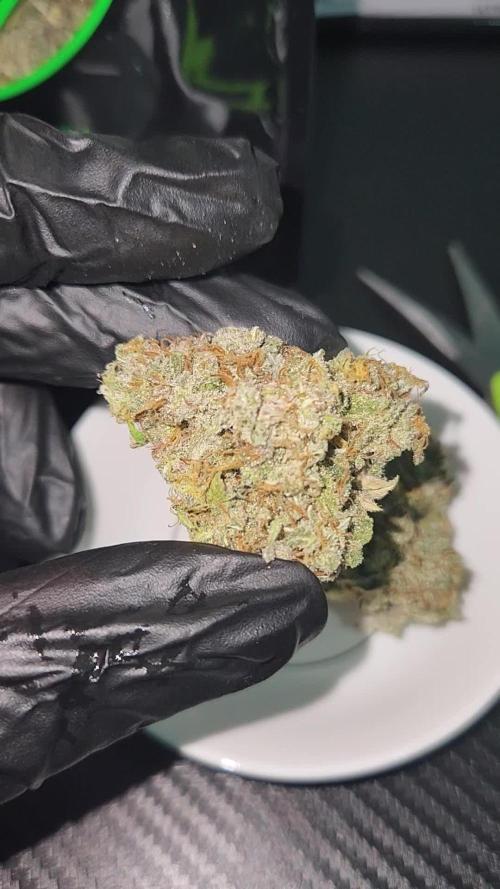
Lol it was a free seed,turn out nice,smells beautiful but flowering was so long should have filled my tent with other strains, oh well..

Likes
2
Share

@Avengergreen
Follow
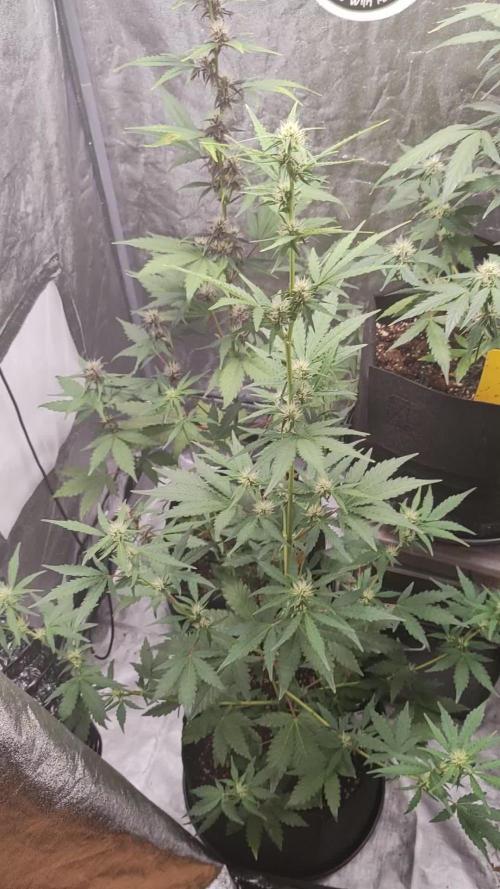
I am starting the third week of flowering. This week I will slightly increase the dose of fertilizers per flower. The plants are responding to the nutrients very well, which can be seen as the flower buds are becoming denser every day.


Likes
10
Share


@Gardener_of_Goodness
Follow
Not actually much to report here! Some slight bleaching to the main colas and clearly the leaves are being sucked dry of thier nutrients despite my feeding.
Clear indication of her finishing up now, slowly the frost is appearing and the stank Fast Buds warns us all about is very much apparent! 😁 a beautiful smell to be welcomed to when ever I’m inspecting!
I’ll give her water after her final feed today of nutrients, next week should be harvest week looking at the trichomes current maturity and pace of development.
See you all next week with some much anticipated pics and smells! ✌️👊👍 stay safe and stay growing guys and gals! Much love as always 🙌🙂
Likes
Comments
Share


@Stecl
Follow
hätte den Pflanzen 1 Woche mehr Zeit geben sollen für das reifen der Trichome

Likes
7
Share


@Smokeitup091191
Follow
This week has gone fine no problems to report buds are starting to bulk slightly and trichomes are present!! The smell is delightful once again only slight but I’m getting hints of orange and cream with like a sour/fizzy smell 😎👌🏽
Likes
Comments
Share


@CentralCoastGenetic
Follow
A week later we could see some progress all 6 have sprouted and looking nice . Hitting them with some nutrients next week ..🤙🏽
Likes
51
Share


@gottagrowsometime
Follow
Was harvested whole. Roots and all. Got a much better pheno this time with the addition of the IR/UV 45 it made for a great impact on the resin. At the moment, she's 6 days drying. Prob 4 more to go.
Really happy with how she's drying. Will fully Trim soon before the sugar leafs dry into the bud. She is about half way through process.
Will update on weight and true smoke report..
The taste I have had, was really nice. But quick air dried bud, is no where near the taste of properly dried bud in a good environment 16-19c "should be kept at a max of 18. It only goes beyond that for a few hours during the day. She's at a RH between 55-62%.

Likes
3
Share


@macrocefalo
Follow
We arrived in the third week the plants show good vigor and growth. Some cold days 17 Cº may have prevented further growth but we do not have to complain the plants demonstrate to be enjoying food and light. On the 15th the plants presented slightly wilted leaves as day 16 was the day of watering I imagined it was thirsty. But day 16 a few hours after watering the plant still had the same symptoms so I realized that the LED screen was 53 cm from the plant. I increased the distance to 65cm and the plant returned to normal both in force and I managed to correct the diagnosis. I am managing to apprehend some things finally putting into practice.
Likes
5
Share


Likes
50
Share


@DogDoctorOfficial
Follow
Eternity Grow Cup - Week 9 Veg Update
We are stepping into Week 9 of vegetation, and things are getting exciting! The plants are thriving—compact, bushy, and growing beautifully. This week, we introduced a SCROG (Screen of Green) net, an essential tool for maximizing yield and optimizing plant structure. Let’s dive deep into the why and how of scrogging:
Why Install a SCROG Net Now?
Maximizes Light Exposure: The net allows even light distribution across all branches, ensuring every bud site gets the optimal amount of light.
Controls Plant Height: By guiding the branches through the net, we keep the canopy even and prevent excessive vertical growth.
Enhances Airflow & Reduces Mold Risks: Spreading the plant out increases air circulation, reducing humidity pockets and minimizing risks of mold and pests.
Increases Yield: More bud sites exposed to light mean higher-quality flowers and greater overall production.
For now, we’re still not using the under-canopy lights, though they will come into play soon. The ICL 300 is positioned strategically, and we will likely move them around as needed later. For now, the focus is on structuring the plants and ensuring they fill out the available space properly.
Optimizing Airflow - The Vortex Effect
Air circulation is crucial for plant health, and this week, we’ve optimized airflow by positioning the fans to create a vortex effect:
Fan Positioning: Each fan is placed at the tent corners, pointing in different directions, ensuring dynamic airflow instead of direct wind hitting the plants.
Benefits of a Vortex System:
Reduces hot spots and evenly distributes CO₂.
Strengthens stems by creating a natural resistance.
Prevents stagnant air, reducing mold and pest risks.
The extraction system is powered by an AeroFan, connected to the AeroFan Smart Remote FRC1, currently running at 60% speed. This setup efficiently manages humidity and temperature while maintaining optimal air exchange.
Current Environmental Conditions & Feeding
For now, we’re maintaining the same water schedule and nutrient regimen. The environmental conditions remain stable:
Temperature: Holding steady at ideal growth levels.
Relative Humidity: Balanced to encourage healthy transpiration.
PPFD (Photosynthetic Photon Flux Density): Kept at optimal levels to support vigorous vegetative growth.
CO₂ Levels: Elevated but within safe limits, promoting faster growth.
The plants are filling the space beautifully, but we know that the flip to flower is approaching soon! The next phase will depend on how fast they continue to spread, and adjustments will be made accordingly.
Closing Thoughts & What’s Next?
This week was all about structural optimization—ensuring proper airflow, training the plants with the SCROG net, and keeping everything in balance before the transition to flower. The upcoming weeks will be crucial, as we fine-tune the environment, possibly introduce the under-canopy lighting, and prepare for the flowering stage.
A huge thank you to our sponsors Aptus Holland, TrolMaster, CannaKan, Grove Bags, Ziggi Papers, and of course, Zamnesia, Plagron, and Grow Diaries for making the Eternity Cup possible. And to our incredible community—followers, supporters, and even the critics—we appreciate every single one of you!
Stay tuned for next week’s update, and don’t forget to follow along on YouTube and Instagram for exclusive content and behind-the-scenes looks! See you soon, and happy growing!
Let’s keep pushing forward, and best of luck to all the competitors—we’re all growing something incredible together. Until next time!
Genetics - Runtz https://www.zamnesia.com/6000-zamnesia-seeds-runtz-feminized.html
Nutrients - Plagron https://plagron.com/en/hobby
- Aptus Holland https://aptus-holland.com/
Controls - Trol Master https://www.trolmaster.eu/
LED - https://www.futureofgrow.com/en
LED - https://www.thinkgrowled.com
Soil - https://www.promixgardening.com/en
Germination - Cannakan https://cannakan.com/?srsltid=AfmBOopXr-inLXajXu3QFgKXCXXos4F1oEvScjMKIB5MR5dk8-GJ-F49
DOGDOCTOR 15% off
Smoking Papers - https://ziggioriginal.com/
Terpene saver - https://grovebags.com/
As always thank you all for stopping by, for the love and for it all , this journey of mine wold just not be the same without you guys, the love and support is very much appreciloved and i fell honored with you all in my life
With true love comes happiness Always believe in your self and always do things expecting nothing and with an open heart , be a giver and the universe will give back to you in ways you could not even imagine so
As always, this is shared for educational purposes, aiming to spread understanding and appreciation for this plant. The journey with nature is one of discovery, creativity, and respect. Let’s celebrate it responsibly and continue to learn and grow together!
Growers Love To you All 💚
#EternityGrowCup #RuntzHunt #GrowersLove #CannabisCommunity #AptusHolland #ProMixSoil #TrolMaster #Zamnesia #Plagron #ZiggiPapers #Grovebags
Likes
12
Share


@Socal6pak
Follow
preflower now. but branches not really growing out. 2 LST 1 NT. NOT REALLY BIG PLANTS FOR ME. PERHAPS NOT OPTIMAL CONDITIONS IN MY YARD.
Likes
13
Share


@Oyziphar
Follow
This week wasn't as bad as last week 😊 Nights were cold 😰, but not to much rain 😿 and a few hours of sun 😍
Temperatures in the greenhouse were medium : during the day 20°C 💀; min temp 3.5°C ; max temp 31,7°C 😤
Cookies Gelato has turned completely purple 👍👍👍
I defoliated the plants 😙 and had to remove budrot (especially in the Cookies Gelatoes)😨
I took the prettiest Cookies Gelato outside for a photo session in my garden 😍
Probably these will be the last pictures of the plans, before harvesting ! 👍😄
Likes
21
Share


@BB_US
Follow
The ladies are coming along very nice. I had to defoiliate them once cause they blew up and I needed the lower branches to get the light. Now it's time to start training these girls. Some but not all will be trained. I'm so pleased with the outcome so far. The banana blaze is super easy to grow as well as the Colorado Cookies. They are on their stretch mode now. Let's see what next brings me. 🌿💚🍌🍪💭

Likes
Comments
Share


@Rare_Terps_5280
Follow
Another week and great growth, expanded nutrient regiments with bat quano and bio-fish. Rode out some big storms this week as well. Shes big, she's bad, hope this trend keeps goin.

Processing
Likes
7
Share


@winn420
Follow
ok so its been about another 2-3 weeks flowering is going well ive added 2 top feeds of down to earth flower and rose mix 3 tbsp to each the auto and the veg 2tbs to mother clones and an a half feed few days back.
cuts this round were signifcantly stronger, and longer. Well for the Gorilla Zkittlez, the Og is very slow in the vegative and i took 3, fairly larger clones, a bit too large for the propagation dome so they're cramped.I soaked the rapid rooting pods in a light compost tea to experiment ( ideas from youtube).
Planted a total of 7 more seeds due to unsuccessful cloning and desire to explore variety, 'tis the spice of life,
1 x Auto colorado cookies
1 x og kush
3 x amherst sour diesel
3 x skywalker ghost (emerald seeds)
new dairy coming from them after a solid week or 2 of steady growth

Likes
10
Share

@Black_Widow
Follow
Привет садоводы !!!
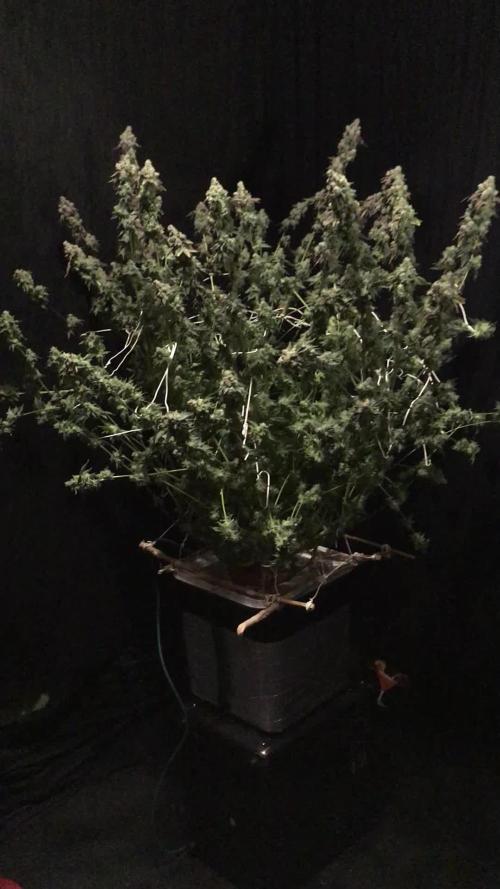
Вот и закончилась эта история Strawberry Chemdawg OG
И закончилась она просто великолепно
Сорт просто супер
Красавица опять выросла
шишки тяжелые и твердые как камень
все покрыты обильно смолой
судя по предыдущим опытам ,получилось не мало
сорт отличный
Создателям SSSC заслуженный поклон !
Всем спасибо кто следил за этой историей !

Likes
55
Share


@wolfvb
Follow
Smoke Report: man this girl was so sweet I loved her more than her sister this one test more like the Resin I pressed from her sister same flavor profile, smooth sweet and a bit of spicy, enjoyed growing here and smoking her so much that I all most forgot to finish the diary I just smoke her up jar after another 😅
Likes
46
Share


@MrJones
Follow
OSS Sherbet Moonrocks
🔹⊱╮🔹╰⊰🔹 GROW Started 03.10.24 INFORMATION 🔹╰⊰´🔹⊱╮🔹
🌞Environment - Maintaining 80F and 65%Humidity
🌾Training - The girls are recovering from last week's Pruning and Defoliation,
⚱️2-Gallon 📊6.2 PH
💧 Feeding - Using Horti Bloom and Horti Cal 12-0-0
🌞Medic Grow Smart 8 760 Watts
🕷️ IPM - CannControl from Mammoth and Mosquito Bits as needed
🔹⊱╮🔹╰⊰🔹 PLANT UPDATES 🔹╰⊰´🔹⊱╮🔹
📝 Notes - I am still not getting the vertical growth that I want before I flip, so I changed my light cycle to 18/6 and will be doing another defoliation and pruning of a few side branching - remember, I am looking for tall plants with little horizontal growth.
Fertigation injects fertilizers into an irrigation system to supply dissolved nutrients to crops.
🗓️04.20.24 Today, I flipped the ladies into flower. I Have let them veg out as much as I feel the grow space can handle. I am sure there will be a bit of pruning and super cropping in the near future. These girls will grow untouched other than the 2x daily fertilization, but I am switching out the Horti-Grow with the Horti-Bloom, feeding at Hort-Bloom @ 2.7 GRMS Per Gal and Horti-Cal @ 2.5 GRMS Per Gal.
🗓️04.21.24 Today fed with Hort-Bloom @ 2.7 GRMS Per Gal, and Horti-Cal @ 2.5 GRMS Per Gal.
🗓️04.22.24 Today fed with Hort-Bloom @ 2.7 GRMS Per Gal, and Horti-Cal @ 2.5 GRMS Per Gal.
🗓️04.23.24 Today fed with Hort-Bloom @ 2.7 GRMS Per Gal, and Horti-Cal @ 2.5 GRMS Per Gal.
🗓️04.24.24 Today fed with Hort-Bloom @ 2.7 GRMS Per Gal, and Horti-Cal @ 2.5 GRMS Per Gal.
🗓️04.25.24 Today fed with Hort-Bloom @ 2.7 GRMS Per Gal, and Horti-Cal @ 2.5 GRMS Per Gal.
🗓️04.26.24 Today fed with Hort-Bloom @ 2.7 GRMS Per Gal, and Horti-Cal @ 2.5 GRMS Per Gal.
╰⊰🔹╰⊰´🔹⊱╮🔹╰⊰🔹╰⊰🔹STRAIN INFORMATION🔹⊱╮🔹╰⊰🔹╰⊰🔹╰⊰🔹⊱╮
Introducing our latest powerhouse, Sherbet Moonrocks, one of our strongest weed strains to date, setting a new bar for potency and effect. A combination of US genetics, Sherbet Cake, and Purple Moonbow create this potent sedative with THC levels above 30% that will take you to celestial bliss.
An exquisite terpene profile offers a tempting treat of sensational fruity tastes, flavors, and aromas that will seduce your mind and body and take you to a serene place of pure tranquility. Ocimene, Caryophyllene, and Limonene are the predominant terpenes; they produce an incredible array of sugary berry fruit flavors with floral hints and spicy undertones.
Growing these feminized seeds is effortless and straightforward regardless of your growing skills, and at harvest time, you will be generously rewarded. Plants will mature to a manageable height with a flowering period of 65 - 70 days and will develop thick, dense buds glossed in thick layers of THC resin crystals packed with indica power that will lure into a deep relaxation. Expect an indoor yield of 600 - 700 gr m2 and outdoor production of over 1 kilo per plant.

Likes
2
Share


@OldskoolHed
Follow
Love this strain and breeder, he is a Virginia based and local. Super easy to grow.
Likes
17
Share


@MoneyGrowup
Follow
Everything is pretty much the same this week the purple punch is doing up numbers, the zkittles is rite behind it with the gelato struggling. Already germinated some seeds for the summer grow hope the gelato grows better out doors
Likes
2
Share


@wavycannabis
Follow
Few days into flowering and the lower internal nodes are already stretching up through the trellis. Hope they keep stretching for another week before they start bulking up.