


Likes
Comments
Share

@Pechu420
Follow
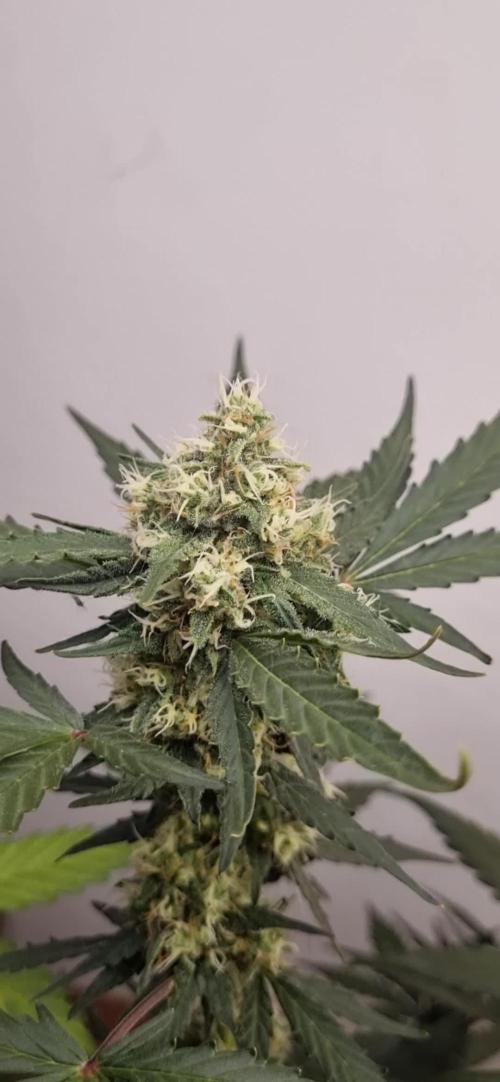
Ak4 is growing a lot, with lots of vibrant colors, and gaining a lot of weight.
Ak3 is the slowest of them all, the smallest, but it's gaining weight at its own pace and resining well.
12/12 from seedWatering with filtered tap water every 2/3 days, when the pot is lighter
Soil:
peat, coconut powder, perlite, carbonized rice husk, sheep manure and worm humus. essential mineral mix, vegetable flours, vegetable cakes, biochar, bokashi EM1 and other organic inputs, Algae ascophyllum nodosum
small pots 3,7liters // 1gallon
light: lm301h-evo
120watts with other plants

Likes
38
Share


@kohlrabi
Follow
I almost despaired of getting my seeds to germinate after I moved house. Unfortunately, I seem to have stored them incorrectly during the move, so almost all of my auto seeds refused to germinate. But this single Mimosa Cake Auto from Fastbuds did manage it in only 2 days, and I'm very happy to be able to grow three plants at once after all. What a struggle!
Because I was given a pretty olla (a clay pot that you bury in the ground), I'm going to try it out this time. Fertiliser cannot be added this way, but it should prevent the soil from drying out.
In this grow, I used my usual nutrients from Greenbuzz-Nutrients, which I received as a sponsorship over a year ago. Time to use them up!
As a substrate, I used the peat-free Lightmix from T.A. again. It is cheaper than alternatives with peat and better for the environment, so I recommend everyone to give it a try.
Likes
Comments
Share


@gr3g4l
Follow
Esta semana una poda de Apicales dejando cuatro nudos de los cuales dos irán fuera. La idea es dejar dos nudos y volver a podar los apicales y repetir una vez mas.

Likes
20
Share


@MOSS_FIGURE
Follow
I closed a light 2 days. It gonna be flower but this week I'll re-veg a plant.
I change a pot to 10 gallons and use great white(mycorhizae) and Mag Xtra from Sensi cal(cal-mag).
Likes
22
Share


@GreenLiving
Follow
I think I planted a little early as the tap root was only just about 1/4 of an inch. I have my lights and fans on to test my environment but I don’t think they’re needed until some green growth appears. The Great White Mycorrhizae I am hoping will help with root growth in the early stages of vegetation.
Likes
93
Share


@MrJones
Follow
🔹🔹🔹🔹🔹🔹WEEKLY GOALS🔹🔹🔹🔹🔹🔹
🌞Environment - 75/80℉ and 65/75% Humidity
💧 Feeding - Using "Super Coco" amended soil. compost teas, Dechlorinated H20 PH/6.5 Fish Fertilizer, about 4 ounces of water per day.
🍃Training /
🕷️ IPM - Will be using Green Cleaner" 1 OZ per Gallon, and CannControl from Mammoth alternating between product each month for Integrated Pest Management.
💡Mars Hydro FC 4800 / 480W Led Grow Light - "Instagram: MarsHydro_Aliexpress"💡
🔹🔹🔹🔹🔹🔹🔹🔹🔹🔹🔹🔹🔹🔹🔹🔹🔹🔹
Rambling - So far these Shockwave F2 Cultivars are doing just fine and starting to stretch up and grow out, these are my first regular seeds, so I have decided to let them go until they are about 5 inches high and flower them right in these 1-gallon pots, sex them and remove the males and see what I can get out of them, I have more seeds that I want to get going so I am going to rush this grow, so let's see what I can push out of these lady's!
🔹🔹🔹🔹🔹🔹🔹🔹🔹🔹🔹🔹🔹🔹🔹🔹🔹🔹
▶️Sunday 11.15.20 / Watered with Dechlorinated H20 PH/6.5 (Dead Easy Soil!), these plants are growing fast and furious can't wait until I can find the males and move on!
▶️Monday 11.16.20 / Watered with Dechlorinated H20 PH/6.5
▶️Tuesday 11.17.20 / Watered with Dechlorinated H20 PH/6.5, hard to believe that on Sunday I stripped all the fan leaves of these plants, and 2 days later they look bushier and just amazing! I still need to sex these plants just not sure how or when!
▶️Wednesday 11.18.20 / Today I decided not to water the pots feel nice and wet, tomorrow I will do a recharge feeding, these girls are just bushing out nicely!
▶️Thursday 11.19.20 / Watered with Dechlorinated H20 PH/6.5
▶️Friday 11.20.20 / Watered with Dechlorinated H20 PH/6.5
▶️Saturday 11.21.20 / Watered with Dechlorinated H20 PH/6.5


Likes
1
Share


@Ultraviolet_
Follow
Turned off IR @ nights
Red wigglers (Eisenia fetida) are highly beneficial. They are considered an ideal choice for "no-till" or container-based organic growing because they live in the upper layers of soil, feeding on organic mulch rather than the plant's root system. Red wigglers accelerate the breakdown of organic amendments and produce high-quality, nutrient-dense worm castings directly in the root zone. Clover is another exceptional component of an organic rhizosphere, offering a sustainable, self-sustaining alternative to synthetic nitrogen fertilizers produced via the energy-intensive Haber-Bosch process. By forming a symbiotic relationship with Rhizobia bacteria, clover converts atmospheric nitrogen N2 into ammonium NH4, providing a steady, slow-release nutrient source that enhances soil health and reduces environmental impacts. Red clover offers superior nitrogen fixation and biomass production compared to white or yellow clover, making it the premier choice for maximum soil vitality, particularly for improving soil structure and providing a high-volume nitrogen credit for subsequent crops.
If it is fully functional and efficient soil, the rhizophagy cycle is far superior long-term than any synthetic delivery when it comes to preventing deficiencies, not because it's "better," per se. The medium will require a very high CEC to make it to harvest without re-fertilization. The rhizosphere acts as a dynamic, interactive exchange where plants and soil microbes trade resources based on immediate needs. When a plant lacks a specific nutrient, it changes its physiology and releases specialized chemical cocktails—root exudates—into the surrounding soil. These exudates, which include sugars, amino acids, and organic acids, serve as a "shopping list" to attract specific microorganisms, which in turn return higher levels of desired nutrients. There is nothing in comparison to synthetic delivery, which causes plants to stop producing exudates, effectively "starving" the beneficial soil life, over time turning the soil barren and void of microbial life. Responsible use, applying the right amount at the right time, can minimize these negative effects. Relying solely on synthetic fertilizers without replenishing organic matter is what typically leads to exhausted soil. The use of synthetic fertilizers can utilize the Cation Exchange Capacity (CEC) of the soil, but without a robust rhizosphere and active microorganisms, the efficiency of this process is significantly reduced. This makes synthetic growing more difficult to prevent deficiencies overall compared to an efficient organic living soil with a robust rhizophagy cycle, as there is no "one size, fits all" when it comes to different nutrient profiles of strains/genetics, making it trickier to "guess" and prevent creeping deficiencies.
CEC does not contribute towards EC. Add more CEC using biochar, problem solved. If you keep pH between 6.3 and 6.7, hydrogen is exudated to cycle the medium's CEC for its needs. Keeping the pH between 6.3 and 6.7 creates an environment where plants release H+ to displace positively charged nutrients (like Ca2+, Mg2+, K+ held on soil particles or within artificial media this cycle through nutrients via the medium's Cation Exchange Capacity (CEC)
Microorganisms generate a stable potential of approximately 0.5 V EC. The rhizosphere creates its own food, similarly to chelation, using 1000's of varying combinations to create its own food.
Start to finish, just add water. Eventually, more materials will need to be added at the beginning of each new grow, but very attainable to go from seed to harvest without ever fertilizing, regenerative cultivation.
ATP is king above all else when it comes to biomass accumulation. Cellular root respiration and cellular respiration are essentially the same biological process, the breakdown of glucose to create usable energy (ATP) in the presence of oxygen, just taking place in different parts of the plant. Synthetic (salt-based) grows have significantly lower levels of total rhizosphere respiration, often referred to as root-zone activity, compared to organic living soil grows. While the plant roots themselves may respire in both systems, the surrounding soil ecosystem in a living soil setup is vastly more active, teeming with bacteria, fungi, and beneficial microorganisms.
2 pools of ATP, it won't double in growth buuuut, but improving root respiration by ensuring high oxygen in the soil is crucial. Good aeration ensures roots can fully utilize glucose to generate the ATP necessary for nutrient uptake, leading to healthier and more productive plants, even if growth isn't exactly doubled. The ATP created using root respiration is dedicated to rootzone growth; the ATP created using regular cellular respiration in a synthetic system would have to dedicate a lot of ATP to the roots when there is little or no root respiration. It's true that there is less of an initial ATP cost in breakdown when nutrients are already in their final form (synthetic), but you lose a solid chunk of ATP when the entire plant is reliant on cellular respiration alone; a large portion of ATP is dedicated to root zones for "forced" (active) nutrient uptake. Making it overall less efficient, even if the initial cost of breakdown is higher. If that makes sense. Oxygen is of critical importance when growing in living soil compared to synthetic methods because it supports the metabolic needs of the microbial, fungal, and insect ecosystem, rather than just the root respiration required by the plant itself. While synthetic grows can survive in lower-oxygen environments with precise mineral feeding, living soil systems rely on aerobic microbes to decompose organic matter (microbial mineralization) to create plant-available nutrients, which is an oxygen-intensive process. While a specific fair percentage is difficult to guess, my experience points to a massive, compound difference between the two methods and the amount of oxygen required. All the ATP spared is used on more biomass, not only that, but the extra root respiration can achieve a much higher CO2 compensation point naturally than you could with synthetic and atmospheric CO2 alone.
As a plant grows faster and increases in size, its demand for nutrients to support that growth increases, requiring a higher rate of nutrient uptake. As plants enter phases of rapid vegetative/floral growth, their metabolic demand for nutrients increases exponentially. Without a robust buffer zone—whether in the soil (cation exchange capacity) or in a hydroponic reservoir—deficiencies will occur rapidly because the instantaneous demand for specific nutrients can quickly exceed the rate of supply.
A growing body of evidence suggests that organic living soil provides superior long-term soil health and environmental benefits compared to synthetic fertilizers, which are often criticized for promoting a cycle of dependency and degradation. While synthetic fertilizers offer short-term convenience and high yields, they often come at the expense of long-term soil health, sustainability, and increased corporate control over growers/ farmers. Organic living soil, while slower and requiring more care to establish, creates a sustainable, resilient, and, ultimately, more fertile environment.
We don't grow; we facilitate energy conversions.
Once all water is removed, approximately 95% to 97% of a plant’s dry matter consists of carbon, oxygen, and hydrogen. These three elements form the structural backbone of all plants. Corporate interest sells you the other 3-5% NPK & all the rest in RATIOS! Why not throw the 3-5% in a pot, and focus your energy on the other 95-97%?
Indigenous Amazonians created, or at least significantly enhanced, the fertile, dark soil known as Terra Preta de Índio (Portuguese for "Indian Black Earth") by incorporating biochar and other organic materials into the soil. This anthropogenic (human-made) soil technique, which dates back roughly 2,500 to 8,000 years, allowed ancient civilizations to flourish in regions with naturally poor, acidic, and nutrient-poor tropical soils.

Likes
8
Share


@cannacat777
Follow
8/26 - sporty looking great, praying hard! Posh is working on it. But look who finally showed up to the party! I’m calling her Baby spice. She sprouted 12 days after going in the soil. Way to be a fighter girl!
This is going to be a tricky thing to manage I feel like my gals are tracking a week apart. I’ll keep this journal’s timeline on sporty spice. -1 week for posh and -2 weeks for baby spice. spice girls let’s grooooow!
8/30 - exactly two weeks from sprout for Sporty and Posh. Pretty wild how big a difference there is between the two. Baby is getting her footing. Now.
Sporty already pushing 4-5 nodes and I saw a tiny root through the drain hole. Wanted to pot her up! About 8 cups pro mix, one cup perlite. About 1.5 tbs of Gaia green 4-4-4, some worm castings and sprinkled mycorrhiza around where the rootball would be. God speed girly!
9/3. Potted up Posh today. About a half gallon pro mix, plus about 1.5 tbsp of the Gaia green 4-4-4. Plus about a cup of worm castings, perlite, and mycorrhiza. Sporty is looking very happy, 5 nodes and counting. Added back my second light, let’s go girls!!!
9/5. Wrapping up week 2 here, so far I’ve been really impressed with the pro mix Gaia green and soil support so far. The girls seem happy and healthy. See you in week 3!

Likes
91
Share


@Greenwolvesfarmer
Follow
Hicimos transplantes , y la verdad me retrasé en subir el seguimiento . Se ven preciosas , esperemos que el stress dels transplante y luces , sea favorable para que exploten de felicidad !
Ahora innovando y agradecidos con los kings de las luces ! mKleds apostando por un : 480w Samsung 3500k + epistar UV 660 IR ...
#greenwolvesfarmer #seguimientoMkled #loboXcultivo


Processing
Likes
54
Share


@BudXs
Follow
Solo cup challenge continues to press along. Not much change, plants are in veg, growing and healthy. Still a few weeks before the flowers start so I hope to get a bit of size going before it does. Having fun and really like looking at the other entries in this contest.
Check out WildeWeed, Butterstotch and BeanswithPork, silky, larimar, fireman

Likes
17
Share


@DimiTryCool
Follow
9 week
Smells excellent, sweetly and fruity.
Begin change color from green to rose .
Looks really wonderful.
Starting prepare for harvest.
Last nutrition at the end of this week.
Then flash
Likes
15
Share


Processing
Likes
45
Share


@SupaDank
Follow
End of day 41 flower and will be flushing both girls on day 42 flower. Overall the buds don’t seem as fat as it should be but hopefully during the flush they should gain some weight. I took a bunch of clones so those will be going to flower soon and now I have a better understanding of how to treat these girls during the flowering stage. Also popped two Blueberry seeds so I will have a journal on that soon.


Likes
2
Share


@PalmaGrow
Follow
Se realizó poda apical y de bajos preparándola pra transplante final
14 - 20 julio

Likes
71
Share


@Krisis
Follow
04/04/24. Going into week 3. The little ladies seem to be doing well. For a few days I dimmed the light to about 20-25% as I thought it was too much for 2 other babies (zoap) I have under it. Prior to that the node spacing was looking perfect. Now the orchids grew several inches taller and the node spacing looks huge. I’ve increased to 50% again. The stems have thickened up quite a bit since last week. I’ve tried to show it in video.
I haven’t given anything but the tea, which I will be giving again with their next watering. They have been getting about 500 ml dechlorinated every 3 days.
#1 has just been topped today at 5th node. I will do the same with #2 when she is there.
Other than that, just watching them grow and do their thing. 😍
Likes
14
Share

@pinknite
Follow
=============================
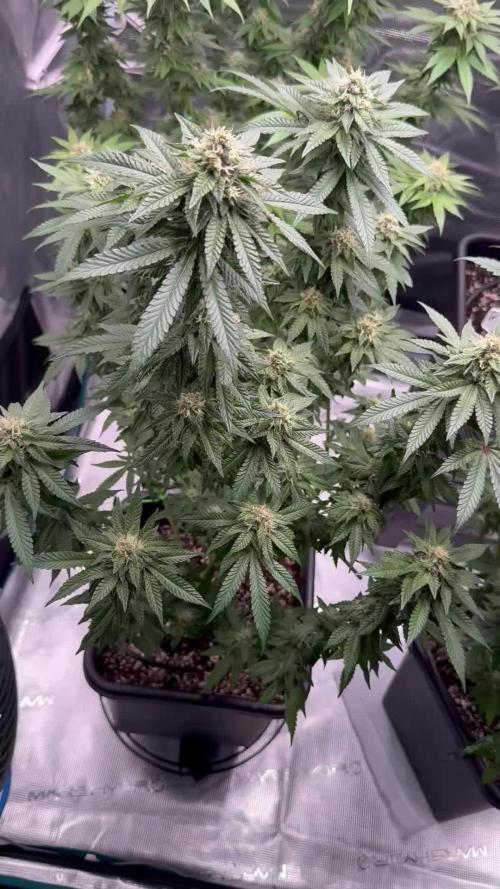
📅 Week 13 – Flowering
Days: 85–91
Dates: 03/07–09/07
Strains: RQS Critical (3x), RQS White Widow (1x)
Processing
Likes
11
Share


@BlumenBot
Follow
1/4 - fed 1gal distilled water, 6.0pH. Starting RAW nutes next feeding.
1/6 - first RAW feeding. Came out rather low ppm so I may double my feeding chart for flower. Everything else is looking good.
72.7*F
5.8pH
818 ppm
4g BLOOM
0.7g Phosphorus
0.75g Kelp
0.55g Cal/Mag
0.5g ominA
2g Microbes Bloom Stage
1.25g Amino Acids
0.25g Enzymes
1/7 - dropped the AC Infinity controller to level 2 as an experiment overnight to see how temps will rise in both compartments. Light is at about 900ppfd a few inches below the lowest tops
1/9 - no issues with fan speed at 2! RAW feeding tonight.
70.5*F
6.1pH
1390 ppm
8g BLOOM
0.96 Potassium
1.5g Kelp
0.25g Cal/Mag
4.2g Microbes Bloom Stage
1.25g Amino Acids
0.25g Enzymes
Also found a new way to mix my RAW nutrients without having them stick to the bottom...small landscaping pond pump! It gets the water moving nicely and I just drop the dry nutes in, mixes it for me and I can easily fine tune PH and test PPM without having to shake and take samples! Huge win.
1/10 - She's getting fatttttt!!! Long time to go but just sayin...my lady in veg needs at least 3 weeks so hopefully I'm not stepping on myself here soon!

Processing
Likes
22
Share


@Psicultivo
Follow
Esta semana fue generalmente bien, salvo por los intentos de supercropping (primer intento) en 5 apicales de los cuales 3 de ellos estan bien, me imagino el supercropping funciono bien, salvo en la de la Royal Gorilla que siento que la doble mucho que casi se rompe, pero no le paso nada menos mal jajaja.
La dosificacion nutritiva fue la misma de la semana pasada agregando 1 ml de top max junto con el riego de biobloom.
Hasta el momento todo bien. Saludos!!

