


Likes
Comments
Share

@KurtThePlantGuru
Follow
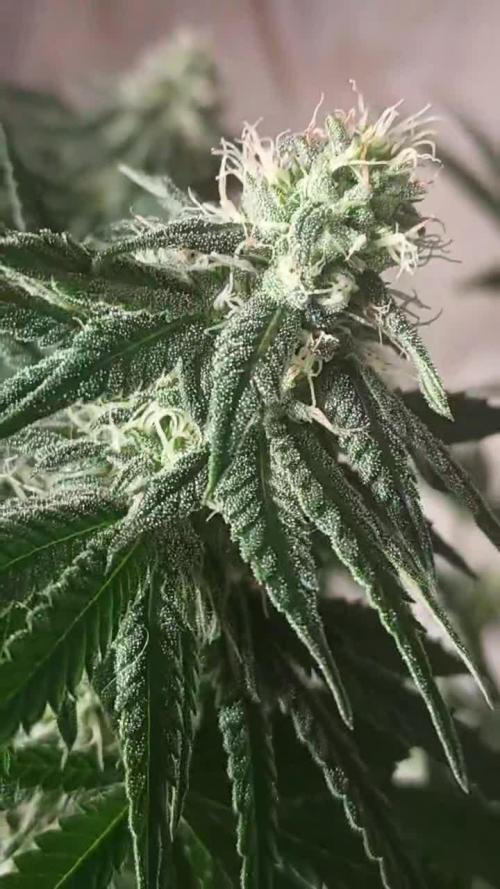
Buds are flowering up super nice! Had a tiny issue where I thought it was much worse then it was (I got sum water on the leaves and it burnt circle shaped burns on them) I worried it was a fungal disease or something. I removed the leaves in a panic, and since haven't had any issues!
Anyway the smell is amazing already I'm getting notes I really didn't expect to smell on a Superboof cross! Almost remiscent of Creature Feature or Acapulco Gold with a bit more gas! It is only week 4, so ideally the Terps should transform. I am loving it so far
The bud structure is looking amazing, the top nugs are almost spear shaped which is really cool, some of the buttom bugs are almost spear shaped as well but more circle/fat. Standard nug look. It's beginning to stack some frost on as well! I have a good idea the nugs are going to have a nice lumpy - spear shaped buds. Almost looks as if the tops are foxtailing which would be really cool too!
Amazing genetics. Every issue I've encountered has been so quickly corrected and bounced back. No herms, definently high grade genetics and I'm happy to be working with Homegrown Genetics to be able to post this seed to harvest and share with everyone!

Likes
142
Share


@MadeInGermany
Follow
Hi everyone 🤗.
The last 5 women are nearing their end 😍.
They will be harvested in the next 2-3 weeks.
The rest of the ones that have already been harvested are currently fermenting 😍.
The finished harvest pictures come when everyone is finished together 👍.
This ends the last diary that was kept with several varieties.
From now on only single strain diaries are coming, all individually ;-).
I wish you a nice week, stay healthy 🙏🏻 and let it grow 🌱


Likes
26
Share

@PedroAndHisPlants
Follow
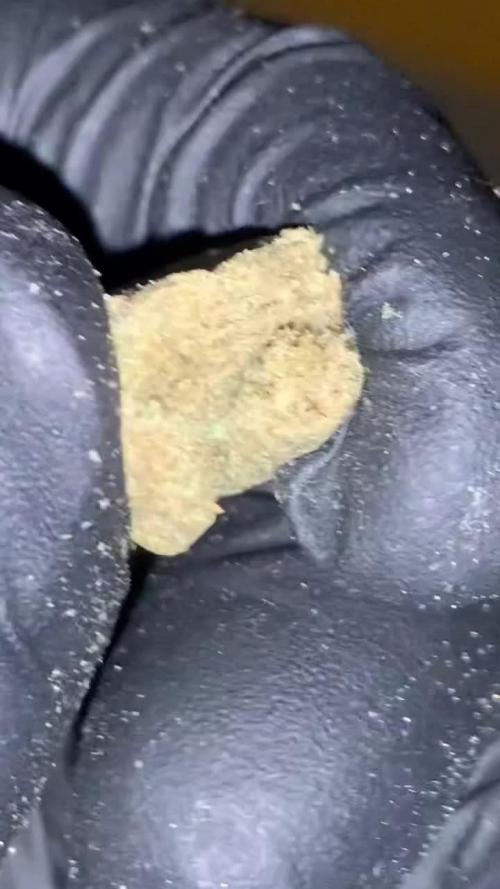
My first grow has been a great learning experience, and I couldn’t be happier with the results. From the reliable BioBizz soil and nutrients to the impressive performance of the Spider Farmer SF 1000, everything worked well together. Each component contributed to a successful harvest, and I’m excited to continue experimenting and improving my setup with new gear and techniques.
💚☀️🤙🏼

Processing
Likes
6
Share


@w00tGrow
Follow
Plant is growing good, put scrog a bit higher and waiting for its flowering, it has showed it's sex and hopefuly starts flowering at least after a week. HPS lamp is doing its job perfectly, can't wait to switch it to yelow Sodium.
Likes
2
Share


@NEPA-Cultivations
Follow
this was a homemade grow tent grow..i now have x2 Vivoson tents 3x3 and a 4x4


Likes
34
Share


@ElLocoDeLaHabitacion420
Follow
Alright! final thoughts I pulled 93.7gs I think I could have pulled more. Ill do a couple things different next time, better soil, maybe coco and better feeding schedule! I think I couldve fed her more with no problems! super strong strain! 100x100 recomended and ill definetly will get a higher tent and a better light for sure!0

Likes
Comments
Share

@RooftopFarmer
Follow
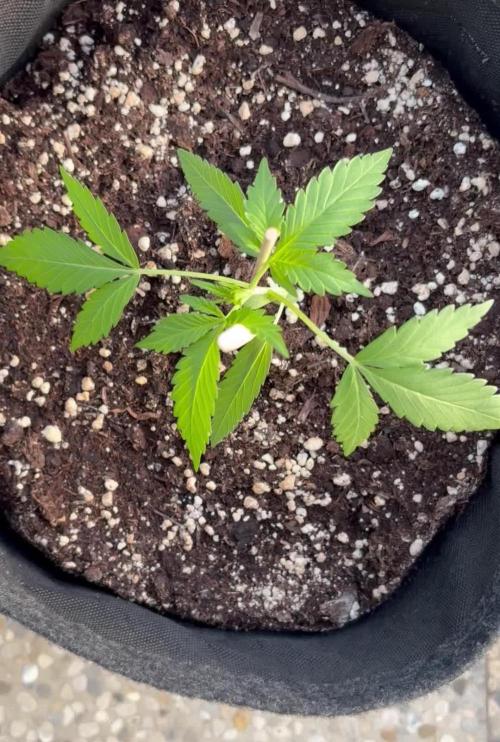
Guava Sundae – Week 4 (Fast Buds Outdoor 2026)
The weather has been fantastic again this week, so Guava Sundae is now 100% outdoors, day and night. She’s getting maximum sunlight and really seems to enjoy the full outdoor life.
As you can see in the pictures, she grew a bit crooked. I hope she straightens out soon. I used some simple sticks for support, but I’m still looking for a better long-term solution. She’s now around 7 cm tall with a beautiful vibrant green color.
I also gave her a light feeding of BioBizz Fish-Mix and BioBizz Calmag. I had deficiency issues last season, so I’m being proactive this time to keep her healthy. Any tips on how to straighten her out are very welcome!

Likes
11
Share


@Professor_Daank
Follow
Herrrrro gang! Welcome to another week of Daank's grow!
8/2: Brought back the Great White. I was reading that it works well in conjunction with other root excelurators, like Rapid Start. I got 2 more temp/humidity sensors for the tent. It allows me to keep track of 100% of what is really going on, I find it to take away worry (b/c temps are very important!). Today was a "eureka!" moment in terms of understanding run-off pH and it's value to telling the grower how healthy the plant is and what nutes may, or may not, be needed. I also got some new LED glasses so I don't burn my fucking corneas when tending to the garden - they are phenomenal and I suggest them if you grow with an LED. Check the videos and photos. Pistils are growing rapidly and baby budlets are starting to form. I'm actually getting a nice subtle purple color - it's very neat.
Today's run-off pH was 6.3, and I gave it 6.3 for water - so that's a good sign (I bounce the pH all around from 5.5-6.3). I'll keep track of this moving forward in the diary. Minor defoliation.
***Pro-Tip: If you're wondering what the run-off should be... around +.5/-.5 of what you put in is good. But this also might not mean anything... so many different opinions on the web.
****: My Spotify Playlist for my plants: https://open.spotify.com/playlist/0ydAFulbzDlqFr5WIZdfM1?si=r5M5H83BSQ6tOE5pk9Bg4Q
Day 38 - 8/4: Lil'budlet's are poppin' up all over. By the end of this week I assume we'll be in full swing.
Day 39: I have ordered new nutes, Advanced Nutrients. The reviews, photos, and research all point to using this for the best results. I found them to be a bit expensive, but if I can always get perfect pH values without much of a hassle... I'm down. They will be here by end of the week and I'll transition that over this weekend. I can't wait.
Day 40: 8/6 - Advanced Nutrient nutes arrive today. Watering will be a pleasure. The plants look great. The buds are real. Small smell. Trimmed last night quite a bit for bud production. They love George Gershwin's "Rhapsody in Blue". It perks 'em up.

Likes
9
Share


@NanoLeaf
Follow
Week 3 - Transplant to fabric pots
Transplanted the ladies in to 17L fabric pots.
Used GHF BioGrow and BioBloom in a 2:1 ratio 1g per L to unamended coco-perlite (70/30) mix with extra worm castings.
Turned the wattage up on my ballasts to 400W each.
The ladies have finally settled in their final pots and the are happy in their new environment.
I also performed LST by tucking fan leaves and softly pinching and bending some of the bud sites.

Likes
11
Share

@KnightRider
Follow
Hey Cannafam Happy Monday,
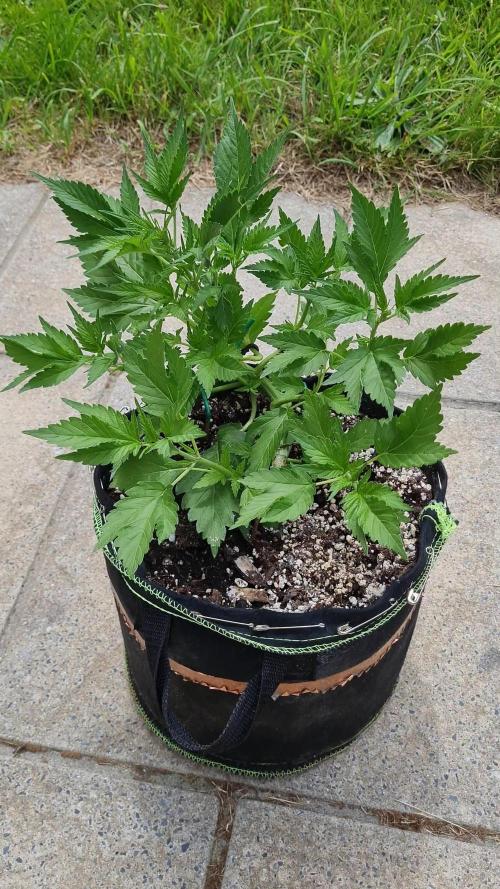
My Apricot gal has had a fairly good week overall, mainly due to a rare bout of very hot weather.
Its been absolutely scorchin, Monday and Tuesday 28c ,Wednesday and Thursday 30c with continuous Sun and average nighttime temps of 24c, Friday through to Sunday thing tapered of a bit down to 23c with Sunshine and clouds.We did also have a thunderstorm Thursday night ,but its been pretty solid on the weather front 😊
Daylight hours are currently at 16 hrs 22 minutes.
We are now in Flower and her first Pistils have appeared! 😊
Training has continued a bit each day and ive been guiding her branches away from the middle and trying to keep them fairly level with some more light defoliation There was one shoot which had grown from the underside of the plant which was struggling for light which has now been exposed.
All shoots have had really good growth this week and ive virtually got her in to the shape i want trying to give spacing for decent airflow in flower, but its a case of constant tweeking.
The leaf miner problem has now ceased but my other friends the slugs appeared after a thunderstorm thurday night and had a go a couple of the fan leaves. This occured after the rain had washed away the diamatous earth from around the pot and the copper tape dididnt work 😑 Ive therefor now decided to roll put some local ale in a beer trap for them to try as id rather they drink than eat, hopefully i can take lock the in beer jail!
Feed wise ive actually managed two feeds this week with the plagron n trace to help power that growth and il be flippin over to flower nutes next week. Although this gal has been attacked a bit shes coming along nicely and doin her Daddy proud 😁
Thats all from me for now, thanks for stopping by ✌️💚
Likes
91
Share


@GERGrowDesigns
Follow
Welcome Everyone,
You been just Invited to Take a Seat at the :
-Designers Club -
Special Thanks to John for hopping through my Messages to Join The SSSC/DP Photo Contest
So my part was to Create the "Designers Club".
Its a New Created Fast Version Strain from a Cooperation Between SuperSativaSeedClub and DutchPassion. The Club will Carry 3 of these Phenos .
Information we have About this Strain :
Fast Version B – Indica-Dominant (90%) | 7 weeks flowering | Fruity, Peppery, Sweet
The Project will be Supported from Narcos Nutriets to give the Strain the Perfect lifespan it could Deserve .
Light used for The Contest Grow :
Tenty Pro x4 200w in a space of
60x60 Homebox Ambiente Tent.
Quickly Reminder , this Diarie will be a Time Eater . If you Enjoy what you see just show it with Some Thoughts and Thumbs in the Weeks . I will Appreciate that.
Enough Talk from me , just Enjoy youre Seats and be a part of The Designers Club .
Good Luck to Everybody and Keep up Growing !
Likes
41
Share


@FrostyGardens
Follow
12/16/18
Start of week 8 of flower. At least one of the plants is more then 1 week out. The sativa leaner still has many white pistils. The frost queen is right on schedule. The runt will be processed into bubble hash. Secret Sara buds are getting huge and are quite mature as well. Hoping to see some yellowing off in next few day.
12/21/18
All 4 plants scoped out well. I saw very little clear trichomes. Also 1 of the plants has some amber trichomes as well. Also almost all pistils have changed color and curled in. I decided to start 36hrs of light deprivation, they are no longer getting water, and the temps are kept as low as possible.
Likes
112
Share


@PEAKYPLANTERS
Follow
Hello, all grower brothers and sisters!
After a long wait, we are finally ready to show you all the finish of this harvest!
I shared a lot of content for you and I hope you enjoy it..
The growth of these plants has all in all been quite simple .... in comparison .... what they have been able to give me back .... is something extremely RARE
Between one phenotype and another they each took on a different color....but all extremely potent! Tight, solid buds that overflow with resin 😬😋 Just how I like them!!
my work combined with the scrog technique paid off and these fantastic lights meant that even the lower buds got the light they deserved ,But all this would not have been possible if I hadn't had good nutrients with me to enrich the soil at the right point! All without ever checking the EC of the ground 😉
Stay updated
Processing
Likes
11
Share


@Grizzly
Follow
Starting to see trichomes develop, buds are fattening by the day. Video to end the week
Likes
20
Share




Likes
31
Share

@Diips
Follow
day 71 - 22/1/2026
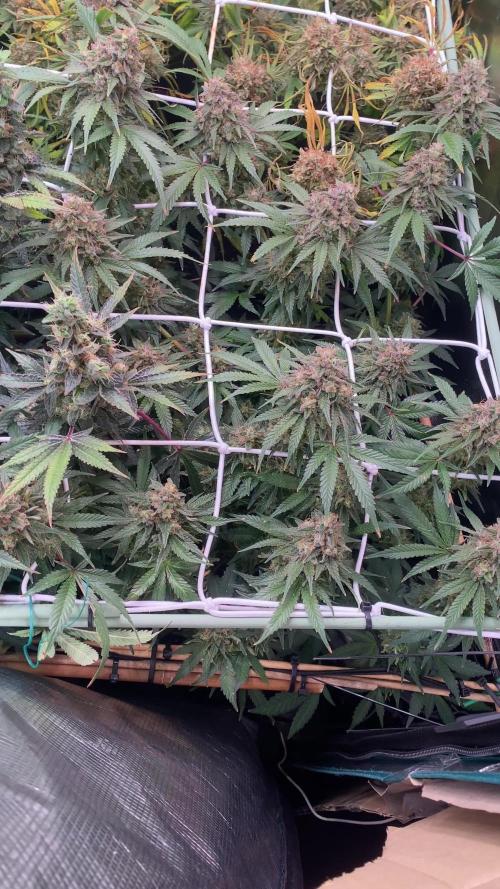
ive been too slow to water, and it shows, but luckily we are at the finish line, prepare for harvest

Likes
18
Share


@valiotoro
Follow
Hello everyone week 6 of flower has passed for this Strawberry Gorilla auto 🍓
For the feeding schedule i stopped feeding Power Roots and Pure Zym and started feeding Green Sensation 0,5/l
Spider Farmer SE7000 80%
have a great day and wish you all happy growing 😎👨🌾🏻
Processing
Likes
24
Share


@Saven
Follow
My first grow will be with an autoflower seed from Mephisto Genetics. The strain is Toof Decay. 😁 Planted seed on 06/08, sprouted on 06/12! I'll be documenting everything...including the mistakes. 😅

Likes
4
Share


@J_Law
Follow
you see 2 sunset sherbets in hydroponics, but then I decided to transplant one of them into potting soil for outdoors. 24 hours in 5.5ph room temperature water and then into the growth plug they go. i will be using BluePlanets organic 3-part FarmersPride, with many other goodies