Likes
Comments
Share
@Ashbash
Follow
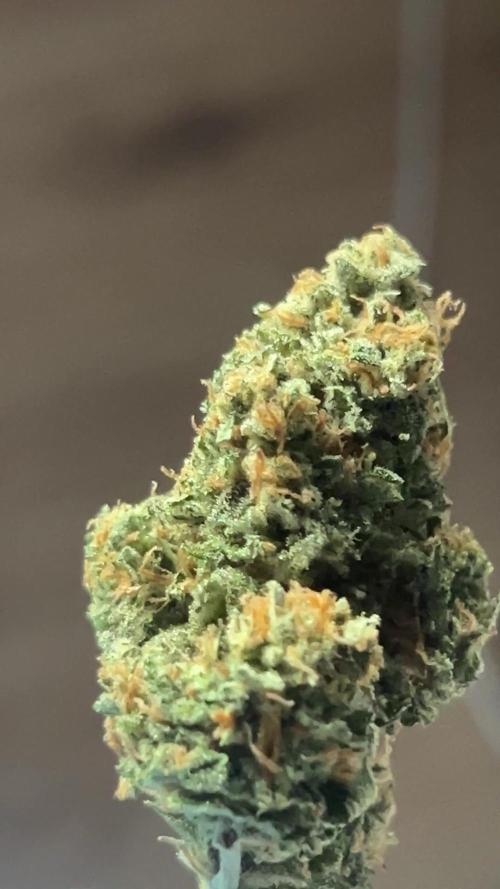
Holy. Shit. This is most likely gonna be my best plant up to this point Smell is unreal and hard to describe. Sweet and earthy but still different somehow. I think judging by the trichomes that it is largely ready to be pulled, so im going to do that over the next day or two. If anybody recommends I leave it please do say haha.

Likes
18
Share
@Cannaguy
Follow
Topped all 4 plants once they developed 4 nodes, will be training branches out this time to open up the middles of plants
Likes
2
Share
Day 28 I was away for 5 days and wow the growth... I'm sold on the auto-pots 😂 Shes a nice in-between of bushy/stretchy structure. No signs of preflowers yet.
Likes
3
Share
@Kushizlez
Follow
Day 54-64 (June 14th-24th) (Day 55) I got a good look at all of the plants in the dark and all of them are quite faded out except for black garlic and the blueberries. Running multiple different strains that all feed differently would be a nightmare on a larger scale! (Day 56) Everything is looking on point and happy. Plants are drinking about a liter of water every 36 hours. (Day 59) Jack Herer #1 has some of the most wild looking foxtails I’ve ever seen. Not a very desirable trait but it’s cool to grow. It’s smell is pure bliss, it’s now matured to a mango funk. I will do a more in depth look at each strain after dry. Jack #2 is starting to pop fresh nanners. I think it is from stress due to lack of nutrients and/or heat stress from where it is in the tent. Both jacks are feeding really hard I’ve noticed. If these bananas get any worse I will just harvest early. Blueberry #1 is developing miniature seeds in its calyx’s and is starting to foxtail like crazy. It almost looks like it’s reveging. Earlier in the season I pulled off an entire bud that was covered in developing seeds but I couldn’t find anymore after that. I will likely find a few bag seeds in this pheno and Jack #2. Blueberry #2 is still terpless and frostless but it’s really starting to fill into it’s structure now. It’s getting impressively dense but that all it has going for it. This one needs to go 65-70 days at least. BAOGC #1 is so beefed up and chunky I love it. The main cola will be a good 6 grams and the lowers are thick gram nugs too. I will let this one go until day 65 BAOGC #2 is much smaller but a super hard feeder. It was one of the first to start yellowing. This pheno is pretty average in my opinion. It stacks a little tighter but has small buds TWOG #1 has this strange velvety look to it’s frost, something I’ve never really seen before. Although it’s a little on the leafy side. It filled out super early and is ready to harvest now. Both are fading out with black streaks on the leaves. TWOG #2 checks every box for quality so far. This might be the perfect strain and I’m sad I didn’t get a clone of it. The only thing wrong with it is the long trichome stalks and lack of resin heads. It is also an early finisher. I will probably take both TWOGs down on the 21st. Black garlic is just mouthwatering. This plant literally looks wet with resin. It was super airy at first but slowly filled out to the point it’s one of the denser plants in the tent. Cant wait to smoke this stuff. (Day 63) Well, every plant in here is looking done except the jacks and blueberry #2. Since I’m harvesting my other tent tomorrow I might as well give everything the chop before I risk bagseeds. I’m going to give a final watering right now and harvest tomorrow. I’m going to be drying in my flower tent kept between 60-65F and 60-65% RH. I will do a full plant hang to extend the dry time for as long as possible. Guess that’s a wrap then. I will give a detailed breakdown of my errors and final thoughts on the run next week after the dry is completely done. ✌️
Processing
Likes
5
Share
@Yatele
Follow
I came back from holidays to realize that I overwatered my plant and mismanaged the aeration and ventilation of the box. The plants grew so much that the box got too full. I had to prune the top of the moby dick that was touching the lamp. Most plants started to loose some leaves from the bottom. Not a big deal, I was planning on defoliating anyway. Worse, because of the lack of airflow, the plants are super flimsy and i broke a few stems haha. On the video above you can see the repair i've attempted. I bought two more ventilator to improve airflow and attached and repositioned the stems thanks to the bamboo sticks.
Likes
10
Share
Voltage, also known as electric pressure, electric tension, or (electric) potential difference, is the difference in electric potential between two points. In a static electric field, it corresponds to the work needed per unit of charge to move a test charge between the two points. In the International System of Units (SI), the derived unit for voltage is named volt. The voltage between points can be caused by the build-up of electric charge (e.g., a capacitor), and from an electromotive force (e.g., electromagnetic induction in generators, inductors, and transformers). On a macroscopic scale, a potential difference can be caused by electrochemical processes (e.g., cells and batteries), the pressure-induced piezoelectric effect, and the thermoelectric effect. Since it is the difference in electric potential, it is a physical scalar quantity. A voltmeter can be used to measure the voltage between two points in a system. Often a common reference potential such as the ground of the system is used as one of the points. A voltage can represent either a source of energy or the loss, dissipation, or storage of energy. Dropping the temps will slightly raise the humidity, air holds less % water the colder it is. Lights on 25-35rh% the same water content will spike to 50rh% + at night just by dropping the temps. At night all the juice photosynthesis has been storing up is mashed and mixed up to make all the goodies we need for bud, water is used to transport all these things everywhere, like little solvent transport devices, once a nutrient/protein has been delivered to destination the plant needs to get rid of all this excess water molecules it was using to transport. The only solution at night is to spit it back out into the air at night. During the peak of flower, this can catch a grower unaware, with a 4x4 full tent it can be a challenge to control all that moisture exhaust overnight especially if you're really pushing the limits. We live in a water world, above or below, our misconception is we live on dry land, we don't live in less watery conditions than above or below. We fit into a very narrow band of moisture that just so happens to be full of lots of air and everything else required for life. Got my first full whiff of the smell of purple lemonade, always surprises me how accurately the smell fits names, the dominant terpenes in the Purple Lemonade weed strain are carene, linalool, limonene, and myrcene. Carene gives this strain its sweet, citrus flavor and some woody notes, whereas the linalool I recognize so well from Granddaddy Purp. Myrcene has been shown to have sedative qualities while bringing musky, earthy elements to the flavor profile. Trichome production started to ramp up, and the plant that grew taller/closer to UV showed noticeably thicker coatings. The taller plant shows slight yellowing of lower leaves, and the smaller plant is green and lush but the buds are slightly less progressed, interesting. I super-cropped the main stem of the tall one just over a week ago (clean). I expected it to be the one slightly behind in development. The plant has roughly 10-15% "Total resources" that it keeps in case emergencies arise. Reserves if you will. My rationale behind breaking anything goes hand in hand with slowing things down as production is lost due to the time it takes to repair damage. I recall watching a YouTube video, where a curly hair gentleman would super crop in a manner to damage but not disrupt using a twisting method, using fingers and thumbs placing them close together one goes clockwise other counter clock this varies a lot depending on the thickness of stem but what you wait for is a tiny snap, it may take several rolls to weaken if walls are tough I found. No snapping or bending of the stem, you want just to fracture it but not puncture this way the xylem and phloem channels remain flowing,the damage is repaired almost instantly and the 10-15% is dispatched with very little repair time. Everything in the general vicinity of the stress will now grow stronger so as to prevent further similar damage. This is why I had expected the tall one to lag behind in development once I had cropped it but low and behold it worked and the tall one has slightly more developed buds. The effects of birdsong on plant life may at first glance be far-fetched. Nigh on ten years ago an article appeared in Nexus Magazine on the discovery or invention of a method of growing plants using bird sounds. Christopher Bird and Peter Tompkins describe the development of Dan Carlson’s Sonic Bloom in their book The Secret Life of Plants. Many others have, it seems, recognized the role of birdsong in the growth of plants, and influenced or directly helped Carlson to develop his invention. Dan Carlson’s desire to see that no one need be hungry through shortage of food sought to understand the optimum growth of plants. He discovered that plants also feed from ‘the top down’ as well as the roots. Underneath all leaves are pores called stomata which open to take in nutrients and moisture from the air. Carlson’s observation that the more bird life there is on the farm, the more abundant is plant life, has been echoed by farmers throughout history, except in modern times. Where there is little bird life, plants are stunted, and dwarfed. Nature has the birds sing at dawn and dusk, which dilates the stomata, and so feeds the plants. One can immediately see the importance of trees. The development of Sonic Bloom was to create birdsong, which is played to the plants, while a foliar nutrient is sprayed onto the plants at the same time as they are being stimulated by the sound, to enhance their growth. This method produced fantastic results in the amount of abundantly nutritious produce from one plant, often in poor soils and in drought conditions. Carlson showed that the breathing leaves of plants are the source of the nutrient intake for growth. This of course is also true for humans—the breath is food. We shall discourse on this on another occasion. Plants transfer nutrients to the soil via this breathing, and Carlson showed that his plants improved the soil and helped earthworms proliferate. The secret of Sonic Bloom was the development of the music of the same frequency as the dawn chorus of the birds. With the help of a Minneapolis music teacher, Michael Holtz, a cassette was prepared. It seems that both birds and plants found Indian melodies called ragas delightfully suitable. This is actually quite profound, although the American farmers, especially women, who had to endure this music whilst it was played to the plants, found it irritating. Holtz found the “Spring” movement of Vivaldi’s The Four Seasons appropriate and concludes: “I realized that Vivaldi, in his day, must have known all about birdsong, which he tried to imitate in his long violin passages. Holtz, it is related by the authors Bird and Tompkins, also realized that the violin music dominant in “Spring” reflected Johann Sebastian Bach’s violin sonatas broadcast by the Ottawa University researchers to a wheat field, which had obtained remarkable crops with 66 percent greater yield than average, with larger and heavier seeds. Accordingly, Holtz selected Bach’s E-major concerto for violin for inclusion on the tape. “I chose that particular concerto,” explained Holtz, “because it has many repetitions but varying notes. Bach was such a musical genius he could change his harmonic rhythm at nearly every other beat, with his chords going from E to B to G-sharp and so on, whereas Vivaldi would frequently keep to one chord for as long as four measures. That is why Bach is considered the greatest composer that ever lived. I chose Bach’s string concerto, rather than his more popular organ music, because the timbre of the violin, and its harmonic structure, is far richer than that of the organ. Birdsong has long been loved but also studied with reference to the musical scale and harmonics. As Holtz deepened his study he said, “I began to feel that God had created the birds for more than just freely flying about and warbling. Their very singing must somehow be intimately linked to the mysteries of seed germination and plant growth. The spring season down on the farms is much more silent than ever before. DDT killed off many birds and others never seem to have taken their place. Who knows what magical effect a bird like the wood thrush might have on its environment, singing three separate notes all at the same time, warbling two of them and sustaining the others. Tree and bird life are essential to Earth's existence, which Carlson, Holtz, and others have shown, but indeed others see and feel. “Plants”, says Steiner, “can only be understood when considered in connection with all that is circling, weaving, and living around them. In spring and autumn, when swallows produce vibrations as they flock in a body of air, causing currents with their wing beats, these and birdsong, have a powerful effect on the flowering and fruiting of plants. Remove the winged creatures, Steiner warns, and there would be stunting of vegetation. Nothing more needs to be added here. It has been said that you cannot hurt the humblest creature or disturb the smallest pebble without your action having a reaction upon something else...You cannot think of an evil thought, no matter how private, without it having an effect upon somebody else. Whatsoever you do in life sets up some form of resonance. When I say the morning chorus of the birds awakens the earth I mean that the characteristic song of the birds sets in motion a series of vibrations which react upon other forms of life. Remember, the soil of the earth is full of living microorganisms. The plants are also living organisms. You, yourselves, are living organisms. Now, this is the beauty and wonder of it all—when one aspect of nature has been moved into a state of resonance it immediately relays its vibrational motion to something else. So when I say the dawn chorus awakens the earth I literally mean what I say. I do not suggest that the earth would come to a standstill without the bird song, but I do mean that life on earth would be sluggish and ineffectual without that first instigating outburst of vibrational power poured forth at just the right pitch and tone to set off a chain effect. I know some of you will say, what happens in those parts of the world where there are no birds? Well, what does happen? Very little, I assure you. The hot deserts and the polar regions where there are few, if any, birds are not renowned for their wonders of nature. It is as though they are asleep. Nothing grows, few things live. Little resonates and there is a great stillness over everything. You see, that outburst of sound just before dawn is like the little lever that works the bigger lever which turns the wheel which moves the machine…and so on. Never underestimate small things. Animals are blessed with instantaneous and unthought-out wisdom. They are in direct contact with God and they act and live as though they are fully aware of it. Men are also in contact with God, but most of them act as though they have never heard of God because they are largely veiled from their divine center by their own thinking minds of which they are so proud.
Likes
1
Share
Plants were watered on day 4 of week 9, as follows: Lucy: 1 gallon water, pH: 6.27, Height: 22 in. Herbert: 1.25 gallons water, pH: 5.77, Height: 24.5 in. ***Both fed nutrients - 5 ml/.5 gal BioVega (3% N, 1% Phosphate, 5% Soluble Potash), 7 ml/.5 gal BioBoost (1% Phosphate), and 1 ml/.5 gal BioRhizotonic (0.6% Soluble Potash) Plants were watered on day 5 of week 9, as follows: Thin Mint Sr: 1 gallon water, pH: 6.76, Height: 20 in. Thin Mint Jr: 1 gallon water, pH: 6.50, Height: 19.5 in Notes: Thin Mint Jr has nutrient burn and so was NOT fed nutrients today. Thin Mint Sr was fed nutrients at 50% strength 2.5 ml/.5 gal BioVega (3% N, 1% Phosphate, 5% Soluble Potash), 4 ml/.5 gal BioBoost (1% Phosphate), and 0.5 ml/.5 gal BioRhizotonic (0.6% Soluble Potash) (both plants still in nutrient distress - in process of recovery but have some new growth that is greener so improvement is being observed; slowly but surely!) ***Plants ideally would have been transitioned to the flowering phase this week, but due to nutrient deficiencies and nutrient burn on Thin Mint Jr., we are holding off on this transition for 1 week to give the plants a chance to recover from stress.
Likes
5
Share
So this beautiful OG kush has been finally Transplanted into her definitive 25L pot for this season, I've prepared the pot with the complete line of biotabs, I've added 25G of startrex for every 5L of soil, then I sprinkled a couple of grams of mycotrex on tje planting hole and after the Transplant was successfully completed I added 5 biotabs slow release fertilizer (one for every 5L of soil) and then just watered the plant immediately with 1g per liter of orgatrex and 1g per liter of bactrex, let's see how this beautiful OG kush pheno #1 develops!! Can't wait!
Likes
21
Share
@WEEDOOR
Follow
All the things going well. I think that the plant is near the end of is life, faster than I expected. I will be happy to hear yours opinions.
Likes
1
Share
@Benjib
Follow
Really starting to go crazy now have her more lst to get more light penetration and she’s loving it crazy frosty I know the diary says week 7 but this is week 6 from seed!!
Likes
3
Share
Started LST this week, not sure if it’ll work out LST seems to be helping form a better shape already
Likes
74
Share
Removed alot of leafs this week. Now i am going to sit back and watch her fatten up. Sour D is a slow finisher around 10-11 weeks of flower. I have a lot of tall colas and a lot of small ones as well :D But the big ones are pretty huge. The stretch surprised me a bit so it was good that i kept her short. Blueberry 420 are following the sour d in height but blueberry only 6 weeks old and is an autoflower but practical none the less. Water schedule is to water every 2-3 days with 4 liters each in coco. 1 liter each for soil when the soil has turned totally dry and dry down to a 2-3 cm dept. All in all amasing plants in my oppinion :D
Likes
13
Share
@Roberts
Follow
FBA2505 is in the mist of bulking. She has about 2 weeks left. She has some nice purple colas on her. She has a piney, sweet, citrus smell. This plant has been through hell. From root rot to a bad ph pen was my latest discovery. She is turning out good for the issues I had. Thank you Fast Buds, Medic Grow, and Athena. 🤜🏻🤛🏻🌱🌱🌱 Thank you grow diaries community for the 👇likes👇, follows, comments, and subscriptions on my YouTube channel👇. ❄️🌱🍻 Happy Growing 🌱🌱🌱 https://youtube.com/channel/UCAhN7yRzWLpcaRHhMIQ7X4g.
Likes
23
Share
So I found my issue with my droopy leaves and light leaves. Not enough water and she wants more phosphorus. I up'ed my water time to 15 mins 7x a day. (Ebb & flow in clay pellets). This week she has gotten most of her green back but I feel it's delayed the flowering alittle. Maybe not. This is my 1st auto and it's only supposed to have a week left. We will see.
Likes
103
Share
_____ Week 11 | Day 78 - 85 | 4th week of Flower ______ Day 78 & 79🌞 - What should I write... Not much has happened, I leave the plants alone. - I put my dehumidifier in the tent this week, it starts as soon as the LF rises above 60%. At the moment it is winter with me and the humidity is very low anyway, saves energy Day 80 🌞💧 - each plant 3 liter Day 83 🌞💧 - at the end of week 4 I provided them with nutrients again. They have become thirstier and now drink 3 liters every 3 days ____________________________________________________________________________________________ Light - 12/12 h - 560 Watt - 2x 200 Watt Toplight - 4 x 40 Watt Lightbars PPFD - 900 - 1000 µmol Temp. avg. - 24,4° Hum. avg. - 58 % RLH
Likes
11
Share
@DrDuhboto
Follow
This week I inoculated the room leaves and plants with Neoseiulus cucumeris, I have had minor thrip problems all summer, Usually I use lady bugs to combat them but none have been available this year. I inoculated the plants by shaking the bottle full of Cucumeris and bran over the leaves. I will do this a few times before pre flowers show. Cucmeris are predatory mites that eat the thrip larvae. And are supposed to work for spider mites as well. I added the scrog nets to the room and began training the plants through them. I then flipped the lights over to 12 and Initiated pre flower. All vegetative growth was very vigorous. The goal of this grow is to do a preliminary test to begin to determine if Mycelium provides any additional benefits to Cannabis when allowed to colonize in super soil before being added to bottom layer of the pot. The Process: 1) 8 weeks Prior to Germination Super Soil is mixed (see super Sub cools super soil recipe further down the page) and added to spinning two part composter, water is added and the super soil mix is allowed to break down for a week. 2) 7 weeks Prior To germination 1L of colonized mycelium is added to each side of composter. Mycelium is now allowed to colonize the super soil. 3) After 8 weeks total the Mycelium has had enough time to colonize throughout the super soil mix and is ready to be added to the bottom 1/3rd of the pots. See Pictures for an example of what this looks like.
Likes
5
Share
@TrimQueen
Follow
SECOND HARVEST OF MY LIFE!! ALWAYS TRYING TO IMPROVE. THANK YOU ALL GUYS.
Likes
39
Share
Processing
Likes
2
Share
@72davis
Follow
Heres a vid this week, didnt get any photos