


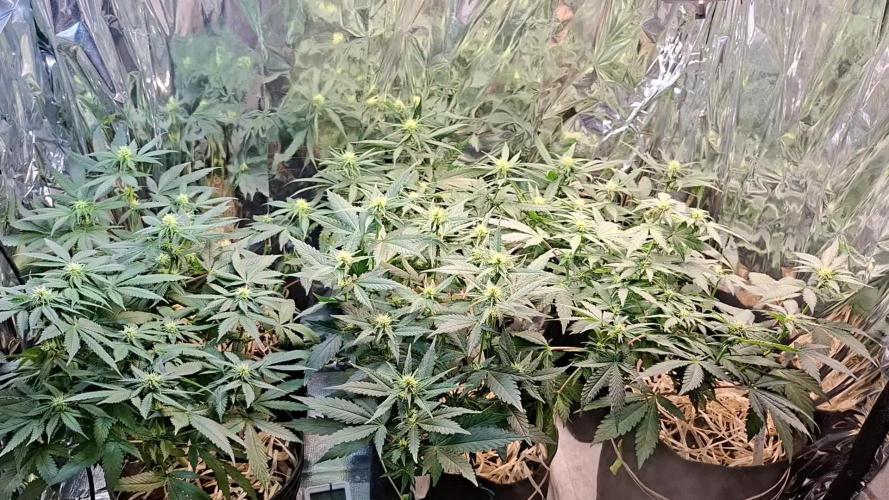


Likes
10
Share


@IslandTerps
Follow
Strain: Fast Buds Mixed Auto
Grow Type: Outdoor
Pot Size: 5 Gallon
Medium: Coco Coir & Perlite
Nutrient Line: Athena
Harvest Update
This Mixed Auto exceeded my expectations super frosty and dense, especially for an outdoor grow. After a full dry and cure, the buds turned out beautifully. The smell is rich, and the trichome coverage is impressive. The smoke was flavorful and smooth, making it a very satisfying experience overall. I didn’t get a chance to take much footage, but for an outdoor run, she really delivered easily one of the highlights of this grow.
Drying Climate Conditions
Temperature: 20–22°C
Humidity: 50–55%
Until the next one stay lifted, and remember to use my code ISLANDT for 15% off your next order at Fast Buds!

Likes
Comments
Share


@The_Lonely_Farmer
Follow
So these girls are shorter than expected allthough the 2 girls are of decent height enough for me too flip along side my aptus fed girls.
I have defoliate all areas that covers light getting too the lowers and also removed excess branching too focus energy towards the main tops also did this via a little lst 🌱
One of each plus an extra 412 so hopefully they stick through and make it too harvest which they look too be healthy so far.
I will next defoliate on week 3 of flower and also remove excess plant matter taking up neccasary energy 🌱
Shogun is serving them well so fa!
Lights will be 12/12 tonight
Week 1 flower commences then
Stay blessed 💚
Likes
11
Share


@PanGrower
Follow
Do not pay attention to the temperature on the thermometer in the middle, it lies by a couple of degrees. I have a good thermometer on top of the box that shows the temperature.
Day 29: After a terrible fracture, we see that the plant is beginning to recover. I'm honestly disappointed because it makes it very difficult for me to train mainlining and it will also increase the amount of time it takes to grow.
Day 30: It looks much better already, I could superprune the right branch, but I don't want to stress it. I will try to bend the right branch harder, I will bend the left one a little in the morning the next day, maybe early.
Day 31: This morning I cut the lower leaves, photo in the evening and continued the LST training after the injury. Photo in the evening.
Day 32: I am completely sure that the plant has moved away from the stress, but we can see on the left circle, the right bud (and side) slowed growth.
Day 34: I saw traces of salt on the tips of the new leaves, so now I pour water with regular 15 PPM.


Processing
Likes
8
Share


@JBro01
Follow
Started my third grow this week. I used a paper towel and a little plastic container tot germinate my seed. First week only pH 6.0 water. Recently bought a dehumidifier. First grow with a dehumidifier.

Likes
18
Share


@Ageddd
Follow
Another cold week, we are having around 2ºC Minimum temperature, and its really cold at night( I mean, for Spain, because if some Nortern people hear this may be laughting at me hahaha)
But there is a range of hours when then sun hits directly the plant if its not cloudy, like 6h-8h, this if i dont have to roll out the awning, so the plant is protected when raining.
Did not feed the plant until past the middle of the week, because i ovserbed that the flowers were developing slowly as im accostummed, probably because of the low temperatures, so i decided to give her the last feeding and start the flush at the end of this week, because i felt the plant was like at least 2 weeks from proper harvest, and still developing the flowers with white hairs... Im looking for something narcotic with a nice Therpenoid Profile so the later the better in my opinion, but without passing he Ripper Line hahaha :)
So last feeding was like a fattening one... Higher Dose of nutrients for the plant, and later added some Micro Vita to the soil, 3grams, and until the end with water and some carbs in 1/2 irrigations ...
What amazed me is the strenght of this plant, surviving these really low temperatures, growing a little slowlier, but without problems or buds, amazing plant, as amazing as beautiful, im in love with the colours..
So i hope you enjoyed reading this week Growmmies :)
Have a nice week and dont forget to roll one ^^
Good vibezz.


Likes
134
Share


@DogDoctorOfficial
Follow
OMG OMG OMG finding hard to put on words all i am felling with this one, she was a delight to grow and without trying yet her medicine she wen strait to my top 3, i mean super strong Mama, strong to everything pests you name it, amazing structure her terpene profile is taking me back to the 90s with her almost like gasoline smell mixed with limes and pines OMG cant wait to try out this one much but much respect to DutchPassion on this creation of them she is so so so , like glue that you cant touch without getting it everywhere <3 <3 haded the last 3 weeks and harvest time-lapse i fell like this one could have gone more than the 71 days in flower that she did, but there is no time for that in this run but i will run her again thats for sure and a must for me.
Guys trust me on this one , she is a must , a real must in any garden <3 <3 <3
Thank you so much Dutch Passion for this blessing of an opportunity and for everything you guys do for the community much respect and appreciation <3<3<3
Everyone best of luck for the contest this was an amazing and fun one <3 <3 <3
As always thank you all for stoping by for the love and for it all, i truly appreciate and enjoy the ride so much more with you guys around <3 <3 <3 you guys make me fell super blessed <3 <3 <3
#aptus #aptusplanttech #aptusgang #aptusfamily #aptustrueplantscience #inbalancewithnature #trueplantscience #growerslove #dogdoctoofficial
With true love comes happiness <3 <3 <3 Always believe in your self and always do things expecting nothing in return and with an open heart , be a giver and the universe will give back to you in ways you could not even imagine so <3 <3 <3
More info and updates @
https://growdiaries.com/grower/dogdoctor
https://instagram.com/dogdoctorofficial
https://youtube.com/channel/UCR7ta4DKLFMg2xxTMr2cpIg
<3 <3 <3 Growers love to you all <3 <3 <3
I will post more photos from her dry trimmed bud report smoke etc asap <3 <3 <3 and need to clean space on my iPad so that i can upload the rest of them photos and videos , my apologies <3 <3
Done hehehe waiting on this beauties to dry now <3 <3 <3


Likes
12
Share


@Cannabizoid_X
Follow
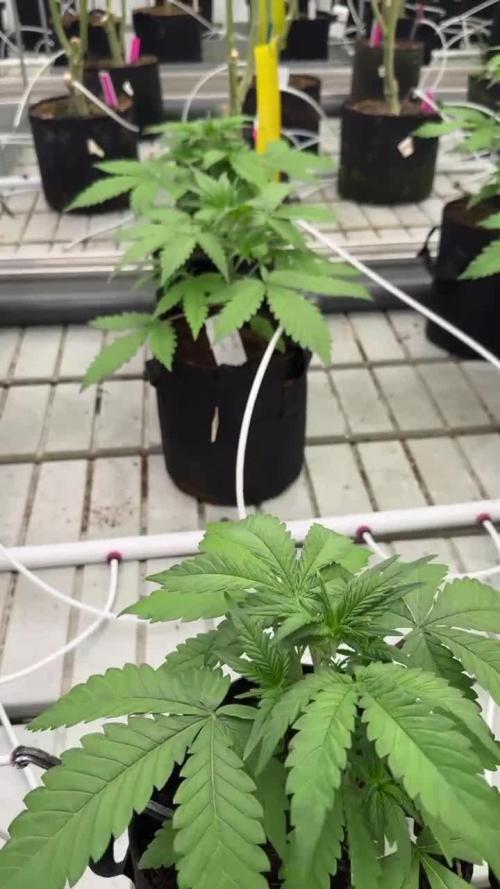
Natural gardening can be tough but is well worth it in the end y'all, keeping steady and everybody stay safe and take care of each other
Likes
54
Share


@WishiFishi
Follow
***Mar 22
Week 2 of flower, looking really good. I made sure to give the reservoir a little extra ppm this time around, because last week the plant ended the week hungry. I put a little extra Plant-Prod in this week, hopefully the extra 300 ppm will be enough this week!
I went in and took off some leaves that were blocking the inner nodes, but I didn't take off any small bud sites on the inside *YET* ...I want to wait til stretch is done before taking anything major off, just in case it catches up by then. I will say that it is looking a lot more open now that I took a handful of leaves off. Most of them were overlapping other leaves, or just straight up too big. Others that didn't seem like much of a threat, just got tucked under other branches or leaves. I'm trying to be as hands-off with this grow as I can. Freakshow doesn't seem to like being played with too much.
PPM is at 1850 and PH is at 6
Lots of pictures to start this week off, and also a small video to better detail how to plant is growing. I may have to switch CalMag brands by the end of the grow, unless the bottle will last me (I'm sharing my nutrients with my partner), but I don't think that would make too much of a difference, but it's worth noting.
I also would like to note that I have not topped, LST'd, or any other training method to be precise, other than taking the top two leaves off as they get too big, I have not done anything else to make this girl get so wide. The canopy has been doing it' all on its own. The roots have been growing around and over the bubbles in the water, making them spread out almost like a cup (my partner has a theory that may be why the plant has been getting wide instead of tall... He believes the plant tends to take on the shape of the container it is it; aka the shape of the roots).
I can now confirm that she is a female, as shown in the picture, you can see 2 long pistils coming out! ✊
I think I have the smallest amount of powdery mildew starting, because of the humidity being so high, BUT I have taken all other plants out of the tent, so this freak is all on her lonesome inside the tent now. I have seen an immediate improvement this morning, so I am not concerned over it.
Beautiful start of the week, and can't wait to see how it goes the rest of the week! Should expect to see a lot of bushing and hopefully some trichome production by the end of it. Have a wonderful week everyone! 😻
***Mar 24
Already drank 2 full cups of water (around 2L) and down from 1850ppm to 1600ppm ... oh boy!!! She's so hungry I wonder if I'll be able to keep up hahaha. She's looking really happy and healthy. Roots are still growing like mad. I wanted to trim them, but going to hold off a bit so I don't stress it out.
***Mar 26
...The amount of water she is drinking is outrageous. I actually had to feed a little bit more nutrients (Plant-prod 15-30-15 about 0.3 tsp to bring the ppm from 1200 to next to 1500 to get through til monday/tuesday) and a sprinkle more of soluble seaweed.
I did a little lollipopping tonight as well! Looking much more open and I took out a lot of the small bottom bud sites and leaves that weren't really getting any light. Everything is looking super good, and still no health issues. Doesn't seem to be missing any nutrients, but also doesn't seem to be bothered by having extra nutrients either.

Processing
Likes
21
Share


@Onlypotent420
Follow
Hi all,
Grow area updates:
So I hit the switch and flipped the light to 12/12 to start week 1 of flower for the master kush. And also raised the scrog net and defoliate a bunch.
Blue dream auto: Week 4 flower
God her first real good defoliation and and a lollipop on the under the canopy. As you can from the pics. The bud sites are plenty. Plant def got biggger then what I thought it had to be tucked one more good time under the net ended up taking up space where another plant woulda be. Literally had to leave a couple branches still standing do to nowhere for them to go and I’m almost definite they will need assistance standing here in a bit. She literally takes have the flower area by herself. I’m stoked about that. The last pic from the web cam shows about how much I took from each branch For defoliation. Ppm at 900
Master kush photo: 1st week of flower
She got pretty y’all over the past week the extra nitrogen grow really helped her have a Maher growth spirt. It got a lil hot this week so some minor leaf curling but nothing major. The new growth coming in looks perfectly fine. She responded well to the femming. So I went ahead and topped all the tops on her and she might get one more at the end of this week. She also got re-tucked under the net.
Ppm at about 750.
As always #StayKited!


Likes
Comments
Share

@frigo_camelo
Follow
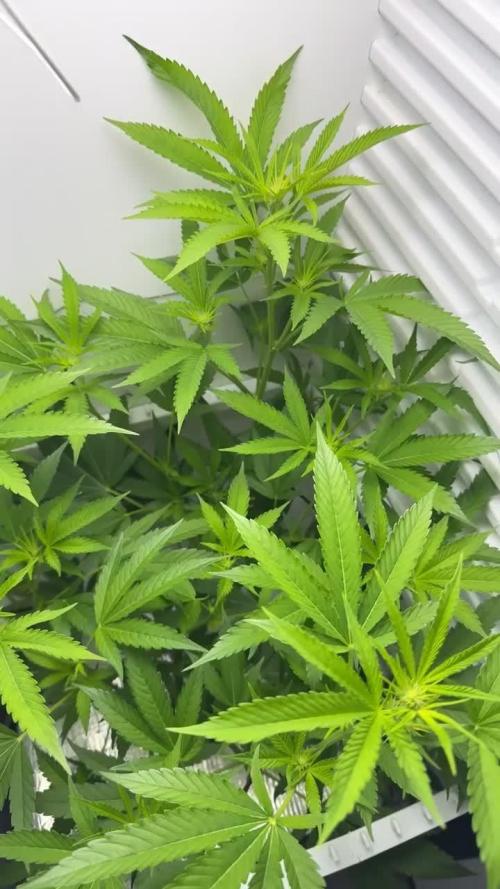
mid week 2 flower 🏻 running welll | insane smell already pics are from 28.06




Likes
33
Share


@iLoveGoodWeed
Follow
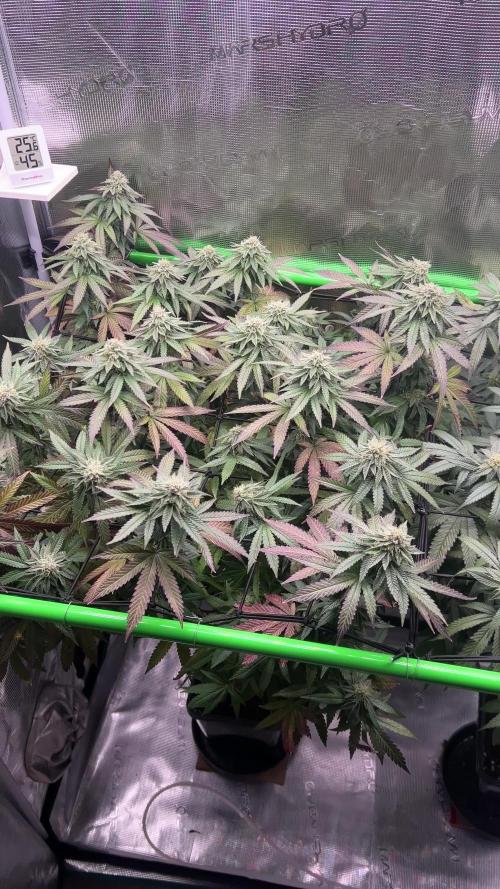
The orange colours looks great can't wait to smoke this strain. She have 2 weeks left and harvest time 🍊🍊🍊
Likes
11
Share

@Sundancers
Follow
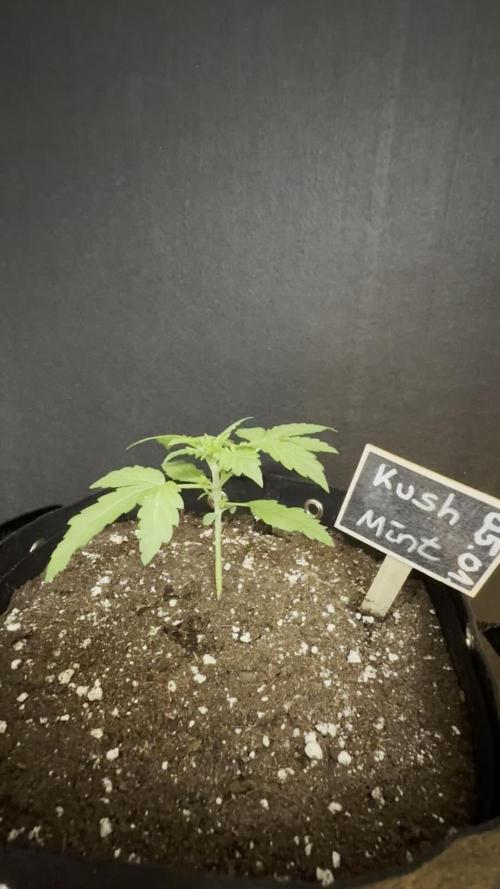
Die Kush Mint hat sich in den letzten zwei Wochen sehr gut entwickelt und deshalb haben wir sie am 13ten Tag getoppt. Düngetechnisch halten wir uns an den Düngeplan von Hy-Pro mit einem EC Wert von 1,2.
Sie zeigt keine Anzeichen von Überdüngung sondern wächst und streckt sich dem Licht schön entgegen. Die Genetik von Super Strain hat das Topping sehr gut vertragen und die Kush Mint wächst bereits am nächsten Tag weiter, als wäre nichts gewesen.
Das stimmt uns sehr positiv und freuen uns auf die nächste Grow-Woche mit ihr.
Wie findet ihr sie? 😎
Likes
16
Share


@Syriusz
Follow
Hello! Another week of vegetation is behind us 💪🤪 this week I did LST and Defoliations on all plants. Unfortunately, while bending one of the plants, I broke a branch. Although it heals, I made a mistake that is worth noting. I have to be more careful when working with the plants. The photos show how the plants are bent. Due to the differences in plant sizes, I decided to extend the growing season by one week. Next week I'll be focusing on branching down and observing. I will do the next defoliation in the first weeks of flowering. Greetings to everyone !!
Likes
11
Share


@adam_pawloski87
Follow
Such an amazing flower, really great especially a phenomenal hash producer yall will be super satisfied with this one!! She’s a shorty but Make sure you top 4 to 6 times or even more to have all them gooey bud producing heads , Dirtyblonde is absolutely an amazing plant!!

Likes
11
Share


@Gardener_of_Goodness
Follow
Some great growth over the past few days, Jack is starting to stretch his legs for sure! To ensure there’s no issues with height, I decided to Top him, I’m not really going to apply any other methods of LST other than gentle defoliation and lead tucking.
Jack has been fed regularly BioBizz nutrients and some beneficial bacteria to support the mediums microbiology 🤓✌️👍
Let’s see what the next week holds for Jack, he’s under a 250watt dual spectrum HPS for the rest of his life now ☀️ 😎
See you all next week! ✌️👊