


Likes
Comments
Share

@DogDoctorOfficial
Follow
🌿 Mango Kush — Harvest Report (Week 7 Flower → Harvest)
Grow Diaries — From Seed to Soul
After months of nurturing, tuning, and watching the Mango Kush sisters evolve, today we finally harvest. What began as two seeds—two phenos with two destinies—has become a garden symphony of light, resin, and patience.
Genetic Journey — From Seed to Harvest
Pheno #1: Started in veg before flipping; taller, more expressive stretch; structured and vigorous.
Pheno #2: Ran 12/12 from seed—shorter cycle, smaller frame, but incredibly dense.
Different paths, same destination. Despite the variation, both finished side by side, their trichomes shimmering like frost under the lens.
From the very first true leaves to the last amber sparkle, this grow embodied the full spectrum of plant life. Both phenos shared that unmistakable Mango Kush sweetness—fruit-forward, creamy, with earthy Kush undertones that deepen as they cure.
🔬 Trichomes — The Living Resin
We harvested with trichomes at about 75 % cloudy, a few ambers scattered, and a few clears clinging on.
Why this timing?
Cloudy trichomes → peak THC, most psychoactive potency.
Amber trichomes → oxidized cannabinoids, deeper body stone, slightly less heady.
Clear trichomes → undeveloped, lighter high, harsher burn.
By cutting at ~75 % cloudy, we captured the perfect balance between energy and depth—a clean, full-spectrum effect with robust THC, trace CBD, and terpenes locked in their prime.
Inside each trichome lives a micro-world of medicine:
Cannabinoids (THC, CBD, CBG)—psychoactive and therapeutic agents.
Terpenes (myrcene, limonene, caryophyllene)—aroma, flavor, entourage synergy.
Flavonoids & esters—color, nuance, antioxidant value.
It’s chemistry turned art—and when viewed through the macro lens, pure alien beauty.
🌸 The Harvest — Dense, Loud, and Sticky
Both plants produced compact, heavy colas.
Pheno #1: 162 g of dry, aromatic medicine.
Pheno #2: 129 g—smaller, but louder in terps.
Together: 291 g total of crystal-coated Mango Kush bliss.
The smell? Explosive.
Sweet mango and creamy Kush so strong that, without carbon filters, the neighborhood would know. 😂
And those buds—dense like stone, sparkling like snow. Trimming gloves glued with resin. Even the scissors felt high.
🌬️ Dry & Cure — The 60/60 Philosophy
We dried the full plants slowly:
60 °F (15.5 °C) and 60 % RH for 14 days.
Why 60/60?
Because slow drying preserves volatile terpenes and ensures chlorophyll breakdown. Quick drying bakes the aroma; slow drying matures it. The science is simple: lower temperature = less terpene loss, stable humidity = even drying.
After the dry, we hand-trimmed every flower using a trim-bin, collecting a rich layer of kief—a golden powder of pure cannabinoids and terpenes.
🔥 Old-School Touch — Hash & Extracts
The kief was gently pressed using only hot water, glass, and hand pressure— we also did some old-school charas way.
No machinery, no shortcuts. Just heat, touch, and patience.
From this we crafted a small hash bar—soft, aromatic, pure.
We also explored extractions with BHO/Rosin, carefully purging over three weeks until perfectly stable. Both concentrates now rest in the fridge—preserved at low temperature, rich in flavor and medicinal potential.
💨 Smoke Report — Smooth, Sweet, and Deep
The first taste is soft and silky. Mango sweetness rolls in, followed by that earthy Kush finish.
Inhale: Fruity and fresh.
Exhale: Creamy, grounding, slightly spicy.
Effect: Uplifting at first, melting into a serene, full-body calm.
The smoke is gentle on the throat, rich in vapor, and incredibly aromatic. This is medicine that heals both mind and mood.
💡 Gear & Ecosystem
Our ecosystem blended art and technology:
TrolMaster Tent-X + WCS sensors → precise moisture, EC, and temperature tracking.
Lighting: ThinkGrow Model One, ICL-300s, Future of Grow Black Series 600W, Lumatek Zeus 465W.
Automation: TrolMaster ecosystem controlling airflow, CO₂, and environmental harmony.
It wasn’t just a grow—it was an orchestra.
🔄 Full Journey Recap
Seed Stage: Aptus Start Booster, delicate beginnings.
Veg: Strong structure, lush growth under perfect PPFD balance.
Pre-Flower: 12/12 flip; phenos diverged but thrived.
Flower Weeks 1–4: Structure building, light & nutrient tuning.
Flower Weeks 5–7: Trichomes exploding, aroma maturing.
Week 8 Harvest: Mission complete—patience rewarded.
🙏 Gratitude
To the community—thank you for growing, reading, laughing, and learning with us.
To the sponsors—Aptus Holland, TrolMaster, ThinkGrow LED, Future Of Grow, Plagron, Zamnesia—thank you for the tools that make the magic.
To the haters and lovers alike—you both make us sharper and kinder.
And to the plants—thank you for teaching patience, precision, and peace.
You can watch the full Seed-to-Harvest 4K series on YouTube for all the details, from germination to the final puff.
📲 Don’t forget to Subscribe and follow me on Instagram and YouTube @DogDoctorOfficial for exclusive content, real-time updates, and behind-the-scenes magic. You won’t want to miss it.
• GrowDiaries Journal: https://growdiaries.com/grower/dogdoctorofficial • Instagram: https://www.instagram.com/dogdoctorofficial/ • YouTube: https://www.youtube.com/@dogdoctorofficial
There’s a new series blooming and it’s more than just plants. It’s about process, patience, and paying attention.
⸻
Explore the Gear that Powers My Grow
If you’re curious about the tech I’m using, check out these links:
• Genetics, gear, nutrients, and more – Zamnesia: https://www.zamnesia.com/
• Environmental control & automation – TrolMaster: https://www.trolmaster.eu/
• Advanced LED lighting – Future of Grow: https://www.futureofgrow.com/
• Root and growth nutrition – Aptus Holland: https://aptus-holland.com/
• Nutrient systems & boosters – Plagron: https://plagron.com/en/
• Soil & substrate excellence – PRO-MIX BX: https://www.pthorticulture.com/en-us/products/pro-mix-bx-mycorrhizae
• Curing and storage – Grove Bags: https://grovebags.com/
⸻
As always, this is shared for educational purposes, aiming to spread understanding and appreciation for this plant. Let’s celebrate it responsibly and continue to learn and grow together.
With true love comes happiness. Always believe in yourself, and always do things expecting nothing and with an open heart. Be a giver, and the universe will give back in ways you could never imagine.
💚 Growers love to all 💚
📜 P.S. — A Note on Timing
There’s roughly a week’s gap between the official logs of Mango Kush #1 and #2, but for accuracy and honesty, this report reflects both at Week 8 Flower / Harvest. Grow Diaries’ calendar system can be tricky, so we’re uniting both here—and they’ll remain side by side through the next reports: Harvest, Dry, Trim, Cure, and Smoke Review. Transparency matters; the story deserves to be whole. 💚

Likes
12
Share


@ChiTaN
Follow
I am very proud of this girl ! Despite the fact that she is younger than the rest by two weeks, she caught up with her friends in height and even surpassed them :) The giant fan leaves are surprising 😃

Likes
39
Share


@BelgianBudtender
Follow
Hey hey Growmies,
the last res change took place this week, she's running on just Ph'd tap water, I want to try out flushing.
there's a lot of debate and bro-science around flushing increasing flavor, burn-ability and high. I don't care about all that and won't take part in that mess, all I know is that it makes the flowers prettier, and I like pretty things.
3 days into the flush (today) fan leaves and sugar leaves started turning purple with dark red stems, I will continue to let her run on tap water until she's self cannibalised with a pretty fade, at which point I will give her 24 hours of darkness without water, which will give the plant one last chance to squeeze out anything she's got.
That will be somewhere next week, since some trichomes have turned amber, If you're wondering where the time-lapse went, I have started on 2 new diaries. both by Zamnesia, one is a Wedding Cake Auto and the other is a Regular Runtz. Trying out a new way to start my seeds in dwc, namely Kratky, so far it is working out okay.. but yeah I moved my grow cam to the veg closet.
thanks for checking out my diary, bud.
Stay safe and keep growing👌

Likes
52
Share


@Ultraviolet
Follow
I gave Isopropyl alcohol 70% equal parts water, 1 tsp cayenne, and kept enough for multiday application, what little population of aphids is left I shall catch them the next morning, opening the tent 10 min before lights on the clovers have yet to open, all the aphids hiding on undersides are easily visible, still none ever went near cannabis plant. Clovers are far tastier it seems.
The alcohol kills on contact, the idea was to saturate the leaves with a light foliar application, and once I was done I ran it through the canopy with my hands making sure as much of the clover surface came in contact with the iso, once done turned on the fans and evaporate it quickly.
Beautiful thing about Isopropyl is that it evaporates rapidly at room temperature way below boiling point leaving behind zero residual so nothing seeps its way into rootzones unless you spill it there.
It is a magical solvent that leaves no trace that it was ever there.
Resonant Frequency:
A resonant frequency is the natural vibrating frequency of an object and is denoted as ‘f’ with a subscript zero (f0). When an object is in equilibrium with acting forces and can keep vibrating for a long time under perfect conditions, this phenomenon is resonance.
In our daily life example of a resonant frequency is a pendulum. If we pull back the pendulum and leave, it will swing out and return at its resonant frequency. Objects combine to form a system, this system can have more than one resonance frequency. The resonant frequency is termed as the resonance frequency.
The phenomena of resonant frequency used in the series circuit when the inductive reactance (XL) is equal to the capacitive reactance (XC). If the value of supply frequency is changed, we can observe that the value inductive reactance (XL) and capacitive reactance (XC) is also changed.
Inductive reactance (XL) and capacitive reactance (XC) are inversely proportional to each other. When we increase the frequency, the value of XL increases, whereas the value of XC decreases. When we decrease the frequency, the value of XL decreases whereas the value of XC increases.
At series resonance, when XL = XC. The mathematical equation of resonant frequency is:
XL = 2πfL; XC = 1/2πfC
XL = XC
2π f0L = 1/ 2πf0C ; f0=1/2π sqrt{LC}
Where f0 is the resonant frequency, L is the inductance, C is the capacitance
How to Calculate the Resonant Frequency of an Object?
An object exposed to its resonant frequency can vibrate in symphony with the sound. The wavefronts pushing on the object will arrive at just the right time to push the object with greater and greater amplitude in each cycle.
To get a clear idea of this concept one of the best examples is pushing a friend on a swing. If you push the swing randomly, the swing will not move very well but if you push the swing at a specific time, the swing will get higher and higher.
Another example to find the resonant frequencies is to place the object next to a speaker and place a microphone attached to an oscilloscope next to the object. Then play the sound in the speaker at a given volume, and then without changing the volume slowly change the frequency.
Now observe the oscilloscope, you will observe that at certain frequencies the amplitude of the wave, is proportional to the volume of the sound that the microphone is able to pick up.
The frequency that is caught by the microphone will be greater than at surrounding frequencies. These are the resonant frequencies and are detectable as the sound energy absorbed by the object is re-emitted more efficiently at these frequencies. The precise moment that constructive interference happens the amplitude of the wave will spike at the precise frequency emitted.
Q: Compute the resonant frequency of a circuit whose inductance is 25mH and capacitance is 5mu F?
A: Known values are,
L = 25mH = 25 x 10-3 H
C = 5mu F = 5 x 10⁻⁶ F
Formula for resonant frequency is,
f0= 1/2π sqrt{LC}1/2π√L
f0=1/2 ͯ 3.14√ (25 ͯ 10-3 ͯ 5 ͯ 10-6)
= 450.384Hz
Why Neodymium?
Ferromagnetism is an exciting phenomenon observed in certain materials, known as ferromagnetic materials, that can retain their magnetization even after removing an external magnetic field. Ferromagnetic materials can become ferromagnets and interact strongly with other magnets and magnetic fields. A characteristic of ferromagnetic materials is their magnetization ability, distinguishing them from paramagnetic and diamagnetic materials, where weak magnetism exists temporarily.
This unique property allows for making permanent magnets widely used in various applications such as motors, generators, speakers, and data storage devices. The ability to generate and maintain a magnetic field without the need for a constant external source of power makes ferromagnets highly valuable.
An alloy of neodymium, iron, and boron discovered in the 1980s is ferromagnetic, yielding permanent magnets over 1000 times stronger than anything ever seen before.
The name neodymium comes from the Greek neos didumous, which means "new twin."
Neodymium magnets are made of an alloy of neodymium, boron, and iron. This allows them to simultaneously store impressive amounts of magnetic energy while being highly resistant to demagnetization.
Because iron oxidizes quickly, neodymium magnets are coated to prevent rust from accumulating.
The attraction between two neodymium magnets is so strong that if placed close enough together, they can collide and shatter.
Neodymium magnets have an unusually high-temperature resistance, and they can even withstand heat exceeding 200 degrees Celsius.
N50UH 1-1/2"OD x 1.065"ID x 3/8"

Likes
41
Share


@PrairieFrostGrow
Follow
Sweet Seeds Cream 47 grow 2020.
Sweet Seeds Cream 47 was finally run and she was a great experience…….as always there was something to be learnt here but in the end these girls were super frosty and finished super fast! Done in 8 weeks Veg and you keep ALL the trim for further processing😊 Stayed under 30” for height and can fight off many issues including pests and temps……as well as cracked stems and broken branches😊
I believe I ordered these in 2018 after my first experience with Sweet Seeds and Gorilla Girl photo. I was so impressed I had wanted to try something else from them. Then I don’t know what happens…..something else newer or possibly more interesting at the time comes along and you push this seed pack to the back. For some reason AK47 has been the strain I have played with a couple variants of and these girls finally had their chance. The seed pack I have has a date stamp of 2016…….not a worry Growmies, seen lots of other growers popping 10 year old genetics from seed and thy will still work out fine. Just sharing a little reminder that its about storage…….I keep mine in a sealed container in a different fridge in a dark spot😊 As an example, these were 4 years old and I got two girls from my three seeds…..works for me😊
Beginning the diary……during germination everything is rosy and you are going to set things on fire!!!!!!
Germination started on July 11/20 with two seeds. First one came up from coco 7 days later on July 18 and C472 was actually the third seed and was put into a rapid rooter on July 19 and came up from coco on July 23…….that left us with C472 actually being 5 days behind C471. Quick note….C472 was a bigger girl at the finish line even though she was 5 days younger and being grown in the 3 gal pot vs the 5 gal pot.
Typical photoperiod process and went to solo cups and then to 1 gal and then a final upsize to either a 3gal or 5gal. I put one in each. At the start of this diary I wanted to focus on seeing the difference in yield between a 12L and 20L pot and is it worth the extra media and nutes? Well things change and you have to go with the punches😊
Early veg and building root mass……..come one girls, lets see some snow white roots!!!!
The girls were grown in 90 – 80% coco and 10 - 20% Perlite……..COVID made many things hard to get here and there this past year and I believe and I even had to use some Vermiculite as I couldn’t get perlite. As in the previous couple of grows I battled pH drift in this run as well. Quick note…….I am now mixing my media with 65% coco, 25% peat, 10% perlite and the current run is doing very well for both autos and photos……pH is holding at 6.1 in media rather than damn 7.2 a couple of weeks later, may consider dropping peat a little next run to 20% or 15% and increase the coco by the same percentage to see the impact😊😊😊
By the end of 7 days they had a whopping 1 set of single blade fan leaves out and the thought of a second set of leaves. Then by the end of 14 days they really rocked and we had a set of 3 blade leaves out and a sliver of green forming the first set of 5 blade fan leaves……..on fire they were😊😊😊😊 With the girls facing an 8 week veg, I was in no rush.
At the end 21 days they were roughly 7” tall and it was time for their first upsize to a 1gal pot. They were finally transplanted on day 23. C471 had a better root development that C472 and she was slightly bigger so was eyed as the pheno to get the 5 gal pot in the future. Usual Mycorrhizae added to the holes and in the pots and further microbes to supplement the girls. Need the roots to more plentiful than what they currently are. The girls loved the extra room and week 5 saw good growth as side branching developed and the leaves became bigger……on course!
Late veg and forming a canopy for flower……SCROG or not?????:
Weeks 4 and 5, plus the start of 6, the girls continued to flourish and grow in 1 gal pots. Being feed a couple of times a week they continued to progress. The girls had reached a little of 10” tall and it was time to top them. Not sure about LST or SCROG at this point, I knew they had to fill half the tent, so I went a head and topped the girls on day 37 between the fourth and fifth nodes. The girls grew a little different shaped fan leaves and they were more “pointy” and long in growth……and long lateral growth fan leaves. She wanted to grow laterally on her own…..bonus!
The girls reacted will to the toping over the next days and kept a solid growth. This strain has tight node spacing and will not grow into 5’ monsters like the Gorilla Girl strain they were grown beside. Finally at day 50, Sept 6/20, the girls were given their final home and transplanted a last time. C471 with more vigorous growth was given the 5 gal pot to fill with roots while C472 was designated the 3 gal pot.
I finally decided that a SCROG was going to be the answer because the other girls in the tent will need to be kept tied down. Problem was that these girls won’t stretch much but the other girls will……how the hell to SCROG that situation otherwise you have nodes 12” taller than others and creates a tough canopy to give the correct amount of light??? Solution was to put C47 girls on boxes and rise them up. Took a guess at the potential height difference in the strains and figured I should plant at least a 12” riser of some type. It actually worked out not to bad……they were coming through the top of the SCROG first but as they grew things balanced out between the strains😊
In week 9 the girls took off and we finally had a good canopy to start flower with……all the girls were down low and touching all sides of the tent and each other. Getting them ready to SCROG I decided to perform LST for a couple of weeks and ensure the branching grows to the side and not straight up. They formed 4 main tops on each girl and the side branches were thick. Bud Ignitor added to the feed in week 9 and we are ready…….lets change the light and watch the explosion Baby 😊😊😊 Still only positive thing happening in the grow to this point!!
Flower time and filling up the tent with sticky buds………my F@#%ing tent is too small for the girls:
Okay Growmies……we are on fire, all 4 girls are growing with pistols popping, branches bent everywhere and put in the first layer of the SCROG……..right on!! Soon reality sets in and the fictitious Gremlins arrive to F my grow and actions☹️ Getting ready for putting the net and decided to cut to low branches from C471 as they just don’t have any thickness to them. Concern was that she was now down to 6 main branches on her…..don’t break any!! Mid week I check the tent in the morning and there is a damn fan laying on top of C471!!! That’s no good but shit happens, no visible damage to the plant…..or the fan😊
So we get through week 1, IPM spray done and net is in, and moving into week 2 of flower my heart stopped when I noticed a huge crack in the main stem of C471……WTF??????? So on day 12 of flower I am looking at two girls with cracked main stems…..one C47 and one Gorilla Girl……WTF everything is the same, why did this happen for no apparent reason? Answer - - - - usual “grower F-up”…….I topped the girls to close to the lower node when done and I should have the scissors up against the node above and left a larger “nub” on top……I had them against the node below when I cut and little to no nub left on top!!!! Once they were trained a bit and started growing harder, the stem didn’t have any more strength and cracked right in the middle of the main stem! Learning point……remember to always leave a good piece of stem at the top when using scissors……hasn’t been an issue for me in the past when “pinching” tops as they develop, this was though☹️
So what to do now they are doing awesome????? Well, that is why I support Grow Diairies and continue to use the site outlining my grows……I asked for help and other opinions about what happened😊 Sure enough within hours, I had some input from fellow growers, thanks again @Mr_Motalovah who pointed out quickly what I had done because they had shared about what has happened to them in the past……thanks a bunch for the input Growmie….you rock!! Now that I know what I screwed up, we vaped a bunch of bud and put on the MacGyver Hat and fashioned some supports and ties out of a pool noodle, zip ties, tape, and more weed😊 Tied the girls up and kept the area moist for a week! She never did weld right back together at the crack because it was too major and at a high stress point for the branches. I feel this certainly contributed to C471 not being as big a yielder as I am sure she should have been.
So now we are getting back on track, forget all the other shit of the last two weeks, stay positive and lets rock this grow😊 There was lots to be positive about as the second lay of SCROG is in, the girls are 20” tall and looking happy with leaves up. She has some huge fan leaves and starting to really show some trichomes already! Right on Sweet Seeds……they are pulling through and doing awesome now! Problem I am now having is keeping the air movement in the tent as these four girls are killing it and I am out of room. If I don’t help with more room or air movement, the yield and quality of the bud will suffer……they will finish and all is good but there will be lost opportunity. I really struggle to grow 4 plants in a 3’ x 3’ tent. I am always out of room and can’t get the light down as low as I want. This grow is a perfect example of that. Not to mention how to cool them off and reduce light intensity when ripening in the last two to three weeks?? I need a bigger freaking tent….finally bit the bullet and ordered a 4’ x 4’ tent for flower. Will then have a 4’ x 4’ for photos and keep one of the 3’ x 3’ for autos. Through week 3 of flower and going now Baby, just waiting on a new tent😊
Late flower and watching them buds swell……no worries now, let the deficiencies fly!!!:
Now in week 4 of flower and the girls are getting very big. The trichome production has kicked in and they are looking happy everyday at this point. Tips up everyday and they are loving the light and feed at this point. Chugging along and feeling like we will feed them though week 6 and flush for weeks 7, 8, and 9 and take down about day 62 or so. Feed moved into Big Bud and silica going to keep the stems strong so they support the bud weight. Her nodes have stacked very well and for week 4 she is chunking out nicely! The girls are pretty dark green now at this point and looking healthy. Again, buds are big and they are frosty…..the grow is going very well.
New tent finally arrives in week 5 and we move the girls to a new home with more room for air and light penetration lower on the branches. Had to cut the girls out of the SCROG and added bamboo to the other strain being run with these girls. Since C47 was not very tall, they were not supported. So feeling that everything is good and we are moving forward. Like I say, feeling good, but I think the girls had their issues in weeks 5 and 6 and I didn’t really pick up on it. They had battled high pH through the grow, again why the media change this run, and it seemed to stall the girls. I think I was so focussed on the success of the Gorilla Girls that I didn’t really pick on the fact these girls were slowing down. At any rate, they looked very good and frosty and still eating so we kept going, there were even resin rails beginning to form on fan leaves and they are 24” tall😊 LST helped to keep them short, along with topping. She is showing that she will make hash people happy!!! Awesome trichomes for this stage of growth…..excited as hell!
We move into week 6 and start working on some flushing. She is dark now and concerning. Her hairs are starting to red here and there and I am seeing some colour in the buds. She smells of a strong floral or something that almost “stings” your sinuses…..sorry for description but it was good strong smell. Flush should have begun at the start of this week, six. Instead, it was not given until week 7, almost too late at this point. She had slowed down her drinking and was not uptalking much anymore. Her buds looked beautiful but her leaves were dark. Yup…..F#$% I missed her and she will not finish with the colours that she should. Not much you can do at this point. She was given Flawless Finish twice and roughly 7 days of plain watering before darkness. Then on November 8, Day 51 the girls went into darkness……..the trichomes had matured and it was time. This strain should have stopped her feeding at the end of week 5 and keep the water only for up for 2.5 weeks idea and colours should pop on her…….not one week like I did☹️
After two days of darkness the girls looked gorgeous and faded a little more than when they went in……right on. The buds are beautiful with the light colour of purple on some calyxes and red hairs in there. Frosty as all heck and sticky like crazy😊😊😊
Harvest, dry, cure and smoking Cream 47 from Sweet Seeds……..is she Sweet Smoke??
Remembrance Day was harvest for the girls. They ran their 53 days and its time to cut them down. It was a little surprising to see that C472 had better bud production that C471 since she was the slower grower. At the same time, it was not surprising as C471 had her stem split and this impacted her yield because of a challenge getting the amount of nutrients she wanted up the stem. She made it to the finish line though and was still making me smile at the end😊 can’t ask for much more than that really! Again, I wanted to compare 3 gal vs 5 gal but this diary simply didn’t work out that way. (one should also use clones for a better test of this and not seeds but its all good because I was just having fun😊)
I hope that my pictures show her level of trichome production as very good to excellent. She has a lot of crystal in her buds and they are sticky. They hung for 10 to 12 days, took a couple of days to finish his time, and went it jars. I kept ALL fan leaves and of course sugar leaves…….in the freezer right now waiting for the next edible or hash run……grower bonus😊 not to mention the crazy good kief in the tray from trimmings you can enjoy as the grower😊 Full Melt Hash!!!
The yield was not the largest for this girl and you can see that in the pictures by the amount of leaf in the buds. They didn’t swell right up……again going back to weeks 5 and 6 in flower I suspect☹️ This is my smoke and I am not worried about yield to be honest. Therefore, even though I only pulled a couple of ounces from each girl…….its primo smoke! The lung expansion is huge and takes my breath away for a couple of seconds as well😊 One dab the size of a rice grain for light weight friend and he was sleeping on the couch 15 minutes later😊 Anyone have insomnia issues?? She is a strong one but with my crazy tolerance she is a nice day to evening smoke for me.
That will wrap it up for this grow and Cream 47 for 2020. Have a few ounces to enjoy plus still have another seed to keep the dream alive😀👍 Should have cloned her........there are so many options though👊 Still, would love to have ran her again knowing that she is done at the start of week 8 and hit the flush properly. On to the next one though.
She was indeed Sweet Smoke!!! Cheers @Sweet_Seeds another one you should be proud of😍😎👊

Likes
17
Share


@eldruida_lamota
Follow
Vamos familia, actualizamos la sexta semana de floración de estas Purple OG kush de DutchFem.
Y es que no veas cómo van progresando las flores y qué color que sanas que se ven.
Llevo aplicando una semana engordacogollos y empiezan a engordar bien.
Ya empezamos la recta final, ya vamos viendo cómo avanza y esperamos que no surjan problemas de última hora.
Hasta aquí todo bien muy contento con el resultado del proceso hasta ahora.
Agrobeta:
https://www.agrobeta.com/agrobetatiendaonline/36-abonos-canamo
Mars hydro:
Code discount: EL420
https://www.mars-hydro.com/
Las maximas de temperatura no superan los 26 grados y las mínimas no bajan 20, así que no me puedo quejar.
Los niveles de humedad también son los correctos van entre 50%/55% de humedad relativa.
Por supuesto el Ph lo estamos dejando alrededor de 6.
Hasta aquí es todo, buenos humos 💨💨💨.

Likes
36
Share


@brownbae420
Follow
Day 49
- Gummi Bears is doing great
- Wiz Stash Remix is OK
- Gorilla Cookies is Hungry and slumping
- Change cycle last week to 18/6
- Vibe: 😕
Day 30 - 3B OG x Samsquanch
- LST
- FIM - not on purpose
- growing well
- Feeding with confidence
- Vibe: 😍
Day 51
- All plants are PRAYING HARD
- Coloring improved
- No watering today
- Defoliated
- Vibe: 😇🙏
Day 52
- Plants are still lime colored
- Leaves are showing a deficiency of some sort
- Watered with 1tsp cal/mag
- All 3 flowering ladies wanted 1 gal of water each
-- Gorilla Cookies - 1430 ppm
-- Gummi Bears - 1260 ppm
-- Wiz Stash Remix - 1070 ppm
- Vibe: 😵
Day 33 - 3B OG x Samsquanch
- Current week Timelapse
- Vibe: 😍
- Readings
-- Lights 18/6 - Level 9
-- Temp: 70 (ideal) | 70.0 (avg)
-- Humidity: 55% | 53.5%
-- VPD: 1.1 | 1.14 kPa
- Vibe: 😇
"Life is like riding a bicycle, to keep your balance, you must keep moving." — Albert Einstein


Likes
6
Share


Likes
16
Share


@MadeInGermany
Follow
Info:
Unfortunately, I had to find out that my account is used for fake pages in social media.
I am only active here on growdiaries.
I am not on facebook instagram twitter etc All accounts except this one are fake.
Flowering day 31
since time change
to 12/12 h.
Hi everyone .
The lady is developing beautifully :-).
The buds start to get thicker and it smells better and better :-).
I added another 1 g GHSC Bio Bloom per l coco.
That should be enough for the remaining weeks.
Otherwise everything was checked and cleaned as usual.
Have fun with the update and stay healthy 🙏🏻
You can buy this Strain at
https://www.barneysfarm.com/blue-cheese-34
Type:
Blue Cheese
☝️🏼
Genetics:
Blueberry
X
Original Cheese
👍
Vega lamp:
2 x Todogrow Led
Quantum Board 100 W
💡
Bloom Lamp :
2 x Todogrow Led
Cxb 3590 COB 3500 K 205W
💡💡☝️🏼
Soil :
Canna Coco
☝️🏼
Fertilizer:
Green House Powder Feeding
☝️🏼🌱
Water:
Osmosis water mixed with normal water (24 hours stale that the chlorine evaporates) to 0.2 EC. Add Cal / Mag to 0.4 Ec Ph with Organic Ph - to 5.5 - 5.8

Likes
5
Share


@Tacofever88
Follow
A quick check up and they're doing well. Some growth so that's a good sign.
Some little bastard animal (mole I assume) made a few holes around my girls. I made sure to put some fluid in them as I was peeing. Then stuffed them with rocks, dirt and a thick branch. Hopefully they're not too interested and I don't have an animal having a root party
Likes
4
Share

@420Junglist
Follow
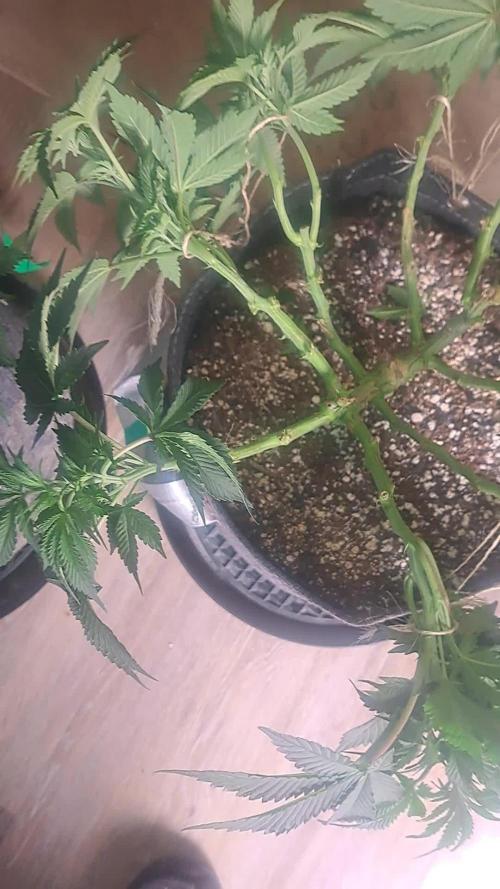
So I think ive sone rhe last stripping and will start the 12/12. Will give ir a week ro recover at that point I'll be switching to the Sensi Bloom plus some additives which will be listed.
I know it doesn't look the best bur for my first mainline im pretty happy so far
Cheers
Likes
26
Share


@CampaCavallo
Follow
Buongiorno amici!
La stagione indoor 2023/24, è partita un po in ritardo alla CampaCavallo per via delle alte temperature autunnali....
Ma ora siamo pronti per ripartire alla garnde!
Grazie alla collaborazione tra Zamnesia e Plagron, abbiamo l'opportunità di partecipare al concorso POWER BUDS
Vedremo come si comporterà la Monster Zkittlez 👹🍬
State sintonizzati per gli aggiornamenti!
E grazie per i Like👍🏽

Likes
1
Share

@therealgrowmie
Follow
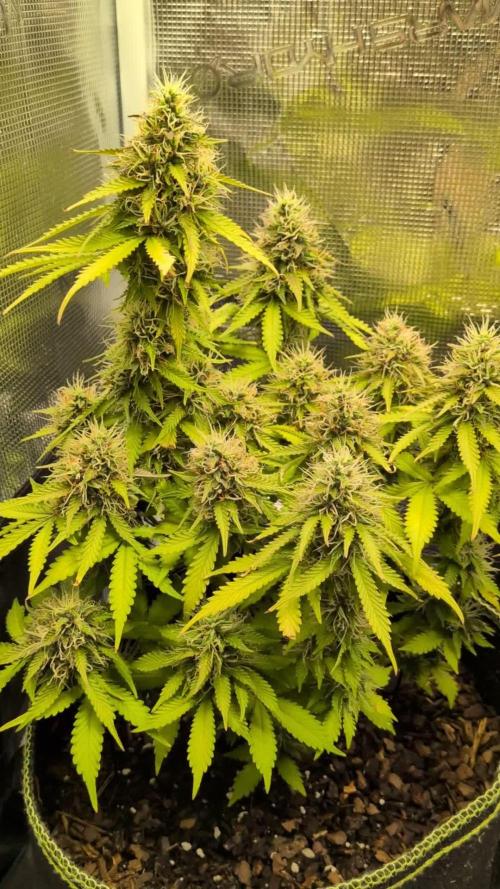
Things are progressing with this grow.
The nutritional issues caused by recent heat stress may have stunted growth a bit, but the buds are forming nicely regardless.
They’ve started to bulk up, and now it’s just a matter of waiting for the final growth and ripening to finish. A lot of the pistils are still white, so we’re likely at least two weeks away from harvest.
Until next week, Growmies!
---
Quick rundown on everything else:
Watering: 1500ml every third day
Fertilizer: According to the BioBizz schedule
Light intensity: ~1000 PPFD
VPD: ~1.62 kPa
Temperature: ~28°C
Relative humidity: ~55%
Likes
17
Share


@420DeepGrow
Follow
Gracias al equipo de Seedsman Marshydro XpertNutrients y Trolmaster sin ellos esto no sería posible.
💐🍁 Tangerine Snow F1 Fast:
Esta gran cepa es un cruce de cuatro vías 75% sativa de (Boost x Tangelo) con (Lavender x Power Plant). Este híbrido Fast F1 proviene de la genética Cali y cuenta con excelentes terpenos cítricos, alta producción de resina para extractos, altos niveles de THC, muy buenos rendimientos y excelente resistencia al moho. Tangerine Snow F1 Fast se puede cultivar tanto en interior como en exterior. Los tiempos de floración en interiores son de entre 8 y 10 semanas, mientras que el tiempo de cosecha en las latitudes del norte es en septiembre, mientras que en el hemisferio sur los productores cosecharán durante marzo. Las regiones climáticas recomendadas son cálidas, secas, húmedas y cálidas. Se trata de plantas altas, semiramificadas, que superan los 200cm y que presentan un alto vigor con muy buena uniformidad. Al igual que muchas otras variedades con fuerte dominancia sativa, Tangerine Snow F1 Fast ofrece una excelente resistencia al moho, así como a las plagas y enfermedades de las plantas. La combinación de terpenos cítricos y mucha resina la convierten en una cepa de muy buen extracto, cuyo método de "lavado" produce muy buenos rendimientos de hachís. El perfil de terpenos cítricos recuerda a las mandarinas y mandarinas y también tiene notas dulces. La producción de THC ha sido verificada en laboratorio en un fuerte 24%, mientras que el CBD es bajo. El efecto es edificante y energizante, perfecto para usar durante el día y las primeras horas de la noche.
🌻🚀 Consigue aqui tus semillas:
💡TS-3000 + TS-1000: se usaran dos de las lámparas de la serie TS de Marshydro, para cubrir todas las necesidades de las plantas durante el ciclo de cultivo, uso las dos lámparas en floracion para llegar a toda la carpa de 1.50 x 1.50 x 1.80.
https://marshydro.eu/products/mars-hydro-ts-3000-led-grow-light/
🏠 : Marshydro 1.50 x 1.50 x 1.80, carpa 100% estanca con ventanas laterales para llegar a todos los lugares durante el grow
https://marshydro.eu/products/diy-150x150x200cm-grow-tent-kit
🌬️💨 Marshydro 6inch + filtro carbon para evitar olores indeseables.
https://marshydro.eu/products/ifresh-smart-6inch-filter-kits/
💻 Trolmaster Tent-X TCS-1 como controlador de luz, optimiza tu cultivo con la última tecnología del mercado, desde donde puedes controlar todos los parametros.
https://www.trolmaster.com/Products/Details/TCS-1
🍣🍦🌴 Xpert Nutrients es una empresa especializada en la producción y comercialización de fertilizantes líquidos y tierras, que garantizan excelentes cosechas y un crecimiento activo para sus plantas durante todas las fases de cultivo.
Consigue aqui tus Nutrientes:
https://xpertnutrients.com/es/shop/
📆 Semana 9:
No ha sido una gran semana respecto al tiempo pero el incremento de nutrientes le ha venido muy bien
Continuo con la dosis recomendada por el fabricante.

Likes
154
Share


@Tropicannibis_Todd
Follow
Well growmies ive been looking forward to the FastBud Tester 2311 , the more she went into flower the more the frost would build up , and that's when the terps came out 👉 Sweet , fruity 👈 Buds are tight and full of frost 👈 Couldn't of asked for better Genetics 😉
The smell coming from this girl during the entire grow was just dreamy 👈. Of course I have no clue to what she is but I like it......
Amazing Job FASTBUDS 👏 I would definitely recommend once they release this one 👍
👉 Big thanks to all my Growmies out there in GD land 👈 Much appreciated 🙏
Thanks To MarsHydro for the TS1000
👉I used NutriNPK for nutrients for my grows and welcome anyone to give them a try .👈
👉 www.nutrinpk.com 👈
NutriNPK Cal MAG 14-0-14👉 All Weeks
NutriNPK Grow 28-14-14👉 Weeks 2 & 3
NutriNPK Bloom 8-20-30👉 Weeks 4 to 8
NutriNPK Bloom Booster 0-52-34👉 Weeks 4 & 9 👌👌
Likes
3
Share


@Cultivoporpasion
Follow
I’m very happy to see this baby’s resistance to hot summer!! I hope she grows up nice and healthy
Likes
5
Share


@dreads
Follow
my first time growing with Coco. For the last 20 years I always grow with soil. I am I am must admit with the and Coco coir the plants looking great


Likes
11
Share


@RoyColt
Follow
Day87 25/02
4 lt ro water -16 ml bloomA -16 ml bloomB -8 ml big bud -8 ml nirvana,
Total 1080 ppm, ph 6,2
Drain 200 ml, 1180 ppm.
*Day89 Continue Defoliation and LST.
Day89 27/02
4 lt ro water - 2ml sensi cal mag extra,
Total 120 ppm, ph 6,1
Drain 600ml, 950 ppm.
*Day91 continue defoliation, 1100 PPFD.
Day91 01/03
4lt ro water -16 ml BloomA -16ml BloomB -8ml Big Bug -8ml Nirvana,
Total 1120 ppm - Ph 6,2
Drain 500ml, 980 ppm.