The Grow Awards 2026 🏆 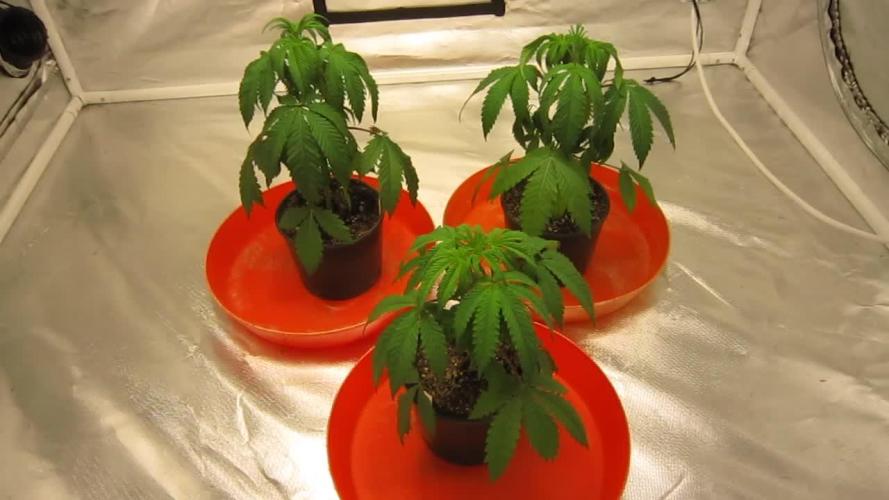







Likes
Comments
Share
@Chucky324
Follow
Hello this is the end of week 3 and the beginning of week 4 of veg.
These girls seem a little wilty, The soil is wet.
I think the light might be a bit too strong for them. It's at 45% I'll turn it down 5% and see how they are tomorrow.
They look good though. Nice green leaves.
I'm topping them this week to get more tops going.
And they get a tomato cage each too, to push the branches out and something to tie the big bud to.
OK. Have Fun Out There.
Chuck.


Likes
3
Share
@xipo86
Follow
now is that time of the harvest that you can see change day by day on buds... love it this phase.. 😀


Processing
Likes
7
Share

Likes
346
Share
@Canna96
Follow
This week went pretty well, other than she stretched like crazy and I am now getting worried about running out of vertical space. I also had a few of my bottom leaves get a few brown and yellow spots on them. I did post some pics and asked a question, thank you for the responses, much appreciated! I am thinking about adding my Spyder Farmer LED 100 Watt light into the tent for the nebula auto because it is about 23 inches shorter than the sour diesel. I believe it would only raise my temp about 2 degrees, and possibly lower the humidity by one or two percent. I must say my dehumidifier has been a freaking stud, running 24X7 and not complaining. I should look into adding another unit, it has been in the mid 90's and muggy for about a week. So far I have to say I am super impressed and excited with this setup, the genetics, and with growing this wonderful plant in general. Already planning ahead to my next grow, and what I can do better. I have been enjoying myself and I really appreciate everyone who has taken the time to answer my questions! I am having a blast and am excited to see what this lady will give up in a few weeks!

Likes
23
Share
@Grey_Wolf
Follow
Fust Buds Originals Sour Diesel 5th week of flowering completed 18th Jan 2020
So that's another week gone by and the sour diesel auto looks pretty tasty to be honest. Not a lot of bulk and there is a tad too much internodal spacing for my liking
However the quality is definately there , with every bud glistening with trichomes and emitting a strong Diesel like smell.
The other plant (polyploid) isn't doing much really but will add to the final yield I get from this grow. Cheers for stopping by 👍
Processing
Likes
20
Share

Processing
Likes
15
Share
@eldruida_lamota
Follow
Que hay de nuevo familia, os traigo la actualización de la semana de nuestras crazy cookies, increíble el tamaño que están alcanzando los centrales, hay que tener bastante cuidado con los nutrientes, si te pasas un poco te lo harán saber.
Tienen un olor bastante peculiar, estas últimas semanas desarrollará todos sus terpenos.
Ph seguimos controlándolo alrededor de 6.5 temperatura algo elevará y humedad perfecta por debajo de los 40%.
No creo que tarden mucho en estar siguen engordando y formando esas flores, la semana que viene veremos cómo avanzan fumetillas.

Likes
15
Share
@Waveform
Follow
After another weekend spent away from home, on day 26 both Opiums present at 30 cm height, having grown big and bushy. Their thirst increased, I will water them when their next day starts. And do some more LST. Not too long until I can install the scrogging net. I am really impressed by their progress. They developed a lot of branching side branches and look really healthy and bushy. In contrast to what I wrote before, I think I can stay a few days longer with the current 80% 18/6 lighting scheme. Leaf positions do not show signs of light hunger, so no reason to change.
Watered them with 1.5 l each on their 27th morning, this time adding some flower fertilisers too. Compensated their relief with some more LST. I can see in timelapse video they are tmelselves compensating this stress easily; it’s amazing to see how fast they turn their heads. You’ll see soon too.
For reference: Pot diameter is approx. 25 cm. So lady #1 spreads about this much, lady #2 is even about 10 cm more. Guess they’ll make a very dense scrog surface, but first let’s have them have their stretch.
Day 28 evening revealed ladies are getting thirstier. The holey pots might be helpful in root development, but they are not when it comes to keeping the tent clean. Because of their structure, water runs out in respectable quantities each time they are fed, which takes a long time to evaporate and adds to air humidity of course. Which on the other hand is currently quite ok. Outside air temperatures are around 30 °C the last days, so a bit more humidity helps to keep the VPD in range. Which is quite ok as I still cannot complain about their growth – around 2–3 cm each day currently.
Grow video for day 28 (sorry about the interferences! Due to the control hard- & software being offline I cannot silence the blower(s) when a photo is taken anymore) shows steady growth and very vivid movements again. Dropping of their leaves around their evening is possibly due to me watering them again as soil was surprisingly dry already.
On their day 29 evening, it’s clear to see how much they are stretching: They really gained 5 cm since yesterday! Lights are close to 30 cm, so I think I’ll reposition things a bit when their next week starts. Attached video shows the day’s progress.
They say you cannot scrog an Automatic but seeing the development speed and bushiness I decided to give it a try nonetheless. I guess the buds can profit from being a bit more apart from each other if I handle to fiddle them through the holes in time.
I rearranged the lights to be at about 45 cm apart from the tops and set the lights to 100% at a 16/8 lighting scheme, waking them up one hour later than before and sending them to sleep one hour earlier.
Last day of this week, day 30, shows that growth speed has even increased. Lady 1 crosses the scrog net already which is positioned at 46 cm above soil. Gave them slightly enhanced water again, 2 l each.

Likes
10
Share
@RandomStreetMerchant
Follow
Got the girls in some bigger pots, avoided waiting a few extra days of transplant shock with some mycorrhiza. They seems to be way happier now!
They got a little stressed out from that one week it was getting into the 90s but I think they will bounce back just fine.
Until next time growmeis. Peace. 06/12/23


Processing
Likes
15
Share
@dank604
Follow
Girls are trucking along without much issue. I did have a bit of PH flux due to my PH meter calibration being off but no biggie, she didn't show too much signs of stress. These girls are starting to stink which I'm happy about, hoping for a really cheesy harvest :D
Likes
19
Share
@JeyGanesha
Follow
Bene continua a crescere super bien......il cerbero sta andando verso la maturazione 👍.continua così bella gustosa terapia mia 😉🤤


Likes
210
Share
@Rock_n_Roll_Randy
Follow
By far the best fertilizer products 👍🤘
www.mars-hydro.com
www.marshydroled.ca
PROMO CODE: rocknroll
Instagram: @marshydropenny
VISIT THE MARS HYDRO STORE AT:
@marshydro_aliexpress
BREEDERS AND SEEDS:
DIVINE SEEDS:
MAZAR, OPIUM, WHITE WIDOW, OG KUSH, PABLO ESCOBAR, DIVINE INDICA.
AUTO WHITE WIDOW
AUTO PABLO ESCOBAR
AUTO WHITE RUSSIAN
AUTO FRACTAL
AUTO MONTREAL
AUTO OPIUM
AUTO KABUL
AUTO MAZAR.
WEEDSEED EXPRESS:
GREEN CRACK, GHOST TRAIN HAZE, LITHIUM OG, CHEESE.
DOCTORS CHOICE:
DC KUSH, AUTO NIAGARA, AUTO ROCK MACHINE.
EXOTIC SEEDS:
HIPPIE BERRY, MALASANA GELATO, EXOTIC ANIMAL.
GENE/MEME SEEDS:
BLACK HELL.
ORIGINAL SENSIBLE SEEDS:
PURPLE PUNCH COOKIES, WEDDING CAKE, PURE KUSH, GORILLA COOKIES.
SWEET SEEDS:
BLACK JACK, GORILLA GIRL, SWEET ZKITTLES.
EMERALD TRIANGLE SEEDS:
GORILLA GLUE, MASTODON KUSH.
SEEDSMAN SEEDS:
BLACK SUGAR, PEYOTE FORUM, PEYOTE WIFI, BADAZZ COOKIES OG, PURPLE GHOST CANDY, STRAWBERRY BANANA GRAPE, L.A. PEYOTE KUSH, PEYOTE WIFI CBD, FUEL DOG, CRITICAL PURPLE KUSH.
AMSTERDAM MARIJUANA SEEDS:
GIRL SCOUT COOKIES EXTREME, GREEN CRACK.
QUEBEC CANNABIS SEEDS:
BRUCE BANNER, GREEN CRACK, QUEBEC CBD 20:1.
I 💚 GROWING MARIJUANA:
SKYWALKER OG, BANANA KUSH, CBD BLUEBERRY
https://growdiaries.com/grower/rock-n-roll-randy
https://greenbuzzliquids.com/
#greenbuzzliquids
@GreenBuzzLiquids
https://greenbuzzliquids.com/en/shop/
PROMO CODE: rocknroll... 15% off
JOIN THE GROW DIARIES COMMUNITY TO TRACK GROWS, MEET GROWERS, ASK AND ANSWER GROW QUESTIONS, LEARN ABOUT LIGHTS, TENTS, FERTILIZER AND SEED BREEDERS
Likes
15
Share
@Dunk_Junk
Follow
Day 77 - Her flowers are forming nicely. Trichomes are forming! Starting to get stinky.

Likes
28
Share
@Grow_N_Smoke
Follow
I went ahead a flipped into flower and the girls have responded really well!
I had some issues last week but I think adjusting the PH down to 5.9 helped and diluting my nutrient solution to bring down my EC levels helped as well

Likes
55
Share
@Ultraviolet
Follow
What's in the soil? What's not in the soil would be an easier question to answer. 16-18 DLI @ the minute. +++ as she grows.
Probably not recommended, but to get to where it needs to be, I need to start now.
Vegetative @1400ppm 0.8–1.2 kPa 80–86°F (26.7–30°C) 65–75%, LST Day 10, Fim'd Day 11
CEC (Cation Exchange Capacity):
This is a measure of a soil's ability to hold and exchange positively charged nutrients, like calcium, magnesium, and potassium. Soils with high CEC (more clay and organic matter) have more negative charges that attract and hold these essential nutrients, preventing them from leaching away.
Biochar is highly efficient at increasing cation exchange capacity (CEC) compared to many other amendments. Biochar's high CEC potential stems from its negatively charged functional groups, and studies show it can increase CEC by over 90%. Amendments like compost also increase CEC but are often more prone to rapid biodegradation, which can make biochar's effect more long-lasting. biochar acts as a long-lasting Cation Exchange Capacity (CEC) enhancer because its porous, carbon-rich structure provides sites for nutrients to bind to, effectively improving nutrient retention in soil without relying on the short-term benefits of fresh organic matter like compost or manure. Biochar's stability means these benefits last much longer than those from traditional organic amendments, making it a sustainable way to improve soil fertility, water retention, and structure over time. Needs to be charged first, similar to Coco, or it will immobilize cations, but at a much higher ratio.
a high cation exchange capacity (CEC) results in a high buffer protection, meaning the soil can better resist changes in pH and nutrient availability. This is because a high CEC soil has more negatively charged sites to hold onto essential positively charged nutrients, like calcium and magnesium, and to buffer against acid ions, such as hydrogen.
EC (Electrical Conductivity):
This measures the amount of soluble salts in the soil. High EC levels indicate a high concentration of dissolved salts and can be a sign of potential salinity issues that can harm plants.
The stored cations associated with a medium's cation exchange capacity (CEC) do not directly contribute to a real-time electrical conductivity (EC) reading. A real-time EC measurement reflects only the concentration of free, dissolved salt ions in the water solution within the medium.
98% of a plants nutrients comes directly from the water solution.
2% come directly from soil particles.
CEC is a mediums storage capacity for cations. These stored cations do not contribute to a mediums EC directly.
Electrical Conductivity (EC) does not measure salt ions adsorbed (stored) onto a Cation Exchange Capacity (CEC) site, as EC measures the conductivity of ions in solution within a soil or water sample, not those held on soil particles.
A medium releases stored cations to water by ion exchange, where a new, more desirable ion from the water solution temporarily displaces the stored cation from the medium's surface, a process also seen in plants absorbing nutrients via mass flow. For example, in water softeners, sodium ions are released from resin beads to bond with the medium's surface, displacing calcium and magnesium ions which then enter the water. This same principle applies when plants take up nutrients from the soil solution: the cations are released from the soil particles into the water in response to a concentration equilibrium, and then moved to the root surface via mass flow.
An example of ion exchange within the context of Cation Exchange Capacity (CEC) is a soil particle with a negative charge attracting and holding positively charged nutrient ions, like potassium (K+) or calcium (Ca2+), and then exchanging them for other positive ions present in the soil solution. For instance, a negatively charged clay particle in soil can hold a K+ ion and later release it to a plant's roots when a different cation, such as calcium (Ca2+), is abundant and replaces the potassium. This process of holding and swapping positively charged ions is fundamental to soil fertility, as it provides plants with essential nutrients.
Negative charges on soil particles: Soil particles, particularly clay and organic matter, have negatively charged surfaces due to their chemical structure.
Attraction of cations: These negative charges attract and hold positively charged ions, or cations, such as:
Potassium (K+)
Calcium (Ca2+)
Magnesium (Mg2+)
Sodium (Na+)
Ammonium (NH4+)
Plant roots excrete hydrogen ions (H+) through the action of proton pumps embedded in the root cell membranes, which use ATP (energy) to actively transport H+ ions from inside the root cell into the surrounding soil. This process lowers the pH of the soil, which helps to make certain mineral nutrients, such as iron, more available for uptake by the plant.
Mechanism of H+ Excretion
Proton Pumps: Root cells contain specialized proteins called proton pumps (H+-ATPases) in their cell membranes.
Active Transport: These proton pumps use energy from ATP to actively move H+ ions from the cytoplasm of the root cell into the soil, against their concentration gradient.
Role in pH Regulation: This active excretion of H+ is a major way plants regulate their internal cytoplasmic pH.
Nutrient Availability: The resulting decrease in soil pH makes certain essential mineral nutrients, like iron, more soluble and available for the root cells to absorb.
Ion Exchange: The H+ ions also displace positively charged mineral cations from the soil particles, making them available for uptake.
Iron Uptake: In response to iron deficiency stress, plants enhance H+ excretion and reductant release to lower the pH and convert Fe3+ to the more available form Fe2+. The altered pH can influence the activity and composition of beneficial microbes in the soil. The H+ gradient created by the proton pumps can also be used for other vital cell functions, such as ATP synthesis and the transport of other solutes. The hydrogen ions (H+) excreted during photosynthesis come from the splitting of water molecules. This splitting, called photolysis, occurs in Photosystem II to replace the electrons used in the light-dependent reactions. The released hydrogen ions are then pumped into the thylakoid lumen, creating a proton gradient that drives ATP synthesis.
Plants release hydrogen ions (H+) from their roots into the soil, a process that occurs in conjunction with nutrient uptake and photosynthesis. These H+ ions compete with mineral cations for the negatively charged sites on soil particles, a phenomenon known as cation exchange. By displacing beneficial mineral cations, the excreted H+ ions make these nutrients available for the plant to absorb, which can also lower the soil pH and indirectly affect its Cation Exchange Capacity (CEC) by altering the pool of exchangeable cations in the soil solution.
Plants use proton (H+) exudation, driven by the H+-ATPase enzyme, to release H+ ions into the soil, creating a more acidic rhizosphere, which enhances nutrient availability and influences nutrient cycling processes. This acidification mobilizes insoluble nutrients like iron (Fe) by breaking them down, while also facilitating the activity of beneficial microbes involved in the nutrient cycle. Therefore, H+ exudation is a critical plant strategy for nutrient acquisition and management, allowing plants to improve their access to essential elements from the soil.
A lack of water splitting during photosynthesis can affect iron uptake because the resulting energy imbalance disrupts the plant's ability to produce ATP and NADPH, which are crucial for overall photosynthetic energy conversion and can trigger a deficiency in iron homeostasis pathways. While photosynthesis uses hydrogen ions produced from water splitting for the Calvin cycle, not to create a hydrogen gas deficiency, the overall process is sensitive to nutrient availability, and iron is essential for chloroplast function.
In photosynthesis, water is split to provide electrons to replace those lost in Photosystem II, which is triggered by light absorption. These electrons then travel along a transport chain to generate ATP (energy currency) and NADPH (reducing power). Carbon Fixation: The generated ATP and NADPH are then used to convert carbon dioxide into carbohydrates in the Calvin cycle. Impaired water splitting (via water in or out) breaks the chain reaction of photosynthesis. This leads to an imbalance in ATP and NADPH levels, which disrupts the Calvin cycle and overall energy production in the plant. Plants require a sufficient supply of essential mineral elements like iron for photosynthesis. Iron is vital for chlorophyll formation and plays a crucial role in electron transport within the chloroplasts. The complex relationship between nutrient status and photosynthesis is evident when iron deficiency can be reverted by depleting other micronutrients like manganese. This highlights how nutrient homeostasis influences photosynthetic function. A lack of adequate energy and reducing power from photosynthesis, which is directly linked to water splitting, can trigger complex adaptive responses in the plant's iron uptake and distribution systems.
Plants possess receptors called transceptors that can directly detect specific nutrient concentrations in the soil or within the plant's tissues. These receptors trigger signaling pathways, sometimes involving calcium influx or changes in protein complex activity, that then influence nutrient uptake by the roots. Plants use this information to make long-term adjustments, such as Increasing root biomass to explore more soil for nutrients. Modifying metabolic pathways to make better use of available resources. Adjusting the rate of nutrient transport into the roots. That's why I keep a high EC. Abundance resonates Abundance.
Likes
9
Share
@Atom_x_Andromeda
Follow
Growing strong cut 13clones today and transplanted the two biguns loving how they are turning out


