The Grow Awards 2026 🏆 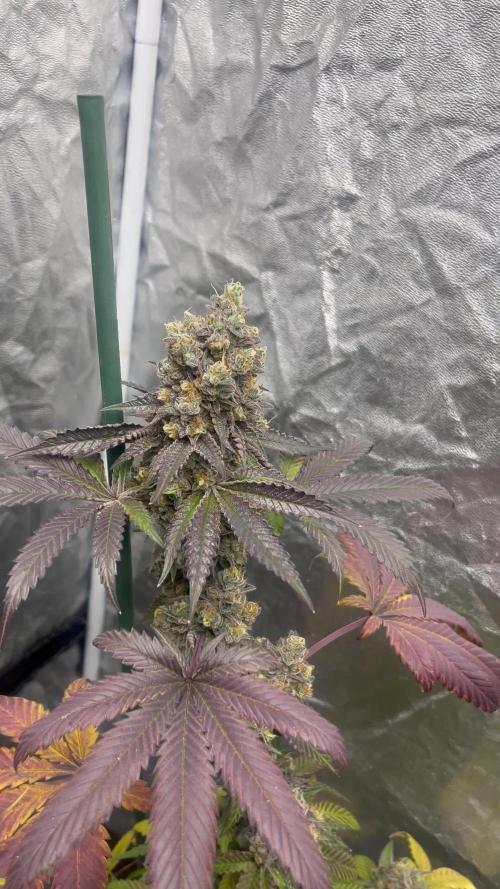






Likes
Comments
Share
@eldruida_lamota
Follow
Vamos familia, actualizamos la novena semana de floración de estas Gelato 44 de RoyalQueenSeeds.
La temperatura que estuvo entre los 24-26 grados y humedad dentro de los rangos correctos.
En cuanto a las plantas las veo verde sano, estiraron bien y ensancharon bastante también.
Quitamos los nutrientes y les dimos solo agua esta semana.
Hay que reivindicar que en este armario no tengo trips ni plagas.
Las flores están madurando bien, por el momento todo correcto, os dejé también alguna novedad y un cambio en la sala, agradecer al equipo de Mars hydro por el nuevo TSW2000. (los últimos 5 años cultive solo con los leds de esta marca) los cuales probé, TS600, TS1000, TS3000, TSL2000.
- os dejo por aquí un CÓDIGO: Eldruida
Descuento para la tienda de MARS HYDRO.
https://www.mars-hydro.com
Hasta aquí todo, Buenos humos 💨💨💨

Likes
7
Share
@ThePotFactory
Follow
Safe to say this is where the money shots start to happen xD. All is going well I think, Im trying to water them every day. Not a lot of maintenance needed at this stage if Im honest. There seem only to be a few little flowers under the net that i just pick off; they usually amount to nothing once dried. Hope to get these colas fat and heavy.
Peace
Charlie
Likes
3
Share
@TS_Greens23
Follow
I have to say,,at the beginning of the Apricot Autos journey,,she had multiple tops,,and jumped out of the barriers like lightning,,,my sexy fingers,,managed to snap the top off what appeared to be the leader,,,and she instantly started flowering,,and didn’t stretch out like I thought she might have,,,,so to cut my losses,,I put her in the outdoor garden to finish up


Likes
15
Share
@IsseyBukkake
Follow
We've made it to day 28! - 17/12/20
The girls seem to be happy and healthy today.
I won't be feeding/watering them as the pots are still heavy from yesterdays feed.
A few of the girls have started to show sex & the smell has picked up a little bit(inside the tent), so I'm hoping to see some flowering begin this week sometime.
(I've been using my iPhone as my only DSLR lens is useless for focusing on certain depths, but I hate the colour I get using the iPhone... I may be switching back to DSLR unless I can find a better camera app.)
update - day 29 (18/12/20)
Short update today.
Fed the girls today and will probably be feeding/watering every day from here on out, we'll see though.
veg growth has really taken off by now, I'm hoping to see some flowering this week.
update - day 30 (19/12/20)
I fed the girls today.
I need to find a better way to hand water, the plants are so short and bushy its a pain getting in between all the branches.
I wish i left my drip feed system up and running, I will definitely refine it and use it next run.
Update - day 31 (20/12/20)
Fed the girl's straight water today.
I'm going to purchase the pieces I need tomorrow to reconfigure my drip feed system & hopefully have it running by mid-week!
Update - day 32
I attempted to set up my drip feed system today but the plants are too thick around the base to place the halo around :(
I will have to wait until next season to set it up, oh well, I guess its hand watering for the next 5-10 weeks
Fingers crossed these girls start to flower ASAP.
I fed the girls today, everything is looking good so far.
I also moved the plants around to try to make hand watering easier, I had issues trying to water the whole pot instead of just one spot due to plants/branches being in the way.
Update - Day 34 - 23/12/20
It definitely seems ill be watering the girls every day from here on out.
All the girls look fairly happy and healthy, they're getting a bit big for the 5x5 they're in.
It looks like flowering has begun on 2 of the girls, hoping to see some more progress on the others in the next few days.
Thanks for stopping by! 🙏

Likes
6
Share
@Rugginho94
Follow
I cut another part of the girls, and the total is even greater than the first part!
We wait another week for the final sums, but right now the flavor is unique.

Likes
17
Share
@Leonweed10
Follow
Una cepa muy fácil de cultivar, y muy agradecida de los cuidados y alimentos dados... En sus últimas 3 semanas engordaron muy bien llegando a formar muy lindos apicales centrales.


Likes
4
Share
@603grower
Follow
Start of week 9 and the girls are just about done. Think I over watered the last two weeks. For some reason I feel like they don’t smell as dank as they did a few weeks ago. Maybe I’m just getting used to them my wife says it still reaks!! Gonna be chopping the girls down in a week days. The gas cream could of been chopped last week but I wanted the Saturn to finish


Likes
9
Share
@MassEric
Follow
Well shit..... Here is a reminder for everyone out there, calibrate your pH monitoring equipment on its recommended schedule! Of all the things to forget about. Sigh. My pH has been out of whack, looks like it was far to low and I have been effectively starving the plants of phosphorus. At least is what the leaves are starting to show, a definite deficiency.
It was hard to see on the right plant at first as the purple hit the spots rather well. They just started turning necrotic in places. It really jumped out on the left plant and was easier to spot.
It was reading 6.1 but was more like 5.2
Lesson learned, stay on top of that pH. I think it is time to retire these old Milwaukee MC120's in favor of some newer models. I could just replace the probes and double down on the calibration but I've had these things for nearly ten years now. I think sitting in that moderately humid environment has taken its toll on the internals. They aren't exactly made well.
Oh well, these won't end up looking perfectly pretty in the end I guess. Given that I already wasn't to happy with the pheno, I'm not expecting much from these plants now.

Likes
114
Share
@Natrona
Follow
Lemon Cake & Lemon Drizzle
Week 9 6/2-6/8 Now at the start of week 9, my outside gals, except L. Cake are now in flower.
This is the first week I’ve had to add nutrients to her feeding. Some lower leaves were yellow. Since I’ve been using amended soil, this indicates Opium is a heavy feeder. Nutrients in soils are used up and she is starting to use her own food sources
5 gallons well water
TPS1 60ml used 1 gallon per plant =12ml
Cal-Mag 25ml used 1 gallon per plant =5ml
Recharge 5ml used 1 gallon per plant =1ml
Signal 1.25ml
PPM 1414, PH 6.93, Temp 82.5
Note I do not have to PH adjust my well water. However, our city water comes out of the tap at 8.2 ph so I must PH down using the hose or my inside grows,
============
Germination April 6.
Vegetation
Week 1 water only
Week 2 water only
Week 3 added recharge and TPS1 increased ppm to 570.
Week 4 continues with recharge and TPS1. I added Fox Cal mag increasing ppm to 685 - 805.
Week 5
TPS1 9ml/gal
Recharge 5 ml/gal
Fox Cal-mag 5 ml/gal
Week 6 5/12-19 Moved outside in 5 gal air pots receiving rain and well water.
Week 7 5/19-25 The Lemons received rain water for the last 2 weeks. They love the natural rain and sunshine evidenced by vigorous growth.
Week 8 5/26-6/1
Drizzle is in flower, stacking buds along the stalk that reaches 38 inches.
Cake is still vegging at 28 inches. Her new growth is starting to show the pistils at the bud sites.
============
Thanks for the visits, likes and comment, I appreciate all the plant love💚.
Have fun & love what you grow 💚
Sending you good vibes of love, light, and healing 💫
💫Natrona 💫
BARNEYS FARM- LEMON DRIZZLE
Lemon Drizzle Cannabis Seeds
Type: Feminized Weed Strain
Lemon Drizzle Strain by Barneys Farm
Indulge yourself in the tantalizing aroma of our Lemon Drizzle strain, a sensually crafted cannabis strain that is sure to tantalize your senses and leave you in a state of blissful euphoria. Bred from a seductive blend of Super Lemon Haze and OG Kush, this sativa-dominant weed strain will transport you to another plane of existence.
With a flowering time of 60-65 days, Lemon Drizzle's exquisite buds are bursting with a potent THC percentage of 20-25%, ensuring an unparalleled and satisfying high. The complex terpene profile of this alluring strain is sure to captivate your senses with notes of zesty lemon and a hint of earthy Kush undertones, providing a flavor explosion that you won't forget.
This tempting beauty grows to a height of 1m - 1.2m indoors and 1.5m - 2m outdoors. You'll be impressed by the generous indoor yield of 550g/m2, while the outdoor yield of up to 1.5 - 2kg is beyond substantial. Experience the ultimate in relaxation with Lemon Drizzle's outdoor flowering time, which begins in early October, allowing you to bask in the sweet sunshine and savor the heady effects of this tantalizing strain. Succumb to the charms of our Lemon Drizzle strain and discover a world of unadulterated pleasure that will leave you in awe.
Is Lemon Drizzle Indica or Sativa?
The Lemon Drizzle strain by Barneys Farm is 85% Sativa 15% Indica.
What is the best way to store my Lemon Drizzle strain seeds?
To properly store Lemon Drizzle seeds, it is recommended to keep them cool and dark in an airtight container ideally in a refrigerator with proper labeling and dating, avoiding freezing.
Lemon Drizzle Cannabis Seeds Strain Specifications
Type: Feminised
Genetics: Super Lemon Haze Strain x OG Kush Strain
Photoperiod: Normal
Sativa %: 85%
Indica %: 15%
Flowering Time (days): 60 - 65
Feminised Outdoor Harvest Month Week: 1st-2nd week - October
Indoor Height (cm): 100-120cm
Indoor Yield (g): up to 550-650 gr/m²
Outdoor Height (cm): up to 150-200cm
Outdoor Yield (g): up to 1500 gr/plant
Taste: Sour, Lemon, Sweet, Citrus Fruits
Aroma: Sweet, Sour, Citrus, Pine, Earthy
Effect: Energizing, Uplifting, Focused, Motivated
PREMIUN CULTIVARS LEMON CAKE
Lemon Cake Seeds
Lemon Cake strain seeds generate typical Sativa buds known for their heavy trichome covering against a bright green background. Let's look at this great strain and learn about its genetics, growing information, and how to obtain it.
Cultivar Profile
Terpenes Caryophyllene, Myrcene, Terpinolene
Strain Type Sativa
Difficulty Moderate
Height 30 in – 78 in
Yield (oz/ft2) 1 – 3
Flowering Time 9 – 10 weeks
Harvest Month October
Pack Size 3, 6, 12, 24
Seed Type Feminized
Brand Premium Cultivars

Likes
293
Share
@Ju_Bps
Follow
Hello growmies 👩🌾👨🌾🌲🌲,
👋 Girls are happy and doing a big stretch, some stems start to be big and hedgehogs are arrived 🦔🦔
💪 Continuing Defoliation, scrog and fight with leaves.
💧 Give water each 2/3 day
And vaporise plant with water + Plagron Roots (1ml/l)
2 l Water + Roots + Bloom + Zym + Sugar Royal (1 + 3 + 1 + 1 ml/l)
2 l Water + Roots + Bloom + Zym + Sugar Royal (1 + 3 + 1 + 1 ml/l)
PH @6
💡Mars Hydro - FC 3000
50% 33 cm
Mars Hydro Fan kit
Setting 6
Have a good week and see you next week 👋
Thanks community for follow, likes, comments, always a pleasure 👩🌾👨🌾❤️🌲
Mars Hydro - Smart FC3000 300W Samsung LM301B LED Grow Light💡💡
https://www.mars-hydro.com/fc-3000-samsung-lm301b-led-grow-light
Mars Hydro - 6 Inch Inline Fan And Carbon Filter Combo With Thermostat Controller 💨💨
https://www.mars-hydro.com/6-inch-inline-duct-fan-and-carbon-filter-combo-with-thermostat-controller
Fast Buds - Gorilla Cookies FF🌲🌲
https://2fast4buds.com/us/seeds/gorilla-cookies-fast-flowering
Likes
6
Share
@Livetimegrower93
Follow
This has by far been the most stressful part of the grow. as I'm trying to increase yield as much as possible, and in doing so f£&ked around and found out the hard way. She has gone into what I would say is severe shock this on the 31/1/25 will be the 3rd day of shock hopefully she can pull through and start growing again 🙏 🤞


Likes
9
Share
@KarlysCannabis
Follow
Veg Week 6 - Holy she grew so fast in the new pot. Going to have to put it lower from the light this week. It definitely stinks if I pull any leaves.
@Grove Bags, @Fishshit, @SoHumSoils, @KindwayFarms @KindwayConsultationsLLC @nutetools, @mjarsenal, @ElevatingTravel, @IntegraProducts @AyaofAfrica @WaxyBrownsFlowerPowerHour-Interactive @BowlBuddy, @cannakamp, @HoneycombHydroLLC @ChillZHQ @TheCannaCoaches, @VibesByDesignLLC @CryptoCannabisClub, @REALMetaMinds @SeattleHempfest @Buttheadz @SwadeSoul @abagaletv, @abagoldcoin, @Idonfts, @ASRG
#wegrowstrongertogether #mocannacup #LFG #letsfngrow #jawwbreaker #danmccann #jawwbreakerbreath #jackterror #legaladultuse #getmoftomyourgrow #honeycombhydrollc #heropackz #nft #crypto #blockchain #metaverse #seedtheworld #greenfarmy #drugsdontmakeseeds #NFSOT


Likes
3
Share
@eldruida_lamota
Follow
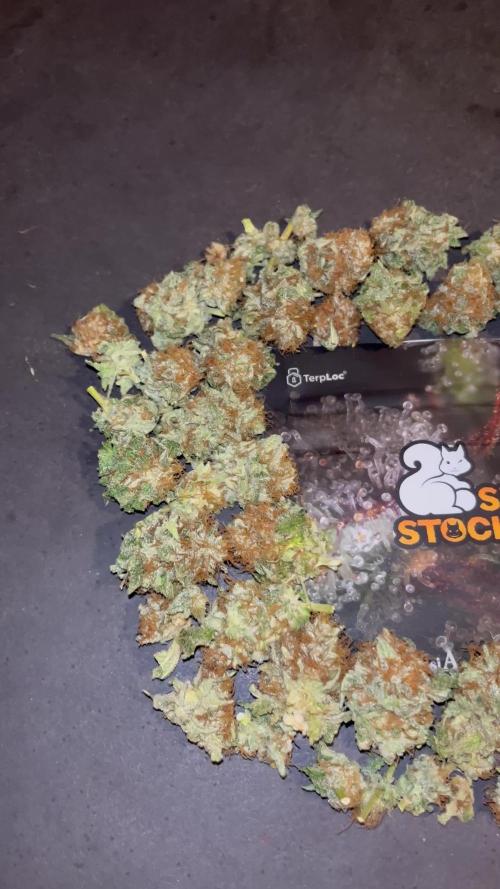
Venga familia que ya viene la cosecha de estas semillas mistery de Seedstockers, que ganas que tenia ya de darles machetazo.
Que locura de variedad , me encantó cultivarla , aún con la plaga de trips que sufrí aguantaron y sacaron unas flores alucinantes.
Las flores aparte de piedras, se ven resinosas.
a sido una genética con la que disfruté bastante, por el momento no puedo dar muchos más datos sobre este proyecto pero aquí resultados.
Agrobeta:
https://www.agrobeta.com/agrobetatiendaonline/36-abonos-canamo
Mars hydro:
Code discount: Eldruida
https://www.mars-hydro.com/
Hasta aquí es todo , espero que lo disfrutéis, buenos humos 💨💨.
Likes
10
Share
@cherokee
Follow
Привет 🖖
С новым годом 🎅
2022 самый ужасный год в моей жизни! Он был сложным во всем, экономический кризис, война.......
Я добавил видео, это 2 ракеты 31 декабря упали рядом с моим домом, русские нацисты обстреляли жилой район, умерла девушка 22 года ей было..... 4 человека получили ранения..... Так страшно ещё не было! Мы встречали новый год под обстрелы ракет и звук сирен тревоги в полной темноте...... Россия государство террорист убийца 😣
Это мой блог и я хочу здесь делится своими чувствами и эмоциями, что бы больше людей знали что происходит.
А теперь дневник.
На этой неделе растения стабильно получали 20 часов света, это очень помогло им стать больше и сильнее.
Я продолжаю тренировки LST.
На этой неделе была обрезка веерных листьев, я часто практикую дефолиацию автоцветов. Надеюсь проблем со светом не будет, растения уже показали "усы" свой пол, значит стадия предцвета будет примерно через неделю, хочу что бы они стали ещё больше и набрали "мяса" массу.
Ещё раз поздравляю всех с новым годом. Мира вам и вашим семьям, и мирного неба, что бы в ваш дом не прилетали ракеты.
🇺🇦 🇺🇦 🇺🇦
Likes
16
Share
@SAC87
Follow
Update:
All 3 seeds broke ground on May 20. Ready to see these babies grow big and beautiful.
Germ Day 1:
Today I decided to plant 3 Fast Buds Afghan Kush Auto. I mixed the Gaia Green All Purpose 4-4-4 with a couple tbsp of mychorrizae and crushed egg shells into 5 gal of sunshine #4 which is predominantly a peat based media. I watered around the seed thoroughly.
I am using the sponsored Vipar Spectra XS2000 and think it will be awesome for these auto flowers. It’s a super strong light with an awesome spectrum. I have it set at 30% at 34”.
I’m excited to see how this combo works. I’ve seen great things from each part and looking forward to a great result together.
Happy Growing 🌱
Processing
Likes
11
Share
@kcartel
Follow
For the first time this week I added fertilizer of 0.5 each, and faced a very unpleasant problem, the plant rushed up so much that at the moment the top cola reached the height of the lamp, and the temperature there is quite high, very much afraid that it could damage the plant itself, and It all happened because I did the maine lining, and the central cola went to grow up, I don’t know how to solve this issue, but soon I think I’ll decide this question, wait for 6 weeks!
Likes
52
Share
@Ultraviolet
Follow
Lacewings seemed to have mostly killed themselves by flying into hot light fixtures. I may have left the UV on which was smart of me :) Done very little to combat if anything but make a sea of carcasses, on the bright side its good nutrition for the soil.
Made a concoction of ethanol 70%, equal parts water, and cayenne pepper with a couple of squirts of dish soap.
Took around an hour of good scrubbing the entire canopy.
Worked a lot more effectively and way cheaper.
Scorched earth right now, but it seems to have wiped them out almost entirely very pleased.
Attempted a "Fudge I Missed" for the topping. So just time to wait and see how it goes.
Question?
If I attached a plant to two separate pots but it was connected by rootzone, one has a pH of 7.5 ish the other has 4.5. Would the Intelligence of the plant able to dictate each pot separately to uptake the nutrients best suited to pH or would it still try to draw nitrogen from a pot with a pH where nitrogen struggles to uptake?
Food for stoner thought experiments!
Another was on my mind.
What happens when a plant gets too much light?
Well, it burns and curls up leaves.
That's the heat radiation, let's remove excess heat, now what?
I've always read it's just bad, or not good, but when I look for an explanation on a deeper level it's just bad and you shouldn't do it.
So I did.
How much can a cannabis plant absorb, 40 moles in a day, ok I'll give it 60 moles. 80 nothing bad ever happened.
The answer, finally. Oh great........more questions........
Reactive oxygen species (ROS) are molecules capable of independent existence, containing at least one oxygen atom and one or more unpaired electrons.
"Sunlight is the essential source of energy for most photosynthetic organisms, yet sunlight in excess of the organism’s photosynthetic capacity can generate reactive oxygen species (ROS) that lead to cellular damage. To avoid damage, plants respond to high light (HL) by activating photophysical pathways that safely convert excess energy to heat, which is known as nonphotochemical quenching (NPQ) (Rochaix, 2014). While NPQ allows for healthy growth, it also limits the overall photosynthetic efficiency under many conditions. If NPQ were optimized for biomass, yields would improve dramatically, potentially by up to 30% (Kromdijk et al., 2016; Zhu et al., 2010). However, critical information to guide optimization is still lacking, including the molecular origin of NPQ and the mechanism of regulation."
What I found most interesting was research pointing out that pH is linked to this defense mechanism. The organism can better facilitate "quenching" when oversaturated with light in a low pH. Now I Know during photosynthesis plants naturally produce exudates (chemicals that are secreted through their roots). Do they have the ability to alter pH themselves using these excretions? Or is that done by the beneficial bacteria?
If I can prevent reactive oxygen species from causing damage by "too much light".
The extra water needed to keep this level of burn cooled though, I must learn to crawl before I can run.
Reactive oxygen species (ROS) are key signaling molecules that enable cells to rapidly respond to different stimuli. In plants, ROS plays a crucial role in abiotic and biotic stress sensing, integration of different environmental signals, and activation of stress-response networks, thus contributing to the establishment of defense mechanisms and plant resilience. Recent advances in the study of ROS signaling in plants include the identification of ROS receptors and key regulatory hubs that connect ROS signaling with other important stress-response signal transduction pathways and hormones, as well as new roles for ROS in organelle-to-organelle and cell-to-cell signaling. Our understanding of how ROS are regulated in cells by balancing production, scavenging, and transport has also increased. In this Review, we discuss these promising developments and how they might be used to increase plant resilience to environmental stress.
Temperature stress is one of the major abiotic stresses that adversely affect agricultural productivity worldwide. Temperatures beyond a plant's physiological optimum can trigger significant physiological and biochemical perturbations, reducing plant growth and tolerance to stress. Improving a plant's tolerance to these temperature fluctuations requires a deep understanding of its responses to environmental change. To adapt to temperature fluctuations, plants tailor their acclimatory signal transduction events, specifically, cellular redox state, that are governed by plant hormones, reactive oxygen species (ROS) regulatory systems, and other molecular components. The role of ROS in plants as important signaling molecules during stress acclimation has recently been established. Here, hormone-triggered ROS produced by NADPH oxidases, feedback regulation, and integrated signaling events during temperature stress activate stress-response pathways and induce acclimation or defense mechanisms. At the other extreme, excess ROS accumulation, following temperature-induced oxidative stress, can have negative consequences on plant growth and stress acclimation. The excessive ROS is regulated by the ROS scavenging system, which subsequently promotes plant tolerance. All these signaling events, including crosstalk between hormones and ROS, modify the plant's transcriptomic, metabolomic, and biochemical states and promote plant acclimation, tolerance, and survival. Here, we provide a comprehensive review of the ROS, hormones, and their joint role in shaping a plant's responses to high and low temperatures, and we conclude by outlining hormone/ROS-regulated plant-responsive strategies for developing stress-tolerant crops to combat temperature changes.
Onward upward for now.
Next!
Adenosine triphosphate
(ATP) is an energy-carrying molecule known as "the energy currency of life" or "the fuel of life," because it's the universal energy source for all living cells.1
Every living organism consists of cells that rely on ATP for their energy needs. ATP is made by converting the food we eat into energy. It's an essential building block for all life forms. Without ATP, cells wouldn't have the fuel or power to perform functions necessary to stay alive, and they would eventually die. All forms of life rely on ATP to do the things they must do to survive.2
ATP is made of a nitrogen base (adenine) and a sugar molecule (ribose), which create adenosine, plus three phosphate molecules. If adenosine only has one phosphate molecule, it’s called adenosine monophosphate (AMP). If it has two phosphates, it’s called adenosine diphosphate (ADP).
Although adenosine is a fundamental part of ATP, when it comes to providing energy to a cell and fueling cellular processes, the phosphate molecules are what really matter. The most energy-loaded composition for adenosine is ATP, which has three phosphates.3
ATP was first discovered in the 1920s. In 1929, Karl Lohmann—a German chemist studying muscle contractions—isolated what we now call adenosine triphosphate in a laboratory. At the time, Lohmann called ATP by a different name. It wasn't until a decade later, in 1939, that Nobel Prize–-winner Fritz Lipmann established that ATP is the universal carrier of energy in all living cells and coined the term "energy-rich phosphate bonds."45
Lipmann focused on phosphate bonds as the key to ATP being the universal energy source for all living cells, because adenosine triphosphate releases energy when one of its three phosphate bonds breaks off to form ADP. ATP is a high-energy molecule with three phosphate bonds; ADP is low-energy with only two phosphate bonds.
The Twos and Threes of ATP and ADP
Adenosine triphosphate (ATP) becomes adenosine diphosphate (ADP) when one of its three phosphate molecules breaks free and releases energy (“tri” means “three,” while “di” means “two”). Conversely, ADP becomes ATP when a phosphate molecule is added. As part of an ongoing energy cycle, ADP is constantly recycled back into ATP.3
Much like a rechargeable battery with a fluctuating state of charge, ATP represents a fully charged battery, and ADP represents a "low-power mode." Every time a fully charged ATP molecule loses a phosphate bond, it becomes ADP; energy is released via the process of ATP becoming ADP.
On the flip side, when a phosphate bond is added, ADP becomes ATP. When ADP becomes ATP, what was previously a low-charged energy adenosine molecule (ADP) becomes fully charged ATP. This energy-creation and energy-depletion cycle happens time and time again, much like your smartphone battery can be recharged countless times during its lifespan.
The human body uses molecules held in the fats, proteins, and carbohydrates we eat or drink as sources of energy to make ATP. This happens through a process called hydrolysis
.
After food is digested, it's synthesized into glucose, which is a form of sugar. Glucose is the main source of fuel that our cells' mitochondria
use to convert caloric energy from food into ATP, which is an energy form that can be used by cells.
ATP is made via a process called cellular respiration that occurs in the mitochondria of a cell. Mitochondria are tiny subunits within a cell that specialize in extracting energy from the foods we eat and converting it into ATP.
Mitochondria can convert glucose into ATP via two different types of cellular respiration:
Aerobic (with oxygen)
Anaerobic (without oxygen)
Aerobic cellular respiration transforms glucose into ATP in a three-step process, as follows:
Step 1: Glycolysis
Step 2: The Krebs cycle (also called the citric acid cycle)
Step 3: Electron transport chain
During glycolysis, glucose (i.e., sugar) from food sources is broken down into pyruvate
molecules. This is followed by the Krebs cycle, which is an aerobic process that uses oxygen to finish breaking down sugar and harnesses energy into electron carriers that fuel the synthesis of ATP. Lastly, the electron transport chain (ETC) pumps positively charged protons that drive ATP production throughout the mitochondria’s inner membrane.2
ATP can also be produced without oxygen (i.e., anaerobic), which is something plants, algae, and some bacteria do by converting the energy held in sunlight into energy that can be used by a cell via photosynthesis.
Anaerobic exercise means that your body is working out "without oxygen." Anaerobic glycolysis occurs in human cells when there isn't enough oxygen available during an anaerobic workout. If no oxygen is present during cellular respiration, pyruvate can't enter the Krebs cycle and is oxidized into lactic acid. In the absence of oxygen, lactic acid fermentation makes ATP anaerobically.
The burning sensation you feel in your muscles when you're huffing and puffing during anaerobic high-intensity interval training (HIIT) that maxes out your aerobic capacity or during a strenuous weight-lifting workout is lactic acid, which is used to make ATP via anaerobic glycolysis.
During aerobic exercise, mitochondria have enough oxygen to make ATP aerobically. However, when you're out of breath and your cells don’t have enough oxygen to perform cellular respiration aerobically, the process can still happen anaerobically, but it creates a temporary burning sensation in your skeletal muscles.
Why ATP Is So Important?
ATP is essential for life and makes it possible for us to do the things we do. Without ATP, cells wouldn't be able to use the energy held in food to fuel cellular processes, and an organism couldn't stay alive.
As a real-world example, when a car runs out of gas and is parked on the side of the road, the only thing that will make the car drivable again is putting some gasoline back in the tank. For all living cells, ATP is like the gas in a car's fuel tank. Without ATP, cells wouldn't have a source of usable energy, and the organism would die.
Eating a well-balanced diet and staying hydrated should give your body all the resources it needs to produce plenty of ATP. Although some athletes may slightly improve their performance by taking supplements or ergonomic aids designed to increase ATP production, it's debatable that oral adenosine triphosphate supplementation actually increases energy.
An average cell in the human body uses about 10 million ATP molecules per second and can recycle all of its ATP in less than a minute. Over 24 hours, the human body turns over its weight in ATP.
You can last weeks without food.
You can last days without water.
You can last minutes without oxygen.
You can last 16 seconds at most without ATP.
Food amounts to one-third of ATP production within the human body.