


Likes
Comments
Share
@LoopyTerps
Follow
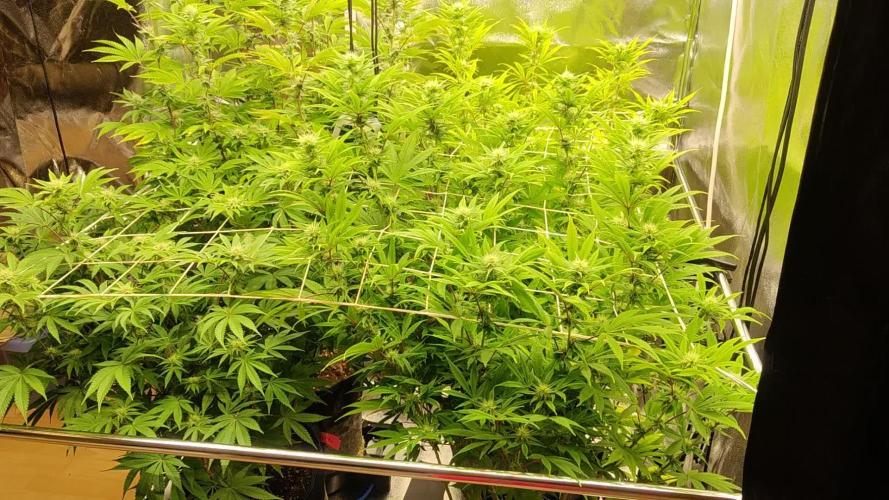
Everything going great beside the back right Original Oreoz which is very pale and looks either overfed or locked-out. I think this is due to poor genetics. She is still praying and growing buds so...
I cannot ajust the feed for differents plants since I use a single reservoir. That's one of the downsight of growing multiple strains on the autopot system.
First smell is here, very promising for the 2 tropics.
Getting ready for the bulking phase.
Happy growing !😊


Likes
3
Share

@Wizardgreen317
Follow
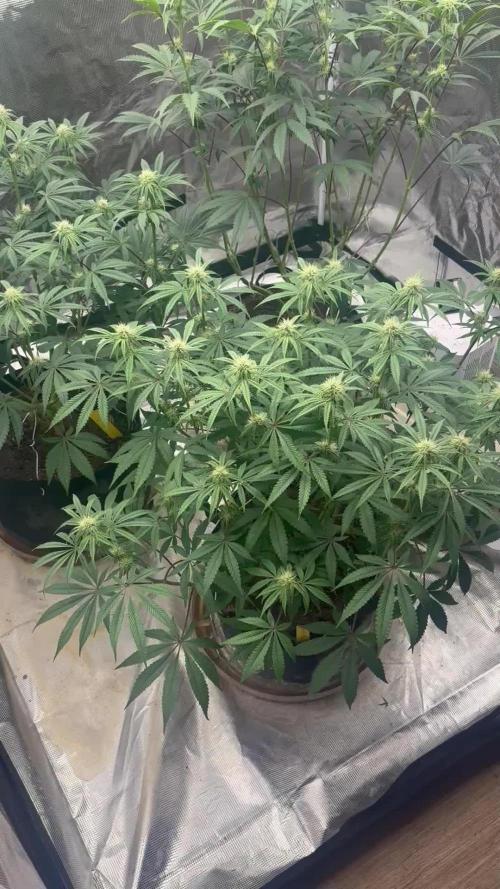
House got a little cooler so they been doing really well the tent gets at it hottest 80 to 84 degrees .. I’ve been feeding a little more since I don’t know if they need more but the looking outstanding . There’s no info on these two strains. I’m going to let the coco dry out alittle more but for half soil half coco there doing great. lol



Likes
43
Share


@TheBulldozerSicily
Follow
Come si evince dalle foto le talee sono oramai diventate piccole piante e stanno crescendo molto bene e in salute, oggi dopo 14 giorni cambiamo la soluzione per raffrescare acqua e nutrienti!!!
Happy growing!!!
Venerdì 19/01/2024
Inizio controllo ec 1444 ph 6.5
Cambiamo l'acqua
Partiamo da 75 lt acqua demineralizzata, otteniamo ec 345 ph 7
Aggiungiamo
135 grow 90 micro 45 bloom
75 sensizym 75 calmag 75 rhino skin 75 nirvana 75 bud candy
Ottenendo ec 1602 ph 6.1
Ci aggiorniamo la prossima settimana 🥂
Processing
Likes
14
Share


@Mr_Og_GreenThumb
Follow
Week 12, Day 83 from seed and 3rd day of flower.....The 5 day of this week officially marked the start of the flowering season!! So I flushed both of these bad boys with ph'd water for two days and then today I switched them to 12/12. I gave them their first dose of bloom nutrients and then lollipoped them as you can see, pixs . Grateful no issues to report for the past 3 weeks have been trouble-free!! I'm going to leave the MH bulb in for an additional 2 weeks to prevent any stretching before switching to the HPS. But so far they are still loving their environment. I'm also in the process of keeping clones of fat banana and hulkberry while i try this new strain of Peanut Butter Tree.

Likes
60
Share


@Lungboi
Follow
Hi everyone! So nothing really of note to report this week, she is definitely getting closer to harvest as she is uptaking significantly less nutrients now than she did a week or two ago so I have had to go down on nutrients and will probably have to lower it even more as it is still raising daily. She is also getting a bit fatter and denser but I'm really hoping to see some improvement here over the last weeks🙏
I have again been pretty busy outside the grow tent this week building and setting up an outdoor gardening area at our house for my girlfriend to grow her vegetables, fruits, and flowers so I have had less time to be in there and have forgotten to take pictures some of the days. But it has been lucky that I haven't really had any problems to attend to in the tent so all I have had to do is the daily PH and EC measurements and then change the water every other day.
Happy growing to everyone and thank you for the comments and encouragement! really appreciate the community in here and it's been a real help in my first grow!

Likes
24
Share


@ValleoGrow
Follow
So this was the first time doing lst, and the first time i trained Them was def to early, so i might have decressed my yield pretty much but, theyre doing really fine besides the lack of budsides, and i Think still 4 weeks of flower to get faat, and soo beautiful Colors showing already😍😍

Likes
48
Share


@Kirsten
Follow
We have gained some significant height this week and the flowers are getting bigger.
17.8.25:
I watered with 2L of dechlorinated water PH'd to 6.5 with;
💜 2ml Trace
PH: 6.5
PPM: 355.
Thank you for stopping by and hanging out 😁💚✌️🍃🙏

Likes
20
Share


@WeEdandGrowLover
Follow
The lil Big Bud is still growing really well😎.
I started to add master grower massive bloom from hydropassion since day 45.(0.3gr/L).
She really starts to smell good😊.

Likes
4
Share


@Dooskigrows
Follow
Day one of flowering. Might up my watering to half a gallon. Trying to let them dry out and not use any more water then needed.
Likes
8
Share


@Hawkbo
Follow
She has some strange growth I'm not sure if I'll keep it or not yet, might just throw it in a 1 gal and see how it turns out. Just want to maximize space if it's not perfectly healthy I'll try somethin else.

Likes
3
Share


@Dysons12
Follow
Day 7 i I transplanted the seedlings in jiffy’s to the DWC basket water level was “just” touching the bottom of the basket which meant there was 1mm- 2mm air gap between the water level and the jiffy’s. The high pressured air in the water to spit when air was released at the top which kept the bottom of the jiffy moist which had minimal roots showing to the exterior of it.
Day 7-13 I originally had 7.5 litres of water that was to the bottom of the basket. I replaced the water on the 13th which meant the water was changed after 6 days at such an early stage I will regularly change the water in the buckets. You can change every 7-14days but I am taking no chances.
I refilled and added nutrients on Day 13 which was yesterday. And the plants are doing really well and are a nice VEG green colour. Hard to tell on the pictures with the light colour but you can see their progress.
When I replaced the water this week I put 6.5L of water in each bucket With nutrients PH’d as close to 5.8 as possible. Some varied from 5.72 - 5.9. I have noted these on each bucket so that I can check if one does better than the others or shows deformities or stress I can amend it to match the others but hopefully not in such a close proximity of 5.8ph with an EC of 700+-
The roots are now showing in every pot with the longest being some 6inches.
The new Wakyme grow light is top notch so far with VEG button on only. Anyone contemplating buying one it cost me £99.00 from amazon and so far is performing just how I would like.
Humidity has been taken care of with a cold air intake fan which is pulled from another area of the building of a cooler environment.
Temperatures are spot on where I want them but I do allow a 2degree +- allowance but it does change back to its original temperature quickly enough.
5 more speed bud germinated and 2peyote critical feminised photoperiod germinated.
Crystal candy XL auto ordered x10
Gorilla glue, Pineapple Express and Cali Kush waiting in the wings. I have these already
If I can be anymore help to anyone let me know. Your diaries are helping me and hopefully I can provide the same to you

Likes
67
Share


@Dunk_Junk
Follow
She is doing her thing. Needed a bit of support. No grow caps yet, I will be using the three packets I was sent in her final 40L airpot.

Likes
Comments
Share

@Redgoose420
Follow
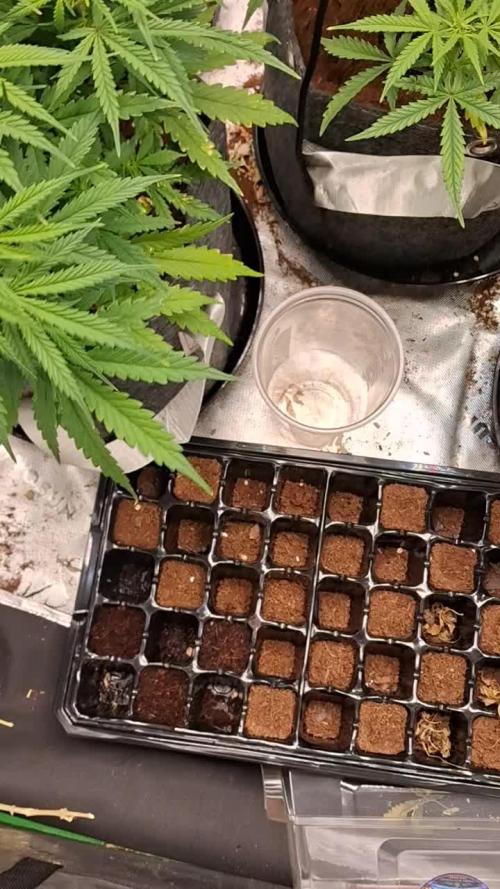
Im sick :( but so happy! Lol. I crossed 2 strains from my favorite sensi seeds.
BlueBerry candiez auto x sticky orange xxl auto
Lets see what happens!
Likes
13
Share


@MrPott
Follow
Been hitting her with the Bio Bizz nutes and looking good so far. However, she IS turning purple and it's a bit concerning to me. The purple is nice tho, not gonna lie. Can't wait to see how fat she's going to be in the next few weeks.
Likes
2
Share


@EtnoGrow
Follow
todo muy bien! esperando paciente el desarrollo de los cogollos, conociendo y viendo los puntos de maduracion asi como la fertilizacion ajustando a su maximo que creemos posible para incentivar que los cogollos engorden, ahora en adelante les hare segumiento de la grande principalmente, que es la que cumple con la edad del diario, ya que las otras como se explico en un principio venian recien cultivadas por eso tienen un par de semanas de retraso , tambien hay una hermafrodita, que al detectar como comentamos semanas anteriores aplicamos al tecnica vista de un cultivador mexicano, consistia en romper los brotes de machos las pelotas con el fin de que no vuelvan a salir, dejando solo los pelos estigmas de las hermbras, si bien el cogollo queda maltratado, al parecer se detiene el crecimiento, asi que estamos viendo como rinde ese experimento.
Processing
Likes
9
Share


@vinnyvinnyvichy
Follow
I don't plan on doing any topping. Just all low stress training. I think I'll do some topping on my next grow round and compare the 2 grows.

Likes
12
Share


@Jays_Not_Here_Man
Follow
Another great week for the girls, I have not seen a single deficiency, other than the odd yellowed leave under the canopy, typically due to lack of light. I will come through soon and do a defoliation of both tents to allow for more light to penetrate, and perhaps get a good push for some girthy colas 😋.
I have lowered the temps a bit in the tents by controlling my lung room temps, and they are maxing out at 77 degrees and hitting a night time cool of about 70. I have also lowered the humidity to hover between 47 and 52 %. Hopefully will start to get some nice colours as they finish.
As I mentioned before, when I water is when I like to get under the canopy and check the stems and leaves for anything that shouldn’t be… and typically once a week after watering I’ll wipe down the tent and sanitize any surface I can. There is no reason to get lazy, that’s how you get Pests, Mold, and PM. Happy Gardening 🇨🇦👊❤️

Processing
Likes
21
Share


@Pedrojuan
Follow
Esta semana arranca con el cambio de solución y solamente a base del final part GHE,El PH esta un poco bajo, creo que rondara 5.6 + o -. El EC está en 2.2 con las cantidades recomendada de GHE x cada litro de agua. Los olores aumentan y con ellos los riesgos de ser denunciado, puso dientes de ajos machacados cerca de la ventana y la puerta del sótano. Esperemos que todo siga bien...Terminando la semana, Critical inicia a tener señales de aproximación a la cosecha, las hojas empiezan a perder color en cambio Runtz siga sin cambios.


Processing
Likes
70
Share


@Teamdirtbag2
Follow
She has jumped to 28 inches. Impressive really. Defoleated A lot of useless bottom crap. Her stem has healed and is about 1 inch thick. She is looking and growing great.
