


Likes
Comments
Share

@GERGrowDesigns
Follow
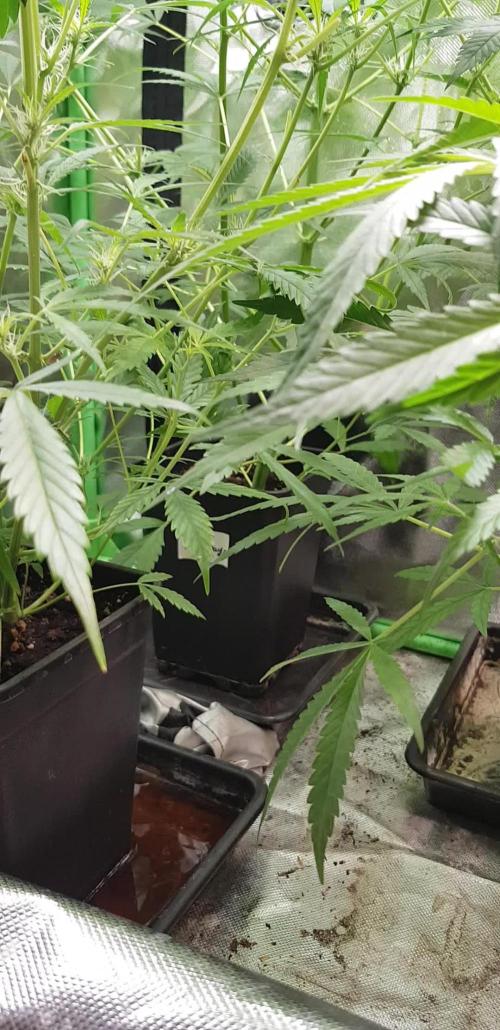
Welcome to Flower Week 1 of Divine Seeds Auto 77 Days
I'm excited to share my grow journey with you all as part of the Divine Seeds Autoflowering Competition 2025. It's going to be an incredible ride, full of learning, growing, and connecting with fellow growers from all around the world!
For this competition, I’ve chosen the Feminized Automatic strain: Auto 77 Days
Here’s what I’m working with:
• 🌱 Tent: 120x60x80
• 🧑🌾 Breeder Company: Divine Seeds
• 💧 Humidity Range: 60
• ⏳ Flowering Time: 56 Days
• Strain Info: 21%THC
• 🌡️ Temperature: 26
• 🍵 Pot Size: 0.5l
• Nutrient Brand: Narcos
• ⚡ Lights : 200W x 2
A huge thank you to Divine Seeds for allowing me to be a part of this amazing competition and Sponsoring the Strains. Big thanks for supporting the grower community worldwide! Your genetics and passion speak for themselves!
I would truly appreciate every bit of feedback, help, questions, or discussions – and of course, your likes and interactions mean the world to me as I try to stand out in this exciting competition!
Let’s grow together – and don’t forget to stop by again to see the latest updates!
Happy growing!
Stay lifted and stay curious!
Peace & Buds!

Likes
5
Share

@Growfather1
Follow
Hello everyone,
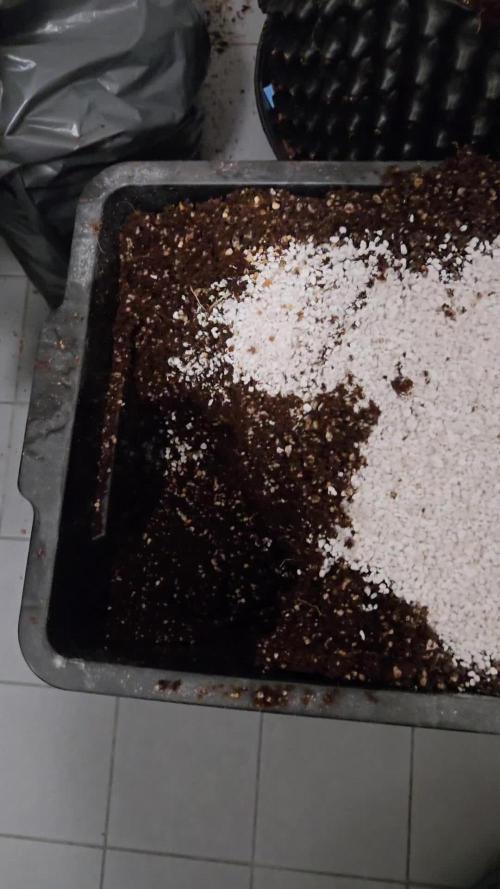
All my gorilla x white widow plants are in bigger pots last week i already transplanted one to a 30 liter pot since a couple of hours the other two are sitting in a 21 and 39 liter airpot.
The next step is letting them build some roots for at least 14 days before thinking of switching to flower.
Let's see how they look next week, thanks for stopping by and have a nice week.
Best regards
Growfather

Likes
18
Share


Likes
38
Share


@Skunkman
Follow
Just going into the second week of flush the buds are really dense now! Chopping them down next Saturday hopefully 😎✌️🏻

Likes
12
Share


@cookingwithninja
Follow
day 30 video day 30 note crossed bridal party x pink paradise
day 31 crossed blackberry oreo bigstuff x pink paradise
day34 videos of each, a lot of photos. Rh% high I keep my terps non-volatile. Bridal rubbing sugar leafs smells like some sort of candy watermelon, blackberry neat skunky AF sugar leaf rub, pink is nice mellow I will have to check tomorrow. Dr. Thunder very oily with sugar leaf rub I swear you could deepfry with it. It also smells mellow skunky but will check again tomorrow it may have been terps overload on my fingers regarding thunder and pink paradise aromas. Pink caylaxes have shriveled and accepted pollen locations. I just don't think the seeds will be ready when harvesting in a few weeks. Start week 5 tomorrow and I don't think crosses will be ready so I will figure it out. Pink crosses would be fun next round but I have so many more selections to choose from to grow my next 4.Thunder smells like a citrus cleaner, almost pineapple front notes then a full citrus.
day35 defoliated like madd. no lie so sticky: 2 fingers lifted a ceramic cup like I was spiderman. 1 finger was a struggle.. science

Likes
3
Share


Likes
44
Share


@XperencdGmanXG
Follow
Girls are starting to show pre flower. Thanks goodness the light pollution in the pot patch is 0. Will add some bloom amendments next week, although they got some bone meal not too long ago. Did another foliar spray as next week may be the last time I will be able to deliver nutrients in that manner. NEVER foliar spray buds! Unless you want to get bud rot.
Likes
5
Share

@Sensemillia
Follow
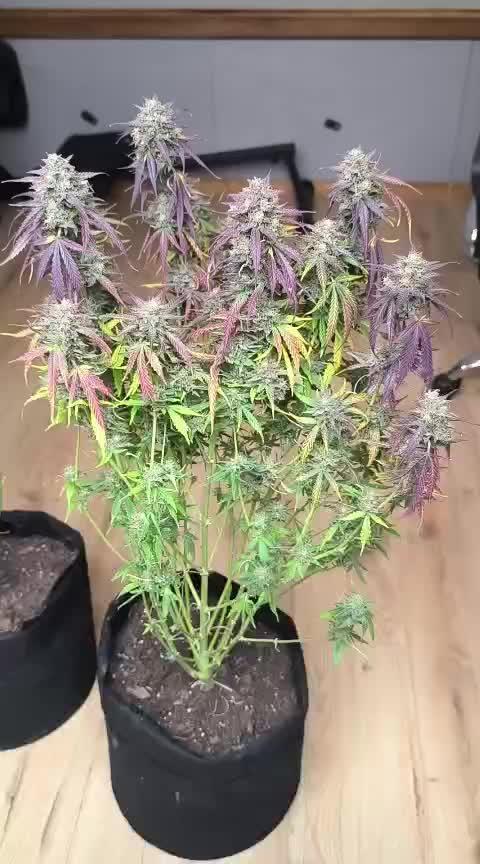
81 days from seed to harvest.
Last 6 day dry cycle.
Last 24 hours total darkness and upped the fan speed.
Hang them all up in tent.
Aiming for low 60% humidity and around 19 - 20 C.
No oscilating fans active, only 2 exhaust fans on low setting.
Report back when dried.
After two weeks drying they still need to cure,
Got around 200 grams of nice bud out of it all.
Had a little taste and was pretty good.
Very piny/earthy taste.
I like it.
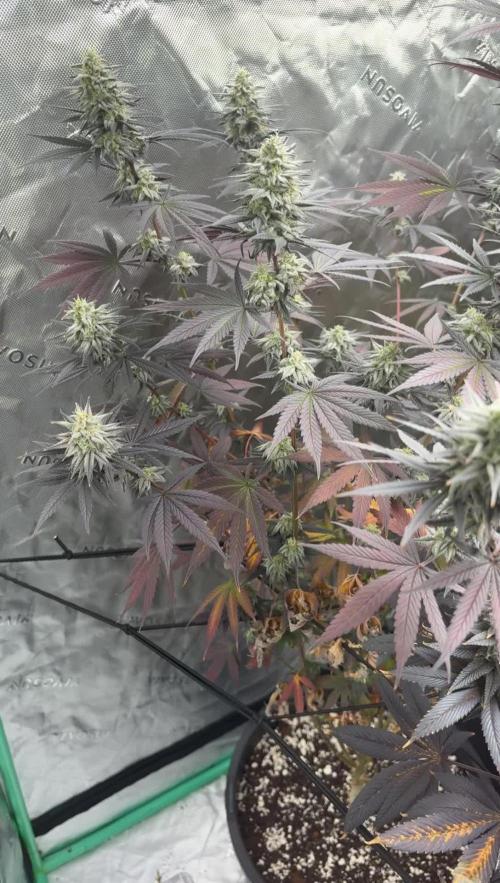
Overall easy plant and im pretty pleased with it for my first grow.
Setting up for next grow: Watermelon Candy F1 auto.


Likes
6
Share


@Shellshocked
Follow
Last week of veg. Renting a house that the owner is selling so I gotta move so everything must flower now. Just plain water ph to 5.9-6.2 and cal mag for 1 watering

Likes
16
Share


@Elogrower
Follow
17 weeks now and I'll give one more week for my Dwarf to see how the trichomes will being. About the Northern Lights, I don't know if I'll wait for her to get the point that I'd like. I'm having problems drying my two Jacks because I don't have a proper space to do it so I had to improve. So, maybe I'll cut both together using the Dwarf as reference...cuz she's going big, maybe the biggest yield among them. As a first attempt to growing, I'm quite excited.
Likes
31
Share


@JuicyFruit
Follow
Day 76 - 07/12/19
The Quick One has turned into a Fat One! The colas are just huge! nice lavender smell and very sticky! the buds also look a lot more dense this time compared to my last diary probably due to adding calmag and pk13/14 and this plant is over twice as tall haha. it finished its stretch at 43cm so shouldnt be a bad sized harvest.
I fed the plants last night with their last dose of nutes and im going to start flushing from today right up until harvest.
My tap water is at 140ppm so this should be okay for flushing. ive grown all my plants with this tap water and tbh i used to let it sit out for a day or two to evaporate chemicals but i havent done that in ages. plants dont seem to mind it straight from the tap. but yeah flushing from today right up until around the start of next week. it should only need a week flush as its coco coir but im expecting to harvest on Day 85.
The top of the main cola started to look weird and was definitely getting burned from the light. i took a small bit off as i cant adjust the height of my lights just now, gotta fit these rope rachets the light is just so damn heavy lol. im not worried tho, expecting about an ounce from this harvest, maybe more from my diesel auto diary.
Still im very proud. this is my first plant with big colas, and not only tall but fat! cant wait to see how dense the buds turn out to be and i think my last harvest was at week 9 so this has had much more time to mature.
I pulled a lot lot of leaves off this plant as they were crispy and yellowing. ive been feeding light amounts of nitrogen for a while so its either just the plant yellowing or the crispiness is light burn. either way you will notice from the pictures. upper colas have no fan leaves lol. and i added a couple of photos through the jewelers loupe, couldnt really get a good angle. but the breeder estimate is 8-9 weeks and il be finishing on week 12 so itll most likely be ready.
I got a few more seeds and they are going to be stunning! award winning genetics and also exotic and high thc autoflowers! im using biobizz light mix and i should be starting once i harvest this diary so keep an eye out for that and check out my other diaries if you get a chance.
Day 78 - still giving 1.8l of water per day. wanted to ensure im getting all the nutes and salts out of this so i gave 1.8l of phed water earlier in the day and 1.8l of phed water 6 hours later. going to try stick to the 1.8 per day as the soil dries out overnight with that amount :)
Other than that the plant is looking great. some faint purple colors and its pretty frosty! nice big buds. once the plant is harvested and trimmed im gonna dry some on a drying rack for about a week. and some hung up to dry in a cardboard box for 2 weeks.
Day 79 - 10/12/19
Harvested the top half of a side cola today so its cured just before christmas 🎄 and i wanted to let light penetrate the lower buds!
Have a look at the pictures and let me know what you think in the comments :)
Biobizz light mix arrived and im thinking of starting my next batch of seeds, keep an eye out for those diaries starting up :)
I plan to harvest on day 85! so excited for this one!
Day 79 same day update:
Took a few pictures of the bud drying :) im gonna dry it slowly and just let the 21-23c room temperature 50-60% humidity do its job. and let me know what you guys think about using a drying rack like in the picture for buds?
Day 80 - 11/12/19
A few days shy of 12 weeks now so i decided to harvest another couple of side colas! Snipped a cola down to individual buds removing all trim and the other cola i didnt break down i just trimmed. il add photos tomorrow to show what i mean :)
The trim was really frosty and looked quite cloudy/plastic and the buds are covered in cloudy/amber pistils.
I smoked a couple of bongs of the test bud which has been drying for about 24 hours now and im pretty stoned! very relaxed in my back and shoulders. no muscle pain. my head is heavy with enhanced audio and visuals :) this is turning out to be a beautiful afternoon smoke! very proud of myself :) Only a few more days until full harvest and i cant wait to cut the main cola down. id say the main cola could be near an ounce when dried as it looks thicker than my arm 😂
Day 81 - 12/12/19
What a night ive had :) been up for ages fine trimming 2 side colas i pulled off the plant tonight. the flushing was worrying me with the extra humidity rise. i added a ton of pictures to show off the whole ordeal as best as possible :) and i came across some mold halfway up one of the giant colas. was a very small pocket of fluff so i cut around the affected area and didnt lose too much (about 2g if dried) the side colas were so much bigger than expected. completely filled my whole raw tray with buds and my drying rack is starting to fill up.
Im like a small child again as these colas are the biggest individual piece of weed that ive held :) really proud that i grew this!
I also got a lot of trim and little popcorn buds. gonna keep then for edibles and dry up these test buds.
3 Days until harvest of the main cola :) and check out the pictures and videos i added at the end. huge colas! :)
Likes
89
Share


@BioBuds
Follow
This strain is a dream to grow, if you haven't tried it yet, it's amazing, it's easy, it's lush and vibrant, full of energy from seed to smoke. Great for organic grow styles and a fun plant to grow. The smoke I will update in the smoke review!
I do not have words for the quality of this strain. In everything. Grow this and be absolutely amazed by its performance.
I had won the seeds with the Halloween give-away but they are a sure winner and a keeper. @SweetSeeds congratulations on a champion auto-strain.
I've grown auto's before, only outdoors, but nothing like this, nothing this big in such a short time, and this resilient for not only mistakes but everything.
This plant will perform even if you were to mess it all up. Keep to 20 liters grow bags for best performance as you could see with my two plants.
One as more developed, although everyone says over 15 ltr makes no difference, with organic coco hybrid super soil, it does.
It is the difference in buffering of nutes, PH, heat, and moisture. Way less hassle in the bigger pot and this was an excellent learning curve.
This grow started out as a match between Forbidden Runtz by Fastbuds and XL Runts by Sweetseeds. But since the playing field was uneven (pot wise but also heat and fresh air wise), the results do not count in my opinion.
But my guess is (since I haven't weighed the Forbiddens) that the XLs for now won. But as I said it would not be fair. We will do the contest again when said playing field is level.
For now thank you again for checking my diaries, if you have any questions or comments, always welcome my friend.
Big Hug
Bud


Likes
20
Share


@French__flair
Follow
Since I am in DWC and the fertilizers are organic, I take care to add them slowly..
Como estoy en DWC y los fertilizantes son orgánicos, me ocupo de añadirlos lentamente...
Por el momento no controlo la atmósfera, sólo tengo un extractor ajustado a 400m3/h para los 2 lumatek al 75%.
Planeo controlar la atmósfera a partir de la inyección de CO2 en la semana 2 o 3 para ver más.
Mientras tanto tengo algunos picos de temperatura por encima de los 28 pero son realmente específicos.
Estoy tratando de mantener la humedad lo suficientemente alta para tener un buen VPD.
For the moment I don't control the atmosphere, I just have an extractor set at 400m3/h for the 2 lumatek at 75%.
I plan to control the atmosphere from the CO2 injection in week 2 or 3 to be seen again.
In the meantime I have a few temperature peaks over 28 but they are really specific.
I am trying to keep the humidity high enough to have a good VPD.
Subí un poco la ec este fin de semana 4 de 0.9 a 1
I turned up the ec a bit this weekend 4 from 0.9 to 1

Processing
Likes
9
Share


@High_Grade_Dadli
Follow
A bit of nute burn od on feeding dem girls getting loud
Likes
5
Share


@Hydroponicfarm7
Follow
Se me descalabro el medidor de ec, otro dwc que estaba a más de 3 de ec . Calibre el medidor y solucione el problema.
Likes
17
Share


@Fat_Olsh_Farms
Follow
Day 14. Beautiful trileaf plant. Not quite ready for LST. Maybe tomorrow.
Day 15. Bent over nicely for me. This plant is gonna be a beast.
Likes
37
Share


@Mr_Juice
Follow
I haven't grown for 15 years. First time indoor. I did not know what I can expect. I am very surprised. It's unbelievable. Thanks for the ghrow diary. I learned a lot and the second time it will be perfect.thx boys and girls 😊

