


Likes
Comments
Share

Likes
11
Share


@UrbanBoer
Follow
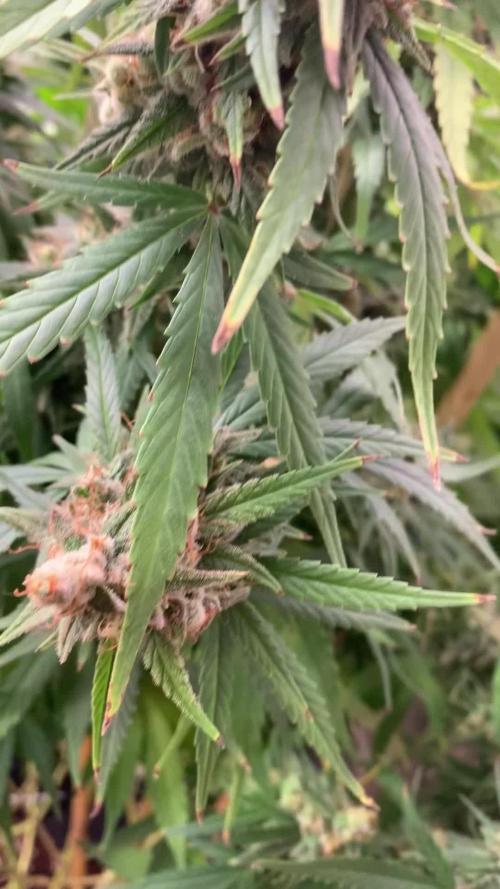
Finally almost a year later and she finally retires 😭😭😭😭😭to emotional she did not want to miss out on the summertime heat and the beginning of autumn, 70 grams, the plastic bag is 3 grams.
Loving her… she is my 2nd best strain this harvest, the smell
Likes
66
Share


@Earthling37
Follow
34 Days have passed.
The colors are fading for some reason but i dont really care, theres obviously room for improvement on this grow.
Im just gonna let it go as far as i can and hopefuly the plants will mature before they die off.
It may have been because of over watering, thats my best bet so i will not water until they show small signs of underwatering, just so i can make sure.
Other than that, the buds are looking good and the smell is incredible.
---1st time growing with FLO - Florian Living Organics.---
They claim that there is no need to pH when watering and that their living fertilizer is the only thing that i will need throughout the whole grow so i only need to mix with soil and just water with plain water.
If this stuff works then it can simplify my future grows ALOT!
Happy growing. 😎


Likes
13
Share


@STAYINGONMYMAINCBATORUNTWO
Follow
Again I’ll start by saying.... I DID NOT use bud ignitor and bud blood in the same solution! I’m using bud blood on the rear and bud ignitor on the front ones! I’m so proud of my girls can’t wait until next week with some close ups of them forming buds! I’m so happy to be where I’m at with these girls all I’ve we heard is amazing things about this strain so to be so ahead with them makes me super proud!
Processing
Likes
10
Share


@Dunk_Junk
Follow
9cm growth this week.
She is very short, very bushy. Not sure what I've done wrong... 😞

Likes
16
Share

@GoldenWeedGrower
Follow
📅 19/05/26
🗓️ D078 (B6 / D1)
🌡️ 1.1
💨 -
💧 -
🥗 -
⚗️ 1.2
🔬 5.8
🛠️ -
📋 -
📅 20/05/26
🗓️ D079 (B6 / D2)
🌡️ 1.4
💨 1300
💧 -
🥗 -
⚗️ 1.2
🔬 5.0
🛠️ Some little adjustment
📋 -
📅 21/05/26
🗓️ D080 (B6 / D3)
🌡️ 1.4
💨 1300
💧 15L
🥗 All nutrients
⚗️ 1.6
🔬 5.0
🛠️ -
📋 -
📅 22/05/26
🗓️ D081 (B6 / D4)
🌡️ 1.2
💨 1500
💧 -
🥗 Bloom A-B
⚗️ 1.9
🔬 4.8
🛠️ LST and defolation
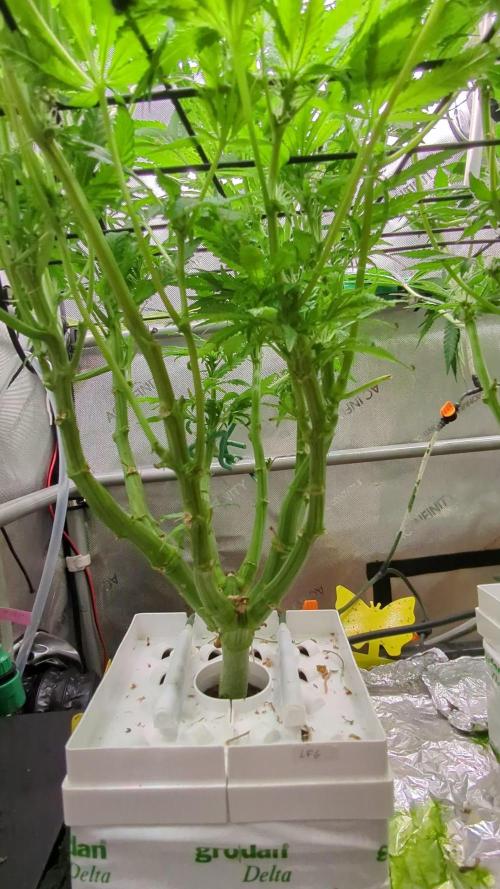
📋 pH is still low but I decided to leave it as is. LFG: I like the way she's growing - Super Boof is performing better than what I thought - Bruce Banner is the queen, there are already first buds formation - Lemon Cherry Gelato I hate he way she's growing so much that I eliminated all her clones, now I've only BB and LFG.
📅 23/05/26
🗓️ D082 (B6 / D5)
🌡️ 1.2
💨 1500
💧 -
🥗 -
⚗️ 1.7
🔬 4.3
🛠️ -
📋 -
📅 24/05/26
🗓️ D083 (B6 / D6)
🌡️ 1.2
💨 1500
💧 -
🥗 -
⚗️ 1.7
🔬 4.6
🛠️ Adding some ice to water to get the temp go down. Also LST and defolation
📋 -
📅 25/05/26
🗓️ D084 (B6 / D7)
🌡️ 1.2
💨 1600
💧 2L
🥗 Calmag, Bloom A-B
⚗️ 1.9
🔬 4.3
🛠️ -
📋 -
=============================================================
Legend:
📅 DATE
🗓️ DAY (StageWeek / Day)
🌡️ VPD
💨 CO2
💧 WATER ADDED
🥗 FOOD ADDED
⚗️ EC
🔬PH (adjustements)
🛠️ ACTIONS
📋 NOTES
📅🗓️🌡️💨💧🥗⚗️🔬🛠️📋


Likes
67
Share


@SlowpokeFuegobud
Follow
😈 💄 🐊 🐙 💚 😈 💄 🐊 🐙 💚 😈 💄 🐊 🐙 💚
https://youtu.be/-da38pwpAaA Who knows it? 🐭 My first record.
Anyway, Madame Medusa is growing in my tent now, who would have thought! 😈 💄 🐊
Thanks @James for the goodie pack, always an honor and pleasure to grow for RoyalQueenSeeds! 🙏 💚 💨
Thanks @Green_Buzz_Nutrients for sponsoring the nutrients for this grow!! 💚 💚 💚 Amazing product line!! 🌞 🌱
If you like to try them, you can find a generous discount on their products in my setup description!! ⬇️
Thanks @MedicGrowLED 💚 I love the Light!! 🌞
___________________________________________________________________________________________________________________
Medusa F1
Medusa is a true F1 hybrid created from pure, inbred cannabis lines. She boasts uniform grow traits, mouthwatering aromas and flavours, and plenty of potency. If you're looking to bring stable, elongated plants into your room, tent, or garden, look no further.
Medusa F1: Mouthwatering Aromas, High Potency, and Mid-Size Plants
Though she won't turn you to stone like the mythical goddess after which she's named, Medusa F1 is bound to get you plenty stoned in her own special way. Combining genetics from inbred lines deriving from Sugar Magnolia, a thick and sweet indica, and American Beauty, a fast, fruity hybrid loved for its well-balanced, positive high, the result is an autoflowering F1 variety that produces fresh flavours, a unique cannabinoid profile, and large yields.
Aromas, Flavours, and Effects of Medusa F1: Mint, Pepper, and Fresh Fruit With a Balanced Cannabinoid Profile
Medusa F1 is a very aromatic cultivar with a vibrant concentration of terpenes bearing notes of fresh mint alongside an upfront peppery kick, backed up by hints of fresh fruit, berries, and tangy fuel. Her thick, frosty flowers consistently produce high levels of THC and CBG, as well as high concentrations of myrcene, ocimene, farnesene, and caryophyllene. As a result, Medusa F1 has strong effects that relax and stone the body from head to toe (brought on by particularly high concentrations of myrcene and farnesene) while motivating the mind with an uplifting, creative, and motivating kick (thanks to high concentrations of ocimene).
Growing Medusa F1: Tall Yet Manageable Plants With Heavy, Easy-to-Trim Flowers
Medusa F1 seeds produce elongated autoflowering plants with long, strong branches and well-spaced internodes. Plants regularly grow up to 80–85cm tall and boast a fast flowering time of just 42–45 days (72 days from germination to harvest). Thanks to her genetics, Medusa F1 produces plenty of thick flowers with big, swollen calyxes that make for very easy trimming. Medusa F1 is very stable, handling stress and unfavourable growing conditions with ease, though she is somewhat susceptible to Botrytis, so make sure to keep tabs on the humidity in your grow room/garden.
Flowering time: 40-45 days 🚀
https://www.royalqueenseeds.com/f1-hybrid-cannabis-seeds/621-medusa-f1.html
Here's a generous discount from Royal Queen Seeds on their internationally operating website: GROWERS20
_______________________________________________________________________________
SETUP:
80x80x180 cm Zelsius
Medic Grow MINI SUN-2
240W Full Spectrum LED
Built-in Timer
LCD Display
high PPFD of 2300μmol/m2/s
@ 6 ’’ in height, efficacy is up to 2.8μmol/J, and PPF is up to 672μmol/s
built in controller with timer and dimmer
www.medicgrow.com
Green Buzz Nutrients
Shouts go out to my sponsors @GreenBuzzNutrients, thanks so much for your support! 💚 💚 💚
If anyone would like to try their amazing organic products, use code GD42025 for generous 25% discount (for orders of minimum 75€) ✨
https://greenbuzznutrients.com/
custom exhaust fan 320/270cm³/h
Carbon Active Granulate 240cm³/h
tab water pH 8 - EC 0,25 with Calmag to 0,5
Advanced Hydroponics pH minus Grow + Bloom to pH 6.2
Likes
Comments
Share

@grimm420
Follow
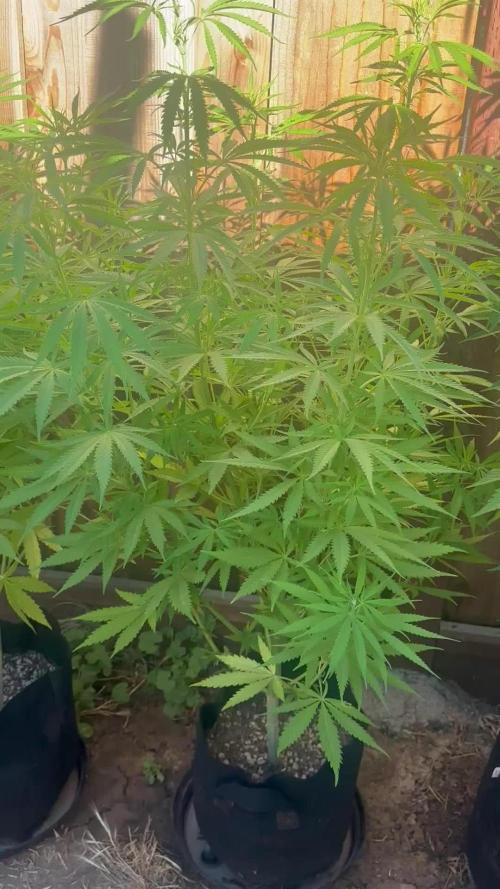
Damn, I missed by a long shot, I feel like they’ll bloom in a month at most, should’ve just fed more bat guano instead of flower girl fertilizer. Not in a rush but that ff mix pack is kicking ass. Excited for these sativas too, they’re growing beautifully!
Likes
7
Share


@KannaKullektiv
Follow
Hiiigh friends 🙌
Welcome to the last week. 🍀
She is harvested, dried and cured. An amazing taste for sure! 🍑
See you next run 👋
Arturo for KannaKullektiv
🙏
Likes
11
Share


@RFarm21
Follow
Week 9 november - 15 november
11 november - i did a little defoliation on the first 2 Nodes in branches.
I also gave the first bloom nutrients because in the next week it will be flowering and it looks like it was asking for more phosphorus
14 november - One more soft session of defoliation/lollipoping
Led power: 240W (80%)



Likes
3
Share

@Growmigos
Follow
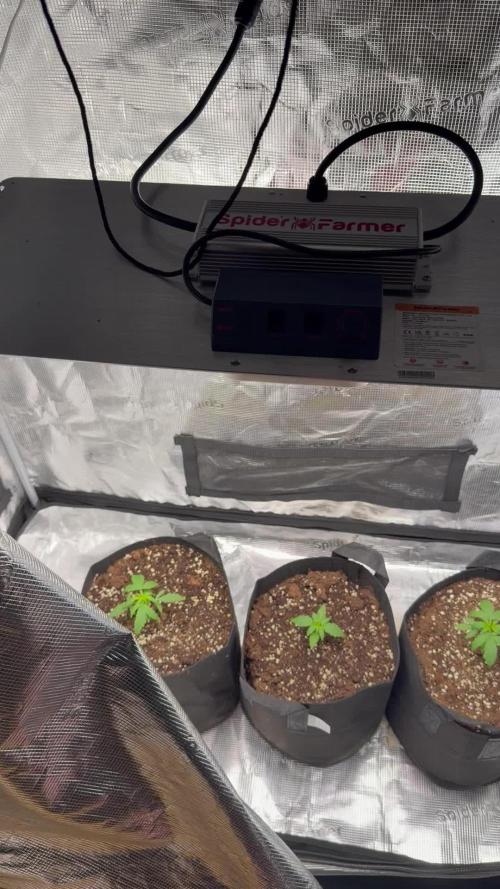
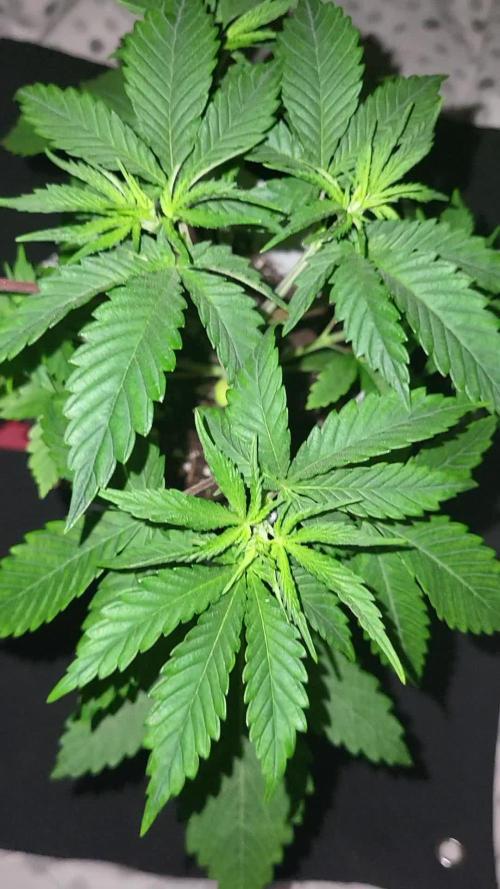
Sie ist nach dem toppen förmlich explodiert,sie sieht super symetrisch aus, habe sie ins grosse zelt gestellt bei 144w zur Eingewöhnung,morgen gibt es ein grösseren topf.....
Likes
51
Share


@DogDoctorOfficial
Follow
And the time to defoliate my freak tester as come, not that she needed that much but since i went in for the rest my giraffe went along with them all, she is lovely with her freaking weird leafs all over lets hope she likes defoliation hahahaha
cut my CaMag , figure if she is with a N block of some kind this will help, and she does not need it in flower any way so lets see
And a few days in to defoliation done and she is happy and never before, mb i should have done her sooner , she starting to put up with an amazing trichome production, this will be an amazing one for extraction mb lets see
And with the week coming to an end she is defiantly happier than she was before i spank her a bit , supper happy with this extra tall girl that aims to the moon
As always thank you all for stopping by for the love and support and for it all, i truly appreciate it all <3 <3 <3
Genetics - Fast Buds Tester 2308
Ligth - LUMATEK ZEUS 465 COMPACT PRO
Food - APTUS HOLLAND
#aptus #aptusplanttech #aptusgang #aptusfamily #aptustrueplantscience #inbalancewithnature #trueplantscience #fastbuds #dogdoctorofficial #growerslove
With true love comes happiness <3 <3 <3 Always believe in your self and always do things expecting nothing and with an open heart , be a giver and the universe will give back to you in ways you could not even imagine so <3 <3 <3
All info and full product details can be find in can find @
https://2fast4buds.com/ wen released
https://aptus-holland.com/
https://autopot.co.uk/
https://lumatek-lighting.com/
Have a few good more diaries going on fell free to drop by and say hi <3 <3 <3
<3 <3 <3 Growers love to you all <3 <3 <3
Likes
142
Share


@MadeInGermany
Follow
Hi everyone 🤗
This week it looked more and more astonishing after opening the box a wonderful sweet smell wafts through the room 👍.
A few days ago the Blue Cheese Phenotype 1 was harvested and placed in the dark room :-).
This week both Kosher Tangie Kush phenotypes will be harvested 👍.
Next week the Blue Cheese phenotypes 1 and 2 will be harvested ;-) everyone else needs a while 😀.
I wish you all a nice week, stay healthy 🙏🏻 and let it grow 🌱👍


Processing
Likes
41
Share


@Enki_Weed
Follow
💪all plants look good small deficits would be corrected😊
use only water with a pH of 6.4

Likes
13
Share


@CURATI_DA_SOLO
Follow
Che dire! Una.delle.mie preferite in growbox! Sta crescendo veramente bene a mio preavviso! I rami sono veramente spessi e si preannuncia veramente una fioritura esplosiva secondo me! Molto buoni anche i nutrienti di BAC sotto stretta concessione del sig.fritz che volevo ringraziare veramente molto per avermi fornito i prodotti adatti per crescere al meglio le mie piante! Volevo anche ringraziare i ragazzi di Fast buds sempre per i splendidi "fagioli"! Queste genetiche autofiorenti sono veramente da urlo! Al prossimo aggiornamento che si preannuncia veramente, veramente di oro!
Likes
28
Share


@BillMonroe
Follow
Nice! Let's say I look forward more to smoking it than trimming it
The tops have some different shapes because I used the "back building" technique
I'll add some more pictures on tuesday. You can right click and open the image in a new window to get a better look

Likes
21
Share

@eldruida_lamota
Follow
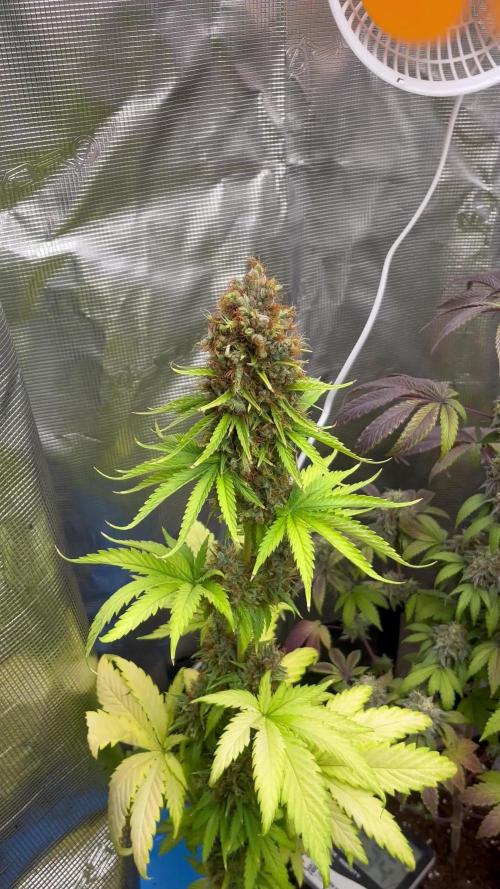
Que pasa familia, vamos con la novena semana de floración de estas Green Gelato feminizadas de RoyalQueenSeeds.
Vamos al lío ,se trasplantaron en macetas de 7 litros definitivamente.
El ph se controla en 6.0 , la temperatura la tenemos entre 24/20 grados y la humedad ronda el 50%.
El ciclo de floración puse 12h de luz, el foco está al 80% de potencia.
De momento van creciendo a buen ritmo y tienen un buen color.
La flor también va madurando y a tricomado bien, estaban muy bien enraizadas al realizarle el trasplante se notaba la abundancia radicular.
Agradecer Agrobeta por el envío del kit gold series en cuestión, unos maestros 🙏
- os dejo por aquí un CÓDIGO: Eldruida
Descuento para la tienda de MARS HYDRO.
https://www.mars-hydro.com
Hasta aquí todo, Buenos humos 💨💨💨