


Processing
Likes
Comments
Share




Likes
44
Share


@Cogollo_eu
Follow
**Encontrarás la traducción a español al final de la descripción**
From/Desde: 08/03/19 || To/Hasta: 14/03/19
From day/Desde día: 15 || To day/Hasta día: 21
You can find the Money Maker Diary here:
** Podéis encontrar el diario de las Money Maker aquí:**
https://growdiaries.com/diaries/25667-gorillamakingmoney-gorilla-vs-money-m
-----IMAGES & VIDEOS-----
Video 1:
7 days TimeLapse, 1 image each 60 secs @ 30 fps, you can see how beauty is the dance of this babies and how are they growing.
Video 7:
An overview video of the babies, moments before i performed the first topping/man-linning/prunning/LST on the biggest gorilla. The other one is recovering at time from those ugly color marks she has on them leaves. As the leaves seems not healthy i decided to not perform the man-lining on this one until it has a pair of healthy main leaves on which i can trust to guide.
Video 11:
Main Gorilla ultrafast topping/man-linning/prunning/LST.
-----WEEK SUMMARY-----
I traveled to Venecia this week and i have very few photos, also i returned with a terrible flu, so i'm not going to take too much photos for the next week too, i'm so sorry.
I'm a bit scared about what happened to the gorilla that looks sick, the other one is growing like a monster, is almost double size comparing with the other 3 plants, this week i've seen enough distances on the plant to start with the techniques. I must say that she responded very well to the pruning...
Also this week i'm going to apply a foliar irrigation to see if i can help to the sick gorilla.
-----WATERING CALENDAR-----
12/03/19 - 700 ml with all week nutrients @ 0.95 E.C. PH5.9
12/03/19 - FOLIAR - Used about 25 ml of (200 ml water with 1ml Pro Active, 2 ml Plant Vitality + and 0.1 ml Foliar Spray)
*****ESPAÑOL*****
-----IMÁGENES & VÍDEOS-----
Vídeo 1:
TimeLapse de 7 días, 1 imagen cada 60 segundos @ 30fps, observad la maravillosa danza de las nenas y cómo crecen.
Video 7:
Un vídeo general del armario, está grabado momentos antes de realizar las técnicas de cultivo sobre la mejor de las gorilas. La otra se sigue reponiendo de esas manchas feas que le salieron en las hojas. Ya que las hojas parecen enfermas, he decidido no hacer el man-lining hasta que no tenga un par de hojas saludables en las que poder confiar para hacer el guiado y alimentar los brotes.
Video 11:
Vídeo super rápido del topping, man-lining, podado y entrenamiento.
-----SUMARIO SEMANAL-----
He viajado esta semana a Venecia y tengo pocas fotos, también he vuelto con una gripe del horror por lo que también voy a disponer de pocas fotos la semana que viene, disculpas por anticipado.
Estoy un poco preocupado por la Gorila que parece enferma, la otra crece como un monstruo, si la comparas con las otras es casi el doble de cualquiera de ellas. Esta semana ya siento suficiente espacio en la planta para comenzar con las técnicas. He de decir que responderá muy bien al podado.
Esta semana también aplicaré un riego foliar a ver si ayuda a la gorila enferma.
-----WATERING CALENDAR-----
12/03/19 - 700 ml con todos los nutrientes semanales @ 0,95 E.C. PH5,9
12/03/19 - FOLIAR - He usado unos 25 ml de (200 ml de agua con 1ml Pro Active, 2 ml Plant Vitality + y 0,1 ml Foliar Spray)
Likes
Comments
Share

@Gardens_of_Of
Follow
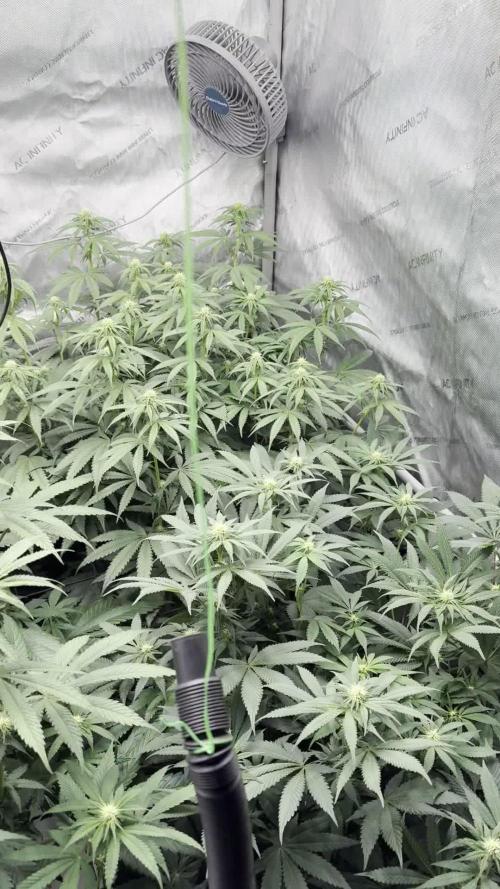
The third week of flowering has come to an end, marking the conclusion of the plants' stretch phase. Watering and feeding practices remained consistent throughout the week, and the garden continues to respond well to the established routine.
Toward the end of the week, I carried out the final round of lollipopping along with a thorough defoliation. The goal was to improve airflow through the canopy and ensure that all developing bud sites receive strong, even light. With the structural work now complete, the plants are well prepared to focus their energy on flower production.
I also noticed that the taller plants were beginning to show slight signs of light stress, with some leaves starting to yellow. To address this, I increased the distance between the canopy and the light to approximately 55 cm, allowing for a more balanced light intensity across the entire canopy.
From this point forward, most of the hands-on work is complete. The weeks ahead will be far less demanding, with the focus shifting primarily to watering, maintaining the feeding schedule, and carrying out only light defoliation when necessary.
For me, this is the most rewarding stage of the entire grow. Over the coming weeks, the flowers will begin to reveal their unique characteristics, gradually expressing their structure, colors, resin production, and aromas. Watching each cultivar develop its own personality—and experiencing their evolving fragrance day by day—is one of the most enjoyable parts of the journey. Now it's simply a matter of patience until those aromas eventually become the flavors of the final harvest.


Likes
14
Share


@LokalGrenz
Follow
Had some humidity issues been watering with spring water until I get something to filter the tap water
Jan.8th amnesia haze 1 got bit taller so I did some more LST


Likes
Comments
Share


@TerraMagica
Follow
So it's basically day 66 on BK and day 58 on GG thinking about start to flush them... They look gorgeous and full of trichomes, smell still missing but I'm fine with it... Next update in week

Likes
57
Share


@Roberts
Follow
This is a amazing autoflower. She grew very well under the Medic Grow Mini Sun-2. She has some big huge colas on her. She smells great, and has a great frosty resin over her. I didn't have any major issues during the grow. looks like a excellent auto, and I am gear to test her. Thank you Medic Grow, and Seedsman. 🤜🏻🤛🏻🌱🌱🌱
https://www.seedsman.com/?a_aid=Mrsour420.
This is my affiliate link to seedsman. Thank you
Thank you grow diaries community for the 👇likes👇, follows, comments, and subscriptions on my YouTube channel👇. ❄️🌱🍻
Happy Growing 🌱🌱🌱
https://youtube.com/channel/UCAhN7yRzWLpcaRHhMIQ7X4g
Likes
5
Share


@tNASTY3k
Follow
Day 20 - she got 16oz of water pH balanced to 6.0~ on Day 16, Day 18, and Day 20.
I topped the plant and then defoliated to leave the 3rd and 4th nodes. The 3rd node is being trained to grow laterally until it reaches the container walls. Once the 4th node matures more, it will also be trained just as node 3. The goal is to train and top one more time in veg to ensure maximum yields in this small 2x2x4 tent.
Likes
4
Share


@Thibaut
Follow
Realy slow growt ,not the best weather still to early to give them nutrients , i let them be for at least an extra week
Update * transplanted them all because of the full moon idk maybe it helpss them recover i am nad at transplanting 😂🍁👍🏻


Likes
13
Share


@StickyThumbz94
Follow
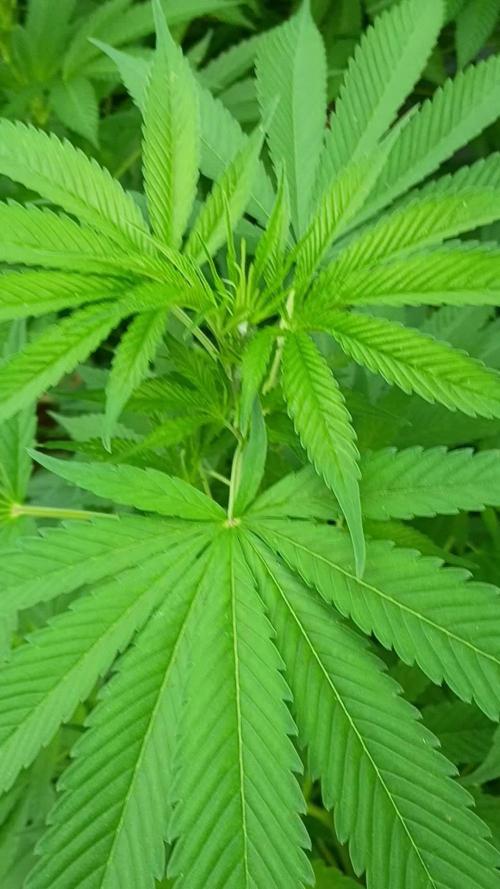
I’m Missing a lot of pics but so far the grow has been great. This is my second grow and first organic grow. Started in early feb. vegged for almost 9weeks. I haven’t had any major issues with this strain whatsoever, will definitely grow again. Has a sweet fruit, gassy and earthy smell. Smells amazing can’t wait. Hoping to yield a few ounces hopefully she bulks up some more before harvest.



Likes
11
Share


@LittleBigTrees
Follow
I've been feeding just water and allowing them to dry right back , I will harvest once the soil is dry again .
Likes
39
Share


@SamDo
Follow
Hello, fin de la semaine 7, et de la semaine 1 de floraison. Les plantes ont vraiment bien récupérées de la défoliation de la semaine dernière. Elles sont déjà pleines de nouvelles feuilles! C’est dingue.. un génétique vraiment solide.
Pour le moment les plantes n’ont pas encore déclaré leur floraison, elles commence à stretcher je trouve, donc je suppose que c’est en bonne voie.
J’ai légèrement baissé l’humidité, je suis à 50%, et je vais réduire progressivement les prochaines semaines.
J’ai eu une très très légère brûlure du à un démarrage peu être trop rapide des engrais de Floraison mais sans grand dégâts. A retenir pour la prochaine fois.
Voilà c’est à peu près tout pour cette semaine. Hâte de voir la floraison s’installer...
Happy grow...😎


Likes
8
Share


@DWCpaqy
Follow
Week has been good. I'm not sure about the ppm and salt around roots, they are a little brown. Wounder if I should flush them and start again with nutrient?
And see some of the last picture, it's pretty thigth between the leaf and buds, should I but some of the leaf?
Ppm 1400-1600
Temp 22 to 31
Temp in water 20-26
Humidity 50-60%
Likes
2
Share


@Cultivators_Dream
Follow
12/13/22 Day 56: Start of the 8th week and she is doing awesome really stretching out I think roots are getting bound though really think i should have put her in 5 gal pot instead of 3 gal but o well hopefully it won't get to bad.. she is already starting to stink 😳 that's for sure.. I have never had so much trouble keeping the ph right I think its because my soil and nutrients were old 😅 😔 will be getting new stuff for next grow I think the nutes are almost 2 years old..Temps have stayed at around 74 for daytime 70 at night hoping to see some colors change but who knows with this strain.. Stay tuned!