




Likes
2
Share


@Gromie
Follow
Had to add a trellis net, DP all the way on the left was getting way too heavy.
Likes
7
Share

@undermink
Follow
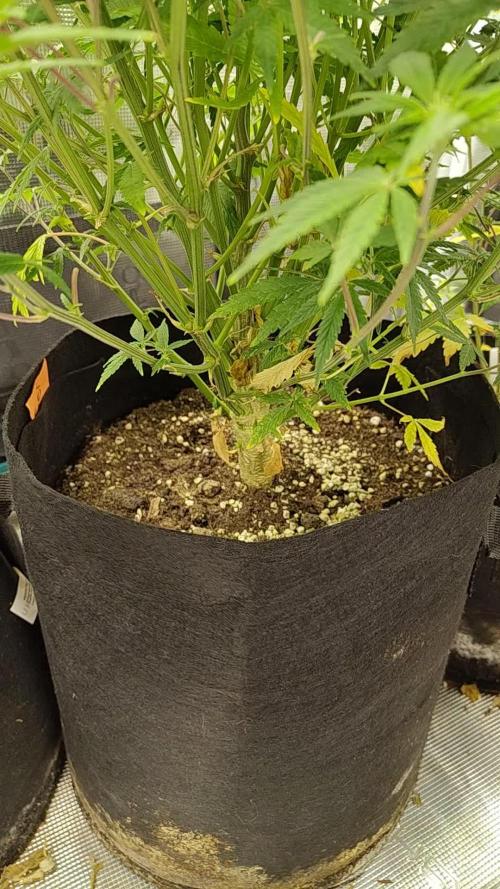
She's awesome. So bushy and strong - I can't belive it 😻 No wonder this strain won so many prices in the past...Love it! It's one of my favorites.

Likes
18
Share


@Dunk_Junk
Follow
Wow she leapt for the sky this week!
Grew another 38cm this week!!! Over doubled her height!!!!!
Look at her weird split stems!!! Very strange.

Likes
14
Share


@b_deal
Follow
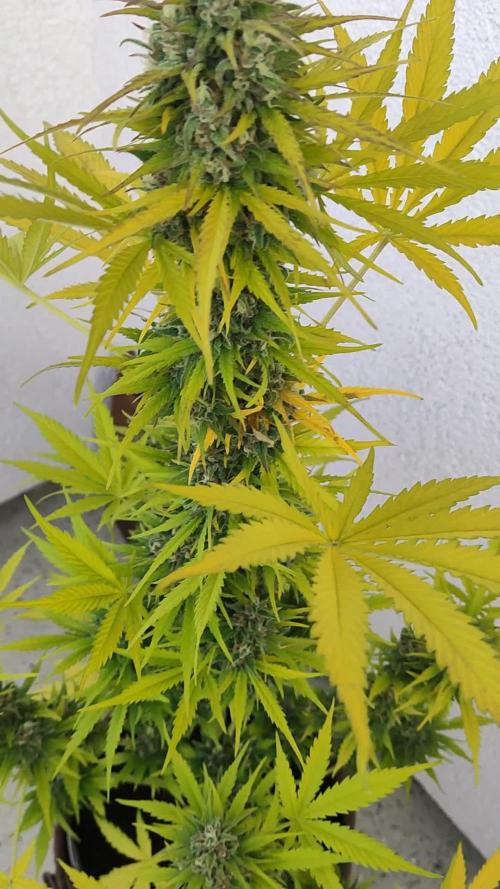
Well folks, this was a PPFD and CO2 controlled grow and I didn't use any bloom boosters like the Big Bud or Canna Boost etc.. Results are crazy.
I managed to collect over 760 grams of dried and fine trimmed nugs. The flowering lights is the LEDWisdom Coral 600W IP67 water and dust proof grow lights. For the first two weeks, I used Rosa 400W and Rosette 200W grow lights from LEDWisdom. When Coral arrived, I changed the light setup so the total lights used is 600Watts. Anyway Coral grow lights have near 3.0 umols/J efficacy and makes your garden yield like crazy no matter what. I'm sure I would have collected more if I used a bloom booster but I wanted to show you guys that you can achieve great results with a great grow light even without flower boosters. You can check my other diaries growing with the Rosa 400W and Rosette 200W. These lights are also killing it and they have around 2.7 umol/J efficacy.
Lights were drawing 590 Watts from the power outlet on the wall so I can say that the whole grow yielded more than 1.3 grams per Watt. These strains are not heavy yielders except the Chocolate Chunk but I only had one plant of this strain and she was the smallest plant in the tent. It didn't affect the total yield much. Pink Kush yields are pretty standart but the quality is exceptional. On the crossbreed strain, yield was slightly more than the Pink Kush plants and the yield from each strain is like below;
-Chocolate Chunk: 80 grams
-Pink Kush: 320 grams
-Purple Punch x Pink Kush: 360 grams
I made some COB's and also some kief and has with the trim. there wasn't much to trim in the end because I kept my plants in good shape. This was a joy to grow and now I have an amazing stash of high quality dried material stored in vacuum. I'm ready for another pandemic but I hope we won't have one 😅
Wish you the best of luck in your garden. Stay green 💪




Likes
12
Share


@Brickie74
Follow
So far so good. Not all that much to say this week. She is still going strong but a bit slower than a few others i have growing now. Continuing the LST trying to keep as many bud sites exposed to the light as possible.

Likes
25
Share


@DrGanj
Follow
Started flush now. I'm adding Nature Delight Active Sugar Boost as it's been recommended to boost terpene production. No idea if it will work this late into flower but trying anyway as apparently it has no need to be flushed and is fully organic.

Likes
13
Share


@GingerSkunk
Follow
-Drinking alot of water and food level staying stable
-Did a light trim took off a few lower leaves that were very big
- Got a net over them to get them to grow flat
-Had to take out the big fan, got a smaller one in hopefully that will keep the temp down and contain the smell
Likes
32
Share


@Hawkbo
Follow
It grew quick it's an early bloomer. The green buzz were great I kept the ppm lower than I typically do staying around 950 for the crop and 880 for this one. If you like the purple autos this is a good one to start with.


Likes
37
Share


@CruellaDeVil
Follow
Da die Orange Bud an zwei stellen angefangen hat hab ich beschlossen sie etwas früher zu ernten.
Hätte bestimmt noch eine Woche stehen können aber von den Trichomen fand ich es schon in Ordnung.


Likes
16
Share


@Chubbs
Follow
420 Fastbuds
Gelato Auto
Week 6
Holy guacamole are these girls ever going to go into flower. It's been six weeks now and generally we'd have flower sites or preflowers by now but so far nothing. It's been super hot with a heat wave going through my area with Temps into the high 90's. I have been still watering 2 liters of straight well water daily. All in all I'll continue to do what I have been and see how long they'll stay into veg and grow.
Likes
4
Share

@Bear_Grows_Green
Follow
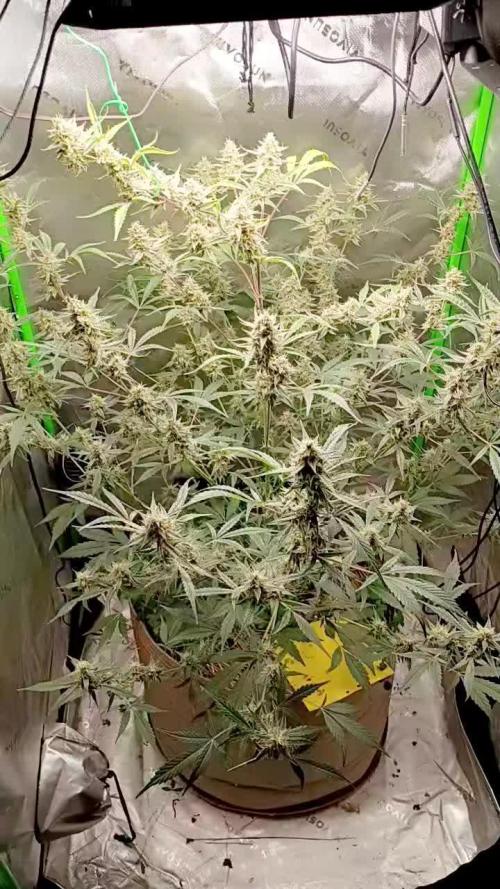
12/05 start of a new week.
12/07 have watering with wdg3000 and yucca


Likes
15
Share

@BLAZED
Follow
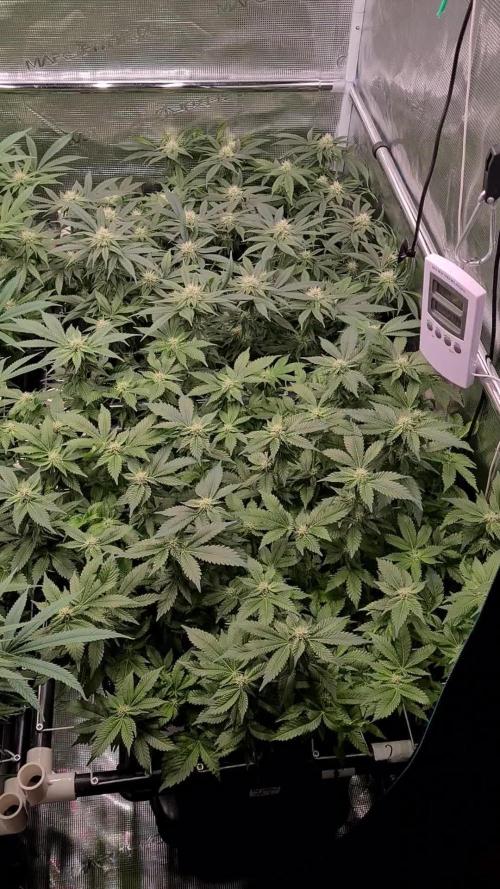
Week 13 (21-4 to 27-4)
21-4
Temps: 20 to 24.8 degrees
Humidity: 54% to 63%
Watering: Both 1000 ml. EC: 1.6
22-4
Temps: 20.8 to 24.7 degrees
Humidity: 54% to 64%
Watering: Both 1000 ml. EC: 0.4
23-4
Temps: 19.2 to 24.6 degrees
Humidity: 55% to 62%
Watering: Both 1000 ml. EC: 1.6
24-4
Temps: 19.3 to 24 degrees
Humidity: 56% to 63%
Light set from 65% to 75% strength.
25-4
Temps: 18.2 to 23.7 degrees
Humidity: 56% to 60%
Watering: Both 1000 ml. EC: 0.4
26-4
Temps: 19.1 to 24.5 degrees
Humidity: 53% to 61%
Watering: Both 1000 ml. EC: 1.6
27-4
Temps: 19.2 to 24.2 degrees
Humidity: 54% to 59%
Watering: Both 1000 ml. EC: 0.4

Likes
43
Share


@TheCannaProphet
Follow
~ GG4 SHERBET FAST FLOWER by FastBuds ~
Well fam, here we go again with another epic strain from FastBuds Fast Flowering stable. After having such tremendous success growing their Gorilla Cookies Fast Flower outdoors last year, I've decided to run another of their fast flowering strains outdoors this year... GG4 Sherbet Fast Flower!
The best description of this awesome cultivar comes directly from my friends at FastBuds which is as follows:
"Bred from extremely potent and flavorful Gorilla Glue and Orange Sherbet genetics, GG4 Sherbet FF (Fast-Flowering) takes all the best traits to the next level, offering a high-yielding strain that can produce up to 600 g/m2 in a 7-week flowering time. This super resilient Indica-leaning hybrid thrives indoors and outdoors, and in all types of climates while producing mouth-watering sweet, fruity, spicy and earthy terps that translate into a delicious sugary hazelnut aroma. Expect an extremely relaxing and overall happy effect that’ll leave you with a huge smile from ear to ear. It’s the perfect strain for growers of all levels of experience seeking low-maintenance yet highly productive photoperiod varieties that deliver quality and quantity without extra effort.
GG4 Sherbet FF grows chunky buds with long dark orange hairs and spade-shaped calyxes that get encrusted with trichomes by harvest time, giving them a gorgeous silvery-white appearance. This medium-sized photoperiod can reach up to 200 cm in height and yields up to 650 g/m2 while developing that typical hybrid structure. GG4 Sherbet FF grows with a stocky, bushy appearance, developing one sturdy main cola and fat side branches that support huge yields without much effort. This super-fast variety produces distinctive light-green buds with a high bud-to-leaf ratio, making your trimming sessions a breeze. It’s a top-notch resin producer that doesn’t need much maintenance and will thrive in almost every climate, rewarding growers of all levels with extremely flavorful resin that makes for outstanding hash end extracts."
________________________________________________________________________________________________________________________________________________________________________________________________________________________________________________________________________________________________________________________
The Setup:
This is going to be an outdoor grow, but I have started the GG4 Sherbet Fast Flower indoors as our weather is still too cold to put her outside (nighttime temp's dipping regularly into the 30's℉).
The plan is simple... let her grow inside under a 19/5 light schedule until the nighttime temperatures stay above the mid 40's℉, at which point she'll be moved outside and transplanted into the soil which I have already setup and inoculated with beneficial microbes, and then let the fun begin!🤪💚
________________________________________________________________________________________________________________________________________________________________________________________________________________________________________________________________________________________________________________________
Weekly Updates:
4/25- Week Four... here we go!
The GG4 Sherbet Fast Flower from FastBuds has her 6th set of leaves now and is looking nice and healthy. She has good color and her growth is beginning to pick up. I have also noticed that something has decided that she's tasty as I have begun to notice holes in her shade leaves that look like they were chewed.
4/27- All is well with the GG4 Sherbet FF. Today I checked the moisture of the soil and decided to water via the garden hose with well water along with a good drink of fresh Compost Tea.
4/29- Rain showers today took care of my watering duties! Yesterday I sprayed her down with Neem Oil to see if it helps to mitigate whatever is beginning to chew on her leaves.
5/1- Well there's another fairly slow week for the GG4 Sherbet FF from FastBuds. Our weather is beginning to warm up and I'm looking forward to seeing this little lady take off!
There's another week for the little GG4 Sherbet FF. I'm really anticipating seeing her take off once our weather gets a bit warmer! Hope to see you next week... 😎
Likes
10
Share


@Deniguez
Follow
Siamo quasi giunti al termino di questo ciclo.. queste bestie si sono dimostrate forti, e trasudano terpeni da ogni parte. Son davvero curioso di ció che sarà il prodotto finale!


