The Grow Awards 2026 🏆 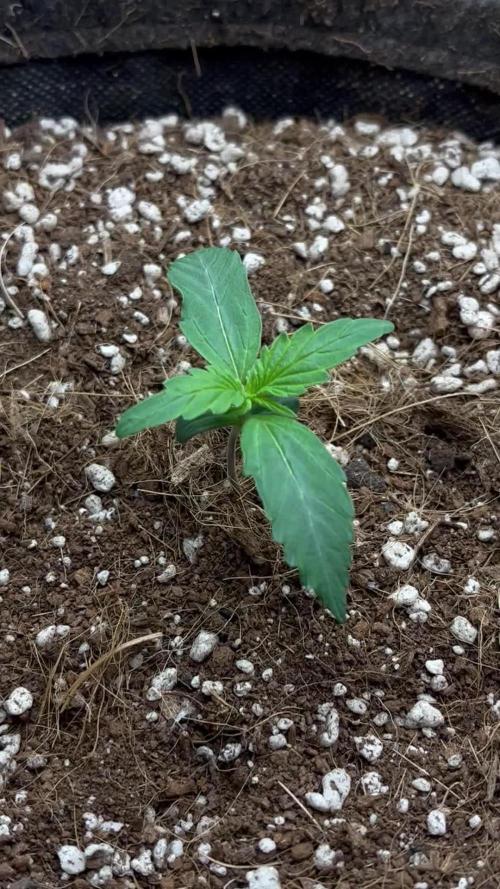










Likes
Comments
Share
@Lvnsource
Follow
Day 5 from seed, today (17.11) I watered 40ml of plain ph adjusted water (ph 5.9) around the stem
Likes
40
Share
@Ganjagrandaddy
Follow
Day 27 from seed: Wow these ladies like life it seems. Some very good growth this week and the switch to Mega Crop has started well so far. The Paler girl is starting to darken a little more now so let's see how we go. As mentioned in the video , I have been able to top them this week so the training can slowly begin . The only thing I need to sort now it the watering regime for the Los. They are doing good with the MC being used too. I am dialing them all in this week to see how green and healthy we can get them. I am looking forward to their smoke as these have been a strain I grew as a photo period a while back. Love these fast buds girls.


Likes
92
Share
@DogDoctorOfficial
Follow
Harvest Notes ✂️
• Harvest Timing: Papaya Zoap was harvested at day 63, with select buds taken earlier at day 56 due to mold concerns.
• Drying: After careful trimming, the buds were dried for 12 days. The quality and aroma during drying hinted at the stellar smoke to come.
• Density & Yield: Buds were rock-solid, delivering an excellent yield with perfect density for storage and enjoyment.
Terpene Profile & Aromas 🍋
• Primary Aromas: A tropical explosion with sweet papaya upfront, complemented by creamy, soapy undertones that make her truly unique.
• Complexity: As the buds cure, a hint of citrus zest and exotic fruit emerges, creating a full-bodied terpene profile that’s simply irresistible.
Cultivation Experience 💡
• Highlights: Her uniform growth, heavy trichome production, and response to super cropping made her a delight to grow. She thrived under careful spectrum adjustments and defoliation, showcasing her adaptability and vigor.
• Challenges: The dense bud structure made her more prone to mold, especially in a high-humidity environment. However, proactive monitoring and swift action mitigated the spread.
Verdict: 🌟🌟🌟🌟🌟🌟🌟🌟🌟🌟 (9.8/10)
Papaya Zoap is a strain that commands attention with her beauty, aroma, and unstoppable growth. While her susceptibility to mold required extra care, her overall performance, yield, and quality were nothing short of exceptional. A grower’s dream and a frosty masterpiece!
Stay tuned for their individual harvest reports, smoke reviews, and more as we wrap up this epic series!
Discount Codes so you can save big on your next check out 💚💚💚
Kannabia - DOGDOCTOR 30% off
SeedsmanSeeds - DOGDOCTOR 10% off
CannaKan- DOGDOCTOR 15% off
terpyz.eu - DOCTOR 15% off
The Neutralizer - PORKIT5-DOG 15% off
Fast Buds - DOGDOCT 15% off
As always thank you all for stopping by, for the love and for it all , this journey of mine wold just not be the same without you guys, the love and support is very much appreciated and i fell honored and so joyful with you all in my life 🙏
With true love comes happiness 💚🙏 Always believe in your self and always do things expecting nothing and with an open heart , be a giver and the universe will give back to you in ways you could not even imagine so 💚
Friendly reminder all you see here is pure research and for educational purposes only
Growers Love to you all 💚💚💚


Likes
26
Share
@Stash074
Follow
This week was good..the ladies are in better health overall. Did some defoliating throughout the week and also did a flush 3 days ago with florakleen.gave em a light feeding today.Just finished setting the timer. Will be flipping them into flower tomorrow at 8 am ..will keep yall updated in my next upload..Happy growing 😎
Likes
5
Share
@zspl0it
Follow
Blueberry smells like Blueberry, Gorilla Cookies smells vanilla like but the Wedding Glue smells like pine.
Ongoing defoliation, I know this shouldn't be done so often but I do it once in a while every couple of days.
I also switched my light from Lumatek to AC Infinity EVO 4 which couldn't run at full power due to DLI issues. I set it to around 200W
Likes
13
Share
@All_our_small_plants
Follow
Bewässerung: 1000 ml jeden 3 Tag in der elften Woche
pH-Wert: 6
EC-Wert: 1.2 mS/cm
Temperatur: 20ºC
Luftfeuchtigkeit: 65%
Schädlingsbekämpfung: im Moment haben wir keine Anzeichen von befall wir haben nur mal zur Prävention etwas Sand gegen die Schnecken um die Pflanze gemacht, dies verhindert das diese sich nähern. Wir haben aber auch Raubmilben ins spiel gebracht zur vorsorge gegen Spinnmilben und andere Schädlinge 😷
PPFD: Direktes Sonnenlicht
DLI: Direktes Sonnenlicht
-Tag 75 Heute haben wir sie mit Schachtelhalmjauche gegossen 😘

Likes
71
Share
@Nor_Cal_Kannabliss
Follow
So these Cream Cookies were really easy to grow! Almost too easy that I neglected them for a week or so and then found two of them covered in Aphids. We tried everything we could to save #1 & #2 but It was a battle that we eventual lost. They are in a bag in the freezer getting ready to be bubble hash. #3 to my awe and surprise has survived through thick and thin. Good and Bad. And will be my only smokeable "flower" from this run. That said I will run these again but inside in a controlled environment as it seems my FastBud Girls were prone to the aphids and caterpillars.
Reguardless I'm super impressed with the structure and just look of the plant overall. Can't wait to smoke #3!!!
The frozen bag of hash weighs in at 203g and includes the mutant #3 smoothie auto from my other diary which also was overrun with aphids. *Will update with dry numbers*
Processing
Likes
1
Share
@josh_meredith1235
Follow
They seem to be going into early flower so time to up the bloom nutes, seem to love there new light


Likes
22
Share
@Basementganja
Follow
Gave her a nice LST+Defoliation session after the week 1 of flower stretch!
She's currently drinking a 1 gallon dosage of the above listed nutes, every 4-5 days!
Likes
17
Share
@Nedyah420
Follow
On average flowering technically truly begins 7 days after 12/12 switch...i waite 7 days because plants dont instantly Flower right at 12/12 switch most take 4-8 days to start actually flowering...it takes time for the hormones to be triggered and start taking effect, so i waite 7 days an consider that the transition period...i suggest waiting on any bloom boosters until after the transition period..also ((Brut worm casting and natures living soil is mixed into soil at listed rates not mixed into water water, all other nutrients are mixed with distilled water.))


Likes
42
Share
@Ultraviolet
Follow
Thank you. Gave her a cocktail to help with stress. Added 1st net for lateral support, not so much now, but for later. Blue light is absorbed by photoreceptor proteins called phototropins, which trigger a hormonal response that causes cells on the shaded side to elongate, making the plant bend toward the light. Try and fill this side a little. She is quite big already, just needs to find her stride again after the undue torture.
The mind is constantly working and producing, just like a factory. It's not just a passive recipient of information but an active producer of ideas, attitudes, and beliefs. The "ingredients" in this factory are the information you consume, such as books, conversations, and the media you engage with. The "products" are your thoughts, beliefs, and actions. The quality of the ingredients directly influences the quality of the output. To guard the door of your mind means to be selective about what you allow in. It involves actively choosing to consume positive and constructive information while filtering out negativity and harmful influences. If you don't guard your mind, others can "dump" whatever they want into it, leading to undesirable results in your life. You must take responsibility for the inputs to ensure you produce the outcomes you desire.
5 apex stems with 20-30 mini cola, let them develop a little, with the apical dominance shattered, all those 20-30 will all compete with each other as soon as that stretch is initiated. Key to a good stretch is making sure the plant is cycling efficiently, with large ATP conversions occurring lights out.
For now, I'm keeping light intensity high. A plant will slow its vertical growth in very high light intensities, leading to a more compact form with thicker stems and leaves. This response is a protective mechanism against light stress, which can damage the photosynthetic apparatus and lead to symptoms like leaf scorching, yellowing, and brittleness. Instead of growing taller, the plant invests its energy into creating a more robust, stress-tolerant structure.
Providing plants with necessary antioxidants helps protect the photosynthetic apparatus by scavenging reactive oxygen species (ROS) that cause damage from excess light.
UV light exposure can impact the xanthophyll cycle by either enhancing its photoprotective role or causing damage, depending on the intensity and type of UV radiation. UV exposure can trigger the synthesis of more xanthophyll cycle pigments to increase the plant's capacity to dissipate excess energy, but it can also cause direct damage, particularly to Photosystem II, and may lead to a decrease in the de-epoxidation state (DEPS ratio) which indicates a reduced capacity to dissipate excess energy.
Plants can respond to UV stress by increasing the synthesis of xanthophyll cycle pigments, such as violaxanthin and zeaxanthin, to improve their photoprotective capacity. UV-induced changes in xanthophyll cycle pigments can be linked to a plant's overall tolerance to high radiation stress. The xanthophyll cycle helps protect against photoinhibition, which is especially important when the plant is exposed to high levels of both UV and visible light. High doses of UV radiation can directly damage photosynthetic components, including the proteins, lipids, and pigments in the thylakoid membranes. Exposure to UV radiation can have a mixed effect on the de-epoxidation state (DEPS ratio) of the xanthophyll cycle pigments. In some cases, UV can inhibit the conversion of violaxanthin to zeaxanthin, resulting in a lower DEPS ratio and a reduced capacity for energy dissipation. However, the total pool of xanthophyll cycle pigments may increase, and this enhanced pool size could provide a greater potential for photoprotection despite a lower DEPS ratio.
The xanthophyll cycle works alongside other mechanisms, such as the accumulation of flavonoids (UV screens), to protect the plant from UV-induced damage.
Blue light repairs 100% UV-induced damage in plants through a process called photoreactivation, which uses a light-dependent enzyme called photolyase. This enzyme uses energy from blue and UV-A light to directly reverse the damaging pyrimidine dimers in the DNA caused by UV-B radiation, a key mechanism for maintaining the plant's genetic integrity.
After carbon, light, water, temperature, and nutrients, the limiting factor of a plant's growth is often its own internal factors or the amount of a key ingredient. Chlorophyll concentration is one such factor, as the amount of this pigment limits how much light can be captured for photosynthesis. Other factors include chloroplast number, respiration rate, and the concentration of carbon dioxide in the atmosphere, as plants are often in a CO2-deficient condition.
60x60x18=64800seconds x 700 = 45,360,000moles. 45DLI
Exposure to 165 µW/cm² of ultraviolet-B (UV-B) light for 3600 seconds = 1 hour, a extremely high, acute dose triggering stress responses and protective mechanisms.
.
The plant's photoreceptor protein, UVR8, senses the UV-B radiation. This triggers a signaling cascade that activates specific genes to protect the plant from damage. In response to the UV-B signal, the plant ramps up the biosynthesis of protective compounds like flavonoids, phenolic acids, and anthocyanins. These compounds absorb UV radiation and accumulate in the epidermal layers of leaves to shield inner photosynthetic tissues. The plant may increase leaf thickness or deposit more cuticular wax, creating a physical barrier to the radiation. The plant will produce more enzymatic and non-enzymatic antioxidants to neutralize the reactive oxygen species (ROS) produced by the UV-B radiation. The plant activates enzymes, including photolyases, to repair DNA damage caused by the UV-B. These repair mechanisms are critical for preventing permanent genetic mutations.
While protective measures are activated, a high dose delivered over a short period can cause stress that overwhelms the plant's defenses.
Photosynthesis is highly sensitive to UV-B. A high dose can inactivate Photosystem II (PSII), damage thylakoid membranes within the chloroplasts, and reduce chlorophyll content, which lowers the plant's overall photosynthetic capacity. Despite repair mechanisms, high UV-B doses can inflict persistent damage on the plant's DNA. The overproduction of reactive oxygen species can cause oxidative stress, leading to the oxidation of lipids and proteins and disrupting cellular function.
I am playing in the enchanted forest.
Likes
15
Share
@Dr81n
Follow
Removed a herm and added plants to follow auto harvest. 3 Deadhead og and one cherries jubilee from caliconnection. No clone straight run.

Likes
20
Share
@SirDucksAlot
Follow
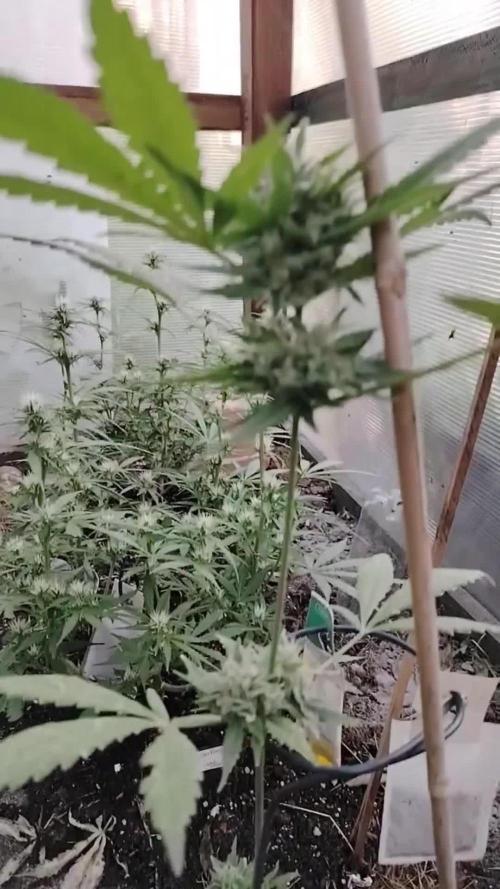
Very happy with the look and smell I'm already getting off the buds. Hairs are starting to turn orange.

Likes
13
Share
@gr3g4l
Follow
Desde el transplante siguen creciendo y se han recuperado del todo, sin más. Ahora ya estoy contando los dias que me faltan para cambiar el fotoperiodo a 12/12h. xd.
Esta semana les hice un riego foliar con Hemplex, auxinas, citoquininas y otras.
Riego cada tres dias, a final de semana 600m l/ Planta

Processing
Likes
6
Share


Likes
5
Share
@FlavorzChaser
Follow
Week 2 G14 started adding biobizz grow along side nitrozyme everything looks perfect staying short and bushy il put a net on top in a few weeks when shes big enough I've started to tuck the leaves in on day 13.
Likes
8
Share
@Salokin
Follow
The week went very well, the plant stretched for an additional 15cm and is now showing the first proper bud-sites. Had to change the nutrient solution after day 5, as the tank was almost empty. I increased the nutrients to a 1000 ppm, which caused a tiny amount of tip burn, so will not be increasing it next week. The second scrog net helps greatly spreading out the canopy, I will continue with a very light LST during the flower as well to guarantee maximum light exposure for all bud-sites. I am enjoying this grow very much, first time in a while for me to grow photos inside and I think I will continue growing photos, it seems they are a bit more forgiving and I feel that I can take the time to really let them fill the tent. On my previous grows I usually had 3 autos in there, which would always lead to issue in regards to some plants growing quicker than others. I have a very optimistic outlook in regards to harvest, which I will keep yo myself in order to not jinx it, but as you can see it looks promising.
Thanks for reading. Until next week :)

Likes
6
Share
@Loucifer
Follow
Was great easy grow had some difficulty with the light but just dialing in the new vivosun led