The Grow Awards 2026 🏆 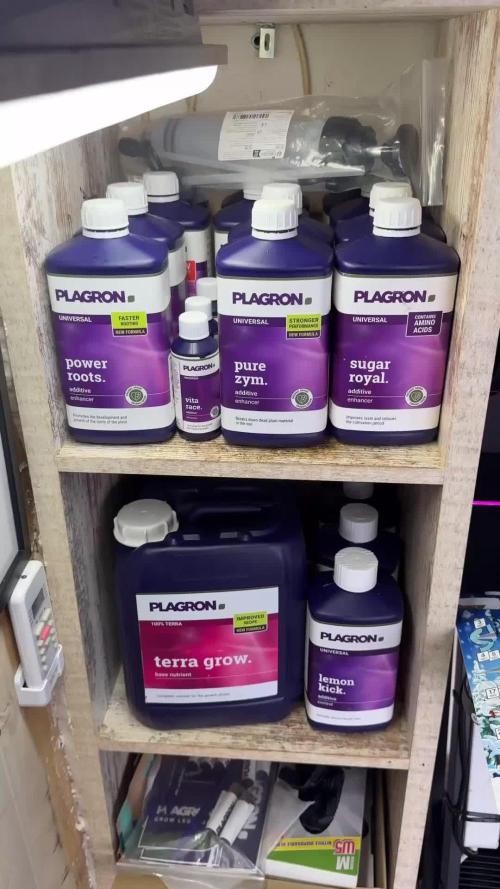









Likes
Comments
Share
@DogDoctorOfficial
Follow
Skywalker OG — Week 2 VEG 🌱
12/12 from seed | Synganic approach
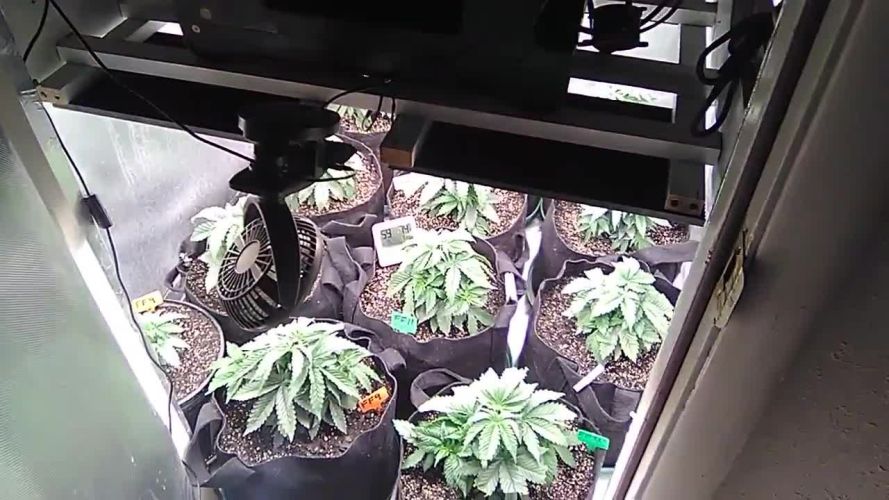
Week two of vegetative growth comes to a close, and all phenotypes are behaving remarkably similar. Despite being grown in different containers (plastic pots and plastic bags), growth rhythm, structure, and overall development are nearly identical across the board.
This kind of uniformity early on is always a good sign — it speaks to stable genetics and a plant that knows exactly what it wants to do. That excites me a lot, both for what’s happening now and for what’s coming later.
⸻
🌿 Plant Development
• Plants are currently working on their third node (third pair of true leaves)
• Height sits around ~7 cm
• Structure is compact and tight, with short internodes
• No visible stress or irregular behavior
Considering this is only Week 2 of VEG and the plants are running 12/12 from seed, this development is exactly where I want it to be. At this stage, the plants are clearly prioritizing root mass and underground work, and I fully accept — and respect — that pace.
No rush. Foundations first.
⸻
💡 Light Cycle Perspective
Running 12/12 from seed means we shouldn’t expect explosive vertical growth early on. Instead, energy is redirected toward:
• Root establishment
• Hormonal balance
• Structural preparation
Top growth will come later — once the roots say they’re ready.
⸻
Nutrition & Feeding — Plagron Synganic Recipe
For this run, I’m deliberately combining mineral precision with organic biological support, creating a synganic symbiosis rather than choosing one side.
The idea is simple:
• Minerals provide accuracy, availability, and control
• Organics support microbial life, enzyme activity, and long-term soil health
This approach allows the plant to:
• Feed immediately when needed
• Build a healthy rhizosphere for future stages
• Avoid deficiencies while still staying biologically active
Rather than forcing growth, the goal is to support the plant’s natural rhythm — letting roots, microbes, and nutrients work together.
Same base recipe as the other diaries, but the intention here is clarity and balance, not speed.
⸻
🧠 Final Thoughts
Everything we’re seeing right now points in the right direction:
• Consistency across phenotypes
• Calm, controlled growth
• Strong early structure
These young Skywalker OGs are doing exactly what they should be doing at this stage — and that’s why I’m very happy with them.
No chasing.
No forcing.
Just listening, observing, and guiding.
On to Week 3. 🌱💚
FOR DISCOUNT CODES AND MORE JUST FOLLOW THE LINK https://website.beacons.ai/dogdoctorofficial
📲 Don’t forget to Subscribe and follow me on Instagram and YouTube @DogDoctorOfficial for exclusive content, real-time updates, and behind-the-scenes magic. We’ve got so much more coming, including transplanting and all the amazing techniques that go along with it. You won’t want to miss it.
GrowDiaries Journal: https://growdiaries.com/grower/dogdoctorofficial
Instagram: https://www.instagram.com/dogdoctorofficial/
YouTube: https://www.youtube.com/@dogdoctorofficial
⸻
Explore the Gear that Powers My Grow
If you’re curious about the tech I’m using, check out these links:
🔆 Lighting & Environmental Control
• Future of Grow — Advanced LED lighting technology
https://www.futureofgrow.com/
DISCOUNT CODE: DOG20
• Lumiflora — Under-canopy LED lighting
https://lumiflorade.com/
• TrollMaster — Environmental controllers and automation gear (past collaboration)
⸻
Genetics
• Zamnesia Seeds — Genetics used in this project
https://www.zamnesia.com/
⸻
🌱 Soil, Substrates, Boosters & Root Support
• Plagron — Substrates, bio mixes, and supportive products
https://plagron.com/en/
⸻
🎒 Storage, Curing & Preservation
• Grove Bags — Curing and storage solutions
https://grovebags.com/
⸻
📸 Photography Equipment & Tools
(Not sponsors, but part of my creative toolkit)
• Sony A6700
• Sony full-frame macro lens + few more
• Stacking photography workflow - learning
• iPhone (for behind-the-scenes shots)
We’ve got much more coming as we move through the grow cycles. Trust me, you won’t want to miss the next steps, let’s push the boundaries of indoor horticulture together!
As always, this is shared for educational purposes, aiming to spread understanding and appreciation for this plant. Let’s celebrate it responsibly and continue to learn and grow together.
With true love comes happiness. Always believe in yourself, and always do things expecting nothing and with an open heart. Be a giver, and the universe will give back in ways you could never imagine.
💚 Growers love to all 💚
📸 P.S. – The Eye Behind the Lens
All photos in this diary (for now — except for the ones showing the camera, which I took with an iPhone) are taken with a Sony A6700 paired with a Sony full-frame macro lens and a few more.
Photography is part of the story — it’s how we share the fine textures, the glow, and the quiet details that words can’t always capture.
I’ve also started experimenting with photo stacking — a technique where multiple images, each taken at a slightly different focus point, are layered together to create one perfectly sharp image from front to back.
It’s not digital enhancement or AI; it’s pure photography — a way to reveal the plant’s beauty in microscopic depth, from trichome to petal.
You’ll even see a few shots of "ghost me" capturing the shots — camera, lens, setup — because every grow deserves not just to be cultivated, but documented like art.
FOR DISCOUNT CODES AND MORE JUST FOLLOW THE LINK https://website.beacons.ai/dogdoctorofficial
NEW DISCORD - Official Server Invite Link : https://discord.gg/ksjAkA5T74
P.S.2— Light Intensity & Environment
For clarity and reference, current light intensity is being kept in a moderate PPFD range, appropriate for early vegetative growth under 12/12 from seed.
At this stage, the goal is not to push top growth, but to support:
• Root development
• Healthy leaf formation
• Stress-free adaptation to the environment
PPFD will be gradually increased as the plants establish themselves and signal readiness. Environment remains stable and consistent, allowing the plants to set their rhythm without unnecessary fluctuations.
As always, light, environment, and nutrition are adjusted in response to the plant, not the calendar.

Likes
6
Share
@Weedboyog
Follow
I think i get 3 phenotype
-Dominant wedding cake
-Dominant Runtz
-hybrid wedding cake runtz
Fertilizer test Giants veg indoor
Flowering outdoor 🦍


Likes
11
Share
@Sawyer_grow
Follow
Hello guys !
new week and an amazing week ! Told you she was working on her buds and now you can see all of them.
It's the perfect moment for a small defoliation in order to increase the focus of the buds.
You can see the videos Before and After. I will have to add bamboo stick because the buds are starting to be too heavy !
she is gonna start to show her colors next week I think.
Hope you enjoy
Take care
Sawyer

Likes
11
Share
@Silverback_Guerilla
Follow
8/28:
She's my last CC bean out of the original 7 that I received. (only ordered 5). I will not be ordering any more of them, but it is really good bud, so I figured why not..
I had 2 out of 3 seeds germinate last grow, and only 1 out of 4 this time....if they hadn't sent me the two freebies I might not have even been successful at all last time...
I will FIM this one to try and increase the yield a little...
She's in the 5gal tall black plastic pot with the white zip-tie loops on both sides.

Likes
Comments
Share


Likes
20
Share
@Hawkbo
Follow
Shes a bushy one, all these plants are growing so bunched up cuz they were stunted before the flip, expecting a disappointing run overall for quality although roughly 80% of the tent is purple so it should look cool atleast


Likes
4
Share
@HighOhioAn
Follow
Rainbow melon has exploded with vibrant green branching. Seems like a new node every day beautiful plant structure going to start low stress training this week.🔥

Likes
12
Share
@GREENPHOENIX6262
Follow
Starting week 2 Veg - See below for specs
Nutrient feeds remain the system
Height - 2 inches (Not much progress in height) Width has definitely grown out
Water feeds continue to be everyday - Have a gallon+Nutes
Light Intensity - 100%
*Mid-week review - 8/18*
Introduced Cal-Mag (4 ml/Gal)
Plants grown approximately .5 inches in height - 2.5 -3.0 inches in width
Light Intensity 100%
*End of week recap* (08/20)
Both have grown about 1 - 1.5 inches in height and 2 - 2.5 inches in width.
Fan leafs deep lushes green
Bud sites topped
Thus far all is running smoothly.
Likes
71
Share
@Roberts
Follow
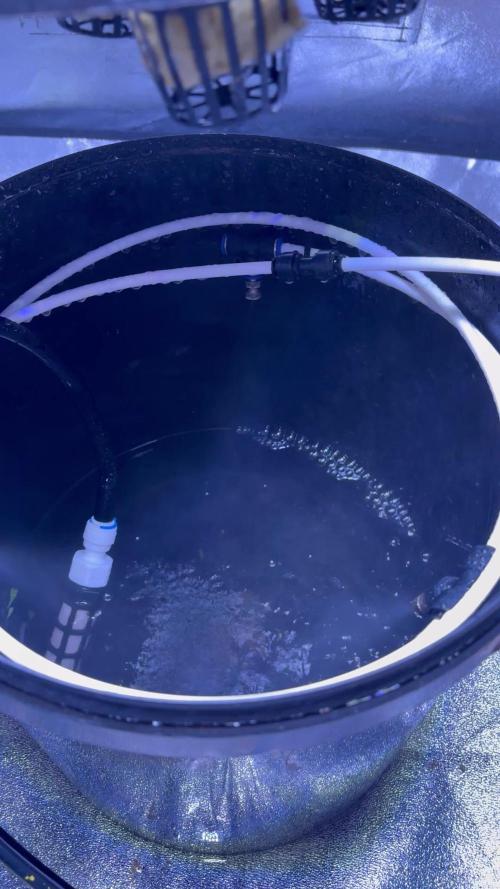
Quebec Blast is growing good, she is starting to develop flowers, and stretching. She is the shorter one in the room. I am figuring a stocky frosty plant at end. 🤞 I get there with no major issues. A solution change of a gallon every 4 to 5 days has been my current schedule. Future grows I wanna try to keep roots higher up through pruning to allow more solution for better stability, and longer between changes. She is in a New Level Hydro bucket, under a Spider Farmer SE5000 light at 80 percent. Thank you Spider Farmer, New Level Hydro, and Quebec Seeds. 🤜🤛❄️🌱
Thank you grow diaries community for the 👇likes👇, follows, comments, and subscriptions on my YouTube channel👇. ❄️🌱🍻 Happy Growing 🌱🌱🌱
https://youtube.com/channel/UCAhN7yRzWLpcaRHhMIQ7X4g
SE5000
https://amzn.to/3qFpAML
Spider Farmer Official Website Links:
US&Worldwide: https://www.spider-farmer.com
UK: https://spiderfarmer.co.uk
CA: https://spiderfarmer.ca
EU: https://spiderfarmer.eu
AU: https://spiderfarmer.com.au
Coupon Code: saveurcash
Www.newlevelhydro.com
Www.hygrozyme.com

Likes
24
Share
@olli0420
Follow
Harvest time! Finally! Super happy with this grow! I'll update harvest with pics of jarred buds after it dried 💚
Last values were 200 ppm💚

Likes
3
Share
@High_Grade_Dadli
Follow
Mother: to the older sets that are in pot
Gonna transplant dem new mother by the end of the week or next week...jus letting LST do it thing since I already started it
New cutting first visible root in 8 day off of water only gonna hit them with a rooting mixture before end of week


Likes
47
Share
@Lady_NugWitch
Follow
Topped these girls and repotted into final resting places. Lol. Happy growing!!
Likes
10
Share
@Archieballs
Follow
All the plants are doing well. Banana #1 is definitely ahead of the others in her flower but the other two are coming along these are all taken on day 48. They are averaging a growth of 2 cm a day in growth. We have changed them the last two weeks to 18/6 lighting and it seems to be helping them in general. The last two watering they received no food as we felt we had been giving them too much nutrients and wanted to give them a wee break. They will be fed tomorrow. Still not sure what the yellow spots on the leaves are but I think it’s something to do with the nutrients they received, I had thought it was lack of Cal/Mag but no one else thought so. They have never been given Cal/Mag before.


Processing
Likes
17
Share
@Silverback_Guerilla
Follow
1/14:
All 3 are looking great!
This morning, I did a foliar application of big bloom and fulvic acid, then about 5 hours later I watered them with about a half-gallon of rainwater each and added armor si, humic acid, endoboost myco/tricho, liquid molasses, and a bunch of cal-mag. Today, I also I wired up and mounted my new samsung sun board strips (660nm/730nm) and my Solacure FlowerPower UVB fixture.
I'm running the deep red/far red bud boosters a few hours per day right now, but will run them for the entire photoperiod once I start flowering them. I'll run the UVB for 4 * 15-minute sessions a day for the full flowering cycle, and if they don't protest too much I'll increase each session by 5 minutes and evaluate again. Some strains are more forgiving than others and I've got 5 different strains in this space...so really not sure much time I'll get away with exposing them to the deadly rays without damaging them too much...😈
1/15:
I received one of the rapid led/growmau far red initiator pucks today. With the placement of my UVB light, I'm realizing I'll need another far red puck to have even and intense far red coverage, so I'm ordering another with Prime delivery and waiting to start flowering until I receive it.
I sprayed them down really well with ph adjusted rainwater tonight to rinse off nutrient build-up from foliar applications.
1/16:
I'm really excited to try flowering under 14/10. I grew photos indoors on an off for 15 years before I semi-retired. If I added up all the additional flowering time I could have done through the years if LED technology existed, I'd have had an extra truckload of bud to smoke.
I did another application of Axiom Harpin a|b Proteins this evening, right before dark. I'm expecting a big growth burst this week, leading up to the flower stretch. I really need them to trigger under 14/10 within 4 or 5 days🙏
...if not, I'll switch to 13/11 and wait a few more days🙏😟..if still no pistils are poppin, I'll go to 12/12 and chalk it up as bad luck or varietal indifference to Pr and Pfr manipulation.
1/17:
I fed each of them about 3/4 gallon of full strength veg nutes. This will be the last. I'll go with half-strength veg and half-strength bloom for a week, then go with full strength bloom nutrients until I start flushing them in 6-8 weeks.
1/18:
I installed the second far-red flowering initiator today and got all my timers configured for flowering:
=========================================
timer#1 - power strip with qb's and red boosters
10:00am -12:00am
timer#2 - (dual/independent setting)
sideA- 3-way cube with uva bars
10am - 3pm
7pm - 11pm
sideB- flowerpower uvb
1pm - 1:15pm
4pm - 4:15pm
7pm - 7:15pm
11pm - 11:15pm
timer#3 - far red pucks
11:00pm - 12:15am
timer#4 - sub-canopy tube
10am - 1pm
3pm - 6pm
8pm - 11pm
========================================
I also did some testing on the timers and sealed myself into the closet to check for any light leaks. All good.👌
1/19:
Tonight is their first long night. It's ON!👍
1/20:
I watered them today with about a half gallon each. I'm seeing calcium and magnesium deficiencies here and there, so added some boomerang and heavy cal-mag-Fe along with liquid molasses, humic acid, and endoboost myco. I also foliar fed with big bloom and fulvic acid.
That's it for week 4-

Likes
14
Share
@ChitownCannaChica
Follow
This is her last week! WHAT A STUNNER! . She just got an ice flush and was flushed with plain water all week. The fade is coming in strong. She is a beast for a lady growing in a 3 gallon pot. Soaked in all that light and took the nutes like a champ. Sort of disappointed that I only have one of these seeds! I got her on a trade! And didn’t clone.
The buds are slightly airy—- but common for a haze. The resin is ON POINT—- she is very sticky! The now is a sweet berry musk almost.
And the bud production has been fantastic without any training at all!
Update next week!!! Cannot wait!! ✌️🏻💚🌿
Likes
170
Share
@Tropicannibis_Todd
Follow
👉Alrighty Then👈
It's been a great week all plants are killing it ......... 👉it's Flipping Time 👈
👉So I topped all but Babba Kush and Slurricane they didn't require it ...
I've now started there nutrients program ,for the flip so we are set to go ......
Persian Pie from Greenhouseseeds
Full Gas from Greenhouseseeds
Babba Kush from Greenhouseseeds
Rainbow Melon from Fastbuds
Papaya Sherbet from Fastbuds
Weddingcheesecake FF From Fastbuds
Purple Oreoz F1 From Seedsman
Slurricane From Premium Cultivars
Soil by Promix
Nutrients by Cronks
Well this should be fun 🙃
Thanks to all my growmies out there for stopping by its much appreciated 👈
👉Happy Growing👈

Likes
33
Share
@NuggetPawn
Follow
So officially 11 weeks and 5 days into the grow so a little early to post week 12 but have got a busy week next week.
Still having to cut off the odd bud here and there that gets too close to the lights. Unfortunate but hopefully the fact it’s so tall means I’ll still get a fair bit from the buds around the sides and just under the canopy.
TDS @ 0.5 is riding around 950 - 1050
Usually alternating days between adding fertiliser and nutrients. She’s drinking about 12 litres or 4.5 gallons every two full days.
Once she’s harvested and weighed in, I’m going to post a long list of points and tips I have learned along the way for any other noobs out there.
Already bought another tent for the next grow which is 240cm tall x 110cm x 180cm vs the 180cm tall x 60cm x 120cm one I’m using at the moment. Hopefully that means no more burnt buds!
Hope the video and pics are interesting!