


Likes
2
Share

@DmbTexasRanger
Follow
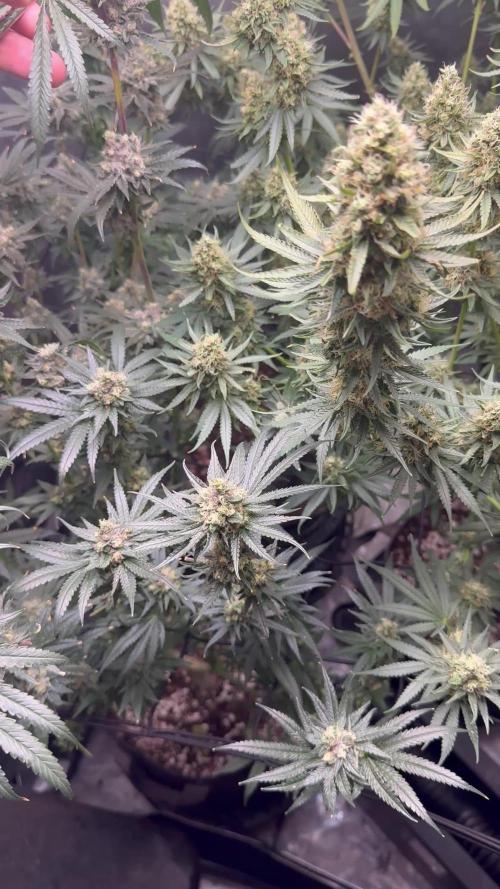
I am very happy with bloom. The plants are showing some amber trichomes very early. Some of it may be from bruising from me reaching over them?


Likes
3
Share

@MrWeeedWorld
Follow
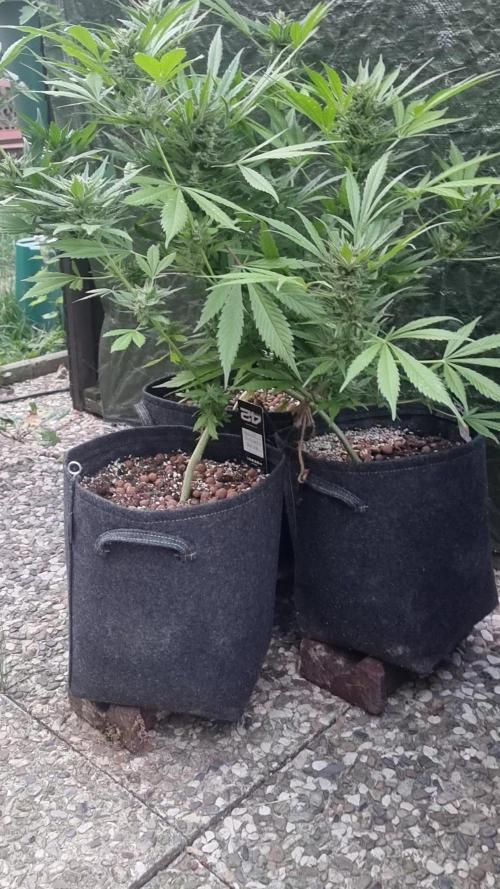
Jetzt beginnt die Ernte langsam ihren Schatten vorauszuwerfen.
Jede Woche zeigt diese Apricot Auto ein neues Gesicht. Was vor wenigen Wochen noch wie eine sauber trainierte Outdoor-Pflanze aussah, entwickelt sich nun immer mehr zu einer beeindruckenden Sammlung harziger Colas.
Das Training der vergangenen Wochen macht sich jetzt richtig bezahlt. Die offene Pflanzenstruktur sorgt dafür, dass nahezu jeder Haupttrieb ausreichend Licht erhält und sich gleichmäßig entwickeln kann. Statt einer dominanten Hauptblüte stehen inzwischen zahlreiche kräftige Colas im Mittelpunkt, die Woche für Woche an Größe und Dichte gewinnen.
Besonders schön zu beobachten ist die Entwicklung der Blüten. Die Kelche beginnen sichtbar anzuschwellen, viele der ersten Blütenstempel färben sich bereits orange, während an den Spitzen weiterhin frische weiße Pistillen entstehen. Genau diese Mischung zeigt, dass die Pflanze noch einmal ordentlich Energie in den Endspurt investiert.
Auch die Harzproduktion legt deutlich zu. Inzwischen sind nicht nur die Buds selbst, sondern auch die Sugar Leaves von einer dicken Trichomschicht überzogen. Je näher man herangeht, desto deutlicher wird, wie frostig die Blüten mittlerweile aussehen.
Die großen Fächerblätter verlieren langsam etwas Farbe – ein typisches Bild einer Pflanze, die ihre gespeicherten Reserven zunehmend in die Blütenbildung steckt. Insgesamt wirkt sie jedoch weiterhin vital, stabil und ausgesprochen gesund.
Jetzt beginnt die spannendste Phase. Von Woche zu Woche werden die Blüten dichter, schwerer und aromatischer. Wenn das Wetter weiterhin mitspielt, dürfte in den kommenden Tagen noch einmal ein ordentlicher Gewichtszuwachs bevorstehen.
Ich freue mich schon darauf zu sehen, wie sich diese Apricot Auto auf den letzten Metern noch einmal entwickelt.
--------------------------------------------------------------------------------------------------------------------------------------------------------------------
The finish line is finally coming into sight.
Every week this Apricot Auto reveals a new side of herself. What started as a carefully trained outdoor plant has now transformed into a beautiful canopy full of resin-covered colas.
The training from the previous weeks is now paying off perfectly. The open structure allows almost every top to receive excellent sunlight, resulting in an even canopy where multiple main colas continue to develop together instead of a single dominant top.
The flowers have clearly entered their swelling phase. The calyxes are becoming thicker, many of the early pistils have already turned orange, while fresh white hairs continue to emerge on the upper buds. This combination is always a great sign that the plant is still pushing hard toward the finish.
Resin production has increased noticeably once again. The buds are becoming increasingly frosty, and even the sugar leaves are now heavily coated in sparkling trichomes. Up close, the flowers are beginning to develop that sticky, icy appearance every grower hopes to see.
Some of the larger fan leaves are gradually fading as the plant redirects its stored nutrients into flower production. This is a completely natural part of late flowering, while the overall plant still looks healthy, vigorous and well-balanced.
Now comes the most exciting stage of the entire grow. Every passing day adds a little more weight, a little more density and another layer of resin. If the weather stays cooperative, the final weeks should reward all the patience invested since day one.
I can't wait to see how this Apricot Auto finishes her journey.

Likes
36
Share


@The_Projexx
Follow
Things are going well in this grow . The plants are growing a little slower then I would like them too but they are still alive and kicking and thats what I like too see . CheesyHeadband#2 seems to be doing some funny things she hasnt come out with her whole set of leaf yet makes me wounder if shes stunted of possibly dwarfed only time will tell tho ! Other then that no complaints coming from me this week things are going well and Im starting to look forward to these lady's growing up :)
I'd like to thank everyone for stopping in and checking out the diary . A special thank you goes out to all my followers , you guys rock and I really appreciate that you guys come in daily and weekly to check out the updates ! So keep on keeping on !!!
Remember to check my diaries daily for updates and weekly for video updates . Stay tuned !!!!!
-Happy Growing!

Likes
4
Share


@TheChronicHunter
Follow
Grab this plant as a clone that had been set out for free at the side of the road in my neighbourhood. Hope it’s not hemp lol.
Likes
12
Share


@igrowtomatoes
Follow
this week you get shit pictures cause never any sun here.
plants are doing well, as soon as i flipped the pineapple had white hairs very next day.
the shiskaberry still has no white hairs but is stretching and catching up to the pineapple.
its only been a week since my mass defoliation and it looks like i didnt even trim anything( will have to re-trim week 3 of flower)
i also bought an ac infinity exhaust fan for better circulation,and i will be buying a dehumidifier this week.
i might start a scrog today ,its kind of late but if anything it will be support for the buds.


Processing
Likes
10
Share


@levensfiets
Follow
another week, another update. by the end of week 6 of flower the two ladies (#1 and #2) are doing great. I noticed a little deficiency by rust spots on the leaves; did some research online and i went ahead to give this one ane extra dose of Overdrive (0-5-4) for her newly developed flowering PK hunger.

Likes
13
Share


@oremountainfarming
Follow
Die ersten Blütenansätze zeigen sich und der Stretch neigt sich dem Ende. Es wurde an Blütetag 7 noch etwas entlaubt und untere Triebe entfernt. Der VPD liegt aktuell bei ca. 1,2 kPa.
Likes
26
Share


@DreamIT
Follow
Sponsored by:
🏡GANJA FARMER SEEDS🏡-💡VIPARSPECTRA💡-💐GREEN BUZZ LIQUIDS💐-🛠️WEDRYER🛠️
4/9 I'm back with updates. there is little to say as for the sister. It is growing well, it has stretched a lot and I expect a good harvest. yeah!
__________________________________________
Personal advertising (contains affiliate links)
__________________________________________
🦄 Huge collection of exquisite genetics since 2009! Anonymous shipping!
✅https: //bit.ly/Ganjafarmer
__________________________________________
Did you know that Green Buzz Liquids fertilizers are 100% vegan? A complete line of products ready to give the best to each of your plants! Visit the site and see my journals to see how they work 🦄
🤯 And with the code "dreami t" you will immediately receive a 15% discount on your purchases
✅https: //bit.ly/GreenBuzzLiquidsPro
__________________________________________
👀 Are you looking for a good lamp to start with? 👀
🌞Viparspectra has something more than the others, take a look at their site.
⏩ Use "GDVIP" for an extra discount or "DREAMIT3" for an extra 5 %% discount
👀 Search for it on Amazon
✅Amazon USA: https://amzn.to/30xSTVq
✅Amazon Canada: https://amzn.to/38udUVe
✅Viparspectra UE: bit.ly/ViparspectraUE
✅Viparspectra USA: bit.ly/ViparspectraUS
______________________________________________
🌈 Tired of blowing on your weed hoping it dries quickly? Check out the Wedryer website! You will find a well-made accessory that will help your weed dry in just 8-10 days without the annoying risk of finding mold or other annoyances! (no affiliate links)
✅https: //bit.ly/Wedryer_
______________________________________________
📷🥇Follow the best photos on Instagram 🥇📷
https://www.instagram.com/dreamit420/
Backup
https://www.instagram.com/dreamit4200/
🔻🔻Leave a comment with your opinion if you pass by here🔻🔻
🤟🦄💚 Thank you and good growth 💚🦄🤟

Likes
21
Share


@FatYappas
Follow
Welcome back all, following a week that has been a fairly straight forward seven days or so in Fat Yappa's Garden, as the older Bruce Banners reach day 51, day 44 for the runt of the sisters, planted on the same day but that took a week longer to germinate, and day 42 for the two Wedding Cheesecake's, one growing in Coco Coir, the other in the same living soil as her Bruce Banner Fastbuds cousins.
The week began with last weeks humidity issues brought well and truly into hand with the addition of the new 20L dehumidifier from Meaco, specifically designed for the UK weather. However a shift in the aforementioned from the falls dawn of an early spring, to a return to more usual climate conditions for this time of year through things off kilter once again. Despite pulling around 6L of water out the air a day, she was struggling to keep the RH down to around 50% with my central heating returned to its usual position of 18c, but an increase to 20c has taken things back in line, and the humidity has returned to the mid 40's I was aiming for.
Humidity concerns during this off period however, and a subsequent inspection below the top layer of the canopy, which resulted in the discovery of quite a lot of whitish, moist growth, prompted a mass defoliation, mostly of the Bruce Banners. I had been performing very light defoliation up until this point, only removing dead/almost dead leaves, and very select leaves from the top of the canopy that were blocking what looked like bud sites, but the lack of light and air getting through past the top layer, together with the fact that now bud sites are far clearer to a novice such as I, lead me to the conclusion that the time was right. Besides the runt, all these plants have not even skipped a beat. The runt has been a bit droopier in her leaves than the others all in all, but I have looked in on them and seen her with leaves pointing up and praying a few times since so I trust all is well.
Following the defoliaton on day 47, the plants stuck to their two day watering schedule, but di threatened to need an increase to daily, as day 50 saw waterings a mere 24hrs after the previous day, but feeling the weight of the pots yesterday I elected to wait til 48 hours to water again. The water amounts per plant has also become more erratic than previously, so I have been watering more carefully.
Other than that the week has been pretty much plain sailing, and what look like to be some big looking flowers coming up all over the canopy, as all bar the Wedding Cheesecake in living soil are now fully in flower, but she will be there by next week. The Bruce banner I accidentally snapped the top off from the second node down doing LST a few weeks ago seems to be about half a week ahead of the other two of the same age, and trichomes have began to appear on the leaves around the buds. The biggest plant in the tent is still the wedding Cheesecake in Coco coir, as she now stand a metre tall and her top is the same level as the light now. Her size is a concern because it has caused me to neglect her in favour of the other plants, certainly in terms of light, but she doesn't seem to have any more bud sites than the other plants, and for the time being at least, her older cousins are leaving her to shame in this department, but she still has a week to catch up.
Lastly, day 39 saw another compost tea feeding, the same recipe as last time.
Happy growing everyone, and I will catch you all again next week.
Processing
Likes
15
Share


@DeStarr_GhettoGrows100
Follow
Great Week! Girls are getting bigger and loving there new light. LST is going well. They are showing there sex and will be going into there stretching phase
Likes
62
Share

@PersonalSmok3s
Follow
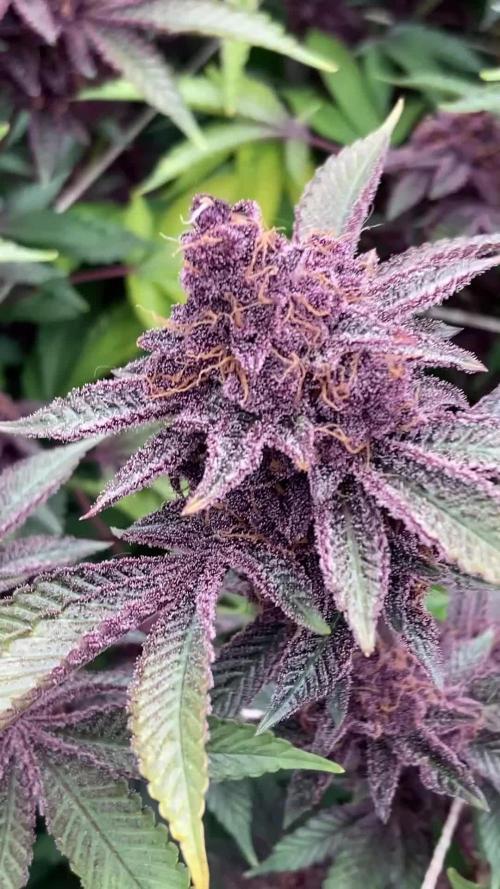
Harvested these ladies at day 68 of flower. Minus the tops from plant #2.
Absolutely stunning genetics! All the plants expressed a range of pinks, reds and purples. I’ve not just experienced anything like it to this extent.
All the plants share a mixture of different terpenes, but predominantly Orange, Cherry and Gas.
Plant #1 smells of Trop Cherry
Plant #2 smells like heavy sour Gas
Plant #3 smells like Orange oil & Gas
Plant #4 smells like Orange oil & Gas
Plant #5 smells like Cherry & Orange
Plant #6 smells of heavy Cherry Gas with subtle Orange tones.
Plant #7 smells like heavy Orange Gas
I’ve ended up leaving plant #5 to keep flushing with the new group 🤷♂️😸
I’ve added a video of a dry bud from plant #2
The second video is plant #6.
It’s been a really fun grow, I’ve got clones of the plants I want to run again so expect future diaries.
I’d like to thank everyone who has commented or liked this diary, I hope it’s been helpful in some way 😸
PersonalSmok3s🌱💚

Likes
6
Share


@oP41No
Follow
I got a double scrog setup and I'm gonna let it grow into it. This is my first grow and I'm excited. General Hydroponics nutes (Flora series). Kingbrite QB 288 v3 from alibaba. I'm just gonna let her do her thing until about week 3.

Likes
30
Share


@Roberts
Follow
Watermelon auto is hurting this week. The neem oil spray is always so harsh on my plants. I am trying a different a way of spraying them,
spray, wait a half hour, and rinse off. But leave on the under side of leaves. Since they like to hide there. Hopefully it will help. I have not seen new ones on this plant. They were on another. It has been a horrible year for issues in my grows. Thank you RQS, Gen1:1, and Medic grow.. 🤜🏻🤛🏻🌱🌱🌱
Thank you grow diaries community for the 👇likes👇, follows, comments, and subscriptions on my YouTube channel👇. ❄️🌱🍻
Happy Growing 🌱🌱🌱
https://youtube.com/channel/UCAhN7yRzWLpcaRHhMIQ7X4g
Thank you grow diaries community for the 👇likes👇, follows, comments, and subscriptions on my YouTube channel👇. ❄️🌱🍻
Happy Growing 🌱🌱🌱
https://youtube.com/channel/UCAhN7yRzWLpcaRHhMIQ7X4g

Likes
4
Share


@mojo1985
Follow
wächst nich so krass schnell wie die banana blaze im direkten vergleich und auch noch nicht in der vorblüte...aber vom wuchs her eine schöne genetik... anfangs waren beide ja bisschen krüppelig...aber haben sich tiptop gefangen... seien wir gespannt... aer ich bin guter dinge 🙏😇
Likes
45
Share


@Bluesbreeder
Follow
yesterday did some defoliation !
damn this cinderella jack is some bushy plan! so many leaves and i maybe cut of like 200 leaves from the 4 plant and they still it's looks so bushy.
also pinched the tops of all my buds for the Budswelling but i forgot to make a video of it.
but i will post the video from my last diary again just to show you what i did with the bud's for this budswelling if you look close to the pictures and zoom in you can see that all my buds have a little brown spot in the middle. that's where i pinched the buds yesterday and is the wound of doing this.
but don't be afraid she will recover soon and produce some big fat compact buds with lot's of trichomes !
it worked on my last grow the auto ultimate to get some fat buds so i will be doing this all the time.
Likes
14
Share

@Northern_Ent
Follow
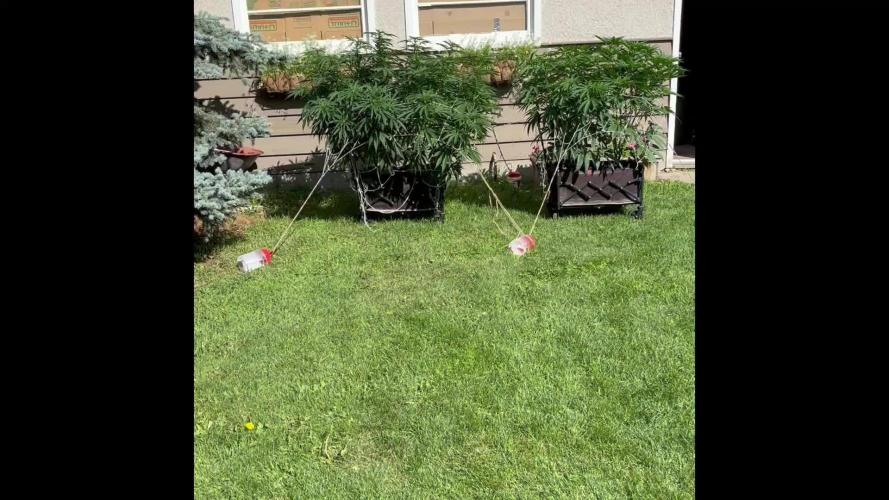
July 26: Lemon Cream Kush is doing just fine. Nicely recovered from me breaking one of the two main stems several weeks ago. I managed to tape it and she recovered quite well but it delayed things a bit and left her a bit asymmetric.
Did a fourth lazy compost tea, see video explaining how i do it without an air pump and using cheap ingredients like blackstrap molasses and Epsom salts.
July 29: defoliated lower fan leaves and small lower bud sites.
Aug 1: added another round of malted barley and Power Bloom because the cannabis plants are showing signs of P deficiency. Blue-ish leaves and reddish petioles on another plant should be fixed by the malt and Power Bloom.

Likes
41
Share


@Kmikaz420
Follow
Bonjour a toutes et à tous , bon dimanche .. je passe juste vite mettre quelque photos (je n ais pas trop le temp en ce moment , je vais être opéré mercredi donc pas mal de chose à préparer)
Je passerai (si tous ce passe bien ) fin de semaine vous mettre des photos des plantes hors de la tante histoire de voir les filles plus en détails.
Je vous dit à très vite (enfin j espere:)


Likes
13
Share

@Chubbs
Follow
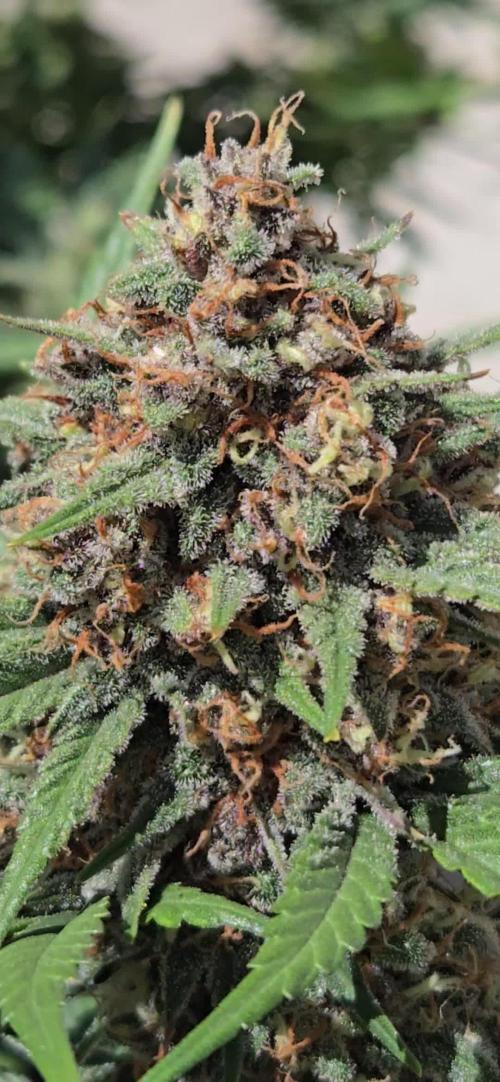
What up fam, took down my 4x8 these where in and figured I'd let them soak up some summer sun. They're getting super close to being finished,I guess another couple days. They smell so good and I really couldn't be happier with how they've grown. Happy Growing.