


Likes
Comments
Share



Likes
8
Share


@valiotoro
Follow
Hello everyone 😎
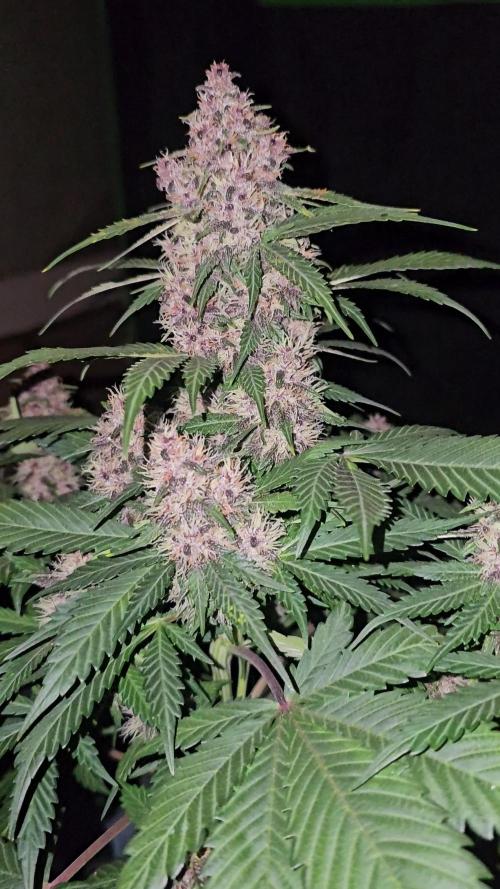
Week 9 of flower for the Orange Sherbet auto from Fast Buds 💥🍊
For the nutrient 4ml/L terra bloom & 1ml/L power buds from Plagron
Weight is coming 💥
Spider Farmer SE-7000 80%
Now plain water💧
The top buds are ready for harvest
Likes
11
Share

@Growbody
Follow
Willkommen zu meinem Growbericht der Gorilla Cookies Auto von 2Fast4Buds. Der Strain wurde 2022 zur besten Indica beim Autoflower World Cup gewählt. Laut FastBuds deren meistverkaufter Strain. Grund genug, den Strain zu testen. Ganz Aktuell wurde die Gorilla Cookies Auto von 2Fast4Buds hier bei den Grow Awards 2026 in der Kategorie Best Strain auf Platz 3 und in der Kategorie Best Autoflowering Strain auf Platz 1 gewählt. Das macht mich noch neugieriger...
Für den Grow verwende ich 15 Liter ROOTiES Stofftöpfe.
Ich war sehr zufrieden mit der Sonnenerde, deshalb habe ich nachbestellt. Sonnenerde hat seine Mischung für die Bio Hanferde letzten Oktober/November geändert. Jetzt sind da kleine Tonkügelchen drin und kleine Gipsstückchen. Laut Sonnenerde soll das die Erde luftiger machen. Auf den Fotos kann man die unterschiedlichen Mischungen gut erkennen. In den AirPots ist die alte Sonnenerde, in den Stofftöpfen die neue. So kann man das Wachstum in den verschiedenen Erden schön vergleichen.
Die Smart Start Plugs von zamnesia hab ich wieder verwendet.
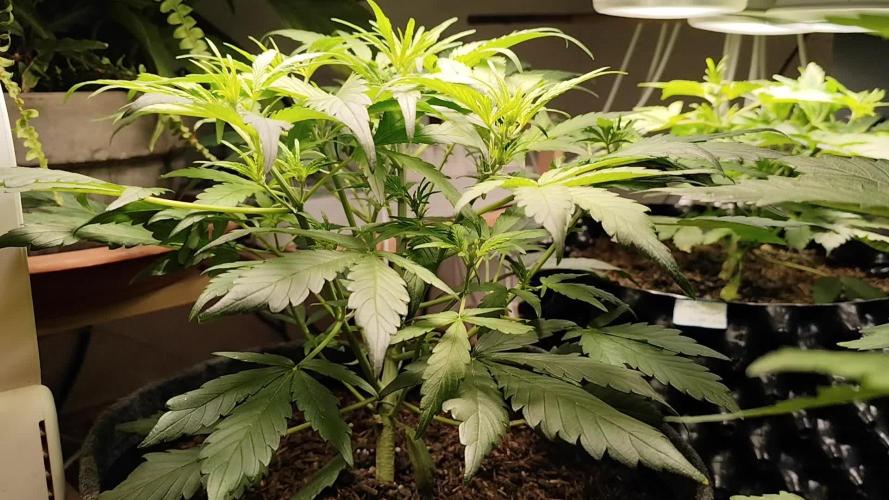
Tag 37: Die Gorilla Cookies Auto von 2Fast4Buds wächst kräftig und hat die Form wie ein Schirm. Diese Woche gab es 3x 1 Liter Wasser.
Schön, das du dir meinen Bericht ansiehst. Schau gerne wieder rein. 👋😎


Likes
2
Share


@Lily_Bloom
Follow
Had to change the solution at day 4 because the Ph went up to 6.8 and I still don’t know why.
And yes, I see… I need to learn how to make better photos. Got the info nearly every time when I upload. Ok.. ok.. :D


Likes
1
Share

@all_about_420
Follow
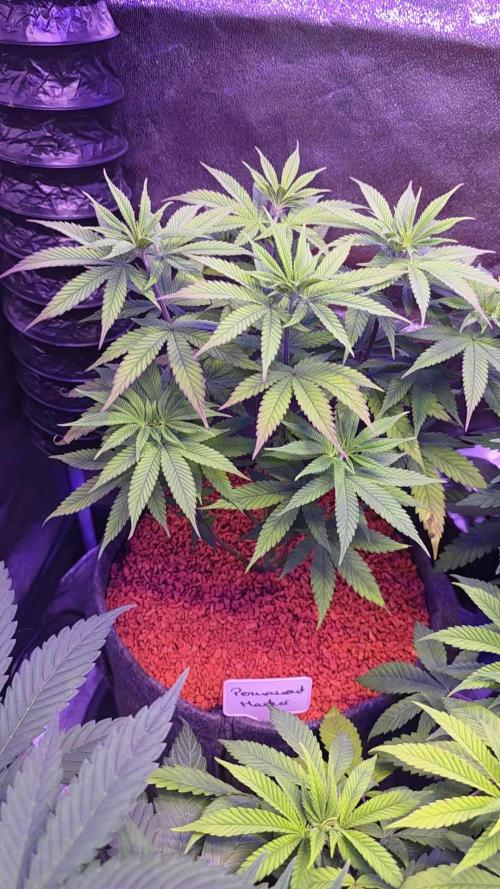
Nachdem die Permanent Marker den Umzug in das neue Substrat hervorragend verkraftet hat, stand nun das erste LST an. Die Zweige wurden mithilfe von Softties flach und gleichmäßig heruntergebunden, um das Kronendach perfekt zu öffnen und die Lichtausbeute zu maximieren. Die Traphouse Genetics reagiert extrem gut auf das Training: Das Blattwerk gewinnt dank der neuen Nährstoffe sichtlich an Kraft, färbt sich wieder satter grün und legt eine wunderbar ausbalancierte, buschige Form an den Tag.
Likes
Comments
Share

@Lynx_361
Follow
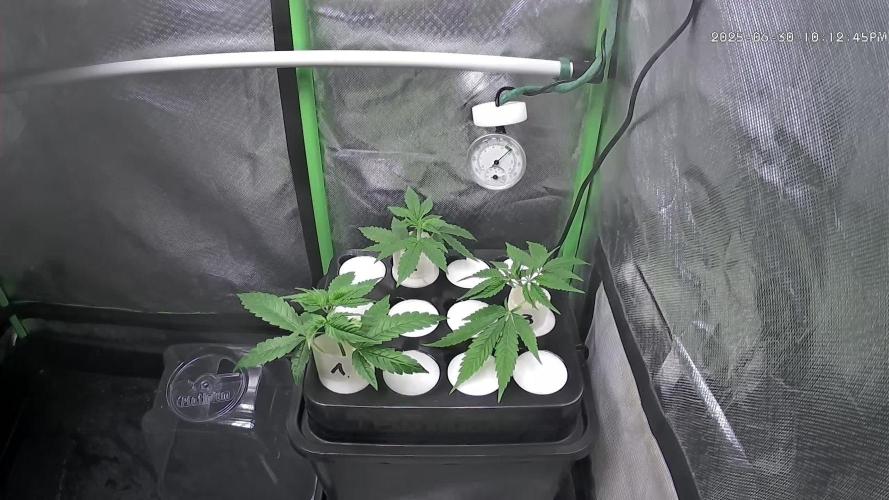
29.06.2025
Took a clone from each of my Plants on day one of flower.
30.06.2025
Did some LST..

Likes
71
Share


@Roberts
Follow
Quebec Blast is doing well. She is in heavy bulking now. Poor root matiance early on is what hurt me the most in this grow on all 4. Live and learn, now hang on till finish. They all look like they will do alright. She is under the Spider Farmer SE5000 light, in a New Level Hydro bucket. Thank you Spider Farmer, New Level Hydro, and Quebec Seeds. 🤜🤛🌱
Thank you grow diaries community for the 👇likes👇, follows, comments, and subscriptions on my YouTube channel👇. ❄️🌱🍻 Happy Growing 🌱🌱🌱
https://youtube.com/channel/UCAhN7yRzWLpcaRHhMIQ7X4g
SE5000
https://amzn.to/3qFpAML
Spider Farmer Official Website Links:
US&Worldwide: https://www.spider-farmer.com
UK: https://spiderfarmer.co.uk
CA: https://spiderfarmer.ca
EU: https://spiderfarmer.eu
AU: https://spiderfarmer.com.au
Coupon Code: saveurcash (is stackable in most cases)
Www.newlevelhydro.com
Www.hygrozyme.com

Likes
10
Share

@The_Doctor_Green
Follow
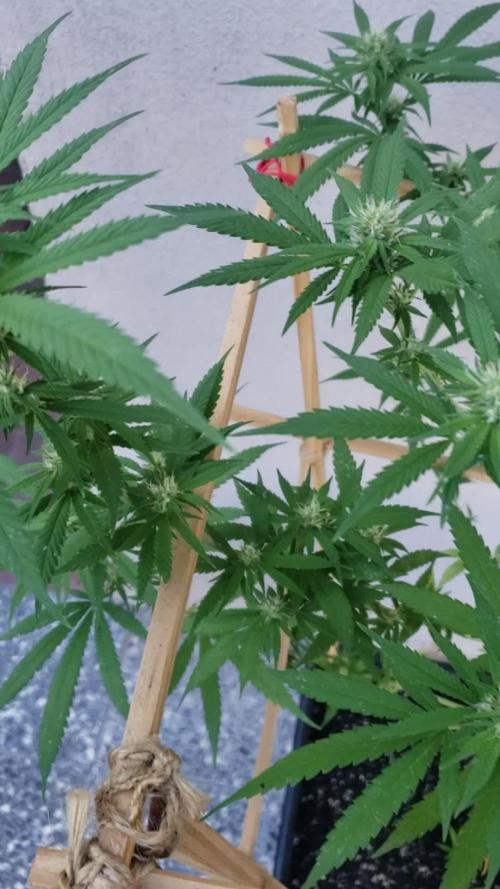
Hola a todos!! Espero que anden bien 😃🤞🙏.
Les cuento que esta semana han comenzado a crecer un poco más los cogollos. El olor débil se puede sentir, solo un poco aun.
He ajustado el ph del riego a 5.8 para equilibrar el drenaje, pero me sigue dando alto.
Igualmente regue con Top bloom 2ml x litro
Y top candy 1ml x litro
También añadi un riego solo con agua y luego el siguiente fue con trico mas de Namaste.
El preparado de jabón neutro a calmado bastante los trips.
Likes
44
Share


@RakonGrow
Follow
Note : Jegliches Equipment aufgelistet welches ich nutze findet Ihr in der Germinations Woche !!!
Day 15 :
ich weiss noch nicht ob der mineralische dünger wirklich sofort etwas gebracht hat . schauen wir was die zeitraffer so vermitteln. ist es seit gestern schneller am wachsen ?
Day 16 :
PPFD 275 * 20h = DLI 19.8
Day 17:
+ 0.5L Flaschenwasser (EC 0.26)
+ + Canna Rizothonic
+ + Canna Terrar Vega
+ = Total EC 0.68 (PH 7.2)
+ Final PH 6.15
Day 18:
es wächst
Day 19:
es wächst immer noch
ventilation übern blätterdach angemacht. ich glaub daher kommt das ruckeln im video
Day 20:
+ 0.5L Flaschenwasser (EC 0.26)
+ + Canna Rizothonic
+ + Canna Terrar Vega
+ = Total EC 0.68 (PH 7.2)
+ Final PH 6.15
+ 0.5L Leitungswasser (PH 8.0)
Der Stamm hat sich in den letzten 3 Tagen verdreifacht vom Volumen. Jetzt hat er so Bleistift dicke erreicht.
Day 21:
die temps und relative luftfeuchte sind hier zwischen 58%-68% und 23.5°-25.5°C . reguliert sich aber immer zu den höheren werten . ist hier halt so :))
Likes
16
Share


@HowtoBubatz
Follow
As the plant enters the fifth week of flowering, the first trichomes have begun to form.
The buds have started to thicken considerably during this week. They are becoming denser and more robust, which indicates that the plant is channeling its energy into producing larger, more resinous flowers.
Throughout the growth process, the cannabis plant has shown no signs of health issues.
It has remained vigorous and resilient, with no observable deficiencies or diseases.
To ensure optimal light penetration and airflow, the plant was lightly defoliated this week.
The cannabis plant is progressing well in its fifth week of flowering.
The formation of trichomes, the thickening of buds, and the plant's overall health are all promising indicators of a successful flowering phase.

Likes
36
Share


@Shagrath
Follow
Week 7 of flowering
Buds are swelling and not much production anymore. Seeds are also developing and I think that the tops don't have that much seeds in them and most are in the larf.
I moved one Cree led from top to bottom last week and now I moved it to closer to these girls to promote the production of the lower buds/popcorn.
pH has been stable 6.4 no matter what but ec is drifting and I diluted it this week from 3.6->2.8 and now the ec is 2.6
Trichomes are maybe 70% clear and 30%cloudy so I'd say that two weeks and they are ready!
Likes
16
Share


@Dr_Rook
Follow
Contando ya los días..
Prácticamente está todo hecho y sólo queda esperar.
Ya sólo estoy regando con agua pura con el ph regulado. Estoy haciendo un lavado de raíces de dos semanas ya que busco el sabor lo más limpio posible.
El clima del exterior está ayudando mucho y he podido mantener la humedad en los parámetros correctos.
Espero cortarlas sobre el finde que viene
Muy contento con lo que veo, la calidad promete 🤩


Likes
21
Share


@DreamIT
Follow
Sponsored by:
AMSTERDAM MARIJUANA SEEDS-💡VIPARSPECTRA💡-💐GREEN BUZZ LIQUIDS💐-🛠️WEDRYER🛠️
29/9 it was a tough month for me but I'm back in charge. We are almost at the end of the cycle and the flowers begin to be large and the pistils begin to color.
__________________________________________
Personal advertising (contains affiliate links)
__________________________________________
🦄 Professional site, exceptional genetics for over 25 years and a new and very nice mascot!
✅https: //bit.ly/Amsterdammarijuanaseeds
__________________________________________
Did you know that Green Buzz Liquids fertilizers are 100% vegan? A complete line of products ready to give the best to each of your plants! Visit the site and see my journals to see how they work 🦄
🤯 And with the code "dreami t" you will immediately receive a 15% discount on your purchases
✅https: //bit.ly/GreenBuzzLiquidsPro
__________________________________________
👀 Are you looking for a good lamp to start with? 👀
🌞Viparspectra has something more than the others, take a look at their site.
⏩ Use "GDVIP" for an extra discount or "DREAMIT3" for an extra 5 %% discount
👀 Search for it on Amazon
✅Amazon USA: https://amzn.to/30xSTVq
✅Amazon Canada: https://amzn.to/38udUVe
✅Viparspectra UE: bit.ly/ViparspectraUE
✅Viparspectra USA: bit.ly/ViparspectraUS
______________________________________________
🌈 Tired of blowing on your weed hoping it dries quickly? Check out the Wedryer website! You will find a well-made accessory that will help your weed dry in just 8-10 days without the annoying risk of finding mold or other annoyances! (no affiliate links)
✅https: //bit.ly/Wedryer_
______________________________________________
📷🥇Follow the best photos on Instagram 🥇📷
https://www.instagram.com/dreamit420/
Backup
https://www.instagram.com/dreamit4200/
🔻🔻Leave a comment with your opinion if you pass by here🔻🔻
🤟🦄💚 Thank you and good growth 💚🦄🤟

Likes
52
Share


@Santica_Garden
Follow
Here's the updated for the end of Week 3 of Flower guys, I have uploaded a video, any questions just ask away 👍🏾🌱💚 HAPPY GROWING GUYS.........!

Likes
101
Share


@WhiteEdge
Follow
12.03.2024
Continue into week two. Target EC is the same for this week
Girls looking great. One girl fall into bucket! That lid is not cut with precision😏 Put some plastic to hold till now
Clean tanks and filters with h2o2+vinegar acid +bleach
Replace all filters
Mix new batch with 2ml AN connoisseur AB + Big Bud Powder + Silica - total 20l @
Donne one pass off long misting 2m
700 PPFD @ center, VPD 1.0, RH 53-56% day, RH 45-48% night, Temp Night-20c, Day-25/26c, Leaf temperature 23c, Light distance 60-65cm, CO2 750+ppm
540w@60cm distance
NT-Nutrient Tank - PH -5.9, EC -1.15, Temp-21c
13.03.2024
Top up tank with 10l off 1.2EC solution - 2ml AN Connoisseur A+B + 3g Big Bud @ 18l (1.16EC)
Replace all filters
Before top up, nutrient solution in tank was 0.84, after adding 1.2EC new mix is 1.03
PH is slightly rising, normal when EC is drooping
Girls grow nicely, no deficiencies, this week is start off stretchy faze.
Remove some big and bottom levees
PAR 800 PPFD, VPD 1.0-1.1, RH 50-54%, Temp Night-21-22c, Day-25/26c, Leaf temperature 23c, Light distance 60cm, CO2 750+ppm
580w@60cm distance
50s ON time 20min OFF time Day Time
50s Off time 30min OFF time Night Time
NT-Nutrient Tank - PH -5.92-5.99, EC -0.89-1.0, Temp-20-22c
14.03.2024
Position TrolMaster Tent-X Box on tent and connect to internet. Temperature ,Light and humidity sensor is great, I lake that all sensors and connector boxes are on RJ connectors
Great and fast install, registration and connections off all cables, censors and light! Like ability to expand system with Aqua-X and Hydro-X for irrigation ,PH/ EC/Temp monitoring off nutrient tank
Controlling solenoid valves and pump will be SUPERB!!! Recycling type off timer are great for Aero misting!
With Inkbird equipment i have issues that all connections are permanent and if you have longer cables....😡
HLG Scorpion Diablo LED light is connect via LMA-14 light adapter ! Wow i can control dimming and timing off my light via Wi-Fi😀😊😎👏🙏🙌
PAR map 800max/600min PPFD, VPD 1.0-1.1, RH 50-54%, Temp Night-21-22c, Day-25/26c, Leaf temperature 23c, Light distance 60cm, CO2 750+ppm
HLG Scorpion Diablo@83%
580w@60cm distance
PAR 800 PPFD, VPD 1.0-1.1, RH 50-54%, Temp Night-21-22c, Day-25/26c, Leaf temperature 23c, Light distance 60cm, CO2 750+ppm
580w@60cm distance
50s ON time 20min OFF time Day Time
50s Off time 30min OFF time Night Time
NT-Nutrient Tank - PH -5.95-5.99, EC -0.89-1.1, Temp-20-22c
16.03.2024
Top up tank with 15l off 1.2EC solution - 2ml AN Connoisseur A+B + 3g Big Bud @ 18l (1.16EC)
Replace all filters, still everything in pristine condition after every changing, nutrient solution in tank looking and smell fresh and clean.
Reducing humidity in night time below 50% , humidifier rise temperature to 22-23c at night
Day RH is 53%, in first two hours keeping temps and humidity lower to reduce deferential form night time to 1-2c
Don't want to have more than 10-15cm off stretch in next week
Girls drink more water and nutrients every day, think around 10-12l per day
Managing EC strength with adding slightly higher nutrients solution when top up tank. Overall its around 0.9-1.0EC for most of the time
PH is stabile , slowly rise in small increments. Need to adjust @ 6.2 to 5.9 every two-three days. Probably i will leave it to swing even more.
Diablo is at 80% power @ 45-55cm from top canopy, 900+PPFD in center, lowest corners get 650+
PAR map 920max/650min PPFD, VPD -1.1, DRH 50-54%, NRH48-50%, Temp Night-21-22c, Temp Day-25/26c, Leaf temperature 23c, Light distance 45cm, CO2 750+ppm
HLG Scorpion Diablo@80%
580w@45cm distance
50s ON time 20min OFF time Day Time
50s Off time 30min OFF time Night Time
NT-Nutrient Tank - PH -5.95-5.99, EC -0.89-1.1, Temp-20-22c
17.03.2024
Top up tank with 10l - 1.2EC solution - 1.8ml AN Connoisseur A+B + 3g Big Bud @ 18l (1.16EC)
Replace all filters, install one new. Total 5 mash filters + 2 disc filters
Remove some large fan leaves from all girls. Nothing crazy. Next week is final BIG defoliation and pruning
Clean room benches a little bit after defoliation.
Whole week all girls are doing great , no sign off any kind off stress or deficiencies. Superb fast growth.
Stretching is more apparent in the end off this week. Next week is going to be madness!
18.03.2024
Raise light 10cm , adjusting to canopy level..
HLG Scorpion Diablo@83%, Set sunrise/sunset dimming @ 30min - TrolMaster Tent-X
PAR map 890max/650min PPFD, VPD -1.1, DRH 50-54%, NRH48-50%, NT-21-22c, DT-25/26c, Leaf temperature 23c, Light distance 45cm, CO2 750+ppm
Week 2 off Flowering in Summary
100l off RO water
190ml+190ml AN connoisseur A+B, 15g Big Bud Powder
70kW electricity in total for light, Pumps and AC Infinity Fans. 58kW for Light + 8kW Dehumidification + AC Infinity ventilation
Week start @ 1.14EC, nutrient strength. Strength dropping every day by 0.1-0.2. Topping up tank with 1.2EC solution bring back strength to 0.9-1.0EC
Start using AN Big Bud powder for day two off this week. For next slowly reducing Nitrogen and add more Big Bud. Next week start @ 1.2EC
Girls look superb all time, Purple Lemonade is huge , all three girls!
Flowering going nicely, obvious sign off formation off bud sites, pistils have shown an all girls.
PH was stabile and move from 5.85 min to 6.2 max. Swing all week without chasing perfect number.
Light distance start at 65cm from canopy finish week at 45-50cm , PPFD levels around 800-940 in center, trough whole week
Temperature vary slightly from 23c at start off day to 26c max at some points. AC Infinity T6 extracting fan program in AUTO to kick in @ 26c
Night temps around 21-23c, dehumidifier start to work at night time to bring down humidity, trying also to minimize Day/Night temperature differential for this week also
Continue in next week at same environment settings and light strength.
Likes
26
Share


@Sickone
Follow
Die wahrscheinlich letzte Woche der 1. Lady beginnt.
Die beiden anderen Ladys hängen deutlich zurück aber ich schenke ihnen gerne die zusätzliche Zeit und Pflege.
Gedüngt wurde ganz normal nach schema, zusätzlich bekommt meine calmag Lady nun das 2. Mal calmag vielleicht fängt sie sich auch noch.
Samstag 15.06.24
Die erste Lady wurde heute geerntet und zum trocknen in den dafür vorbereiten Schrank gehangen, ich entscheide mich hier für die Dry Trim Methode weshalb ich sie noch nicht weiter verarbeitet habe.

Likes
11
Share

@ShinWeed
Follow
Vorwort:
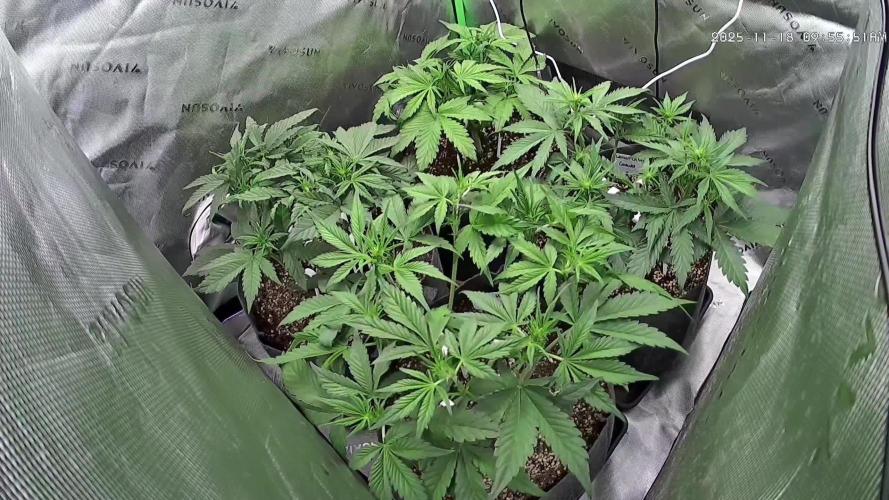
Die Bilder dieser Woche sind leider nichts Besonderes geworden. Hab vergessen während des Gießens vergessen zu knipsen, und die Aufnahmen danach sind sehr schwach. Trotzdem dokumentiere ich sie, was wichtig ist.
🌿 Tag 29-35 - Lichtflut, Höhenflüge und erste süße Düfte
Ich, Banana Purple Punch, bin diese Woche förmlich explodiert. Jeden Morgen war ich ein Stück höher, als hätte mich über Nacht jemand heimlich auseinandergezogen. Das Licht bei 100 Prozent hat mich wachgeküsst und irgendwie konnte ich dann nicht mehr aufhören. Meine Triebe arbeiten hart, meine Energien schießen überall hin. Ich weiß, der Gärtner schaut schon kritisch nach oben. Vielleicht beruhige ich mich bald. Vielleicht auch erst später. 🍌
Ich, Purple Haze, strecke mich nur so weit, wie es Sinn ergibt. Nicht zu viel, nicht zu wenig. Meine Höhe passt, meine Breite trägt mich gut. Keine Rennen, keine Dramen, nur ein ruhiger Übergang. Die Energie fühlt sich stabil an, ausgeglichen. Genau mein Ding.
Wir beiden Lemon Cherry Cookies erleben gerade zwei völlig verschiedene Wochen.
Ich, die Schnellere, fühle mich wie auf einem Marathonstartpunkt. Die Blüten schieben kräftig, weiß und deutlich. Mein Inneres summt, als hätte ich endlich begriffen, wohin die Reise geht. Licht, Wasser und Raum greifen perfekt ineinander.
Und ich, die Gemütlichere, nehme das alles Schritt für Schritt. Warum rennen, wenn man auch sauber arbeiten kann? Meine Spitzen zeigen Blüte, aber ganz kontrolliert. Ich schaue mir alles erst einmal an und wähle meinen eigenen Rhythmus. 🍋🍒
Tag 34: Die ersten Düfte werden spürbar, zart und frisch.
Tag 35: 4 Liter Wasser. Der Boden dankt es, wir auch.
Die Woche war hell, laut und voller Bewegung. Jede von uns reagiert anders, jede setzt ihren eigenen Akzent. Die Blüte hat angefangen zu sprechen, noch leise, aber unverkennbar.
Likes
5
Share


@84ruk
Follow
Está 5 semana de vegetación la planta dejó de estar en indoor y fue puesta en el patio, aquí recibe el sol de 11 am a 4 pm, al parecer se está espigando un poco pero en mi indoor estoy cultivando plantas automáticas correctamente desde el principio para mejorar la producción.
