


Likes
Comments
Share

@Mimi420
Follow
Day 49 of flower — Harvest season creeping up
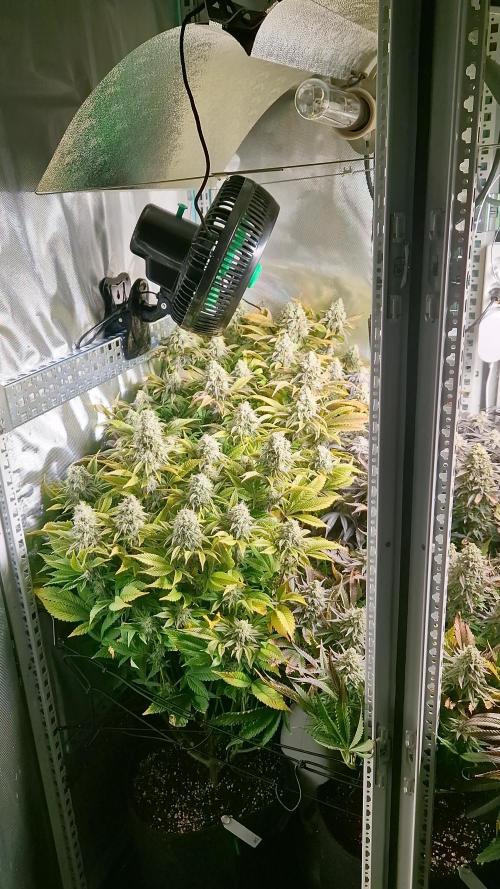
Yo — quick GD drop from my 120×80 SCROG. Plants are looking proper: fat, frosty colas everywhere and the tent stinks so good. I’m switching to water-only from here — flushing the last stretch. Trichomes are mostly cloudy with the odd amber speck showing; I’d say the whole lot will be ready in ~7–14 days depending on how the last swing of amber develops.
Big realities: my garage is cold & wet (nights down near 5°C, RH ~80–85%), so humidity’s been the constant headache. Ordered a Spider Farmer heater to push intake under the canopy but delivery got delayed — super annoying. To avoid chill I’ve had to cycle the inline fan overnight and run a tiny cabinet heater to keep temps around 15–17°C, but humidity still spikes. Zero perfect conditions here, just making it work — and honestly the cold gave me some gorgeous colours on the buds.
Notes & general vibe: buds are tacky as hell — every time I touch a cola my fingers go sticky with resin. Little amber popping on the tricomes now, mostly milky — perfect for couch-locky daytime/ evening smoke depending on how much amber develops.
Strain-by-strain snapshot (positions + quick notes)
Back-left — Wedding Cake (Portland)
Nice chunky cakes, early fatteners. Lots of resin, big rounded colas. Colours starting to deepen on leaves, smells super dessert-y under HPS — heavy trich coverage, finishing fast.
Back-center — Kush Crasher
The Kush genetics show: purple/burgundy stacks and dense nodal buds. Slow to bulk but super frosty now. These ones are gonna be super sticky and couchy — big terp punch expected.
Back-right — AK-47
Classic heavy producer — loads of colas, reliable chunky structure. Stretches a bit less, packs resin fast. One of the more even finishers in the tent.
Front-left — Double Krush
Longer skinny colas but dense calyxes — nice structure for my net. Terp-forward, stacking trichs well. Good contender for chop in the next week.
Front-center — Wappa (PARADISE) — main cola boss
She’s my star. Main cola is packing insane weight and is the most consistently chunky plant in the line-up. Colours are gorgeous — deep purples, dark greens, and a thick resin coat. Wappa’s bulking like a champ and will be one of the fattest buds in the harvest. Massive praise for this one — she’s the poster child for this run.
Front-right — Detroit Runtz
Frost city — tiny sugary calyxes and lots of sparkle. Slightly looser than the Kush lines but super resinous and fruity-leaning. Good final week filler.
Quick operation notes
Water-only from now on (flushing).
Trichomes: ~mostly milky, some amber; keep checking under loupe.
Humidity = main enemy. Heater + proper intake/exhaust under canopy will help once the SF unit arrives.
I’ll do final clean-up lollipop & remove any really dead/dying leaves before chop.
Final thought — for an amateur out of practice I’m stoked. Learned a few lessons (humidity control = everything), but the tent’s delivering fat, sticky, colourful colas. Wappa deserves a medal — she’s the queen of this round.
Green vibes✌️🌿


Likes
9
Share


@paetel
Follow
Just a quick update because life has been pretty busy. Finally received my new pH-meter from Apera Instruments and I am satisfied so far.


Likes
189
Share


@Green_Man_420
Follow
Evening fellow growers hope you all had a great weekend. Massive shout to James @RQS for supplying the beans for my current grow.
⚠️ I add photos as the week progress so please stop by and check out the progress.
Day 29 the start of week 5, we have entered flower. Let’s hope for some stretch now. Really happy with how they are progressing. Still trying to figure out why the big one at the back is looking sad. She is growing at a rate of knots so I’m bamboozled to say the least! Watered last night will introduce some flower nutrients this week.
Day 31, watered today upped the amount to 1 litre also started with some bloom. Will add some photos either day or tomorrow. ✌️
Day 32, nothing to report just letting them do their thing. 👊🏻
Day 35, not been a good couple days. The dodgy looking one at the back is no longer part of the crew. She tried and I gave her all the best help I could but she just stopped growing. The bud sites were like nothing I have ever seen before I really don’t know what happened. The other mimosa is doing fine. She is stretching and the bud sites are looking good. Watered last night with plain water. Will probs give her one more feed of grow then onto the bloom. ✌️
Once again thank you all for the love and likes on the current diary. ✌️

Likes
4
Share

@Smev1337
Follow
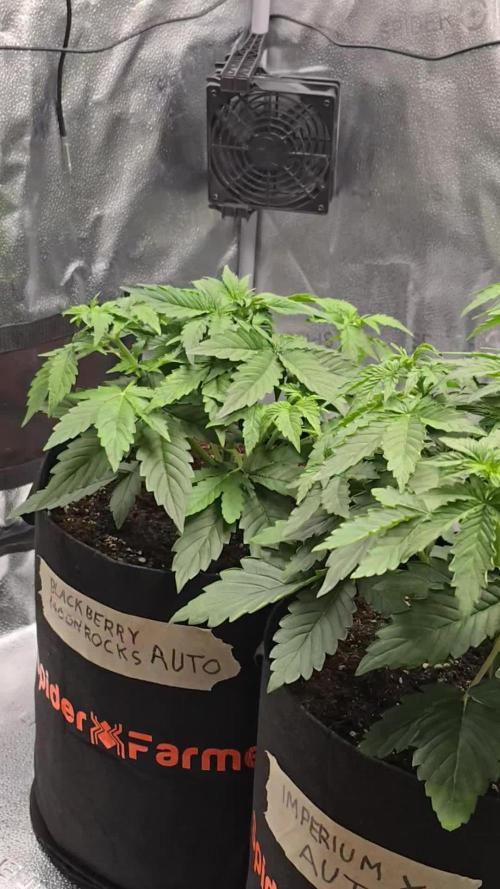
this week is starting off strong with the veg phase and they are enjoying the soil a lot, no nutrients given by hand just all in the soil from the Plagron All mix 😄 all going good so far 😅

Likes
7
Share


@ILikeCheezzz
Follow
Good growth this week. Thinking i could top end of this week was obviously too optimistic, but i will be able to this week.
The plant with the stronger stem is still the most vigorous one, definitely keeping her. The others are doing fantastic too tho, I can see the beginnings of the 4th node already.
The white clover is coming through, it will have about a month time to grow till i’ll chop most of it. I’ll leave some near the edges of the plots.
Added some old pics of the bamboo I’ll be using to support the plants outdoors. Should be plenty long haha.
Excited for the coming week! Growth is speeding up and they’ll soon get their first training.
Likes
2
Share


Likes
5
Share


@wheedtobeus420
Follow
Day 84. She’s been in the dark flashing and getting the ice treatment for a while. Her for leaves are starting to fade to a nice yellow. She smells to high heaven’s. I’m really excited to see how she will finish. She will be getting cut down in the next couple days. The next journal entry will be her harvest summary. I’m really happy with the way she has turned out her body structures are starting to lean down and she would be needing some help to be picked up. Mephisto never lets us down.
Processing
Likes
15
Share


@HisHope
Follow
8/17 Week 5 Flipping
Lights set to 11-13 for the first few days then 12-12
Nuets will transition accordingly
Took two cuttings for clones
Reducing feeds to once a day during the switch
Intro Cocotek Bloom a/b at 5ml/gal each
Reduce Grow to 10ml/g each
Next feed half and half
8/19
Switching to 12-12 from 11-13 think its done its work changes are afoot
8/20
Colas forming quickly may have to flip the week to Flower, lets hope so 😉
They getting a dose of Kangaroots 5ml/g and Fish Shit 2ml/g at intervals during transition purely as plants seem to need.
Pics tonight
8/21
Not there entirely yet but wont be long at all
Vertical growth has picked up strongly, 2" in 3 days, though I really wont call it stretch yet
Continued light defoliation keeping center clear
Nuets as is for now

Likes
410
Share


@Rock_n_Roll_Randy
Follow
The gals are still loving the fc4800 and their new 8x8 mars hydro grow tent as much as I do👍 leaves are sticking straight up towards the light. Love how easy the zippers are to open and close. Nice and strong and guaranteed to last. It has extra material on the backside of the zipper that helps for light leaksand enough ports and vents for anything you need in it👍. the tsw2000 is still going strong and is also a very good light. Its been going almost nonstop for 6 months and still working the same as when I got it👍. not much heat off both lights but the fc4800 is alot cooler and the heat-sinks work extremely well. I have it daisy chained to the tsw2000 and 1 dimmer controls the other and i don't need to be reaching in too far to dim the other light, it's awesome and I can't wait to buy more lights to daisy 4 together👍. I would recommend this light to everyone that grows with leds and have trouble with temperatures getting too high. Even if you grow with HPS lights I think any mars hydro light is a MUST TRY. I like how heavy both lights are because I know it means they are built soild and strong 💪.
FOR EVERYTHING MARS HYDRO VISIT:
Www.mars-hydro.com
PROMO CODE: rocknroll
Instagram: @marshydropenny
https://youtube.com/channel/UChU5ZWwNi-DvnO3oWVU3ceA
Thanks for taking the time to read and check out my shit🤜🤛
GET THE MAX FROM MARS👍: Welcome one of the newest members of the Mars Hydro family🤜🤛🤘. The Mars Hydro FC 4800 480W LED Grow Light can accommodate up to a 4' x 4' area for flowering. It has OVER 2000 LED chips consisting of the best selling Samsung LM301B diodes which has a Luminous Efficacy of: 220 lm/W
0.2 W, 3 V mid power,
Osram 660nm Diodes, Infrared light and UV LIGHT👍. It boasts the incredible efficiency of 2.8 µmol/J, maximum 2.5gram yield per watt with 30% higher Average PPFD. This High-intensity spectrum is beneficial for plants at all stages - from veg to bloom, and creates Big dense Buds👍. achieve 50% higher yields & quality compared with the old lights! Only consumes 480W for 4x4ft personal grows, and 3x3ft for commerical grow. It comes with a dimmer and daisy chain function with a maximum of up to 15 lights, the master light controls the rest👍. Wide 6-bar design offers even & wide canopy coverage and can maximizes your grow space. slim 180° FOLDABLE DESIGN... YES I SAID FOLDABLE🤘🤣 , making it compact and easy to install, it's IP65 WATERPROOF and will give you no worries while growing in a humid environment and makes it a flexible high performance commercial grow light for enormous SUPER FROSTY yields.😛😛😛. MARS GETS EM FROSTY BOYS👍
AWESOME HEAT DISSIPATION: The Low energy consumption FC4800 growing light has 6 passive-cooled bars and an aluminum heat-sink a removable driver you can upgrade later or have it outside your tent. with zero noise you can save up to 50% in your electricity bill compared to HID's or HPS lights!
It also has a removable driver so you can upgrade it in the future or have it outside your grow space for better heat control in your growroom👍
UPGRADED FULL SPECTRUM: Yield Max Spectrum with enhanced red (Top-Bin Samsung 3000k-5000knm, Osram 660nm Deep Red), speed up blooming & fruiting, perfectly suited for full-cycle growing. The FC4800 LED grow lamp was born for Big Buds, perfect for commercial, grow tent, grow room, hydroponics, and all soil grows.👍
THE BEST SAMSUNG DIODES: THE FC4800 has Top Bin genuine Samsung Osram Diodes, combined with remarkable 2.8 µmol/J Efficacy, 30% higher Average PPFD, 50% less energy consumption, to maximize your yields. They give you a TRUSTED 3 years warranty 100% Satisfactory guaranteed!!!
The MARS HYDRO 8x8 Grow Tent interior is made of a unique diamond design mylar which is highly reflective. (Other companies mylar and reflective rate is as low as 50%, and it won't provide efficient light. They use thick 1680D oxford canvas, and being double stitched, it is tear proof and perfect for locking in the light. Their grow tent keeps 100% of the light inside the tent and helps your plants absorb more light. EXTRA-THICK material means No light leaks or rips at all.👍
Strong Stable metal corner adapters and poles are the trustful supporters of the tent. It's very sturdy, neither rusting or paint flaking off. quick and easy tool-free setup. They use heavy-duty metal zippers, with double layer black lining, by far the best on the market which creates a light-proof seal.
The Easy observation windows are made by double layers of cloth. Observe the growing conditions of your plants without opening the tent and avoid disturbing your plants. The observation windows also serves to dissipate heat and ventilate the air.
The tent includes 2 removable waterproof floor trays to hold soil and water. The removable tray can be taken out to wash easily.
They guarantee the grow tents are easy to install even if you've never done something like this before. Clear Instructions and no tools needed! They also offer 30-day unconditional refunds for quality problems. Just contact their friendly 24 hours customer service 👍
Likes
17
Share


@OrganicBuds030
Follow
Die beiden Melonade Runtz Pflanzen stehen einmal vorne in der Mitte und einmal hinten in der Mitte. Also quasi hintereinander. Die hintere Melonade Runtz ist Pheno#2 und die vordere Melonade Runtz ist Pheno#1. Die Pflanzen werden jetzt auf die Blüte vorbereitet und mein Blütedünger wurde schon zugegeben.
Ich bin sehr gespannt auf die Blütephase und auf die ersten Gerüche von Melonade Runtz. Sie riecht jetzt schon sehr lecker fruchtig.
Likes
4
Share


@HawksGrow
Follow
Ive been flushing around 7 days now and the first leaves are starting to fade,in around 5-10 days it will be ready to chop.
I've also harvested a couple branches early with cloudy/clear trichomes to hold me over and make room for new strains to start vegging in the tent.
This is by far my best run of this strain and smelliest , im not entirely sure if my skills and equipment have gotten better or this phenotype is just especially good.


Processing
Likes
142
Share


@MadeInGermany
Follow
Hey everyone :-).
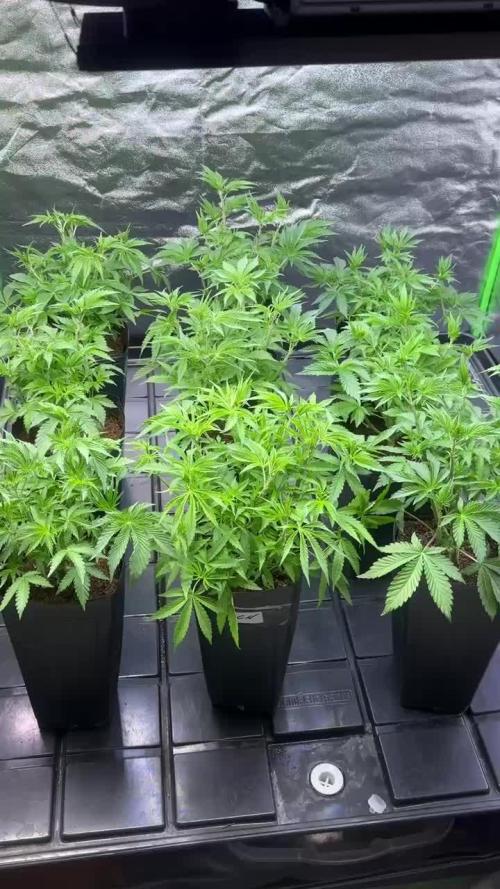
The last plants were also placed in the bloom chamber kammer.
Everyone has made great progress this week 🙏🏻.
There is not much to say about this week, I think videos and pictures say more like words 🙈😎.
I wish you all a good start into the week :-) Stay healthy and let it grow 🙏🏻👍




Likes
6
Share

@CptnNugz
Follow
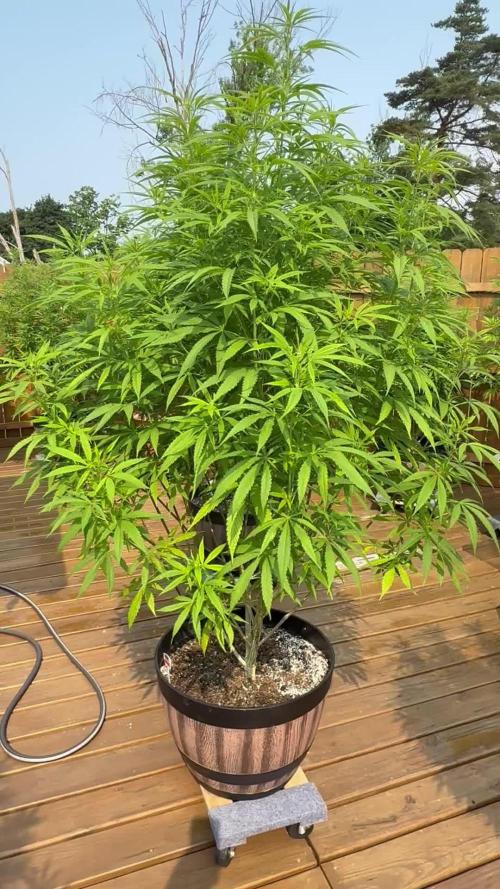
Plants should be about done stretching… showing white hairs on the plants that weren’t in flower yet. Looking strong and healthy to get this flowering going!

Likes
37
Share


@Ruediger
Follow
Tag 89 - heute wahrscheinlich das letzte Mal 1,2l gegossen.
Die Trichome schauen langsam schön milchig aus.
Jetzt heißt es regelmäßig nachschauen und Kontrollieren.
Leider ist die Luftfeuchtigkeit immernoch um die 65%

Likes
18
Share


@BezzyB
Follow
Idk if this is a auto anymore or my lights r just weak need help give me feed back guys


Likes
2
Share


@xTaps
Follow
Just checking the trichome heads daily to harvest them at the for me perfect moment.

Likes
90
Share


@AsNoriu
Follow
Day 50. Had big plans, but postponed them to monday/tuesday. Will strip and heavy bend/lst girls, give them 5 days and i think they will be ready for flower.
Increased light power output from 50% to 70%. Girls got water with 0.5 ml/l Fish Mix.
Overtimes and all weekend at work stops me a bit, but work is work ...
Day 54. Girls got heavy training, started it even too late, leaves were too droopy. All went good, while last one was done, first were somewhere "happy" ;)))
Pure water.
Think to send them to flower this weekend.
Day 55. And like nothing happend ;))) All girls are happy and bushy, one or two days, darkness and FLOWER TIME ! ;)
Happy Growing !


