


Likes
Comments
Share

@Krautis_IndoorFarm
Follow
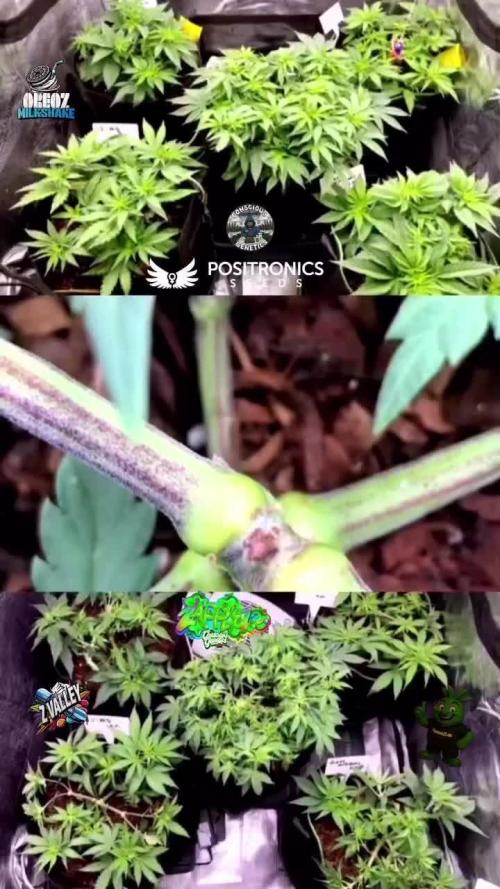
Tag 41!Der Endspurt zur Blüte hat begonnen! 🚀
Die Veg-Phase läuft sensationell! Unsere Mädels stehen nach dem intensiven Training extrem stabil und buschig da. An Tag 41 ist die Struktur perfekt geformt, um am kommenden Freitag in die Blüte zu starten. Wir nutzen diese letzten Tage der Wachstumsphase optimal, um sie final auf den großen Stretch vorzubereiten!
🌟 Das Wichtigste auf einen Blick!
• 🏆 Zustand der Pflanzen: Volle Vitalität, dichter Wuchs und keinerlei Stress. Sie sind gesund und bereit, ihre Nährstoffreserven für die Blütenproduktion aufzufüllen.
• 🌱 LST abgeschlossen: Die gleichmäßige Blattdecke ist das Ergebnis des erfolgreichen Low-Stress-Trainings, ideal für maximale Lichtausbeute unter dem SCROG.
• 🚨 Blüte Stichtag, Freitag, 19. Dezember! Nur noch wenige Tage, dann schalten wir um auf 12/12 und lassen den Stretch beginnen. Die Spannung steigt! 🔥
Bleibt dran, um den Übergang in die Blüte mitzuerleben!
🌱 Die Crew & 🤝 Das Ökosystem
Die Pflanzen (Genetik):
• Z-Vally (2x) & OreoZ Milkshake (2x) | von @positronicsseedsgermany @positronicsseed
• Zapplez 2.0 (1x) | von @conscious__genetics @conscious_genetics2.0
Das Ökosystem🐻💚
• Substrat (Living Soil): @panova25.de / @living_roots_pro
• Community: @cannacommunity.deutschland420 @cannacommunity.deutschland / @cannacommunity.germany
#LivingSoilGrow #Tag41 #BlüteCountdown #FreitagStart #LSTTraining #Zapplez20 #OreoZMilkshake #ZValley #CannabisTraining #OrganicGrow #GrowUpdate


Likes
10
Share


@eldruida_lamota
Follow
Cepa difícil de cultivar, hay que estar pendientes de ellas cada día.lástima algunas tienden a salir flor macho, no obstante la calidad está muy bien , pegan de miedo.
Red hot cookies x cookies gelato
Híbrido (50% indica / 50% sativa).
Producción Interior: 450/500 g/m2 .
Floración Interior: 8/9 semanas z
Thc: 25%/28% .
Cbd: bajo .
Sabor: afrutado y dulce.
Altura interior: 90cms- 140cms .
-Origen genético de red hot cookies: Tropicanna Cookies (Girl Scout Cookies x Tangie.
-Origen genético de cookies gelato:
Girl Scout Cookie X Gelato 33
Posibilidad de conseguir flor roja, porcentaje desconocido.
Disponible , tirar chat o Dm instagram.
Likes
4
Share


@ElNass
Follow
✂️ Harvest complete! 🌿
After weeks of care and attention, the plant has been cut down, dried for 14 days under controlled conditions, and I’ve now officially started the curing process in jars 🌬️💨
The aroma is promising, the buds are dense and sticky… I can’t wait to see (and smell) the final result! 😍
One cycle ends, but the satisfaction it brings is lasting 💚

Likes
3
Share


@Earthsower
Follow
She has suffered with light stress from the week pria to this which caused deficiency. I repotted her after keeping her in natural sunlight for most of the week and will continue to keep her there until she recovers. I have not fed her a two weeks and will continue the draught until the pot almost completely drys!

Likes
18
Share


@420DeepGrow
Follow
Gracias al equipo de Fast Buds, XpertNutrients y Marshydro, sin ellos esto no seria posible.
💐🍁 Gorilla Melon:
La Gorilla Melon crece más hacia fuera que hacia arriba, lo que resulta en una planta tupida y manejable. Produce cogollos pequeños, sólidos como rocas y muy pegajosos, que envolverán sus ramas al final del ciclo de cultivo. Esta variedad desarrolla muchas colas, así que no te preocupes por el rendimiento: te cubrirá con un suministro de flores agridulces de primera calidad. Al fumarla, mostrará sus terpenos de melón, heredados de nuestra cepa keeper cut of Melon, con los toques de un sabor clásico heredado de GG#4 (Murdock GG Strains). Otra cosa que hereda de sus padres es su fuerza de gorila, que le permite resistir a cualquier tipo de estrés. Puedes hacer toda la defoliación que consideres necesaria, o coger todos los clones que quieras, y verás cómo se recupera casi instantáneamente y vuelve más fuerte que antes.
🚀 Consigue aqui tus semillas:
https://2fast4buds.com/es/seeds/gorilla-melon
💡FC6500: Eficiencia líder en el mercado: la lámpara de cultivo LED FC-E6500, que ostenta un estatus líder en el mercado, es una solución rentable con un PPE de 2,8 µmol/J y un rendimiento máximo de 2,5 g/vatio. Ofrece un PPF alto de 2026 umol/S y es adecuada para una cobertura de vegetación de 1,50 m x 1,50 m y una cobertura de flores de 1,20 m x 1,20 m.
Iluminación versátil y uniforme.
https://marshydro.eu/products/mars-hydro-fc-e-6500-730w-commercial-led-grow-light/?gad_source=1&gclid=Cj0KCQjw1qO0BhDwARIsANfnkv9IIrYSbmJqz8PqpJOIyWwJfp5bc3SGJgUV68USLQ4tjmXDYwoBuAsaAue3EALw_wcB
🚥 MarsHydro ADLITE UV/IR/RED:
Para lograr un crecimiento óptimo de las plantas y maximizar los rendimientos es un arte simple que depende en gran medida de las condiciones ambientales adecuadas. Reconociendo las limitaciones de la iluminación natural y las soluciones de iluminación tradicionales para satisfacer estas necesidades únicas, lanzamos ADLITE. Estas luces especiales UV, IR y roja están diseñadas para llenar áreas del espectro, proporcionando las altas longitudes de onda que las plantas necesitan para un crecimiento y desarrollo óptimos.
🚀 Consigue aqui tu Adlite:
https://marshydro.eu/collections/adlite-supplemental-lights/
🏠 : Marshydro 1.50 x 1.50 x 1.80, carpa 100% estanca con ventanas laterales para llegar a todos los lugares durante el grow
https://marshydro.eu/products/diy-150x150x200cm-grow-tent-kit
🌬️💨 Marshydro 6inch + filtro carbon para evitar olores indeseables.
https://marshydro.eu/products/ifresh-smart-6inch-filter-kits/
🍣🍦🌴 Xpert Nutrients es una empresa especializada en la producción y comercialización de fertilizantes líquidos y tierras, que garantizan excelentes cosechas y un crecimiento activo para sus plantas durante todas las fases de cultivo.
Consigue aqui tus Nutrientes:
https://xpertnutrients.com/es/shop/
📆 Semana 11:
¡Está siendo una experiencia increíble! Los cogollos siguen engordando y están cubiertos de una capa gruesa de tricomas, lo que promete una buena potencia. El aroma es dulce y afrutado, con toques de melón y una ligera nota de gas que le da un toque muy especial. Las plantas están sanas y fuertes, con hojas que mantienen un verde intenso, y los brotes de los cogollos son densos y pegajosos al tacto. Estoy viendo un crecimiento impresionante en su fase final de floración

Likes
24
Share


@SMELLYBUDZ
Follow
Week 3 day 7.
Buds are getting icey and stretching around 1-2” a day.
Dropped the carboload and is going to be replaced by a PK booster (big bud).
Watering everyday. Plain RO on every 3rd water.
The kind LED is pissing on the hps if im being honest. Bud development and vigor seems a lot nicer.
Stay baked.


Likes
22
Share


@Spliffi
Follow
Week 11👍🤙👍🌱
I can see the end. This Contest have been a eye opener!!
Jon Dabs
Check them out here:
https://jondabs.com
@jondabs Instagram
The Sponsors
Check them out here:
Dutch Passion
https://dutch-passion.com/en/
Hydroponic.co.za
https://hydroponic.co.za/hydroponic/harvesting-and-growing-accessories/
Bud Juice
https://www.gohydro.co.za
The Best Grow
https://thebestgrow.co.za
Dynomyco
https://www.dynomyco.com
Nuclear Roots
https://www.nuclearroots.co.za
Photronic
https://shop.photronic.net
Special Thanks to Hydroponic.co.za. I buy all my products from them. Best service.
Daily updates coming...

Likes
13
Share


@rkomaaa
Follow
A lot of problems with run off PH
It drove me crazy, and i gave up
Now is aprox 6.5 and i will see how it will go
Likes
5
Share

Likes
1
Share


@Growjrim
Follow
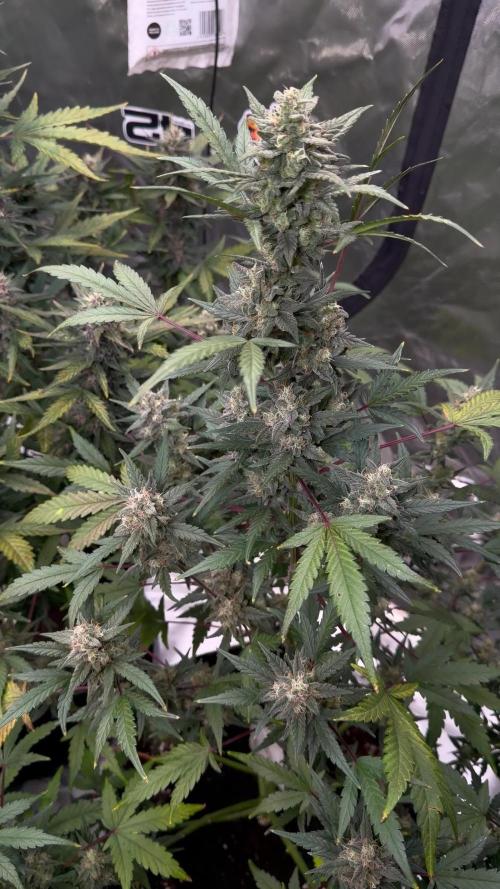
I've decided not to send her into flower yet and I'm trying to stretch her throughout the whole tent.
Likes
23
Share


@BedroomGrower
Follow
March 12, Day 71 my Sea Of Green is now a Sea Of Buds 😄 Tomorrow I will collect the three plants closest to the poster that seem to be mature. Next week I will collect the last two gorillas (excluding the two plants with a photoperiod predominance) because they seem to need a little more time.
March 13, Day 72: I wanted to make a video or a video to show you the defoliated plants ready to be cut, but when I removed them from the SOG they no longer had the support of the nearby plants and the branches could not support the weight of buds. I'm not complaining, in fact I didn't think I would get such a big harvest. For the same reason I only cut and put to dry two plants, I don't have enough space in my dryer that is only 50x50x120 Centimeters. However, I made a video with Harvest and a video with the new layout of the plants in my SOG. Now in my sea of buds there are three gorillas left, two cheese in advanced bloom and two photoperiodic gorillas and the margin there is a Cheese that has just started to bloom.
I realized that I can make only one harvest page for each variety, I thought it was possible to create one for each plant, so I will edit the diary for the final harvest, when I will also collect the last three gorillas in my secret garden. Thanks to everyone for the views and likes 😉
Likes
8
Share


@Mon_monde_onirique
Follow
Purple shine a bien repris son développement, niveau racines il va être temps de la rempoter une bonne masse racinaire commence à sortir du air pot.
Le 25/04 seconde taille des branches principales, de 2 apex cela va passer à quatre😉,
apport de solution nutritive pour réduire le stress de la taille(terragrow 1,5ml, katanaroot 0,2ml, silicon 1ml, calmag 0,5ml). Maintenant repos pour cette demoiselle avant la prochaine taille😉
Purple shine semble reprendre assez vite sa végétation après une taille. Ses branches sont bien épaisse ajout de silice et a participé.
Likes
25
Share


@pifflestikkz
Follow
Day 17
17/07/24 Wednesday
De-chlorinated tap water pH 6 with calmag 5ml -5L.
Very humid week, noticed a green turning colour on top of soils where the humidity has been far to high.
I have installed door netting and recently left open all day and night now so they can condition over night in colder temps.
1x overdose doing very well, one overdose slightly behind and looking ABIT swifted. But she'll come around 💪💚
Day 19
19/07/24 Friday
Lite Feed today, 250ml each pot small run off.
Seeing excellent start to these babies. Let's get it 👌💚
Day 21
21/07/24 Sunday
De-chlorinated tap water pH 6 with calmag 5ml to 5L.
Watering in 250ml each day from now.
Updated video


Likes
8
Share


@La_VecinaCannabica83
Follow
Van muy bien y muy sanas
Estos días les haré trasplante a maceta más grande.
Likes
18
Share


@Ananas_Comosus
Follow
Despite slight damage by overzealous gardener with a weed wacker, causing shot through holes and torn leaves, the plants are doing OK. Supplemented feed on two different days with 7.5 ml/gallon Cytokin and 30 ml/gallon molasses. Had to remove visible eggs of unknown insect on several leaves (I hope it's not a beneficial). Increased but not overwhelming leaf miner damage.
I need to start measuring these for height and width. The growth seems to have slowed but I am also on leave and observing the plants more so I don't know if it as situation where a watched pot never boils.



Processing
Likes
62
Share


@OwlGang_Uk
Follow
I’m so excited to show you guys week 3. These plants are huge!!! Even though I’m watching them grow right before my eyes I’m still shock as to how big they are. I browsed through other growers diaries that’s growing the same strains as me and I haven’t came across none as big as mines. The plants are responding well to their nutrients and TLC from me. I was planning to scrog this grow but I’m curious to see how big these autos are going to get so I’m going to just let them ride it out.
Make sure to follow my diary for your weekly updates and give a like if you like the grow. Peace Love & Guidance #OwlGang #AGrowingEmpire


Likes
2
Share


@IndianaGrow
Follow
Finale week flush and all my kids ready to be chop gotta sent them in to the 48 of dark room for some rest did an ice flush as well for extra trichome which is pretty cool leaves almost turn all yellow now and trichome are half amber half cloudy