


Processing
Likes
Comments
Share


@The_cannabis_botanist
Follow
Day 53 - More stretch .1 liter . 2 ml Cal Mag + 1 ml Iguana grow +2 ml Iguana Bloom

Likes
7
Share

@Suemchen
Follow
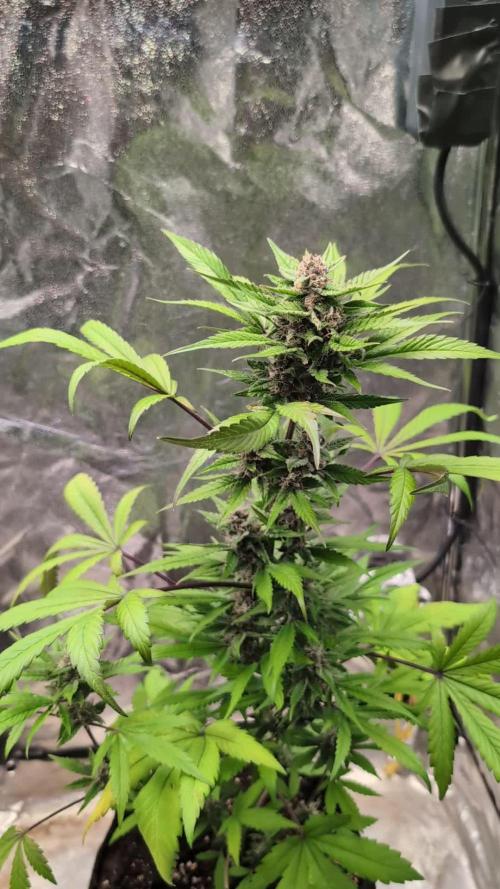
Sanlight EVO 3-60 at 80%
Day 43: looking really good 🤗 watered with rain water and 3 ml/l AlgaBloom, 1 ml/l CalMag, 2 ml/l Hesi Boost and 1 ml/l Green Sensation 👌🏻 pH at 6.4 👍🏻
Day 46: watered with rain water and 3 ml/l AlgaBloom, 1 ml/l CalMag, 2 ml/l Hesi Boost and 1 ml/l Green Sensation 👌🏻 pH at 6.4 👍🏻
Day 49 watering still with rain water and 3 ml/l AlgaBloom, 1 ml/l CalMag, 2 ml/l Hesi Boost and 1 ml/l Green Sensation 👌🏻 pH at 6.4 👍🏻


Likes
21
Share


@BleedingGums
Follow
Hello everybody!🙏🏿🌸
the girls recovered well after the topping , with no grow stops and feeling pretty good! ( 2 of them even got 4 new main stems )
Looking forward for the first trimming and flower phase.
Moisture is pretty high, I noticed water forming under some pressed leaves.
-They getting 1,25,l 2x per week
- The roots start to grow out at the bottom of the pot
Fan running on full power and they hearing classic music most of the time
Day 20
-each Lady got 1,25l
- pulled the baby leaves at the bottom
-replaced them in the tent
- placed van on a higher point
" Cant wait for start of next week and flower phase🌸🙏🏿"
Day 21
- noticed water on the side of the tent
- leaves got greener after watering
- some leaves got little burns on the edges so i adjusted the light

Likes
3
Share

@central_flgrow420
Follow
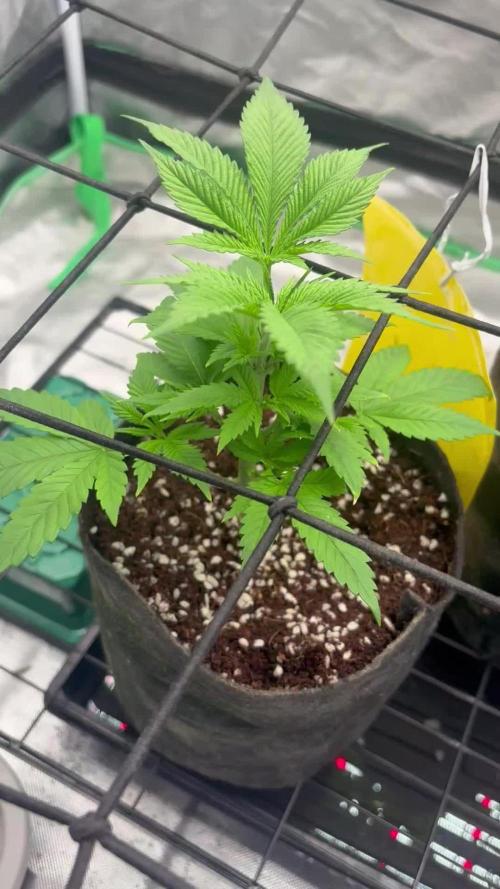
Number two and number three look the same so far one just kind of taller than the other. I also had a bit of a overwatering issue that seems to be fixed but overall she’s pretty.
Likes
2
Share


Likes
57
Share


@Zengrower
Follow
The Fruity Donutz are doing great! Still stretching but not as much as last week. I turned on the airco in the growroom at a constant 21 degrees to keep the temperature under 25 in the GTools. Heat can also cause the plant to stretch more, and it has another advantage because it helps to keep the humidity down. The Sanlight is now fully raised to the ceiling and the plants have enough space to build those colas.
Removing the suspension cords all together and just attaching the clips to the ceiling was a great solution. Silly that I never thought of this before. Now I don't have to supercrop! Supercropping is HST for the plant, but also High Stress for the grower (at least for me 😅). Not much more to say at this point, but I will post more pics of the developing buds later this week ✌️. Cheers and happy growing!
Likes
10
Share

@farah4weed
Follow
Hello guys😍😍
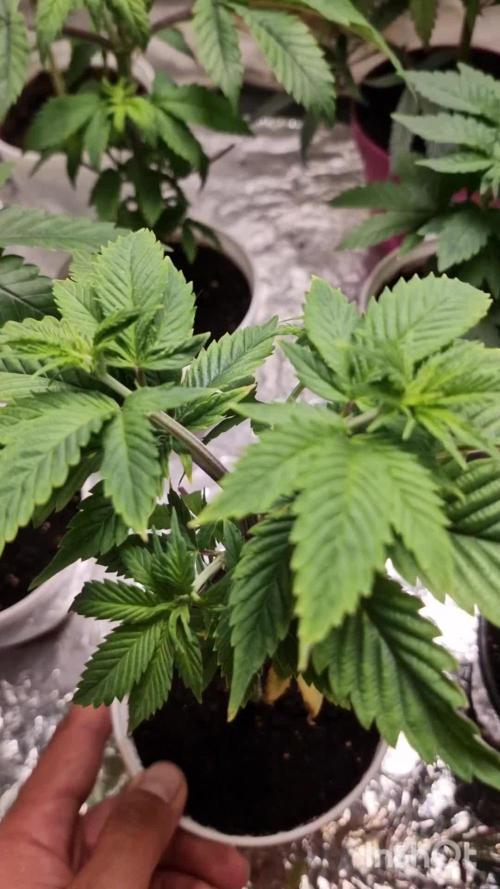
Fifth week of growth.
Last week, the plants were a little shocked after topping, but after a few weeks they returned to normal growth.
To reduce this shock, I used BioEnhancer fertilizer.
And this week I checked the roots.
The pots are ready to be Transplat.Thank you for following my project.
🌷farah4weed🌷
Likes
2
Share


@Gembel94
Follow
Grow-Report – Blütewoche 2 (Tag 8–14)
Strain: Neon Runtz (Wizard Trees)
Medium: Coco, 15 L Stofftöpfe
Zelt: 1,40 × 0,70 × 2,00 m
Lichtsystem: Spider Farmer G4500 + UV/IR-Supplement Bars
Steuerung: Spider Farmer Controller + Meross WLAN-Steckdosenleiste
Lichtzyklus: 12/12 (18:00 – 06:00 Uhr)
Luftentfeuchter: Klarstein DryFy Pro Connect 16L (seit Dienstag im Einsatz)
–––––––––––––––––––––––––––––––––––––––––––––––––––––––––––––––––––––––––––
Düngung – Woche 2
Basisdünger:
- Cali Pro Bloom A: 1,5 ml/L
- Cali Pro Bloom B: 1,5 ml/L
- CalMag Agent (Canna): 0,5 ml/L
Zusätze:
- Emerald Goddess: 2 ml/L
- Honey Chome: 2 ml/L
- King Kola: 2 ml/L
- Root Wizard: 4 ml/L
- PowerZym (Hesi): 2 ml/L
–––––––––––––––––––––––––––––––––––––––––––––––––––––––––––––––––––––––––––
IR-Supplement (Spider Farmer IR-Bar)
- Morgens aktiv: 05:45 – 06:30 Uhr (15 Minuten vor bis 30 Minuten nach Lichtstart)
- Abends aktiv: 17:30 – 18:00 Uhr (30 Minuten vor Lichtaus)
- Gesamtlaufzeit: 1 Stunde 15 Minuten täglich
- Verwendung: durchgehend aktiv über die gesamte Blütezeit
- Funktion: Unterstützt die Phytochrom-Umstellung, reduziert Stress beim Lichtwechsel
- Wirkung: Tagesrhythmus stabilisiert, aufrechter Wuchs ohne Überdehnung
–––––––––––––––––––––––––––––––––––––––––––––––––––––––––––––––––––––––––––
Gießverhalten & Luftfeuchtigkeit
- Tägliche Gießmenge reduziert auf 2,5 Liter pro Pflanze
- Grund: Sehr hohe Luftfeuchtigkeit durch äußere Wetterbedingungen (Regen, hohe Umgebungsluftfeuchte)
- Luftentfeuchter hält RLF derzeit bei etwa 65 %, trotz Dauerbetrieb
- Entlaubung durchgeführt zur Verbesserung der Luftzirkulation im unteren Bereich
- Drainmengen kontrolliert, Wurzelzone gesund, keine Staunässe oder Fäulnis
–––––––––––––––––––––––––––––––––––––––––––––––––––––––––––––––––––––––––––
Pflanzenzustand & Entwicklung
- Pflanzen zeigen kräftiges, vitales Wachstum
- Erste Blütenansätze sind sichtbar
- Leichte Harzbildung beginnt, Geruch nimmt zu
- Keine Nährstoffprobleme oder Mangelerscheinungen zu erkennen
–––––––––––––––––––––––––––––––––––––––––––––––––––––––––––––––––––––––––––
Visuelle Entwicklung – Tag 8 bis Tag 14
- Pflanzen befinden sich klar im Übergang vom Stretch zur Blütenbildung
- Zu Wochenbeginn längere Internodien, am Ende kompaktere Triebspitzen
- Entlaubung hat für gute Luftführung gesorgt – freie Stängel, keine Stauzonen sichtbar
- Gleichmäßiger Stretch und Lichtverteilung durch SCROG/Gitterführung
- Laubgesundheit sehr gut – sattgrün und glänzend
- Gesamtbild: stabil, gut trainiert, sehr homogen
–––––––––––––––––––––––––––––––––––––––––––––––––––––––––––––––––––––––––––
Ausblick auf Blütewoche 3
- IR-Licht bleibt vollständig aktiv, unterstützt weiter Einschlaf-/Aufwachprozess
- UVB bleibt weiterhin deaktiviert (geplanter Einsatz ab Woche 6)
- Gießmenge ggf. leicht erhöhen, wenn Luftfeuchtigkeit sich weiter stabilisiert
- King Kola und Honey Chome werden fortgeführt
- Ab Montag: Start des Purolyt-Einsatzes zur mikrobiellen Stabilisierung
→ Anwendung als Blattspray bis zur Ernte geplant
→ Ziel: Schimmelprävention & erhöhte Hitzetoleranz bei Sommerbedingungen
- Beobachtung der Bud-Struktur und Geruchsentwicklung im Fokus


Likes
15
Share


@Rangaku
Follow
Soaked seed for 18 hours and then planted into pots , 24 hours later and she’s broke ground . I’ll run high humidity and give her water for a few days then ease her into nutes .
Likes
175
Share


@love_2_grow
Follow
Day 8 Flower (Day 50)
The first day of the second week of flower and the strech is real. The right girl is getting pretty damn big and keeps on drinking a lot. I gave her another 3 liters of pH 6.4 water today.
On the other hand, the left girl drinks hardly anything, so I didn't need to water her.
I also did some lollipopping today and got rid of a whole bunch of undergrowth. I saved some clones off the big girl but no clue what to do with them. We'll see what happens.
Day 9 Flower (Day 51)
Chill day today. All I did was to give each girl 3 liters of pH 6.5 water and snap a few pics.
Day 10 Flower (Day 52)
Today I finally got around to re-organize the small tent to move the light as high up as possible to give the canopy some additional space.
I moved the exhaust fan to outside the tent, so it was out of the way for the light, and then put the circulation fan below the canopy, blowing upward. Finally, I adjusted the light so it was reading about 900 PPFD in the center of the canopy.
The left girl didn't need any water today, but the right girl got 3 liters of pH 6.2 water.
Day 11 Flower (Day 53)
They're back! The fungus gnats are back in the tent, although I'm not surprised, and let me tell you why.
When the light for my tomatoes and peppers broke down, I had to move them so that they get some daylight.
It is still cold here (the coldest May around these parts ever, I think), so they have to stay inside even though they usually would have moved outside long ago. The best place to keep them in my apartment is by the window in the same room as my grow tents.
The last time I had gnats, I only had enough nematodes to treat my girls, but I didn't do the rest of the apartment even though I should have.
So currently, my peppers and tomatoes all have a ton of gnats. Put plants with gnats in the same room as your grow, and it is only a matter of time before the gnats find their way into the tents.
So yeah, it wasn't a surprise at all when I noticed the gnats in my tents some days ago.
I put up some yellow sticky traps to deal with the adults and ordered more nematodes, enough to treat my girls, plus all other plants in my entire apartment. Twice.
The nematodes arrived today, and I mixed up 10 million of them into 6 liters of water and gave each girl half at pH 6.5.
That was it for today.
Day 12 Flower (Day 54)
Exhausting day today. I opened the tents, took pics, closed the tents. Phew! I think I need to lay down for a bit.
Day 13 Flower (Day 55)
Late last night I decided to supercrop the right girl to slow her down and get the canopy to even out. We're almost at the end of the second week of flower so this is the last training I will do besides some defoliation later on. I think I cropped around 10 branches or so.
Today, most of the branches were already standing up again and she was VERY thirsty so I gave her 4.5 liters of pH 6.4 water. The left girl on the other hand didn't need any water.
Day 14 Flower (Day 56)
The last day of the second week of flower and the right girl is in flower. Early yet so still small and no smell, but they are there.
The left girl is in flower as well but isn't as far along, but that isn't unexpected considering the different lights.
The left girl is 68 cm tall (18 cm increase in a week), and the right girl is 100 cm tall (23 cm increase in a week) but would have been even taller without super-cropping.
I gave each girl three liters of pH 6.3 water and removed the tape from the right girl's broken branch. She looks fully healed, so I removed the supports as well, and she was looking great. However, thinking about it for a second, I put back one of the supports, just in case.

Likes
8
Share

@Matteliquo
Follow
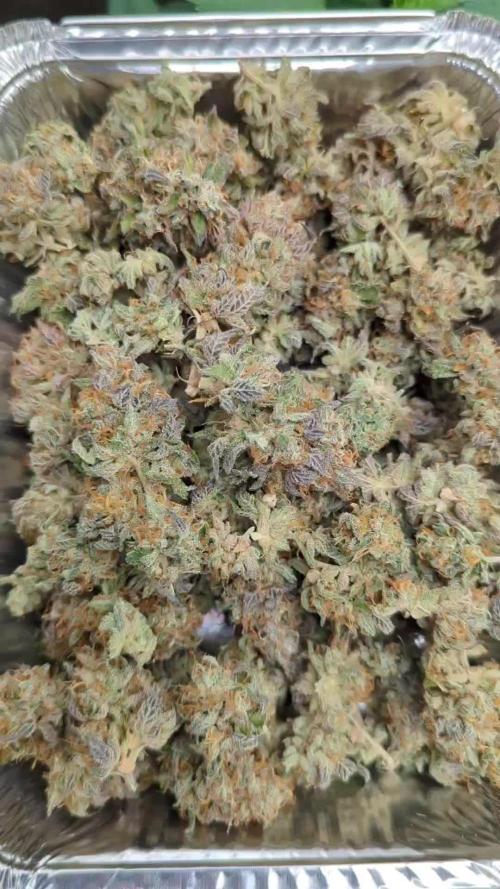
In the end, I harvested 310g of dry plants, discarding all the popcorn. Not a bad result, even if I didn't reach my goal of 450g. I decided to leave a few leaves and let it re-vegetate. It's growing very quickly, and I'll soon send it back to flowering. Thank you all for following the diary and leaving likes and comments. Happy growing to all my friends.🌽🌽🌽

Likes
25
Share


@BudHaks
Follow
Hey, there peeps!
Apologies for not updating my diary as I have been quite busy balancing non-plant responsibilities -.-!
Anyway, we are now on day 75 since I ordered my equipment and started germinating my seed and day 71 since I placed my seedling in her first Coco pot! She is now a staggering 4 foot 2 - which was overwhelming considering this is my first grow and orginally only cleared out 2/3 of my cuboard but now it uses the whole space but she's coming along so well! I have also added a LED Grow Light Full Spectrum 50W Red COB as I wanted some extra light for the bottom half nuggests.
She is very healthy (I assume from the strong healthy roots) and hasnt shown any major defects other then the initial defects i encountered in week 2-3 and slight light burn on the top cola in week 7 which was from the plant growing so quickly and touching the light, but I did then adjust the light within 2-3 hours.
What do you guys think and how did she get so tall consdiering she is an auto-flower and the strain is meant to be indica domiant?

Likes
56
Share


@MrGrow
Follow
11.10.2022
130 giorni dalla germinazione al raccolto
70 giorni fioritura in totale
Pianta molto bella, sexy, 2 semi su 2 germinati con successo.
di due piante, ho avuto 2 fenotipi leggermente diversi, entrambe le piante mostrano una struttura ibrida tendenzialmente sativa,
con rami lunghi e boccioli densi e duri, ricoperti da tricomi. Ho laciato le piante crescere con un Lst applicato un po in ritardo, ma entrambe le
piante hanno reagito benissimo e formato delle belle chiome a cespuglio.
Profumo tendente al dolce, note di lavanda ed erbe aromatiche, una delle 2 in fase avanzata di fioritura profumava di ananas maturo, semplicemente uno spettacolo!
La resa sembra buona, le cime sono di ottima qualita, aggiornerò con peso tra poche settimane!


Likes
15
Share


@Homegrown93
Follow
160 days of life harvested on day 63 of flower. I don’t have photos of her vegging but she started off great. About two weeks in, she started having some major issues. Her leaves started atrophying, curling up at the borders, growing 3 finger leaves, all new growth was deformed and twisted and growth in general almost stopped completely, to what I suspect was from broad mites. These fuckers are nasty! I dm’d my local grow shop and tried out some Neem Oil. I diluted it in water like they recommended and sprayed that baby every day for one week, then every other day the following week, then down to once a week. I sprayed her leaves stem and surface of the soil. I also cleaned the entire grow space with some bleach solution. Doing this allowed her to really bounce back, growth started to take off again! So I vegged for a few more weeks and trained her as much as I could to keep her uniform but short, she responded well to this. During flower, she was very happy. I had two main issues during this time, one was being too hot in Nitrogen and a week of very hot temperatures which burned her a slight bit, although she didn’t seem to mind much. I also could’ve continued a once a week spray of Neem oil because I think they might’ve started to come back on the lower and younger leaves that weren’t getting much light. Overall it was a dope grow and hope to do better on the next one!

Likes
27
Share


@TheCannaProphet
Follow
~ FASTBUDS TESTER #2205 ~
Well friends, here we go on another 'canna-venture' together!
The grow room has had a complete remodel and some upgrades done to it including brand spanking new 4x8 and 4x4 tents and a Trolmaster Hydro X controller along with a new Control Panel.
This tester strain is one of six tester strains that FastBuds has graciously provided me with and I'm looking forward to seeing what this girl has to offer when she's grown to her full potential!
One drawback of 'testers' is I have little to no information on it other than its number and that it's an autoflower... 🤪 But, it's ALWAYS a blast growing them for me because not knowing a lot allows me to just concentrate on the essentials: Light, Environment, Water, Nutrients and possibly a bit of LST... not complicated, just basics like keeping a constant temperature and RH in the tent at a level that gives a good VPD, watering when almost dry and maintaining proper light levels according to their stage of growth.
____________________________________________________________________________________________________________________________________________________________________________________________________________________________________________________________________________________________________________________________________________________________________________________________________________________________________________________
~THE SETUP~
~Initially seeds were lightly scuffed, then soaked for 3 hours in 78℉ distilled water after which they were transferred to moist paper towels laid out in a Jiffy Pellet plastic starter tray with lid. Underneath the tray was placed a Mars Hydro Heat Mat with Controller that was set to 78℉ where they stayed until their tap roots emerged.
~Planted into Jiffy Peat Pellets that were hydrated with distilled water warmed to 78℉ with a 7.0 ph.
~Once roots emerge from the Jiffy Pellet they're transferred to their fabric pots.
~Grown 100% organic in a 4g Gronest fabric pot and a 3g fabric pot by Wraxly filled with Mother Earth 70/30 Coco/Perlite medium and initially amended with Dr. Earth 4-4-4 / Earthworm Castings / Dr. Earth Flower Girl 3-9-4 and Coast of Maine Stonington Blend Organic Plant Food 5-2-4.
~19/5 light cycle for the entire run with supplemental UVA added during flower. Lights are controlled by a Trolmaster Hydro X controller set for a 15min Sunrise/Sunset simulation.
~Top dressing every 3-4 weeks with slow release dry amendments and Earthworm castings.
~Straight water ph'd @ 6.2-6.8 when needed and bi-weekly Compost Tea's.
____________________________________________________________________________________________________________________________________________________________________________________________________________________________________________________________________________________________________________________________________________________________________________________________________________________________________________________
Weekly Updates:
12/29- Here we go into Week One of Flower! It's been a month since these pretty ladies popped out of the ground and they're both looking perfect and have pistils popping out everywhere!
Their fabric pots were still heavy when lifted, and they looked happy, so I skipped watering today and will check them tomorrow morning after the lights come on.
Since being topped roughly a week ago, they have two new shoots that are emerging and looking extremely healthy with excellent vigor and have a beautiful healthy green color! The #1 is now at 7" tall and the #2 a bit taller at 9".
12/31- Today was a 'dry day and all I did was refill the humidifier and some canopy maintenance, tucking shade leaves and gently bending branches.
It's been a little over four weeks since they were planted in their amended medium and it's time to give their microbes a good feed so they can continue to provide them with all the macro and micro nutrients they need so, yesterday they got a good watering with 0.5g of de-chlorinated water with GreenGro's Veg, Flower, Green Aminos, Natures Brix and Granular Myco added to it @ 1.5 tsp/g and then ph'd to 6.4 @ 73℉.
01/02- Today I watered them from the bottom with 0.5g of de-chlorinated water to which I added 3ml/g of Earth Juice OilyCann cal-mag to prevent any Cal-Mag issues they may encounter before they arrive.
I also have the HLG 650R set 36" above canopy and it's set at 60% power which is being controlled by a Trolmaster HydroX controller. The tent environment is on point with temp's running 70 when the light's off and 74℉ with the light on. I'm keeping the RH at 55-60% right now but will drop it as flowering progresses. Finally, I've been keeping the VPD in the tent running 0.85 - 1.05 which I'm happy with!
01/04- They have both been doing really well getting watered every other day and yesterday they received 0.5g each of de-chlorinated water with 3ml/g of Fish Head Farms Fish Sh!t Soil Conditioner which was then ph'd to 6.3 @ 72℉.
They're both doing fantastic but were really beginning to get choked up with growth so I went in and selectively removed a few shade leaves from both to get some light penetration down into their canopies to give that lower growth some much needed light. While I was doing that I also did a little more LST on both to also increase light penetration.
Well, there goes another week in our journey and I'm looking forward to the coming weeks as flowering gets cranked up! 😍👍
😎💚 Thank you for checking out my passion in life! Please visit as often as you wish and I hope you enjoy this journey as much as I know I will! Grow Strong! 💪😎🤙


Likes
12
Share

@Bunterbiber
Follow
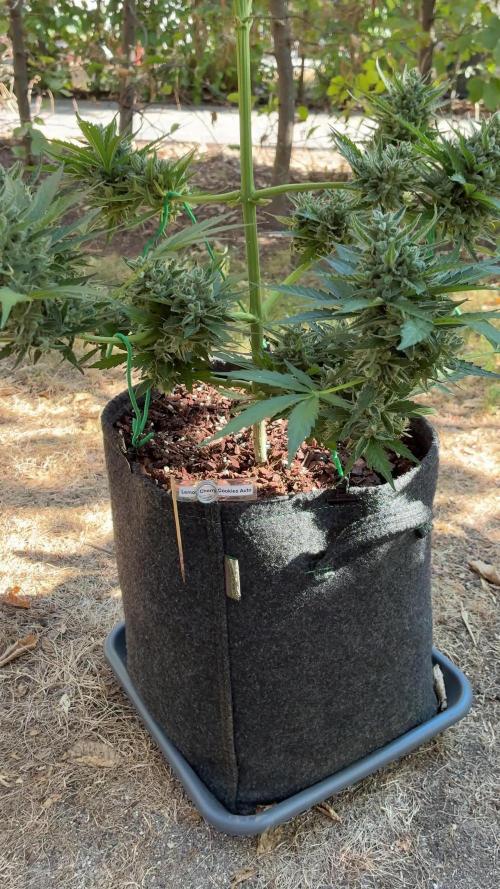
What a shift in weather! After weeks of baking in that brutal summer furnace, the temperatures finally dropped this week, and Mother Nature brought us some much-needed rain showers.
Weather & Smart Shelter: 🌧️🏠
Because we are in peak flower, direct rain is the enemy. I kept the ladies under a roof outdoor to make sure they didn’t get drenched. Even though the humidity spiked quite high at times because of the wet weather, luckily it didn't stay locked in for multiple days in a row. That’s a massive relief because keeping airflow up and avoiding stagnant moisture is everything at this stage to prevent any mold issues! Overall, the girls handled the cooldown perfectly and are looking incredibly good.
The Big News: Harvest Time for Team Indica! 🕵️♂️🔮
I pulled out the loupe to check on the progress of the quicker girls, and we have reached a major milestone:
Lemon Cherry Cookies Auto & Banana Purple Punch Auto: The trichomes are now predominantly milky! They have officially reached that gorgeous peak window, so I will very likely be chopping them down over the next few days. The anticipation is through the roof, and I can't wait to see the final rewards from these two beautiful, frosty strains!
The Sativa Crew Stays Out: ⏳🌿
Amnesia Haze Auto & Bruce Banner Auto: The more Sativa-leaning ladies are still doing fantastic but are running on their own timeline. They clearly need a little while longer to fully mature, which is exactly what I expected.
Amnesia Haze: She is absolutely putting on a show right now. She is packing on serious bud mass by the day, swelling up beautifully, and turning into a heavier monster.
It’s an interesting week ahead—part of the garden is getting ready for the scissors, while the other half gets to enjoy the extra space and keep bulking up. Stay tuned for the harvest update!

Likes
19
Share


@eldruida_lamota
Follow
Vamos familia tercera semana de vida de estás apollo black cherry de SeedStockers.
Que ganas tengo de ver el progreso de esta variedad, las plántulas están sanas, se ven con buen color.
La cantidad de agua cada 48h entre riegos.
Esta primera semana ya añadimos nutrientes de la gama Agrobeta.
Tuve problemas de trips en un indoor y tengo todas plagadas pero ya las e tratado con aceite de neem y un insecticida genérico, también añadí tiras azules, trataré esta semana.
Trasplanté a maceta definitiva 7 litros.
Estas próximas semanas veremos cómo avanzan.
Mars hydro:
Code discount: EL420
https://www.mars-hydro.com/
Agrobeta:
https://www.agrobeta.com/agrobetatiendaonline/36-abonos-canamo
Hasta aquí todo, Buenos humos 💨💨.
Likes
Comments
Share

@SubliminalSociety
Follow
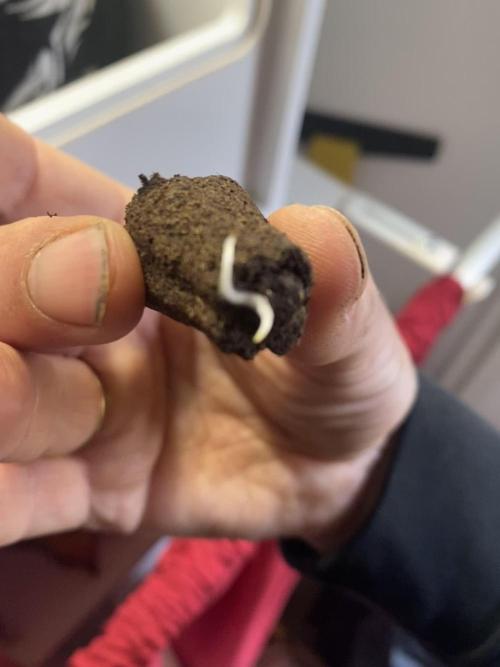
Used RQS propagator. 100% success as always,
sprouted after 2 days. the top root was a bit exposed but she doesnt mind.
tap rrot nice and long and strong.
will wait a day until i move her to the growbox.