The Grow Awards 2026 🏆 














Likes
Comments
Share
@Sobreruedas
Follow
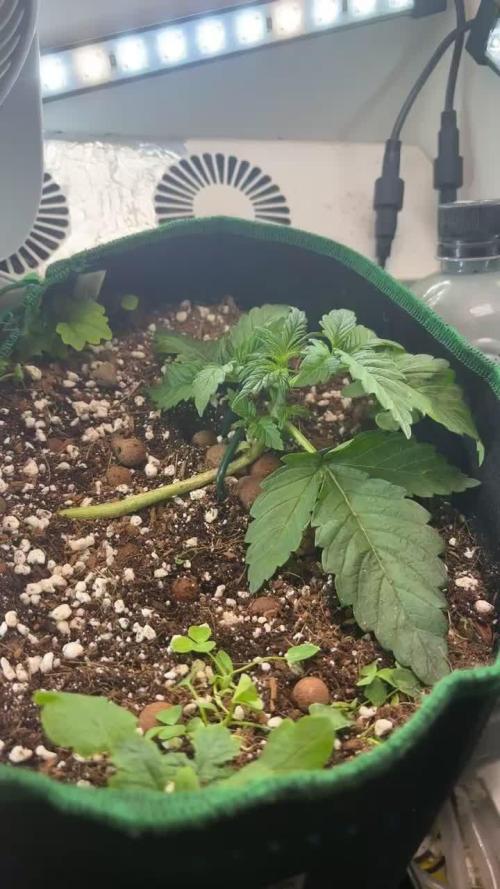
This week the focus was mainly on LST.
I continued guiding and adjusting the branches to keep everything level and well structured, helping the plant maintain a clean and symmetrical shape.
Apart from that, everything remains the same with no major changes. The plant is slowly recovering from the calcium deficiency, and the new growth is already looking healthier, so I’m just letting her grow and settle in 🌿💪

Likes
17
Share
@crimsonecho
Follow
Some yellow leaves and some calcium def etc etc. All good, they are progressing well. Gave a feeding yesterday. Should have staked them probably we’ll see. Overall about 4 weeks left.

Likes
3
Share
@psychonaut420
Follow
The start of week 3 veg I’ve been LSTing the plant I notice development drastically every 12hrs and now just starting to spot the development of side branches and a sturdier stem and fatter leaves and new node growth I am following shogun coco nutrient schedule week by week


Likes
17
Share
@CanadianFillmore
Follow
Welcome back growfessors to another episode of growfessor theatre! 👽🌳💚
Week 8F begins for the ladies of the 4x8, last round of feeding before the flush.
LSD has gone crazy over the last week, insane bulk-up in her buds, from top to bottom, in by the stock and out to the tips, she's just bulky, dense, sticky, frosty and incredible! By far, the best looking results from any of my LSD grows.
Green Crack also looks incredible and the rest of the ladies, while doing awesome, will be their final grow in my garden.
Thanks for stopping by growfessors, tune in next week for another episode! 👽🌳💚


Likes
6
Share
@Kolakk420
Follow
Very good strain selection, good quality,easy to grow, recomended this strain, thx dutchpassion seeds company for good strain choices and thx for watching!!!

Likes
6
Share
@organicman
Follow
6 plants temporary moving out to the new room until new seeds arrive
4 days later:
9 more (all) plants moving out to the new room
____________________________________________
light- and watering schedule: see photos
now:
15 plants
3 x Auto Orange Bud > Dutch Passion (early80's)
1 x Haze Berry Automatic > Royal Queen Seeds (2018)
2 x Auto Euforia > Dutch Passion (late 90's)
2 x Auto Bubblegum > TH Seeds (late 80's)
2 x Original Auto BubbleGum > Fast Buds Company (late 80's)
1 x Strawberry Pie Auto > Fast Buds Company
1 x Gorilla Cookies Auto Seed Stockers (2015)
2 x Auto White Widow x Big Bud > Female Seeds
setup + strategy:
18 seeds
3 x Auto Orange Bud > Dutch Passion (early80's)
3 x Haze Berry Automatic > Royal Queen Seeds (2018)
3 x Auto Euforia > Dutch Passion (late 90's)
2 x Auto Bubblegum > TH Seeds (late 80's)
2 x Original Auto BubbleGum > Fast Buds Company (late 80's)
2 x Strawberry Pie Auto > Fast Buds Company
1 x Gorilla Cookies Auto Seed Stockers (2015)
2 x Auto White Widow x Big Bud > Female Seeds
setup:
18 x gronest 2 liter
60 cm x 120 cm x 180 cm (2 x 4) growtent
4 l humidifier
25 watt axial fan
15 watt clip fan
ro-filter
bath room with a 50 watts room fan (-> carbon filter not necessary)
...and a lot of odds and ends.
grow strategy:
max yield by stressing with:
1. tiny shoes (2 l fabric pots standing on 3 plastic rings (4 cm) for max oxygen)
2. tiny growspace (18plants on 0.72 sqm)
3. many strains (8 strains)
4. annoying neighbourhood (mixing old - i.e. bubblegum (late 80's) - with young- i.e. hazeberry (2018) - genetics)
5. no stress by light or food or water
6. unintentionally too much food
plus:
- no lst - no hst - just leaf tucking
- positioning bigger strains (euphoria, orange bud, haze berry) or just bigger phenos on less intense light spots (end of tent + edges)
- music-rotation: 24 hrs reggae (for sativas) - 24 hrs classicals (because it's scientifically proofed) - 24 hrs traditionals from the hindukush region (for the indicas)
max efficiency (min electricity - max yield):
- light: 23 h on - 1 h off
- keeping the distance of 18" (45 cm) and dimming to the right par (lux) - value depending on growing stages (see sheet: beginning 185 par ( 10000 lux/100 watt )/end 340 par ( 18000 lux/175 watt )) => ends up in approx. 170 watts in average over max 15 weeks
temperatur management:
- using approx. max. half of what the lamp can do keeps temperature low:
my tsl 2000 is pulling max. 360 watts of the wall - i need only 175 watts, results in less temperature than using a 175 watts lamp
- adjusting the temperature by using a humidifier outside of tent:
blown in humidity is soaking degrees and is transported out by fan, works much better than doing the same with pure air
summer extreme: no humidifier: 36°C / 35 rh - with humidifier: 29°C / 65 rh
works for 1-2 weeks of real hot summer days, no mould, no signs of stress in two summers
germination:
seeding in waterglass
spraying "basic"-water: ro-water (22 ppm) + calmag to 180 ppm every 4 - 8 hours until sprouted
man versus fungus gnat:
5 days before seeding i'm running the tent with "basic"-watered pots as if there were plants inside - led on, fans on, humidifier on. Fungus gnats coming with the soil might take the chance to come out now for breeding. i'm waiting with a 9 mm rifle. in the past i found 6 gnats in 2 of 8 x 50 l biobizz lightmix bags coming out of the soil. i could eliminate every single gnat successfully ;)
rotating harvest:
the little ones will be harvested completely when ready. at this point only the top branches of the big ones will be cut...and the new (basic-watered) pots of the new grow will move into the tent. 2-3 weeks later the secod half of the big ones will be cut and the second half of the new grow will move in...
nutes:
biobizz / soil: biobizz lightmix
bloom,grow,topmax,activera,algamic
+ aminopower instead of bio heaven (too expensive)
individual feeding schedule/once a week:
veg: 200 - 600 ppm
bloom: 600 - 900 ppm
water:
ro-water with:
veg: 100-150 ppm calmag
bloom: 150 ppm calmag


Likes
4
Share
@Purkle
Follow
End of Week 9 of Flower. I can just taste those buds now!
The smell is intoxicating and the view is picturesque. There is definitely a noticeable difference between the two pheno's but I suspect both will pack a good punch. There has been some purpling in some of the top leaves which I expect will increase with the drop in temperature the last week or so. I cant wait to get some good pictures at the end of the week as Ive decided the chop day will be this coming Sunday.
The clash of yellow, purple and green is always my favourite so I plan to capture as much as possible since the next update will be jam packed with pictures of the girls just before their chop and after 48 hours of darkness to get the last of that resin production from the plant. I will also take some pics of the hanging plants in the drying cupboard.
The reason I am leaving my plants in darkness for 48 hours before they get chopped, is that it has been long belived that this practice will increase the last of the thrichome production and some say increases potency. There has been a recent study in the Netherlands which does confirm increased resin production for plants left in 48 hours of darkness (they also tested 24 hours darkness but found 48 was better) at the end of their flower cycle.
The chop has been planned to be pretty straight forward where I will just be taking off the main fan leaves and leaves with no thrichomes as well as chopping off the larfy/popcorn buds which will go straight in the freezer for a fresh frozen bubble hash run. I dont bud wash my flower as my tent gets a regular clean each week and always gets a full deep clean when every harvest is over and besides, its only me and my friends that smoke it!
The drying cupboard I use for drying is a small cupboard designed for storing and drying clothes which I have put a carbon filter and fan as well as a small desk fan to circulate the air as well as a small dehumidifier just incase there is an increase in humidity.
So the basics of drying is that you want the area where you are drying to be dark and fairly cool (its recommended to be between 15 and 22 degrees C), have a humidity level between 45% and 55%. I aim for around 21 degrees C temperature and 50% humidity. The drying time can vary depending on strain but its recommended to dry the buds for 7 - 10 days and I will explain further about how to tell if your bud is done drying and is ready to be cured on the next post. Drying is very important as you can affect all your hard work if the conditions arent right and the bud ends up too dry (luckily these days there are ways to fix bud thats too dry) or you end up with mouldy ganja which isnt save to smoke. Its also believed that a good long dry in good conditions helps increase potency and also has been shown to reduce anxiety.
Anyway thats it for this week and I hope to see you all on the final post for the end of Week 10 of flower and the harvest!
Until next week.
✌️


Likes
14
Share
@Kakui
Follow
11 Noviembre: Primer riego con 2.5EC y 5.9pH, runoff de 2.9EC y 6.2pH, en una semana más ya deberían estar recibiendo 3.0EC y seguir con esa concentración por todo el cultivo. Alturas están entre 15cm y 20cm.
13 Noviembre: Riego 2.5EC y 5.9pH, runoff de 3.3EC y 6.2pH. Hoy se removieron los primeros nodos de cada planta y se les hizo poda apical.
14 Noviembre: Riego 2.5EC y 5.9pH, runoff de 3.3EC y 6.2pH en la mañana. En la tarde se realizó transplante a maceteros definitivos de 5 litros con 4 litros de sustrato aprox. el cual fue pre cargado hasta la capacidad de campo, con 3.0EC y 5.8pH, desde este punto se debe esperar un par de días hasta que el dryback(secado) del sustrato sea de un 35-40%, lo cual vendría siendo el primer P3 del cultivo, una vez se alcance ese porcentaje de secado, se comenzará con los primeros riegos de precisión llamados P1.

Likes
5
Share
@CannaArchive
Follow
Environment:
Temperature: ~26 °C
Humidity: ~65% RH
Light intensity: ~350 PPFD
Watering / Feeding:
Watering frequency was adjusted to the plant’s needs. The pot was watered once it felt noticeably lighter.
RO water was used, and one application of Greenhouse Bio Enhancer was added this week. Watering volume was slightly increased, as Amnesia Zkittlez showed a higher demand compared to the other plants 🙂
Observations:
During week 3, Amnesia Zkittlez showed very healthy and steady vegetative growth. Leaf color remained a deep, healthy green, and the plant continued to be the most vigorous one in the tent. 🌿
The structure looks compact and balanced so far. No training was applied; instead, only light leaf tucking was done to improve light penetration while keeping stress to a minimum.
Overall, the plant responded very well to the increased light intensity and stable environment.
The focus this week was on maintaining stable conditions and letting the plant develop naturally. Everything looks on track heading into the next phase 😊
Likes
1
Share
@Growedbypepper
Follow
Semana 6 y se ve en perfecto estado nuestra planta exceptuando por un pequeño brote de oidio debido a la alta humedad actual debido a las fuertes lluvias, muy bonita dejando unos cogollos muy bonitos y de un buen tamaño


Likes
22
Share
@dr_Thompson
Follow
Rather big and greedy plant, doesn't demand a lot of attention. Has shown good reaction to scrog and lst.
I've already grown it once, and I'm sure I'll do it again.
Довольно большое и прожорливое растение, не требует повышенного внимания, хорошо реагирует на scrog и lst. Поднимаю уже не в первый и точно не в последний раз:)

Likes
2
Share
@JVKdopegrow
Follow
Very nice stretch! This girl actually looks like the plants I have been trying to grow (for this stage). Still dialing in the nutes for consistent growth. Light defoilation only, skipping LST for this baby. Probably just good genetics on this one rather than any skill on my part.
Processing
Likes
9
Share
@BudXs
Follow
Check it. FB autos being run in the preseason like the Jays in Dunedin
BudXs
Fuck yer CBD
Likes
24
Share
@Ultraviolet
Follow
The cannabis strain Grape Guava can be a purple strain, depending on its specific phenotype and genetic makeup. While not all phenotypes of Grape Guava are purple, some variations, such as the Zatix Grape Guava, are noted for their striking purple appearance due to the genetic expression of anthocyanin pigments.
In a garden of green, Grape Guava gleams,
With its fruity aroma, enchanting dreams.
Clusters of grapes, guava's sweetness ignite,
A strain so divine, in purple and white.
Euphoria whispers, a lush fruity haze,
Grape Guava's embrace, a tranquil daze.
Off and away.@1400ppm. The increased CO2 allows plants to thrive at higher temperatures, which in turn necessitates higher humidity to maintain the ideal VPD for healthy growth and transpiration. 80F -5F = 75F LST with 70% RH = 0.72 kPa. Higher temperatures and humidity promote rapid growth, nutrient uptake, and photosynthesis while maintaining a lower stress level. Temperature influences the rate of enzymatic reactions involved in aerobic respiration. Enzymes, such as those involved in glycolysis, the Krebs cycle, and the electron transport chain, work most efficiently at an optimal temperature range. In low temperatures, enzymatic activity will slow down, thus reducing the rate of aerobic respiration. In high temperatures, enzymes can become denatured, thus impairing their function and stopping the process of aerobic respiration. Glucose is the primary fuel for aerobic respiration. The rate of aerobic respiration increases with the availability of glucose, as it is the starting point for glycolysis. If glucose levels are low, cells may rely on alternative energy sources such as fatty acids or amino acids , but these processes may yield less ATP or be less efficient. To determine this effect, carbon dioxide volume was measured (as carbon dioxide is an output of aerobic respiration)
A seed germinated via skotomorphogenesis (in the dark) will generally develop faster in its initial stages to reach light, though it will be etiolated (elongated and weak) and will switch to slower, more robust photomorphogenesis (light development) once it emerges into light. While skotomorphogenesis is a rapid, growth-oriented process for soil escape, it's a temporary phase; photomorphogenesis is a more sustainable development program that prepares the seedling for photosynthesis.
18/6 with the 6 being IR instead of darkness, keeping temps overnight a neat 77F-80F. PPFD overnight 1.8.
Think of my tent as a lung. What goes in must come out. When the rate of air going out exceeds the amount of air coming in, it creates a negative pressure. Tent concaves (bends in). If set up correctly, your RH will begin to drop slowly to the desired level you set, and the extraction turns off when it reaches 50% RH. The plant, as it performs cellular respiration, will always be releasing more water into the air, so the RH% of the tent overnight will always increase, so long as oxidative phosphorylation is occurring. As soon as the RH% creeps back up to 55%, the extraction turns back on, over and over, this creates a strong pressure differential which will work wonders on your grow. replicating high and low pressure fronts in nature, critical for oxygen diffusion, but more importantly, full control of your RH%.
Moisture will not transfer from a saturated atmosphere to another if that air is already at or above its saturation point, meaning the air can't hold any more water vapor. Once I understood that water is produced as a by product during cellular respiration, specifically at the very end of the electron transport chain (ETC) where electrons are finally transferred to molecular oxygen, the higher the RH of the air, the more resistance there is for more moisture to be added to that environment, and effects the ease with which it does so. But none of that water comes from the pot; it's pulled from the air. If you run high daytime RH, your medium/pot is 100% reliant on transpirational root pull to move water. ZERO evaporation happens across the atmosphere if the tent air has high RH%, the medium cannot release its water through evaporation. Once a canopy develops, light no longer slowly wicks and evaporates from the topsoil. The Soil-Plant-Atmosphere Continuum (SPAC) describes the continuous pathway and process of water movement, driven by a gradient in water potential, from the soil, through the plant's roots, stem, and leaves, and finally evaporating into the atmosphere through transpiration. There is evaporation, there is transpiration, then there is evapotranspiration; Evapotranspiration (ET) is the combined total of two processes: evaporation (water lost directly from soil and surface water into the atmosphere) and transpiration (water released from plants to the atmosphere through their leaves). Evapotranspiration represents the total amount of water that moves from the medium into the air. There is no such thing as a medium with too much water, only a medium that retains too much for too long.
The water must always flow efficiently from one atmosphere(Medium) to another(Air) in a timely manner. Moisture is a critical factor for bacterial growth and decay. Dictating how long it's allowed to sit in any one location for any given period is a key preferred control. To ensure a net reduction in a bacterial population, the rate of removal (ET) must exceed the rate of bacterial growth (decay rate), which is often modeled as a growth rate for the specific bacterium under the given conditions. By optimizing daytime VPD, we also optimize conditions for bacterial growth to explode exponentially above 77°F.. If water is allowed to sit in a medium without an escape within a timeframe, nothing good will happen. IF High RH is maintained overnight as well as during the day, placing 100% of water movement at the behest of daytime transpiration, roots can only pull where they can reach, and if soil is compressed above a certain point, moisture will become trapped in a medium with no way of moving day or night. This will begin the countdown for decay to take hold. When water stagnates in a medium, it loses oxygen, creating anaerobic conditions that foster the growth of harmful microorganisms like bacteria and fungi, which can produce toxins and disease vectors.
Thigmomorphogenesis, the process by which plants respond to mechanical stimuli like touch by altering their growth and development, resulting in significant morphological changes to improve survival against mechanical perturbations. This complex response involves sensing touch and initiating physiological and genetic responses, leading to changes in form and structure over days or weeks. The process is triggered by physical forces such as wind, rain, or touch. Plants adapt to these stimuli by changing their shape and structure, which may include slower growth, thickened stems, or altered leaf development. Plants possess sophisticated mechanisms to detect even subtle mechanical stimuli and initiate responses. A variety of molecules, including calcium ions, jasmonates, ethylene, and nitric oxide, are involved in signaling these mechanical inputs. Touch can induce the expression of genes that encode proteins for calcium sensing, cell wall modification, and defense mechanisms. A plant exposed to constant wind may become shorter and sturdier. A plant that is touched frequently might grow slower to conserve energy and develop thicker cell walls. These changes increase a plant's resilience and ability to survive in harsh environments.
Let's get Thiggy with it.
Likes
9
Share
@Lazuli
Follow
This is by far the biggest yielding strain ive done, the plant flowered in high humidity and no mold. Very resistant and amazing yield. The plant needs support to carry the weight and also has a good stretch the first 3 weeks of flower. Absolutely gold 10/10

Likes
7
Share
@Cultivatorcarlos
Follow
everything in the second week of flower went well. she really stretched and the buds quickly started getting fat. also every watering i would notice a very strong odor of weed.
december 22nd 2021: gaver her last half of gallon used in last feeding. also nothing was tested. ph tested at 6.6 last feeding and it usually comes out a little higher after a few days.
january 1st 2022 i noticed the first trichomes.

Likes
4
Share


