


Likes
Comments
Share


@Ninjabuds
Follow
A sturdy plant with large buds it gonna be some good smoke it has some super sticky buds with a strong pungent fruit smell

Likes
10
Share


@asstonmartian
Follow
Fifth week of flower and it was time to defoliate the indoor units as they were starting to get bushy and block exposure to the lower bud sites. Quick work with the bonsai shears and they were ready to soak in the sun. I left the rooftop plants alone as I believe having additional leaf mass enables them to withstand temp and environmental fluctuations better. Whether or not this is the case, it was an experiment.
Likes
24
Share


@Familytrees19
Follow
So I posted a video here as well as Instagram (@familytrees19) of my attempt at making my own automated feed. I got some tweets to do but so far looking great! So this week was great good growth and smelling nice!! I am most likely gonna flip these babies Monday or Tuesday. I can’t wait to see this light in action with flowering!! Oh Ye I had a quick power outage this Morning I had to redo all my timers and check to make sure they turned on at the proper time, all my tents but this one! This one has the AMAZING kind led k5 Wi-Fi xl1000 it went right back to schedule! I checked and it was like nothing happened! What a great light really plug in set it up and that’s it! Anyways hopefully next week I’ll have a video of my automated feed in 💯 working

Likes
21
Share


@puffin_ganja
Follow
Cut down at day 60. Now drying for approximately 10-14 days in the same room with temps at 68 degrees and 60% humidity.

Likes
19
Share


@MiyaguiOkPolilla
Follow
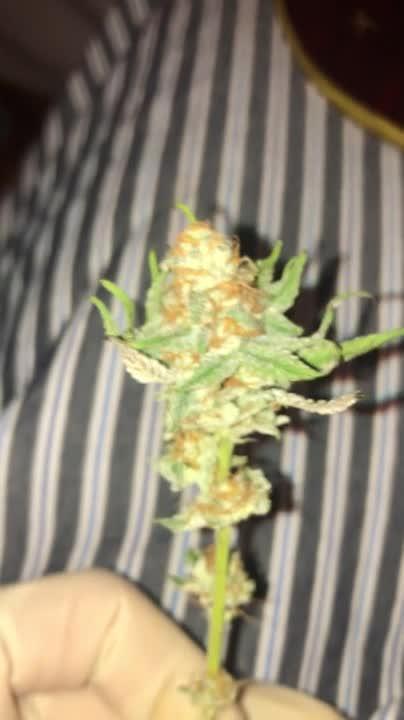
Esta variedad me encanta, huelen genial y sus cogollos son super densos y llenos de resina siempre. Poca tolerancia a los excesos y es muy fácil de estresar. A pesar de todo sigue siendo una de mis variedades favoritas ya que su aroma old school con toques ácidos me fascina!. Actualizaré luego del secado y después notas de humo. Saludos!



Likes
25
Share


@Ultraviolet
Follow
ANTHOCYANIN production is primarily controlled by the Cryptochrome (CR1) Photoreceptor ( !! UV and Blue Spectrums are primary drivers in the production of the pigment that replaces chlorophyll, isn't that awesome!
1. Diverse photoreceptors in plants
Many civilizations, including the sun god of ancient Egypt, thought that the blessings of sunlight were the source of life. In fact, the survival of all life, including humans, is supported by the photosynthesis of plants that capture solar energy. Plants that perform photosynthesis have no means of transportation except for some algae. Therefore, it is necessary to monitor various changes in the external environment and respond appropriately to the place to survive. Among various environmental information, light is especially important information for plants that perform photosynthesis.
In the process of evolution, plants acquired phytochrome, which mainly receives light in the red light region, and multiple blue light receptors, including his hytropin and phototropin, in order to sense the light environment. .. In addition to these, an ultraviolet light receptor named UVR8 was recently discovered. The latest image of the molecular structure and function of these various plant photoreceptors (Fig. 1), focusing on phytochrome and phototropin.
Figure 1
Ultraviolet-visible absorption spectra of phytochrome, cryptochrome, phototropin, and UVR8. The dashed line represents each bioactive absorption spectrum.
2. Phytochrome; red-far red photoreversible molecular switch
What is phytochrome?
Phytochrome is a photochromic photoreceptor, and has two absorption types, a red light absorption type Pr (absorption maximum wavelength of about 665 nm) and a far-red light absorption type Pfr (730 nm). Reversible light conversion between the two by red light and far-red light, respectively(Fig. 1A, solid line and broken line). In general, Pfr is the active form that causes a physiological response. With some exceptions, phytochrome can be said to function as a photoreversible molecular switch. The background of the discovery is as follows. There are some types of plants that require light for germination (light seed germination). From that study, it was found that germination was induced by red light, the effect was inhibited by subsequent far-red light irradiation, and this could be repeated, and the existence of photoreceptors that reversibly photoconvert was predicted. In 1959, its existence was confirmed by the absorption spectrum measurement of the yellow sprout tissue, and it was named phytochrome. Why does the plant have a sensor to distinguish between such red light and far-red light? There is no big difference between the red and far-red light regions in the open-field spectrum of sunlight, but the proportion of red light is greatly reduced due to the absorption of chloroplasts in the shade of plants. Similar changes in light quality occur in the evening sunlight. Plants perceive this difference in light quality as the ratio of Pr and Pfr, recognize the light environment, and respond to it.
Subsequent studies have revealed that it is responsible for various photomorphogenic reactions such as photoperiodic flowering induction, shade repellent, and deyellowing (greening). Furthermore, with the introduction of the model plant Arabidopsis thaliana (At) and the development of molecular biological analysis methods, research has progressed dramatically, and his five types of phytochromes (phyA-E) are present in Arabidopsis thaliana. all right. With the progress of the genome project, Fi’s tochrome-like photoreceptors were found in cyanobacteria, a photosynthetic prokaryotes other than plants. Furthermore, in non-photosynthetic bacteria, a homologue molecule called bacteriophytochrome photoreceptor (BphP) was found in Pseudomonas aeruginosa (Pa) and radiation-resistant bacteria (Deinococcus radiodurans, Dr).
Domain structure of phytochrome molecule
Phytochrome molecule can be roughly divided into N-terminal side and C-terminal side region. PAS (Per / Arndt / Sim: blue), GAF (cGMP phosphodiesterase / adenylyl cyclase / FhlA: green), PHY (phyto-chrome: purple) 3 in the N-terminal region of plant phytochrome (Fig. 2A) There are two domains and an N-terminal extension region (NTE: dark blue), and phytochromobilin (PΦB), which is one of the ring-opening tetrapyrroles, is thioether-bonded to the system stored in GAF as a chromophore. ing. PAS is a domain involved in the interaction between signal transduction-related proteins, and PHY is a phytochrome-specific domain. There are two PASs and her histidine kinase-related (HKR) domain (red) in the C-terminal region, but the histidine essential for kinase activity is not conserved.
3. Phototropin; photosynthetic efficiency optimized blue light receptor
What is phototropin?
Charles Darwin, who is famous for his theory of evolution, wrote in his book “The power of move-ment in plants” published in 1882 that plants bend toward blue light. Approximately 100 years later, the protein nph1 (nonphoto-tropic hypocotyl 1) encoded by one of the causative genes of Arabidopsis mutants causing phototropic abnormalities was identified as a blue photoreceptor. Later, another isotype npl1 was found and renamed phototropin 1 (phot1) and 2 (phot2), respectively. In addition to phototropism, phototropin is damaged by chloroplast photolocalization (chloroplasts move through the epidermal cells of the leaves and gather on the cell surface under appropriate light intensity for photosynthesis. As a photoreceptor for reactions such as escaping to the side of cells under dangerous strong light) and stomata (reactions that open stomata to optimize the uptake of carbon dioxide, which is the rate-determining process of photosynthetic reactions). It became clear that it worked. In this way, phototropin can be said to be a blue light receptor responsible for optimizing photosynthetic efficiency.
Domain structure and LOV photoreaction of phototropin molecule
Phototropin molecule has two photoreceptive domains (LOV1 and LOV2) called LOV (Light-Oxygen-Voltage sensing) on the N-terminal side, and serine / on the C-terminal side. It is a protein kinase that forms threonine kinase (STK) (Fig. 4Aa) and whose activity is regulated by light. LOV is one molecule as a chromophore, he binds FMN (flavin mononucleotide) non-covalently. The LOV forms an α/βfold, and the FMN is located on a β-sheet consisting of five antiparallel β-strands (Fig. 4B). The FMN in the ground state LOV shows the absorption spectrum of a typical oxidized flavin protein with a triplet oscillation structure and an absorption maximum wavelength of 450 nm, and is called D450 (Fig. 1C and Fig. 4E). After being excited to the singlet excited state by blue light, the FMN shifts to the triplet excited state (L660t *) due to intersystem crossing, and then the C4 (Fig. 4C) of the isoaroxazine ring of the FMN is conserved in the vicinity. It forms a transient accretionary prism with the tain (red part in Fig. 4B Eα) (S390I). When this cysteine is replaced with alanine (C / A substitution), the addition reaction does not occur. The effect of adduct formation propagates to the protein moiety, causing kinase activation (S390II). After that, the formed cysteine-flavin adduct spontaneously dissociates and returns to the original D450 (Fig. 4E, dark regression reaction).
Phototropin kinase activity control mechanism by LOV2
Why does phototropin have two LOVs? Atphot1 was found as a protein that is rapidly autophosphorylated when irradiated with blue light.
The effect of the above C / A substitution on this self-phosphorylation reaction and phototropism was investigated, and LOV2 is the main photomolecular switch in both self-phosphorylation and phototropism. It turns out that it functions as. After that, from experiments using artificial substrates, STK has a constitutive activity, LOV2 functions as an inhibitory domain of this activity, and the inhibition is eliminated by photoreaction, while LOV1 is kinase light. It was shown to modify the photosensitivity of the activation reaction. In addition to this, LOV1 was found to act as a dimerization site from the crystal structure and his SAXS. What kind of molecular mechanism does LOV2 use to photoregulate kinase activity? The following two modules play important roles in this intramolecular signal transduction.
Figure 4
(A) Domain structure of LOV photoreceptors. a: Phototropin b: Neochrome c: FKF1 family protein d: Aureochrome (B) Crystal structure of auto barley phot1 LOV2. (C) Structure of FMN isoaroxazine ring. (D) Schematic diagram of the functional domain and module of Arabidopsis thaliana phot1. L, A’α, and Jα represent linker, A’α helix, and Jα helix, respectively. (E) LOV photoreaction. (F) Molecular structure model (mesh) of the LOV2-STK sample (black line) containing A’α of phot2 obtained based on SAXS under dark (top) and under bright (bottom). The yellow, red, and green space-filled models represent the crystal structures of LOV2-Jα, protein kinase A N-lobe, and C-robe, respectively, and black represents FMN. See the text for details.
1) Jα. LOV2 C of oat phot1-to α immediately after the terminus
Rix (Jα) is present (Fig. 4D), which interacts with the β-sheet (Fig. 4B) that forms the FMN-bound scaffold of LOV2 in the dark, but unfolds and dissociates from the β-sheet with photoreaction. It was shown by NMR that it does. According to the crystal structure of LOV2-Jα, this Jα is located on the back surface of the β sheet and mainly has a hydrophobic interaction. The formation of S390II causes twisting of the isoaroxazine ring and protonation of N5 (Fig. 4C).
As a result, the glutamine side chain present on his Iβ strand (Fig. 4B) in the β-sheet rotates to form a hydrogen bond with this protonated N5. Jα interacts with this his Iβ strand, and these changes are thought to cause the unfold-ing of Jα and dissociation from the β-sheet described above. Experiments such as amino acid substitution of Iβ strands revealed that kinases exhibit constitutive activity when this interaction is eliminated, and that Jα plays an important role in photoactivation of kinases.
2) A’α / Aβ gap.
Recently, several results have been reported showing the involvement of amino acids near the A’α helix (Fig. 4D) located upstream of the N-terminal of LOV2 in kinase photoactivation. Therefore, he investigated the role of this A’α and its neighboring amino acids in kinase photoactivation, photoreaction, and Jα structural change for Atphot1. The LOV2-STK polypeptide (Fig. 4D, underlined in black) was used as a photocontrollable kinase for kinase activity analysis. As a result, it was found that the photoactivation of the kinase was abolished when amino acid substitution was introduced into the A’α / Aβ gap between A’α and Aβ of the LOV2 core. Interestingly, he had no effect on the structural changes in Jα examined on the peptide map due to the photoreaction of LOV2 or trypsin degradation. Therefore, the A’α / Aβ gap is considered to play an important role in intramolecular signal transduction after Jα.
Structural changes detected by SAXS
Structural changes of Jα have been detected by various biophysical methods other than NMR, but structural information on samples including up to STK is reported only by his results to his SAXS. Not. The SAXS measurement of the Atphot2 LOV2-STK polypeptide showed that the radius of inertia increased from 32.4 Å to 34.8 Å, and the molecular model (Fig. 4F) obtained by the ab initio modeling software GASBOR is that of LOV2 and STK. It was shown that the N lobes and C lobes lined up in tandem, and the relative position of LOV2 with respect to STK shifted by about 13 Å under light irradiation. The difference in the molecular model between the two is considered to reflect the structural changes that occur in the Jα and A’α / Aβ gaps mentioned above.
Two phototropins with different photosensitivity
In the phototropic reaction of Arabidopsis Arabidopsis, Arabidopsis responds to a very wide range of light intensities from 10–4 to 102 μmol photon / sec / m2. At that time, phot1 functions as an optical sensor in a wide range from low light to strong light, while phot2 reacts with light stronger than 1 μmol photon / sec / m2. What is the origin of these differences? As is well known, animal photoreceptors have a high photosensitivity due to the abundance of rhodopsin and the presence of biochemical amplification mechanisms. The exact abundance of phot1 and phot2 in vivo is unknown, but interesting results have been obtained in terms of amplification.
The light intensity dependence of the photoactivation of the LOV2-STK polypeptide used in the above kinase analysis was investigated.
It was found that phot1 was about 10 times more photosensitive than phot2. On the other hand, when the photochemical reactions of both were examined, it was found that the rate of the dark return reaction of phot1 was about 10 times slower than that of phot2. This result indicates that the longer the lifetime of S390II, which is in the kinase-activated state, the higher the photosensitivity of kinase activation. This correlation was further confirmed by extending the lifespan of her S390II with amino acid substitutions. This alone cannot explain the widespread differences in photosensitivity between phot1 and phot2, but it may explain some of them. Furthermore, it is necessary to investigate in detail protein modifications such as phosphorylation and the effects of phot interacting factors on photosensitivity.
Other LOV photoreceptors Among fern plants and green algae, phytochrome ɾphotosensory module (PSM) on the N-terminal side and chimera photoreceptor with full-length phototropin on the C-terminal side, neochrome (Fig. There are types with 4Ab). It has been reported that some neochromes play a role in chloroplast photolocalization as a red light receiver. It is considered that fern plants have such a chimera photoreceptor in order to survive in a habitat such as undergrowth in a jungle where only red light reaches.
In addition to this, plants have only one LOV domain, and three proteins involved in the degradation of photomorphogenesis-related proteins, FKF1 (Flavin-binding, Kelch repeat, F-box 1, ZTL (ZEITLUPE)), LKP2 ( There are LOV Kelch Protein2) (Fig. 4Ac) and aureochrome (Fig. 4Ad), which has a bZip domain on the N-terminal side of LOV and functions as a gene transcription factor.
4. Cryptochrome and UVR8
Cryptochrome is one of the blue photoreceptors and forms a superfamily with the DNA photoreceptor photolyase. It has FAD (flavin adenine dinucle-otide) as a chromophore and tetrahydrofolic acid, which is a condensing pigment. The ground state of FAD is considered to be the oxidized type, and the radical type (broken line in Fig. 1B) generated by blue light irradiation is considered to be the signaling state. The radical type also absorbs in the green to orange light region, and may widen the wavelength region of the plant morphogenesis reaction spectrum. Cryptochrome uses blue light to control physiological functions similar to phytochrome.
It was identified as a photoreceptor from one of the causative genes of UVR8 Arabidopsis thaliana, and the chromophore is absorbed in the UVB region by a Trp triad consisting of three tryptophans (Fig. 1D). It is involved in the biosynthesis of flavonoids and anthocyanins that function as UV scavengers in plants.
Conclusion
It is thought that plants have acquired various photoreceptors necessary for their survival during a long evolutionary process. The photoreceptors that cover the existing far-red light to UVB mentioned here are considered to be some of them. More and more diverse photoreceptor genes are conserved in cyanobacteria and marine plankton. By examining these, it is thought that the understanding of plant photoreceptors will be further deepened.

Likes
12
Share


@Aceboogie441
Follow
Sorry been away for so long. Been super busy at home and at work. Had turned my favorite pheno of the zkittz berry ade and turned into mother

Likes
151
Share


@PapaNugs
Follow
First week of flower going well. I've been adjusting the lst ties to spread these girls out. Been getting water every other day to every day. They've been drinking a lot.
When I went to adjust after taking pictures, I snapped off my last main branch I was working on. F me. Whelp it should be ok

Likes
25
Share


@XperencdGmanXG
Follow
they are growing nicely, cant wait for the warmer weather to set in so I can plant these girls outdoors. Had a fungus gnat issue that i swatted down with some physical traps and Raid green Earth, see video for details. Also problems with 2 spotted spider mites so I deployed my troops, predatory spider mites. They should get rid of the problem for me.
Likes
12
Share


@TeamQuality420
Follow
First week of flower lots of notes to come stay tuned !!!
So first week of flower notes will have to make up for my lack of content . I was on the covid train so I was pretty sick this week ( no excuse but it is what it is )
Minimal stretching so far this week she did very well with plucking and taking a majority of leaves off with great ease !!!
Big fan leaves strong structure it's gonna make for so massive spudz down the road !! They are now in the Autopot system so I'm excited to see how that works out !!!!


Processing
Likes
15
Share


@Red_i_jedi
Follow
12/03/19
So there hasn't been a lot going on in terms of healthy growth. It seems I've been giving nutrients too often and that the pH of my water is too high (7.8) resulting in a Calcium defficiency and stunted/abnormal growth.
Following some great advice from Bulbi to one of my questions. I've bought some Cal-mag and pH down to try and mitigate this issue, I've done the following :-
: 1ml Cal-Mag to 1l of Water per plant
: 2ml Cal-Mag to 1l of spray bottle to be used infrequently
: I haven't pH reduced on this watering as I noticed the Cal-Mag slightly reduces the pH, so to not shock the plants I'll lower the pH marginally on the next 2 feeds untill it's at 6.5
: Raised the light to 45cm
: Changed the lighting schedule to 18/6
Let's hope these few changes will bring these lil babys back to life!
I'll post some mid-week pictures to show any difference.
Likes
19
Share


@DrGr33nThumb
Follow
So heen away a while not too sure what day I'm on but the weeks are correct lol... photo and vid dump I'm getting super excited at how well it's doing.
Dropped in abit of calmag to the feed this week as its was showing signs of deficiency.
Likes
5
Share


@GODAXE
Follow
01.07.2024
Back home in the PM.
one blackberry have pop out showing 1 set of true leaf
the two fast berry have pop out 1 showing 1set of true leaf the second hardly strugling with the seed shell
04.07.2024
i broke the shell lock fastberry while trying to help her
no sign of the second blackberry, look heavily over soaked
07.07.2024
the two viable Berry sister have been removed from the germination tray.
the roots and the rockwool base have been dips in Cyco cyclone rooting gel before being set in their hydroponic basket with expended clay, cap with foil to prevent any light leak.
they will be in kratky pot in a 300 ppm nutrient solution of megacorp and sweet candy, from greeleaf nutrients, in a 10 for 1 ratio for few day before hitting their final DWC bucket.
special thank to Barry the camping keeper for is help on this grow.
Likes
16
Share


@Andres
Follow
she has a 10% amber has a pine smell. earth ... a nice smell .... with many milky trichomes most of them ... so I'll give you both 1 or 2 weeks for your process ... just wait...
pak 2 apparently the other one was hermaphrodite .. only 3 branches were.seeded and they gave me seeds ...
Likes
6
Share


@chupacabra80
Follow
этот сорт супер,он выдерживает все жару, холод, lst ,hst ,super cropping я делал все что мог,вывод такой что не трогайте авто сорта,пусть растут себе )))) 314 г
но ребята он без воды стоял больше суток в гидропонике в темноте,так что он за сутки немного подсох,так что я не могу сказать что было вчера на весах когда я я отключил гидропонику и оставил на сутки в темноте без воды, на фотке видно что листья уже упали,так что было больше! будем ждать когда высохнут 😉
ну вот ребята что вышло )) 62 сухих, вкус и запах соответствуют описанию,я не могу в точности передать вкус,но очень вкусный! это растение получило очень много стрессов,я всем советую!!!!


Likes
75
Share


@DogDoctorOfficial
Follow
Week 4: A Flourishing Symphony of Growth and Transition
Greetings, fellow cultivators and green enthusiasts! Week 4 with our Panty Punch Auto has been nothing short of a botanical marvel, a harmonious blend of veg and flower phases unfolding before our very eyes. Join me as we embark on a journey through the lush landscape of her growth, enriched by the remarkable support of TrolMaster, Aptus Holland, Seedstockers, and the vibrant community on Grow Diaries.
As we transition into Week 4, the sheer vitality of our Panty Punch Auto is simply awe-inspiring. Her growth trajectory knows no bounds, with each day bringing forth leaves of unprecedented size and vigor. It's a testament to the resilience of autoflowers and the magic woven into their genetic makeup.
Amidst this whirlwind of growth, the emergence of her pre-flower signals the impending transition to the flowering phase. It's a breathtaking sight to behold, a delicate dance of life unfolding in the heart of our grow space. With each passing day, her beauty deepens, foreshadowing the abundance of blooms to come.
As Week 4 draws to a close, we bid adieu to the veg feeding regimen provided by Aptus Holland. It has been instrumental in nurturing our plant through her formative stages, but the time has come to adjust our approach for the flowering phase. Stay tuned as we unveil the new recipe in the weeks to come.
Transitioning Technology: From Hydro-X to Tent-X
The heartbeat of our grow space continues to pulse under the vigilant gaze of the TrolMaster Hydro-X Controller. However, an exciting shift looms on the horizon as we prepare to transition to the cutting-edge technology of the Tent-X Controller. Its arrival heralds a new era of precision and control, promising to elevate our cultivation experience to new heights.
Before I conclude this report, I extend heartfelt thanks and shout-outs to Grow Diaries, Seedstockers, and Aptus Holland for their unwavering support and contributions to this journey. A special acknowledgment to TrolMaster for providing the controllers that have been instrumental in optimizing our grow environment. Wishing all contestants in the Grow Diaries contest the best of luck on their green adventures.
As we bid farewell to Week 4 and embrace the dawn of a new phase, let us continue to nurture our botanical companions with love, care, and boundless curiosity. Until next time, may your gardens flourish and your spirits bloom.
Genetics - Panty Punch Auto - https://seedstockers.com/
Plant nutrition - Aptus Holland - https://aptus-holland.com
LED Photons - Lumatek - https://lumatek-lighting.com
Controls - Trol Master - https://www.trolmaster.eu/
Watering - myself
Love and attention - Me, myself and i
As always thank you all for stopping by, for the love and for it all , this journey of mine wold just not be the same without you guys, the love and support is very much appreciated and i fell honored and blessed with you all in my life, With true love comes happiness. Always believe in your self and always do things expecting nothing and with an open heart , be a giver and the universe will give back to you in ways you could not even imagine so
More info, the ocasional give-away and exclusive updates from all my adventures can be found - links in the profile description
Friendly reminder all you see here is pure research and for educational purposes only
Growers Love To you All 💚 💚 💚
Likes
5
Share


@wheedtobeus420
Follow
Day 70. So frosty and stinky but I can’t smell because my face is rebelling at me. My sinuses 😂🤦♀️🏻 She’s will be hopefully swelling more before her flush out. I’m excited to see her in her full glory.
