


Likes
Comments
Share


@PestoMaker
Follow
Overall, plants continue to grow well and recover from LST. Continue to worry about under / over watering and whether leaf / root mold or bugs is causing spotting on leaves and wilting leaves from time to time. Have fought off white bug infestation and possible yellow leaf mold (maybe ph flux or root rot) in past weeks, but seems to be under control now with rarely a bug sighted and old rust spots on leaves at bottom of 1 or 2 plants being replaced by vibrant green growth above.
Trying to water ever 3 days or so with approximately 1/2 gallon of water each plant with 1/4 recommended Fox Farm nutrients and root protector from ILGM phd at around 6.3.
Tent is starting to smell abit skunky when opened. Tallest plant is around 12.5 (White LSD) and smallest is around 7" (White Widow #3). Avg plant is around 10" tall.

Likes
3
Share

@RebelSeedBank
Follow
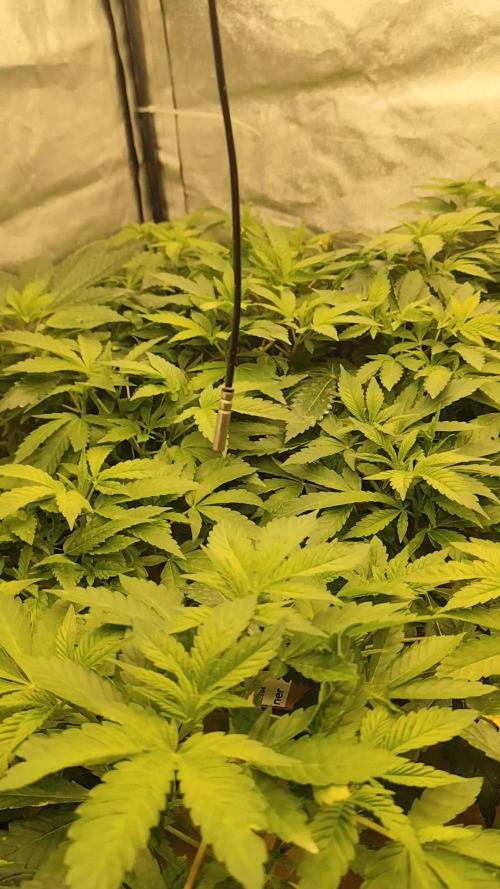
🌸 Flowering Week 1 — Switch Day / 12:12 Initiated
LCG × Vitamin Z | Phenohunting N1/2026 | 35 plants | Ebb & Flow 2.5L | SOG
Switched to 12/12 today after 8 weeks total from germination (6-7 weeks active veg). Plants are sitting at 25–40cm, uniform canopy, compact internodes. No stress signs visible — healthy, turgid foliage across all 35 plants.
System: Hydro SOG Ebb & Flow, 2.5L pots, expanded clay + rockwool, 120×120 tent, 2× Figolite FG-E3000 Samsung LM301H EVO + UV/IR, Meanwell driver. RO water base.
Nutrition — Day 1 switch:
Running EC 1.2 (protocol calls for 1.3 F1, holding slightly lower for the first 3–5 days to avoid osmotic pressure during the metabolic transition). pH locked at 5.7. Full mineral salt program — Calcium Nitrate, MgSO4, Potassium Nitrate, MAP, Potassium Sulfate, Kelamix microchelates, Pepton Plus, Cellulase + Pectinase enzymes, Potassium Silicate.
Irrigation: 4 cycles/day, lights ON 22:30 / OFF 14:30. One pre-light cycle at 00:30 for root oxygenation. Substrate completing full dry cycle overnight.
Goals this week:
Pre-sex identification starting day 7–10. First phenotypic observations logged — leaf morphology, relative vigor, early aromatic signature by rubbing leaves. Light defoliation of large fan leaves blocking lower nodes planned before stretch kicks in.
Flavor target: Dominant citrus-sweet / lemon dessert / clean creamy base. Zero synthetic gas. Zero pine. Cup-level aromatic selection in progress across all 35 regular seeds.
Stretch expected to begin days 5–10. Will update with first sex identification and early pheno notes next week. 🔬
#LCG #VitaminZ #Phenohunting #EbbAndFlow #SOG #HydroSOG #CupQuality #RebelSeedBank #PureExpression #SamsungLM301H #Figolite
#LCG #VitaminZ #Phenohunting #EbbAndFlow #SOG #HydroSOG #CupQuality #RebelSeedBank #PureExpression #SamsungLM301H #Figolite
Likes
49
Share


@Roberts
Follow
Green Cure CBD Auto germinated and has sprouted easily. Every seed I started all germinated. So she is getting acclimated, and should start growing very soon. Everything is looking good. I did provide a light feed to help with ph stability in coco. She is off to a good start. Thank you Medic Grow, and Zamnesia Seeds. 🤜🏻🤛🏻🌱🌱🌱
Thank you grow diaries community for the 👇likes👇, follows, comments, and subscriptions on my YouTube channel👇.
❄️🌱🍻 Happy Growing 🌱🌱🌱
https://youtube.com/channel/UCAhN7yRzWLpcaRHhMIQ7X4g


Likes
8
Share


@Salgeezi
Follow
All well here. Roots are kinda turning brown again. My water temps are at 75f. I know a bit on the high side. Was looking into ewc teas but I'm just too lazy to make it. Might just have to pay these jerks on Amazon with their outrageous price for hydroguard


Likes
6
Share


@DillyGenetics
Follow
Transplanted my nursery tent from 4L cup to 1 gallon plastic pot , main lining , topping , made Micro tea every week with fish fertilizer 1 tsp Neptune , bloom city seaweed , worm tea concrete, soil recharge 1,2 1 liter of tea per pot to make sure the soil is condensed into soil
Likes
33
Share

@eldruida_lamota
Follow
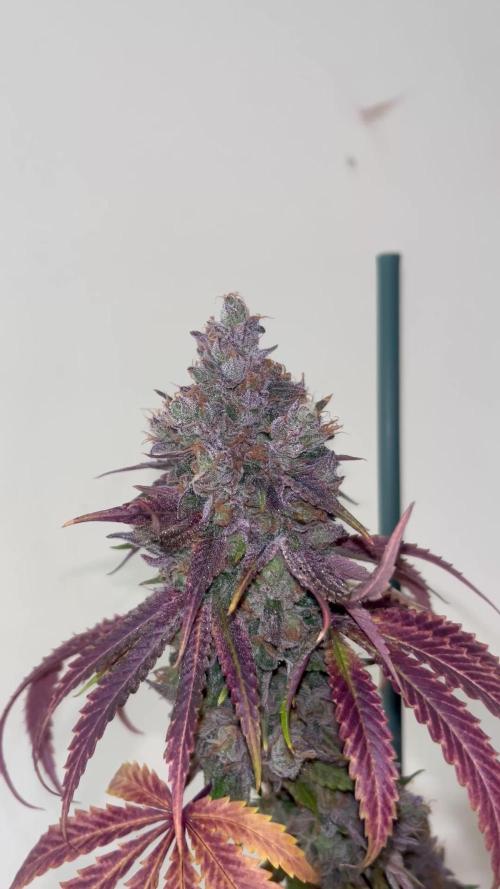
Venga familia que ya viene la cosecha de estas Lemon Cherry Runtz de Fastbuds, que ganas que tenia ya de darles machetazo.
Que locura de variedad , me encantó cultivarla , en este indoor no tuve plaga de nada así que todo fenómeno.
Las flores aparte de piedras, se ven resinosas.
a sido una genética con la que disfruté bastante, es fácil de cultivar y es resistente, 9/10 semanas de floración, la planta es bien olorosa, apesta bastante, los aromas son intensos y muy dulces.
Agrobeta:
https://www.agrobeta.com/agrobetatiendaonline/36-abonos-canamo
Mars hydro:
Code discount: Eldruida
https://www.mars-hydro.com/
Hasta aquí es todo , espero que lo disfrutéis, buenos humos 💨💨.
Likes
14
Share

@PapaBlob
Follow
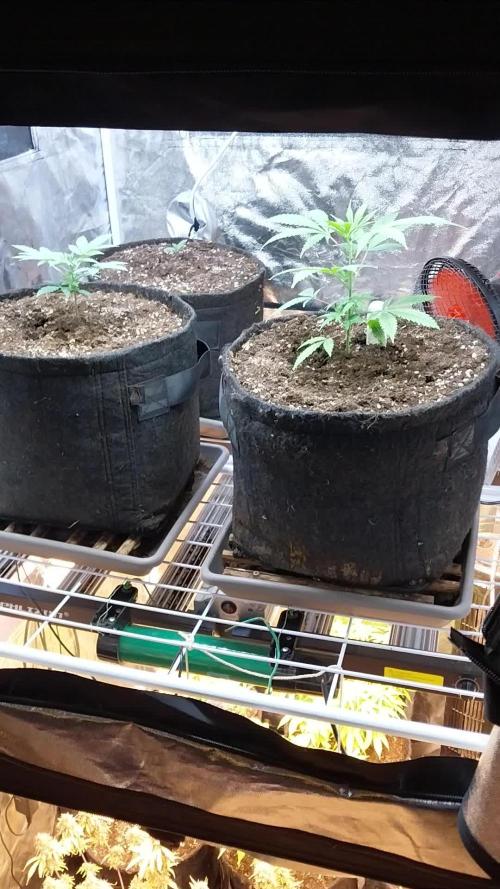
31/10 Voilà, voilà ! Alors, il ne faut pas se moquer de sa petite taille 😂 Elle a eu des ennuis à la naissance. 😂👍
Divine Seeds : https://divineseeds.net/ _ils ont des petites plantes bien sympathiques.

Likes
31
Share


@The_Bearded_Grower
Follow
I'm loving red poison, not only does it look great my god am I high. also on the upside it helped me with my pain enough for me to get more than 3-4 hrs of sleep in 3 months 😭

Likes
10
Share


@GloHoodlum
Follow
Slight nutrient burn on the super silver haze and the banana. I have backed them up in feed from 10ml per gallon back to 8, it seems to have done the trick the last couple days. Both banana and super silver haze are trucking along quite well I think otherwise. I have officially decided to start my flushing on the black domina x Scott's og, trichomes are about half milky half clear, not sure if I should be doing a full flush or continue feeding through week 7 and start flush on week 8 I'm not overly sure lol see how it goes anyway.
Cheers


Likes
4
Share

@Simba247
Follow
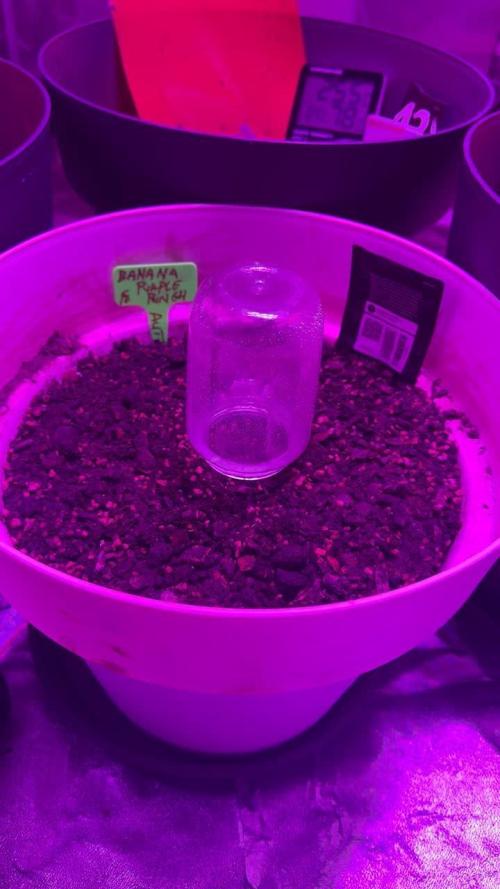
Went in a Glass of water on August 13th
Removed the next day to be transferred to paper towel
Stayed in a dark closet for 2 Days
Sent into soil on August 16th
Likes
35
Share


@DutchFarmer
Follow
She has returned with two 2 tops
Lets hope she gives me sativa dreams ! 💤 😴
She is so strong 💪 and stable im impressed with Kannabia Genetics !
I LOVE YOU KANNABIA GENETICS! 😍😘
Check out my Cannabis Community, please👇like👇, follow, comment, and subscribe to my YouTube channel👇. ❄️🌱🍻
https://www.youtube.com/@DutchF4rmer
Join our cannabis community community for weekly giveaways 👌
(Discord Server)
https://discord.gg/VMu6rH4a7V
It will be appreciated! ❤️
Happy Growing 🌱🌱🌱


Likes
72
Share


@JUNGLE_B4RNS
Follow
Week 8, probably the last week of Veg , it will depends on how the main tops are gonna grow compared to the side shoots that are supposed to fill up the inner holes. If the plants redirect their energy in the shoots instead of the main tops I could be able to add another week of Veg , plants have been ScrOG’ed and shaped for this but after all they will decide by their own if they fill that the main tops are to low to catch the male pollen they will send the energy in the side shoots to get a chance to catch it !
Plants grows for only one purpose, to reproduce ! And the Cannabis has an maniac obsession to reproduce this is why it makes it so resilient ! And this why it gets twice bigger in just 2-3 weeks when it stretch.
So, if you’re reading this my friends, you will understand that the time to prepare your girls for the stretch is now ! Starting to bump the feeding mix with some Veg nootz preparing them for the battle as they will use a lot of Nitrogen ! And for the ones who are just looking the pictures like if this diary was a comic book, they still won’t understand why their plants are getting yellow in middle of flowering when roots doesn’t absorb Nitrogen anymore as they will only concentrate on P-K (Mg/Sulfur) and getting doomed with no solution to fix it.
[Day 51]
Water + RootBooster + AllZymes
Cookies
[Day 52]
Water 💦
Acapulco
Tangerine
Bad Azz
J.H
BBG TH,SS
Water + RootBooster + AllZymes + Earth Grow Mix
Vanilla
G13
Ams L
[Day 56]
Water 💦
J.H
BBG TH,SS
Tangerine
Acapulco
Ams L
Bad Azz
Cookies
(P.S: I’m looking for a job in the Cannabis industry as Master Grower, Mineralogist, Quality Control 🐞)
This diary is updated daily ☝️


Likes
7
Share


@100Trillion
Follow
Second week of flower went well. The plant has over double the size at this point and we have early signs buds forming within the second week. Continuing to keep the light about 12 to 14 in above the canopy as the plant stretches. Plants are getting really bushy will prepare for a day 21 leaf strip to clear out the canopy and to allow for air flow while dropping humidity. Will also try to implement a second scrog for support.Currently The single seed Sent from khalifa for grow Contest is tallest pheno in the tent and healthiest looking that pheno will show on the top right in any of the disclosed pictures and videos.

Likes
13
Share


@TheBluntBeauty
Follow
Short and stacked with really tight Node Spacing. Packing on the frost already! I decided to go in and take some of the larger Fan leaves off being very selective in which and how many I take .

Likes
109
Share


@buddha61
Follow
Day 85 - Noticed at least briefly, the tent had gotten up to about 84°, but went back down to its normal 82ish. I don't know if it has to do with slightly warmer temperatures or not. I will monitor. Was also fed today, following the Dyna-Gro feed chart with 2 tsp Bloom, and 2 tsp Mag Pro. As of this week, Foliage Pro is no longer going to be given.
As I sit here and reflect on some of the earlier grow, I am starting to realize that lots of my discoloration early in the grow was likely predominantly caused by me. Not thinking, with this being a coco/peat mix, once I started feeding, it should have been every feed. I was not wanting to overfeed, so basically I fed one watering, then the next was plain water, thus essentially flushing the pot once a week and feeding once a week. Am I sure this was the cause, no, but it is the most logical thing that I can think of. I will call it 'first grow' lessons learned!
Day 86 - Temp seemed to stay around 82° today, with a few hours of light left.
Day 87 - She seems to be moving along fine with minimal effort on my part. Flowering seems to be the easiest part by far, but the hardest (having to wait when it gets close).
Mid day update - New fan has arrived. Will be put in the tent tonight when the lights come on.
Day 88 - Fed today, just over 1g with 2 tsp of Bloom and Mag Pro (per gallon). Installed the new Vivosun fan. Happy with it so far, seems a much better design to clip to the tent. Haven't used the old one as an underskirt fan just yet, but may still do so. Added a video looking at the new fan through the looking window of tent, so you can see it in action, while the tent is sucked in. You can see the leaves move from each side of the plant, then how the oscillation just perfectly fills the tent corner.
I won a reverse auction from GPS, for a pack of Chinook Haze over the weekend (killer price), so I am going to start a small genetics collection I think. My original order from GYO has 1 Barneys Farm Pineapple Chunk (freebie), 2 random (freebies), 2 GYO GSC and 2 GYO Bubblegum seeds left, all of which should be feminized. The GPS seeds are regular. I really want to try some Subcool strains, like Jack the RIpper (have had the smoke and liked it) or Grape Lime Ricky (description just sounds awesome), but don't feel like paying $10 a bean for regular seeds at this point in time. The other I want to get is some White Rhino, which I might end up picking up some Nirvana White Rhino (another smoke I thoroughly enjoyed) seeds at some point as well.
Day 89 - There is something peaceful about just sitting by the tent with the door open, and relaxing with the plant.
NOTICE: Since a comment brought it to my attention that I never showed the lights, I added pics in the week 2 section, since that is when they went into the tent. They are QB132 v1 lights from HLG.
Day 90 - Temp again hit 84° in the tent. I guess I can't worry too much. There is plenty of airflow, that that thermo is on the net, in the light, so it may be more of a radiant vs ambient temp. She isn't really showing any ill signs of it, so I will just keep plugging along.
Day 91 - Fed today, 2tsp Bloom and Mag Pro (per gallon), with 140 oz given. 5 weeks of flower in the books. GYO lists this strain as a 55-63 day flower. I don't know if they base that off of time flip, or pistil formation, but I am 35 days in from time flip (I think it was about 12 days for first pistils), and I can't imagine that it will be done in 3 more weeks. I'm thinking at least 4 more, but we will see how she finishes as the weeks continue to go by. Opened the tent right before lights on today to grab a couple lights off flash on photos.


Processing
Likes
73
Share


@Andres
Follow
she has 161 days outdoors .... and 98 days of flowering ... a lot of patience ... her smell is still strong ... a smell of mint. to pine ... the smell of indica is felt .. she will give some big buds .. especially her main crown ... she is a champion and fighter with the inclemency outdoor ... I believe that I will cut her on Sunday with 100 days of exact flowering ... but maybe ... I'll check your buds one by one ... I'll try more information ...
