The Grow Awards 2026 🏆 






Likes
14
Share
@Kendoda
Follow
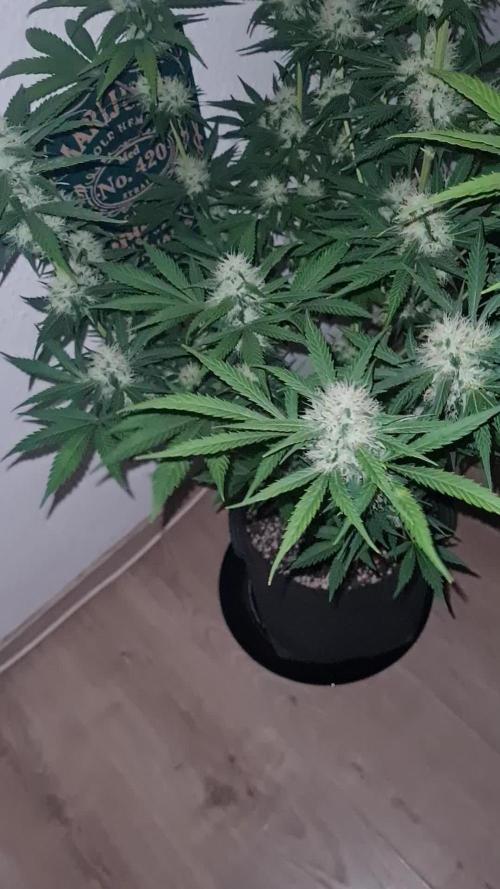
It’s the final week. I’m just giving them a couple of waterings with ph’d water before the chop.


Likes
27
Share
@DeepRootsGrowTrees
Follow
Week #18 Gelato-K By Kannabia
Week #18 Mar 8th-15th
Week #7 Flower
This week she is packing on weight buds a swelling trichomes are still mostly clear. Thank you for stopping by!! Stay Growing!!

Likes
89
Share
@Nebula420
Follow
Finally I begin grow report of strain Gorilla Girl from Sweet Seeds,
Thanks you Sweet Seeds)))😘 The last time the plants blew away wind, and rip.😇
I love cookies, Gorilla girl is a sativa dominant hybrid of the legendary Gorilla Glue X Girl Scout Cookies.
Vegetation: will be in the outdoor for 35-40 days for natural light,
Flowering: in Indoor with 600w HID lamp,
Nutrients: from GHE, and Advanced Nutrients .
Pot Size: 4Gal - soil/perlite 50/50.
Gorilla Girl : This strain is the resulting hybrid from the cross between two of the most famous and powerful genetics coming from the USA: Gorilla Glue X Girl Scout Cookies.
The GSC specimen used for this cross comes from the phenotype known as “Thin Mint”. An Indica-Sativa hybrid with Sativa predominance.
Gorilla Girl®️ is a strain with a very powerful effect, featuring very high THC levels that can reach to between 20% and 25% in optimum growing conditions. Some specimens can even exceed these levels. The resin production of this strain is copious, covering all the flower calyxes with aromatic trichomes. The buds are very resinous and compact.
Gorilla Girl®️ features intense taste and aroma, with cypress tones and a touch of wood, complemented with hints of earth and citrus.
The plants look like balanced Indica-Sativa hybrids, very productive and vigorous, with long and flexible side branches.
Indica/Sativa 40% / 60%
THC 19-25%
CBD 0,1%
Indoor Yield 400-550 g/m2
Outdoor Yield 350-600 g/plant
Indoor Blooming 9 weeks
Outdoor Harvest late September
Sex Feminized
Effects Psychoactive, Euphoria, Stimulating, Creativity, Happiness
Flavor Cypress, CITRIC, Earthy, Woody

Likes
10
Share
@CordersGreen
Follow
👉DIA : 13/12/21👈
Metodo de germinacion: 👉<< VASO DE AGUA >>👈
seleccionamos las cantidades deseadas de semillas y en un pequeño vaso con agua opmotizada insertamos las semillas para nutrirlas durante 12H, situada en un lugar sin luz, apropiadamente tapada con un trapo.😉
__________________________________________________________________________________________________________________________________________________________________________________
👉DIA : 14/12/2021👈
👇👇👇👇👇👇👇👇👇👇👇👇
una vez pasada las 12 H de germinacion en vaso de agua , depositamos las semillas bien colocadas en un recipiente con papel de cocina humedecido con agua y 1ML de estimulador de raices (TOPCROP).
Esperamos de 1 a 2 días a que salga la raiz de la semilla y ser transportada a los Jiffy😉
___________________________________________________________________________________________________________________________________________________________________________________
👉DIA 17/12/2021👈
👇👇👇👇👇👇👇👇👇👇👇👇
Pues pasados los 3 dias de germinacion en el metodo de papel, vemos que ya salieron a luz las raices y con sorpresa😱 NUNCA habia visto una cosa asin!!
An salido GEMELAS, sii sii !!😵 de una misma semilla an salido dos raices una cosa impresinante!
y damos paso a colocarlas en los Jiffy.
👉Instrucciones:👈
- Colocación de los jiffy en un recipiente con 2L de agua y 2ML de enraizantes de top Crop.
- Dejamos actuar durantes varios minutos hasta que el jiffy se extienda.
- Abrimos un pequeño orificio en los Jiffy para introducir la semilla con el cáliz dejandolo hacia afuera.
- Colocamos en un pequeño invernadero para que tengan la suficiente humedad.
- Ayudandonos de unos foco de pocos waltios, le damos a luz necesaria para esta face de germinacion dejandolas 24 horas de luz.
________________________________________________________________________________________________________________________________________________________________
DIA 22/12/2021
Colocacion de Jiffy en Maceta de 3,25L
👇👇👇👇👇👇👇👇👇👇👇👇
👉Instrucciones👈
-Pasados varios dias vemos que el periantio(semilla) ya se rompió y empezo a salir los cotiledones con una hermosa raiz blanca por debajo del jiffy.
-rellenamos macetas de 3,25L con sustrato de top crop(anterior cultivo).
-introducimos los jiffy en las macetas dejando la plantula bien colocada.
-regamos con 3L agua opmotizada y 1ML/L enraizante Voodoo ADVANCED NUTRIENTS
- Permanecemos con las 24 horas de luz con foco led.
_________________________________________________________________________________________________________________________________________________
👉DIA 25/12/2021👈
👇👇👇👇👇👇👇👇👇👇👇👇👇👇👇
pasados 3 dias desde que se plantó en maceta. A dado unas respuestas increibles !!👍
las volvemos a regar y a cambiar las horas de luz que se pasarian a 18H


Likes
38
Share
@MadeInGermany
Follow
Hey guys :-) .
Today the plant was sprayed again with neem oil.
There weren't any more trips to be seen after the second application, but to be on the safe side, you did it again today get a cure.
That's why the beautiful dark shimmer on the leaves :-).
She has developed very well this week.
I will give you 7-10 days before I switch to flowering.
This week it was poured 3 times with 1 l each (nutrients see table above)
Otherwise everything was cleaned and, as always, everything was checked.
Have fun with the update and stay healthy 🙏🏻
👇🏼👇🏼👇🏼👇🏼👇🏼👇🏼👇🏼👇🏼👇🏼👇🏼👇🏼👇🏼
You can buy this Nutrients at :
https://greenbuzzliquids.com/en/shop/
With the discount code: Made_in_Germany you get a discount of 15% on all products from an order value of 100 euros.
👇🏼👇🏼👇🏼👇🏼👇🏼👇🏼👇🏼👇🏼👇🏼👇🏼👇🏼👇🏼
You can buy this strain at :
https://www.exoticseed.eu/de/hanfsamen/hippie-therapy-cbd
Water 💧 💧💧
Osmosis water mixed with normal water (24 hours stale that the chlorine evaporates) to 0.2 EC. Add Cal / Mag to 0.4 Ec Ph with Organic Ph - to 5.8 - 6.4
MadeInGermany

Likes
11
Share
@SanderanderS
Follow
This grow was all about learning the process of hydroponics. Needles to say
It is not as easy as it looks and takes a lot of time to set up and so...
But along the way with help from several growmies it came to a unexpected result. 227 gram dry weight of good quality cannabis. This result ,I'm very happy ,has so much room for improvement that I can't wait for the next grow.
I like to thank Royal Queen Seeds for sending me these awesome genetics, I suspect this is a big part of the result, the freebies and a lot of weed.
Ofcourse I couldn't wait for the cure and started smoking. Man this stuff is sticky!! The smell is already hard to resist. The taste could be better,no cure yet,
Very fresh but you smell and taste the potential.
Being a long time haze smoker the effect is not exactly my thing but at night
after dinner with a cup of coffee that's more what this is.
Being a older person the hardest part of this contest is this damn diarie. Still find it difficult to find my ways. How many times I have to do this over 😤
I will grow this stuff again , never was a big fan of autoflowers but this outcome
made me a believer. The starting plugs that came with these seeds are from now on a absolute must have! You see the difference .
I cleaned the Aquafarm and it's ready for the other strain "Legendary OG Punch", that's now inside the growplug. Unfortunately to late for a full grow to be in competition but will make a diarie never the less.

Likes
6
Share
@xmackobox
Follow
Hola amigos arrancamos nuevo cultivito, por ahora os traigo los videos que subo a YT como ya sabéis le estoy dando caña al canal, buscarme allí, me llamo como aquí, xmackobox.
Poco mas, se empezaron a germinar el día 14/02/24. Algunas se pasaron a maceta el día 16, otras en 17 y se terminaron de plantar en maceta definitiva de 11 L el día 18/02/24.
Para la primera semana de crecimiento ya meto fotos detalle de todas.
**ACTUALIZADO**
26/02/24 llevamos 12 días desde que se empezó a germinar, todas brotadas perfectas excepto 1 que como veis parece atrofiada o con algún problema, no desarrolla el ojo principal es decir su punta apical.
Esperaremos a ver que hace esta plantita :D
Likes
9
Share
@Shefman93
Follow
Compound genetics got magic in those beans! All buds were dense and after the cure smelled amazing.
Likes
1
Share
@Gorillabraziu
Follow
Next week i will stop feeding her with grow nutrients, but decreasing (reduce) doses.
I am brazilian guy, so i dont write very well and not understand somethings 😅
Likes
199
Share
@CRiSPrGrow
Follow
The SWAMPMONSTER ran out of juice so no SMART PROTEINS for these this week, but holly smokes looks like that swamp thing potion does lasting work on the plants : they're just popping the f off ! faster than any auto i've ever grown, and i'm grow diaries native so you can see all my other grows ever lol anyway, as you can see these have started developing side shoots and it's week 3 . Never seen a plant like this in my life, well dont be surprised it's my first photo , so yeah, just glad a found a way around that longish veg for a photo ! these are 3 weeks in, maybe they've got a couple more weeks of veg in them tops , some will stay vegged for the rotation, any questions welcome ! in case you were wondering it's just plain water until i get more juice maybe some more beneficials but that's just about it that's planned ! 🚀

Likes
7
Share
@jojopfoh
Follow
Such a beautiful and bushy lady. Lots of buds and wonderful stacking on the buds So sticky and frosty. The buds are solid

Likes
6
Share


Likes
13
Share
@StoneyMelony
Follow
I liked growing this strain very much, it was very easy growing and everything worked out nice, I like the structure of this plant the node spaces are not so big and everything filled in nicely when she was flowering. The fastbuds zkittelz has giant huge buds they where one of the biggest buds i grow on auto's. It was a plesure to see em getting bigger and bigger. I found that the plant was very forgiving as in mistakes you make, so i recomend this to every grower out there. They only thing is it takes a little bit longer then they advertise. But then again maybe the company's are giving you the most early time you can harvest if you do everything as perfect as you can. I think you cannot do much more perfect as you have a plant that grow as big as this one. So that being said i think if you let em go for 2 weeks more then in the last 2 weeks the buds are really fattening up and they double in size sometimes. In the end i had some foxtails on my buds, not all of them but still a few, I was thinking about it, and maybe it is because i pushed her a little bit too much in the end with the nutrients, She was not that close to the lights i think. Or maybe it is also a little bit in the strain. I definitely grow this strain again.
(no rights to the music in the video)

Likes
7
Share
@x_grower
Follow
Last week plants grew very healthy, as they got bushier the humidty raised providing a better enviroment, I could even reduce the amount of water I give them. Planning to move to flowering stage very soon.
Likes
21
Share
@Staffedition
Follow
Привет друзья. Моей растихе сегодня 96 дней.
Заметил паутинного клеща.
Сегодня обработал раствором.
Растение почти пришло в себя.
20.10 перевёл свет в режим 12/12
Начал применять LST технику на 19 дне и продалжаю применять её через день, а 18 августа добавил ДЕФОЛИЗАЦИЮ
С 20.08 ДЕФОЛИЗАЦИЮ делаю каждые 3,4 дня
С 20.08 LST технику делаю каждые 4.6 дней
На сегодняшний день влажность 54%
5.09.2023 заметил высокий Ph 7.9
С 48 дня Ph не ниже 5.8
На сегодняшний день Ph 6.0
Начал кормить с 60 дня Canna Terra Vega
PPM 770
Всем мира и добра!
Не забудь поставить лайк❤️, если понравилась как прошла неделя
И читайте наш TELEGRAM: https://t.me/smail_seeds
#Smail_Seeds 😀
Likes
3
Share
@GrownwithLED
Follow
The plants keep to continue to grow FANTASTICALLY with the BIO-TABs nutrients and fill out the tent quickly. I therefore decide it is time to defoliate the plants. I cut off all lower branches (lowest two to three internodes) and take the biggest fan-leaves off the plant. This ensures a better air circulation and better light penetration. The two SANlight EVO4-120 LED-lamps continue to be 75 cm above the plants and run on full-power (=not dimmed). The development of new buds each day is outstanding, all is going well.


