


Likes
Comments
Share

@Hempface86
Follow
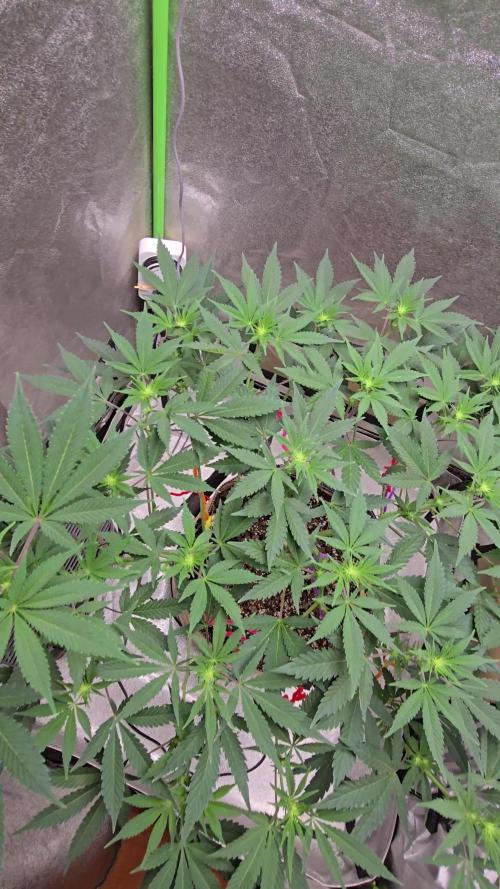
It's been a week and a half since I post it, but as you can tell she is stretching and crowning simultaneously.. Filling up the tent very nicely.I'm hoping to pull a half pound anyway .. hope all is well.God bless and happy growing 🙏

Likes
6
Share

@ShinWeed
Follow
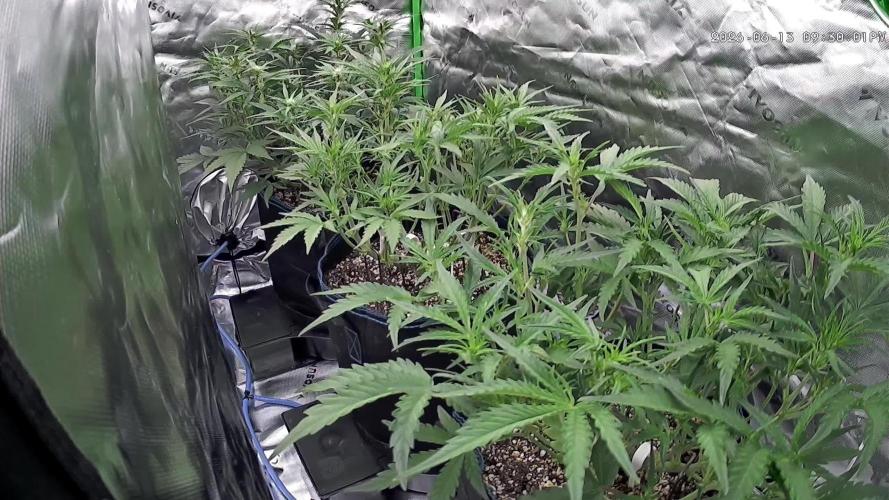
Heute nur ein kurzes update:
Der Wasserverbrauch der Pflanzen ist innerhalb einer Woche von 20 l auf 60 l angestiegen, Tendenz weiter steigend.

Likes
43
Share


@MANIIAKSINDUBS
Follow
I did alot of fuck ups so ended up with a small yeild but ended up having really dense nugz the smell of her is amazing sour apples smell with the taste being musky with grapefruit and cheese taste
Likes
20
Share

@AsNoriu
Follow
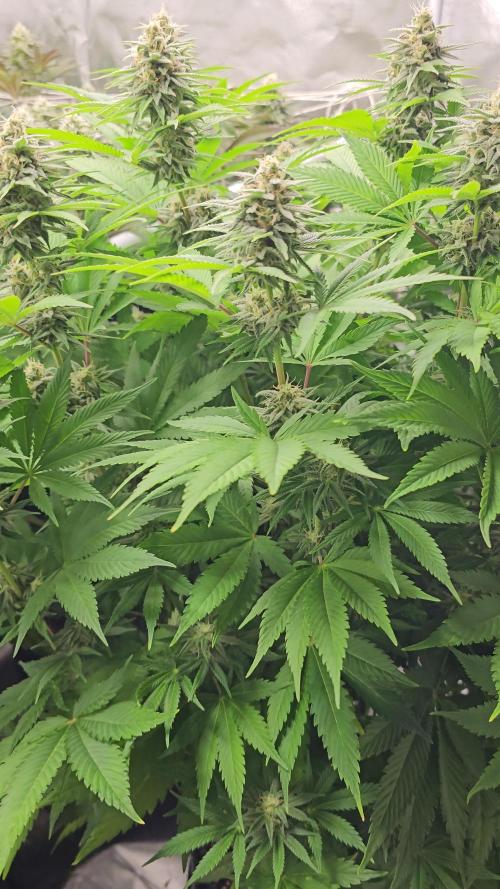
Day 109 since seed touched soil. Same feeding, just dropped magnesium to 50 ppm and boosted 5in1 a bit. Nothing to add, now looks like all goes nice !
Happy Growing !!!


Likes
4
Share
@Canda
Follow
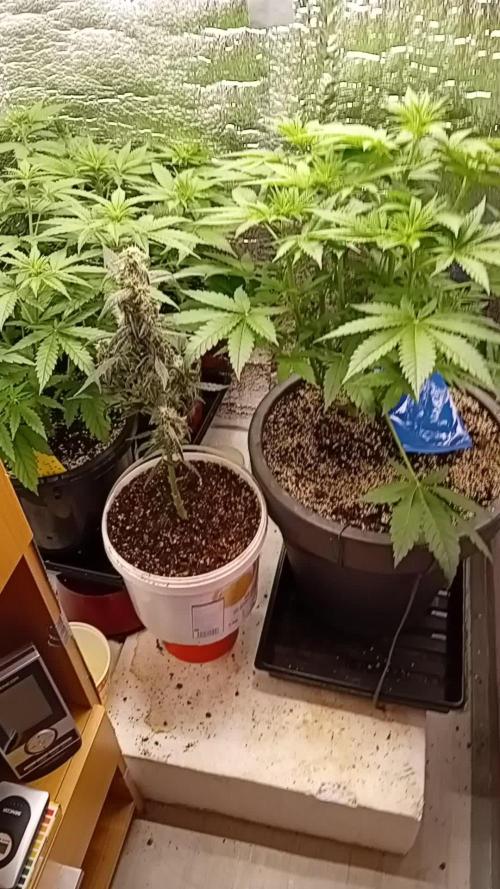
Holkám se daří dobře, vypadají zdravé a vitální, co se týče stretch,. tak vystrelili ze do 300% moc nechybi
Guano odvádí spolecne s vodou dobrou práci a v jidelnicku mame kdyztak biobizz bloom ,jestli bude potřeba tak uvidíme. .jedna z holek ukázala lehce bile spicky listu ale nesiri se to, nemění to barvu tak mam zato ze jde o projev toho ze substrat je nabitéj a chce jenom vodu ..uvidime jak to pujde dal ...
At vám to roste Hombres..Dasvidáňa :D

Likes
237
Share


@1Right_Angle
Follow
Aug 29th
- week 8 for Machupi’s Lady
- week 6 for Russian Tzar Bomba
- week 5 for LSD
- week 4 for the rest (as mentioned, I prepped all plants a few days early for Flower; amendments n meals, week 4 is legit
- sending a bug photo (above) to the question people
- Plants fed nutrients as above; PurpsBerry fed OVERDRIVE instead of Rezin
Sept 4th
- last day of week 4 flower for most of the Plants. Except for Machupi’s Lady, LSD, Russian Tzar Bomba they are a few weeks ahead of schedule.
- machupi gets inspected this aft, it might be time…
- amending the soil of these remaining plants today
- both Congo #3 x Bangi Haze and the Russian Tzar Bomba get a visit tomorrow. Some DeFol, some Food, (they were soil amended earlier this week)
and some definite love and scrutiny are in store. It’ll end up on next weeks report, but thats whats scheduled.
- Russian Tzar Bomba is down to the final few… She gets spoiled tomo !!!


Likes
17
Share


@EXZELENS
Follow
Bud wet weight : 168,1g of trimmed medium to big sized buds
25,4g of tiny tiny buds/larfs = 193.5 grams of trimmed wet buds.
Details on genetics and smoke report above.
This, as my first grow, is way more than I ever expected it to be. I haven´t had that much fun and enthusiasm in a very very long time.
I can´t even explain the feeling it is to harvest your own cannabis, but I know most of you know what I´m talking about haha.
It was really nice to practice LST, even tho it was SO HARD, ´cause I didn´t had barely any space to work since I used a hard pot and did not fill nearly half the size of it and the walls of the pot were really high. It was even difficult to water without dropping water on the lower buds.
I haven´t learnt much about defoliation tho, I feel I need to study a little more about the phases you should or should not do it.
Also, I discovered thrips are a pain in the ass. I had 2 tough weeks dealing with thrips, but in the end it was alright.
I don´t have any humidity control device, which I intend to buy for the next grows.
Growdiaries was really helpful for me, it kept me motivated everyday (not that I wouldn´t have had it anyways), the Grow Questions are REALLY useful and all the community is awesome. Thanks to all people that helped me here on GD during this first grow!
To conclude it: I am really happy and satisfied with how the grow turned out. They look incredible, it almost feels like I can´t believe it still.
Peace.
UPDATES:
07/10 : The buds are now dry and already in curing jars, one of them with a Boveda 58% humidity pack.
The total grams of the dry buds are: 41.4g (medium to big sized buds)
4.1g (tiny buds) = 45.5 grams!
I´m really happy with the results, I thought it would be around 30g so yeah, that´s a really good surprise!
In 2 weeks I´ll be back to update the smoke report.
Thanks so much for reading! Peace.
09/10 : I managed to fit everything in the same container with some space between them, so now every bud is with the Boveda pack.
14/10: It´s been a week and the smell improved, it still smells a little like hay/plant ( even tho it´s not too dry neither too wet ).
21/10: Now it´s been two weeks and even tho the smell isn´t anymore hay, it´s a lot herbal. I really think the aroma can get better, but the taste is already good enough for me. The smoke report has been done and in case I have something to add, I´ll report here.
Thank you so much for reading! Peace.
Likes
42
Share


@rhodes68
Follow
12/28 Week 7
Wow well looking around there are a lot of plants not sure how we will reconcile space issues with so many of them recovering but glad to have the problem.
More than likely convert the veg tent but still damn
In Flower
Pussy Galore (FF7) is showing their classic stretch to the ceiling, working on it.
Octopussy(LSD) and Plenty (GC) doing very well look great really
In veg - big girl feed 24ml/g grow + occasional Kangaroots
Solitaire (CC) and Chew Mee (FF2) moving towards size to flower couple more inches needed to compete with the big girls.
Bambi (FF6) Right behind them by a few days
Dink(FF2) has now graduated to the big girls - great job #HisHope
In veg - little girl feed 10ml/g grow + kangaroots low dose
Tiffany Case - Gold Leaf
Thumper - FB FFT-8
Holly Goodhead - FB FFT-7
Mary Goodnight - ILGM Gold Leaf
Kissy Suzuki - Fast Buds Wedding Cheese Cake
Seedling - 2ml/L grow
Strawberry Pie will name on transplant should all go well
Typical Bond at the end of the first act everything looks ok but a mess
Issue is in two weeks will have 7 plants in flower another bunch can be ready in 3-4 weeks if I slow things down nuet wise.
Thing is the clones will be coming along in about 6 weeks with planned 8 plants ready for flower with prob a week or two remaining on the first three to flower.
MUHAHAHAHAHA I am happy. But I really hate fungus gnats
12/29
Chew Mee and Solitaire are in the Flowering tent made as nice with the Medicinals as I could, they were getting out of hand.
FF7 is just a stretchy girl, this was expected and did what we could with gentle bend and secure within a cage to keep things manageable.
Octopussy is a perfect lady, growing very well, no cage for her.
Plenty required a little discipline so she got a cage.
Three more plants headed this way within a week or two, FF2 FF6 Gold Leaf
12/30
Three FFT-7 clones have rooted very well.
Transplanted into solo cups to begin the contest for the coveted two F7 slots in the grow.
Other clones still no roots but its way early
12/31
Late night staff meeting on how to proceed.
Clones - ... are on their own in the small tent, will use the small tent and seedling station to bring them along but will veg in the small. Just do the best we can here should be fine.
No more clones will be taken that would only make the space issues worse.
Flowering tent... I can take two more plants but they will have to be flipped small-ish (13") and grow more vertical than wide so no topping on Dink and Bambi which will flower in this tent.
Medicinals... should have been flipped smaller I reckon, hard to get that right but they are large and healthy so keeping them smaller is easier than making them bigger. Not really higher than we wanted just not sure when the stretch will end and the stretch is always out and up. Pussy is the largest so far but Octo is catching up at least in height. Plenty doing great love how she is growing.
Solitaire and Chew Mee outstanding looking plants. Wish I had space for their clones.
Veg tent... Dink and Bambi moving toward departure in a few days
Rest of them flower here, will flip on the smallish side no real choice have to assume they will get larger than planned.
Just have to decide when, will put up the divider for the seedling area so they wont interfere with each other.
Thats it doing well


Likes
13
Share


@GrowGuy97
Follow
Overall happy with this solo cup grow, wish I could have got a little more but I ended with 6.3 grams dry weight, bud looks amazing. Post more of a update after I smoke it in a few days! Thanks for following & happy growing friends!


Likes
15
Share


@902EastCoast
Follow
This strain was easy to grow right from seed. I think it will be one of my favourite strains this grow. Time to dry and cure. I will report the weight when dry. 💚✌️🏼

Likes
6
Share


@Kardo
Follow
Sie wächst sehr schön in die Höhe und hat viel Potenzial in ihren Blüten sie wird noch viel schöner

Likes
27
Share


@Jungle_James_Grows
Follow
Not really done much last week, they got a bit of light burn from LED. Which I've now move up.
But new growth seems to be doing ok.
Cover crops are coming on fantastic.
26/6 Friday
V) She is the bid sister of the group so I'm going to top her today
29/6
V) Has got 4 new grow tips started where I topped her.
The rest are catching up nicely now. Will start some LST in the next couple of days.
2/7 Done a bit if training on the girls today.
Bent four of them over.
The fifth one that I topped I didn't bend her yet, I just did some leaf tucking and she is coming on fantastic.
3/7 They have all bounced back brilliantly and heading towards the lights.
5/7 End of week 3 and going to do some more LST on them as the have bounced back from the last lot of training.

Likes
490
Share


@Legendaryseedthumb
Follow
Day 85: still flushing her and it starting to show on the leaves. I don’t want them to disappear because I’m going to make hash but I’m still waiting for a plant in the same tent. Have no space for drying so need to cut them all at the same time :/
Day 86: Will cut on Friday!
Day 87: switched the lights off until tomorrow.
This it the light I’m using for this grow!
Mars hydro SP3000
High PPFD at 2.8 umol/j, average yield at 2.5g/w, increasing your yield 50% or more compared with old blurple and HPS lights, 300 watts output.
Dimmer knob added, more convenient to adjust the brightness. Up to 30 lights can be daisy-chained and control together on just one light, or just have one lamp in 120x60 tent is perfect for light.
https://www.instagram.com/marshydro_aliexpress2/
Likes
3
Share


@Nxs235
Follow
Hello plant lovers community
The first week of the vega was almost perfect, except for the fact that the leaf is spinning at the Apricot, but these are trifles
The light was on all the time 30 watts, 20/4, watered to a glass weight of 300 grams every day, water 70ppm / 7.8ph with the addition of Tarantula and Piranha
On the 8th day they were transplanted into airpots, the light was set to 60 watts and the mode was 18/6
For transplantation, I use the method of two plastic cups, the video clearly showed
Likes
2
Share

@GreeneScene
Follow
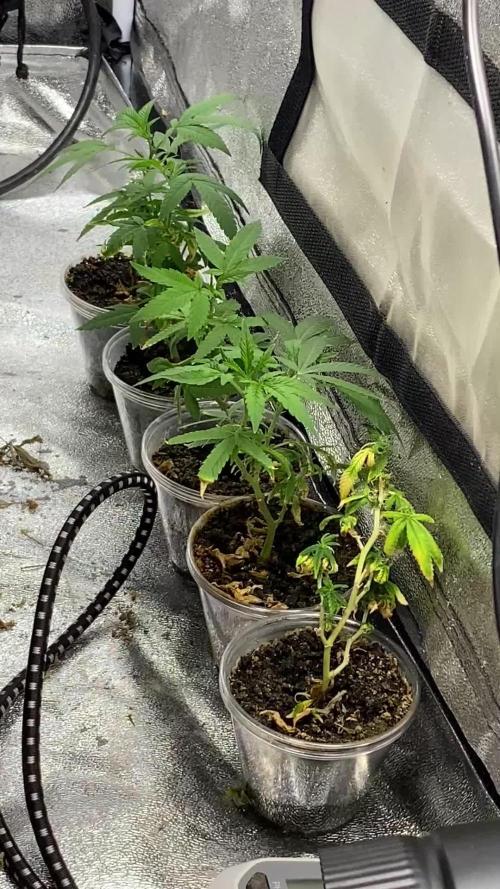
Gave her an almost MegaDose today. Since the last time I uploaded 12 days ago she was watered MegaDose of 80mL nutes in 2 gal of pure compost blend tea concentrate . After that she was given a half a gallon of regular water , followed by a half dose feeding of 40mL in 2 gallons upwards to today where I gave her 60mL in 1 gallon.
Got 9 inches of growing left until shes filled the tent to the brim . 12 days ago there were 12 inches . I’ve included a Timelapse video I’ve been creating since July 22 until Aug 21.
Likes
4
Share


@Wescoas
Follow
Gave the lady a good flush a few days ago and have only watered one time since then, still using RO water. Cut out the molasses from her diet, will only be getting water until harvest.
Pistils starting to flush from white to orange, I’d say about 30-35% so far. Buds starting to show thickness, which is good. Smell becoming more pronounced each day. The end is very near for this beautiful lady. After harvest she will be getting a 30 day cure, nothing too crazy but enough to bring out the terpene profiles.


Likes
16
Share

@Draken91
Follow
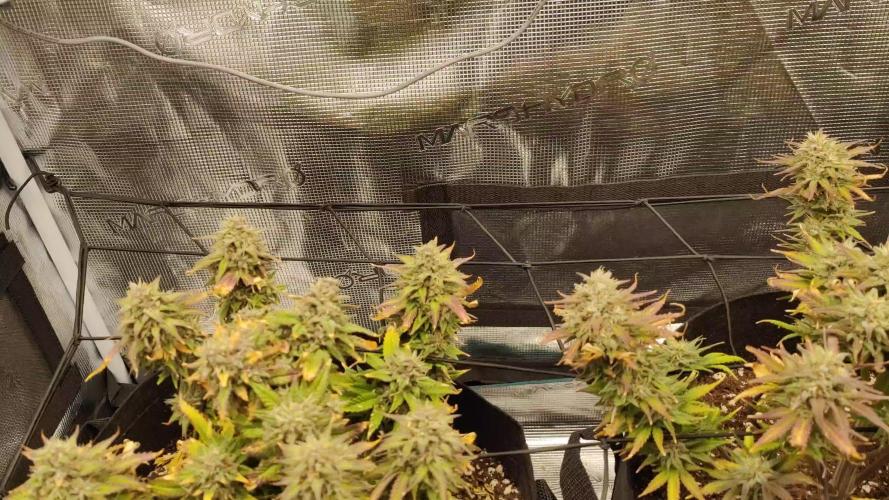
Hey Leute, diesemal etwas früher damit die Wochen wieder richtig sind dafür gibt es heute auch stattdessen ein video in besserer Quali :)
Likes
7
Share

@AestheticGenetix
Follow
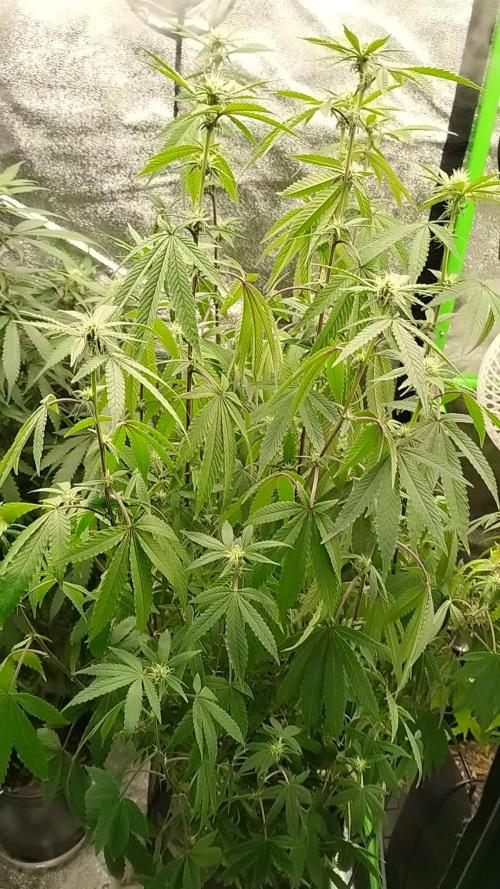
This plant is freaking huge. Super excited to see what happens next with her. The structure is incredible.
Already showing trichomes.