
Likes
181
Share
@StarLorr
Follow
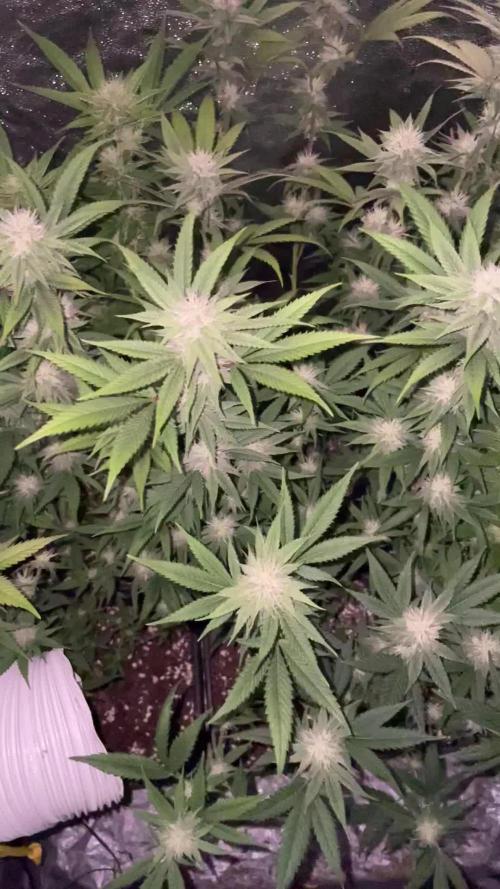
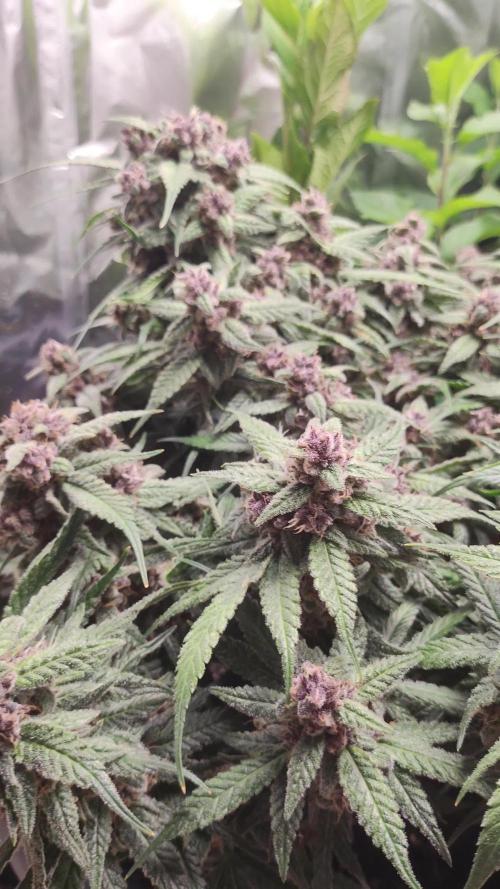
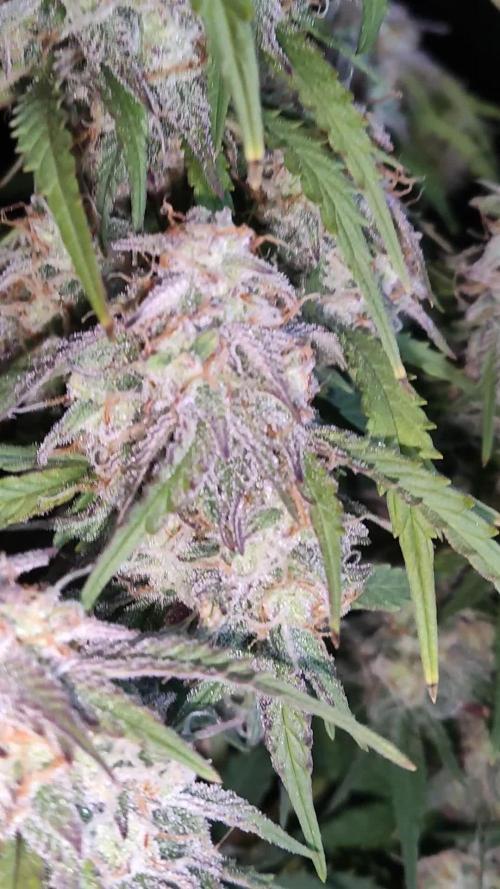
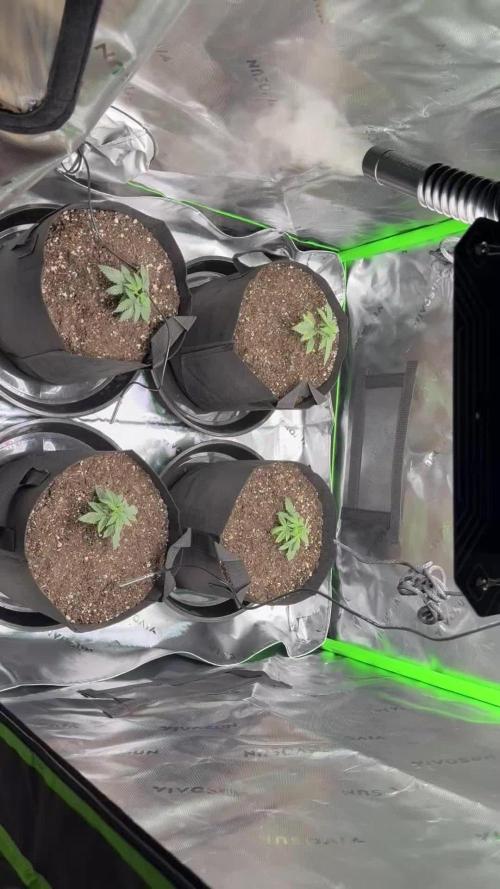
Welcome to my Øpium diary. In this diary: Seeds: sponsored by Ðivine Șeeds Media: Promix HP Nutrients: Advanced Nutrients, Diablo Nutrients, Gaia Green Power Bloom. Light and Weather: Şun☀️and Mother Earth.🌎 ___________________________ Wet Weight: 1737 grams ___________________________ Wet Trimming with my trimming bowl was a humongous time saver!! ______________________________ Took me about 7 hours to wet trim ______________________________ I wanna Thanks Ðivine Seeðs for the Opportunity to grow and smøke your Ðivine Plants👊🏼😉 ______________________________ Thanks for stopping by, likes and comments are appreciated!👊🏻😎 Keep on growin! Keep on tokin!!! 😙💨💨💨💨💨
Likes
14
Share
Day 114 (f52) update: Runtz is doing great! 😀 Smells are gaining in complexity 😋😋, with more of a dank heavy gelato smell behind the 'blue cheese' fruity smells. --> Buds were swelling this week, with the buds closest to the light nicely swollen and more ripe than mid and lower section buds. 😎 ==> Guessing another 10-14 days till harvest 😍😁😛
Likes
22
Share
@dillande3
Follow
Hello, Day 77, Flower Phase , PGK, Final weeks of flower phase ongoing, Plant starting change color some leaves I can see some purple colors and mostly yellowish color. Trichomes still slightly cloudy and buds looks grate, smells also like tropical Mango ))) Temp is ok and TH also good at 65% these days. Thanks. Week 11 - Flower Phase Day 76 - 18/01/23 Day 77 - 19/01/23 Day 78 - 20/01/23
Likes
11
Share
@Stifler
Follow
Hello Growers !! How are you ? I spent a whole week without posting updates on my girls, I got very sick, stomach problems and that made me very discouraged and having trouble making better pictures, but next week I will try to test the results !! This is the last week of the cultivation, next week I will carry out the harvest, about 5% of the trichomes are amber in color !! I already stopped with the nutrients and I won't make a flush, since my cultivation was totally organic !! I'm happy with the results and the aroma of citrus mango is wonderful! 😊
Processing
Likes
5
Share
This week is been great. I started with high ppm on the 2nd week for the nutrient kick , now just a low dose of growth enhancer. Good roots system. Topped them just 1 time and cleaning them from useless leafs. Using reverse osmosis water (15ppm)
Likes
4
Share
@SamDo
Follow
Vegetative Week 7 – Pineapple Upside Down (Round 2) This week confirms a very good recovery following last week’s defoliation and pruning. As shown in the photos, the plant bounced back quickly and shows strong vegetative vigor. Leaf mass has rebuilt nicely, and overall growth looks healthy and well-balanced. There are no signs of stress or slowdown at this stage. After the structural work, light intensity was temporarily reduced to avoid additional stress. Now that the plant is clearly responding well, light power has been increased again to around 50%, corresponding to roughly 150 watts in full-spectrum. For now, the plan is to let the plant continue growing and building strength. The four main branches that were previously selected need a bit more growth before starting any low-stress training. Once they elongate further, light LST will be applied to begin shaping the plant’s final structure. A move to a larger grow space is planned later, but there is no urgency at this stage. Overall, everything is stable and progressing well. See you next week. Take care.
Likes
20
Share
1st October 25 First visit to side after 2 months, had no time to feed or water this girl. Buds size not there because of lack of food and water but still survived. Could be better .Super nice colour, smell like blueberry for sure. No bud rot what's so ever. Definitely will try again next season
Likes
28
Share
@Chubbs
Follow
420Fastbuds FBT2307 Week 6 What up grow fam week 6 update for these 3 lovely ladies. In the past week they've grown quite a bit not only upwards but filling in nice after the last defoliation. Seeing preflower sites all over which is always a pleasant site. Color on them are a nice green, how ever I did notice some rust spots showing up on a few leafs so I upped the calmag when feeding to 1tsp/gal. It seem to resolve that issue. I also fed a molasses tea this week to help the microbes in the soil allowing the plant easier access to notes needed. All in all Happy Growing
Likes
91
Share
Happy evening to all of you .... Brothers of the world's most coveted company! Peaky gardens burst of thousand-color flowers in an immense enchanted and fragrant valley ... This week we dedicate ourselves to the rinsing of the soil to start cleaning the roots and eliminate excess nutrients I hope the contents like you .... if so it was ... leave your opinion Kiss Kiss
Processing
Likes
30
Share
2018-03-20 Week 12 Day 1 New week and not much to say. No water or nutes today, just the regular weekly check to see that they look nice and healthy. Raised the lamp about 10 cm to make sure that the girls don't get burned again. Crazy Cookies nr1 is 52 cm Crazy Cookies nr2 is 49 cm ----------------------------------------------------------------------------------------------------------------------------------- Strain information: The word synergy is a business term first quoted in the early eighties to describe mutual enhancement through interaction or cooperation, where the end result gained is greater than the sum of the parts used. What do synergy and the Crazy Cookies cannabis strain have to do with each other you may well ask? The parents of the forthrightly indica Crazy Cookies are marijuana royalty. OG Kush and Girl Scout Cookies. These strains of contemporary legend have been combined to cerebrum shattering effect. The cured flowers deliver a mouth-watering and couchlocking 24% THC. The initial delectable spacey upbeat onrush compliments of the Durban Poison coursing through the genes of the Cookies soon becomes a lush and rich, inescapably delicious body flux. There should be a picture of a Crazy Cookie nugget in the dictionary next to the word synergy. Crossing the OG back into the Cookies has amplified the psychoactive effects of the notorious lineage of both parents. This is an indica with a capital I. As a breeder it would be fair to assume that injecting more OG into the Cookies would result in an OG-dominant Cookie, or even close to a pure OG, but something else has happened. Some long dormant genetic switch has been flipped and a standalone indica has emerged whose spicy notes and earthy tones, hints of grape and horny pheromone are an absolute pleasure. Paying this breed some careful attention as it grows will reward you substantially, indoors or out. Typical hybrid vigour is shown throughout each grow phase. Stout plants to 80cm can be expected indoors and muscular examples with fluted stalks growing to two metres can be easily achieved outdoors. Good bracing is necessary as the flowers mature. With more than 500g at harvest per robust plant, colas can easily snap and twist branches. -----------------------------------------------------------------------------------------------------------------------------------
Processing
Likes
10
Share
Tutto sempre preciso per ora, molto soddisfacente. Defogliato e eliminati i rami in eccesso Verso metà settimana hanno cambiato marcia, crescono a vista d'occhio +- 10ml/l fosforo Ho aggiunto una lampada led da 1000watt per coprire più superfice E le mele per aumentare la produzione di resina in risposta all'etilene rilasciato dalle mele
Likes
17
Share
@FlonGrow
Follow
Noch ne woche dann ist ernte zeit
Likes
19
Share
---------------------------------------------- ~Sweet Seeds Sweet Zenzation (SWS84)~ ---------------------------------------------- Zkittlez is one of the most famous and potent strains found on the west coast of the USA. Sweet Zenzation (SWS84) derives from a cross between an elite clone of Zkittlez combined with a specially selected Grape Ape clone, which is one of the strains used to develop the original Zkittlez. The result is a predominantly Indica genetic hybrid. It produces a large amount of resin-soaked flowers. It is both relaxing and stress-relieving, yet it also stimulates the imagination and conversation, an effect that is normally associated with sativa strains. The flowers have a high terpene content, an exquisite aroma and sweet taste, with hints of fruit-flavored candies, hardwood undertones, shades of lemon, cypress and subtle aromatic peppers. Variety: Sweet Zenzation (SWS84) Indica: 70% Sativa: 30% THC: 16-23% CBD: 0.2% Indoor Yield: 450-650 g/m² Outdoor Yield: 400-700 g/plant Effects: Creativity, Stimulating, Happiness, Relaxing Taste: Spicy, Fruity, Citrus, Lemon, Candy, Cypress, Sweet ________________________________________________________________________________________________________________________________________________________________________________________________________________________________________________________________________________________________________________________________________________________________________________________________________________________________________________________ THE SETUP: ~Planted into Jiffy Peat Pellets that were hydrated with de-chlorinated water with SuperThrive added then ph'd to 6.0 @ 80℉ ~Grown 100% organic in 10g fabric pots with Mother Earth 70/30 Coco/Perlite medium amended with 2tbs/g of Down To Earth 4-4-4 / 2 cups/g of Earthworm Castings / 1tbs/g of Dr. Earth Flower Girl 3-9-4, 1tbs/g of Dr. Earth Bat Guano, 3/4 cup of Down To Earth Azomite and 1 tsp/g Down To Earth Fish Bone Meal. ~24hr light cycle during Germination / 19/5 light cycle for Vegetation and 12/12 for Flower ~Straight water ph'd @ 6.2-6.8 when needed and weekly Compost Tea's. ________________________________________________________________________________________________________________________________________________________________________________________________________________________________________________________________________________________________________________________________________________________________________________________________________________________________________________________ Weekly Updates: 9/13- With approx. 10 weeks of growth behind her now she's going into her 5th week of flower now and let me tell you the pictures don't do her justice... This is one phenomenal cultivar! 😍 She was given Compost Tea yesterday and today was still fairly heavy so I skipped watering and just removed a few leaves to maintain light penetration, turned her pot and sat and chatted with her awhile! 9/15- Well she really must have liked that last batch of Compost Tea as she looks exceptionally vibrant today! She's continuing on her mission of stacking her flowers, which are developing beautifully and have a delicious sweet citrus aroma to them right now. I did not water yesterday, so today I watered with 1.5g of straight de-chlorinated water that was ph'd to 6.5 @ 72℉ and rotated her pot... Damn she is looking great! 🤩💖 9/17- Yesterday I top dressed her with 1/2 cup of Down To Earth Bio-Fish then watered it in with 1.5g of straight de-chlorinated water that was ph'd to 6.5 @ 72℉. Her flowering is continuing beautifully and she's smelling stronger every day it seems! I'm staying on top of tucking leaves blocking light and turning her pot daily as well. 9/19- Five weeks of flower on the books! We're halfway there now, she's stacking her flowers tightly going into Week Six and she's looking phenomenal! 🤩 When I watered her today I added 1 tbsp/g each of Kelp Extract and Fish Emulsion (both liquid) to the 1.5g of straight de-chlorinated water she received, which was ph'd to 6.2 @ 74℉. ~Thanks for stopping in! Things should be getting a lot more interesting in the coming weeks...Stay lifted and be Blessed! 😎🙏~
Likes
6
Share
D71/F24 - 11.29 - There's not much to say about these two. They didn't even hiccup after the defoliation, though it does appear their stretch has just about finished. They both have fat greasy prebuds right now, and the Passion Berry has particularly long pistils. A pleasure to watch em grow! <3 D76/F29 - 12.4 - Just like holy fuck these things are monsters. 🙏🙌 Praise be to Swerve 👑, I'm astonished at the pace and vigor of these two plants
Likes
Comments
Share
@Radagast_
Follow
19.08. White Runtz Day 79# The plant is progressing well, the last feeding I repeated the dose of tnt because it didn't show any real signs of preflowering, but now it is slowly entering preflowering and the next feeding gets bloom and boost. She is healthy, she is happy, all five. 2 days ago it was the end of her 11th week, the pictures and video are from yesterday. Stay High and Keep Growing!!!
Likes
18
Share
Green light is radiation with wavelengths between 520 and 560 nm and it affects photosynthesis, plant height, and flowering. Plants reflect green light and this is why they appear green to our eyes. As a result, some growers think that plants don’t use green wavelengths, but they actually do! In fact, only around 5 – 10% of green light is reflected from leaves and the rest (90 – 95 %) is absorbed or transmitted to lower leaves [1]. Green wavelengths get used in photosynthesis. Chlorophyll pigments absorb small amounts of green wavelengths. Light that doesn’t get absorbed is transmitted to leaves that are shaded out from direct light. This means that leaves at the bottom of the canopy get more green light than leaves at the top. A high proportion of green wavelengths compared to other colors tells lower leaves that they are being shaded out, so they are able to react accordingly. Lower leaves may react by opening or closing their stomata or growing longer stems that help the leaves reach brighter light [1, 2, 3]. When it comes to growing cannabis, many cultivators are interested in the quality of light used for the flowering stage. In many plants, flowering is regulated by two main photoreceptors: cryptochrome and phytochrome. Both photoreceptors primarily respond to blue light but can also respond to green, although to a lesser extent. Green can accelerate the start of flowering in several species (although cannabis has yet to be tested) [1, 4, 5]. However, once flowering has begun, it’s important to provide plants with a “full spectrum” light that has high amounts of blue and red light, and moderate amounts of green, in order for photosynthesis to be optimized. Green light mediates seed germination in some species. Seeds use green wavelengths to decide whether the environment is good for germination. Shade environments are enriched in green relative to red and blue light, so a plant can tell if it is shady or sunny. A seed that senses a shaded environment may stay dormant to avoid poor growing conditions [1]. Some examples of plant species where researchers have documented this response are: ryegrass (a grass that grows in tufts) and Chondrilla (a plant related to dandelion) [1, 6]. Although green wavelengths generally tell plants NOT to germinate, there are some exceptions! Surprisingly, green wavelengths can stimulate seed germination in some species like Aeschynomene, Tephrosia, Solidago, Cyrtopodium, and Atriplex [1, 6, 7]. Of course, light is not the only factor affecting seed germination – it’s a combination of many factors, such as soil moisture, soil type, temperature, photoperiod, and light quality. When combined with red and blue light, green can really enhance plant growth [1, 8]. However, too much green light (more than 50% of the total light) can actually reduce plant growth [8]. Based on the most current research, the ideal ratio of green, red, and blue light is thought to be around 1:2:1 for green:blue:red [9]. When choosing a horticultural light, choose one that has high amounts of blue and red light and moderate amounts of green and other colors of light. Not many studies can be found about the effect of green light on cannabis growth or metabolism. However, if one reads carefully, there are clues and data available even from the very early papers. Mahlberg and Hemphill (1983) used colored filters in their study to alter the sunlight spectrum and study green light among others. They concluded that the green filter, which makes the environment green by cutting other wavelengths out, reduced the THC concentration significantly compared to the daylight control treatment. It has been demonstrated that green color can reduce secondary metabolite activity with other species as well. For example, the addition of green to a light spectrum decreases anthocyanin concentration in lettuce (Zhang and Folta 2012). If green light only reverses the biosynthesis of some secondary metabolites, then why put green light into a growth spectrum at all? Well, there are a couple of good reasons. One is that green penetrates leaf layers effectively. Conversely red and blue light is almost completely absorbed by the first leaf layer. Green travels through the first, second, and even third layers effectively (Figure 2). Lower leaf layers can utilize green light in photosynthesis and therefore produce yields as well. Even though a green light-specific photoreceptor has not yet been found, it is known that green light has effects independent from the cryptochrome but then again, also cryptochrome-dependent ones, just like blue light. It is known that green light in low light intensity conditions can enhance far red stimulating secondary metabolite production in microgreens and then again, counteracts the production of these compounds in high-intensity light conditions (Kim et al. 2004). In many cases, green light promoted physiological changes in plants that are opposite to the actions of blue light. In the study by Kim et al. blue light-induced anthocyanin accumulation was inhibited by green light. In another study it has been found that blue light promotes stomatal opening whereas green light promotes stomatal closure (Frechilla et al. 2000). Blue light inhibits the early stem elongation in the seedling stage whereas green light promotes it (Folta 2004). Also, blue light results in flowering induction, and green light inhibits it (Banerjee et al., 2007). As you can see, green light works very closely with blue light, and therefore not only the amount of these two wavelengths separately is important but also the ratio (Blue: Green) between these two in the designed spectrum. Furthermore, green light has been found to affect the elongation of petioles and upward leaf reorientation with the model plant Arabidopsis thaliana both of which are a sign of shade avoidance symptoms (Zhang et al. 2011) and also gene expression in the same plant (Dhingra et al. 2006). As mentioned before, green light produces shade avoidance symptoms which are quite intuitive if you consider the natural conditions where the plants grow. Not all the green light is reflected from the highest canopy leaves in nature but a lot of it (50-90%) has been estimated to penetrate the upper leaves at the plant level ((Terashima et al., 2009; Nishio, 2000). For the plant growing in the understory of the forest green light is a signal for the plant of being in the shade of a bigger plant. Then again, the plants growing under unobstructed sunlight can take advantage of the green photons that can more easily penetrate the upper leaves than the red and blue photons. From the photosynthetic pigments in higher plants, chlorophyll is crucial for plant growth. Dissolved chlorophyll and absorb maximally in the red (λ600–700 nm) and blue (λ400–500 nm) regions of the spectrum and not as easily in the green (λ500–600 nm) regions. Up to 80% of all green light is thought to be transmitted through the chloroplast (Terashima et al., 2009) and this allows more green photons to pass deeper into the leaf mesophyll layer than red and blue photons. When the green light is scattered in the vertical leaf profile its journey is lengthened and therefore photons have a higher chance of hitting and being absorbed by chloroplasts on their passage through the leaf to the lower leaves of the plant. Photons of PPFD (photosynthetic photon flux density) are captured by chlorophyll causing an excitation of an electron to enter a higher energy state in which the energy is immediately passed on to the neighboring chlorophyll molecule by resonance transfer or released to the electron transport chain (PSII and PSI). Despite the low extinction coefficient of chlorophyll in the green 500–600 nm region it needs to be noted that the absorbance can be significant if the pigment (chlorophyll) concentration in the leaf is high enough. The research available clearly shows that plants use green wavelengths to promote higher biomass and yield (photosynthetic activity), and that it is a crucial signal for long-term developmental and short-term dynamic acclimation (Blue:Green ratio) to the environment. It should not be dismissed but studied more because it brings more opportunities to control plant gene expression and physiology in plant production. REFERENCES Banerjee R., Schleicher E., Meier S. Viana R. M., Pokorny R., Ahmad M., Bittl R., Batschauer. 2007. The signaling state of Arabidopsis cryptochrome 2 contains flavin semiquinone. The Journal of Biological Chemistry 282, 14916–14922. Dhingra, A., Bies, D. H., Lehner, K. R., and Folta, K. M. 2006. Green light adjusts the plastic transcriptome during early photomorphogenic development. Plant Physiol. 142, 1256-1266. Folta, K. M. 2004. Green light stimulates early stem elongation, antagonizing light-mediated growth inhibition. Plant Physiol. 135, 1407-1416. Frechilla, S., Talbott, L. D., Bogomolmi, R. A., and Zeiger, E. 2000. Reversal of blue light -stimulated stomatal opening by green light. Plant Cell Physiol. 41, 171-176. Kim, H.H., Goins, G. D., Wheeler, R. M., and Sager, J. C. 2004.Green-light supplementation for enhanced lettuce growth under red- and blue-light emitting diodes. HortScience 39, 1617-1622. Nishio, J.N. 2000. Why are higher plants green? Evolution of the higher plant photosynthetic pigment complement. Plant Cell and Environment 23, 539–548. Terashima I., Fujita T., Inoue T., Chow W.S., Oguchi R. 2009. Green light drives leaf photosynthesis more efficiently than red light in strong white light: revisiting the enigmatic question of why leaves are green. Plant & Cell Physiology 50, 684–697. Zhang, T., Maruhnich, S. A., and Folta, K. M. 2011. Green light induces shade avoidance symptoms. Plant Physiol. 157, 1528-156. Wang, Y. & Folta, K. M. Contributions of green light to plant growth and development. Am. J. Bot. 100, 70–78 (2013). Zhang, T. & Folta, K. M. Green light signaling and adaptive response. Plant Signal. Behav. 7, 75–78 (2012). Johkan, M. et al. Blue light-emitting diode light irradiation of seedlings improves seedling quality and growth after transplanting in red leaf lettuce. HortScience 45, 1809–1814 (2010). Kasajima, S., et al. Effect of Light Quality on Developmental Rate of Wheat under Continuous Light at a Constant Temperature. Plant Prod. Sci. 10, 286–291 (2007). Banerjee, R. et al. The signaling state of Arabidopsis cryptochrome 2 contains flavin semiquinone. J. Biol. Chem. 282, 14916–14922 (2007). Goggin, D. E. & Steadman, K. J. Blue and green are frequently seen: responses of seeds to short- and mid-wavelength light. Seed Sci. Res. 22, 27–35 (2012). Mandák, B. & Pyšek, P. The effects of light quality, nitrate concentration and presence of bracteoles on germination of different fruit types in the heterocarpous Atriplex sagittata. J. Ecol. 89, 149–158 (2001). Darko, E. et al. Photosynthesis under artificial light: the shift in primary and secondary metabolism. Philos. Trans. R. Soc. B Biol. Sci. 369 (2014). Lu, N. et al. Effects of Supplemental Lighting with Light-Emitting Diodes (LEDs) on Tomato Yield and Quality of Single-Truss Tomato Plants Grown at High Planting Density. Environ. Control Biol. 50, 63–74 (2012).
Likes
20
Share