


Likes
Comments
Share

@captaincondor
Follow
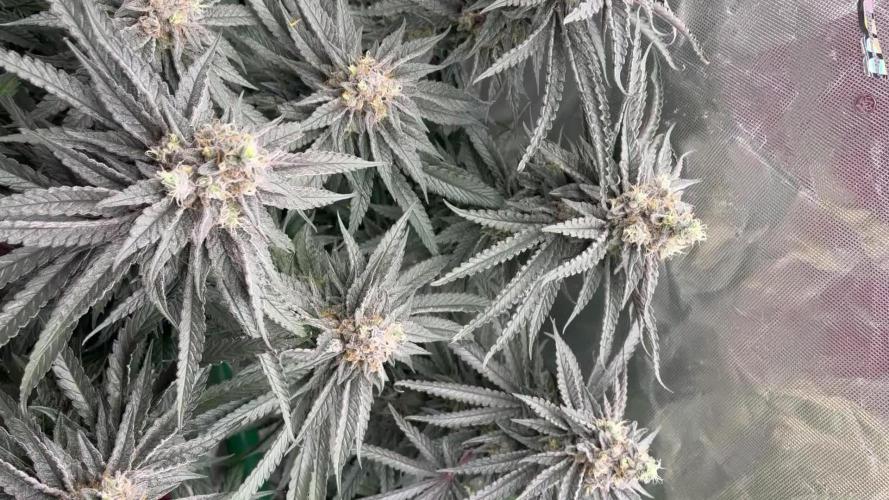
I’ve used dragon force to bring these two plants to the finish line . I’ll be chopping probably in around 8 days

Likes
40
Share


@BudXs
Follow
These beautiful beasts are taking off. Heavily defoliated on F1, a complete bounce back and rigorous growth on F4. Will defo again on day 21 as is my preference. Seeing guys like AstroBoy grow this strain out is inspiring. OSS really knocked it out of the park with these beans, thank you once again for sending them across oceans to land in the Scroggernaut
60 day count down to chop is on. Girls are healthy, and happy. Mothers are being flowered out in the same room, see the diaries, they will be fkn beasts

Likes
3
Share


@Growrnotashowr
Follow
Harvested two of the plants for fresh frozen bubble hash. Total for the hash wash is 900 grams of starting material so I should get about 30 grams of high quality rosin. The third and biggest plant has yet to be weighed but will update once the dry?cure is finished

Likes
24
Share


@Grumpygrower121
Follow
05.01.2023 Day 31
I don't even know where to start. These Truffaloha's are by far the most iced out plants I have ever grown. #1 is the most uniform plant while #2 is the prettiest and #3 the iciest one. They are also extremely stinky . If these smoke half as good as they look this will be the best smoke of my life
5.3.2023 day 33 I took some cuts of my mother plants. I will Flower them out and keep the clones as a new mom

Likes
35
Share


@farahweed
Follow
This is the last week of growth. We are approaching the most attractive part, flowering. This week I will remove the extra leaves. And the last time I used growth fertilizer.
This week I moved the grow light driver outside to lower the temperature inside the grow box and also added 2 Mars Hydro ts1000 bulbs to the box for better flowering👊👊👊


Likes
19
Share

@Bunterbiber
Follow
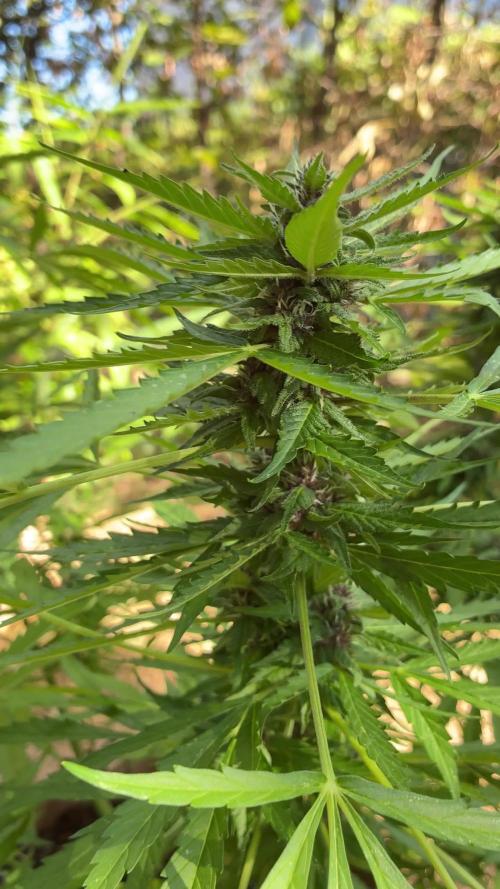
Welcome to Week 9! The summer heat reached a whole new level during the first half of the week, hitting a scorching 40°C with tropical nights that didn't drop below 26°C on most of the days. To prevent the soil from turning into a desert, I had to give her a good watering every single day. It’s honestly amazing how well these plants are taking the heat—she isn't showing any signs of struggle, and everything is progressing smoothly. I just hope it stays that way and the heat stress doesn't catch up with us later.
Feeding-wise, I’ve dialed the nutrients to roughly 75% of the BioBizz feeding chart, and she seems to be loving it.
Appearance & Progress:
She looks incredibly healthy right now, and I am still completely in love with that beautiful violet base underneath the buds. It’s such a unique look! Looking at her flower development compared to her sister, it’s becoming pretty clear that she will most likely need a bit more time to fully mature and reach the finish line.
Don't forget to swing by the Black Orchid Auto diary on my profile to check out her stunning dark look!


Likes
17
Share


@KonstantinUKR
Follow
Последний раз полил компотом. Далее, раз вода, и начинаю РИПЕНить, дней 10-12.
Проба снята, с подшишников :) Оочень даже и очень, потенциал хороший.


Likes
115
Share


@DogDoctorOfficial
Follow
Week 1 Chronicles: Cherry Cola Auto Unleashed!
Greetings, fellow cultivators of green magic! The time has come to unravel the mysteries of the first week in the life of our beloved Cherry Cola Auto from the illustrious @Fast_Buds . Buckle up, my friends, because this is not just a report; it's a journey into the heart of cannabis cultivation. Let the green adventure begin!
Week 1 Highlights:
Our Cherry Cola Auto has emerged from its cozy soil cradle, and boy, is it making a statement! In just one short week, this little botanical marvel has spread its leafy wings and is reaching for the stars. The cotyledons have given way to the first set of true leaves, each one a testament to the genetic artistry crafted by Fast Buds Seeds.
The leaves are a vibrant shade of green, like nature's own canvas painted with the promise of potency and flavor. It's like watching an artist create a masterpiece, stroke by stroke, with each leaf contributing to the symphony of growth.
A round of applause goes to Aptus Holland, our trusted sponsor, for providing the nutritional symphony that fuels this botanical performance. The Cherry Cola Auto is sipping on Aptus nutrients like a connoisseur enjoying the finest wine. It's a harmonious dance of elements, ensuring our plant gets the love it deserves.
Shout-outs:
Before we get lost in the lush foliage of our Cherry Cola Auto, let's extend our gratitude to those who make this journey possible.
Once again, Fast Buds, you've outdone yourselves. The vigor and vitality of the Cherry Cola Auto are a testament to your dedication to cannabis excellence. Bravo!
A tip of the hat to my sponsor, Aptus Holland, for providing the nutrient wizardry that propels my plant to new heights. Your support is the secret ingredient in this green alchemy.
To our fellow green thumbs on Grow Diaries, your support and camaraderie fuel our passion. Sharing the highs and lows of our horticultural adventures makes this journey even more exhilarating.
Conclusion:
As we wrap up this first-week report, it's clear that the Cherry Cola Auto is not just a plant; it's a botanical symphony in the making. Fast Buds Seeds, Aptus Holland, and the Grow Diaries community, you're all part of this green opera, and we're grateful for your contributions. Here's to the weeks ahead, where we'll witness the crescendo of buds, the aroma of success, and the sweet taste of horticultural triumph. Until then, keep growing, keep smiling, and may your gardens be forever green! 🌿🌟💚
Genetics Cherry Cola Auto @Fast_Buds @fastbuds_genetics_official @fastbuds_official @fastbuds_espana
Nutrition: @aptusholland @aptus_world @aptus_
Love, Care, and Attention: @dogdoctorofficial
As always, thank you all for joining me on this journey, for your love, and for it all. My horticultural odyssey would never be the same without you. Your love and support are cherished, and I feel both honored and blessed to have you in my life <3 <3 <3
#aptus #aptusplanttech #aptusgang #aptusfamily #aptustrueplantscience #inbalancewithnature #trueplantscience #dogdoctorofficial #growerslove #fastbuds #specialplants #homegrown #fastbuds #cherrypie #CultivatingBeauty #NatureArtistry #HomegrownMagic #GreenPassion #JourneyWithPlants
With true love comes happiness. Always believe in yourself and always do things expecting nothing in return, with an open heart. Be a giver, and the universe will respond in ways you can't even dream off.
Friendly reminder: all you see here is pure research and for educational purposes only.
Growers Love to you all <3 <3 <3


Likes
Comments
Share

@jeffbudger
Follow
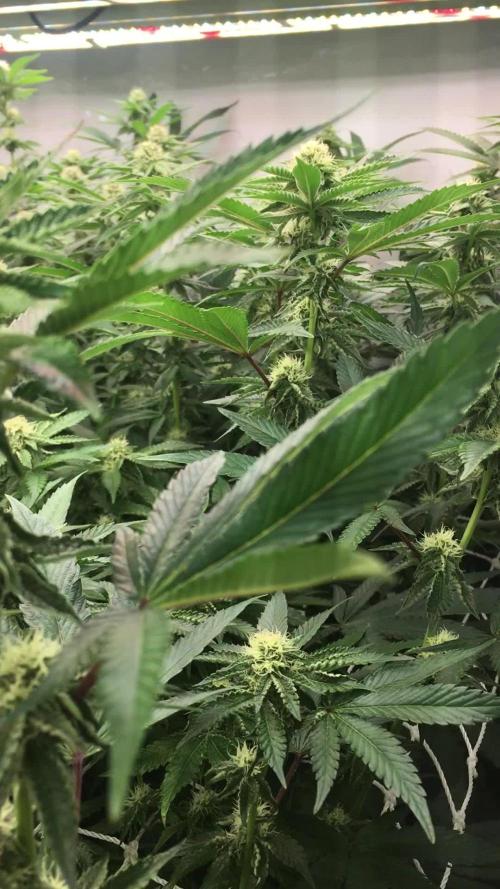
left the tent door 1/4 opened by accident on week 3 day 5 hoping for the best for my girls 😩

Likes
58
Share


@MadeInGermany
Follow
Info:
Unfortunately, I had to find out that my account is used for fake pages in social media.
I am only active here on growdiaries.
I am not on facebook instagram twitter etc All accounts except this one are fake.
Flowering day 1
since time change
to 12/12 h.
Hi guys :-) .
The time has finally come 👍
You have been switched to 12/12 hrs and are ready to flower.
Of course, cuttings were cut beforehand to keep the genetics.
For 4 days now she has also been getting Fast Buds from GreenBuzzLiquids.
They were also sprayed again with GBL Fast Plant spray.
She is very healthy and I am excited to see how she gets going again in bloom :-).
This week it was poured twice with 1.2 l each time (for nutrients, see nutrient table above).
Then I filled canisters with fresh osmosis water for the next few weeks 👍.
The tent was cleaned and every plant was checked for health.
At the moment I am tinkering with the ventilation because there are currently 4 fans with 4 activated carbon filters running, which I want to make more efficient by putting a hose through 2 tents.
These are the things about which you desperately at the beginning but learned from them in the end.
I wish you all a nice week.
Stay healthy 🙏🏻
You can buy this Nutrients at :
https://greenbuzzliquids.com/en/shop/
With the discount code: Made_in_Germany you get a discount of 15% on all products from an order value of 100 euros.
You can buy this Strain at :
www.Zamnesia.com
Type:
Banana
☝️🏼
Genetics:
OG Kush x unkown
👍
Vega lamp:
2 x Todogrow Led
Quantum Board 100 W
💡
Bloom Lamp :
2 x Todogrow Led
Cxb 3590 COB 3500 K 205W
💡💡☝️🏼
Soil :
Canna Coco Professional +
☝️🏼
Nutrients :
Green Buzz Liquids :
Organic Grow Liquid
Organic Bloom Liquid
Organic more PK
More Roots
Fast Buds
Humic Acid Plus
Growzyme Big Fruits
Clean Fruits
Cal / Mag
Organic Ph - Pulver
☝️🏼🌱
Water:
Osmosis water mixed with normal water (24 hours stale that the chlorine evaporates) to 0.2 EC. Add Cal / Mag to 0.4 Ec Ph with Organic Ph - to 5.5 - 5.8 .

Likes
10
Share


@Grey_Wolf
Follow
FastBuds Mexicans airlines 4 weeks of flowering Completed 11th Jan 2020
Sorry about the photo quality this week but I find it hard to take pics of the plants when they are in the full sun
Nothing to report this week other than the buds smell Great!! 😃 See you next week.
Likes
12
Share


@rickhaZe
Follow
-comenzamos la 2da semana de vegetacion con los 11 ejemplares de bsf seed y una cabeca de preto de maconha seed banco brasileño.
- aumentamos 100 ml o 0.1 l de agua, ya vamos en 400ml.
- hay una critical 2 que quedo mas pequeña, seguramente debe ser error de genética u de fabrica.
- esta semana seguimos fertilizando con grotek, al dia 17.

Likes
1
Share

@JVKdopegrow
Follow
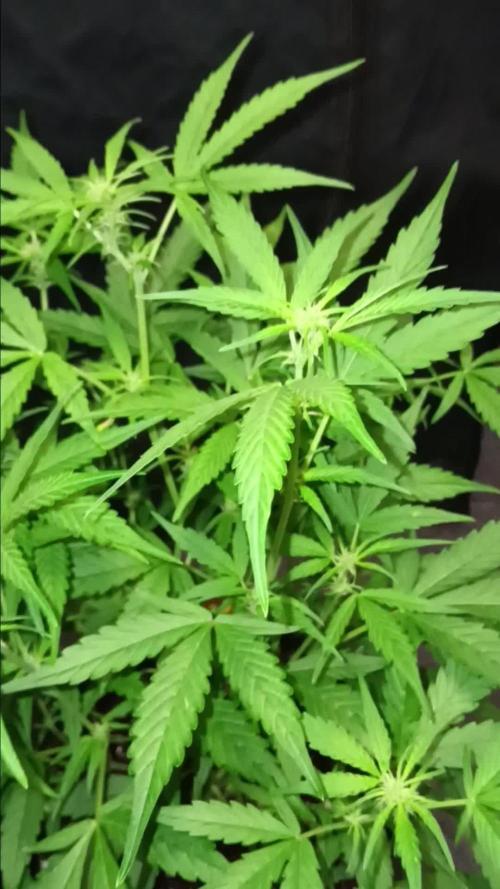
Bud sites have all blossomed into flowers. Great shape as she has stretched to her full size. Slight defoilation as I dealt with a tent wide white fly issue.
Likes
241
Share


@Tropicannibis_Todd
Follow
💩Holy Crap We Are Back At It And Loving It💩
Growmies we are at DAY 42 and she's just killing💀it👌
👉We are in full on flowering , gotta say the pink to redish hairs look amazing , not to mention the frost 👈 even the stems and branches are sticky icky 👈
OMG I LOVE THE PINK PISTOLS 👈
So Shit , I gave them just a tad to much nutes on the first few feeding 👈 But I have since fixed it
So I'm still doing some low stress training 🙃 and some defolation 😳
Lights being readjusted and chart updated .........👍rain water to be used entire growth👈
👉I used NutriNPK for nutrients for my grows and welcome anyone to give them a try .👈
👉 www.nutrinpk.com 👈
NutriNPK Cal MAG 14-0-14
NutriNPK Grow 28-14-14
NutriNPK Bloom 8-20-30
NutriNPK Bloom Booster 0-52-34
I GOT MULTIPLE DIARIES ON THE GO 😱 please check them out 😎
👉THANKS FOR TAKING THE TIME TO GO OVER MY DIARIES 👈
Likes
10
Share


@pHilosophy420
Follow
She’s growing really well. We had two extremely hot days at 30°C, which caused some leaf curling, but overall the plant handled it just fine.
The heat didn’t stress her much, thanks to the two CO₂ grow bags I have in place to help manage intense light and higher temperatures.


Likes
10
Share


@toscky
Follow
Esta semana seguí con 18 hrs unos días hasta que hoy le cambie el fotoperiodo a 12/12 y le puse otro foco más.
Seguiré así una semana y luego pasaré a nutrientes de flora.