
Processing
Likes
Comments
Share
@
Follow
Likes
3
Share
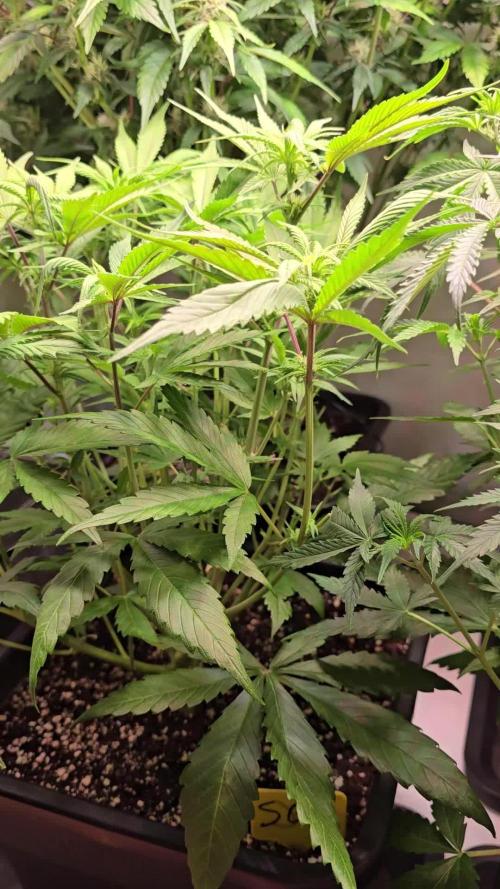
61/100 Using 9 part feed 4 week left might do liquid feed 1 week the koolbloom for final 2 weeks
Likes
10
Share
@BudXs
Follow
FIRST OFF - A HUGE THANK YOU TO ALL OF THE GROW DIARIES COMMUNITY FOR YOUR SHOW OF SUPPORT. I WISH I COULD FOLLOW EVERYONES DIARIES AND LIKE EM ALL. ITS OVERWHELMING, AND I APPRECIATE ALL OF YOUR KIND WORDS. YOU ARE ALL GROWMIES Thank you to GHL for the beans. This will be a first and will reqhire some timing skills that i think you will admire. Germ method by BudXs; https://www.instagram.com/tv/CMn3M9zl7H9WxMOpnDBxhm1TP5cloXQg7ZIpaQ0/?igshid=mlodbrr9vpcq
Likes
57
Share
@nonick123
Follow
Día 13 (06/05) Nos acercamos al final de la fase plántula. A ver si ahora empiezan a crecer de forma explosiva! He sido muy estricto con los riegos, dejando que el top hasta el nudillo se seque completamente! Día 14 (07/05) Hago una mejora en la tienda. Hasta ahora tenia intracción pasiva, pero ahora he instalado una turbina para que impulse aire fresco dentro de la tienda Día 15 (08/05) Con el calor que hace me sorprende que las macetas sigan aguantando la humedad, pero al hundir el nudillo sigue húmeda. Mañana haré un riego de nuevo Día 16 (09/05) Relleno el top con sustrato para compensar la compactación y dar mas soporte a las plantas Riego con 300 ml solo H20 - pH 6,2 Día 17 (10/05) Baño de sol de dos horas. Día 18 (11/05) Baño de sol de dos horas Día 19 (12/05) Riego 750 ml H2O + Regulator 0,15 ml/l + CaMg-Boost 0,25 ml/l + Startbooster 0,25 ml/l - pH 6.2 💦Nutrients by Aptus Holland - www.aptus-holland.com 🌱Substrate PRO-MIX HP BACILLUS + MYCORRHIZAE - www.pthorticulture.com/en/products/pro-mix-hp-biostimulant-plus-mycorrhizae
Likes
12
Share
Nice growth. It's been stormy here so they're a little stressed but will strengthen back up when the sunshine comes back out. I'm thinking, or at least hoping, this is a female 🤞 I topped every bud site on every plant, both indoors & outdoors.
Likes
15
Share
@Hashy
Follow
Most of this week I was away so the tent was on autopilot. When i got back i was pleased to see all 4 strains where still around the same on development with this one perhaps being slightly further on then the others. The Ams supreme is the smaller of the 2 AMS autos. She is starting to throw out some nice colours now. I'm confident this one is going to hit my 13 weeks scheduled for it, so not long left. Notes Day 64 nothing away Day 65 autofeed last weeks nutes Day 66 Got back, everything's fine Day 67 manually water Day 68 light strength from 75% to 87% PPFD was 458 Dli was 29.7 now its 544Ppfd 41.1Dli. Day 69 autofeed this weeks nutes Day 70 553Ppfd 35.3Dli Back in a week Take it easy.
Likes
55
Share
What's in the soil? What's not in the soil would be an easier question to answer. 16-18 DLI @ the minute. +++ as she grows. Probably not recommended, but to get to where it needs to be, I need to start now. Vegetative @1400ppm 0.8–1.2 kPa 80–86°F (26.7–30°C) 65–75%, LST Day 10, Fim'd Day 11 CEC (Cation Exchange Capacity): This is a measure of a soil's ability to hold and exchange positively charged nutrients, like calcium, magnesium, and potassium. Soils with high CEC (more clay and organic matter) have more negative charges that attract and hold these essential nutrients, preventing them from leaching away. Biochar is highly efficient at increasing cation exchange capacity (CEC) compared to many other amendments. Biochar's high CEC potential stems from its negatively charged functional groups, and studies show it can increase CEC by over 90%. Amendments like compost also increase CEC but are often more prone to rapid biodegradation, which can make biochar's effect more long-lasting. biochar acts as a long-lasting Cation Exchange Capacity (CEC) enhancer because its porous, carbon-rich structure provides sites for nutrients to bind to, effectively improving nutrient retention in soil without relying on the short-term benefits of fresh organic matter like compost or manure. Biochar's stability means these benefits last much longer than those from traditional organic amendments, making it a sustainable way to improve soil fertility, water retention, and structure over time. Needs to be charged first, similar to Coco, or it will immobilize cations, but at a much higher ratio. a high cation exchange capacity (CEC) results in a high buffer protection, meaning the soil can better resist changes in pH and nutrient availability. This is because a high CEC soil has more negatively charged sites to hold onto essential positively charged nutrients, like calcium and magnesium, and to buffer against acid ions, such as hydrogen. EC (Electrical Conductivity): This measures the amount of soluble salts in the soil. High EC levels indicate a high concentration of dissolved salts and can be a sign of potential salinity issues that can harm plants. The stored cations associated with a medium's cation exchange capacity (CEC) do not directly contribute to a real-time electrical conductivity (EC) reading. A real-time EC measurement reflects only the concentration of free, dissolved salt ions in the water solution within the medium. 98% of a plants nutrients comes directly from the water solution. 2% come directly from soil particles. CEC is a mediums storage capacity for cations. These stored cations do not contribute to a mediums EC directly. Electrical Conductivity (EC) does not measure salt ions adsorbed (stored) onto a Cation Exchange Capacity (CEC) site, as EC measures the conductivity of ions in solution within a soil or water sample, not those held on soil particles. A medium releases stored cations to water by ion exchange, where a new, more desirable ion from the water solution temporarily displaces the stored cation from the medium's surface, a process also seen in plants absorbing nutrients via mass flow. For example, in water softeners, sodium ions are released from resin beads to bond with the medium's surface, displacing calcium and magnesium ions which then enter the water. This same principle applies when plants take up nutrients from the soil solution: the cations are released from the soil particles into the water in response to a concentration equilibrium, and then moved to the root surface via mass flow. An example of ion exchange within the context of Cation Exchange Capacity (CEC) is a soil particle with a negative charge attracting and holding positively charged nutrient ions, like potassium (K+) or calcium (Ca2+), and then exchanging them for other positive ions present in the soil solution. For instance, a negatively charged clay particle in soil can hold a K+ ion and later release it to a plant's roots when a different cation, such as calcium (Ca2+), is abundant and replaces the potassium. This process of holding and swapping positively charged ions is fundamental to soil fertility, as it provides plants with essential nutrients. Negative charges on soil particles: Soil particles, particularly clay and organic matter, have negatively charged surfaces due to their chemical structure. Attraction of cations: These negative charges attract and hold positively charged ions, or cations, such as: Potassium (K+) Calcium (Ca2+) Magnesium (Mg2+) Sodium (Na+) Ammonium (NH4+) Plant roots excrete hydrogen ions (H+) through the action of proton pumps embedded in the root cell membranes, which use ATP (energy) to actively transport H+ ions from inside the root cell into the surrounding soil. This process lowers the pH of the soil, which helps to make certain mineral nutrients, such as iron, more available for uptake by the plant. Mechanism of H+ Excretion Proton Pumps: Root cells contain specialized proteins called proton pumps (H+-ATPases) in their cell membranes. Active Transport: These proton pumps use energy from ATP to actively move H+ ions from the cytoplasm of the root cell into the soil, against their concentration gradient. Role in pH Regulation: This active excretion of H+ is a major way plants regulate their internal cytoplasmic pH. Nutrient Availability: The resulting decrease in soil pH makes certain essential mineral nutrients, like iron, more soluble and available for the root cells to absorb. Ion Exchange: The H+ ions also displace positively charged mineral cations from the soil particles, making them available for uptake. Iron Uptake: In response to iron deficiency stress, plants enhance H+ excretion and reductant release to lower the pH and convert Fe3+ to the more available form Fe2+. The altered pH can influence the activity and composition of beneficial microbes in the soil. The H+ gradient created by the proton pumps can also be used for other vital cell functions, such as ATP synthesis and the transport of other solutes. The hydrogen ions (H+) excreted during photosynthesis come from the splitting of water molecules. This splitting, called photolysis, occurs in Photosystem II to replace the electrons used in the light-dependent reactions. The released hydrogen ions are then pumped into the thylakoid lumen, creating a proton gradient that drives ATP synthesis. Plants release hydrogen ions (H+) from their roots into the soil, a process that occurs in conjunction with nutrient uptake and photosynthesis. These H+ ions compete with mineral cations for the negatively charged sites on soil particles, a phenomenon known as cation exchange. By displacing beneficial mineral cations, the excreted H+ ions make these nutrients available for the plant to absorb, which can also lower the soil pH and indirectly affect its Cation Exchange Capacity (CEC) by altering the pool of exchangeable cations in the soil solution. Plants use proton (H+) exudation, driven by the H+-ATPase enzyme, to release H+ ions into the soil, creating a more acidic rhizosphere, which enhances nutrient availability and influences nutrient cycling processes. This acidification mobilizes insoluble nutrients like iron (Fe) by breaking them down, while also facilitating the activity of beneficial microbes involved in the nutrient cycle. Therefore, H+ exudation is a critical plant strategy for nutrient acquisition and management, allowing plants to improve their access to essential elements from the soil. A lack of water splitting during photosynthesis can affect iron uptake because the resulting energy imbalance disrupts the plant's ability to produce ATP and NADPH, which are crucial for overall photosynthetic energy conversion and can trigger a deficiency in iron homeostasis pathways. While photosynthesis uses hydrogen ions produced from water splitting for the Calvin cycle, not to create a hydrogen gas deficiency, the overall process is sensitive to nutrient availability, and iron is essential for chloroplast function. In photosynthesis, water is split to provide electrons to replace those lost in Photosystem II, which is triggered by light absorption. These electrons then travel along a transport chain to generate ATP (energy currency) and NADPH (reducing power). Carbon Fixation: The generated ATP and NADPH are then used to convert carbon dioxide into carbohydrates in the Calvin cycle. Impaired water splitting (via water in or out) breaks the chain reaction of photosynthesis. This leads to an imbalance in ATP and NADPH levels, which disrupts the Calvin cycle and overall energy production in the plant. Plants require a sufficient supply of essential mineral elements like iron for photosynthesis. Iron is vital for chlorophyll formation and plays a crucial role in electron transport within the chloroplasts. The complex relationship between nutrient status and photosynthesis is evident when iron deficiency can be reverted by depleting other micronutrients like manganese. This highlights how nutrient homeostasis influences photosynthetic function. A lack of adequate energy and reducing power from photosynthesis, which is directly linked to water splitting, can trigger complex adaptive responses in the plant's iron uptake and distribution systems. Plants possess receptors called transceptors that can directly detect specific nutrient concentrations in the soil or within the plant's tissues. These receptors trigger signaling pathways, sometimes involving calcium influx or changes in protein complex activity, that then influence nutrient uptake by the roots. Plants use this information to make long-term adjustments, such as Increasing root biomass to explore more soil for nutrients. Modifying metabolic pathways to make better use of available resources. Adjusting the rate of nutrient transport into the roots. That's why I keep a high EC. Abundance resonates Abundance.
Likes
2
Share
I just let them chill and few them and have the extra water as I had to go on vacation for a week
Likes
65
Share
Blue Dream'Matic was cut down on March 17, 2018. The pics are from just before harvest. I'll add a Harvest update on GD after she's dried. But I can tell you she smells sooo strong its incredible. Looking forward the smoke report! 👍
Likes
2
Share
@PalmaGrow
Follow
No se cómo expresar mi felicidad después de casi 3 años sin poder cultivar consecutivamente he podido cosechar esta belleza gracias a @blacktunaco por la K.O una genética llena de resina con flores compactas. Cometiendo errores desde el principio se pudo obtener una excelente planta corrigiendo todo para así mejorar el aprendizaje continuo. Se dieron 12 días de lavado de raíz y 3 de estos estuvo expuesto a lluvia constante durante los 3 días por tal razón se decidió cosechar para evitar dañar las flores
Likes
1
Share
Week 6 of flowering 10/23/24 Changed nutrients to fit week 6 Buds are getting even bigger and thicker. Defoliated a little. Noticed a PH of 4.8 in runoff, same as the late stage of flower in my previous grow. After lowering feed EC, CalMag on max strength, flushing with 0.8ec nutes for 3 days in a row, nothing changed and PH stayed the same. Read in a forum thread about constant low PH in the rootzone when growing in coco. Got great info about CEC, water, nutrients and little chemistry from a detailed explanation. (https://www.icmag.com/threads/recurring-problem-with-low-ph-in-coco.338385/page-2#post-10843765) Flushed plants with tap water + calmag, PH 6.5. Used 120L total for 4 plants in 2 days. 1st day: flushed after lights on, did not water until 2 hours before lights off and flushed again. Runoff PH went up a little, but not to the correct range. 2nd day: flushed after lights on and checked runoff EC + PH, of each plant. Fortunately, PH got corrected to 5.8, and I returned to automatic watering 4 times a day (with 10%-20% runoff). Thoughts: In the last grow, I thought I had a problem because of salts buildup in the media with constantly low PH in late flower. I didn't fully correct the problem till chop day. Same problem here in the same stage of flower without the salt buildup. After reading every forum I could find about the problem, I understood that my bloom nutes were the main problem because of their chemical composition. The coco ability to exchange ions lead to the low PH in the rootzone. It got worse quickly because I did not use any tap water with the feedings, so the PH could swing easily and drastically without resistance. After I looked online for the T.A. feeding chart, I saw they used TriPart Grow till week 7 of flower, the Nitrogen type they are using will up the PH. CocoForCannabis chart that I'm using, has not enough nitrogen to combat the bloom nutes PH down effect in flower. It gets even worse with RO water because there are no minerals that can resist PH down. Now I'm using 30% tap water with rest RO water, T.A. TriPart feeding chart with calmag and silica. Hopefully I have corrected the problem for the rest of the grow. It wasn't easy, because there were lots of variables that worsened the problem quickly. Now I'm checking runoff PH and EC daily. Update on next week :)
Likes
27
Share
Sunday 24/03 - started flushing early, don’t want any of the bulkier plants to go too far into the amber territory! - will flush for 3 days, twice a day til Tuesday night, then harvest time!
Likes
22
Share
@Jwjoh
Follow
This was an interesting harvest. Everything was going great and the buds/trichomes were still piling on, when suddenly almost overnight plant "C" shifted to about 20% amber trichomes. So I harvested it, and because the other plant wasn't ready yet I decided to try water curing the first one for 7 days. Then at the end of the 7 days, I figured I'd hack down plant "D" and dry them both on the racks in the tent at the same time before moving into jars. The water curing was a huge success! After the first day, the water was cloudy with a slight green tinge. Second day was about the same. Then the water was just a little cloudy each change, no green tinge. Compare it to the diary I just opened around water re-curing some cannabis I bought from the government store, where the water is diarrhea brown :O On day 7 of my water cure, the water was perfectly clear so I decided to hack down plant "D" and get them both drying on racks in the tent together. While water-curing plant "C", I had its trim sitting in a bowl in the freezer. When I hacked down plant "D", I put its trim in the same bowl. After my typical wet-trimming, I hung up Plant "C"'s water-cured buds on the top rack, plant "D"'s buds on the 2nd rack for an old fashioned cure, and random trim from both plants spread out on the bottom 2 racks. The water-cured buds dried within about 24 hours and went into a jar with a 58% humidipack. The buds are SUPER dense and potent! Nice clean high, doesn't kill my throat. The downside is that the taste is really weak and not that great. But everything has pros and cons. Almost no trichome loss in the bucket during the water curing as well -- I was really worried about that! The other buds dried in about 36 hours and went into a jar with a 58% humidipack, where I burped it many times a day for a week. The smell and flavour are much more potent than the water-cured bud and it's a little harsher on my throat, but otherwise I'm not sure there's a detectable difference. However, you can SEE there's a sharp visual difference between the water-cured buds and the jar-cured :) Of course the jar-cured will mature more with time as well. Once the trim was completely dry, I put it in a bag in the deep freezer and dropped it to about -20. I didn't need to use a grinder this way -- I could just mash it all up in the bag with extreme ease! Sifted it through the kief screen, and pressed down 17 grams of lazy-man's hash! After processing the trim through the kief screen, I decarbed in the oven at 200F for 1 hour (this converts THC-A into THC or something to that effect -- if you don't do this, the edibles won't get you very high). I put the trim into a big mason jar and back into the freezer along with my bottle of Everclear. Once they dropped somewhere down around -20, I poured in the Everclear, put the lid on, and shook as hard as I could, as often as I could, for 5 minutes or so. I noticed that as I shook it around, the contents inside would alternate between solid and liquid which was kinda cool :) Shake it one way and it freezes, shake it the other way and it thaws... or something to that effect, anyway. I was able to use a double-coffee-filter to extract about 2 cups of dragon tincture! I threw everything in the coffee filter out -- next time I'm going to do a better job of it as there's a little pile of trichomes that forms at the bottom of the filter which I could put to use. Once I get that down next harvest, I'll have around 99% efficiency milking every last drop out of my harvests! White chocolate is so yummy, as are candy canes... I wanted to combine the two to make some edibles. Looking around for candy cane crush, I decided to check out Amazon. They had the same candy cane crush I was looking at from popular stores, for only a couple dollars more, so I figured sure why not have it delivered. I was planning to get some white Baker's chocolate, but on checkout of the candy cane crush I got a deal for adding on white chocolate Lindt bars for $1.25 a piece LOL! So I bought 10 of those. When the Amazon package arrived, I slowly boiled down 1/2 cup of my dragon tincture in a pot, then used a double-boiler setup to melt down 4 of the Lindt bars in the same pot. Once it was mixed well with the hash oil, I set it aside to cool for about 3 minutes before stirring in 1/8 cup of candy cane crush (plus I ended up adding maybe like a tablespoon more), pouring into a pan lined with parchment paper, and putting in the freezer for 30 minutes. So now I have a nice big chunk of white chocolate candy cane crunch stuff where a piece the size of my thumb gets me super high for like 8+ hours; 17 grams of lazy-man's hash; and 88 grams of bud :) And still enough dragon tincture left over to make 3 more rounds of edibles -- not sure what I'll make next! From now on I'm going to water cure a large portion of all my buds -- not just the ones I grow myself, but ones I buy from the Gummint too!
Processing
Likes
5
Share
Likes
13
Share
@Skull
Follow
Really happy with the flower progression it took a while to get going but really happy with her now
Likes
7
Share
@hooolian
Follow
10/12/21: lights are at 60% and around 18 inches from the plants. disposed of the freak plant from earlier weeks and now have only 8. installed a six inch extractor and carbon filter fan on top of the grow room. also added an inlet fan to add more oxygen into the tent. Air circulation is good with 2 large fans blowing the air around. the plants themselves are thriving - 300ml of filtered water every other day. one plant is larger than the rest - affecting light spread somewhat but it looks too healthy to give up. aiming for around 6/7 weeks in veg for this set up.
Likes
6
Share
🌱 Folder #1 — Lemon Cherry Gelato Week 3 Veg — 12/12 From Seed This run continues to surprise me in the best possible way. This plant is an autoflower, grown 12/12 from seed, and honestly… it’s performing well beyond expectations. This is my first time ever running autoflowers under a strict 12/12 cycle from day one, and I didn’t know what to expect going in. What I’m seeing now is clear, confident growth — calm, structured, and healthy. We are currently moving into the third pair of leaves, and what’s interesting is how balanced the behavior feels. At moments it almost feels like: • the autoflowers are behaving like photoperiods • or the photoperiods are behaving like autos Either way, the plant is responding beautifully. ⸻ 🌿 Growth & Structure • Stage: Week 3 veg • Light cycle: 12/12 from seed • Height: ~10 cm • Nodes: Third pair of leaves forming • Overall vigor: Strong, steady, controlled The leaves are lush, vibrant green, with excellent posture and spacing. Growth is compact but not stalled — exactly what I want to see at this stage, especially under 12/12. ⸻ 🎨 Leaf Expression & Personality We’re starting to see a bit of personality show up — nothing problematic at all. There is some light discoloration / pigmentation variation on the leaves, creating a subtle, almost camouflage-like pattern. Important to note: • No signs of deficiency • No stress signals • No structural issues Just natural expression, and honestly, it looks beautiful and unique. This is one of those moments where observation matters more than reaction. I’m loving it, and I’m very curious to see how this expression evolves as the plant matures. ⸻ 🌡️ Environment & Feeding All parameters remain identical to the previous report, keeping consistency across the room: • Same temperatures • Same humidity • Same solution • Same EC & pH • Same airflow philosophy Nothing changed — and that’s exactly the point. The plant is responding positively within the system. ⸻ 🧠 Observations So Far What stands out most is how comfortable these autoflowers seem under 12/12. There’s no rush, no panic, no weird stretch — just calm, confident development with a strong focus on structure and roots. This run is already teaching me something, and we’re only in week three. FOR DISCOUNT CODES AND MORE JUST FOLLOW THE LINK https://website.beacons.ai/dogdoctorofficial 📲 Don’t forget to Subscribe and follow me on Instagram and YouTube @DogDoctorOfficial for exclusive content, real-time updates, and behind-the-scenes magic. We’ve got so much more coming, including transplanting and all the amazing techniques that go along with it. You won’t want to miss it. GrowDiaries Journal: https://growdiaries.com/grower/dogdoctorofficial Instagram: https://www.instagram.com/dogdoctorofficial/ YouTube: https://www.youtube.com/@dogdoctorofficial ⸻ Explore the Gear that Powers My Grow If you’re curious about the tech I’m using, check out these links: 🔆 Lighting & Environmental Control • Future of Grow — Advanced LED lighting technology https://www.futureofgrow.com/ DISCOUNT CODE: DOG20 • Lumiflora — Under-canopy LED lighting https://lumiflorade.com/ • TrollMaster — Environmental controllers and automation gear (past collaboration) ⸻ Genetics • Zamnesia Seeds — Genetics used in this project https://www.zamnesia.com/ ⸻ 🌱 Soil, Substrates, Boosters & Root Support • Plagron — Substrates, bio mixes, and supportive products https://plagron.com/en/ ⸻ 🎒 Storage, Curing & Preservation • Grove Bags — Curing and storage solutions https://grovebags.com/ ⸻ 📸 Photography Equipment & Tools (Not sponsors, but part of my creative toolkit) • Sony A6700 • Sony full-frame macro lens + few more • Stacking photography workflow - learning • iPhone (for behind-the-scenes shots) We’ve got much more coming as we move through the grow cycles. Trust me, you won’t want to miss the next steps, let’s push the boundaries of indoor horticulture together! As always, this is shared for educational purposes, aiming to spread understanding and appreciation for this plant. Let’s celebrate it responsibly and continue to learn and grow together. With true love comes happiness. Always believe in yourself, and always do things expecting nothing and with an open heart. Be a giver, and the universe will give back in ways you could never imagine. 💚 Growers love to all 💚 📸 P.S. – The Eye Behind the Lens All photos in this diary (for now — except for the ones showing the camera, which I took with an iPhone) are taken with a Sony A6700 paired with a Sony full-frame macro lens and a few more. Photography is part of the story — it’s how we share the fine textures, the glow, and the quiet details that words can’t always capture. I’ve also started experimenting with photo stacking — a technique where multiple images, each taken at a slightly different focus point, are layered together to create one perfectly sharp image from front to back. It’s not digital enhancement or AI; it’s pure photography — a way to reveal the plant’s beauty in microscopic depth, from trichome to petal. You’ll even see a few shots of "ghost me" capturing the shots — camera, lens, setup — because every grow deserves not just to be cultivated, but documented like art. FOR DISCOUNT CODES AND MORE JUST FOLLOW THE LINK https://website.beacons.ai/dogdoctorofficial NEW DISCORD - Official Server Invite Link : https://discord.gg/ksjAkA5T74
Likes
74
Share
@Mr_Maes
Follow
Nothing but colas on all 3 this is going to be a big harvest. Another 2 or 3 weeks max.
Likes
2
Share
@Oldwied
Follow
The enzymes working well, even the hemp weeds in the mulch are starting to decompose. The plant seems to like it too, as the greenery is overwhelming. Light Power: 100% Day 81 Flower day 34 Photoshooting
Likes
42
Share
Dear Growers , Welcome to Week 8 or Flower week 5 // Day 56-63 from Kannabia Lemon Haze Auto . Incase of Moving to a New Home . I Decided to skip some Weeks from every Diarie of the 12x12 Automatic Project . Everything should be Normal in the next Weeks . Whether you're a beginner or an expert, you are warmly invited to join, ask questions, and share your own experiences along the way! Project Setup & Conditions: • Brand/Manufacturer: Kannabia Seeds • Tent: 222cmx150cmx150cm • Light: 2x 720 Watt Full Spectrum • Humidity: 50% • Soil: Narcos Organix Mix • Nutrients: Narcos Products • pH Value: 6 If you want Germinitation results like mine , check out Kannabia Seeds with my link [https://www.kannabia.com/de?ref=61966] and grab the germination device or the strains I used . Trust me – it’s worth it for sure ! Get another 20% Discount at all products using the code [GGD] at the Checkout . Stay curious and keep up Growing —we look forward to welcoming you back for the next chapter soon!